
.svg)
.svg)
%201.svg)
%201.svg)
.svg)

.svg)
.svg)
.svg)
.svg)

.svg)
.svg)
.svg)




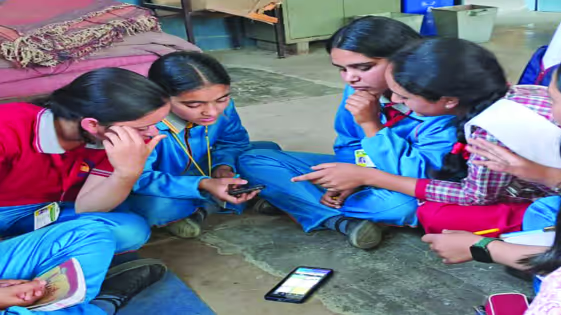
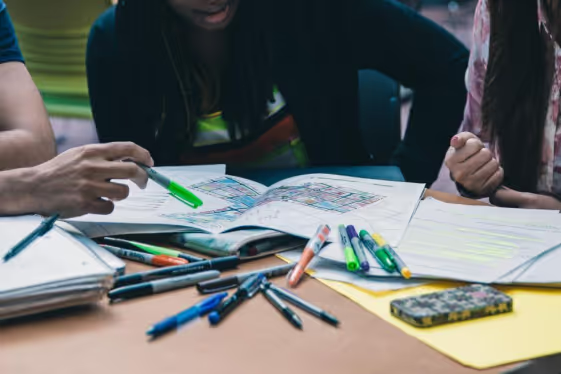
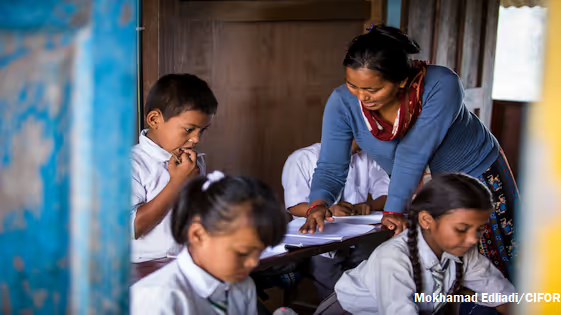
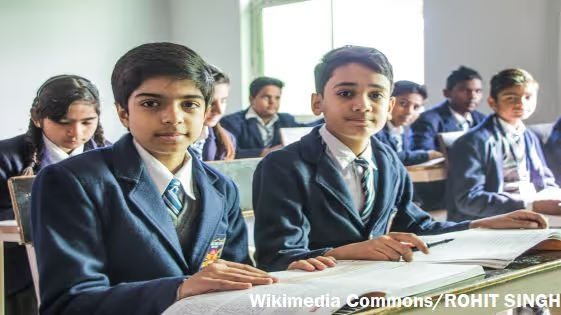
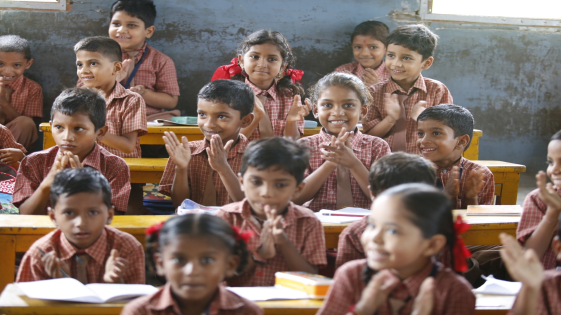
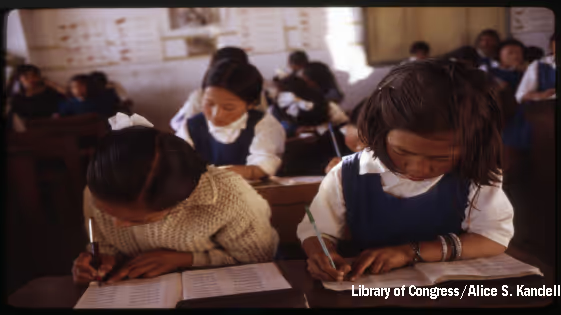
This project studies the effect of random dormitory assignment in a tertiary-level educational institution in India on subsequent academic achievements. The effects of peer-ability are around one-third as high as that of own-ability, with effects increasing with assortative matching. It finds that students from non-urban and non-English backgrounds do particularly better in higher education when assigned higher-ability peers. The effects of both randomly-allocated roommates and self-nominated friends play a significant role in the education production process, mainly through social interactions such as group discussions.

Subscribe Now
Thank you! Your submission has been received!
Oops! Something went wrong while submitting the form.































.svg)

.svg)
%201.svg)
.svg)
.svg)
