
.svg)
.svg)
%201.svg)
%201.svg)
.svg)

.svg)
.svg)
Conversations

Webinar video: Putting farmers first
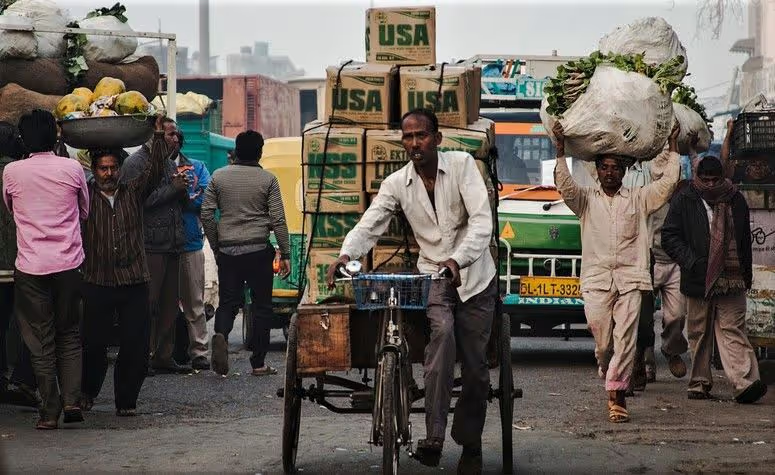
In December 2020, the India Programme of the International Growth Centre (IGC) and Asian Development Research Institute (ADRI) organised a webinar on ‘Putting Farmers First’. The panel comprised Siraj Hussain (Senior Visiting Fellow, Indian Council for Research on International Economic Relations (ICRIER)), Sudha Narayanan (Research Fellow, International Food Policy Research Institute (IFPRI)), Vikas Rawal (Professor, Jawaharlal Nehru University), and N Vijaya Lakshmi (Principal Secretary, Government of Bihar). The event was moderated by Sukhpal Singh (Professor, Indian Institute of Management, Ahmedabad).


Webinar video: Navigating Covid-19 impact on agriculture supply chains
In October 2020, the India Programme of the International Growth Centre (IGC) and Asian Development Research Institute (ADRI) organised a webinar on ‘Navigating the Impact of Covid-19 on the Agriculture Supply Chain in India’. The panel comprised N. Saravana Kumar (Secretary, Agriculture Department, Government of Bihar), Siraj Hussain (Senior Visiting Fellow, Indian Council for Research on International Economic Relations (ICRIER) and former Secretary, Ministry of Agriculture, Government of India), Shekhar Tomar (Assistant Professor, Indian School of Business). The discussion was moderated by Mekhala Krishnamurthy (Associate Professor, Ashoka University).
IGC Panel Discussion: Financing growth and diversification of Bihar’s agriculture
In a panel discussion held at Patna, Bihar in December 2018, Anjan Mukherji (Jawaharlal Nehru University), Mekhala Krishnamurthy (Ashoka University), Avinash Kishore (International Food Policy Research Institute), Bharat Ramaswami (Ashoka University), and Pronab Sen (IGC) discussed the issues related to agriculture in Bihar and what can be done to promote growth and diversification in the sector.
I4I@10 | Emerging from Covid-19: Challenges and solutions
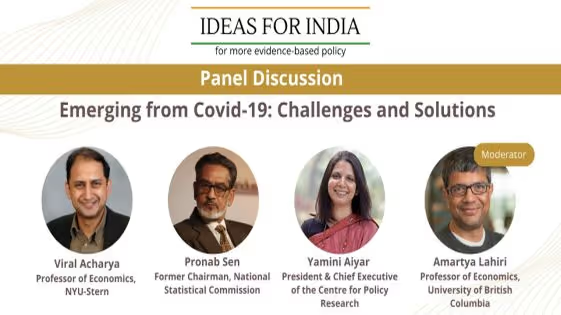
As India emerges from the Covid-19 pandemic, economists will have to rethink how they understand the Indian economy in context of global volatilities. In this panel, moderated by Amartya Lahiri, Viral Acharya, Yamini Aiyar and Pronab Sen discuss both the macroeconomic implications of growth, infrastructure and public policy, and the microeconomic concerns of whether we are creating enough good jobs, ensuring welfare, and reducing income inequality.
Budget 2022-23 and outlook for the Indian economy
Several commentators have lauded the recently presented Budget 2022-23 as a ‘growth budget’, on account of the large allocations made for capital expenditure on public infrastructure. On the other hand, concerns have been expressed about the Budget’s potential to create jobs for the masses, allay inflation worries, and strengthen social sectors such as health and education. Should we be optimistic or cautious? In this edition of I4I Conversations, Ashok Kotwal (Editor-in-Chief, Ideas for India) speaks with Pronab Sen (IGC India) to dissect the various policies and proposals in the Budget, and deliberate on the outlook for the Indian Economy. Dr Sen explains that the rhetoric around the Budget is mixing up accounting and economic classifications in the context of the announcement of 35% increase in public capex, why we cannot think of infrastructure as a homogenous activity in terms of the intensity of employment generation, how the support for MSMEs may be cherry-picking the units...
Budget 2022-23 and outlook for the Indian economy
Several commentators have lauded the recently presented Budget 2022-23 as a ‘growth budget’, on account of the large allocations made for capital expenditure on public infrastructure. On the other hand, concerns have been expressed about the Budget’s potential to create jobs for the masses, allay inflation worries, and strengthen social sectors such as health and education. Should we be optimistic or cautious? In this edition of I4I Conversations, Ashok Kotwal (Editor-in-Chief, Ideas for India) speaks with Pronab Sen (IGC India) to dissect the various policies and proposals in the Budget, and deliberate on the outlook for the Indian Economy. Dr Sen explains that the rhetoric around the Budget is mixing up accounting and economic classifications in the context of the announcement of 35% increase in public capex, why we cannot think of infrastructure as a homogenous activity in terms of the intensity of employment generation, how the support for MSMEs may be cherry-picking the units ...
Webinar video: The Covid-19 shock
The Covid-19 pandemic and the containment measures adopted to check the spread of the disease, have caused an unprecedented economic crisis in India as well as the rest of the world. Further, India is experiencing a massive humanitarian crisis, exemplified by the scale of reverse migration that is in progress. There is an urgent need for the government to implement policies designed to mitigate the economic damage, and alleviate the suffering of the most vulnerable. In this webinar (12 June 2020) – moderated by Prof. Parikshit Ghosh, Member of the I4I Editorial Board – Dr Pronab Sen reviews the current status, and deliberates on what needs to be done, and where we are likely to be in the future. The webinar is based on Dr Sen’s recent five-part series on I4I.

Webinar video: The new Coronavirus and the Indian economy
The global pandemic has created a terrible trade-off for every country between an economic crisis caused by a shutdown of the economic activity and a health crisis and fatalities as the healthcare system gets overwhelmed. The burden of the economic hardship is unbearably heavy on the poor. This is especially so in India where a significant part of the population live hand to mouth.
Covid-19: Ashok Kotwal speaks with Pronab Sen
In conversation with Ashok Kotwal on the ongoing economic crisis caused by lockdown to mitigate Covid-19 spread, Pronab Sen breaks down the problem into survival of individuals and livelihoods, and the survival of enterprises and the productive capacity of the economy. He contends that if enough is not done for the latter, the former will become very difficult to manage – once the pandemic begins to recede.
I4I Panel Discussion: The challenge of job creation
In a recent I4I editorial, Ashok Kotwal described the challenge of job creation that is facing the Indian economy today. In December 2017, Prof. Kotwal moderated a panel discussion on the topic between Kaushik Basu (Cornell University), Renana Jhabvala (SEWA), and Pronab Sen (IGC India). The panellists presented their views on issues including raising productivity of the unorganised sector; role of manufacturing and services in job creation; impact of automation and artificial intelligence; and binding constraints on growth of the organised sector.
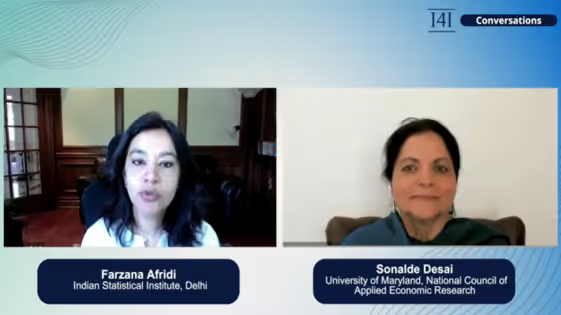
Managing India’s demographic transition
India’s population is expected to peak at about 1.7 billion in 2064, and while the current median age is only 28, the share of Indians aged 65 and above will go from 7% to 20% in the next 40 years or so. Has India been able to take advantage of its demographic dividend of a large working-age population, and is the country prepared for the upcoming transition from a young to an ageing population? In a new edition of I4I conversations, Farzana Afridi (Indian Statistical Institute, Delhi) and Sonalde Desai (University of Maryland & National Council of Applied Economic Research) discuss the challenges associated with India’s demographic dividend. They emphasise the need to tap into the full workforce, including women, as well as ensuring that workers are productive. They also analyse the issue of ageing both from the perspective of society and family. ....
Managing India’s demographic transition
India’s population is expected to peak at about 1.7 billion in 2064, and while the current median age is only 28, the share of Indians aged 65 and above will go from 7% to 20% in the next 40 years or so. Has India been able to take advantage of its demographic dividend of a large working-age population, and is the country prepared for the upcoming transition from a young to an ageing population? In a new edition of I4I conversations, Farzana Afridi (Indian Statistical Institute, Delhi) and Sonalde Desai (University of Maryland & National Council of Applied Economic Research) discuss the challenges associated with India’s demographic dividend. They emphasise the need to tap into the full workforce, including women, as well as ensuring that workers are productive. They also analyse the issue of ageing both from the perspective of society and family. ....

Second Ashok Kotwal Memorial Lecture: Inequality, Labour and Social Democracy
The Ashok Kotwal Memorial Lecture was instituted in 2022, in memory of our founding Editor-in-Chief, as an annual lecture on key issues of development. For its second edition, I4I hosted Professor Pranab K. Bardhan on 30 November 2023 in New Delhi on 'Inequality, Labour and Social Democracy’. A video recording of the lecture has been made available here.
Tracking learning outcomes: ASER’s work through the pandemic
With the onset of the Covid-19 pandemic and the associated lockdowns, schools quickly pivoted to online learning. However, there was limited information about whether children had access to learning materials, and what was actually taking place within households. In this edition of I4I Conversations, Rukmini Banerji and Wilima Wadhwa discuss the role that the Annual Status of Education Report (ASER) played in remedying this gap in the data. They discuss a few major findings from the survey on learning outcomes during the pandemic. Although the proportion of children not enrolled in schools went up, the proportion of children enrolled in government schools increased, and most of them had access to digital learning materials due to an increase in smartphone coverage. They discuss the challenges they faced while conducting ASER during the pandemic, including being limited to phone surveys and rallying volunteers amidst uncertainty. However, after the lack of data during the first ...
Tracking learning outcomes: ASER’s work through the pandemic
With the onset of the Covid-19 pandemic and the associated lockdowns, schools quickly pivoted to online learning. However, there was limited information about whether children had access to learning materials, and what was actually taking place within households. In this edition of I4I Conversations, Rukmini Banerji and Wilima Wadhwa discuss the role that the Annual Status of Education Report (ASER) played in remedying this gap in the data. They discuss a few major findings from the survey on learning outcomes during the pandemic. Although the proportion of children not enrolled in schools went up, the proportion of children enrolled in government schools increased, and most of them had access to digital learning materials due to an increase in smartphone coverage. They discuss the challenges they faced while conducting ASER during the pandemic, including being limited to phone surveys and rallying volunteers amidst uncertainty. However, after the lack of data during the first ...
Covid-19 and schooling: 2020 experience and way forward
The onset of the Covid-19 pandemic brought with it significant challenges for the education sector. On the one hand, closing schools meant imposing a heavy cost on a whole generation of students, and on the other hand, keeping schools open was a health hazard. India and several other developing countries – reluctantly at first – adopted online teaching. However, this was riddled with problems given the weak access to digital connectivity and devices. So how was the schooling experience in 2020, and are there any lessons for the future? To explore these crucial questions, I4I Editor-in-Chief Ashok Kotwal speaks with Rukmini Banerji (CEO of Pratham; India’s largest education non-profit) and Wilima Wadhwa (Director, Annual Status of Education Report (ASER) Centre). Banerji and Wadhwa discuss the mechanics of the ASER 2020 phone survey; availability of educational materials and learning activities in rural homes; how families, communities, and schools came together to keep up children’s le
IGC Panel Discussion: Does Ayushman Bharat address the issues of healthcare delivery in Bihar?
A year ago, as part of the Union Budget 2018-19 speech, the government announced a new National Health Protection Scheme called Ayushman Bharat. In a panel discussion held at Patna, Bihar in December 2018, Sanjay Kumar (Principal Secretary, Health Department, Government of Bihar), Sisir Debnath & Tarun Jain (Indian School of Business, Hyderabad), Anup Malani & Kiran Pandey (University of Chicago), Chandrakant Lahariya (public health specialist), and D. Narayana (Gulati Institute of Public Finance), deliberated on key issues around Ayushman Bharat in the context of healthcare delivery in Bihar.
IGC Panel Discussion on gender and education: From policy to practice
The International Growth Centre, in collaboration with the Asian Development Research Institute (ADRI), the Gender Resource Centre (GRC), the Women Development Corporation of the Government of Bihar, and the Centre for Catalyzing Change (C3), organised a panel discussion on Gender and Education in Patna in December 2019. The panel comprised Zakir Hussain (Presidency University, Calcutta), Ashmita Gupta (Asian Development Research Institute), Lakshmi Narasimhan Gadiraju (International Labour Organisation), Anu Rammohan (University of Western Australia), and Raghabendra Chattopadhyay (Indian Institute of Management, Calcutta). The session was moderated by Abhiroop Mukhopadhaya (Indian Statistical Institute, New Delhi).
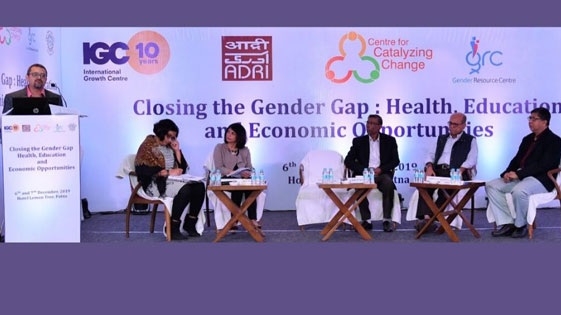
IGC Panel Discussion on gender and education: From policy to practice
The International Growth Centre, in collaboration with the Asian Development Research Institute (ADRI), the Gender Resource Centre (GRC), the Women Development Corporation of the Government of Bihar, and the Centre for Catalyzing Change (C3), organised a panel discussion on Gender and Education in Patna in December 2019. The panel comprised Zakir Hussain (Presidency University, Calcutta), Ashmita Gupta (Asian Development Research Institute), Lakshmi Narasimhan Gadiraju (International Labour Organisation), Anu Rammohan (University of Western Australia), and Raghabendra Chattopadhyay (Indian Institute of Management, Calcutta). The session was moderated by Abhiroop Mukhopadhaya (Indian Statistical Institute, New Delhi).
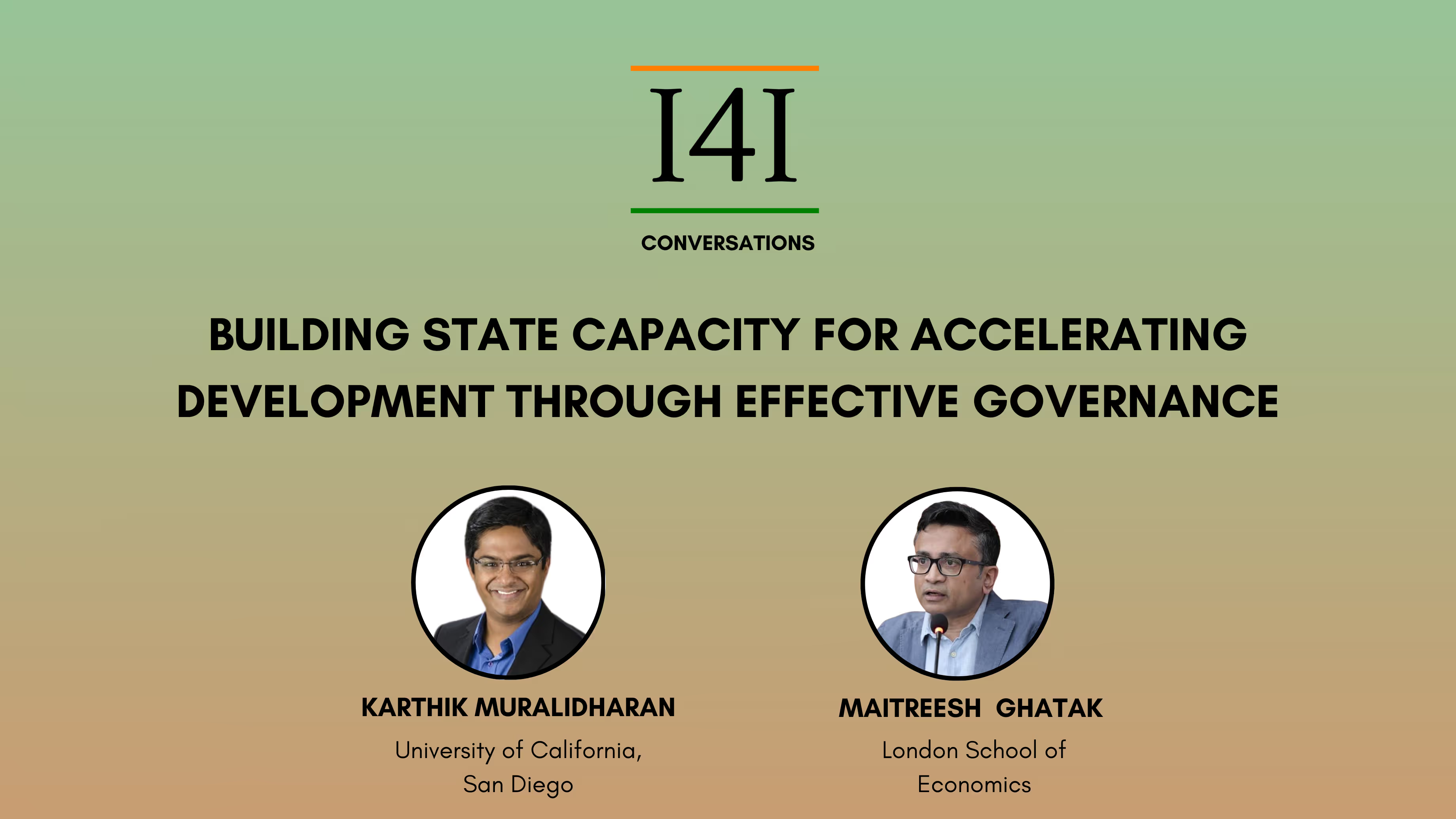
Building State capacity for accelerating development through effective governance
In a new edition of I4I conversations, Maitreesh Ghatak (London School of Economics) is joined by Karthik Muralidharan (University of California, San Diego) to discuss his new book, Accelerating India's Development: A State-Led Roadmap for Effective Governance.
Building State capacity for accelerating development through effective governance
In a new edition of I4I conversations, Maitreesh Ghatak (London School of Economics) is joined by Karthik Muralidharan (University of California, San Diego) to discuss his new book, Accelerating India's Development: A State-Led Roadmap for Effective Governance.

The growing wave of decentralisation: Comparative evidence from developing countries
Over the last few decades, decentralisation has been rapidly spreading in developing countries across the world, with around 35 countries announcing new or deepening decentralisation reforms in recent years. In a new I4I Conversation, Lakshmi Iyer (University of Notre Dame) joins Sarmistha Pal (University of Surrey) and Jean-Paul Faguet (London School of Economics), the editors of ‘Decentralised Governance: Crafting Effective Democracies Around the World’, to discuss the current global state of decentralisation. Over the conversation, they draw on theoretical and empirical insights from different chapters of the book, each featuring diverse countries – Pakistan, China, Indonesia, Kenya, India, Ghana, Bangladesh, and Colombia.

The growing wave of decentralisation: Comparative evidence from developing countries
Over the last few decades, decentralisation has been rapidly spreading in developing countries across the world, with around 35 countries announcing new or deepening decentralisation reforms in recent years. In a new I4I Conversation, Lakshmi Iyer (University of Notre Dame) joins Sarmistha Pal (University of Surrey) and Jean-Paul Faguet (London School of Economics), the editors of ‘Decentralised Governance: Crafting Effective Democracies Around the World’, to discuss the current global state of decentralisation. Over the conversation, they draw on theoretical and empirical insights from different chapters of the book, each featuring diverse countries – Pakistan, China, Indonesia, Kenya, India, Ghana, Bangladesh, and Colombia.
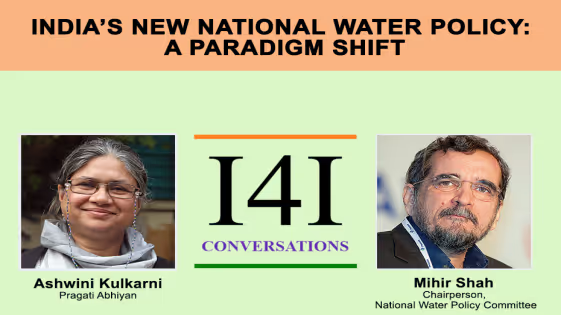
India’s new National Water Policy: A paradigm shift
In 2019, the Ministry of Jal Shakti set up a committee of independent experts – led by Dr Mihir Shah – to draft a new National Water Policy. To examine the recommendations made by the Committee, Ashwini Kulkarni speaks with Mihir Shah, beginning with a discussion of the key issues constituting the water crisis facing India today – in terms of dichotomies such as agriculture and industry use, rural and urban issues, quality and quantity of water, and so on. Dr Shah explains how the new Policy is a shift away from a supply-centric approach involving dam construction and groundwater extraction, to the management of the demand and distribution of water. He emphasises the importance of weaving our interventions into the contours of nature, rather than having a “command and control” relationship with nature – a lesson that is especially relevant in Covid times. Within the wider context of climate change, drying rivers and falling water tables, Shah noted that the past is no longer a reliable
India’s new National Water Policy: A paradigm shift
In 2019, the Ministry of Jal Shakti set up a committee of independent experts – led by Dr Mihir Shah – to draft a new National Water Policy. To examine the recommendations made by the Committee, Ashwini Kulkarni speaks with Mihir Shah, beginning with a discussion of the key issues constituting the water crisis facing India today – in terms of dichotomies such as agriculture and industry use, rural and urban issues, quality and quantity of water, and so on. Dr Shah explains how the new Policy is a shift away from a supply-centric approach involving dam construction and groundwater extraction, to the management of the demand and distribution of water. He emphasises the importance of weaving our interventions into the contours of nature, rather than having a “command and control” relationship with nature – a lesson that is especially relevant in Covid times. Within the wider context of climate change, drying rivers and falling water tables, Shah noted that the past is no longer a reliabl

Covid-19: Is it time to decentralise power?
Raghuram Rajan speaks to Econ Film’s CoronaNomics show, on the merits of de-centralised governance in the battle against the Covid-19 pandemic, how local authorities can be empowered, and the risk of a new financial crisis led by emerging markets.

Criminal politicians and informed voting in India
In India, 9% of legislators face criminal charges. Could voter information and coordination improve the country’s political representation?
I4I Panel Discussion: Two years of Modi government
In a panel discussion organised to mark the 4th anniversary of Ideas for India, Parikshit Ghosh (Member of the I4I Editorial Board & Associate Professor, Delhi School of Economics) moderates a discussion on ‘Two years of Modi government’ among Pranab Bardhan (University of California, Berkeley), Mihir Sharma (Bloomberg View) and Pratap Bhanu Mehta (Centre for Policy Research), encompassing issues related to policy and governance; corruption; manufacturing; social sector; and social and cultural issues.
Charting a course for the Indian economy
Karthik Muralidharan (Associate Professor of Economics, University of California, San Diego) speaks with Arvind Subramanian (Chief Economic Adviser, Government of India) on a broad set of issues ranging from the uniqueness of the Indian development model, the political economy of reforms, reducing factor misallocation in the economy, enhancing State capacity, financing India´s infrastructure needs, to the implications of the Fourteenth Finance Commission, improving the design of social welfare programmes, and climate change.
Emerging challenges: Economic and social
To mark the second anniversary of I4I in July 2014, we invited two eminent scholars – Abhijit Banerjee (MIT) and Mukul Kesavan (Jamia Milia) to discuss the emerging economic and social challenges in India, post the recent Parliamentary election. The discussion was moderated by Ashok Kotwal (Editor-in-Chief, Ideas for India). Take a look at a ‘highlights’ video of the discussion here!

Big and small ideas in development economics: Theory, evidence and practice
Karthik Muralidharan, Associate Professor of Economics, University of California, San Diego speaks with Kaushik Basu, Chief Economist and Senior Vice President, World Bank and former Chief Economic Adviser, Government of India, on the World Bank’s global development agenda; inequality and the design of anti-poverty policies; contribution of recent academic research to development policy; research evidence, political economy and policymaking; State capacity for implementation; and law and economics.
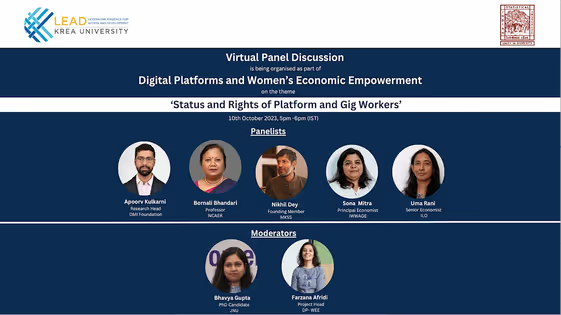
DP-WEE Panel Discussion: Status and rights of platform and gig workers
A virtual panel discussion was organised by the Digital Platforms and Women’s Economic Empowerment (DP-WEE) programme, funded by the Bill and Melinda Gates Foundation, to understand the status and legal rights of the workforce in India’s digital economy. The discussion was moderated by Farzana Afridi (Head, DP-WEE) and Bhavya Gupta (PhD scholar, Jawaharlal Nehra University), and featured Uma Rani (International Labour Organization), Sona Mitra (IWWAGE), Nikhil Dey (Mazdoor Kishan Shakti Sangthan), Bornali Bhandari (NCAER) and Apoorv Kulkarni (OMI Foundation).
I4I@10 | First Ashok Kotwal Memorial Lecture: The future of development
What is the 'fourth' fundamental law of capitalism? Will capital ‘inherit the earth’? Has the pandemic quickened the intuitive appeal of the capital-labour substitution? Should sovereign funds be based on corporate wealth, not just natural resources? Would Universal Basic Income work in a relatively poor country like India? In the first annual Ashok Kotwal Memorial Lecture, Professor Debraj Raj talks about the future of development, and the contribution of labour, capital and automation in growth. After a quick introduction, he dispels the notion of balanced growth by showing that, far from being constant, the share of labour is falling, over time, across countries, and within sectors. Presenting employment elasticities of different sectors, and labour shares for many economies, he establishes the ubiquity of capital-labour substitution. We see GDP growth has outpaced employment growth in India too, even though there is an abundance of cheap labour. ...
The future of work from home
With the outset of the Covid-19 pandemic, work from home became the norm in 2020. However, even though mobility restrictions have been lifted, many workplaces all over the world continue to follow a model of remote or hybrid working. This has raised questions about worker productivity, work-life balance, and the future of commuting and cities. In this edition of I4I Conversations, Prof. Nirvikar Singh (University of California, Santa Cruz) and Prof. Nicholas Bloom (Stanford University) talk about the future of work. They delve into Prof Bloom's seminal work on management practices and work from home prior to the pandemic. They discuss the effects of flexibility on productivity, happiness and building managerial capital. They go on to speak about trends in remote work over the last few years, and how that has differed across countries. This leads to further discussion about the impact on cities and the environment, as more people move to suburbs and commute to work. They also touch ..
The future of work from home
With the outset of the Covid-19 pandemic, work from home became the norm in 2020. However, even though mobility restrictions have been lifted, many workplaces all over the world continue to follow a model of remote or hybrid working. This has raised questions about worker productivity, work-life balance, and the future of commuting and cities. In this edition of I4I Conversations, Prof. Nirvikar Singh (University of California, Santa Cruz) and Prof. Nicholas Bloom (Stanford University) talk about the future of work. They delve into Prof Bloom's seminal work on management practices and work from home prior to the pandemic. They discuss the effects of flexibility on productivity, happiness and building managerial capital. They go on to speak about trends in remote work over the last few years, and how that has differed across countries. This leads to further discussion about the impact on cities and the environment, as more people move to suburbs and commute to work. They also touch ..
Leveraging digital labour markets to increase employment opportunities
India’s relatively young population, the pace of adoption of smartphones and digital technology, and rapid urbanisation has contributed to the growth of digital labour markets. In recent years, we have seen the proliferation of gig work and labour market platforms like Uber, Urban Company, Swiggy and others. This growth has accelerated in the wake of the Covid-19 pandemic with India currently accounting for 8% of the world’s digital labour platforms. In this edition of I4I Conversations, Prof. Farzana Afridi (Indian Statistical Institute) speaks with Dr K Rajeswara Rao and Dr Sakshi Khurana (NITI Aayog) to examine how job-matching technology platforms could be harnessed to increase employment opportunities, through skill-matching and technology-based job allocation. In reference to the NITI Aayog report ‘India's Booming Gig and Platform Economy: Perspectives and Recommendations for the Future of Work’, released on 27 June 2022, they discuss how the flexibility and low entry ...

Leveraging digital labour markets to increase employment opportunities
India’s relatively young population, the pace of adoption of smartphones and digital technology, and rapid urbanisation has contributed to the growth of digital labour markets. In recent years, we have seen the proliferation of gig work and labour market platforms like Uber, Urban Company, Swiggy and others. This growth has accelerated in the wake of the Covid-19 pandemic with India currently accounting for 8% of the world’s digital labour platforms. In this edition of I4I Conversations, Prof. Farzana Afridi (Indian Statistical Institute) speaks with Dr K Rajeswara Rao and Dr Sakshi Khurana (NITI Aayog) to examine how job-matching technology platforms could be harnessed to increase employment opportunities, through skill-matching and technology-based job allocation. In reference to the NITI Aayog report ‘India's Booming Gig and Platform Economy: Perspectives and Recommendations for the Future of Work’, released on 27 June 2022, they discuss how the flexibility and low entry ...
Automation and inequality
Public discourse around automation has seen some take a fairly alarmist view – with concerns around its impact on employment, wages, the labour share of national income, and inequality. Others take a more optimistic view – that short-run turbulence and long-run increases in welfare are the typical outcomes of any technological change. In this context, Dilip Mookherjee (Boston University) speaks with Pascual Restrepo (Boston University) to discuss the evidence around the developed and developing country experience with automation, and whether the optimistic or alarmist view is bearing out in reality. Prof Restrepo outlines the definition of automation technology – differentiating it from ‘augmenting’ technologies – and contends, that like most things in economics, the answer lies somewhere in the middle of the alarmist and optimist views. They foray into discussing evidence on automation and technological change for developed countries: decline in the labour share of national income,,,
Automation and inequality
Public discourse around automation has seen some take a fairly alarmist view – with concerns around its impact on employment, wages, the labour share of national income, and inequality. Others take a more optimistic view – that short-run turbulence and long-run increases in welfare are the typical outcomes of any technological change. In this context, Dilip Mookherjee (Boston University) speaks with Pascual Restrepo (Boston University) to discuss the evidence around the developed and developing country experience with automation, and whether the optimistic or alarmist view is bearing out in reality. Prof Restrepo outlines the definition of automation technology – differentiating it from ‘augmenting’ technologies – and contends, that like most things in economics, the answer lies somewhere in the middle of the alarmist and optimist views. They foray into discussing evidence on automation and technological change for developed countries: decline in the labour share of national ...
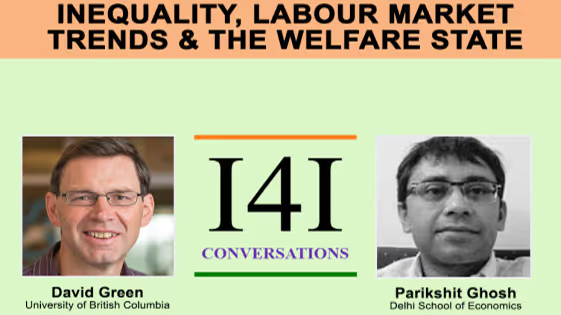
Inequality, labour market trends, and the welfare State
All around the world, rising levels of inequality – particularly in the last 3-4 decades – have been recognised as a major issue. In this context, David Green (University of British Columbia) and Parikshit Ghosh (I4I Editorial Board; Delhi School of Economics) discuss various factors including trade and globalisation; gradual ideological shift to the 'right'; the changing nature of work – role of technological advancements, hierarchies created by higher education, and 'rents' rather than returns to skill. They also examine social protection – going beyond income support to also provide public services and foster communities, identifying rents in the economy to generate tax revenue to fund welfare, shifting from redistribution as charity to redistribution as justice and how Covid-19 can jumpstart this attitudinal change. This is the second edition of I4I Conversations.

Parikshit Ghosh speaks with Debraj Ray
In this podcast, Parikshit Ghosh (Member of the I4I Editorial Board & Associate Professor, Delhi School of Economics) speaks with Debraj Ray (Julius Silver Professor, Faculty of Arts and Science, and Professor of Economics, New York University) on the rise of Trump and how it relates to the upsurge of inequality in the US and the ‘American dream’ narrative; implications of the process of automation for the relative shares of capital and labour as factors of production; the idea of committing a share of gross domestic product for the provision of a universal basic income; and the challenges involved in addressing inequality of wealth.

Third Ashok Kotwal Memorial Lecture: Voluntary Carbon Markets: Challenges and Opportunities in Developing Economies
The Ashok Kotwal Memorial Lecture was instituted in 2022, in memory of our founding Editor-in-Chief, as an annual lecture on key issues in development. For the third edition on 11 December 2024, Professor Rohini Pande spoke about voluntary carbon markets, and the associated challenges and opportunities in developing economies. A recording of the lecture is now available to view.
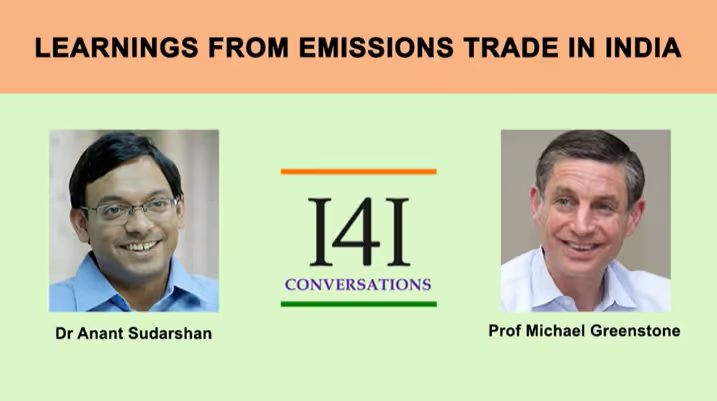
Learnings from emissions trade in India
India, and many developing nations in other parts of the world take solace in the U-shaped Kuznets curve: a belief in this inverse relationship between income and environmental quality results in not enough efforts being made to tackle pollution and environmental degradation in these countries. There is an urgent need for policy which can protect societies and people from the adverse effects of climate change. In this edition of I4I Conversations, Anant Sudarshan and Michael Greenstone discuss their work as environmental economists, and the many ways in which they have been able to use research to help guide policy. This includes their work on emissions trading in Surat, the cap-and-trade market in Gujarat, and clean cookstoves in Orissa. In that context, they list some of the difficulties with environmental regulation, such as the reluctance to install emissions monitors and falsification of the readings. They also delve into the trade-off between finding energy sources that are ...
Learnings from emissions trade in India
India, and many developing nations in other parts of the world take solace in the U-shaped Kuznets curve: a belief in this inverse relationship between income and environmental quality results in not enough efforts being made to tackle pollution and environmental degradation in these countries. There is an urgent need for policy which can protect societies and people from the adverse effects of climate change. In this edition of I4I Conversations, Anant Sudarshan and Michael Greenstone discuss their work as environmental economists, and the many ways in which they have been able to use research to help guide policy. This includes their work on emissions trading in Surat, the cap-and-trade market in Gujarat, and clean cookstoves in Orissa. In that context, they list some of the difficulties with environmental regulation, such as the reluctance to install emissions monitors and falsification of the readings. They also delve into the trade-off between finding energy sources that are ...
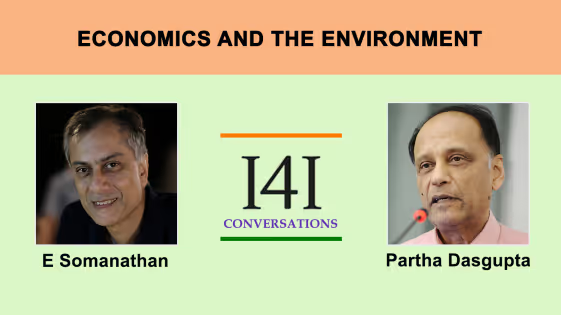
Economics and the environment
Published in February 2021 by the UK government, the ‘Dasgupta Review’ calls for changes in how we think, act and measure economic success to protect and enhance our prosperity and the natural world. Against the backdrop of the Review, in the fourth edition of I4I Conversations, E. Somanathan speaks with Partha Dasgupta, tracing the origins of his interest in environmental economics – a consistent theme of his academic work that spans several fields of economics – and how his thinking on the issue has evolved over the years. They foray into economic theorising of the ecology’s imprint on collective behaviours; fusing micro and macro perspectives on the embeddedness of the economy in nature; the complexities of accounting for natural wealth in economic terms and enhancing this wealth via small institutional changes; how average yields of primary producers such as algae are much higher than of virtually any other investment; how the millions of small errors we are making are adding up t
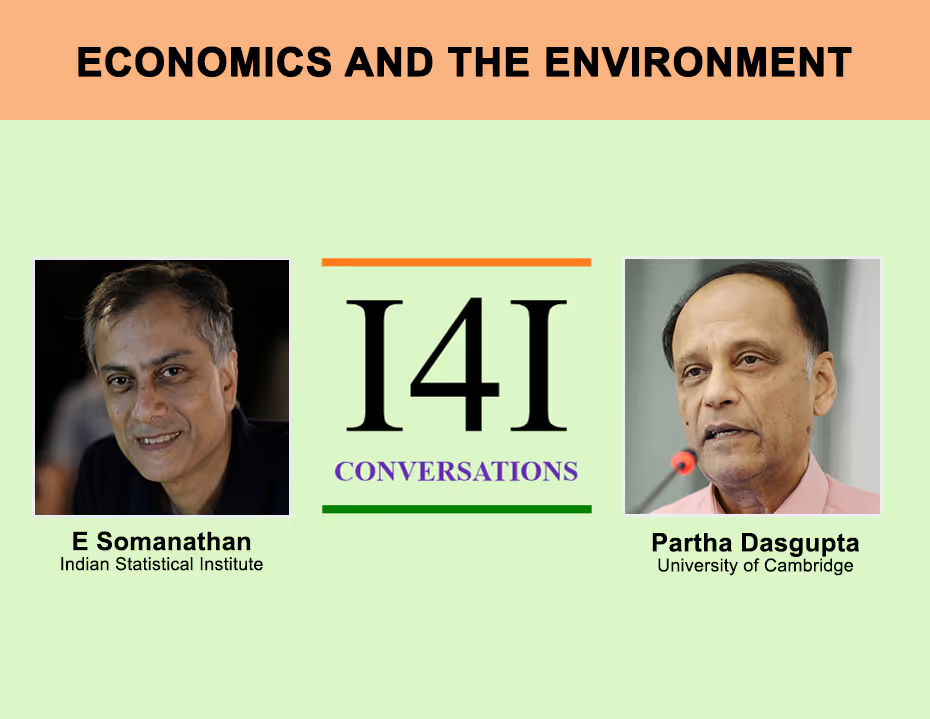
Economics and the environment
Published in February 2021 by the UK government, the ‘Dasgupta Review’ calls for changes in how we think, act and measure economic success to protect and enhance our prosperity and the natural world. Against the backdrop of the Review, in the fourth edition of I4I Conversations, E. Somanathan speaks with Partha Dasgupta, tracing the origins of his interest in environmental economics – a consistent theme of his academic work that spans several fields of economics – and how his thinking on the issue has evolved over the years. They foray into economic theorising of the ecology’s imprint on collective behaviours; fusing micro and macro perspectives on the embeddedness of the economy in nature; the complexities of accounting for natural wealth in economic terms and enhancing this wealth via small institutional changes; how average yields of primary producers such as algae are much higher than of virtually any other investment; how the millions of small errors we are making are adding up
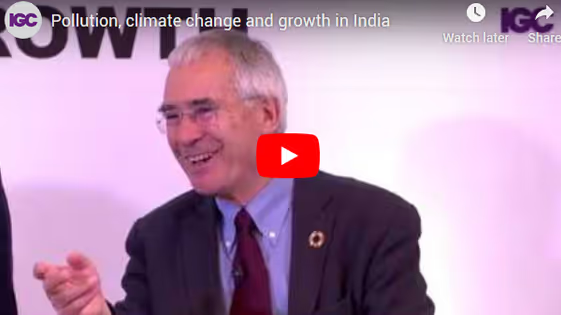
IGC Panel Discussion: Pollution, climate change, and growth in India
In September 2019, the International Growth Centre (IGC) organised a panel discussion in New Delhi to bring together experts to deliberate on issues related to pollution, climate change, and growth in India. The panellists for the discussion were Michael Greenstone (Energy Policy Institute at the University of Chicago), Nicholas Stern (London School of Economics) and Ulka Kelkar (World Resources Institute). The session was chaired by Kanika Chawla (CEEW Centre for Energy Finance).

IGC Panel Discussion: Should electricity be a right?
In September 2019, the International Growth Centre (IGC) hosted a panel discussion in New Delhi to bring together experts to discuss whether a basic minimum quantity of electricity should be available to all and what action could be taken to solve the problem of restricted power supply. The panellists included Robin Burgess (IGC and London School of Economics and Political Science), Anant Sudarshan (University of Chicago), Michael Greenstone (University of Chicago), and R. Lakshmanan (Rural Electrification Corporation Ltd). The discussion was moderated by Rahul Tongia (Brookings India).
I4I@10: A quick look at a decade in the making
On the 10th anniversary of Ideas for India (I4I), we take a look at some of our major achievements and key moments since our launch on 19 July, 2012. Spearheaded by the late Prof. Ashok Kotwal and a group of prominent economists at the International Growth Centre, I4I was intended to showcase economic and policy research which was evidence-based and accessible. In the decade that followed, I4I was able to achieve that mission by hosting over 2,000 unique ideas – from articles, to perspectives and notes from the field. Our reach has expanded beyond the website, and I4I articles have been reprinted and mentioned around 300 times in external publications and translated into 4 other languages. The success was in no small part due to the efforts of the Editorial Board – a diverse and erudite group of economists and civil society leaders, now headed by Prof. Parikshit Ghosh as Editor-in-Chief – and the authors who have worked with the I4I team to share their ideas with a wider ....
Culture and development
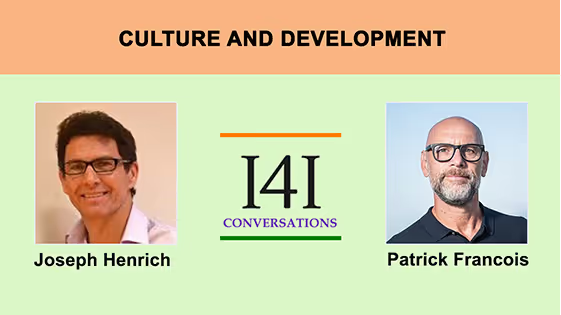
How did human society evolve from being organised predominantly around large kin-based networks, to one with strong notions of individualism? To examine this question, Joseph Henrich (Harvard University) and Patrick Francois (University of British Columbia) discuss the interactions between informal norms, formal institutions, and psychology, based on examples and evidence from around the world. With the realisation in the West that kin-based societies have limited scalability, and the Church facilitating the breakdown of these units, certain psychological traits emerged and solidified – the central premise of Henrich’s book "The WEIRDest people in the world: How the West became psychologically peculiar and particularly prosperous". As these societies gained an ascendant position, the new norms and institutions proliferated and affected the rest of the world, via pathways such as Industrial Revolution and exports. Finally, they deliberate on how the possibility of substantial psychologi
Culture and development
How did human society evolve from being organised predominantly around large kin-based networks, to one with strong notions of individualism? To examine this question, Joseph Henrich (Harvard University) and Patrick Francois (University of British Columbia) discuss the interactions between informal norms, formal institutions, and psychology, based on examples and evidence from around the world. With the realisation in the West that kin-based societies have limited scalability, and the Church facilitating the breakdown of these units, certain psychological traits emerged and solidified – the central premise of Henrich’s book "The WEIRDest people in the world: How the West became psychologically peculiar and particularly prosperous". As these societies gained an ascendant position, the new norms and institutions proliferated and affected the rest of the world, via pathways such as Industrial Revolution and exports. Finally, they deliberate on how the possibility of substantial psychologi
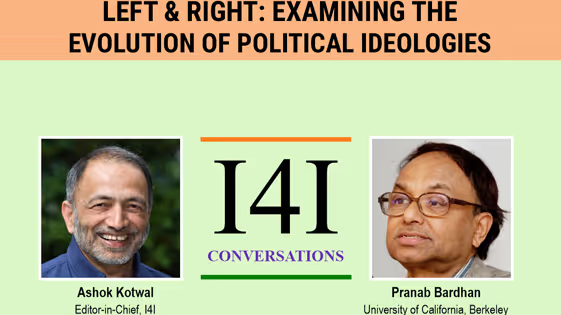
Left and right: Examining the evolution of political ideologies
With the advent of globalisation, the struggle between the ‘left’ and ‘right’ – as defined in Marxian terms – rapidly evolved from one between economic ideologies, to cultural wars. In this context, I4I Editor-in-Chief Ashok Kotwal engages in a deep-dive with Prof. Pranab Bardhan (University of California, Berkeley) on issues ranging from growing resentment towards educated elite, shifts in the form of capital and employment patterns, role of communities, to emergence of illiberal political movements, and the different types of nationalism and populism. This is the first edition of I4I’s new feature “Conversations”, which would present in-depth discussions with experts on ‘big picture’ or futuristic topics.
Left and right: Examining the evolution of political ideologies
With the advent of globalisation, the struggle between the ‘left’ and ‘right’ – as defined in Marxian terms – rapidly evolved from one between economic ideologies, to cultural wars. In this context, I4I Editor-in-Chief Ashok Kotwal engages in a deep-dive with Prof. Pranab Bardhan (University of California, Berkeley) on issues ranging from growing resentment towards educated elite, shifts in the form of capital and employment patterns, role of communities, to emergence of illiberal political movements, and the different types of nationalism and populism. This is the first edition of I4I’s new feature “Conversations”, which would present in-depth discussions with experts on ‘big picture’ or futuristic topics.
Leading economic institutes join hands to bridge research-policy gap
The International Growth Centre at the London School of Economics and Tata Centre for Development at the University of Chicago collaborate to better communicate evidence-based research for informed decision-making, through 'Ideas for India'.
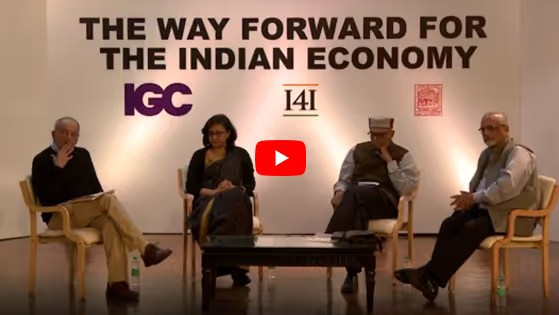
I4I Panel Discussion: The way forward for the Indian economy
In December 2018, I4I organised a panel discussion on ‘The Way Forward for the Indian Economy’ with K.P. Krishnan (Ministry of Skill Development and Entrepreneurship), T.N. Ninan (Business Standard), and Ila Patnaik (NIPFP). Ashok Kotwal (Editor-in-Chief, I4I) – the moderator of the discussion – set the context and laid out the key issues for deliberation in a blog post prior to the event. The panellists presented their views on issues including banking sector stress and infrastructure financing; possibility of India following an export-led growth path; the country’s business environment, including factor markets and law and order; skilling of the labour force; rural distress; India and the 4th Industrial Revolution; and the quality of our institutions.
Sign up to our newsletter to be notified about the latest updates
.svg)
Just One Step Away!
Complete your signup to start getting the latest news, stories, and updates delivered straight to your inbox.