
.svg)
.svg)
%201.svg)
%201.svg)
.svg)

.svg)
.svg)

Why India's plan to sell rice for ethanol undermines food and water security
In a recent policy shift with regard to India’s Ethanol Blended Petrol Programme, excess rice stocks of the Food Corporation of India are being made available for ethanol production at a reduced reserve price. In this post, Akanksha Jain argues that while the move might resolve an immediate supply chain bottleneck, it risks distorting the long-term balance between food security, environmental sustainability, and bioenergy policy.


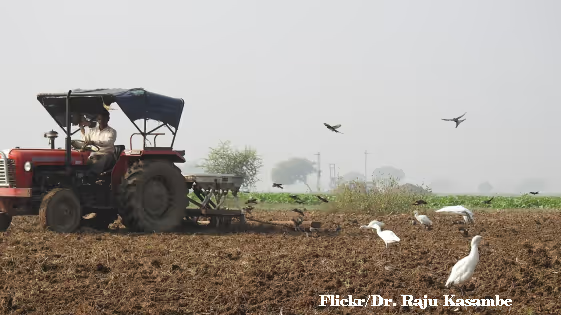
Internal migration and spatial reorganisation of agriculture
While migrants and their urban destinations are extensively studied, less is known about how their departure transforms the rural economies they leave behind. Analysing Indian data, this article shows that migrant-sending households near cities reduce farm size and investment rather than replacing workers with capital. On the other hand, non-migrant, remote households expand production in response to falling land prices and rising crop prices

Sowing sunshine: Can agriphotovoltaics offer a path to doubling farmers’ income?
In recent years, the contribution of agriculture and allied sectors to economic output has declined, with farmers’ real incomes virtually stagnating. This article demonstrates that new ideas such as agriphotovoltaics, which combine solar power with crop cultivation, have the potential to boost farmers’ incomes while also enhancing land-use efficiency and combating climate change.
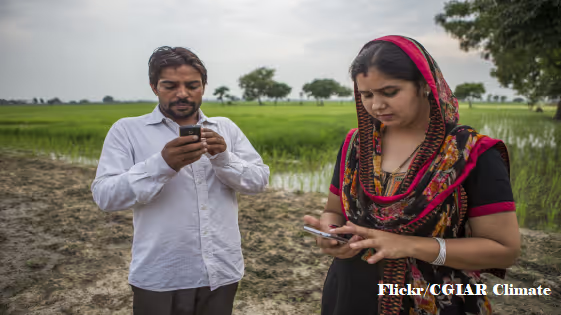
Information is power: ICT and agricultural productivity
One reason for low agricultural productivity in developing countries is that farmers lack sufficient information or guidance in the use of modern agricultural methods. This article examines the impact of an Information and Communication Technology initiative in Bangladesh, involving call centres that enable farmers to consult experts regarding agricultural practices. It finds that, post intervention, villages with access to phone service experienced a 50% reduction in agricultural inefficiency at the plot level.
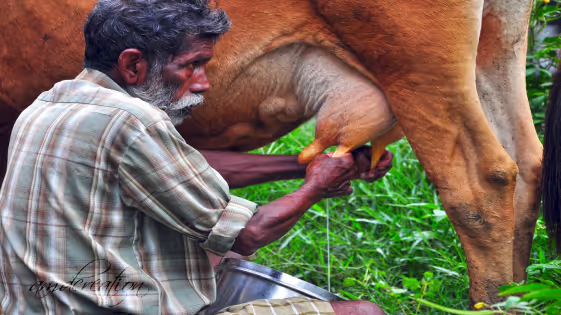
Impact of climate change on smallholder dairy farmers in India
A considerable number of agricultural households in India engage in livestock rearing and milk production to supplement their income and improve household nutrition. This article examines how global warming impacts smallholder dairy farmers, particularly through a decline in milk yields. It finds a significant negative impact of higher maximum or minimum temperatures on milk yield, with the highest impact for the range above 350C.
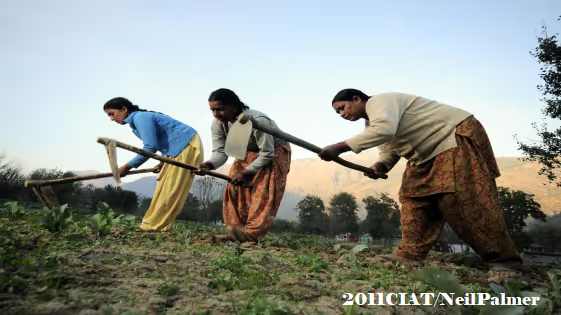
The agricultural productivity gap: Informality matters
There are various explanations in the literature for the observed productivity gap between agriculture and other sectors, in developing countries. Using Indian data, this article questions the standard view of the two-sector productivity gap. It shows that while the productivity gap between the farm sector and informal non-farm sector is negligible, a worker in the formal non-farm sector is 3-4 times more productive than a worker in the farm sector.
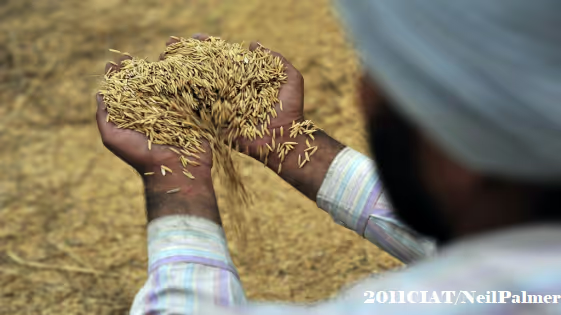
100 million tonnes of cereals are missing… every year
In an earlier I4I post, Drèze and Oldiges drew attention to India’s ‘cereal gap’ – a large difference between net availability of cereals and household consumption. In this post, they use recently released consumption survey data, and find that the gap is more than twice as large as their earlier estimate of 45 million tonnes for 2022-23. They discuss the possible reasons for this yawning gap.

The ‘cereal gap’: Looming issues in India’s foodgrain policy
Cereal production in India recently crossed 300 million tonnes for the first time. In this post, Drèze and Oldiges point out that a major gap has emerged between the net availability of cereals and household consumption – and it is unclear where the balance goes. With cereal production expected to increase further, they argue that there is a looming inconsistency between pricing policy and the realities of cereal demand.

Exploring urban perceptions around freshness of vegetables
With urban Indians increasingly seeking healthy lifestyles, the demand for fresh produce has escalated. In this note, Raj, Purushothaman and Sadashiva discuss findings from their survey in Bengaluru, exploring perceptions around the ‘freshness’ of produce among different consumer groups, and factors influencing consumer choices. They contend that a relationship of trust between producers and consumers can enable convergence of quality, nutrition and food safety in farm produce
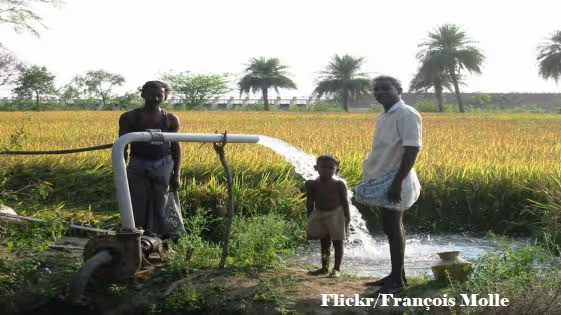
Watering the seeds of the rural economy: Evidence from groundwater irrigation in India
Over time, technological advancements accompanied with government energy subsidies have made groundwater the single largest source of irrigation in India. This study evaluates the impact of access to groundwater irrigation on the spatial and sectoral distribution of rural economic activity. It finds a significant improvement in agricultural production accompanied with modest consumption gains, as well as a substantial increase in population density. Access to groundwater also appears to provide additional employment opportunities for agricultural wage labour from surrounding non-irrigated villages.
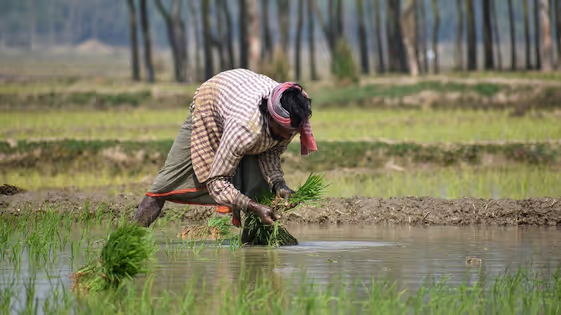
The role of caste in agricultural technology diffusion
Local social structures, such as the jati-caste system in India, can play an important role in the extent of diffusion of new and beneficial agricultural technologies. This article builds on an existing study of paddy farmers in Odisha and finds that village-level caste homogeneity supports the diffusion of a flood-resistant seed variety, while fragmentation deters it. De Janvry et al. note differences in diffusion rates based on the frequency of flooding, and the caste identity of the initial recipient.
Odisha Millets Mission: An update at the end of IYM 2023
In the sixth and final post of the e-Symposium on ‘Carrying forward the promise of International Year of Millets’, Banerjee and Kundu discuss the extent to which policies implemented as a part of the Odisha Millets Mission improved the production, processing and procurement of the crop. Building on previous work by the Bharat Rural Livelihoods Foundation, they also look at how the Mission was impacted by Covid-19 and other challenges including poor awareness and public perception. They highlight how Odisha's efforts, preceded the International Year of Millets 2023, and how its success can become a model for other Indian states to follow.

निवेश को पुनर्जीवित करने के लिए अगली पीढ़ी के आर्थिक सुधार क्यों महत्वपूर्ण हैं
कॉर्पोरेट जगत की लाभप्रदता और बैंकों की ऋण देने की क्षमता पिछले कुछ समय से बढ़ रही है, फिर भी कॉर्पोरेट निवेश सुस्त बना हुआ है। गुप्ता और सचदेवा इस लेख में तर्क देते हैं कि भविष्य की मांग में वृद्धि के सन्दर्भ में, भारतीय कंपनियों के निवेश स्तर उनके आकलन के अनुरूप हैं। भूमि अधिग्रहण को प्राथमिकता देते हुए अगली पीढ़ी के सुधारों को लागू करने से बड़ी भारतीय कंपनियाँ वैश्विक स्तर पर प्रतिस्पर्धा में अधिक खरी उतर सकती हैं। विकास में सुधार होने से निवेश को बढ़ावा मिलेगा।

Why next-generation economic reforms are crucial for reviving investment
While corporate profitability and banks' lending ability have been on the rise for some time, corporate investment remains sluggish. In this post, Gupta and Sachdeva argue that investment levels of India Inc. are consistent with their assessment of future demand growth. Unleashing the next generation of reform, with a priority given to land, can make (large) Indian firms more competitive globally – improving growth and spurring investment.
राज्यों की सब्सिडी का बढ़ता बोझ
भारत में राज्य सरकारों द्वारा नागरिकों को कल्याणकारी लाभ पहुँचाना अक्सर ‘सब्सिडी’ के रूप में जाना जाता है। इस लेख में वर्ष 2018-19 और 2022-23 के बीच की अवधि के लिए भारत के सात राज्यों के बजटीय डेटा का विश्लेषण करते हुए दर्शाया है कि किस प्रकार से प्रत्यक्ष सब्सिडी का वित्त पर दबाव पड़ रहा है और विकास व्यय प्रभावित हो रहा है। इसके अलावा, यह लेख इस बात के नए सबूत पेश करता है कि कैसे सरकारी खातों में सब्सिडी का वर्गीकरण उनके वास्तविक राजकोषीय प्रभाव को छुपाता है।
The growing burden of state subsidies
Delivery of welfare benefits to citizens by state governments in India often takes the form of subsidies. Analysing budgetary data from seven Indian states for the period between 2018-19 and 2022-23, this article documents how explicit subsidies are straining state finances and compromising development expenditure. Further, it presents new evidence on how subsidy categorisation in government accounts masks their true fiscal impact.
केन्द्रीय बजट 2025-26 : कई छोटे-छोटे उपाय लेकिन बड़े विचारों का अभाव
वित्त मंत्री ने हाल ही में वर्ष 2025-26 का केन्द्रीय बजट पेश किया। राजेश्वरी सेनगुप्ता इस लेख में बजट पर चर्चा करते हुए यह बताती हैं कि इस का सबसे महत्वपूर्ण पहलू कर राहत के माध्यम से मध्यम वर्ग के उपभोक्ताओं को लक्षित राजकोषीय प्रोत्साहन है। फिर भी, उनका तर्क है कि टिकाऊ, दीर्घकालिक विकास को बढ़ावा देने के लिए पर्याप्त संरचनात्मक सुधारों के अभाव में इस उपाय का प्रभाव सीमित और अल्पकालिक होने की संभावना है।
Union Budget 2025-26: Many small measures but lacks big ideas
The Finance Minister recently presented the Union Budget for 2025-26. In this post, Rajeswari Sengupta notes that the most significant aspect of this Budget is the fiscal stimulus aimed at middle-class consumers through tax relief. However, she argues that the impact of this measure is likely to be limited and short-lived in the absence of substantial structural reforms to drive sustainable, long-term growth.

High public debt in India: 9 stylised facts
The Covid-induced surge in public debt in India was unique compared to its own history, but also bigger and driven by different factors relative to the average emerging market economy. In this post, Mishra and Patel document nine stylised facts on the recent evolution of sovereign debt and fiscal deficits in India – examining issues such as the cost of high debt levels, whether there are silver linings, and the path ahead.

Uneven resilience: Why some emerging markets better navigate US monetary policy cycles
As the US dollar and monetary policy continue to have a significant impact on global financial dynamics, some emerging markets are observed to be more resilient than others to the policy cycles. Analysing data on a large sample of emerging markets, this article highlights the role of consistent strategy that strengthens macroeconomic fundamentals and institutional quality across all phases of the cycle.

शिक्षकों का विश्वास कैसे प्रेरणा और छात्रों के सीखने को आकार दे सकता है
शिक्षक का प्रयास छात्रों के सीखने के लिए महत्वपूर्ण है, जबकि साक्ष्य दर्शाते हैं कि शिक्षक स्वयं ऐसा नहीं मानते हैं। इस लेख में शिक्षकों पर लक्षित मनो-सामाजिक हस्तक्षेप से जुड़े एक यादृच्छिक प्रयोग से प्राप्त निष्कर्ष प्रस्तुत हैं। लेख में दर्शाया गया है कि हस्तक्षेप प्राप्त करने वाले शिक्षकों ने छात्रों की सीखने की क्षमता बढ़ाने तथा कक्षा के अंदर और बाहर अधिक प्रयास करने की अपनी क्षमता पर ज़्यादा विश्वास दिखाया, जिसके परिणामस्वरूप छात्रों का प्रदर्शन बेहतर हुआ।

पंजाब का आर्थिक विकास : सम्भावनाएँ और नीतियाँ
वर्ष 2000 तक उत्तर भारतीय राज्य पंजाब देश में प्रति-व्यक्ति आय रैंकिंग में शीर्ष पर था, उसके बाद से इसकी स्थिति लगातार गिरती गई है। इस लेख में लखविंदर सिंह, निर्विकार सिंह और प्रकाश सिंह ने पंजाब की अर्थव्यवस्था- कृषि, विनिर्माण व सेवाओं, नौकरियों व शिक्षा और सार्वजनिक वित्त व शासन की वर्तमान स्थिति के सन्दर्भ में तथा राज्य के सामने आने वाली चुनौतियों के कारणों पर चर्चा की है। इसके अलावा विकास और सक्षम नीतियों की सम्भावनाओं पर भी विचार किया गया है। यह आइडियाज़@आईपीएफ2024 श्रृंखला का चौथा और अंतिम लेख है।
Economic development of Punjab: Prospects and policies
While the north Indian state of Punjab topped per-capita income rankings within the country until year 2000, its position fell consistently thereafter. This article discusses the current state of Punjab’s economy – in terms of agriculture, manufacturing and services; jobs and education; and public finance and governance – and the reasons for the challenges faced by the state. Further, they consider prospects for growth and enabling policies.

Food, fuel, and facts: Distributional effects of global price shocks
The recent upsurge in global prices of essential commodities of food and fuel, warrants an analysis of the distributional ramifications, especially within developing economies. This article examines Indian household consumption and income data, and finds that on average, increases in these prices adversely affects consumption in the country. While rise in food prices unequivocally exacerbates consumption inequality, the effect of oil prices is more nuanced.
What will it take for the Indian economy to break out of the lower-middle-income bracket?
In 2007, India moved from the low-income to lower-middle-income category, as per the World Bank’s classification of countries by income. With clear aspirations to graduate into the higher brackets of income, what will it take for India to make it? Speaking at the launch event of Ashoka’s University’s Isaac Centre for Public Policy (ISPP), experts including Rakesh Mohan (former Governor of the Reserve Bank of India), Anup Wadhawan (former officer of the Indian Administrative Service) and Prachi Mishra (Chief of the Systemic Issues Division, International Monetary Fund) discuss ideas for achieving faster structural transformation of the economy, strengthening State capacity, catching the bus for labour-intensive manufacturing, empowering urban local government, and consolidating public debt.

Does rural electrification cause economic development?
The last unelectrified Indian village is now connected to the grid. Given the large investments required for these infrastructure projects, value-for-money is an important consideration. Examining the impact of the Rajiv Gandhi Rural Electrification Programme, which expanded electricity access in 400,000 villages during 2005-2011, this article shows that the economic benefits of the intervention likely do not outweigh the costs below a certain population threshold.
Interim Budget 2024-25: Are we on track to achieve healthcare for all?
The National Health Policy, 2017 set a target of increasing India’s health expenditure to 2.5% of its gross domestic product by 2025. In this post, Sayamsiddha decodes the recently presented Interim Budget, with a spotlight on outlays for health programmes. In her view, the government should complement their current focus on insurance models and private sector role with adequate and effective public provisioning of healthcare.
Budget 2024-25: A countercyclical approach to fiscal policy
Keynes propounded that fiscal policy should be countercyclical in nature – expansionary during recession and contractionary during periods of boom. In this post, Aakanksha Shrawan analyses India’s Interim Union Budget for 2024-25, as well as trends in the discretionary spending component of government’s fiscal policy in recent years. She concludes that India seems to be on track towards sound debt management and a higher degree of countercyclicality in fiscal management.
Growth, well-being and distribution in the last decade – II
In the first part of this two-part series, Balakrishnan and Parameswaran presented an assessment of the performance of the Indian economy on macroeconomic indicators. In this post, they focus on well-being indicators – including those pertaining to health, sanitation and housing, poverty, and food security – followed by a discussion of the likely change that may have occurred in the distribution of income.
Growth, well-being and distribution in India in the last decade – I
As India gets ready to vote in the general election, Balakrishnan and Parameswaran present a comprehensive, evidence-based review of the performance of the Indian economy over the past decade. In the first of a two-part series, they focus on macroeconomic indicators including growth, investment, unemployment, inflation, manufacturing performance, and tax revenues. In part II, they analyse indicators of well-being and investigate how the income distribution may have changed in this time.

Forecasting long-run Indian GDP using high-dimensional big data
This article describes an attempt to forecast of India's long-run GDP, which uses using quarterly data on macroeconomic variables from 1996-2021, and a dynamic factor model to establish long-run trends. It explains how the model controls for exogenous shocks, including rising temperatures and oil prices, as well as changes in monetary and fiscal policies. It suggests that growth will depend either on the implementation of strategies to deal with these exogenous shocks, or on public investment and public service delivery.
Effect of food prices on inflation: Is monetary policy an effective tool?
With rising inflation becoming a global concern, Balakrishnan and Parameswaran discuss some explanations for the high inflation in India. They find that inflation was driven by a domestic rise in food prices rather than by imports. They also dismantle the claim that inflation is being driven by oligopolistic corporate pricing, before evaluating the efficacy of raising repo rates in controlling inflation. They conclude that inflation cannot be managed by monetary policy alone and must include supply-side management of agricultural prices.

India’s debt dilemma
In the fifth article in the Ideas@IPF2023 series, Eichengreen, Gupta and Ahmed reveal how high levels of debt in India limit the resources available for other priorities. At the same time, they predict that there is no immediate crisis of debt sustainability, as institutional factors limit rollover risk, and interest rates have not risen with additional debt issuance. However, financial stability and sustainability risks may arise in the future, and fiscal consolidation would require lower primary deficits achieved through tax revenue generation and privatisation.

Priorities for the G20 Finance Track
Considering the macroeconomic challenges faced by emerging markets, Eichengreen and Gupta outline a few key aspects of the financial agenda that G20 members could address. They discuss seven areas of improvement, including broadening central bank currency swaps, easing access credit lines, reallocating resources to low-income countries, improving the measures used and transparency of credit rating agencies, taking climate-risk into account when lending to vulnerable countries, creating hedging instruments to address currency mismatch, and establishing an effective mechanism for restructuring debts.

Budget 2023-24: Fiscally conservative but lacking economic strategy
The Indian economy’s recovery from the Covid-19 pandemic has not been all good news: employment creation has stagnated, and government capex allocation has not been successful in generating private sector investment. Against this backdrop, Rajeswari Sengupta discusses two missed opportunities for the Union Budget – announcing strong growth-oriented policies, which could help meet the medium-term fiscal deficit target to increase macroeconomic stability; and boosting India's trade competitiveness by reducing import tariffs and focussing on exports.
Pre-election Budget 2023-24: Short on extravagance, long on substance
The Union Budget presented earlier this month was the last full-year budget before next year's general elections. Rajat Kathuria looks back to India's economic performance in 2014 and suggests that this year’s budget comes against a similar backdrop, with India once again seeing healthy growth projections. He touches upon the budget's focus on macroeconomic fundamentals, including rationalizing untargeted subsidies and replacing them with capex, and lauds as a step towards ensuring effective fiscal consolidation and increased investment in public infrastructure.
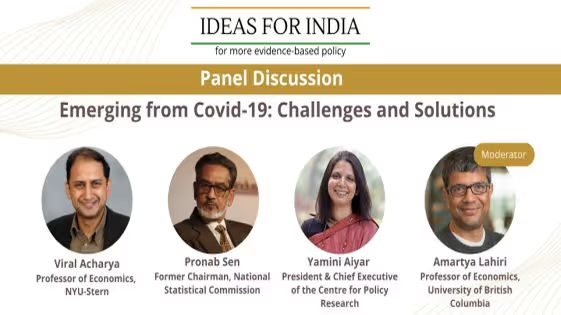
I4I@10 | Emerging from Covid-19: Challenges and solutions
As India emerges from the Covid-19 pandemic, economists will have to rethink how they understand the Indian economy in context of global volatilities. In this panel, moderated by Amartya Lahiri, Viral Acharya, Yamini Aiyar and Pronab Sen discuss both the macroeconomic implications of growth, infrastructure and public policy, and the microeconomic concerns of whether we are creating enough good jobs, ensuring welfare, and reducing income inequality.
Budget 2023-24: Some good and no harm
Following the budget speech, Deepak Mishra weighs in on the extent to which the three goals of higher growth, better distribution, and stability were met. He discusses the Finance Minister’s success in appeasing large sections of the population through better targeting of subsidies and deft tinkering of tax policy. He concedes that although this year’s budget is a step in the right direction, it does not aim for bold structural reforms or address issues such as stagnant trade performance.

Budget 2023-24: A wish list of priorities
Ahead of the release of the Union Budget for FY2023-24, Chetan Subramanian reveals his expectations about the government’s key priorities and how they could balance multiple objectives. He discusses the past year's focus on capital expenditure, which is likely to continue. He also highlights the need to focus on incentivising affordable housing; make appropriate allocations to states; and ensure employment growth to boost consumption. Expenditure on rural infrastructure and healthcare are also expected to be priorities, with this budget focussing on continuity.

Little evidence for 'too much finance'
The current consensus that the finance-growth nexus is more complex than previously assumed has led to concerns about ‘too much finance’. Using a large panel dataset over six decades, this article finds some evidence of a detrimental effect of ‘too much finance’, but not for highly financially developed countries or for the long-term growth trajectories of countries with intermediate levels of financial development.
An illusory Phillips curve: Is now the right time for a rate hike?
The Phillips curve represents an inverse relationship between inflation and unemployment. In this post, Parantap Basu argues that the ‘illusory’ Phillips curve in western industrial nations is driven by a withdrawal from the workforce rather than a demand boom. He contends that now might not be the ideal time for central banks across the world to hike rates, as this has the potential to worsen existing supply-side issues and stagflation.

आरबीआई के कार्य (और वक्तव्य) कैसे वित्तीय बाजारों को प्रभावित करते हैं
विकसित देशों में उनके केंद्रीय बैंक द्वारा घोषित नीतिगत दरों में अप्रत्याशित परिवर्तन के चलते वित्तीय बाजारों को लगने वाले मौद्रिक झटके के प्रति पर्याप्त प्रतिक्रिया दर्शाने के लिए जाना जाता है। यह लेख भारतीय रिज़र्व बैंक (आरबीआई) के मौद्रिक नीति संबंधी वक्तव्यों और 2003-2020 के दौरान ओवरनाइट इंडेक्स स्वैप दरों में दैनिक परिवर्तनों के आंकड़ों के विश्लेषण के आधार पर दर्शाता है कि भारत में भी यही स्थिति है।
बजट 2022-23: सफलताएं एवं चूक
वर्ष 2022-23 के बजट की सफलताएं एवं चूक को रेखांकित करते हुए, राजेश्वरी सेनगुप्ता यह तर्क देती हैं कि सरकार द्वारा पूंजीगत व्यय को बढ़ावा देना एक सही दिशा में कदम प्रतीत होता है, जबकि संरक्षणवाद पर निरंतर ध्यान केंद्रित करने के पीछे का तर्क संदिग्ध है। उनके विचार में, बजट में एक सुसंगत विकास रणनीति का अभाव है, जो कि वर्तमान में विशेष रूप से सरकारी ऋण के उच्च स्तर को देखते हुए आवश्यक थी।
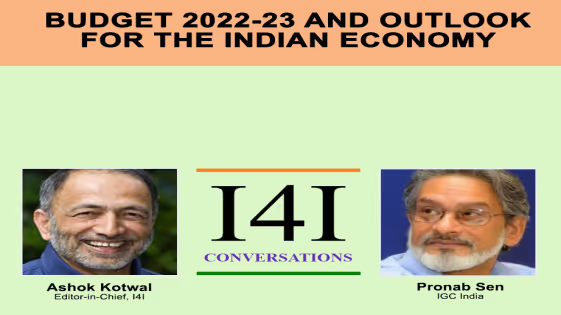
Budget 2022-23 and outlook for the Indian economy
Several commentators have lauded the recently presented Budget 2022-23 as a ‘growth budget’, on account of the large allocations made for capital expenditure on public infrastructure. On the other hand, concerns have been expressed about the Budget’s potential to create jobs for the masses, allay inflation worries, and strengthen social sectors such as health and education. Should we be optimistic or cautious? In this edition of I4I Conversations, Ashok Kotwal (Editor-in-Chief, Ideas for India) speaks with Pronab Sen (IGC India) to dissect the various policies and proposals in the Budget, and deliberate on the outlook for the Indian Economy. Dr Sen explains that the rhetoric around the Budget is mixing up accounting and economic classifications in the context of the announcement of 35% increase in public capex, why we cannot think of infrastructure as a homogenous activity in terms of the intensity of employment generation, how the support for MSMEs may be cherry-picking the units...
Budget 2022-23 and outlook for the Indian economy
Several commentators have lauded the recently presented Budget 2022-23 as a ‘growth budget’, on account of the large allocations made for capital expenditure on public infrastructure. On the other hand, concerns have been expressed about the Budget’s potential to create jobs for the masses, allay inflation worries, and strengthen social sectors such as health and education. Should we be optimistic or cautious? In this edition of I4I Conversations, Ashok Kotwal (Editor-in-Chief, Ideas for India) speaks with Pronab Sen (IGC India) to dissect the various policies and proposals in the Budget, and deliberate on the outlook for the Indian Economy. Dr Sen explains that the rhetoric around the Budget is mixing up accounting and economic classifications in the context of the announcement of 35% increase in public capex, why we cannot think of infrastructure as a homogenous activity in terms of the intensity of employment generation, how the support for MSMEs may be cherry-picking the units ...
बजट 2022-23: क्या सार्वजनिक निवेश पर आधारित विकास रणनीति वांछनीय और विश्वसनीय है?
सरकार ने सकल घरेलू उत्पाद के अनुपात के रूप में सार्वजनिक निवेश को बढ़ाने की इच्छा रखते हुए वर्ष 2022-23 के बजट में आर्थिक विकास को बढ़ावा देने की अपनी प्रतिबद्धता को दोहराया है। इस संदर्भ में, आर. नागराज भारत के वर्तमान नीति अभिविन्यास और उद्योग एवं बुनियादी अवसरंचना में हाल में किये गए निवेश के परिणामों की जांच करते हैं। वे तर्क देते हैं कि उद्योग पर बजट के फोकस में यथार्थवादी प्रस्तावों की कमी है जिससे तेजी से गिरती उत्पादन वृद्धि दर को उलटा जा सके।
Budget 2022-23: Hits and misses
Outlining the hits and misses of the Budget 2022-23, Rajeswari Sengupta contends that the capital expenditure push by the government seems to be a step in the right direction, while the rationale behind the continued focus on protectionism is questionable. In her view, the Budget appeared to lack a coherent growth strategy, which was the need of the hour – especially given the high levels of government debt.
India’s asset monetisation plan
In August 2021, Government of India announced an asset monetisation plan wherein existing public assets worth Rs. 6 trillion would be monetised by leasing them out to private operators for fixed terms, and the proceeds would be used for new infrastructure investment. In this post, Amartya Lahiri examines the revenue potential of this plan, and whether it is likely to enhance the efficiency of the economy.
Assessing the credibility of sub-national budgets in India
The Covid-19 crisis has put immense pressure on the finances of Indian states. Fiscal consolidation in the post-pandemic period will depend on growth revival, increased fund flows, and efficient budget management processes. In this context, Jena and Singh assess the credibility of sub-national budgets during the period 2012-2019, in terms of planned and actual revenues and expenditures – both at the aggregate and individual state levels.
Understanding the dynamics of the rupee-dollar exchange rate
Since 1993, the Indian rupee (INR) has officially been following a market-determined exchange rate – price is determined by demand for and supply of foreign exchange – with intervention by the Reserve Bank of India from time-to-time. Analysing data from 2000-2020, Patnaik and Sengupta examine whether INR actually followed multiple exchange rate regimes, and if so, how the Central Bank managed exchange market pressure across these regimes.
Foreign currency corporate borrowing: Risks and policy responses
Non-financial corporations in emerging market economies increasingly rely on foreign currency debt,and are exposed to currency depreciations and sudden stops in capital flows. Analysing data on 1,786 Indian firms during 2004-2019, this article shows that favourable global funding conditions are a much more significant determinant of foreign currency borrowing than firm-level factors. Further, it suggests that RBI’s macroprudential policies have been effectively mitigating these risks.
How open is India's capital account?
Although India began opening up its capital account in the mid-1990s, the approach towards financial liberalisation has been cautious. Tracing changes in the de-facto openness of the country’s capital account over time, Aggarwal et al. contend that greater financial integration with global markets along with monetary policy autonomy to successfully pursue an inflation target, reduces the policy space available to the RBI to stabilise currency fluctuations.

Goods and services tax: Estimating optimal rates
Introduced in India in 2017, a key feature of the goods and services tax (GST) system is that the tax rate for a particular commodity is uniform across the country. Based on a counterfactual framework that incorporates regional diversity in prices and spending to estimate optimal commodity tax rates, this article argues for a departure from this universal GST practice in India.

India’s service-led economic growth
Structural transformation that involves a shift from agriculture straight to services, is a cause of concern to many scholars as an expanding service sector might be a pale substitute to technical progress in manufacturing as the main engine of growth. Analysing microdata from India for 1987-2011, this article shows that lack of pronounced industrialisation does not mean that growth is bound to fall. However, India’s service-led growth is strikingly pro-rich.
Business sentiments and labour markets
The Covid-19 pandemic and associated lockdowns have had a significant adverse impact on jobs and livelihoods. Using 2006-2021 data from a survey on business sentiments, this article examines fluctuations in firms’ hiring of temporary/casual and permanent workers across three major economic events – the Global Financial Crisis, demonetisation, and the Covid-19 crisis. It shows that firms use temporary workers to adjust to changes in the demand of their products in response to macroeconomic uncertainty – increasing vulnerability among workers.
West Bengal’s economic performance relative to India over the last three decades
Against the backdrop of the ongoing elections in West Bengal, Maitreesh Ghatak examines how the state’s economic performance compares with that of the country as a whole, over the past three decades. He highlights that despite West Bengal’s lack of economic dynamism, its agricultural growth rate as well as the growth rate of consumption expenditure in its rural areas, that house 72% of the population, has been higher than the national average.
From abundant global liquidity to selective lending: How corporate finance has changed
Global credit has experienced significant changes in the last two decades. Analysing data on 1,160 Indian firms for the 2000-2017 period, this article shows that in the period following the global financial crisis, abundant global credit allowed firms to take advantage of relatively cheap financing abroad. However, since 2013, lenders are differentiating across borrowers and firms’ access to external finance has declined, with an associated reduction in their real investment activities.
Growth in India: Narratives and evidence
There are various narratives on the trajectory of India’s economic growth, and its key determining factors. This article analyses the recently released GDP data series at 2011-12 prices, extending back to 1950, to establish India’s actual growth trajectory. It also provides a theoretical explanation for the growth, and brings perspective to the role of the economic policies pursued at different stages of India’s economic history post-Independence.
De-globalisation driven by global crises
Concerns associated with the Covid-19 pandemic have led to new rationales of protectionism, with renewed emphasis on domestic production and sourcing. In this post, Assaf Razin compares the current economic crisis brought on by the pandemic to previous major economic crises, and examines what this could mean for the future of various aspects of globalisation.

A world of no lockdowns: The case of South Korea and Sweden
While most of the world was under lockdown during the Covid-19 pandemic of 2020, two countries, Sweden and South Korea, decided to keep their economies open. In this post, Bhatia et al. use a metric of six categories to compare the measures taken by the two countries in their respective economies last year.

Of twists and turns: Monetary policy and ‘term premium’
As India’s economic growth slowed down in recent years, the reliance on monetary policy to stimulate growth increased significantly – especially during the pandemic. Analysing data from 2018-2020, Rajeswari Sengupta and Harsh Vardhan show that conventional and unconventional monetary policy actions of the RBI have had only a modest impact on the ‘term premium’ – an indicator of the market’s expectations of future interest rates. This points towards the limits of monetary policy actions alone as economic stimulus during a crisis.
बजट 2021-22: राजनीतिक अर्थव्यवस्था के परिप्रेक्ष्य में
वर्ष 2021-22 के केंद्रीय बजट को एक राजनीतिक अर्थव्यवस्था के दृष्टिकोण से जांचते हुए यामिनी अय्यर कहती हैं कि भारत सरकार द्वारा चुने गए नीतिगत विकल्प यह दर्शाते हैं कि सरकार का झुकाव वित्तीय संसाधनों को राज्य सरकारों को हस्तांतरित करने की बजाय उन्हें केंद्रीकरण की ओर तथा कल्याणकारी नीतियों से दूर हटने की ओर है।
बजट 2021-22: लिंग आधारित नजरिए से
2021-22 के केंद्रीय बजट को लिंग आधारित नजरिए से परखते हुए नलिनी गुलाटी ने इस बात पर चर्चा की है कि इस बजट में भारतीय अर्थव्यवस्था में महिलाओं के लिए विशेष रूप से डिजिटल पुश, सार्वजनिक परिवहन, अन्य सार्वजनिक सेवाओं, स्वास्थ्य क्षेत्र के संबंध में, और कपड़ा उद्योग को बढ़ावा देने के लिए क्या प्रावधान किए गए हैं और क्या नहीं।
बजट 2021-22: एक औसत बजट
वर्ष 2021-22 के केंद्रीय बजट का आकलन करते हुए भास्कर दत्ता यह तर्क देते हैं कि भले इस बजट में कई सकारात्मक पहलू भी हैं परंतु यह कुल मिलाकर निराशाजनक है क्योंकि इसमें गरीबों की जरूरतों को पूरा करने पर ध्यान नहीं दिया गया है।
Inflation targeting in India: An interim assessment
Inflation targeting in India is a work-in-progress, with a five-year review due by March 2021. This article presents an interim assessment suggesting that significant progress has already been achieved to date: this is evident in the reduced volatility of a range of inflation-related outcomes and in the stronger anchoring of inflation expectations, which appears to have enhanced the ability of the RBI to respond to the exceptional Covid-19 shock.

Budget 2021-22: Does it address structural issues?
Highlighting some of the key features of the 2021-22 Union Budget, Sarthak Agarwal contends that although this Budget was presented in an exceptionally difficult period for the Indian economy, policymakers have remained cognisant of the structural challenges facing the country.
Budget 2021-22: A passing grade
Assessing the 2021-22 Union Budget, Bhaskar Dutta argues that while there are several positive features, the overall thrust is disappointing because it does not address the needs of the poor.
Budget 2021-22: A macroeconomic overview
Providing a macroeconomic overview of the Union Budget 2021-22, Niranjan Rajadhyaksha and Sharmadha Srinivasan contend that it is based on realistic assumptions of nominal GDP growth, is reasonably aimed at fiscal expansion rather than premature austerity, makes fiscal policy more transparent, and has a welcome focus on capital spending. However, they believe that it also sets the stage for higher public debt ratios that will complicate the management of the economy.

Budget 2021-22: Over-reliance on infrastructure investment to spur growth?
Commenting on the strong infrastructure push in the 2021-22 Budget, Sarmistha Pal argues that an emphasis on investment in infrastructure may not necessarily bring India out of the current economic recession – with the Budget’s negligence of the education sector and insufficient health expenditure, making matters worse.
Budget 2021-22: Missed opportunity for increasing tax collection
Examining income tax announcements of Budget 2021-22 with a broader perspective, Gurbachan Singh highlights the need to increase tax collection in India in a gradual and careful but sustained manner. In his view, while checking tax evasion is important in this context, it is also important to ensure that the law requires people to pay taxes in the first place.
Budget 2021-22: A gender lens
Examining the 2021-22 union budget through a gender lens, Nalini Gulati discusses what the budget does – and does not do – for women in the Indian economy, particularly with respect to the digital push, public transport, other public services, health sector, and the boost to the textile industry.

An assessment of policy performance under the current regime
Commenting on the recent policy paper by Subramanian-Felman, Maitreesh Ghatak discusses why – looking at the same numbers – he would tend to be less generous in his grades for the performance of policy initiatives under the current regime. Regarding the Covid-19 shock, Ghatak contends that to the extent there is a policy trade-off between lives and livelihoods, one wonders why India does not score highly on either – whether it is “hardware problems” or “software” glitches in policy design and implementation.
Fiscal rules during the Covid-19 pandemic
Several countries have amended their fiscal rules to provide for additional public spending, in order to revive their economies that have been adversely hit by the pandemic. This post examines the fiscal strategies to deal with the Covid-19 shock of a set of countries that belong to the G20 group or the middle-income EMEs, and are broadly similarly placed as India.
The Indian economy and policymaking: Towards ‘openness’
Providing his perspective on the recent policy paper by Subramanian and Felman, Nirvikar Singh contends that more emphasis is needed on financial reforms and innovation, addressing India’s export slowdown, and enhancing digital connectivity. In his view, greater transparency and openness to criticism will lead to better policymaking.
State of the Indian economy: Diagnosis and recommendations
Arvind Subramanian (India’s former Chief Economic Adviser) and Josh Felman (former IMF Resident Representative to India) have brought out a new policy paper, offering a diagnosis of the Indian economy and recommendations for the forthcoming budget. In this post, Ashok Kotwal (I4I Editor-in-Chief) highlights key takeaways from their paper. Over the next few days, I4I will present a series of comments by eminent economists on this analysis.
“New Welfarism”: Old wine, new bottles?
Commenting on the recent policy paper by Subramanian and Felman, R Nagaraj contends that the authors imaginative re-branding of the erstwhile ‘populist schemes’ as “New Welfarism of the Right” is an endorsement of the current government policies, without contending with burgeoning evidence on their shortcomings. Nagaraj further argues that what the authors call ‘software’ problems of policymaking are essentially matters of governance, and the issue of crony capitalism needs to be addressed.
Evaluating inflation targeting in India
In March 2021, India will complete five years since the adoption of the inflation targeting framework by the government and RBI. Analysing inflation data since 1996 using alternative models, this article argues that the ‘output gap model’ that underlies the current regime is not the best descriptor of inflation trends in India.
Inflation targeting and capital flows
Current law in India mandates a review of the target inflation rate by 31 March 2021 for a five-year period. Several critics have called for abandoning the flexible inflation targeting regime altogether. In this post, Gurbachan Singh shows that flexible inflation targeting can accentuate the problem of sudden capital flows, and that the current monetary policy framework can be substantially improved by including two ‘new’ policy instruments that can be used by the Ministry of Finance rather than the RBI,
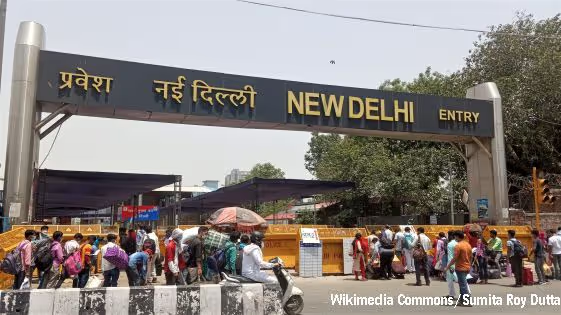
कोविड-19 लॉकडाउन और प्रवासी श्रमिक: बिहार एवं झारखंड के व्यावसायिक प्रशिक्षुओं का सर्वेक्षण
भारत में हुए राष्ट्रव्यापी लॉकडाउन के कारण विशेष रूप से प्रवासी मजदूर बुरी तरह प्रभावित हुए। जब यात्रा प्रतिबंध हटा दिए गए तब 1.1 करोड़ अंतरराज्यीय प्रवासी अपने घर लौट गए। इस आलेख में चक्रवर्ती एवं अन्य बिहार और झारखंड के युवाओं (‘दीनदयाल उपाध्याय ग्रामीण कौशल्य योजना’ के पूर्व प्रशिक्षु) के साथ किए गए फोन सर्वेक्षण से प्राप्त प्रमुख निष्कर्षो को प्रस्तुत करते हैं। इस सर्वेक्षण के जरिए अंतरराज्यीय प्रवासी श्रमिकों पर लॉकडाउन के प्रभाव का आकलन करने और भविष्य में उनके द्वारा फिर से प्रवासन की उनकी इच्छा का अनुमान लगाया गया है।
Covid-19 crisis: Response should not undermine institutions
The unprecedented economic crisis triggered by the Covid-19 pandemic has resulted in calls for drastic actions on part of the government and RBI. In this post, Sengupta and Vardhan content that these actions often entail – explicitly or indirectly – undermining or even overriding established frameworks and institutions of policymaking. In their view, this approach is ineffective and unsustainable, and can be dangerous for India’s medium- to long-term growth prospects.
Aatmanirbhar Bharat: Foreign trade, capital flows, and India’s growth
The Atmanirbhar Bharat (self-reliant India) policy was announced by the central government, along with the economic package, as a response to the crisis triggered by the Covid-19 pandemic. In this post, Partha Sen discusses the role of foreign trade and capital flows in India’s growth performance. He contends that India can create foreign demand for its products by putting a lid on capital flows and following a suitable exchange rate policy
Covid-19 lockdown and migrant workers: Survey of vocational trainees from Bihar and Jharkhand
The nationwide lockdown in India hit migrant workers particularly hard and once travel restrictions were lifted, 11 million interstate migrants returned home. In this note, the authors present key findings from a phone survey of youth from Bihar and Jharkhand who were previous trainees of ‘Deen Dayal Upadhyay Grameen Kaushalya Yojana’. The survey seeks to assess the impact of the lockdown on interstate migrant workers, and to gauge their willingness to migrate again in the future.
A ten-point programme for economic recovery
The Indian economy has been experiencing a slowdown in growth of GDP in general and investment in particular, with the Covid-19 crisis being the last (big) straw. In this post, Gurbachan Singh presents an internally consistent 10-point programme for economic recovery, which includes a novel package of well-targeted policies for macroeconomic and financial stability, and self-sustaining growth.
‘मेक इन इंडिया’ में अवरोध
वर्तमान सरकार ने, सीमित सफलता के साथ, वर्ल्ड बैंक के डूइंग बिजनेस संकेतकों में भारत की रैंकिंग को सुधारने का प्रयास किया है। यह लेख बताता है कि राज्य और कारोबारों के बीच 'सौदे' - नियमों के बजाय - राज्य-व्यापार संबंध का विवरण प्रस्तुत करते हैं। कमजोर गुणवत्ता शासन वाले भारतीय राज्यों में लाइसेंस प्राप्त करने की गति के मामले में 'अच्छे सौदों’ का अनुपात अधिक है। इसी प्रकार आवश्यक नहीं है कि कारोबार नियमों को आसान बनाने से उच्च उत्पादकता प्राप्त हो।

Which jobs were ‘lost’ during India’s Covid-19 lockdowns? Evidence from online vacancy postings
Covid-19 and associated lockdowns across countries have had a devastating impact on the global economy and labour markets. In India, recent data show a historic economic contraction by 23.9% over the last quarter. Using real-time data from a large online job portal, this article finds that hiring activity (in mostly urban, formal-sector jobs) declined dramatically due to the national lockdown and these job losses affected less-educated, young, and female job seekers more than others.
Covid-19: Assessing fiscal position of government in first quarter of 2020-21
In this post, Pandey and Raju analyse the trends in the revenue, expenditure, and borrowings of the Government of India in the first quarter of 2020-21, based on data released by the Controller General of Accounts. They argue that the contraction in revenues in the Covid-struck economy has constrained the government’s capacity to effectively address the operational needs arising from the pandemic, and that greater borrowing by the government may be required in the coming months to offset a rise in expenditure.
Subsidies, merit goods, and fiscal space - II
In Part I of this two-part series, the authors presented their estimates of total budget subsidies, and their merit and non-merit components. In this part, they discuss the relationship between subsidies and the delivery of specific public services, the comparative efficiency of subsidy use by different states, and the scope for rationalisation of subsidies as a part of deep fiscal reforms, in order to create fiscal space for reviving inclusive growth following the Covid-19 lockdown shock.
What would make India’s growth sustainable?
Much of the discussion on the economic slowdown in India in recent years – as well as on the government’s measures to tackle the present economic crisis due to the Covid-19 lockdown – is focused on the supply side. In this post, Ghatak, Kotwal, and Ramaswami emphasise the demand channel, and argue that this is the fate of any growth episode that is not inclusive.
Covid-19: Assessing vulnerabilities faced by microenterprises
In India, where microenterprises form a crucial foundation for livelihoods and employment, the effects of the Covid-19 lockdown can potentially be significant. Based on the first wave of a dynamic, multidimensional survey of 1,461 microenterprises across the country, Buteau and Chandrasekar show that, while most business owners surveyed have displayed remarkable levels of confidence in the possibility of business recovery after Covid-19, more than half of them do not have a strategy to chart their recovery plan and are dipping into their savings to stay afloat.

Covid-19: Recession in India, and policy lessons from other countries
Given the prevailing economic situation in India and following the past experience of several developed countries, there is a clamour for accepting much larger fiscal deficits, and adopting unconventional monetary policy. In this post, Gurbachan Singh contends that these are relatively soft and not very effective policy options for sustainable recovery and growth. He presents a different diagnosis, and accordingly, an alternative policy prescription.

Covid-19: Conditions on state borrowing need a rethink
States have been in the firing line in the battle to save lives and livelihoods from the impact of Covid-19. However, the loss of economic activity following the nationwide lockdown, has wreaked havoc on states’ finances. While the Centre has allowed states to raise their fiscal deficits from 3% to 5% of gross state domestic product, riders have been imposed in the form of implementation of reforms. In this post, Mayank Jain and D Priyadarshini examine whether these conditions will facilitate or hinder the effective functioning of states in the current scenario.

Does easing controls on foreign borrowing boost firm performance?
The literature shows that rigid capital-control policies adversely influence international trade, but overlooks the relationships among access to external financing, firm-level productivity, and exporting performance. Using a dataset of 11,612 Indian firms over 1988-2014, this article finds a significant effect of capital-account liberalisation through an export-oriented policy initiative, on firms' productivity and exporting activity. The effect is stronger for financially vulnerable firms, as measured by high debt and low liquidity.
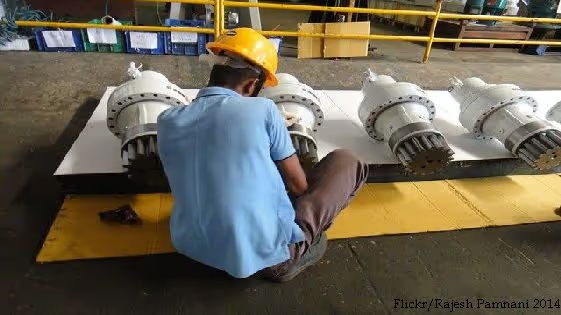
Unmaking ‘Make in India’
The current government has attempted to improve India’s ranking in the World Bank’s Doing Business Indicators, but with limited success. This article shows that ‘deals’ between the State and businesses, rather than the rules laid out by the State, characterise the State–business relationship. Indian states with weaker quality of governance provide higher proportions of ‘good deals’ in terms of the speed of obtaining licences, such that easing business regulations does not necessarily lead to higher productivity

कोविड-19 संकट और छोटे व्यवसायों की स्थिति: एक प्राथमिक सर्वेक्षण से निष्कर्ष
हाल के अपने बयान में, सूक्ष्म, लघु और मध्यम उद्यम मंत्रालय के केंद्रीय मंत्री ने स्वीकार किया कि यह क्षेत्र "अस्तित्व के लिए जूझ रहा है"। इस आलेख में, शांतनु खन्ना और उदयन राठौर ने, मई 2020 में, 360 से अधिक उद्यमों में किए गए अपने सर्वेक्षण के प्रमुख निष्कर्षों का उल्लेख किया है जिनमें वे इस क्षेत्र पर कोविड संकट के प्रभाव का आकलन करने पर ध्यान केंद्रित करते हैं। प्रारंभिक निष्कर्ष से ज्ञात होता है कि यह क्षेत्र अत्यधिक संकट के दौर से गुजर रहा है जिसमें सूक्ष्म उद्यमों की स्थिति सबसे खराब है।
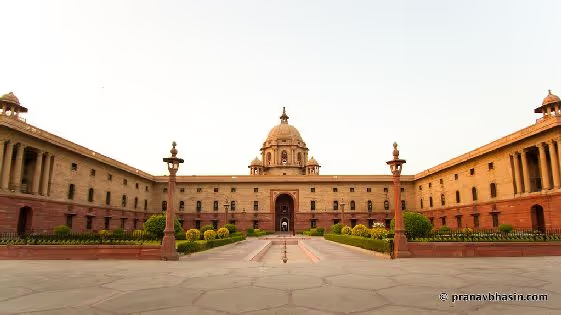
Atmanirbhar Bharat Abhiyan: Putting the cart before the horse
In an attempt to tackle the economic crisis triggered by the Covid-19 pandemic, Government of India announced a Rs. 20 lakh crore Atmanirbhar Bharat Abhiyan financial package, equivalent to 10% of India’s GDP. In this post, Dey and Kundu present a detailed analysis of the package and contend that the actual stimulus component is only about 1.27% of GDP. They propose a modified package equivalent to 5% of GDP, with a focus on stimulating demand in the economy.
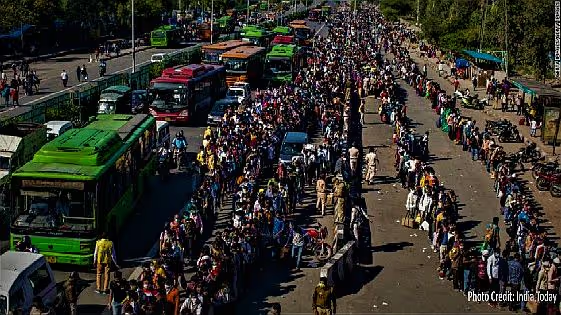
कोविड-19: विपरीत पलायन से उत्पन्न होने वाले जोखिम को कम करना
भारत में कोविड-19 लॉकडाउन से सबसे बुरी तरह प्रभावित वर्गों में से एक वर्ग प्रवासी मजदूरों का है, जो बेरोजगार, धनहीन और बेघर हो गये हैं। हालांकि कई राज्य सरकारों द्वारा प्रवासी मजदूरों को वापस लाने और उनके सुरक्षित आवागमन को सुविधाजनक बनाने के लिए प्रयास किए जा रहे हैं, लेकिन यह ‘विपरीत पलायन’ राज्यों के भीतरी क्षेत्रों में संक्रमण के फैलने का खतरा बढ़ाता है। इस आलेख में, पारिख, गुप्ता, और सुभम इस बात पर चर्चा करते हैं कि कैसे राज्य इस शीघ्र संभावित जोखिम को कम कर सकते हैं।
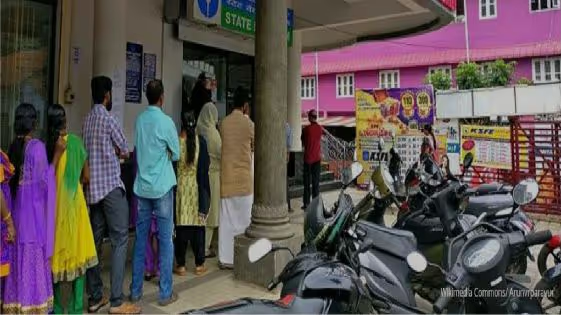
The supply-side effects of India’s demonetisation
What were the effects of the 2016 Indian demonetisation that removed 86% of currency in circulation overnight, on the production side of the economy? By combining data from financial statements and surveys of firms and workers, this article finds that firms that use cash more and obtain larger shares of labour or material inputs from the informal sector, experienced declines in these input shares after demonetisation. Further, casual labourers were more likely to report being unemployed post demonetisation.

Webinar video: The Covid-19 shock
The Covid-19 pandemic and the containment measures adopted to check the spread of the disease, have caused an unprecedented economic crisis in India as well as the rest of the world. Further, India is experiencing a massive humanitarian crisis, exemplified by the scale of reverse migration that is in progress. There is an urgent need for the government to implement policies designed to mitigate the economic damage, and alleviate the suffering of the most vulnerable. In this webinar (12 June 2020) – moderated by Prof. Parikshit Ghosh, Member of the I4I Editorial Board – Dr Pronab Sen reviews the current status, and deliberates on what needs to be done, and where we are likely to be in the future. The webinar is based on Dr Sen’s recent five-part series on I4I.

Protectionism and Statism, once again
In this post, Ajit Karnik argues that, at a broad strategic level, the Indian government has displayed a disconcerting shift towards protectionism and Statism over the last few months. While discussing India’s experience with an inward-looking policy in the past – the negative consequences of which had kept it shackled in a low rate of growth for decades – he presents a critique of the economic vision of the current government.
कोविड-19 झटका: अतीत के सीख से वर्तमान का सामना करना – पांचवां भाग
इस श्रृंखला के पिछले दो भागों में, डॉ. प्रणव सेन ने कोविड-19 झटके से उबरने के लिए तीन अलग-अलग चरणों (उत्तरजीविता, पुनर्निर्माण और सुधार) के माध्यम से सुधार के मार्ग प्रस्तुत किए हैं। श्रृंखला के अंतिम भाग में, उन्होंने सरकार की राजकोषीय स्थिति के बिगड़ने के बारे में चिंताओं पर विचार करते हुए, सुधार के निधिकरण पर और बड़े प्रोत्साहन पैकेज के निधिकरण के लिए संसाधनों को कैसे जुटाया जा सकता है, इन मुद्दों पर चर्चा की है।
कोविड-19 झटका: अतीत के सीख से वर्तमान का सामना करना – चौथा भाग
इस श्रृंखला के पिछले भाग में डॉ. प्रणव सेन ने सुधार के लिए एक मार्ग प्रस्तुत किया था, जिसमें उन्होने 'उत्तबरजीविता' के चरण, यानि लॉकडाउन की तीन महीने की अवधि पर ध्यान केन्द्रित किया था। इस भाग में उन्होंने पुनर्निर्माण चरण यानि लॉकडाउन हटाए जाने के बाद के चार महीने की अवधि जिसमें सामान्य आर्थिक गतिविधियों को जून 2020 से फिर से शुरू करने की अनुमति दी जाएगी और उसके बाद के सुधार चरण पर चर्चा की है।

कोविड-19 झटका: अतीत के सीख से वर्तमान का सामना करना – तीसरा भाग
श्रृंखला के पिछले भाग में, डॉ. प्रणव सेन ने वर्तमान में जारी संकट के कारण हुई आर्थिक क्षति, और अगले तीन वर्षों में अर्थव्यवस्था के अपेक्षित प्रक्षेपवक्र के अनुमान प्रदान किए थे। इस भाग में, उन्होंने उत्तरजीविता के चरण पर ध्यान केंद्रित करते हुए सुधार का मार्ग प्रस्तुत किया है। तात्कालिक संदर्भ में जब लॉकडाउन लागू है, दो प्रमुख अनिवार्यताएं होनी चाहिए – पहली, अपनी आजीविका खो चुके लोगों की उत्तरजीविता, और दूसरी, गैर-अनिवार्य क्षेत्रों में उत्पादन क्षमता। इस तीन महीने की अवधि के दौरान आवश्यक अतिरिक्त राजकोषीय समर्थन का अनुमानित आकलन रु.2,00,000 करोड़ है।
States’ loss of fiscal autonomy in a centralised federal system
The Indian states bear the larger responsibility in dealing with Covid-19, but they have few resources to do so. In this post, M. Govinda Rao argues that the ongoing process of centralisation has weakened the states, and that we need an institutional mechanism to oversee bargaining between the Centre and the states.

Covid-19 crisis and health of small businesses: Findings from a primary survey
In a recent statement, the Union Minister for micro, small, and medium enterprises, acknowledged that the sector is “battling for survival”. This article reports some key findings from a survey of more than 360 enterprises, conducted in May 2020, which focusses on assessing the impact of the Covid crisis on the sector. The preliminary findings are suggestive of high levels of distress in the sector, with micro-enterprises faring the worst.

कोविड-19 झटका: अतीत के सीख से वर्तमान का सामना करना – दूसरा भाग
आलेखों की इस श्रृंखला के पहले भाग में डॉ. प्रणब सेन ने पिछले दो बड़े आर्थिक झटकों – 2008 में वैश्विक वित्तीय संकट और 2016-17 में नोटबंदी एवं जीएसटी के दौरान भारतीय अर्थव्यवस्था के प्रदर्शन पर चर्चा की, और उनसे वर्तमान संकट के लिए सबक प्रस्तुत किए। इस भाग में उन्होंने सरकार द्वारा अब तक घोषित राजकोषीय प्रोत्साहन को ध्यान में रखते हुए, लॉकडाउन और निर्यात मंदी के कारण अर्थव्यवस्था को हुए नुकसान का अनुमान लगाया है। अगले तीन वर्षों में अर्थव्यवस्था के अपेक्षित प्रक्षेपवक्र को प्रस्तुत करते हुए वे कहते हैं कि संभावित सुधार पथ V नहीं है, बल्कि दीर्घ U है या L के करीब भी जा सकता है।
Covid-19, and the way to avoid a blunt interest rate policy
Given the looming recession due to Covid-19, the Reserve Bank of India has reduced interest rates to encourage economic activity in the country. In this post, Gurbachan Singh contends that the prevailing interest rate policy is non-transparent and complex, in addition to being blunt. He proposes an alternative policy that is transparent, simple, and well-targeted.

I4I Webinar on the Covid-19 shock
Join our Webinar - based on the recent I4I series by Dr Pronab Sen on "The Covid-19 shock: Learnings from the past, addressing the present", on Friday, 12 June 2020 at 5 pm IST.
Perceived obstacles among Indian firms: What happens to innovation efforts?
For countries like India where large numbers of small- and medium-sized firms cannot access formal credit and face widespread bureaucratic corruption, long-run survival and consequent distributional implications are important. Based on firm-level micro-data, this article shows that obstacles, as perceived by firms in the form of corruption and access to finance, jointly reduce their probability to innovate.
कोविड-19: भारत को प्रभावी रूप से लॉकडाउन से बाहर निकालना
भारत अपने कोविड-19 लॉकडाउन से बाहर आने की कगार पर है। इस लेख में, सुगाता घोष और सरमिष्ठा पाल ने भारत को लॉकडाउन से प्रभावी ढंग से बाहर निकालने के लिए विशेषज्ञ सलाह के कार्यान्वयन से संबंधित चुनौतियों की जांच की है। उनका तर्क है कि केंद्र सरकार एक राष्ट्रीय रणनीति बनाने में अंतर-सरकारी सहयोग को बढ़ावा देने के लिए और बहुत कुछ कर सकती है ताकि नीतिगत कमजोरियों को दूर किया जा सके, परीक्षण और ट्रैकिंग को बढ़ाने के लिए राज्यों को आवश्यक धनराशि जारी की जा सके और भय एवं अफवाह फैलने से रोकने हेतु फर्जी खबरों और गलत सूचनाओं को विनियमित किया जा सके।
The Covid-19 shock: Learnings from the past, addressing the present - V
In the previous two parts of the series, Dr Pronab Sen presented a pathway to recovery from the Covid-19 shock in three distinct phases – survival, revival, and recovery. In the final part of the series, he discusses the financing of the recovery, addressing concerns around deterioration of the government’s fiscal position, and how resources can be raised for financing a larger stimulus package.
The Covid-19 shock: Learnings from the past, addressing the present - IV
In the previous part of the series, Dr Pronab Sen presented a pathway to recovery, focusing on the ‘survival’ phase, that is, the three-month period of lockdown. In this part he discusses the revival phase – four-month period after the lockdown is lifted and normal economic activity is allowed to resume from June 2020, and the recovery phase thereafter.
The Covid-19 shock: Learnings from the past, addressing the present - III
In the previous part of the series, Dr Pronab Sen provided estimates of the economic damage on account of the ongoing crisis, and the expected trajectory of the economy over the next three years. In this part, he presents a pathway to recovery, focusing on the survival phase. In the immediate context while the lockdown is in place, the two principal imperatives should be survival of those who have lost livelihoods, and of production capacities in non-essentials sectors. An approximate estimate of the additional fiscal support required during this three-month period is Rs. 2 trillion.
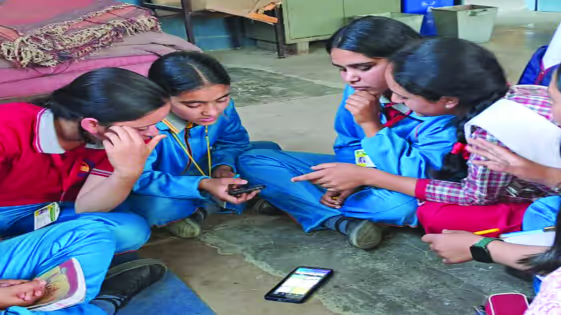
ग्रामीण भारत में युवाओं की डिजिटल तैयारी
भारत में तेज़ी से तकनीकी परिवर्तन हो रहा है, ऐसे में डिजिटल साक्षरता युवाओं की भविष्य की शैक्षिक, आर्थिक और सामाजिक अवसरों की तैयारियों का एक प्रमुख चालक बन गई है। कुमार और भुतडा ने इस लेख में, वार्षिक शिक्षा स्थिति रिपोर्ट (असर- एएसईआर) 2023 और 2024 में प्रस्तुत जानकारी के आधार पर ग्रामीण युवाओं के बीच डिजिटल तैयारी की जाँच की है। हालांकि स्मार्टफोन का अब व्यापक रूप में इस्तेमाल हो रहा है, तब भी डिजिटल कौशल और तेज़ी से प्रौद्योगिकी-संचालित दुनिया के अनुकूल होने की तैयारी में महत्वपूर्ण अंतर बना हुआ है।
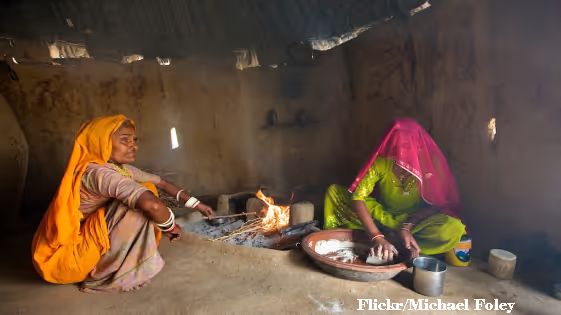
स्वच्छ ईंधन में बदलाव हेतु महिलाओं के समय का मूल्य (महत्त्व) बढ़ाना
ग्रामीण भारत में अधिकांश महिलाएँ पारंपरिक ईंधन का उपयोग जारी रखती हैं, जिसके चलते घरेलू कामों में उनका अधिक समय व्यतीत होता है। फरज़ाना अफरीदी ने इस लेख में मध्य प्रदेश में हुए एक सर्वेक्षण के परिणामों पर चर्चा की है और यह दिखाया है कि स्वच्छ ईंधन का उपयोग शुरू करने से महिलाओं का औसतन प्रतिदिन लगभग 20 मिनट का समय बचता है, लेकिन महिलाओं की कार्यबल भागीदारी में समान वृद्धि नहीं होती है। उनका कहना है कि श्रम बाज़ार में महिलाओं के काम का मूल्य बढ़ाने से स्वच्छ ईंधन अपनाने को प्रोत्साहन मिल सकता है।
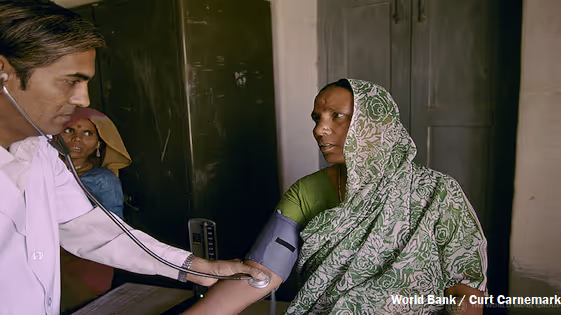
India’s primary healthcare reform: Improved service delivery, reduced mortality
On average, a 60-year-old in India can expect to live for about 19 years, four years less than their counterparts in high-income countries – with the gap being partly driven by poor access to quality healthcare services. Based on data from Rajasthan, this article shows that adding a mid-level healthcare worker to public healthcare facilities in rural areas – a reform undertaken at scale across the country – improves service provision, increases patient visits, and decreases all-age mortality rates.

शिक्षा का मार्ग रोशन करना : क्या बिजली की सुविधा से बच्चों के परीक्षा स्कोर में वृद्धि हो सकती है?
घरों में बिजली की सुविधा उपलब्ध हो जाने पर बच्चों के स्कूल में दाखिला लेने की सम्भावना बढ़ जाती है। लेकिन क्या वे बेहतर प्रदर्शन भी करते हैं? यह लेख पश्चिम बंगाल के सार्वभौमिक घरेलू विद्युतीकरण कार्यक्रम और राष्ट्रीय स्तर के प्रतिनिधि डेटा के आधार पर, दर्शाता है कि बिजली की सुविधा वाले परिवारों के बच्चे पठन और गणित की परीक्षाओं में बेहतर अंक प्राप्त करते हैं। इसके पीछे के मुख्य तंत्रों के रूप में अधिक देर तक पढ़ने की सुविधा, अधिक पारिवारिक आय और ईंधन संग्रहण की आवश्यकता कम होने के रूप में की गई है।

किशोरों के मानसिक स्वास्थ्य पर शराब निषेध का अनपेक्षित प्रभाव
शराब का सेवन आमतौर पर किशोरावस्था के दौरान शुरू होता है, जिसका वयस्कों के स्वास्थ्य, आर्थिक स्थिरता और कल्याण पर दीर्घकालिक प्रभाव पड़ता है। इस लेख में बिहार के शराब प्रतिबंध का विश्लेषण करते हुए, पड़ोसी राज्यों से अवैध शराब की बढ़ती पहुँच और घर में व स्थानीय रूप से तैयार शराब की अधिक खपत के कारण किशोरों के मानसिक स्वास्थ्य पर प्रतिकूल प्रभाव पाया गया। इसके अतिरिक्त, जोखिम भरे व्यवहार में वृद्धि हुई और किशोरों के सामाजिक वातावरण में गिरावट आई।
Youth’s digital readiness in rural India
As India undergoes rapid technological transformation, digital literacy has become a key driver of youth’s preparedness for future educational, economic, and social opportunities. In this note, Kumar and Bhutada examine digital readiness among rural youth, based on insights offered by the Annual Status of Education Report (ASER) 2023 and 2024. While there is widespread smartphone access, significant gaps remain in digital skills and readiness to adapt to an increasingly technology-driven world.
Lighting the path to learning: Can electricity boost children’s test scores?
When households gain access to electricity, children are more likely to be enrolled in school. But do they also perform better? Based on West Bengal’s universal household electrification programme and nationally representative data, this article shows that children in families with electricity access score higher on reading and math tests. The key mechanisms are identified as longer study time, higher household incomes, and reduced need for fuel collection.
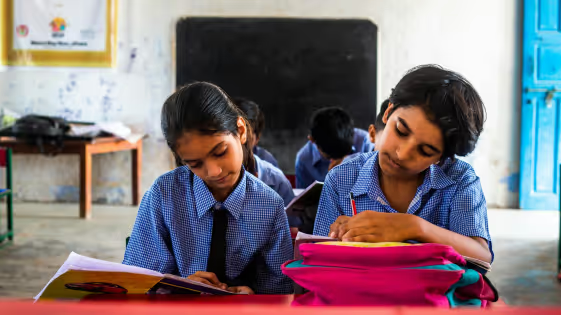
एएसईआर 2024: महामारी के बाद के सुधार से कहीं बेहतर
गत कई वर्षों की ही भाँति शिक्षा की वार्षिक स्थिति रिपोर्ट (एएसईआर) 2024 में भारत के लगभग सभी ग्रामीण जिलों से बच्चों की स्कूली शिक्षा की स्थिति, उनके पठन और अंकगणित के स्तर के बारे में रिपोर्ट प्रस्तुत की गई है। एएसईआर केन्द्र की निदेशक विलिमा वाधवा ने इस लेख में सरकारी और निजी स्कूलों में स्कूल नामांकन और शिक्षा के परिणामों में प्रमुख रुझानों पर चर्चा की है। अधिगम में हुए सुधार का श्रेय उन्होंने नई शिक्षा नीति में बुनियादी साक्षरता और अंक-ज्ञान पर दिए गए ध्यान को दिया है।
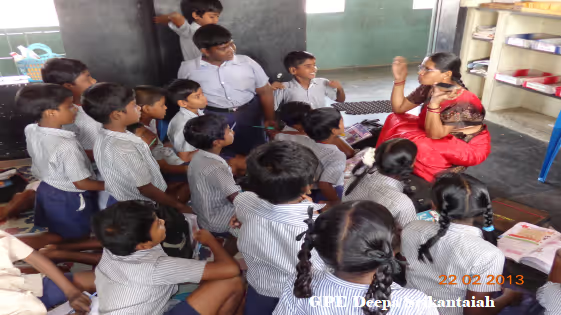
Reflections on how the New Education Policy plays out in the classroom
The National Education Policy, 2020 emphasises the acquisition of foundational literacy and numeracy by Standard 2. Yet, little is known about how the related initiatives have translated into changes in teaching-learning in the classroom. In this note, Bhattacharjea, Bhutada and Bisht share insights from a study involving classroom observations and teacher interviews across eight states in India – on aspects such as classroom composition, teachers’ attitudes towards young children, and teaching methods.
The unintended effect of alcohol prohibition on adolescents’ mental health
Alcohol consumption is typically initiated during adolescence, with long-lasting implications on adult health, economic stability, and well-being. Analysing Bihar’s alcohol ban, this article finds adverse impacts on adolescents’ mental health – driven by increased access to illegal alcohol from neighbouring states and higher consumption of home-brewed and locally produced alcohol. Additionally, there was an increase in risky behaviours and deterioration in the adolescent social environment.
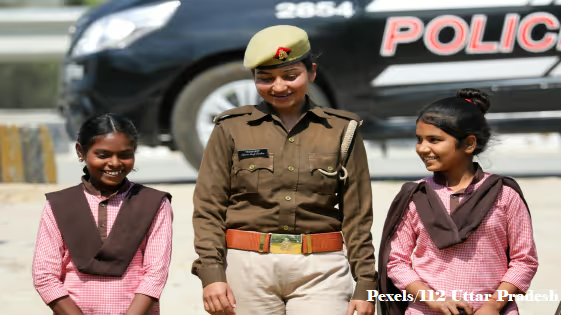
How police patrols reduced severe street harassment in India
Street harassment is a pervasive issue, with negative impacts on women’s safety and mobility in urban public spaces. Based on an experiment conducted in collaboration with the Hyderabad City Police, this article demonstrates that visible, anti-harassment policing strategies combined with efforts to transform underlying social attitudes, can make a difference.

लैंगिक समानता और सशक्तिकरण की ओर बढ़ते पहिए
भारत के बिहार और ज़ाम्बिया के ग्रामीण इलाके में, सरकार ने किशोरियों को स्कूल आने-जाने के लिए साइकिल प्रदान करके शिक्षा में लैंगिक अंतर को दूर करने के कार्यक्रम शुरू किए। इस लेख में, इन पहलों के तात्कालिक और दीर्घकालिक प्रभावों पर चर्चा करते हुए, शिक्षा में लैंगिक समानता को बढ़ावा देने के लिए अधिक प्रभावी और स्थाई नीतियाँ डिज़ाइन करने के बारे में रोशनी डाली गई है। यह अंतर्राष्ट्रीय महिला दिवस 2025 के उपलक्ष्य में हिन्दी में प्रस्तुत श्रृंखला का तीसरा लेख है।
ASER 2024: More than a post-pandemic recovery in learning
The Annual Status of Education Report (ASER) 2024 reports on children’s schooling status and reading and arithmetic levels from almost all rural districts of India. In this post, Wilima Wadhwa, Director of the ASER Centre, discusses the key trends in school enrolment and learning outcomes across government and private schools. Noting improvements in learning, she attributes the gains to the focus on foundational learning and numeracy in the New Education Policy.
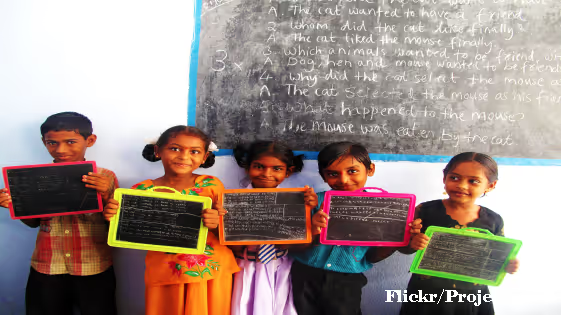
माता-पिता एवं शिक्षक के बीच सहयोग के माध्यम से आधारभूत शिक्षा को बढ़ावा देना
प्राथमिक विद्यालयों में नामांकन में प्रगति होने के बावजूद, ग्रामीण भारत में 50% से अधिक विद्यार्थी मूल साक्षरता हासिल करने में असफल रहते हैं, जबकि 5वीं कक्षा के अंत तक 44% विद्यार्थियों में अंकगणित कौशल का अभाव होता है। ग्रामीण उत्तर प्रदेश में किए गए एक यादृच्छिक प्रयोग के आधार पर, इस लेख में पाया गया है कि माता-पिता और शिक्षकों के बीच सहयोगात्मक तथा भागीदारीपूर्ण दृष्टिकोण के माध्यम से सामुदायिक भागीदारी से स्कूलों में जवाबदेही बढ़ती है, और बच्चों की बुनियादी शिक्षा में उल्लेखनीय सुधार होता है।
Enhancing foundational learning through parent-teacher collaboration
Despite advancements in primary school enrolment, over 50% of pupils in rural India fail to achieve core literacy, while 44% lack numeracy skills at the end of grade 5. Based on a randomised experiment in rural Uttar Pradesh this article finds that community participation, facilitated through a collaborative and participatory approach between parents and teachers, enhances accountability in schools, and significantly improves children’s foundational learning.
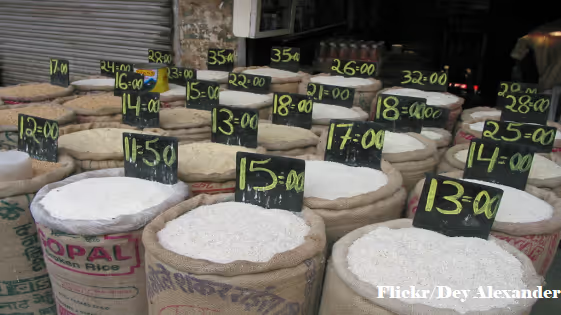
The wide-ranging benefits of India’s Public Distribution System
India’s Public Distribution System (PDS) is the world’s largest food transfer programme and India’s most far-reaching social safety net, accounting for 60% of the country’s social assistance budget at one time. This article shows that the expansion of the PDS, following the National Food Security Act, prevented approximately 1.8 million children from being stunted, while also raising wage incomes and improving dietary diversity.
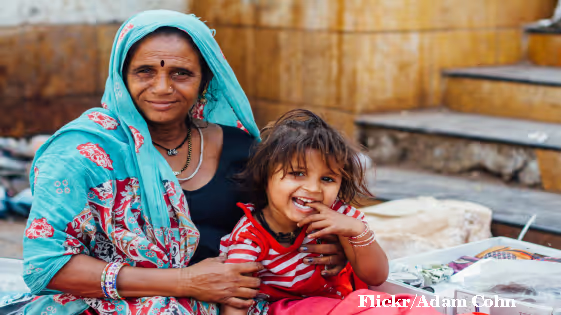
बेटियों को सशक्त बनाना : सशर्त नकद हस्तांतरण किस प्रकार से पारम्परिक मानदंडों को बदल सकते हैं
हर साल 24 जनवरी को राष्ट्रीय बालिका दिवस के रूप में मनाया जाता है। इस दिन की स्थापना 2008 में भारत सरकार के महिला एवं बाल विकास मंत्रालय ने लड़कियों को सशक्त बनाने और उनकी सुरक्षा के महत्व के बारे में जागरूकता बढ़ाने के लिए की थी। यह दिन उन सभी असमानताओं के बारे में लोगों में जागरूकता बढ़ाने के लिए मनाया जाता है जिनका सामना लड़कियों को करना पड़ता है। इसी अवसर पर पेश है आज का आलेख। पिछले 30 वर्षों में भारत सरकार ने बेटियों के जन्म के बाद, उनके लिए निवेश करने वाले माता-पिता को पुरस्कृत करने के लिए 20 से अधिक कार्यक्रम लागू किए हैं। फिर भी, पुत्र प्राप्ति की प्राथमिकता को कम करने तथा सांस्कृतिक मानदंडों में बदलाव लाने में इन कार्यक्रमों की प्रभावशीलता के बारे में बहुत कम जानकारी उपलब्ध है। इस शोध आलेख में, कई विशिष्ट डिज़ाइन वाली योजनाओं के प्रभाव का विश्लेषण करते हुए पाया गया है कि ऐसे कार्यक्रम सही मायने में नीति सम्बन्धी टूलकिट का हिस्सा हैं और उन पर और अधिक ध्यान देने की आवश्यकता है।
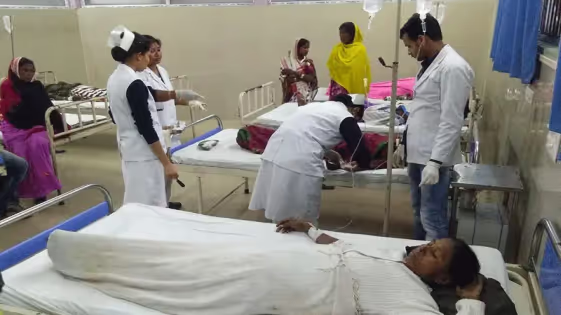
Network membership and demand for health insurance
Despite being free and having liberal eligibility criteria, the adoption of public health insurance in India remains low. This article examines how informal networks influence adoption behaviour, in the context of Andhra Pradesh’s Aarogyasri programme. It shows that network type matters: information networks do not significantly impact the uptake of public insurance, whereas financial networks actually facilitate, rather than hinder, public insurance adoption.

प्रतिस्पर्धी नौकरियों की खोज : कम शेयरिंग से कंपनियों का नुकसान
श्रम बाज़ार में नौकरियों और कर्मचारियों के सही तालमेल के लिए यह ज़रूरी है कि नौकरी पोस्टिंग की जानकारी उपयुक्त नौकरी खोजने वालों तक पहुँचे। हालांकि इस सम्बन्ध में सोशल नेटवर्क महत्वपूर्ण भूमिका निभाते हैं, लेकिन नौकरियों के लिए होने वाली प्रतिस्पर्धा सूचना के साझाकरण को हतोत्साहित कर सकती है। मुंबई में कॉलेज छात्रों के साथ किए गए एक प्रयोग के आधार पर, इस लेख में पाया गया है कि इस हतोत्साहन के कारण आवेदकों और नियुक्तियों की समग्र गुणवत्ता कम हो जाती है।
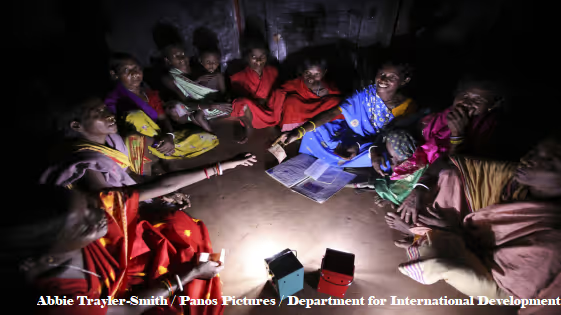
Powering progress: How reliable community electrification boosts women’s autonomy
While there has been significant progress in expanding access to grid electricity in India, the reliability of electricity remains a concern. Based on five national-level datasets spanning over a period of almost two decades., this article shows that improved reliability of electricity at the community level is beneficial for women’s empowerment in terms of mobility, participation in household decision-making, health autonomy, and safety.
Empowering daughters: How conditional cash transfers can shift cultural norms
During the last 30 years, Indian governments have implemented over 20 programmes that reward parents who have daughters and invest in them after birth. Yet, very little is known about these programmes’ effectiveness in reducing son preference and shifting cultural norms. Analysing the impact of a scheme with many typical design features, the article finds that such programmes are rightfully part of the policy toolkit and deserve more attention.
Competitive jobseekers: When sharing less leaves firms at a loss
For efficient matching of jobs and workers in the labour market, it is essential that information on job postings reaches suitable jobseekers. While social networks play a key role in this regard, competition for jobs may disincentivise information-sharing. Based on an experiment with college students in Mumbai, this article finds that these disincentives reduce the overall quality of applicants and hires.
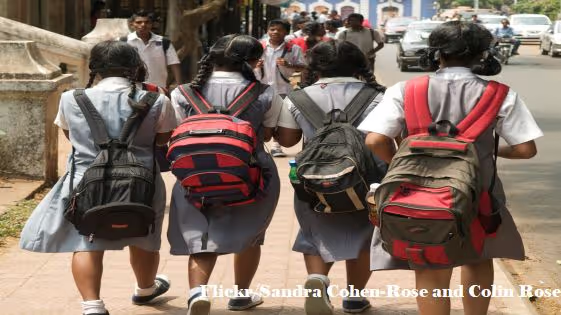
Street safety and girls’ secondary schooling in India
Street harassment in India is still a constraint on women's education, dimming their future. Analysing the case of ‘SHE teams’ in the state of Telangana, this article shows that the introduction of special police units dedicated to women's safety on streets led to a significant increase in girls finishing grade 12. Further, it establishes that the impact is not driven by non-street safety determinants of schooling.

Contraception as a pathway to better child nutrition and health
India is home to one-third of the world’s stunted children, and half of all under-five mortality can be attributed to undernutrition. Existing literature has shown an association between larger families and poorer child health outcomes. Based on analysis of data from the National Family Health Survey, 2019-2021, this article finds that reducing fertility through increased use of contraception can lead to significant improvements in child health and malnutrition indicators.
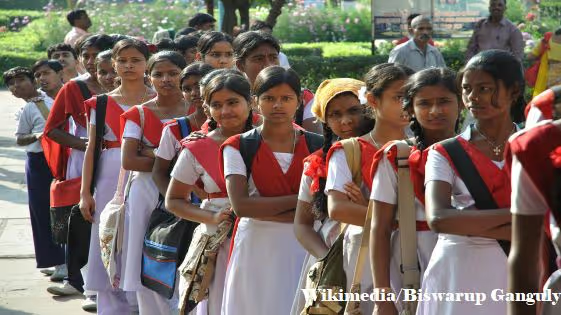
कैसे लड़कियों की शिक्षा में निवेश से भारत में घरेलू हिंसा कम हो सकती है
भारत में 15 से 49 वर्ष की आयु की लगभग एक तिहाई महिलाएँ घरेलू हिंसा का सामना करती हैं। यह लेख जिला प्राथमिक शिक्षा कार्यक्रम, बड़े पैमाने के एक स्कूल विस्तार कार्यक्रम, के कारण लड़कियों की शिक्षा में वृद्धि के उस प्रभाव की जाँच करता है जो वयस्क जीवन में घरेलू हिंसा पर पड़ता है। इसमें महिलाओं के प्रति लैंगिक दृष्टिकोण में सकारात्मक बदलाव, साथी की गुणवत्ता में सुधार और सूचना तक पहुँच में वृद्धि के माध्यम से घरेलू हिंसा में उल्लेखनीय कमी पाई गई है।

Moratorium on new subsidies to garner resources for public spending on health
Employability is fundamentally driven by human capital development, encompassing health and education. Based on analysis of data from about 100 economies, Shishir Gupta argues that in India, the lack of sufficient public spending constrains healthcare – rather than education, where the issues are different. In his view, one pragmatic way to increase public spending on healthcare is by putting a moratorium on new subsidies and rationalising existing ones

भारत में रोज़गार की विशाल समस्या और इसके कुछ समाधान
भारत के केन्द्रीय बजट 2024-25 की घोषणा में रोज़गार सृजन की आवश्यकता पर महत्वपूर्ण ज़ोर दिया गया है। प्रणब बर्धन इस लेख के ज़रिए लम्बे समय में अच्छी नौकरियों के स्थाई सृजन हेतु एक चार-आयामी रणनीति- बड़े पैमाने पर व्यावसायिक शिक्षा व प्रशिक्षुता, पूंजी सब्सिडी को सशर्त मज़दूरी सब्सिडी से बदलना, गैर-कृषि घरेलू उद्यमों को विस्तार सेवाएँ प्रदान करना और कमज़ोर समूहों के लिए बुनियादी आय अनुपूरक के माध्यम से मांग को बढ़ावा देना प्रस्तुत करते हैं।
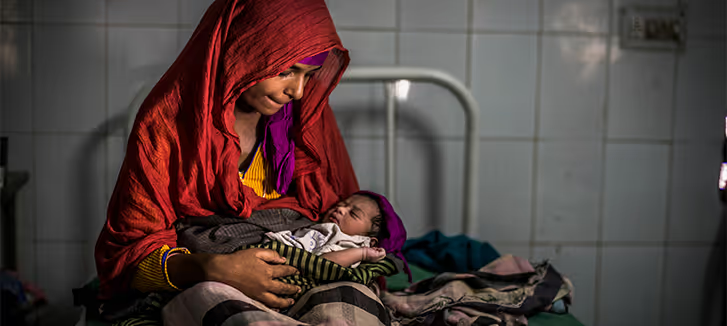
क्या सार्वजनिक सेवाओं में सब्सिडी से बाज़ार अनुशासित होते हैं या मांग का स्वरूप खराब हो जाता है?
पूर्व में हुए शोधों ने भारत के प्रमुख सुरक्षित मातृत्व कार्यक्रम की विफलता को दर्ज किया है- यह कार्यक्रम प्रसवकालीन मृत्यु दर को कम करने में विफल रहा है जबकि सार्वजनिक स्वास्थ्य सुविधाओं में प्रसव कराने वाली माताओं की हिस्सेदारी में पर्याप्त वृद्धि हुई है। यह नीति-निर्माताओं के सामने एक उलझी हुई पहेली की तरह खड़ा है। मातृ-स्वास्थ्य सेवा बाज़ार के विभिन्न क्षेत्रों में कार्यक्रम के प्रति प्रतिक्रियाओं की जाँच करते हुए इस लेख में, सार्वजनिक और निजी स्वास्थ्य सेवा प्रदाताओं के बीच की अंतर्क्रियाओं में स्पष्टीकरण का पता लगाने प्रयत्न किया गया है।
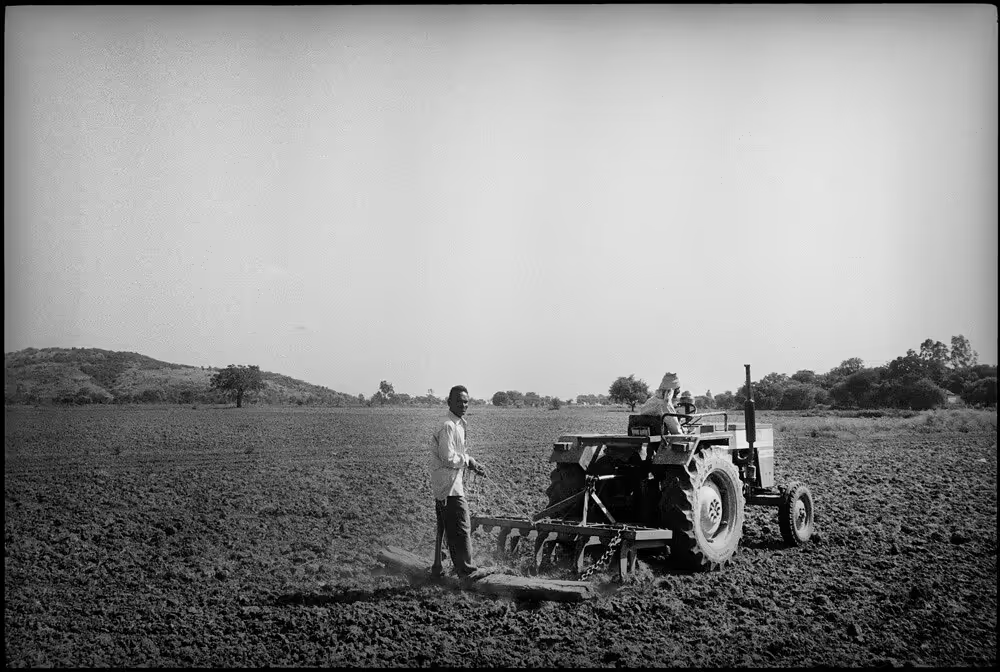
भूमि संबंधी ऐतिहासिक नीतियाँ और सामाजिक-आर्थिक विकास : उत्तर प्रदेश का मामला
उत्तर प्रदेश में विकासात्मक परिणामों में महत्वपूर्ण अंतर-राज्यीय भिन्नता पाई जाती है और शोध से पता चलता है कि ऐसा आंशिक रूप से, राज्य के भीतर औपनिवेशिक भूमि संबंधी नीतियों में अंतर के दीर्घकालिक प्रभावों के कारण हो सकता है। यह लेख 19वीं शताब्दी में भूमि सुधार वाले क्षेत्रों और जहाँ सुधार नहीं हुए हैं, ऐसे क्षेत्रों की तुलना करते हुए दर्शाता है कि पूर्व में धन और मानव पूंजी पर सकारात्मक दीर्घकालिक प्रभाव पड़ा है। इसमें निम्न जाति के वे परिवार भी शामिल हैं जिनके पूर्वजों को सुधारों के तहत भूमि नहीं मिली थी।
Does subsidising publicly provided services discipline markets or distort demand?
Prior research has documented the failure of India’s flagship safe motherhood programme in reducing perinatal mortality, despite substantially increasing the share of mothers delivering at public healthcare facilities – presenting a conundrum for policymakers. Examining responses to the programme across various segments of the maternal healthcare market, this article locates the explanation in the interactions between public and private healthcare providers.

मध्य भारत के आदिवासी समुदाय : चुनौतियाँ और आगे की राह
‘आदिवासी आजीविका की स्थिति’ रिपोर्ट ने एक बार फिर मध्य भारत में जनजातियों की भयावह स्थिति की ओर ध्यान आकर्षित किया है। विश्व के मूल व आदिवासी लोगों के अधिकारों के प्रति जागरूकता बढ़ाने और उनकी रक्षा करने के लिए प्रत्येक वर्ष 9 अगस्त को मूल लोगों के अंतर्राष्ट्रीय दिवस के रूप में मनाया जाता है। इसी उपलक्ष्य में प्रस्तुत इस लेख में मध्य प्रदेश और छत्तीसगढ़ के आदिवासी परिवारों के सर्वेक्षण के आधार पर, चौधुरी और घोष जैव विविधता की हानि और भूमिहीनता, खराब खाद्य सुरक्षा और कुपोषण, और निरक्षरता जैसी चुनौतियों पर चर्चा करते हैं। वे खाद्य सब्सिडी के ज़रिए प्रदान की जाने वाली राहत पर प्रकाश डालते हैं, साथ ही इन समुदायों के उत्थान के लिए शासन प्रणाली में सुधार और आदिवासी मूल्यों को संरक्षित करने का सुझाव देते हैं।
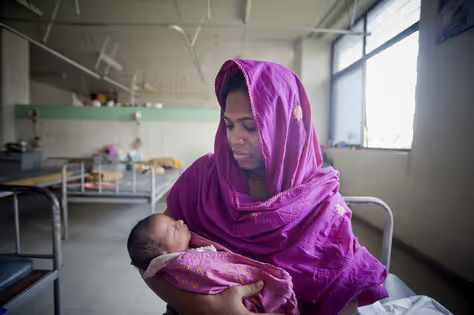
Did Covid-19 pandemic increase incidence of low-birth-weight among newborns?
Globally, one in four babies are born with low birth weight, with long-term impacts on health and economic outcomes. This article uses Indian data from 2019-2021 to analyse the impact of the Covid-19 pandemic on birth outcomes, given the disruption of essential maternal and neonatal services. It finds that infants born post-pandemic had 45 grams lower birth weight, with 3% greater incidence of low birth weight than infants born before the pandemic.
India’s massive employment problem and some ways out
In the recent announcement of India’s Union Budget 2024-25, significant emphasis was placed on the need for job creation. In this post, Pranab Bardhan presents a four-pronged strategy for the sustainable generation of good jobs in the long run: mass-scale vocational education and apprenticeship; replacing capital subsidies with conditional, wage subsidies; providing extension services to non-farm household enterprises; and boosting demand via a basic income supplement for vulnerable groups.
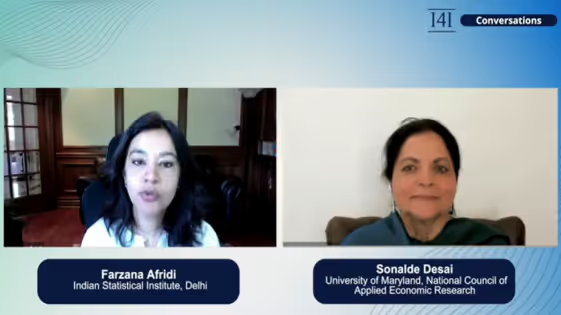
Managing India’s demographic transition
India’s population is expected to peak at about 1.7 billion in 2064, and while the current median age is only 28, the share of Indians aged 65 and above will go from 7% to 20% in the next 40 years or so. Has India been able to take advantage of its demographic dividend of a large working-age population, and is the country prepared for the upcoming transition from a young to an ageing population? In a new edition of I4I conversations, Farzana Afridi (Indian Statistical Institute, Delhi) and Sonalde Desai (University of Maryland & National Council of Applied Economic Research) discuss the challenges associated with India’s demographic dividend. They emphasise the need to tap into the full workforce, including women, as well as ensuring that workers are productive. They also analyse the issue of ageing both from the perspective of society and family. ....
Managing India’s demographic transition
India’s population is expected to peak at about 1.7 billion in 2064, and while the current median age is only 28, the share of Indians aged 65 and above will go from 7% to 20% in the next 40 years or so. Has India been able to take advantage of its demographic dividend of a large working-age population, and is the country prepared for the upcoming transition from a young to an ageing population? In a new edition of I4I conversations, Farzana Afridi (Indian Statistical Institute, Delhi) and Sonalde Desai (University of Maryland & National Council of Applied Economic Research) discuss the challenges associated with India’s demographic dividend. They emphasise the need to tap into the full workforce, including women, as well as ensuring that workers are productive. They also analyse the issue of ageing both from the perspective of society and family. ....
माध्यमिक स्तर के अधिगम में सुधार : रेमिडियल शिविरों और कक्षा में शिक्षकों के लचीलेपन की भूमिका
भारतीय शिक्षा प्रणाली की एक प्रमुख दुविधा यह है कि बच्चे स्कूल तो जा रहे हैं, लेकिन वास्तव में ढ़ंग से सीख नहीं रहे हैं। यह लेख ओडिशा में हुए एक प्रयोग के आधार पर, माध्यमिक विद्यालय में अधिगम की कमी के सम्भावित समाधानों की खोज करता है। इसमें पाया गया है कि अनुकूलित सुधारात्मक या रेमिडियल कार्यक्रम सीखने की प्रक्रिया में सुधार और सीखने के स्तर के बारे में शिक्षकों की धारणाओं में सुधार लाते हैं। लेकिन पाठ योजनाओं में शिक्षक स्वायत्तता को बढ़ाने से होने वाले लाभ इतने स्पष्ट रूप से नहीं दिखते।

चहुँ ओर पानी लेकिन पीने के लिए एक बूँद भी नहीं! साफ़ पानी के सन्दर्भ में सूचना और पहुँच को सक्षम बनाना
भारत में 5 करोड़ से ज़्यादा लोग आर्सेनिक-दूषित पानी पीते हैं, जिससे उनके स्वास्थ्य पर, ख़ास तौर पर बच्चों के स्वास्थ्य पर प्रतिकूल प्रभाव पड़ रहा है। इसके बावजूद प्रभावित क्षेत्रों में निजी, सुरक्षित पेयजल की माँग कम बनी हुई है। यह लेख असम में किए गए एक प्रयोग के आधार पर दर्शाता है कि किस प्रकार जल गुणवत्ता जागरूकता हस्तक्षेपों को, सरकारी लाभ प्राप्त करने में लेन-देन सम्बन्धी जटिलता को कम करने के साथ संयोजित करने से, इस समस्या के समाधान में मदद मिल सकती है।
Historical land policies and socioeconomic development: The case of Uttar Pradesh
Uttar Pradesh is characterised by significant intra-state variation in developmental outcomes, with research suggesting that this could be partially attributable to the long-run effects of differences in colonial land policies within the state. Comparing areas that underwent land reforms in the 19th century with those that did not, this article demonstrates that the former experienced positive long-run effects on wealth and human capital – including among lower-caste households whose ancestors did not receive land under the reforms.

Reversing the trend: Improving toilet access for better test scores
Poor sanitation is associated with adverse health outcomes among children, which in turn are linked with poor educational outcomes. Leveraging the staggered implementation of ‘Swachh Bharat Mission’ across districts in India during 2014-2018, this article shows that exposure to the programme improves children’s test performance in the short term, with larger estimated benefits the longer districts were exposed to the programme
Water water everywhere, not a drop to drink? Information and enabling access to clean water
Over 50 million people in India are exposed to arsenic-contaminated water, leading to adverse health outcomes – especially for children. Yet, the demand for private, safe drinking water remains low in the affected areas. Based on an experiment in Assam, this article demonstrates how combining water quality awareness interventions with a reduction of transactional complexity in obtaining related government benefits can help address the issue.
How teachers’ beliefs can shape motivation and student learning
While teacher effort is crucial for student learning, evidence suggests that this is not what teachers themselves believe. This article presents findings from a randomised experiment involving a psycho-social intervention targeted at teachers. It shows that teachers exposed to the intervention exhibit greater confidence in their ability to raise student learning and exert more effort

Aiding the search for good jobs: Evidence from Uganda
To design policies that lead young labour-market entrants to good jobs, it is important to understand job search processes and what affects the ability to find gainful employment. Based on an experiment in Uganda involving two interventions – vocational training and matching workers with firms – this article shows that while training enhances optimism about employment prospects, matching causes discouragement and poorer labour market outcomes in the long run.
How investing in girls’ education can reduce domestic violence in India
One-third of women in India aged 15-49 report experiencing domestic violence. This article examines the impact of an increase in education among girls due to the District Primary Education Programme – a large-scale school expansion programme – on domestic violence in adulthood. It finds a significant decline in domestic violence, via pathways such as positive shifts in gender attitudes among women, improvements in partner quality, and increased access to information.
क्या सुरक्षित पेयजल से बच्चों के शैक्षिक परिणामों में सुधार हो सकता है?
यह अच्छी तरह से प्रमाणित हो चुका है कि शुद्ध पानी पीने से स्वास्थ्य संबंधी लाभ होते हैं, लेकिन क्या इससे बच्चों के शैक्षिक परिणामों में भी सुधार हो सकता है? साफ पानी का अधिकार एक मूल अधिकार है और एक सतत विकास लक्ष्य भी। विश्व स्वास्थ्य दिवस, जो हर साल 7 अप्रैल को मनाया जाता है, के सन्दर्भ में भारत मानव विकास सर्वेक्षण के आँकड़ों का विश्लेषण करते हुए, इस लेख में दस्त की घटनाओं में कमी, पानी लाने में कम समय बिताया जाना और अल्पकालिक रुग्णता पर कम खर्च तथा शिक्षा पर अधिक खर्च कर पाने जैसे विकल्पों की पहचान के प्रमाण प्रस्तुत किए गए हैं। एक विशेष बात यह है कि इसका प्रभाव लड़कियों पर अधिक स्पष्ट है।
Enhancing secondary school learning: Role of remedial camps and teacher flexibility
A key dilemma in Indian education is that while children are enrolled in school, they are not actually learning. Based on an experiment in Odisha, this article explores possible solutions to the learning deficit in secondary schooling. It finds that tailored remedial programmes improve learning and correct teachers’ beliefs regarding learning levels. However, gains from increasing teacher autonomy in lesson plans are not significant.

Transforming menstrual hygiene in India
Launched in 2014, the ‘Rashtriya Kishor Swasthya Karyakram’ seeks to improve menstrual hygiene in India by addressing issues around affordability as well as awareness. In this post, Kanika Dua contends that the programme – combined with enhanced provision of sanitation facilities – helped increase the adoption of hygienic menstrual management products, particularly among rural, less educated, and economically disadvantaged women.

मानसिक बीमारी की 'अदृश्य' विकलांगता : सामाजिक सुरक्षा तक पहुँच में बाधाएं
विश्वव्यापी अनिश्चितता और सन्घर्ष में अंतर्राष्ट्रीय ख़ुशी दिवस, 20 मार्च का महत्व और बढ़ जाता है। इसी सन्दर्भ में दिव्यांगता के आयाम में प्रस्तुत इस शोध आलेख में साक्षी शारदा लिखती हैं कि मानसिक स्वास्थ्य के मूल्याँकन और उसके निदान के बारे में स्पष्टता की कमी तथा सामाजिक सुरक्षा योजनाओं के अपर्याप्त कार्यान्वयन के चलते किस प्रकार विकलांग लोगों की भेद्यता बढ़ जाती है। वे मानसिक बीमारी, तंत्रिका सम्बन्धी विकारों और सीखने की अक्षमता जैसी 'अदृश्य' सीमितताओं से पीड़ित लोगों के लिए ‘विकलांगता प्रमाणपत्र’ प्राप्त करने में आने वाली कठिनाइयों का पता लगाती हैं। वे मौजूदा नीति में व्याप्त कमियों, मानसिक स्वास्थ्य के लिए जाँच के बारे में आम सहमति की कमी और तृतीयक स्वास्थ्य देखभाल केन्द्रों तक की सीमित पहुँच के कारण होने वाले मुद्दों पर प्रकाश डालती हैं।
महिलाओं में ग़ैर-संचारी रोगों की वृद्धि को रोकने के लिए स्वास्थ्य देखभाल तक पहुँच में सुधार करना
ग़ैर-संचारी रोगों के कारण मृत्यु दर में हो रही वृद्धि के चलते महिलाओं के लिए बदलते स्वास्थ्य देखभाल बोझ को देखते हुए, भान और शुक्ला पिछले दो दशकों में विभिन्न भारतीय राज्यों में हुई बीमारियों की घटनाओं और स्वास्थ्य देखभाल तक पहुँच में आने वाली बाधाओं को कम करने के लिए पीएमजेएवाई कार्यक्रम की भूमिका की रूपरेखा प्रस्तुत करते हैं। अन्तर्राष्ट्रीय महिला दिवस पर प्रस्तुत इस शोध आलेख में भान और शुक्ला सार्वजनिक वित्त-पोषित स्वास्थ्य देखभाल कार्यक्रमों के उपयोग में पुरुष पूर्वाग्रह पर, जैसा कि राज्य की बीमा योजनाओं से पता चलता है, ध्यान देते हैं और महिलाओं की पहुँच और उपयोगकर्ता अनुभव में आने वाली बाधाओं को समझने की आवश्यकता पर रौशनी डालते हैं।
What ASER 2023 reveals about the gender gap in confidence
The Annual Status of Education Report (ASER) 2023 finds that although gender gaps in school enrolment have fallen over the years, girls still lag behind in terms of access to and use of digital technologies. In this post, Suman Bhattacharjea explores factors such as patterns of social and family control over youth of each sex, expectation from girls of refraining from independent action, and availability of role models at home and school.
Can safe drinking water improve children’s educational outcomes?
It is well-established that treated water has health benefits, but can it also enhance children’s educational outcomes? Analysing India Human Development Survey data, this article provides evidence in this context – identifying pathways such as decreased incidence of diarrhoea, lesser time spent on fetching water, and reduced expenditure on short-term morbidity allowing for higher spend on education. Further, the impact is more pronounced for girls.
The tribal communities of central India: Challenges and way forward
The ‘Status of Adivasi Livelihoods’ Report has once again brought attention to the dire situation of tribes in central India. Based on a survey of tribal households in Madhya Pradesh and Chattisgarh, Chaudhuri and Ghosh discuss challenges such as loss of biodiversity and landlessness, poor food security and malnutrition, and illiteracy. They highlight the relief provided by food subsidies, and suggest improving governance systems and preserving tribal values to uplift these communities.
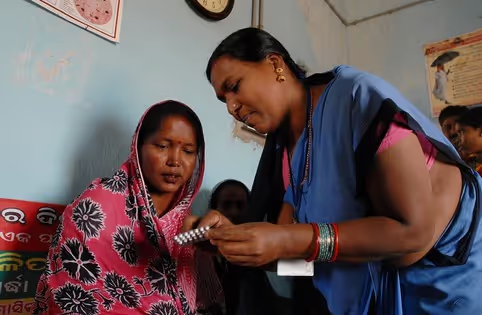
भारत के मिशन परिवार विकास का प्रजनन दर व परिवार नियोजन पर प्रभाव
भारत का बड़े पैमाने का परिवार नियोजन कार्यक्रम, मिशन परिवार विकास, गर्भनिरोधक तक पहुँच में सुधार करता है, कार्यक्रम अपनाने वाले लाभार्थियों को नकद प्रोत्साहन प्रदान करता है और 146 जिलों में प्रजनन की वर्तमान उच्च दर को कम करने के उद्देश्य से परिवार नियोजन के बारे में जानकारी का प्रसार करता है। इस लेख में एनएफएचएस के कई दौरों के डेटा का उपयोग करते हुए, हस्तक्षेप के परिणामस्वरूप जन्मों की संख्या में गिरावट, महिलाओं और पुरुषों की प्रजनन प्राथमिकताओं में कमी और गर्भनिरोधक को अपनाने में वृद्धि के साक्ष्य का दस्तावेज़ीकरण किया गया है।

भारत में विज्ञान शिक्षा के निर्धारण में जाति और लिंग की भूमिका
12 जनवरी को राष्ट्रीय युवा दिवस के रूप में मनाया जाता है। इसी सन्दर्भ में प्रस्तुत है यह आलेख। शिक्षा और करियर युवाओं के लिए अत्यंत महत्त्वपूर्ण होते हैं। भारत में विज्ञान, प्रौद्योगिकी, इंजीनियरिंग और गणित (एसटीईएम) स्तर की शिक्षा प्राप्त करने के लिए उच्च माध्यमिक स्तर पर विज्ञान का अध्ययन करना आवश्यक है। इस लेख में हालिया शोध के आधार पर विज्ञान का अध्ययन करने के विकल्प में लिंग और जाति-आधारित असमानताओं की व्यापकता को प्रस्तुत किया गया है। लेख में परिवारों की सामाजिक-आर्थिक स्थिति, स्कूली शिक्षा तक पहुँच की कमी और इन असमानताओं को समझाने में गलत मान्यताओं व पूर्वाग्रहों की भूमिका पर प्रकाश डालते हुए, यह दर्शाया है कि शिक्षकों की सामाजिक पहचान का वंचित समूहों द्वारा विज्ञान को चुनने पर प्रभाव पड़ सकता है।
Improving healthcare access to address the rise in non-communicable diseases among Indian women
In light of the changing healthcare burden for women, with a rise in mortality due to non-communicable diseases, Bhan and Shukla outline the incidence of diseases in Indian states over the last two decades, and the role that the PMJAY programme plays to alleviate constraints to healthcare access. They note the male bias in utilisation of public-funded healthcare programmes, as evidenced from state insurance schemes, and highlight the need to understand the barriers to access and user experience of women.
सीखने के लिए सतत संघर्ष : आदिवासी क्षेत्रों की कहानी
हाल के राष्ट्रीय उपलब्धि सर्वेक्षण यानी नेशनल अचीवमेंट सर्वे से पता चलता है कि अधिगम परिणामों के सन्दर्भ में आदिवासी जिले पीछे चल रहे हैं। इसे महत्वपूर्ण मानते हुए, लेख में इस तथ्य पर चिन्ता जताई गई है, क्योंकि स्कूली शिक्षा के भौतिक ढाँचे के वितरण में ऐसा अन्तर नज़र नहीं आता है। लेख में जनजातीय आबादी की अधिक हिस्सेदारी वाले क्षेत्रों में, भाषा और गणित के औसत से कम परिणामों पर प्रकाश डाला गया है। लेख में, समावेशी शिक्षा के लक्ष्य को प्राप्त करने के लिए भौतिक ढाँचे में निवेश के अलावा, शिक्षकों की भागीदारी और शैक्षणिक सुधार (पेडागोजी और अध्यापन में सुधार) पर ध्यान केन्द्रित करने की ज़रूरत पर ज़ोर दिया गया है।

Second Ashok Kotwal Memorial Lecture: Inequality, Labour and Social Democracy
The Ashok Kotwal Memorial Lecture was instituted in 2022, in memory of our founding Editor-in-Chief, as an annual lecture on key issues of development. For its second edition, I4I hosted Professor Pranab K. Bardhan on 30 November 2023 in New Delhi on 'Inequality, Labour and Social Democracy’. A video recording of the lecture has been made available here.
Impact of India’s Mission Parivar Vikas on fertility rates and family planning
India’s large-scale family planning programme, Mission Parivar Vikas, improves access to contraception, offers monetary incentives to beneficiaries for programme adoption, and disseminates information on family planning with the objective of reducing the prevailing high rates of fertility in 146 districts. Using data from multiple rounds of the NFHS, this article documents evidence of a decline in number of births as a result of the intervention, accompanied by reduced fertility preferences of women and men, and increased adoption of contraception.
Persistent struggle for learning: A tale of tribal regions
The recent National Achievement Survey shows that tribal districts lag behind in learning outcomes. This article suggests this to be of significant concern, as the distribution of schooling infrastructure does not show similar differences. It highlights the below average language and mathematics outcomes in areas with a higher share of tribal populations. It emphasises the need to focus on teachers’ involvement and pedagogical improvements, in addition to investment in physical infrastructure, to achieve the goal of inclusive learning
How socioeconomic status shapes parental beliefs about child academic achievement
This article highlights the prevalence of socioeconomic disparities in parental beliefs about their child’s performance – often outpacing actual disparities in academic performance. Analysis using data from India, the USA, Kenya, and Ghana shows that parents with lower socioeconomic status – as measured by household consumption and caste identity – are more likely to think that their child is below average. It explores the factors that could drive these beliefs and quantifies the impact of below-average parental beliefs on educational investment in children. This article highlights the prevalence of socioeconomic disparities in parental beliefs about their child’s performance – often outpacing actual disparities in academic performance. Analysis using data from India, the USA, Kenya, and Ghana shows that parents with lower socioeconomic status – as measured by household consumption and caste identity – are more likely to think that their child is below average. It explores the factor
लचीली शिक्षा प्रणालियों की स्थापना : पाँच देशों से प्राप्त साक्ष्य
देश के पहले शिक्षा मंत्री मौलाना अबुल कलाम आज़ाद की जन्मतिथि के अवसर पर प्रति वर्ष 11 नवम्बर को मनाए जाने वाले राष्ट्रिय शिक्षा दिवस के उपलक्ष्य में यह आलेख प्रस्तुत है जिसमें कोविड-19 महामारी के कारण दुनिया भर में एक अरब से अधिक बच्चों की शिक्षा बाधित होने की स्थिति को देखते हुए, एक ऐसी शिक्षा प्रणाली स्थापित किए जाने की आवश्यकता पर ज़ोर दिया गया है, जो लचीली हो और ऐसे झटकों के बावजूद शिक्षा की निरंतरता को बनाए रखने में कारगर साबित हो। इस लेख में मोबाइल फोन जैसी कम लागत वाली पारिवारिक स्वामित्व वाली संपत्ति का लाभ उठाने के लिए पाँच विकासशील देशों में किए गए हस्तक्षेप का वर्णन किया गया है और बच्चों के अधिगम प्रतिफल और उनके कल्याण पर इसके प्रभाव का सारांश प्रस्तुत किया गया है। इससे पता चलता है कि कैसे बड़े पैमाने पर कार्यों के कम रिटर्न प्राप्त करने की अपेक्षा, मूल प्रमाण-अवधारणा यानी प्रूफ-ऑफ-कॉन्सेप्ट को विभिन्न देशों के सन्दर्भों में सफलतापूर्वक बढ़ाया जा सकता है।
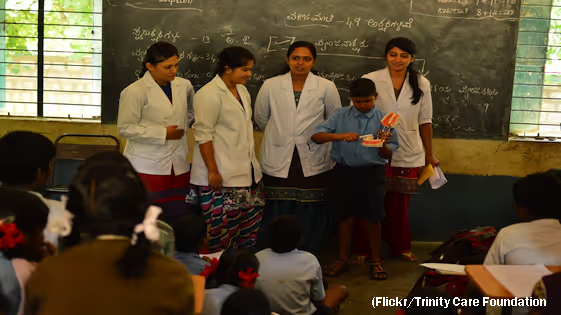
The role of caste and gender in determining science education in India
Studying science at the higher secondary level is essential to pursue further STEM education in India. However, based on recent research, this article documents the prevalence of gender- and caste-based disparities in the choice to study science. It highlights the role of households’ socioeconomic status, lack of access to schooling, and false beliefs and biases in explaining these disparities, and suggests that the social identity of teachers could have an impact on the uptake of science by disadvantaged groups.

Home-based learning through low-cost mobile teaching: Findings from Odisha
Evaluating the effectiveness of a low-cost Home-Based Learning programme implemented during the Covid-19 school closures in Odisha, this article finds that it improved the mathematics and language learning outcomes of children in under-resourced communities. With a rise in hybrid teaching and learning, the findings suggest that such technology-based learning interventions have the ability to provide a safety net in the event of sudden school closures and cushion against a decline in learning levels.
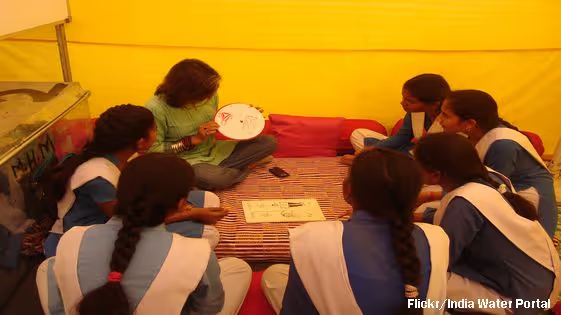
मासिक धर्म सम्बन्धी स्वास्थ्य को कल्याणकारी प्राथमिकता देना : तीन राज्यों से प्राप्त अंतर्दृष्टि
अक्तूबर 11 पूरी दुनिया में अन्तर्राष्ट्रीय बालिका दिवस के रूप में मनाया जाता है। इस दिवस को मनाने का मुख्य उद्देश्य है देशों, समुदायों और समाजों को बालिकाओं के महत्त्व के बारे में याद दिलाना और उन्हें जीवन के हर क्षेत्र में बराबरी का स्थान दिलाना। इसी सन्दर्भ में आज का यह लेख प्रस्तुत है जिसमें तान्या राणा ने बिहार, मध्य प्रदेश और राजस्थान के फ्रंटलाइन कार्यकर्ताओं के साथ बातचीत से प्राप्त अंतर्दृष्टि साझा की है। मासिक धर्म सम्बन्धी सार्वजनिक स्वास्थ्य नीतियों का ध्यान मुख्य रूप से महिलाओं और बालिकाओं को सैनिटरी नैपकिन वितरित करने पर केन्द्रित रहता है। अपने इस लेख में तान्या राणा ने अधिक व्यापक मासिक धर्म सम्बन्धी स्वास्थ्य सेवाओं को उपलब्ध कराने की आवश्यकता पर ज़ोर दिया है। वह इस बात पर प्रकाश डालती हैं कि मासिक धर्म सम्बन्धी स्वास्थ्य योजनाएं कार्यक्रम के खराब कार्यान्वयन और फ्रंटलाइन कार्यकर्ताओं के प्रशिक्षण की कमी से ग्रस्त हैं और अनुशंसा करती हैं कि योजना बनाते समय बालिकाओं को चिंतन के केन्द्र में रखने से इन कमियों को दूर किया जा सकता है।
The ‘invisible’ disability of mental illness: Barriers to social security access
Sakshi Sharda writes about the how a lack of clarity on the assessment and diagnosis of mental health and poor implementation of social security schemes increases the vulnerability of those livings with disabilities. She explores the difficulties faced when obtaining disability certification for people suffering from ‘invisible’ disabilities such as mental illness, neurological disorders and learning disabilities. She highlights the shortcomings in existing policy, and issues caused by the lack of consensus on testing and limited access to tertiary health care centres.
Making menstrual health a welfare priority: Insights from three states
Public policies on menstrual health have mainly focussed on distributing sanitary napkins to women and girls. However, in this note, Tanya Rana shares some insights gained from conversations with frontline workers in Bihar, Madhya Pradesh and Rajasthan which reveal the need for making more comprehensive menstrual health services available. She highlights that menstrual health schemes suffer from poor programme implementation, and a lack of training for frontline workers. She recommends that convergent thinking in planning can solve for these lacunae.
How Prayagraj is addressing learning poverty in its Anganwadis
Despite increasing school enrolment rates, learning levels in India remain low. In this note, Agrawal and Kheria describe the efforts being made by the district administration in Prayagraj, Uttar Pradesh, to incorporate early childhood education into the care provided by Anganwadis. They highlight efforts to train Anganwadi workers and leverage technology to engage parents in their children's learning, as well as administrative endeavours to upgrade the infrastructure at Anganwadi centres to ensure greater chances of success from accessing education.
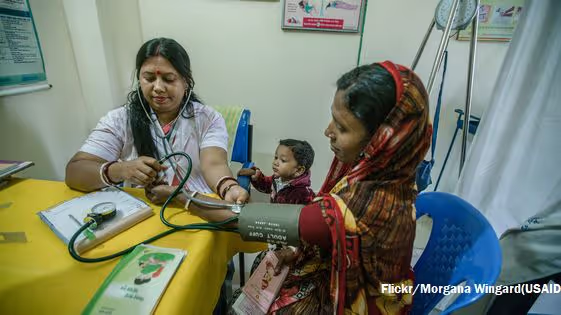
‘स्वीट कैश’- विकासशील देशों में महिलाओं की स्वास्थ्य देखभाल सम्बन्धी ज़रूरतें
अग्रवाल एवं अन्य, स्वास्थ्य देखभाल की मांग के संदर्भ में लिंग-आधारित प्राथमिकताओं की भूमिका का पता लगाते हैं। सीपीएचएस डेटा का उपयोग करते हुए वे पाते हैं कि ईपीएफ में योगदान की अनिवार्य दरों में बदलाव से उत्पन्न सकारात्मक आय-झटके के कारण चिकित्सा परामर्श और दवाओं पर खर्च कम होने से, स्वास्थ्य देखभाल के खर्चों में 11.6% की गिरावट आती है। पर यह गिरावट स्पष्ट रूप से महिलाओं के बेहतर स्वास्थ्य परिणामों को इंगित नहीं करती है। यह दर्शाती है कि महिलाएँ, विशेष रूप से विवाहित महिलाएँ, अपनी बढ़ी हुई आय का उपयोग घरेलू सामान की खरीद पर करने को प्रमुखता देती हैं।
Building resilient education systems: Evidence from five countries
With education disrupted due to the Covid-19 pandemic for over a billion children worldwide, this article emphasises the need to create an education system that is resilient and maintains continuity despite such shocks. It describes an intervention conducted across five developing countries to leverage existing, low-cost family-owned assets – mobile phones – and summarises its effect on children's learning outcomes and wellbeing. It reveals how the original proof-of-concept can be successfully scaled across various country contexts, without showing diminishing returns.
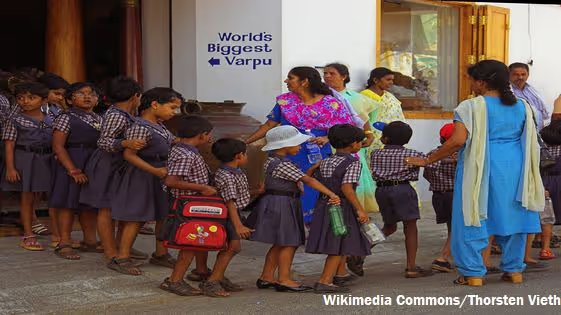
समय पर चेतावनी’ के रूप में स्कूल में अनुपस्थिति
जब बच्चे अक्सर स्कूल में अनुपस्थित रहते हैं तो यह इस बात का संकेत हो सकता है कि वे प्रतिकूल व्यक्तिगत परिस्थितियों से गुज़र रहे हैं। अनुराग कुंडू इस लेख में, स्कूलों में छात्रों की उपस्थिति पर नज़र रखने और कमज़ोर छात्रों को सहायता प्रदान करने के लिए बड़े पैमाने के एक हस्तक्षेप संबंधी अनुभव की चर्चा करते हैं, जिससे छात्रों के स्कूल वापस आने में मदद मिल सकती है। वे स्कूलों में बेहद कम उपस्थिति के कारण सीखने और स्वास्थ्य परिणामों पर पड़ने वाले प्रतिकूल प्रभावों और छात्रों की परिस्थितियों को समझने और उचित हस्तक्षेप डिज़ाइन करने के लिए स्कूलों में उनकी उपस्थिति को ट्रैक करने की आवश्यकता पर प्रकाश डालते हैं।
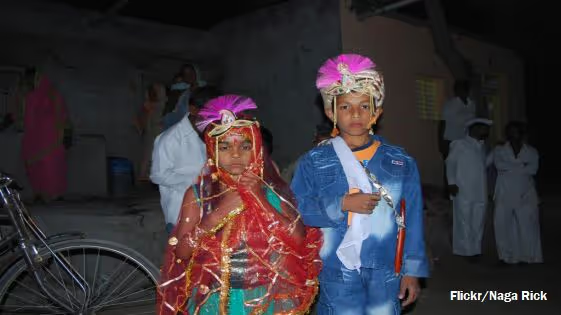
भारत में महिला बाल विवाह के संबंध में एक डेटा अध्ययन
अंतर्राष्ट्रीय महिला दिवस 2023 के उपलक्ष्य में I4I के महीने भर चलने वाले अभियान के दौरान प्रस्तुत अपने लेख में, क्वांटम हब के शुभम मुदगिल और स्वाति राव देश भर के संसदीय निर्वाचन क्षेत्रों में बाल विवाह पर डेटा हाइलाइट्स प्रस्तुत करने के लिए एनएफएचएस पर आधारित एक नवीनतम डेटासेट का उपयोग करते हैं। वे महिला बाल विवाह की व्यापकता और पिछले वर्षों में कुछ राज्यों में इसकी स्थिति में हुए सुधार का पता लगाते हैं। साथ ही वे बाल विवाह की कम रिपोर्टिंग के मुद्दे और महिला बाल विवाह दरों में कमी सुनिश्चित करने के लिए महिला सशक्तिकरण के एक समग्र दृष्टिकोण की आवश्यकता पर भी चर्चा करते हैं।
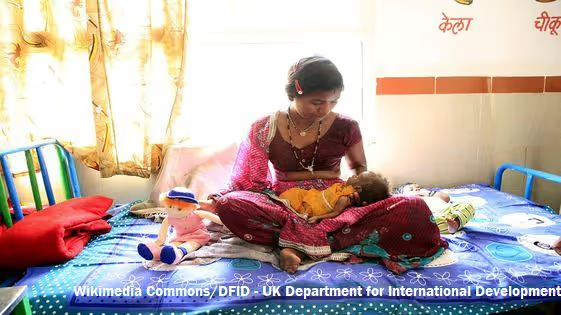
How does a ban on sex-selective abortions affect child health?
Widespread access to sex selection technologies has further skewed the male-biased sex ratio in India. However, this article suggests that the ban on prenatal sex determination may have adverse consequences on the health and mortality outcomes of the surviving children. Looking at children born between in the decade before and after the ban, it finds that the ban led to an increase in the proportion of unwanted girls, and increased competition for resources among children in large families.

भारत में महिलाओं का सशक्तिकरण : क्या औपनिवेशिक इतिहास मायने रखता है?
क्या औपनिवेशिक इतिहास भारत में महिलाओं के समकालीन आर्थिक परिणामों की दृष्टि से मायने रखता है? इसकी जांच करते हुए यह लेख इस बात की ओर इशारा करता है कि जो क्षेत्र सीधे ब्रिटिश शासन के अधीन रहा, महिला सशक्तिकरण के लगभग सभी मानदण्डों के आधार पर वहां की निवासी महिलाएं बेहतर स्थिति में हैं। इसमें तर्क दिया गया है कि अंग्रेज़ों के काल में महिलाओं के पक्ष में लाए गए कानूनी और संस्थागत परिवर्तन और 19वीं शताब्दी में पश्चिम-प्रेरित सामाजिक सुधार इस दीर्घकालिक संबंध को समझाने में प्रासंगिक हो सकते हैं।
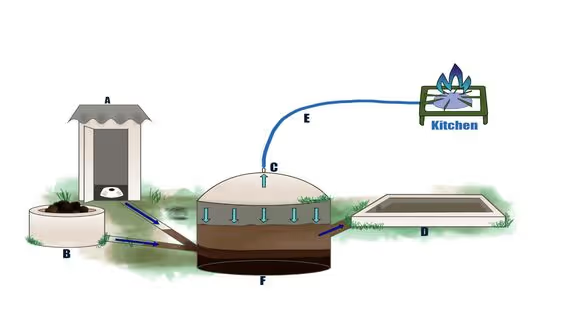
Overcoming socio-cultural resistance towards biogas technology
Cultural taboos are often described as an insurmountable barrier to adoption of domestic toilet-linked anaerobic digesters (TLADs). This study provides a better understanding of the socio-cultural resistance towards TLADs through findings from interviews with households in Assam, and demonstrates that this resistance can be negotiable in certain circumstances. It highlights various pathways to adoption of TLADs and suggests ways in which the implementation of the national biogas programmes could become more effective.
School absences as an early warning system
When children are frequently absent from school, it could be a sign that they are going through adverse personal circumstances. In this note, Anurag Kundu discusses the experience of launching a large-scale intervention to track students' attendance and provide support to vulnerable students that would allow them to return to school. He highlights the adverse impact of poor school attendance on learning and health outcomes, and the need to track attendance to understand students’ circumstances and design appropriate interventions

भारत में स्वच्छ पेयजल तक पहुंच और महिलाओं की सुरक्षा
सेखरी और हुसैन इस अध्ययन में, भूजल की कमी के कारण महिलाओं के प्रति होने वाली यौन हिंसा में वृद्धि के संदर्भ में अनुभवजन्य साक्ष्य का पता लगाने के लिए जिला स्तर के आंकड़ों का उपयोग करते हैं। वे तर्क देते हैं कि जिन परिवारों को पीने का साफ पानी घरों में नहीं मिल पाता, उन परिवारों की महिलाओं को पानी लाने के लिए अक्सर घर से दूर जाना पड़ता है, जिससे वे यौन हिंसा के प्रति अधिक असुरक्षित हो जाती हैं। क्योंकि यह सिद्ध होता है कि पानी की कमी से महिलाओं के लिए यौन हिंसा का खतरा बढ़ता है, यह शोध पानी के बुनियादी ढांचे को सुदृढ़ बनाने के लिए अधिक पूँजी निवेश की दलील प्रस्तुत करता है।
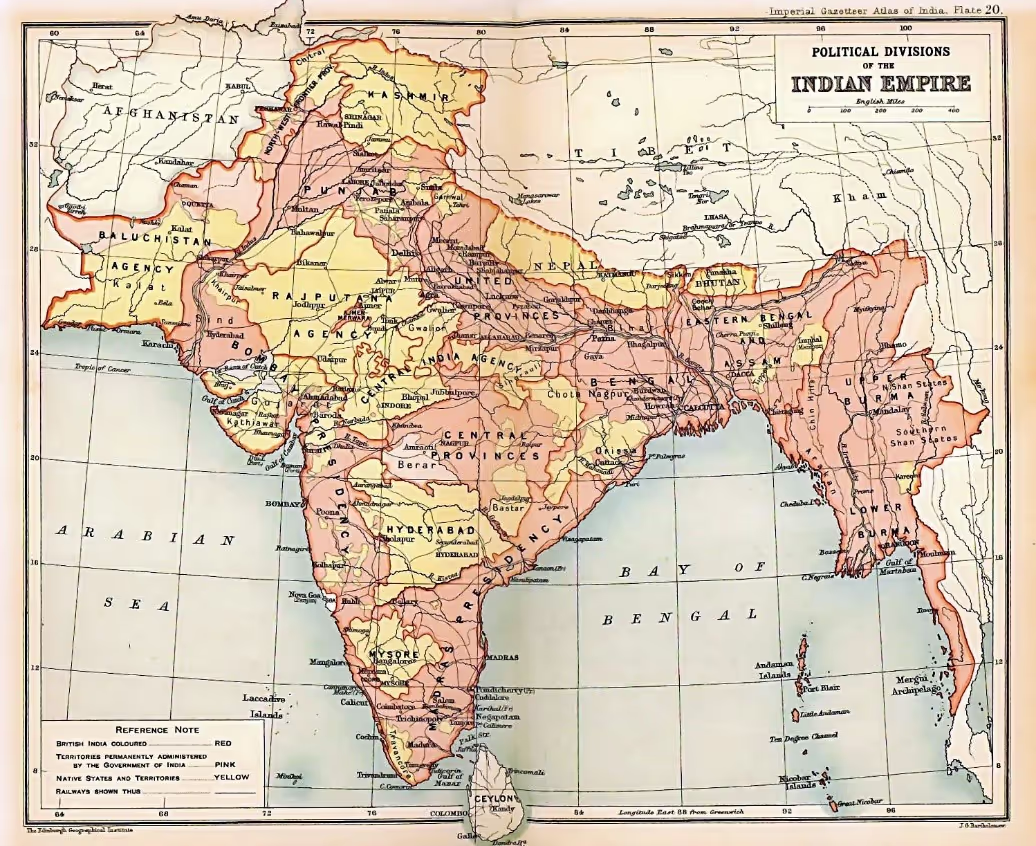
Women empowerment in India: Does colonial history matter?
Examining whether colonial history matters for women’s contemporary economic outcomes in India, this article shows that women who live in areas that were under direct British rule are better off in terms of almost all measures of women empowerment. It argues that legal and institutional changes brought in by the British in favour of women, and West-inspired social reforms in the 19th century may be relevant to explaining this long-term link.
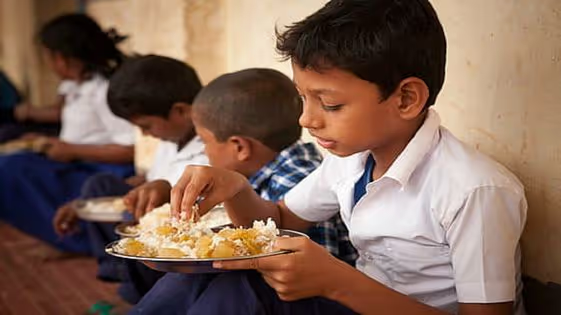
मातृत्व पर पोषण का बोझ : क्या बच्चों को दिया जाने वाला मध्याह्न भोजन उनकी माताओं के स्वास्थ्य परिणामों में भी सुधार ला सकता है?
मध्याह्न भोजन बच्चों को पोषण सुरक्षा जाल प्रदान करता है और उनके अधिगम परिणामों तथा स्कूलों में उनकी उपस्थिति में सुधार लाता है। निकिता शर्मा तर्क देती हैं कि मध्याह्न भोजन प्राप्त करने वाले बच्चों की माताओं को भी इसके ‘स्पिलओवर’ लाभ मिल सकते हैं। वह शोध के निष्कर्षों पर प्रकाश डालती हैं जो यह दर्शाते हैं कि मध्याह्न भोजन बच्चों में कुपोषण को दूर करने के साथ-साथ यह भी सुनिश्चित करता है कि पोषण में कमी के दौरान बच्चों को खिलाने के लिए माताओं को अपना आहार त्यागने की आवश्यकता नहीं पड़ती।

अस्पताल की जवाबदेही में सुधार हेतु मरीज़ों को जानकारी देकर सशक्त बनाना
समूचे भारत में गरीबों के लिए मुफ्त स्वास्थ्य सेवा में विस्तार होने के बावजूद, कई अस्पतालों ने मरीज़ों की जेब से फीस लेना जारी रखा है। डुपास और जैन ने अपने अध्ययन में, इस बात की जांच की है कि क्या मरीज़ों को उनके लाभों के बारे में सूचित करने से अस्पतालों को जवाबदेह बनाने में मदद मिलती है। वे राजस्थान की एक सरकारी योजना के तहत, बीमा के हकदार डायलिसिस मरीज़ों का सर्वेक्षण करते हैं और पाते हैं कि निजी एवं सार्वजनिक अस्पतालों में जानकारी संबंधी हस्तक्षेप के प्रभाव अलग-अलग तरीके से उजागर होते हैं और केवल सार्वजनिक अस्पतालों में परीक्षण और दवाओं की कम कीमतों के कारण मरीज़ों के जेब से भुगतान में कमी आती है।
Nutritional penalty of motherhood: Can midday meals for children also improve their mothers’ health outcomes?
Midday meals provide a nutritional safety net for children and improve their learning outcomes and attendance. Nikita Sharma argues that spillover benefits might also exist for mothers of the children who receive them. She highlights research findings which indicate that, in addition to addressing malnutrition among children, midday meals also ensure that mothers do not need to forgo their own consumption to feed their children in times of scarcity.
Access to clean drinking water and women’s safety in India
In this study, Sekhri and Hossain use district-level data to find empirical evidence that groundwater scarcity results in an increase in sexual violence against women. They argue that in households without access to clean drinking water, women often have to walk far from home to collect water, making them more vulnerable to sexual violence. Since they establish that water shortages increase the risk faced by women water collectors, it makes the case for increased investment in water infrastructure.
Foundational learning outcomes: More recovery than loss
Sharing data from the recently released ASER 2022, Wilima Wadhwa discusses the trends in primary school enrollment and learning during the pandemic. Using data collected from Karnataka, Chhattisgarh and West Bengal in 2021 to fill in the gap in the surveys, she shows how there were large learning losses in reading and maths between 2018 and 2021; however, learning levels had recovered by 2022. She also highlights the emphasis given to foundational learning, the results of which are reflected in ASER 2022.
Herself, and her child: Are they worse off due to Covid-19?
Lockdowns imposed to contain the spread of Covid-19 led to loss of employment and income. They also created greater food insecurity, with women and children being more vulnerable to such shocks. In this context, based on surveys in rural Bihar, Husain et al. discuss the impact of the lockdown on the dietary practices of women and children, and how these were impacted by their access to government welfare programmes during this period.

Old habits and new norms
As schools reopen and memories of the pandemic fade, Madhav Chavan takes stock of practices and ideas that have become the ‘new normal’. He highlights the increase in enrollment and absence of learning loss among children over the last few years, and the role that parents and the community played in aiding children’s learning efforts. He sees the pandemic-induced closures as an opportunity to learn from how the school system coped with the challenge and created new pedagogical norms.
Sweet cash: Women’s demand for healthcare in developing countries
Agrawal et al. explore the role of gender-based preferences for demand of healthcare. Using CPHS data they find that the positive income shock – generated by a change in the mandated rates of contribution to the EPF – leads to a 11.6% decline in healthcare expenses driven by less expenditure on consultations and medications. However, this decline is not explained by women having better health outcomes and suggests that women, especially married women, prefer using the increased income on household goods
Empowering patients with information to improve hospital accountability
Despite the expansion of free healthcare for the poor throughout India, many hospitals continue to charge patients out-of-pocket fees. In this study, Dupas and Jain investigate whether informing patients of their benefits helps hold hospitals accountable. They survey dialysis patients in Rajasthan entitled to insurance under a government scheme and find the impact of the information intervention manifests differently in private and public hospitals, with a decrease in out-of-pocket payments

The unintended positive consequences of India’s safe motherhood programme
India’s flagship maternal health intervention, Janani Suraksha Yojana, provided conditional cash transfers to women opting for institutional deliveries. In this study, Chatterjee and Poddar document large positive spillovers of this programme on children’s educational outcomes. They find that these spillovers accrue to the already born elder children in the household through increased investments in human capital and changes in fertility preferences among women beneficiaries of the programme.
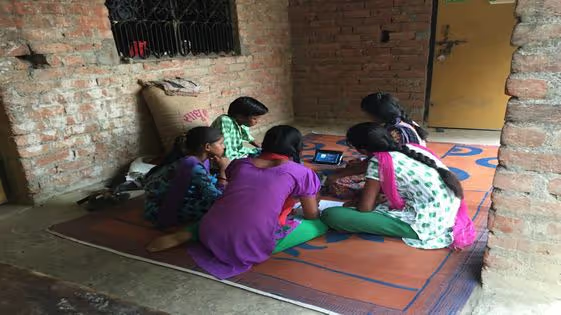
Low-tech and teacher support interventions during school closures
School closures during Covid-19 significantly impacted early childhood education, especially in households without sufficient parental engagement. Using data from households affiliated with Balwadis and preschools in Mumbai and Pune, Vernekar et al. find that those with access to a structured educational technology programme reported higher engagement levels. This effect was even greater for households that also received teacher support. They make a case for using such ed-tech programmes for blended schooling to minimise learning inequalities in case of future shocks.
A data story on female child marriage in India
In the eighth post of I4I’s month-long campaign to mark International Women’s Day 2023, Shubham Mudgil and Swathi Rao from The Quantum Hub use a novel dataset based on NFHS-5 to present data highlights on child marriage in parliamentary constituencies across India. They trace the prevalence of female child marriage and the extent to which the situation has improved in certain states over the years. They discuss the issue of underreporting, and the need for a holistic approach of empowering women to ensure reduction in female child marriage rates.
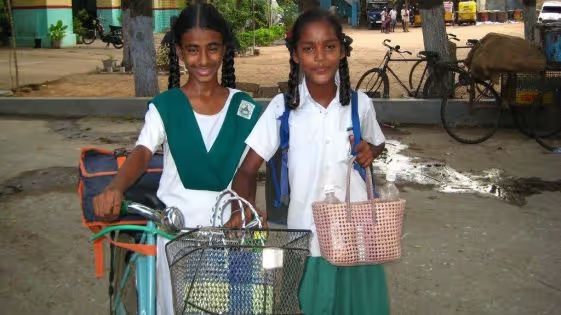
Time poverty for girls: Implications for educational attainment and workforce participation
In the fifth post of I4I’s month-long campaign to mark International Women’s Day 2023, Priyadarshini et al. leverage time use data from a study in Bihar, and find that girls take on a majority of domestic duties, and spend significantly less time studying or preparing for entrance exams. However, they note that since the pandemic, male participation in unpaid household work has increased. They also present qualitative evidence which shows that attitudes towards the conventional division of work are slowly changing among some youth.
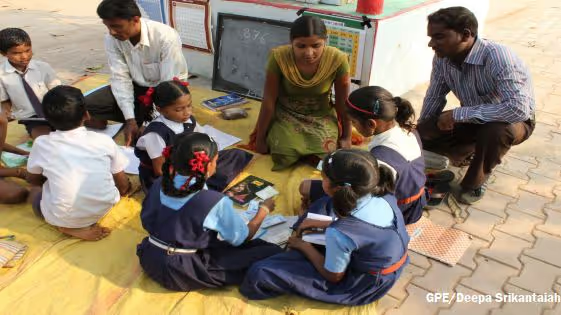
Understanding intergenerational educational mobility with conflicting evidence
There is a growing literature on intergenerational educational mobility that explores how parental education influences the educational attainment of children. This article compares three empirical models widely used to study intergenerational educational mobility. Using data from India, China and Indonesia, it finds that conclusions regarding educational mobility vary substantially across different models. . It argues that rank-based measures are not suitable for understanding the effects of economic policy, and suggests that policy advice should focus on the measures based on years of schooling.
क्या ग्रामीण उत्तर भारत में अभी भी खुले में शौच प्रचलित है?
स्वच्छ भारत मिशन के बाद चार फोकस वाले राज्यों में प्रचलित खुले में शौच को समझने की कोशिश में, व्यास और गुप्ता एनएफएचएस-5 के निष्कर्षों का मूल्यांकन करते हैं। वे पाते हैं कि पारिवारिक स्तर पर एकत्र किए गए डेटा के उपयोग और प्रतिक्रिया पूर्वाग्रह की संभावना के चलते खुले में शौच की दर को एनएफएचएस द्वारा कम आंके जाने की संभावना है। अनुमानों को समायोजित करने के पश्चात वे पाते हैं कि वर्ष 2019-21 के दौरान फोकस वाले राज्यों में लगभग आधे ग्रामीण भारतियों ने खुले में शौच किया।
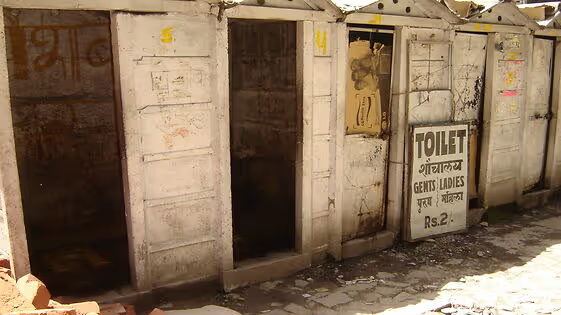
Is open defecation still prevalent in rural north India?
In an attempt to understand open defecation in four focus states in the aftermath of the Swachh Bharat Mission, Vyas and Gupta evaluate the findings of the NFHS-5. They note that the NFHS is likely to underestimate open defection rates due to their use of data collected at the household level, and the possibility of response bias. After adjusting the estimates, they find that about half of rural Indians in the focus states defecated in the open in 2019-21.

Phone-based assessment data: Triangulating schools’ learning outcomes
Recent research has shown that schools often report overestimated learning outcomes, as they fear adverse consequences if they report poor performance. In this post, Gupta et al. describe a pilot study to measure reliability and validity of phone-based assessments, in which they tested students in Uttar Pradesh both over the phone and in person. They reveal that students performed similarly in both modes, and put forth some recommendations to state government looking to scale phone assessments and improve data reliability.

Credit cooperatives: Promoting worker well-being during crises?
Research shows that access to alternative credit mechanisms during the pandemic enabled informal women workers to gain financial security, benefitting their mental well-being in the process. Based on the results of a survey conducted by SEWA Bharat in 2021, Devika Oberoi discusses the mechanisms through which credit cooperatives increase financial security and create networks among women, and suggests some policy interventions which can encourage financial inclusion and improve women's resilience in times of crisis.
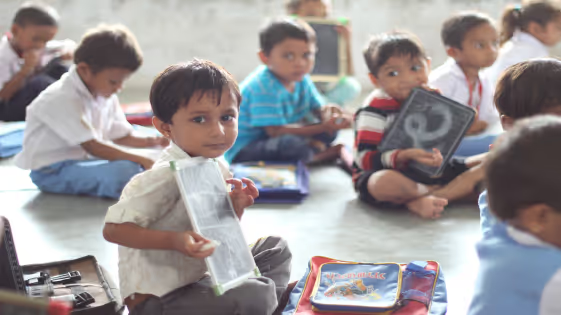
India’s early years mathematics curriculum: Continuity, discontinuity and progression
Research has shown the importance of building strong foundations for learning, as the development of cognitive skills in preschool and early primary years is predictive of later mathematical achievement. This article examines the national curriculum for mathematics and learning materials used in three states and finds that state textbooks do not always follow the prescribed content and there is a lack of continuity between the curriculum followed during preschool and early years of primary school.

भारत में माध्यमिक शिक्षा तक पहुंच से संबंधित चुनौतियां
भारत की नवीनतम राष्ट्रीय शिक्षा नीति में वर्ष 2030 तक शिक्षा तक सार्वभौमिक पहुंच की परिकल्पना की गई है। हालांकि, प्राथमिक विद्यालयों में नामांकन अधिक होने के बावजूद माध्यमिक शिक्षा तक पहुंच कम रही है। इसमें योगदान करने वाले कुछ कारकों के बारे में बोरदोलोई और पांडेय विचार करते हैं, जिनमें माध्यमिक शिक्षा प्रदान करने वाले स्कूलों की सीमित संख्या, स्कूली शिक्षा से जुड़ी उच्च लागत और शिक्षा और व्यावसायिक प्रशिक्षण में सार्वजनिक निवेश की कमी शामिल हैं। वे माध्यमिक शिक्षा पर केंद्रित नीति पर अधिक ध्यान देने का आह्वान करते हैं।

Challenges in access to secondary education in India
India’s latest National Education Policy has envisaged universal access to education by 2030. However, while enrolment is high in elementary schools, access to and uptake of secondary education has remained low. Bordoloi and Pandey consider some contributing factors, including the limited number of schools offering secondary education, the higher costs associated with schooling, and the lack of public investment in education and vocational training. They call for increased attention to be paid to policy focussed on secondary education.

Tracking learning outcomes: ASER’s work through the pandemic
With the onset of the Covid-19 pandemic and the associated lockdowns, schools quickly pivoted to online learning. However, there was limited information about whether children had access to learning materials, and what was actually taking place within households. In this edition of I4I Conversations, Rukmini Banerji and Wilima Wadhwa discuss the role that the Annual Status of Education Report (ASER) played in remedying this gap in the data. They discuss a few major findings from the survey on learning outcomes during the pandemic. Although the proportion of children not enrolled in schools went up, the proportion of children enrolled in government schools increased, and most of them had access to digital learning materials due to an increase in smartphone coverage. They discuss the challenges they faced while conducting ASER during the pandemic, including being limited to phone surveys and rallying volunteers amidst uncertainty. However, after the lack of data during the first ...
Tracking learning outcomes: ASER’s work through the pandemic
With the onset of the Covid-19 pandemic and the associated lockdowns, schools quickly pivoted to online learning. However, there was limited information about whether children had access to learning materials, and what was actually taking place within households. In this edition of I4I Conversations, Rukmini Banerji and Wilima Wadhwa discuss the role that the Annual Status of Education Report (ASER) played in remedying this gap in the data. They discuss a few major findings from the survey on learning outcomes during the pandemic. Although the proportion of children not enrolled in schools went up, the proportion of children enrolled in government schools increased, and most of them had access to digital learning materials due to an increase in smartphone coverage. They discuss the challenges they faced while conducting ASER during the pandemic, including being limited to phone surveys and rallying volunteers amidst uncertainty. However, after the lack of data during the first ...
उच्च स्कोरिंग लेकिन गरीब: उच्च शिक्षा में प्रतिभा का गलत आवंटन
जैसे-जैसे कॉलेज शिक्षा में श्रम बाजार के लाभों में बढ़ोतरी हुई है, अब पहले से कहीं अधिक युवको को किसी न किसी प्रकार की उच्च शिक्षा प्राप्त हो रही है। फिर भी, गरीब सामाजिक आर्थिक स्थिति के बच्चों की कॉलेज में उपस्थिति कम रहती है। यह लेख उस असमानता की पड़ताल करता है। इस लेख में पाया गया है कि पारिवारिक पृष्ठभूमि कॉलेज में उपस्थिति के लिए अकादमिक तैयारी से अधिक महत्वपूर्ण है, क्योंकि अपनी कक्षा में शीर्ष स्थान पर रहने वाले गरीब छात्रों के कॉलेज में उपस्थित रहने की संभावना उतनी ही होती है जितनी उनकी कक्षा में सबसे नीचे स्थान पर रहने वाले अमीर छात्रों की होती है।
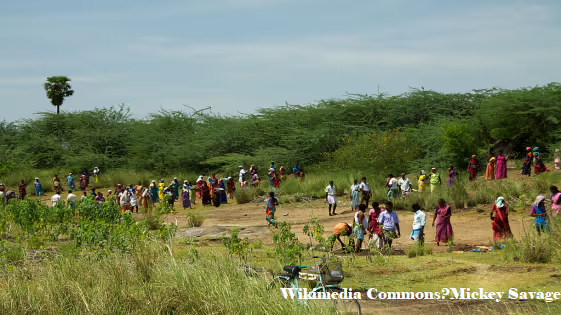
How MNREGA reduced women’s labour force participation
By guaranteeing 100 workdays annually per household in rural India, MNREGA seeks to enhance economic security and alleviate poverty. This article shows that while the programme has successfully achieved these goals, it has inadvertently reduced rural women’s labour force participation and consequently their well-being and household bargaining power. This is because it has reduced the need for women to serve as additional workers in times of male income instability.
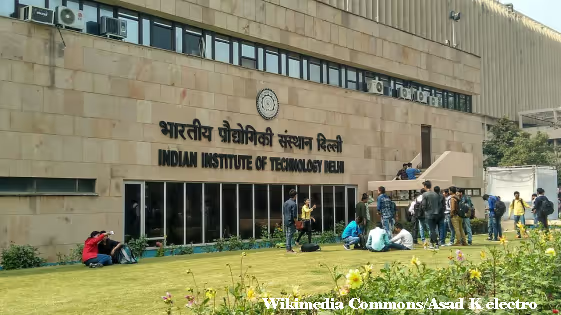
प्रौद्योगिकी में लड़कियाँ : आईआईटी की अतिरिक्त सीट योजना का मूल्यांकन
वर्ष 2018 में शुरू की गई अतिरिक्त सीट योजना (सुपरन्यूमरेरी सीट्स स्कीम) का उद्देश्य परंपरागत रूप से पुरुष-प्रधान रहे आईआईटी संस्थानों के स्नातक इंजीनियरिंग छात्रों में स्त्री-पुरुष अनुपात में सुधार लाना है। लेख बताता है कि यह पहल इन प्रतिष्ठित संस्थानों में अधिक लड़कियों की भर्ती में सफल रही है। इसके अलावा, यद्यपि लड़कियों की शुरूआत प्रवेश स्तर पर निचले रैंकों से होती है, वे औसतन कार्यक्रम अवधि में शैक्षणिक रूप से अपने पुरुष समकक्षों के बराबर आ जाती हैं।
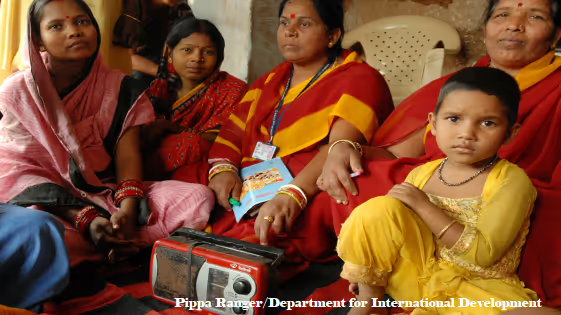
Tuning into empowerment: How community radio affects gender equality
India’s Community Radio Policy, 2006, enables educational institutions and NGOs to establish community radio stations to address local development issues via locally produced content. This article shows that exposure to community radio improves women’s outcomes in terms of education, marriage and fertility. The evidence makes a case for leveraging grassroots media to address gender inequality at scale in developing countries.
Raising the value of women’s time for a transition to clean fuels
A majority of women in rural India continue to use traditional fuels, adding to the time that they devote to domestic work. In this post, Farzana Afridi discusses findings from a survey in Madhya Pradesh, showing that switching to a clean fuel leads to time saving of about 20 minutes per day on average – but no corresponding increase in women’s workforce participation. She contends that raising the value of women’s work in the labour market can incentivise clean fuel adoption
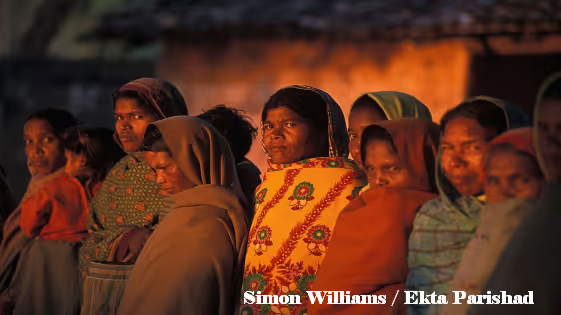
आर्थिक विकास और महिलाओं के खिलाफ अपराध
जैसे-जैसे आर्थिक विकास होता है, प्रौद्योगिकी शक्ति-प्रधान की बजाय कौशल पर अधिक निर्भर होती जाती है, जिससे महिलाओं की कमाई की सम्भावना बढ़ जाती है। इस लेख में, वर्ष 2004-2012 के भारतीय डेटा का विश्लेषण करते हुए यह दिखाया है कि स्त्री-पुरुष अनुपात में कमी के कारण विशेषकर उन क्षेत्रों में जहाँ लिंगानुपात में पूर्वाग्रह अधिक है, महिलाओं के साथ बलात्कार और अभद्र व्यवहार की घटनाएं बढ़ रही हैं। इसके पीछे का मुख्य कारण महिला सशक्तिकरण के खिलाफ़ पुरुषों की प्रतिक्रिया है, वह भी ऐसे परिवेश में जहाँ सामाजिक संस्थाएँ पारम्परिक रूप से पुरुषों का पक्ष लेती रही हैं।
Girls in tech: Evaluating IIT’s Supernumerary Seats Scheme
Introduced in 2018, the Supernumerary Seats Scheme seeks to improve gender ratios among undergraduate engineering students at IITs, which have historically been male dominated. This article shows that the initiative has been successful in getting more females into these elite institutions. Further, on average, although girls start off with lower entry ranks, they are able to match up with their male counterparts academically over the duration of the programme
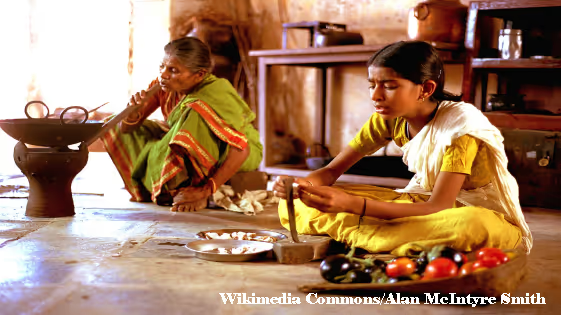
What is behind the recent rise in women’s workforce participation?
Women’s workforce participation in India increased from 32% in 2022-23 to 37% in 2023-24, with the rise concentrated in rural areas. This article demonstrates that this significant change may be driven by additional clarifications in instructions to enumerators, resulting in several women who were earlier classified as outside the labour force now being considered self-employed. This highlights the need to exercise caution while interpreting the rising workforce participation as sustainable employment growth
‘ब्रिंग-ए-फ्रेंड’: महिलाओं के प्रजनन अधिकार में सुधार के लिए वित्तीय और साथी के समर्थन का लाभ उठाना
राष्ट्रीय सुरक्षित मातृत्व दिवस के सन्दर्भ में प्रस्तुत दो आलेखों की श्रृंखला के इस दूसरे लेख में उन परिणामों पर प्रकाश डाला गया है, जिनसे पता चलता है कि अगर महिलाओं के साथी उनके साथ हों तो उनके परिवार नियोजन सेवाओं का लाभ उठाने की अधिक संभावना होती है। शोधकर्ता दर्शाते हैं कि साथी का समर्थन सामाजिक अलगाव को कम कर सकता है, महिलाओं के आवागमन को बढ़ा सकता है और सास व परिवार के अन्य सदस्यों के विरोध को दूर कर सकता है। इस प्रकार के परिणामों का महिला सशक्तिकरण पर व्यापक प्रभाव पड़ेगा।
मम्मी-जी को मनाना : भारत में परिवार नियोजन के लिए सास की स्वीकृति
भारत में हर साल 11 अप्रैल को, जो कस्तूरबा गाँधी की जयन्ती होती है, राष्ट्रीय सुरक्षित मातृत्व दिवस के रूप में मनाया जाता है। इसे मानाने का उद्देश्य गर्भावस्था, प्रसव और प्रसवोत्तर चरणों में माताओं के लिए उचित स्वास्थ्य सेवा और कल्याण के महत्व के बारे में जागरूकता बढ़ाना है। इसी सन्दर्भ में प्रस्तुत दो आलेखों की इस श्रृंखला के पहले लेख में यह चर्चा की है कि महिलाओं की परिवार नियोजन सेवाओं तक पहुँच पर सास का क्या प्रभाव पड़ता है। पारम्परिक रूप में सास औसतन महिलाओं और उनके पतियों की तुलना में अधिक बच्चों और बेटों को प्राथमिकता देती हैं। लेख में उत्तर प्रदेश में महिलाओं को सब्सिडी वाले परिवार नियोजन तक पहुँच प्रदान करने वाले एक हस्तक्षेप के प्रभावों का वर्णन है। इस हस्तक्षेप से महिलाओं और उनकी सास के बीच परिवार नियोजन के बारे में बातचीत में वृद्धि हुई, जिसके परिणामस्वरूप सासों द्वारा परिवार नियोजन के प्रति स्वीकृति में वृद्धि हुई, और उल्लेखनीय रूप से बहुओं के क्लिनिक में जाने की संख्या में भी वृद्धि हुई है।
मानसिक मामले : नेपाल में कलंक-मुक्ति से कैसे सहायता मांगने की प्रवृत्ति को बढ़ावा मिला
चिंता और अवसाद जैसी सामान्य मानसिक स्वास्थ्य समस्याएं एक महत्वपूर्ण लोक स्वास्थ्य चुनौती बन गई हैं तथा उचित देखभाल प्राप्त करने में कलंक (स्टिग्मा) एक प्रमुख बाधा है। यह लेख नेपाल में किए गए एक अध्ययन के आधार पर दर्शाता है कि सूचना अभियान या सेलिब्रिटी समर्थन जैसे कम लागत वाले, अच्छी तरह से लक्षित हस्तक्षेप लोगों को सहायता लेने के लिए प्रोत्साहित कर सकते हैं और उपचार की खाई को पाट सकते हैं।

गतिशीलता के माध्यम से लैंगिक असमानता से लड़ना : दिल्ली की ‘पिंक टिकट’ योजना का आकलन
आवागमन में व्याप्त लैंगिक असमानताओं को दूर करने के लिए, दिल्ली सरकार ने वर्ष 2019 में महिलाओं के लिए किराया-मुक्त बस यात्रा योजना की शुरुआत की। शहर में महिला यात्रियों के एक सर्वेक्षण के आधार पर, निशांत और अर्चना ने इस योजना के सकारात्मक प्रभावों, जैसे कि स्वतंत्र रूप से यात्रा करने के आत्मविश्वास में वृद्धि, मुफ्त यात्रा से होने वाली बचत का अन्य उद्देश्यों के लिए उपयोग पर प्रकाश डाला है। साथ ही, वे व्यापक अर्थों में बस परिवहन को और अधिक महिला-अनुकूल बनाने की आवश्यकता पर बल देते हैं। यह अंतर्राष्ट्रीय महिला दिवस 2025 के उपलक्ष्य में हिन्दी में प्रस्तुत श्रृंखला का दूसरा लेख है।
Female labour force participation: Measurement and data quality
Official data revealed a sharp decline in female labour force participation in India between 2004-05 and 2011-12, despite fast economic growth in the country. Examining the measurement of women’s work and data quality issues, this article identifies three explanations for the low observed female labour force participation: inconsistent treatment of non-market work, more women in higher education, and the disproportionate time spent by women on childcare
International Women’s Day 2025: Towards equality and empowerment
Throughout this week, I4I has been sharing some of the latest evidence and ideas around women’s empowerment to mark International Women’s Day 2025. Discover the five-part series, and more about I4I’s gender-focused research, in this post.
Pedalling towards gender equality and empowerment
In Bihar, India and in rural Zambia, the government introduced programmes to address gender gaps in education by providing adolescent girls with bicycles for their commute to school. Discussing the immediate and long-term impacts of these initiatives, this article provides insights into designing more effective and sustainable policies to promote gender parity in education. This is the fifth post of a five-part series to mark International Women’s Day 2025.
International Women’s Day 2025: Towards equality and empowerment
Throughout this week, I4I has been sharing some of the latest evidence and ideas around women’s empowerment to mark International Women’s Day 2025. Discover the five-part series, and more about I4I’s gender-focused research, in this post.
Can job ad language help explain the gender gap in the Indian labour market?
Women applying for jobs tend to earn a lot less than men of the same age and education qualifications. Understanding the factors contributing to this disparity is crucial for addressing gender inequality in the labour market. This article explores one such factor: the wording of job advertisements and how it is linked to applicant behaviour. It finds that women might be deterred from applying to high-salary jobs due to implicit gender associations, together with explicit preferences. This is the fourth post of a five-part series to mark International Women’s Day 2025.
Does electrification illuminate women's lives?
A key reason for women’s low labour force participation in developing countries is the burden of unpaid domestic work. Analysing data from rural Bangladesh, this article assesses whether electrification can make a difference by increasing access to time-saving technologies. It finds that women in electrified homes are able to divert some time away from housework to farm work and leisure, and have a greater say in decision-making. This is the third post of a five-part series to mark International Women’s Day 2025.
Fighting gender inequality through mobility: Assessing Delhi’s ‘Pink Ticket’ scheme
To address gender inequities in mobility, Delhi launched a fare-free bus travel scheme for women in 2019. Based on a survey of female passengers in the city, Nishant and Archana highlight positive effects of the scheme such as enhanced confidence to commute independently, and use of savings from free travel for other purposes. At the same time, they note the need to make bus transport more female-friendly in a broader sense. This is the second post of a five-part series to mark International Women’s Day 2025
Mind matters: How destigmatisation drives help-seeking in Nepal
Common mental health problems such as anxiety and depression constitute a significant public health challenge, with stigma being a key barrier to seeking proper care. Based on a study in Nepal, the article shows that low-cost, well-targeted interventions such as information campaigns or celebrity endorsements, can encourage people to seek support and bridge the gaps in treatment.
क्या अल्पसंख्यकों के बारे में बातचीत के ज़रिए भेदभाव कम हो सकता है? चेन्नई में ट्रांसजेंडर-विरोधी भेदभाव से जुड़े साक्ष्य
भारत में अल्पसंख्यक अधिकार दिवस भाषाई, धर्म, जाति, लिंग और रंग के आधार पर अल्पसंख्यक लोगों के अधिकारों को बढ़ावा और संरक्षण देने के लिए एक महत्वपूर्ण दिन है और प्रति वर्ष 18 दिसम्बर को मनाया जाता है। भले ही भारतीय संविधान अल्पसंख्यकों समेत सभी हाशिए पर रहने वाले समुदायों को समान और न्यायपूर्ण अधिकार प्रदान करता है लेकिन अल्पसंख्यकों के अधिकारों से संबंधित कई मुद्दे अभी भी जीवित हैं। इसी सन्दर्भ में प्रस्तुत है यह शोध आलेख। सभी जानते हैं कि भेदभावपूर्ण व्यवहार से विभिन्न आर्थिक और सामाजिक क्षेत्रों में समानता और दक्षता पर प्रतिकूल प्रभाव पड़ता है। इस लेख के माध्यम से, चेन्नई के शहरी भागों में ट्रांसजेंडर लोगों के खिलाफ भेदभाव के सन्दर्भ में यह पता लगाया गया है कि क्या अल्पसंख्यक के बारे में बहुसंख्यक समूह के सदस्यों के बीच आपसी बातचीत से भेदभाव को कम किया जा सकता है। यह पाया गया कि इस तरह के आपसी बातचीत के महत्वपूर्ण सकारात्मक प्रभाव होते हैं, जो समूह के सदस्यों द्वारा एक-दूसरे को ट्रांसजेंडर के प्रति अधिक संवेदनशील बनने के लिए राजी करने से प्रेरित होते हैं।
अत्याचार, हत्याएं व अस्पृश्यता : जाति-आधारित भेदभाव का मापन
मानवाधिकार वे अधिकार हैं जो किसी भी व्यक्ति को जन्म के साथ ही मिल जाते हैं। सरल शब्दों में इसका अर्थ है किसी भी व्यक्ति के जीवन, स्वतंत्रता, समानता और प्रतिष्ठा का अधिकार। 10 दिसंबर को हर साल मानवाधिकार दिवस के रूप में मनाया जाता है। इसी दिन लोगों को मूल अधिकार देने की घोषणा की गई थी। हम भारत में व्याप्त अंतर-जातीय तनाव और भेदभाव को सबसे अच्छे तरीके से कैसे माप सकते हैं? मानवाधिकार दिवस के सन्दर्भ में प्रस्तुत विकटॉयख़ जिरार्ड के इस लेख में, वर्ष 1989 में जाति-आधारित भेदभाव से निपटने के लिए लागू हुए अत्याचार निवारण अधिनियम के तहत संकलित आँकड़ों का उपयोग करने की सीमाओं पर चर्चा की गई है। जिरार्ड दर्शाती हैं कि निचली जातियों की हत्याओं की रिपोर्ट या यहाँ तक कि घरेलू सर्वेक्षणों में अस्पृश्यता के बारे में औसत प्रतिक्रियाएं, राज्यों में अंतर-समूह तनावों के अधिक सुसंगत संकेत प्रदान करती हैं।
लिंग-आधारित हिंसा की रिपोर्टिंग : सार्वजनिक सक्रियता और संवाद क्यों महत्वपूर्ण हैं
कोलकाता के एक अस्पताल में ड्यूटी पर तैनात एक महिला डॉक्टर के साथ हुए क्रूरतापूर्वक बलात्कार और हत्या के हालिया मामले के कारण देश भर में विरोध प्रदर्शन हुए और इसने एक बार फिर भारत में महिलाओं की सुरक्षा को लेकर गम्भीर सवाल और चिन्ताएँ खड़ी कर दी। इस लेख में, वर्ष 2012 में दिल्ली में हुई ‘निर्भया’ घटना और उसके परिणामस्वरूप हुए सामाजिक आन्दोलन के प्रभाव की जाँच करते हुए पाया गया कि इस घटना के बाद लिंग-आधारित हिंसा की रिपोर्टिंग में 27% की वृद्धि हुई थी।

Road to empowerment: Rural roads programme and women's outcomes
Lack of spatial mobility is recognised as a critical constraint on women's socioeconomic participation. This article presents findings from a study examining the impact of India’s rural roads programme, on women’s outcomes. While the construction of all-weather roads alleviates women’s mobility restrictions and improves social norms and female education, there is limited effect on female employment – with men benefitting more in this regard instead.

रक्षात्मक सहयोग : भारतीय मुसलमानों के समाज-सार्थक दृष्टिकोण को समझना
विकास के मुख्यधारा के सिद्धांत अधिक समरूप परिस्थितियों में सार्वजनिक साधनों में योगदान करने की अधिक इच्छा को दर्शाते हैं। दिल्ली की झुग्गियों में किए गए एक अध्ययन के निष्कर्षों को इस लेख में प्रस्तुत किया गया है, जिसमें यह आकलन किया गया है कि हिन्दू और मुसलमान सामुदायिक स्वच्छता की पहलों में योगदान को बढ़ावा देने वाले सामाजिक दबाव पर कैसे प्रतिक्रिया देते हैं। सैद्धांतिक परिकल्पना के विपरीत, यह अध्ययन बताता है कि मुसलमानों में सामाजिक जवाबदेही तंत्र अधिक प्रभावी हैं जो शत्रुतापूर्ण सामाजिक-राजनीतिक वातावरण से निपटने में अल्पसंख्यकों द्वारा अपनाई गई रणनीतियों को दर्शाता है।
गर्भनिरोधक संबंधी निर्णयों के घरेलू हिंसा पर प्रभाव : निर्णय और गतिशीलता
महिलाओं की परिवार में अपनी बात रखने की शक्ति और रोज़गार व शिक्षा के रूप में उनके सशक्तीकरण को, अन्तरंग-साथी द्वारा उनके प्रति हिंसा (इंटिमेट पार्टनर वायलेंस- आईपीवी) की घटनाओं के कम होने और बढ़ जाने, दोनों के सन्दर्भ में दर्ज किया गया है। राष्ट्रीय परिवार स्वास्थ्य सर्वेक्षण (एनएफएचएस-5) के नवीनतम सर्वे के डेटा का उपयोग करते हुए, इस लेख में यह जाँच की गई है कि किसी महिला के गर्भनिरोधक उपयोग के फैसले अन्तरंग-साथी द्वारा उसके प्रति हिंसा (आईपीवी) को कैसे प्रभावित करते हैं। यह लेख दर्शाता है कि गर्भनिरोधकों के उपयोग का स्वतंत्र रूप से निर्णय लेने पर महिला को शारीरिक, यौन और भावनात्मक हिंसा का अधिक खतरा होता है।
Economic development and crime against women
With economic development, technology becomes more skill-intensive than brawn-intensive, increasing the earning potential of women. Analysing Indian data from 2004-2012, this article shows that the decreasing gender gap is associated with more rapes and indecent assaults against women, particularly in areas where gender bias is high. The key mechanism behind this is male backlash against female empowerment, in settings where social institutions have traditionally favoured men.
Defensive cooperation: Understanding pro-social attitudes in Indian Muslims
Mainstream theories of development predict greater willingness to contribute to public goods in more homogeneous settings. This article reports findings from a study in Delhi slums to assess how Hindus and Muslims respond to social pressure promoting their contribution to community sanitation initiatives. In contrast to theory, it shows that social accountability mechanisms are more effective among Muslims – reflecting coping strategies by minorities to navigate hostile sociopolitical environments.
Reporting of gender-based violence: Why public activism and dialogue matter
The recent case of an on-duty female doctor being brutally raped and murdered in a Kolkata hospital, has sparked nation-wide protests and yet again raised serious questions and concerns around women’s safety in India. Examining the impact of the ‘Nirbhaya’ incident in Delhi in 2012 and the resultant social movement, this article finds that there was an increase of 27% in the reporting of gender-based violence following the incident

Digital gender divide amidst India’s service-led growth
While India’s growth in recent decades has been services-led, entering high-productivity business services requires an adequate supply of high-skilled workers. In this context, Isha Gupta discusses how the country’s ‘digital gender divide’ – women’s lower access to and use of information and communication technologies – acts as a constraint. Outlining avenues offered by digital technologies, she recommends policy interventions that can help leverage these opportunities for women’s economic empowerment.
ऋण बाज़ार में सकारात्मक कार्रवाई : क्या इससे अल्पसंख्यक कल्याण में बढ़ोतरी होती है?
धार्मिक अल्पसंख्यकों के कल्याण में सुधार के लिए भारत सरकार के कार्यक्रम के एक भाग के रूप में, वर्ष 2009 में वाणिज्यिक बैंकों को इन समूहों को दिए जाने वाले ऋण बढ़ाने के निर्देश दिए। यह लेख दर्शाता है कि इस नीति के कारण लक्षित क्षेत्रों में धार्मिक अल्पसंख्यकों की बैंक ऋण तक पहुँच में वृद्धि हुई है। इससे अल्पसंख्यकों और ग़ैर-अल्पसंख्यकों के बीच उपभोग की खाई कम हुई है, जबकि ग़ैर-अल्पसंख्यकों पर कोई प्रतिकूल प्रभाव नहीं पड़ा।
Decisions and dynamics: Unpacking the impact of contraceptive decisions on domestic violence
Women’s empowerment in the form of intra-household bargaining power, employment, and education have been documented to both reduce and increase the prevalence of intimate partner violence (IPV). Using data from the latest wave of the National Family Health Survey (NFHS-5), this article investigates how a woman’s contraceptive use decisions could affect IPV, and shows that independently deciding to use contraceptives puts her at a greater risk of physical, sexual, and emotional violence.

भारत में स्कूली पाठ्य पुस्तकों में व्याप्त लैंगिक पूर्वाग्रह का विश्लेषण
शिक्षक का पुस्तकों, पाठ्यक्रमों, शिक्षण प्रणालियों, नई पीढ़ियों, नवाचार और समाज से अंतरंग सम्बन्ध है। शिक्षक दिवस, 5 सितम्बर को प्रस्तुत इस शोध आलेख में शिक्षकों की नहीं अपितु पाठ्य पुस्तकों के एक संवेदनशील और अति वांछनीय पहलू की चर्चा है। यदि हम चाहते हैं कि शिक्षा से लैंगिक समानता स्थापित करने में मदद मिले, तो पहला बुनियादी कदम यह सुनिश्चित करना है कि हम बच्चों को लैंगिक भेदभाव वाली पाठ्य पुस्तकें न दें। इस लेख में भारत की स्कूली पाठ्य पुस्तकों में व्याप्त लैंगिक पूर्वाग्रह का विश्लेषण किया गया है और यह खोज की गई है कि क्या यह अलग-अलग राज्यों में अलग-अलग है। इसके अलावा यह भी जाँच की गई है कि क्या पुस्तकों में लिंग-आधारित प्रतिनिधित्व तथा समाज में महिलाओं व लड़कियों के प्रति प्रचलित दृष्टिकोण के बीच कोई सम्बन्ध है।

Why firms should appoint ‘networked’ women directors
India has introduced regulations mandating companies to appoint woman directors on their boards, to improve gender balance at the top. In this context, this article traces the evolution of women-director networks in listed firms during 2010-2020. It finds that networked women directors are more involved in board activities, and positively impact firm performance through bridging information gaps and improving corporate governance.
श्रम बाज़ार में महिलाओं के खिलाफ पितृसत्तात्मक भेदभाव
कई कम आय वाले देशों में महिलाएं अक्सर श्रम बाज़ार से बाहर रह जाती हैं। इस लेख में पितृसत्तात्मक भेदभाव के रूप में एक नई व्याख्या प्रस्तुत की गई है- महिलाओं को खतरनाक या अप्रिय कार्यों से बचाने के लिए पुरुषों को प्राथमिकता दी जाती है। बांग्लादेश में रात्रि पाली की नौकरियों और श्रमिकों के परिवहन और सब्सिडी के प्रावधान से जुड़े क्षेत्र में हुए प्रयोग में नियोक्ताओं के बीच इस तरह के भेदभाव के सबूत मिलते हैं।
Affirmative action in credit markets: Can it enhance minorities’ welfare?
In 2009, as part of a Government of India programme to improve the welfare of religious minorities, commercial banks were directed to increase credit to these groups. This article finds that the policy led to an increase in access to bank credit among religious minorities in the targeted areas. This in turn reduced the consumption gap between non-minorities and minorities, without any adverse welfare effects on the latter group.
Analysing gender bias in school textbooks in India
If we want girls’ education to help build gender equality, a basic first step is ensuring we are not giving children sexist textbooks. This article analyses gender bias in school textbooks in India and whether this varies across states. Further, it checks for any association between gender representation in books and prevailing attitudes towards women and girls in society.
Paternalistic discrimination against women in the labour market
Women in many low-income countries are often excluded from the labour market. This article proposes a new explanation in the form of paternalistic discrimination – the preferential hiring of men to protect women from dangerous or unpleasant tasks. Based on a field experiment in Bangladesh involving night-shift jobs and provision of worker transport and subsidies, it finds evidence of such discrimination among employers

Harnessing machine learning to combat domestic violence in India
One in three women globally will endure a form of domestic abuse in their lifetimes – with the prevalence being even higher in South Asian countries such as India. Given the complexity of identifying and addressing intimate partner violence, Sneha Shashidhara discusses the application of machine learning techniques in this context. While recognising the potential of this technology, she also highlights ethical concerns and the need for clear guidelines and safeguards.

Beneath the colours: Unveiling Holi's impact on violence against women
While social norms are considered important to the issue of violence against women (VAW), there is little research on how norms impact VAW in public places. Analysing police data from Bihar, this article finds a stark increase of 170% in assaults against women during the festival of Holi as compared to otherwise similar days. The effect varies across districts with different perceptions among women and men regarding VAW.
Can conversations about minorities reduce discrimination? Evidence from anti-transgender discrimination in Chennai
Discriminatory behaviour is known to adversely impact equity and efficiency in a range of economic and social domains. In the context of discrimination against transgender people in urban Chennai, this article examines whether discrimination may be reduced by peer-to-peer communication among majority-group members about a minority. It finds that such communication has significant positive effects, driven by group members persuading one another to be more pro-transgender. Main Text:
Female leadership in corporate India: Firm performance and culture
Under the Companies Act, 2013, all listed firms in India are required to have at least one woman on their board. This article finds that having at least one woman on board leads to better economic performance and lower financial risk for large and medium-sized firms. Further, higher share of women in board positions is positively associated with employee ratings and sentiment scores. This is the first article in the Ideas@IPF2024 series
Forced male sterilisation and violence against women: Evidence from ‘Emergency India’
During 1975-1977, the Government of India introduced a programme involving forced sterilisation of men, in order to achieve population control as a poverty alleviation measure. Leveraging the varying degree of coercion employed under the programme across districts in the country, this article finds that forced vasectomies led to an increase in violence against women – effects that persist well beyond the period of the intervention.
Soil characteristics, women’s workforce participation and intra-household consumption distribution
When women’s participation in agriculture increases relative to men, does the intra-household distribution of consumption become more gender-equitable? Is there a positive impact on children’s access to consumption resources within households? This article analyses 2011 Consumption Survey Data and finds that regions where geographical conditions favour greater participation of women in agriculture, have significantly higher shares of consumption resources among both women and children within the household.
भारत में उद्यमिता और रोज़गार में लैंगिक असमानताओं का आकलन
आर्थिक विकास सम्पूर्ण कार्यबल के सफल उपयोग पर निर्भर करता है। एजाज़ ग़नी का तर्क है कि लैंगिक समानता न केवल मानवाधिकारों का एक प्रमुख स्तम्भ है, बल्कि उच्च और अधिक समावेशी आर्थिक विकास को बनाए रखने का एक शक्तिशाली साधन हो सकता है। उनके अनुसार भारत की आर्थिक प्रगति के बावजूद, आर्थिक भागीदारी के मामले में भारत में लैंगिक संतुलन दुनिया में सबसे कम है और वे इस शोध आलेख में इन असमानताओं को उजागर करने वाले विनिर्माण और सेवा क्षेत्र के कुछ आँकड़े साझा करते हैं।

भारत में महिलाएँ और उनका स्वास्थ्य
मार्च महीने में अंतर्राष्ट्रीय महिला दिवस के सन्दर्भ में प्रस्तुत लेखों की श्रृंखला के इस अंतिम आलेख में I4I की संपादकीय सलाहकार नलिनी गुलाटी भारत में महिलाओंके स्वास्थ्य पर आर्थिक शोध का एक सार प्रस्तुत करती हैं, जिसमें मातृ एवं शिशु स्वास्थ्य, स्वास्थ्य देखभाल तक लैंगिक पहुँच, अन्तरंग-साथी द्वारा हिंसा और मानसिक स्वास्थ्य सम्बन्धी चिंताओं के पहलुओं को शामिल किया गया है। लेख में इन सभी पहलुओं में व्याप्त असमानताओं को दूर करने में संसाधन, लैंगिक दृष्टिकोण और जानकारी की भूमिका पर विचार किया गया है।
How social norms hold women back: A look at recent evidence
In light of India’s low female labour force participation rate, as a follow up to International Women’s Day, I4I Deputy Managing Editor Nikita Mujumdar highlights a selection of economic research on social and household norms in India which have held women back from taking up higher education and work; and brings together some ideas on how women’s economic and political participation can improve household and community outcomes and improve how they are perceived in society.
क्या लड़कियों पर 'नियंत्रण' रखा जाना चाहिए? बिहार के लड़कों और अभिभावकों की राय
अन्तर्राष्ट्रीय महिला दिवस के उपलक्ष्य में मार्च महीने में प्रस्तुत लेखों की श्रृंखला के इस द्वितीय शोध आलेख में लड़कियों और महिलाओं की लैंगिकता पर नियंत्रण की चर्चा है। बिहार में लड़कियों के बाल विवाह की प्रथा आज भी आम है। प्रियदर्शनी, जोशी और भट्टाचार्य ने इस लेख में, लड़कों और माता-पिता के अपने सर्वेक्षण के आधार पर निष्कर्ष प्रस्तुत किए हैं, जिसमें वे इस प्रवृत्ति के पीछे के सम्भावित कारकों को मापने के लिए 'महिलाओं और लड़कियों की लैंगिकता को नियंत्रित करने और उन पर अपनी पसन्द थोपने की प्रवृत्ति' के लिए एक सूचकांक का निर्माण करते हैं। विशेष रूप से लड़कों के प्रतिगामी विचारों को उजागर करते हुए, वे स्कूल और सामुदायिक स्तर पर लैंगिक संवेदनशीलता की वकालत करते हैं।
Should girls be ‘controlled’? Opinions among young boys and parents in Bihar
The practice of child marriage among girls continues to be common in Bihar. In this note, Priyadarshini, Joshi and Bhattacharya present findings from their survey of boys and parents, wherein they construct an index for the “tendency to control women and girls’ sexuality and assertion of choice” to measure a possible factor driving this trend. Highlighting the regressive views of young boys in particular, they advocate for gender sensitisation at the school and community levels.
Mahila Samakhya: Women’s education through empowerment
While girls are now at par with boys in school enrolment, they continue to lag behind in terms of the number of years spent in formal education. In this context, this article assesses the impact of the ‘Mahila Samakhya’ programme – which sought to empower women within local communities in rural India in order to challenge traditional gender roles that may be restricting girls’ education – on educational gains.
Women and health in India
This International Women’s Day, I4I Editorial Advisor Nalini Gulati presents a curation of economic research on women’s health in India, encompassing aspects of maternal and child health, gendered access to healthcare, intimate-partner violence, and mental health concerns – and considers the role of resources, gender attitudes, and information in addressing inequalities.

All is not well: Unintended consequences of maternity leave policy in India
In 2017, mandated paid maternity leave for women employees in India was increased from 12 weeks to 26 weeks. Analysing data for 160,000 households, this article finds that the policy change caused a fall in employment and income among women in the high-fertility age group. This was driven by a rise in firms’ ‘reservation productivity’ for hiring these women, since employers alone finance the leave.
भारत का महिला आरक्षण अधिनियम : शासन के लिए एक बड़ी सफलता और उससे परे
20 फरवरी को विश्व सामाजिक न्याय दिवस, जिसका मूल लैंगिक असमानता, बहिष्कार, गरीबी बेरोज़गारी व सामाजिक सुरक्षा जैसे मुद्दों पर आधारित है, के उपलक्ष्य में प्रस्तुत इस लेख में महिला आरक्षण अधिनियम पर चर्चा है। पिछले वर्ष सितम्बर में पारित महिला आरक्षण अधिनियम क्या ज़मीनी स्तर पर लैंगिक असमानताओं को कम कर सकेगा, इस विषय पर विभिन्न चर्चाओं में वट्टल और गोपालन स्थानीय सरकार में महिलाओं की भागीदारी से संबंधित कई यादृच्छिक मूल्याँकनों से साक्ष्य का सारांश जोड़ते हैं। इन अध्ययनों से पता चलता है कि स्थानीय सरकारों में महिला नेताओं की अधिक सहभागिता से महिलाओं के लिए प्राथमिकता वाली नीतियों में अधिक निवेश होना सम्भव है।साथ ही, महिलाओं की सामाजिक धारणाओं में सुधार और लैंगिक भूमिकाओं के प्रति महिलाओं की आकांक्षाओं और दृष्टिकोण में बदलाव हो पाएगा।
राजनीतिक आरक्षण के वितरणात्मक परिणाम
सन 2011 से 25 जनवरी को भारत में राष्ट्रीय मतदाता दिवस के रूप में मनाया जाता है ताकि 18 वर्ष की आयु पूरी करने वाले सभी मतदातों को मतदान के महत्त्व के बारे में जागरूक बनाया जाए। मतदान में हमेशा अनुसूचित जातियों, जनजातियों और अन्य पिछड़े वर्गों का महत्त्व रहा है। इसी पृष्ठभूमि में प्रस्तुत आज के इस शोध आलेख में पंचायतों में अनुसूचितजाति (एससी) के लिए आरक्षण के प्रभावों को समझने में कमियों की पहचान की गई है और उन्हें भरने का प्रयास किया गया है। राज्य-व्यापी जनगणना के डेटा, कई अन्य प्रशासनिक डेटासेट और बिहार के प्राथमिक सर्वेक्षण डेटा का उपयोग करते हुए, यह पाया गया कि आरक्षणअनुसूचित जाति और अन्य के बीच की संपत्ति असमानता को कम करता है। यह शोध सार्वजनिक सुविधाओं का अधिक लक्ष्यीकरण, कल्याण कार्यक्रमों तक पहुँच और बेहतर राजनीतिक भागीदारी जैसे उन कारणों की जाँच करता है, जिनके माध्यम से ऐसा होता है। इस सन्दर्भ में, यह शोध यह भी दर्शाता है कि आरक्षण तब सबसे कारगर तब होता है, जब एससी श्रेणी के भीतर उपजातियाँ कम होती हैं और पंचायत में उनकी आबादी न तो बहुत छोटी होती है और न ही बहुत बड़ी।
Coping through acceptance: What shapes attitudes towards intimate partner violence
In many instances, tolerance for intimate partner violence (IPV) exists even among its victims, with women justifying their partners' behaviour as a coping mechanism. This article investigates the causal effect of IPV on attitudes towards violence, and the extent to which the length of exposure to abuse impacts that. Exploiting differences in legal drinking age across states, it finds that a lower drinking age increases exposure to violence, which in turn leads to an increase in wives' tolerance towards it.
India’s Women’s Reservation Act: A big win for governance and beyond
Amidst debates about the recently passed women's reservation act and whether it will reduce gender disparities on the ground, Wattal and Gopalan summarise evidence from a number of randomised evaluations on women's participation in local government. These studies find that more women leaders in local governments can lead to greater investment in policies which are a priority for women, as well as improved social perceptions of women and changes in women’s aspirations and attitudes towards gender roles.
Assessing gender disparities in entrepreneurship and employment in India
Economic growth depends on successful utilisation of the entire workforce. Ejaz Ghani argues that gender equality is not only a key pillar of human rights, but could be a powerful tool for sustaining higher and more inclusive economic growth. He notes that despite the economic advances that India has made, its gender balance in economic participation remains among the lowest in the world, and shares some statistics from the manufacturing and services sector which highlight these disparities.
The distributional consequences of political reservations
This article identifies and attempts to fill in the gaps in understanding the effects of reservations for Scheduled Castes (SCs) in Panchayats. Using data from a state-wide census, multiple administrative datasets and primary survey data from Bihar, it finds that reservations reduce asset inequality between scheduled castes and others, both in the short run and more substantially, in the long run. It investigates the mechanisms through which this takes place – including greater targeting of public goods, access to welfare programmes and improved political participation. In this context, they also show that reservation works best when sub-castes within SCs are few and their population in the GP is neither too small nor too large.
घरेलू हिंसा का हृदय सम्बन्धी जोखिम पर प्रभाव
हर वर्ष 25 नवम्बर का, महिलाओं के खिलाफ हिंसा के उन्मूलन के अंतर्राष्ट्रीय दिवस के रूप में पालन किया जाता है। इसी सन्दर्भ में प्रस्तुर इस लेख में, सीता मेनन घरेलू हिंसा और महिलाओं में हृदय रोग के बढ़ते जोखिम के बीच के कारण-सम्बन्ध की जांच करती हैं। एनएफएचएस-4 के आँकड़ों का उपयोग करते हुए और घरेलू हिंसा में भिन्नता के स्रोत के रूप में शादी के समय सोने की कीमत का आकलन करते हुए, वे महिलाओं में उच्च रक्तचाप पर घरेलू हिंसा का सकारात्मक प्रभाव पाती हैं। लेकिन उनके जीवनसाथी पुरुषों पर इसका कोई प्रभाव नहीं मिलता।

वर्ग और जाति किस प्रकार से स्कूल के चुनाव को प्रभावित करते हैं
माता-पिता द्वारा अपने बच्चों की शिक्षा के सम्बन्ध में लिए जाने वाले निर्णयों पर परिवार की सामाजिक-आर्थिक स्थिति प्रभाव डालती है। जाति और वर्ग की परस्पर-क्रिया को ध्यान में रखते हुए, यह लेख दर्शाता है कि परिवार जब बहुत अमीर या बहुत गरीब होते हैं, तब उनकी जाति की पहचान स्कूल के चुनाव के उनके निर्णयों को प्रभावित नहीं करती है। लेकिन, संपत्ति-वितरण के बीच में आने वाले वर्गों के लिए, जाति की पहचान बहुत मायने रखती है- वंचित जातियों के छात्र, जिनके माता-पिता श्रम बाज़ार में अच्छी तरह से जुड़े नहीं होते, उन्हें शिक्षा के रिटर्न कम मिलते हैं।
Bring a friend: Leveraging financial and peer support to improve women’s reproductive agency
In the second of two articles about women’s fertility and family planning, S Anukriti et al. highlight findings which reveal that women are more likely to avail of family planning services if they are accompanied by one of their peers to the clinic. They suggest that peer support could also reduce social isolation, enable greater mobility, and overcome the resistance from mothers-in-law and other family members, with the findings of this intervention having broader implications for women’s empowerment.
Convincing the Mummy-ji: Improving mother-in-law approval of family planning in India
In the first of two articles about women’s fertility and family planning, Anukriti et al. discuss the influence that mothers-in-law have on women’s access to family planning services, with them on average preferring more children and sons than the women and their husbands. They describe the effects of an intervention that provides access to subsidised family planning to women in Uttar Pradesh. The intervention increased conversations about family planning between women and their mothers-in-law, with a consequent increase in mothers-in-law’s approval of family planning, and significantly, an increase in daughters-in-law’s clinic visits.
An overview of (elder) son preference in India
In the fourth article in the Ideas@IPF2023 series, Seema Jayachandran presents key information about son preference and how it manifests as gaps in health and updates these outcomes with NFHS-5 data. She substantiates a more novel assertion on how elder sons are favoured and its consequences for other children, especially considering and the impact of declining fertility on sex-selection practices. She concludes with a discussion of the shortcomings of commonly employed policies intended to improve the sex ratio in India.

How class and caste influence school choice
Families' socioeconomic status impacts how parents make decisions regarding their children's education. Taking into account the interplay of caste and class, this paper finds that when families are too rich or too poor their caste identity does not affect their decisions about school choice. However, it is in the middle of the wealth distribution that caste identity matters most – students from disadvantaged castes whose parents are not as well connected in the labour market see lower returns to education.
भारत में हिंदुओं और मुसलमानों के प्रजनन दर में अंतर: एक अपडेट
पिछले शोध के आधार पर सास्वत घोष और पल्लबी दास एनएफएचएस के नवीनतम दौर के आंकड़ों का उपयोग करते हुए हिंदुओं और मुसलमानों के बीच के राज्य और जिला स्तर की प्रजनन क्षमता में अंतर का अनुमान लगाते हैं। वे दर्शाते हैं कि भले पिछले दशक के दौरान अधिकांश राज्यों में प्रजनन परिवर्तन में प्रगति हुई है और हिंदुओं और मुसलमानों के बीच की प्रजनन दर में भी अभिसरण हुआ है, फिर भी कुछ क्षेत्रीय भिन्नताएं अभी भी बनी हुई हैं।
Hindu-Muslim fertility differentials in India: An update
Building on past research, Saswata Ghosh and Pallabi Das estimate the state- and district-level fertility differentials between Hindus and Muslims using data from the latest round of the NFHS. They show that although the fertility transition has advanced further in most states during the last decade, and fertility rates between Hindus and Muslims have also converged, some regional variations persist.
पुरुषों के प्रवासन का महिलाओं के राजनीतिक जुड़ाव पर प्रभाव
अंतर्राष्ट्रीय महिला दिवस 2023 के उपलक्ष्य में I4I पर चल रहे अभियान के अंतर्गत आईएचडीएस तथा बिहार के ग्रामीण क्षेत्र में किए गए एक सर्वेक्षण के आंकड़ों का उपयोग कर रितिका कुमार ने पाया है कि प्रवासन के कारण पुरुषों की अनुपस्थिति से भारत के ग्रामीण क्षेत्र की दैनिक राजनीतिक में महिलाओं जुड़ाव बढ़ता जा रहा है। यह एक वैकल्पिक मार्ग के माध्यम से हुआ है: आर्थिक रूप से परिवार पर निर्भर रहने के बावजूद महिलाएं सशक्त हैं। परंतु वे पाती हैं कि इस सकारात्मक प्रभाव को प्रवासी पुरुषों की समय-समय पर अपने घर वापसी और संयुक्त परिवार पद्धतियों का प्रभुत्व बाधित करता है और पारिवारिक गतिशीलता को मौलिक रूप से नहीं बदलता है।
The complexity of female empowerment interventions
In the final post of I4I’s month-long campaign to mark International Women’s Day 2023, Siwan Anderson unpacks the complex dimensions and interactions between measures of female empowerment. She highlights the sobering and unintended perils of policy interventions that aim to increase women’s economic and political empowerment or change gender norms. She urges policymaking to remain mindful of the backlash within families to women’s expanded economic prospects, the benchmarking and transplanting of gender norms from developed countries and measures to build capacity to make political quotas effective
Left behind or left ahead? Implications of male migration on female political engagement
In the eleventh post of I4I’s month-long campaign to mark International Women’s Day 2023, using data from both the IHDS and a survey conducted in rural Bihar, Rithika Kumar finds that migration-driven male absence is leading to the feminisation of everyday political engagement in rural India. This is through an alternate pathway: women are empowered despite remaining financially dependent on the household. However, she finds that the periodic return of migrant men and the dominance of joint family systems constrains this positive effect and in fundamentally altering household dynamics
धार्मिक हिंसा और सामाजिक संघर्ष का महिलाओं की शादी की उम्र पर प्रभाव
इस लेख में देबनाथ एवं अन्य अंतर्राष्ट्रीय महिला दिवस 2023 के उपलक्ष्य में I4I पर इस महीने चल रहे अभियान के अंतर्गत महिलाओं की शादी से जुड़े फैसलों पर हिंदू-मुस्लिम दंगों के प्रभावों का पता लगाते हैं। वे पाते हैं कि धार्मिक हिंसा की घटनाओं के कारण महिलाओं के प्रति यौन हिंसा की संभावनाओं को कम कराने के उद्देश्य से कम आयु में ही उनके विवाह करा दिए जाने हेतु प्रेरणा मिलती है। वे यह भी पाते हैं कि उनकी शादी कम उम्र में होने से उनकी शिक्षा प्राप्ति और उनके बच्चे पैदा करने की उम्र पर असर पड़ता है।

The effect of domestic violence on cardiovascular risk
In the tenth post of I4I’s month-long campaign to mark International Women’s Day 2023, Seetha Menon investigates the causal relationship between domestic violence and increased risk of cardiovascular disease among women. Using data from NFHS-4, and instrumenting the price of gold at the time of marriage as a source of variation in domestic violence, she finds a positive effect of domestic violence on hypertension in women but finds no effect on the partnered men
The impact of religious violence and social conflict on women’s age of marriage
In the ninth post of I4I’s month-long campaign to mark International Women’s Day 2023, Debnath et al. explore the effects of Hindu-Muslim riots on decisions around women's marriage. They find that the incidence of religious violence lowers the age of marriage for women– likely motivated by the desire to marry girls off early to reduce their vulnerability to sexual violence. They find that early marriage also impacts women’s educational attainment, and their age at which they have children.
भारत में महिलाओं का ससुराल वालों के साथ रहने का रोजगार पर प्रभाव
आइडियास फॉर इंडिया के अंतर्राष्ट्रीय महिला दिवस 2023 के महीने भर चलने वाले अभियान के इस आलेख में राजश्री जयरामन का यह मानना है कि भारत में महिलाओं के ससुराल वालों के साथ रहने की उच्च दरों और उनके बीच श्रम बल भागीदारी की कम दरों के बीच नकारात्मक संबंध हैं। वे इन दोनों के बीच एक अनौपचारिक संबंध स्थापित करती हैं और तीन संभावित चैनलों की पड़ताल करती हैं जिसके माध्यम से सह-निवास महिलाओं की रोजगार को प्रभावित कर सकता है, जैसे साझा घरेलू संसाधनों का उपयोग करने के आय पर नकरात्मन प्रभाव, घरेलू जिम्मेदारियों में वृद्धि; और रूढ़िवादी लिंग मानदंड, जो महिलाओं की गतिविधियों को प्रतिबंधित करते हैं।
The empowering effects of employment on married women
In the seventh post of I4I’s month-long campaign to mark International Women’s Day 2023, Madeline McKelway and Julia Redstone outline the findings of a study investigating the empowerment effects on married women of an employment opportunity in carpet weaving in Uttar Pradesh. They note that although the intervention increased women's participation in the training programme and involvement in household decision making, the employment effects were not long-lasting, as participation in paid work came at the cost of women's leisure time.

Inching towards college: Exploring gender and mobility in India
In the sixth post of I4I’s month-long campaign to mark International Women’s Day 2023, Vijaya at al. investigate mobility constraints among college-going students in Jalandhar. They find that while a greater proportion of boys are allowed to travel on their own earlier in life, this gender gap reduces by the time they reach college, and that more girls gain the freedom to travel in households where adult women already travel alone. They also investigate how gender, caste and class-based differences intersect to affect access to mobility: impacting time and distances travelled.
Living with the in-laws: Effect on women’s employment in India
In the fourth post of I4I’s month-long campaign to mark International Women’s Day 2023, Rajshri Jayaraman considers the negative correlation between high rates of co-residence with in-laws and low rates of labour force participation among women in India. She establishes a causal relationship between the two and explores three possible channels through which co-residence could reduce women’s employment – a negative income effect from accessing shared household resources; an increase in domestic responsibilities; and conservative gender norms which restrict women's agency.

Women’s Month 2023: An International Women’s Day series
Throughout the month of March, I4I will be hosting the latest evidence and perspectives to mark International Women’s Day 2023. Follow this campaign across platforms and join the conversation using #Ideas4Women
75 वर्षों के योजनाबद्ध विकास के बाद आदिवासी आजीविका की स्थिति
भारत में आदिवासी समुदाय की भलाई सुनिश्चित करने हेतु सतत प्रयास किये जाने के बावजूद, यह समुदाय सबसे वंचितों में से एक रहा है। चौधरी एवं घोष ने इस लेख में झारखंड तथा ओडिशा में रहने वाले आदिवासी समाज की आजीविका की स्थिति के सर्वेक्षण के एक अध्ययन के निष्कर्षों पर चर्चा की है। वे व्यक्तिगत साक्षात्कारों, फोकस समूह चर्चाओं और पारिवारिक सर्वेक्षणों का उपयोग कर यह पाते हैं कि देश के अन्य समुदायों की तुलना में, आदिवासी न केवल पारिवारिक आय में, बल्कि पोषण संबंधी परिणामों, सड़कों और सार्वजनिक परिवहन तक पहुँच तथा साक्षरता और भूमि के स्वामित्व के मामले में भी पीछे हैं।
The state of Adivasi livelihoods after 75 years of planned development
Despite efforts to ensure their wellbeing, the Adivasi community remains one of the most deprived in India. In this post, Chaudhuri and Ghosh discuss the findings of a study surveying the livelihood status of the Adivasi population in Jharkhand and Odisha. Using personal interviews, focus group discussions and household surveys, they find that Adivasis lag behind the rest of the country in not only household income, but also nutritional outcomes, access to roads and public transport, literacy and landholdings

Motherhood, childcare and wages in India
Despite studies emphasising the role of parenthood as central to gender wage inequality in wealthy countries, these wage dynamics in developing countries are poorly understood. This article looks at the association between having children and women’s wages in India. It quantifies the contribution of motherhood to gender wage inequality across urban and rural contexts. Wage reductions associated with motherhood are negligible for rural women, but large for urban women, who have better educational and job characteristics.
स्वयं-सहायता समूहों में जाति आधारित मतभेद: ग्रामीण आजीविका कार्यक्रम से साक्ष्य
राष्ट्रीय ग्रामीण आजीविका मिशन (एनआरएलएम) का उद्देश्य ग्रामीण परिवारों की आय में वृद्धि करना और उनके कल्याण में सुधार लाना है। इस लेख में, भारत में नौ राज्यों के सर्वेक्षण डेटा का उपयोग करते हुए, एनआरएलएम कार्यक्रम के भीतर स्वयं-सहायता समूहों में व्याप्त जाति-आधारित मतभेदों के अस्तित्व का विश्लेषण किया गया है। यह पाया गया कि वंचित समूहों के सदस्यों की भी समान रूप से पदाधिकारी के रूप में चुने जाने की संभावना है। नेतृत्ववाले पदों में वंचित समूहों के प्रतिनिधित्व से वंचित समूह के सदस्यों के बीच भागीदारी, लाभों तक पहुंच और अन्य संबंधित परिणामों में वृद्धि होती है।
Caste-based differences in self-help groups: Evidence from a rural livelihood programme
The National Rural Livelihood Mission aims to increase income and improve wellbeing for rural households. Using survey data from nine states in India, this article analyses the existence of caste-based differences in self-help groups within the NRLM programme. It finds that members of disadvantaged groups are equally likely to be elected as an office bearer. Further representation of disadvantaged groups in leadership positions increases participation, access to benefits and other related outcomes amongst members from the disadvantaged group.

'इंडियन मैचमेकिंग': कामकाजी महिलाओं को विवाह बाजार में नुकसान (पेनल्टी)
भारत में महिला शिक्षा दरों में वृद्धि के बावजूद, विश्व स्तर पर भारत में महिला श्रम-शक्ति भागीदारी दर सबसे कम में से है। शादी डॉट कॉम (Shaadi.com) पर उपलब्ध प्रोफाइल के माध्यम से एकत्र किए गए डेटा का उपयोग करते हुए, दिवा धर उन महिलाओं के संदर्भ में विवाह बाजार में नुकसान (पेनल्टी) का अनुमान लगाती हैं जो शादी के बाद काम करना पसंद करती हैं। इस लेख में, वैवाहिक प्रोत्साहनों द्वारा महिलाओं के करियर विकल्पों का निर्धारण कैसे किया जाता है, इस पर ध्यान दिया गया है, साथ ही यह लेख भारत में महिला श्रम-शक्ति की भागीदारी दरों में लैंगिक मानदंड की भूमिका पर भी प्रकाश डालता है।
रोजगार का मनोसामाजिक मूल्य: एक शरणार्थी शिविर से साक्ष्य
रोजगार में आय सृजन के स्पष्ट लाभ-सहित सार्थक मनोसामाजिक लाभ होने की क्षमता के बावजूद, दुनिया के कई सबसे कमजोर समूहों- जिनमें शरणार्थी शामिल हैं, की रोजगार तक पहुंच कम है। यह लेख बांग्लादेश में रोहिंग्या शरणार्थियों के साथ किये गए एक क्षेत्रीय प्रयोग के आधार पर, शरणार्थियों को रोजगार प्रदान करने के प्रभाव का निरीक्षण करता है और यह पाता है कि केवल वेतन-बराबर नकद सहायता राशि प्राप्त करने वालों की तुलना में रोजगार से बेहतर कल्याण होता है तथा स्वाभिमान में वृद्धि होती है।
'Indian Matchmaking': The marriage market penalty for working women
Despite female education rates rising, India has one of the lowest female labour force participation rates globally. Using data gathered through profiles on Shaadi.com, this article by Diva Dhar estimates the penalty in the marriage market for women who choose to work after marriage. By looking at how women’s career choices are determined by marital incentives, this article also highlights the role that gender norms play in female labour force participation rates in India.
उच्च वर्ग में विवाह (हाइपरगैमी) का अभाव और घरेलू हिंसा
उच्च वर्ग में विवाह (हाइपरगैमी) के अभाव - जब पत्नी की आर्थिक स्थिति उसके पति के बराबर या अधिक होती है, में क्या घरेलू हिंसा में वृद्धि होती है या कमी आती है, इसके बारे में प्राथमिक रूप से अस्पष्टता है। यह लेख वर्ष 2015-2016 के राष्ट्रीय परिवार स्वास्थ्य सर्वेक्षण के आंकड़ों का विश्लेषण करते हुए दर्शाता है कि गैर-हाइपरगैमस विवाहों में पतियों के अपने घर में अधिकार स्थापित करने हेतु हिंसा को एक साधन के रूप में उपयोग करने की अधिक संभावना है। अतः उच्च वर्ग में विवाहों (हाइपरगैमस) की तुलना में गैर-हाइपरगैमस विवाहों में महिलाओं द्वारा घरेलू हिंसा का सामना किए जाने की संभावना कम से कम 14% अधिक है।
The psychosocial value of employment: Evidence from a refugee camp
Many of the world’s most vulnerable groups – including refugees –lack access to employment opportunities, which along with the obvious benefit of income generation also produces psychosocial benefits for individuals. Based on a field experiment in Bangladesh with Rohingya refugees, this article inspects the effect of providing refugees with employment, and finds that it leads to improved well-being and self-worth, compared to those who receive only a wage-equal amount of cash assistance.
Hypergamy violation and domestic violence
Whether violation of hypergamy – when the wife’s economic status equals or exceeds that of her husband’s – increases or decreases domestic violence is a priori ambiguous. Analysing 2015-2016 National Family Health Survey data, this article shows that women in non-hypergamous marriages are at least 14% more likely to face domestic violence than those in hypergamous marriages; as husbands in non-hypergamous marriages are more likely to use violence as an instrument to establish authority at home.
The impact of displacement on women’s marriage outcomes: Evidence from the partition of India
Women and children are made particularly vulnerable by displacement – the high incidence of gender-based violence and vulnerability to child marriage is well-documented in literature. Using data from Pakistan’s 1973 Housing, Economic, Demographic Characteristics survey, this article examines the impact of displacement during the partition of India (1947-1949) on the outcomes of young women, and finds that adolescent displaced women were more likely to get married at the time of partition, and experienced higher child marriage and fertility rates.

Caste inequalities within socio-religious groups: Evidence from Uttar Pradesh
The Mandal Commission and Sachar Committee reports, among others, have indicated the existence of caste inequalities within the four major caste groups. However, data on this subject remain limited. Using data from a novel 2014-2015 survey conducted in Uttar Pradesh, this article shows that within-group inequalities among upper castes are significantly less, relative to the within-group inequalities observed among both Hindu and Muslim OBCs and Dalits.

A signal to end child marriage: Evidence from Bangladesh
Child marriage remains common even where female schooling and employment opportunities have grown. Based on a field study in Bangladesh, this article seeks to experimentally evaluate the impact of a financial incentive to delay marriage alongside a girls’ empowerment programme. While girls eligible for two years of the incentive are 19% less likely to marry underage, the empowerment programme failed to decrease adolescent marriage.
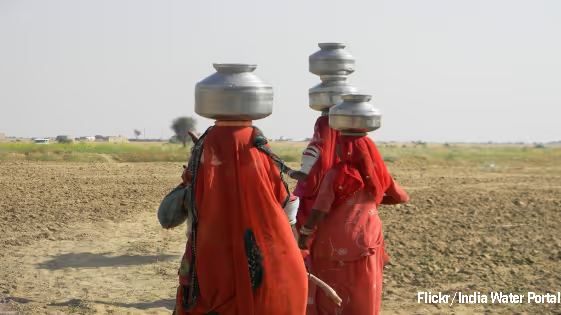
इनडोर पाइप से पेय जल की आपूर्ति से किसे लाभ होता है? लैंगिक आधार पर विश्लेषण
भारत में, घरों में इनडोर पाइप से पेय जल (आईपीडीडब्ल्यू) की आपूर्ति बहुत सीमित है, और महिलाओं पर इसका प्रतिकूल प्रभाव पड़ता है क्योंकि उन्हें बाहर से पानी लाने का बोझ उठाना पड़ता है। यह लेख 2005-2012 के भारत मानव विकास सर्वेक्षण डेटा का उपयोग करते हुए दर्शाता है कि परिवारों को इनडोर पाइप से पेय जल मिलने से रोजगार में- विशेष रूप से ग्रामीण क्षेत्रों में कृषि और गैर-कृषि रोजगार- दोनों के मामले में लैंगिक अंतर को कम करने में मदद मिल सकती है।

भेदभाव में लिंग-जाति अंतर्विरोध: क्या मरीज़ डॉक्टर की सामाजिक पहचान की परवाह करते हैं?
भारत में सामाजिक पहचान पर आधारित भेदभाव व्यापक रूप में फैला होने की वजह से, भेदभाव में जाति-लिंग अंतर्विरोध के अध्ययन हेतु एक अनूठी सेटिंग उपलब्ध होती है। यह लेख, उत्तर प्रदेश में किये गए एक क्षेत्रीय प्रयोग के आधार पर दर्शाता है कि मरीज द्वारा महिला डॉक्टरों की तुलना में पुरुष डॉक्टरों को पसंद किये जाने के कारण जाति-संबंधी पूर्वाग्रह इस लिंग संबंधी भेदभाव को और बढ़ा सकते हैं। भारत में निम्न-जाति के पेशेवरों की बढ़ती हिस्सेदारी को देखते हुए, यह लिंग-जाति अंतर्विरोध पेशेवरों के बीच लैंगिक असमानताओं को बढ़ा सकता है।
Who benefits from indoor piped drinking water supply? A gender analysis
In India, there is limited access to indoor piped drinking water (IPDW) in households, and this has a disproportionate impact on women as they bear the burden of fetching water. Using 2005-2012 India Human Development Survey data, this article shows that household access to IPDW can help reduce gender differences in employment, especially in rural areas and both in terms of farm and non-farm employment.
Gender-caste intersectionality in discrimination: Do patients care about doctor’s social identity?
Due to widespread prevalence of discrimination based on social identity, India provides a unique setting for studying caste-gender intersectionality in discrimination. Based on a field experiment in Uttar Pradesh, this article shows that when patients prefer male doctors over female doctors, caste-related prejudices can worsen this gender discrimination. Given the increasing share of low-caste professionals in India, this gender-caste intersectionality can exacerbate gender disparities among professionals.
कोविड-19: ‘आभासी महामारी’ और महिलाओं के खिलाफ हिंसा
महिलाओं के खिलाफ हिंसा दुनिया भर में एक समस्या है जिसकी आर्थिक लागतें वैश्विक जीडीपी में 1% से 4% तक आती हैं। यह लेख इस बात की जांच करता है कि भारत में कोविड-19 लॉकडाउन के दौरान महिलाओं के खिलाफ हिंसा की संख्या और तरीके किस प्रकार बदल गए हैं। इसमे यह दर्शाया गया है कि सबसे कड़े प्रतिबंध वाले जिलों में घरेलू हिंसा और साइबर क्राइम की शिकायतों में बढ़ोतरी हुई है जबकि बलात्कार और यौन हमले की शिकायतों में कमी आई है।

कोविड-19: ‘आभासी महामारी’ और महिलाओं के खिलाफ हिंसा
महिलाओं के खिलाफ हिंसा दुनिया भर में एक समस्या है जिसकी आर्थिक लागतें वैश्विक जीडीपी में 1% से 4% तक आती हैं। यह लेख इस बात की जांच करता है कि भारत में कोविड-19 लॉकडाउन के दौरान महिलाओं के खिलाफ हिंसा की संख्या और तरीके किस प्रकार बदल गए हैं। इसमे यह दर्शाया गया है कि सबसे कड़े प्रतिबंध वाले जिलों में घरेलू हिंसा और साइबर क्राइम की शिकायतों में बढ़ोतरी हुई है जबकि बलात्कार और यौन हमले की शिकायतों में कमी आई है।
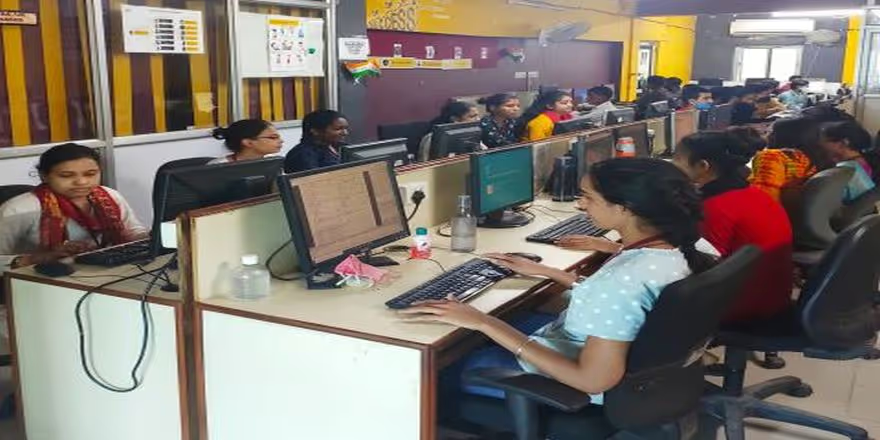
Does the gender of your co-worker matter? Evidence from call centres
Several theories suggest that gender integration in the workplace may have negative effects in gender-segregated societies. Based on an experiment conducted with 765 employees in call centres located in five Indian cities, this article shows that being assigned to a mixed-gender team – Vis-a-vis same-gender team – has no effect on either productivity or number of days that an employee is present at work.
Does the gender of your co-worker matter? Evidence from call centres
Several theories suggest that gender integration in the workplace may have negative effects in gender-segregated societies. Based on an experiment conducted with 765 employees in call centres located in five Indian cities, this article shows that being assigned to a mixed-gender team – Vis-a-vis same-gender team – has no effect on either productivity or number of days that an employee is present at work.
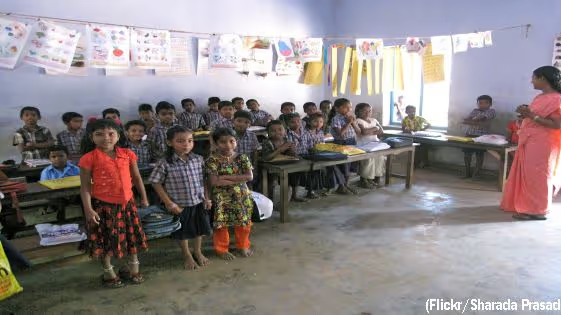
Nakusha: Son preference, ‘unwanted’ girls, and gender gaps in schooling
Indian society is commonly associated with a strong cultural preference for sons. Using nationally representative data from 1986-2017, this article examines parental investment in the education of sons vis-à-vis daughters. It finds that while gender gaps in the quantity of schooling have declined significantly for all children, those in the quality of education have increased – especially in families with unwanted girls.
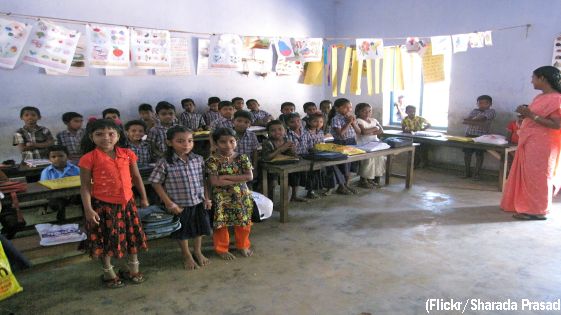
Nakusha: Son preference, ‘unwanted’ girls, and gender gaps in schooling
Indian society is commonly associated with a strong cultural preference for sons. Using nationally representative data from 1986-2017, this article examines parental investment in the education of sons vis-à-vis daughters. It finds that while gender gaps in the quantity of schooling have declined significantly for all children, those in the quality of education have increased – especially in families with unwanted girls.
Building State capacity for accelerating development through effective governance
In a new edition of I4I conversations, Maitreesh Ghatak (London School of Economics) is joined by Karthik Muralidharan (University of California, San Diego) to discuss his new book, Accelerating India's Development: A State-Led Roadmap for Effective Governance.
Building State capacity for accelerating development through effective governance
In a new edition of I4I conversations, Maitreesh Ghatak (London School of Economics) is joined by Karthik Muralidharan (University of California, San Diego) to discuss his new book, Accelerating India's Development: A State-Led Roadmap for Effective Governance.

14th Finance Commission: A trust-based approach towards local governments
The 14th Finance Commission has been hailed as ‘path-breaking’ for recommending larger fund allocations to state governments and giving them more autonomy in spending these funds. In this article, Meera Mehta and Dinesh Mehta highlight that the Commission has also recognised the need to trust and respect local government bodies, and has allocated much larger funds to them. Will this approach work and will state governments cooperate?

निर्वाचित नेता या नियुक्त नौकरशाह, किसके द्वारा शासित होना बेहतर है?
भारत में हर साल 24 अप्रैल को राष्ट्रीय पंचायती राज दिवस मनाया जाता है। 1993 में इसी दिन संविधान का 73वां संशोधन अधिनियम लागू हुआ था जो स्थानीय शासन को मज़बूत करता है और ग्रामीण समुदायों को सशक्त बनाने में मदद करता है। इसी परिपेक्ष में प्रस्तुत है आज का यह लेख। राजनेताओं और नौकरशाहों के बीच शासन संबंधी कार्यों और ज़िम्मेदारियों का आवंटन विभिन्न राजनीतिक सत्ताओं में अलग-अलग होता है। कर्नाटक में किए गए एक प्रयोग के आधार पर, इस लेख में एक निर्वाचित नेता बनाम एक नियुक्त नौकरशाह द्वारा शासित होने के प्रभाव की जांच की गई है। यह लेख दर्शाता है कि जहाँ एक ओर राजनेता व्यय को नागरिकों की प्राथमिकताओं के साथ बेहतर ढंग से जोड़ते हैं, और सामाजिक सहायता तेजी से प्रदान करते हैं, वहीं दूसरी ओर नौकरशाह अभिजात वर्ग के प्रभाव में कम आते हैं और विशेष कार्यों में उत्कृष्टता प्राप्त करते हैं।

सिंचाई जल के विकेन्द्रीकरण का गलत स्थानिक आवंटन पर प्रभाव
भारत में सिंचाई का एक महत्वपूर्ण स्रोत नहरों का पानी है, जिसका वितरण किसी भौगोलिक क्षेत्र के भीतर किसानों के बीच अक्सर असमान रूप से होता है। इस लेख में, ओडिशा राज्य में नहर सिंचाई प्रणालियों के प्रबंधन के विकेन्द्रीकरण के बाद किए गए एक सर्वेक्षण के आधार पर पाया गया कि नीतिगत सुधार के सकारात्मक प्रभाव पड़ते हैं, लेकिन सुधार का संस्थागत डिज़ाइन भी मायने रखता है।

Accountability and responsibility
Accountability of public institutions and employees is deemed important for them to function for the common good. In this post, Drèze and Sen argue that accountability is only one aspect of a much broader concern for responsibility. Explaining how a sense of responsibility can be an immense force for social progress, they call for bringing such ideas back to the forefront of mainstream economics.

Decentralisation and spatial (mis)allocation of irrigation water
Canal water – an important source of irrigation in India – often tends to be unequally distributed among farmers within a geographical area. Based on a survey in the state of Odisha, following the decentralisation of the management of canal irrigation systems, this article finds that the policy reform has positive impacts – but the details of the institutional design matter.
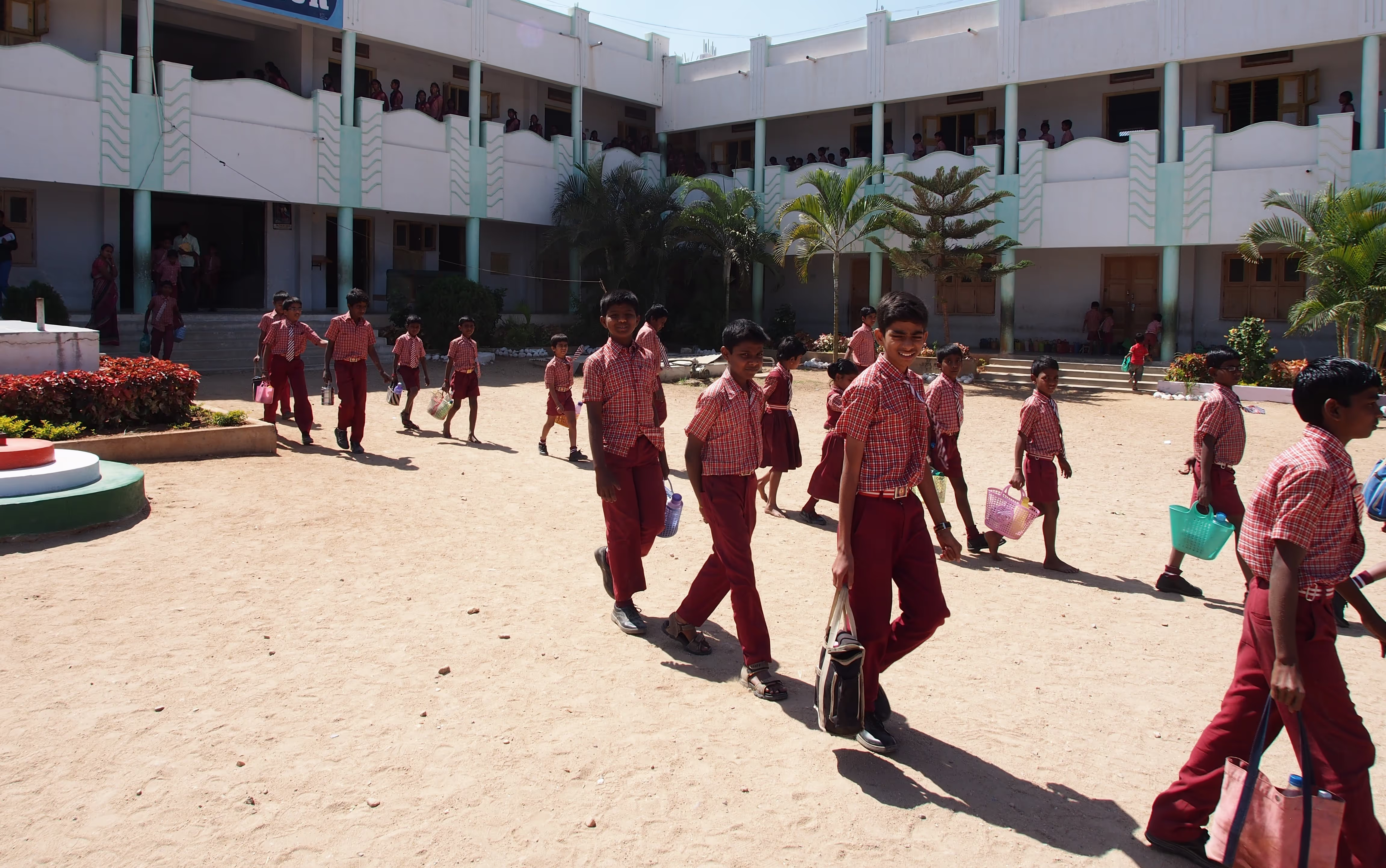
The influence of local politicians in the private education market
Private schooling has experienced rapid expansion in India – both in terms of number of schools and student enrolment. Analysing data from 2005-2017, this article shows that constituencies represented by ruling party-aligned politicians experience significantly higher growth in private schools, relative to those represented by opposition leaders, potentially through the influence exerted by the former over the bureaucracy. However, this does not translate into improvements in educational quality.

आप्रवासन नीति सम्बन्धी अनिश्चितता श्रम बाज़ारों को प्रभावित करती है
राष्ट्रपति ट्रम्प के फिर से चुने जाने से एच-1बी वीज़ा सम्बन्धी नीतियों पर बहस फिर से शुरू हो गई है, यह एक अस्थाई उच्च कौशल कार्य वीज़ा है जिसमें 70% वीज़ा भारतीयों के पास हैं। इस लेख में, वर्ष 2016 में ट्रम्प की पहली बार हुई जीत के दौरान भारत से प्राप्त नौकरियों के आँकड़ों का विश्लेषण करते हुए पाया गया है कि अमेरिकी आप्रवासन नीतियों के बारे में अनिश्चितता बढ़ने के कारण तथा वीज़ा कोटा एवं प्रक्रियाओं में कोई बदलाव नहीं होने के कारण, कई फर्मों ने नौकरियाँ अमेरिका से भारत स्थानांतरित कर दीं।
How immigration policy uncertainty affects labour markets
President Trump’s re-election has reignited debate over H-1B visa policies, a temporary high-skill work visa programme wherein 70% of visas are held by Indians. Analysing jobs data from India from the period around Trump’s first victory in 2016, this article finds that increased uncertainty around US immigration policies – without any change in visa quotas and procedures – caused firms to relocate jobs from the US to India.
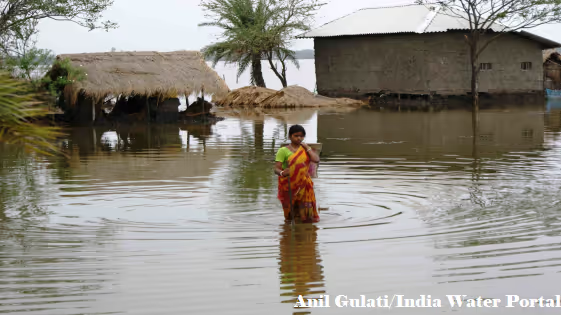
Fiscal transfers and natural calamities: Does political alignment matter?
Fiscal transfers from the central government serve as an important mechanism for state governments to mitigate adverse impacts of extreme climate events. This article demonstrates that higher allocations are made to states that are politically aligned with the Centre. Further, the scope for such partisan politics is greater in case of slow onset events such as droughts, as compared to floods that manifest relatively quickly.
Is it better to be governed by an elected leader or appointed bureaucrat?
The division of governance functions and responsibilities between politicians and bureaucrats varies, both across and within political regimes. Based on an experiment in Karnataka, this article examines the impact of being governed by an elected leader versus an appointed bureaucrat. It shows that while politicians better align expenditure with citizen preferences and deliver social assistance rapidly, bureaucrats are less prone to elite capture and excel at specialised tasks
Why political competition matters when inequality is high
In a high-inequality setting, local politicians with secure positions may favour the rich by diverting resources towards them, at the cost of the poor. To test this hypothesis, this article analyses data from rural India, and demonstrates that lower political competition worsens the impact of inequality on public provisioning as well as developmental outcomes such as infant mortality.

Expected or unexpected? Strategic communication around audits to maximise deterrence
Even with evidence on how audits can be designed to be more effective in deterring corruption by bureaucrats, in practice, budget constraints restrict governments from being able to conduct audits with the quality or intensity necessary to further deter corrupt behaviour. Analysing the case of social audits for MNREGA in Jharkhand, this article shows that, with the same audit resources, providing information to bureaucrats about their audit can be more effective in lowering misappropriated expenditures than unexpected audits.
The ‘Odisha model’ for disaster resilience
From its management of the devastating Super Cyclone in 1999 to the more recent challenges posed by the Covid-19 pandemic, the state of Odisha has been a testament to the power of adaptive governance. In this post, Souryabrata Mohapatra discusses four key aspects of Odisha’s model for disaster resilience – multi-layer institutional framework, ground-up approach, capacity-building, and infrastructure and technology – reflecting the state’s ethos of valuing every life.

संख्याओं से प्रभाव तक : राजस्थान के प्रभावी डेटा प्रबंधन से सीख
नीति निर्धारण में साक्ष्य-आधारित निर्णय लेने के लिए अच्छे डेटा का होना महत्वपूर्ण होता है। इस लेख में, संतोष और कपूर ने विकासात्मक चुनौतियों से सम्बंधित डेटा एकत्रित करने, उसे साझा करने और उसका उपयोग करने के साथ-साथ, राजस्थान के अनुभव पर आधारित एक अंतर्दृष्टि पर चर्चा की है। वे राजस्थान व अन्य राज्यों में डेटासेटों की अंतर-संचालनीयता (इंटरऑपरेबिलिटी) में सुधार लाने, तथा डेटा के लिए संस्थागत और कानूनी ढाँचे के लिए सिफारिशें करते हैं ताकि इसका उपयोग सरकार के भीतर व बाहर के हितधारकों द्वारा प्रभावी ढंग से किया जा सके।
भारत के बाल श्रम प्रतिबंध के अनपेक्षित परिणाम
हर जून में दो महत्वपूर्ण दिन आते हैं, एक पर्यावरण से संबंधित और दूसरा बाल श्रम से संबंधित। "आइए अपनी प्रतिबद्धताओं पर कार्य करें, बाल श्रम को समाप्त करें!" 12 जून को मनाए जाने वाले बाल श्रम विरोधी दिवस की थीम के परिपेक्ष्य में यह चिंतन करने का समय है कि बाल श्रम की समस्या से निपटने के लिए क्या आवश्यक है। विकासशील दुनिया में बाल श्रम के विरुद्ध प्रतिबंध और विनियमन, इस समस्या को हल करने के सबसे लोकप्रिय नीतिगत उपायों में से हैं। लेकिन ये व्यवहार में कितने कारगर हैं? कई वर्ष पूर्व का यह शोध आलेख आज भी प्रासंगिक है। आलेख में बाल श्रम के विरुद्ध भारत के प्रमुख कानून,1986 के बाल श्रम अधिनियम की प्रभावशीलता का विश्लेषण किया गया और यह पाया गया कि इस प्रतिबंध के कुछ वर्षों बाद, 14 वर्ष की कानूनी रोज़गार आयु की तुलना में कानूनी आयु से कम आयु के बच्चों के रोज़गार स्तर में वृद्धि हुई।
From numbers to impact: Learning from effective data management in Rajasthan
Access to good data is critical for evidence-based decision-making in policy. In this note, Santhosh and Kapur discuss insights from a study of Rajasthan’s experience with collecting, sharing and using data pertaining to developmental challenges. They make recommendations for improving interoperability of datasets, and institutional and legal frameworks for data in Rajasthan and other states – such that it can be used effectively by stakeholders within and outside government.
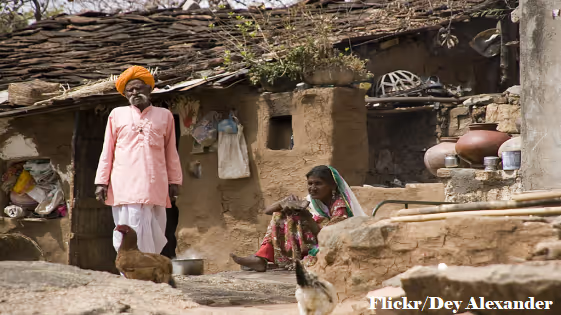
What does Mission Antyodaya data say about rural deprivation?
Public provisioning of basic facilities such as health and education, remains crucial for marginalised populations. In the context of the decentralised structure of governance and fund allocation in India, Guha, Jyotishi and Hatekar assess public provisioning at the disaggregated levels, and the gaps therein. Leveraging the Mission Antyodaya dataset, they create a ‘Rural Deprivation Index’ which can be used to examine the status of provisioning across blocks, villages, districts and states.
Reshaping social protection in India
As India has undergone a transformation in recent decades in terms of trends such as poverty reduction, food security and urbanisation, there is a need to also revamp the traditional social protection architecture. In this post, Ejaz Ghani proposes a four-pillar approach involving a focus on informally employed urban poor, incorporating gender differences in risks, streamlining existing schemes, and engaging the private sector
भारत में समाचार पत्र बाज़ार के राजनीतिक निर्धारक
समाचार पत्र भारतीय मतदाताओं के लिए राजनीतिक जानकारी का एक महत्त्वपूर्ण स्रोत हैं। लेख में इस बात पर प्रकाश डाला गया है कि राजनीतिक कारक समाचार पत्र बाज़ार को किस तरह से प्रभावित करते हैं। 2000 के दशक के मध्य में की गई परिसीमन की घोषणा को एक बाहरी झटके के रूप में मानते हुए, यह पाया गया कि उन जिलों में समाचार पत्रों के प्रसार में वृद्धि हुई थी, जिनका चुनावी महत्त्व घोषणा के बाद बढ़ गया था। देखा गया कि, अल्पावधि में यह परिवर्तन आपूर्ति में बदलाव से प्रेरित था, क्योंकि मतदाता अभी भी राजनीतिक झटके से अनजान थे।

What explains policy change? Understanding the historical political economy of India
Drawing on insights from his new book, ‘History of Economic Policy in India’, Rahul De frames policy change as precipitating through three circumstances: crisis, coalitions, and contingency. He uses historical examples of policymaking in post-independent India to delineate why and under what circumstances certain policies were implemented. Using instances from the Nehruvian planning regime to the economic liberalisation in 1991, this article aims to use political economy concepts to incisively explain major economic policy changes in India.
आम भूमि रजिस्ट्री की महत्त्वपूर्ण आवश्यकता
भारत की आम भूमि के बारे में विस्तृत आँकड़ों की व्यापक कमी भूमि संरक्षण, संसाधन उपयोग और भूमि अधिकार को प्रभावित करती है। चंद्रन और सिंह ने सूचना विषमता को कम करने और पारदर्शिता बढ़ाने के लिए इस लेख में एक राष्ट्रीय आम भूमि रजिस्ट्री की आवश्यकता पर प्रकाश डाला है। वे कुछ राज्य सरकारों द्वारा डिजिटल मैपिंग और स्थानीय समुदायों के साथ जुड़ाव के माध्यम से किए हाल के प्रगति कार्यों को दर्शाते हैं। उनका दावा है कि भूमि रजिस्ट्री की सफलता केन्द्र सरकार के मार्गदर्शन के साथ-साथ, राज्य-स्तरीय नियमों के विभाजन पर काबू पाने में छिपी हुई है।
Political determinants of newspaper markets in India
Newspapers are an important source of political information for Indian voters. This article looks at how political factors influence the newspaper market. Using the announcement of delimitation in the mid-2000s as an exogenous shock, it finds that there was an increase in newspaper circulation in districts whose electoral importance increased after the announcement. It notes that, in the short run, this change was driven by a shift in supply, as voters were still unaware of the political shock.
वन अधिकार अधिनियम : विरोधाभासी संरक्षण कानूनों का लेखा-जोखा
वन अधिकार अधिनियम (एफआरए) के बारे में अपने दूसरे लेख में, भारती नंदवानी ने इस बात की जांच के लिए कि एफआरए की शुरूआत के बाद भूमि सम्बन्धी विवाद क्यों बढ़े, भूमि संघर्षों पर डेटा का उपयोग किया है। वे विरोधाभासी कानून की व्यापकता की ओर इशारा करते हुए, प्रतिपूरक वनीकरण निधि या ‘कम्पेन्सेटरी अफॉरेस्टेशन फण्ड’ के मामले को उजागर करती हैं, जिसका वितरण इस तरह से होता है कि वनवासियों की खेती की भूमि पर अतिक्रमण हो जाता है। वे उन समुदायों के बेहतर ज्ञान को पहचानने और उन्हें वनों के प्रबंधन और संरक्षण की ज़िम्मेदारी देने की आवश्यकता पर ज़ोर देती हैं।

The growing wave of decentralisation: Comparative evidence from developing countries
Over the last few decades, decentralisation has been rapidly spreading in developing countries across the world, with around 35 countries announcing new or deepening decentralisation reforms in recent years. In a new I4I Conversation, Lakshmi Iyer (University of Notre Dame) joins Sarmistha Pal (University of Surrey) and Jean-Paul Faguet (London School of Economics), the editors of ‘Decentralised Governance: Crafting Effective Democracies Around the World’, to discuss the current global state of decentralisation. Over the conversation, they draw on theoretical and empirical insights from different chapters of the book, each featuring diverse countries – Pakistan, China, Indonesia, Kenya, India, Ghana, Bangladesh, and Colombia.

The growing wave of decentralisation: Comparative evidence from developing countries
Over the last few decades, decentralisation has been rapidly spreading in developing countries across the world, with around 35 countries announcing new or deepening decentralisation reforms in recent years. In a new I4I Conversation, Lakshmi Iyer (University of Notre Dame) joins Sarmistha Pal (University of Surrey) and Jean-Paul Faguet (London School of Economics), the editors of ‘Decentralised Governance: Crafting Effective Democracies Around the World’, to discuss the current global state of decentralisation. Over the conversation, they draw on theoretical and empirical insights from different chapters of the book, each featuring diverse countries – Pakistan, China, Indonesia, Kenya, India, Ghana, Bangladesh, and Colombia.
प्रत्यक्ष लाभ हस्तांतरण कार्यक्रमों का विकेन्द्रीकृत लक्ष्यीकरण : एक पुनर्मूल्यांकन
'डिसेंट्रलाइज्ड गवर्नेंस : क्राफ्टिंग इफेक्टिव डेमोक्रेसीज़ अराउंड द वर्ल्ड' में दिलीप मुखर्जी कल्याण कार्यक्रमों के विकेन्द्रीकरण के खिलाफ राजनीतिक ग्राहकवाद और अभिजात वर्ग के कब्ज़े की घटनाओं सहित कुछ तर्क प्रस्तुत करते हैं और हाइब्रिड ‘पुनर्केन्द्रीकरण’ पहल के लिए विकासशील देशों द्वारा किए गए प्रयासों का सारांश प्रस्तुत करते हैं। प्रत्यक्ष लाभ हस्तांतरण (डीबीटी) योजना गलत आवंटन और भ्रष्टाचार की गुंजाइश को सीमित कर सकते हैं, इसे स्वीकारते हुए वे स्थानीय झटकों और राजकोषीय संघवाद के लिए केन्द्रीकरण के प्रति प्रतिक्रिया की डीबीटी की क्षमता की जांच करते हैं।
How Prayagraj is leveraging wastewater surveillance to prevent another pandemic
This note by Agrawal and Siva outlines efforts taken by the Prayagraj district in Uttar Pradesh to collect samples from sewage treatment plants and test them for the SARS-CoV-2 pathogen. They found a correlation between surveillance results and test results two weeks later, suggesting that wastewater surveillance can be used for early detection of the disease. They also highlight the potential to use wastewater surveillance to understand antimicrobial resistance, and to monitor diseases during large events.
वन अधिकार अधिनियम- स्थानीय समुदायों की राजनीति में सहभागिता
वन अधिकार अधिनियम (एफआरए) के कार्यान्वयन के बारे में अपने दो लेखों में से पहले लेख में, भारती नंदवानी ने ओडिशा के अनुसूचित जनजातियों की राजनीति में सहभागिता के संदर्भ में भूमि स्वामित्व मान्यता की बढ़ती मांग के निहितार्थ पर प्रकाश डाला है। वे आय में वृद्धि या शिकायत निवारण तक पहुँच जैसे संभावित चैनलों की, जिनके माध्यम से एफआरए लाभार्थियों को सशक्त बना सकता है, जांच करती हैं और दर्शाती हैं कि स्थानीय समुदायों को उनके अधिकार दिलाने और कल्याण कार्यक्रमों तक उनकी पहुँच को बढ़ाने से वनों के संरक्षण में मदद मिल सकती है और संघर्ष को कम किया जा सकता है।
Mainstreaming millets right: Dangers of promoting ultra-processed products
In the fifth post of the e-Symposium on ‘Carrying forward the promise of International Year of Millets’, Reshma Roshania argues that instead of relying on the ‘Big Food’ industry to increase the production and consumption of millets, policies should focus on making millets a vital part of government food schemes. She highlights the shortcomings of Production Linked Incentives in ensuring that the nutritious value of millets is realised, and suggests that rather than investments in startups, street food vendors and small-scale food outlets should be encouraged to provide millet-based meals and cater to rural markets.

Impact of fiscal decentralisation and ethnic heterogeneity on choice of local polity
In this article, based on Chapter 7 of 'Decentralised Governance’, Mitra and Pal utilise Indonesia’s fiscal decentralisation to local communities in 2001 to examine how FD may differentially affect the choice of local polity and generate local political entrepreneurship in ethnically homogenous and heterogenous communities. Utilising local income and local development as proxies for local political entrepreneurship, they document that ethnically diverse electoral democracies were more effective to initiate political entrepreneurship in Indonesia, which in turn facilitated the alignment of diverse population groups.
Decentralised targeting of transfer programmes: A reassessment
Ahead of the release of ‘Decentralised Governance: Crafting Effective Democracies Around the World’, Dilip Mookherjee brings together some of the arguments against decentralisation of welfare programmes, including the incidence of political clientelism and elite capture, and summarises attempts made by developing countries to undertake hybrid ‘recentralisation’ initiatives. While acknowledging that direct benefit transfer (DBT) programmes can limit the scope for misallocation and corruption, he probes the ability of DBTs to be responsive to localised shocks and recentralisation’s implications for fiscal federalism.
Forest Rights Act: An account of contradictory conservation laws
In the second of two articles about the implementation of Forest Rights Act, Bharti Nandwani uses data on land conflicts to investigate why land disputes increased after the introduction of FRA. She points to the prevalence of contradictory legislation, highlighting the case of compensatory afforestation funds which are disbursed in a way that encroaches upon land cultivated by forest dwellers. She emphasises the need to recognise the superior knowledge of those communities and give them the responsibility of managing and conserving forests
बिहार में स्वयं-सहायता समूहों के माध्यम से जोखिम साझा करने की सुविधा
यह देखते हुए कि बिहार में स्वयं सहायता समूह (एसएचजी) कार्यक्रम से महिलाओं की कम ब्याज़-दर वाले ऋण तक पहुँच में सुधार हुआ है, इस लेख में उपभोग वृद्धि के गाँव-स्तरीय भिन्नता में अंतर की जांच करके इस बात का मूल्याँकन किया गया है कि क्या इससे जोखिम-साझाकरण में सुधार हुआ है। यह पाया गया कि जोखिम-साझाकरण में सुधार केवल उन ब्लॉकों में हुआ है, जहाँ एसएचजी पहले से ही बड़ी संख्या में मौजूद थे। इससे 'समुदाय कैडर' के रूप में इस कार्यक्रम की प्रशासनिक क्षमता का महत्व सामने आता है, जिसमें मौजूदा एसएचजी के सदस्यों की सक्रिय भूमिका है और वे नए समूहों के गठन के लिए ज़िम्मेदार भी हैं।
Forest Rights Act: Political participation of indigenous communities
In the first of two articles about the implementation of Forest Rights Act, Bharti Nandwani looks at the implication of increased demand for land title recognition on political participation of Scheduled Tribes in Odisha. She examines possible channels through which the FRA can empower beneficiaries, such as through increased income or accessing grievance redressal, and suggests that recognising the rights of indigenous communities and increasing their access to welfare programmes could aid in conservation and reduce conflict.
Making the case for a common land registry
The lack of comprehensive data on India’s common lands affects conservation, resource use and land right conflicts. Chandran & Singh highlight the need for a national common land registry to reduce information asymmetry and increase transparency. They note recent developments and progress have been made by some state governments through digital mapping and engaging with local communities. They assert that key to the success of a land registry will be overcoming the fragmentation of state-level regulations with the central government’s guidance.
क्या वर्ष 2023-24 का बजट लैंगिक प्राथमिकताओं को संतुलित करने में सफल रहा है?
तान्या राणा और नेहा सुज़ैन जैकब केंद्रीय बजट के लैंगिक बजट वक्तव्य या जेंडर बजट स्टेटमेंट (जीबीएस) के माध्यम से, उसके दो हिस्सों के तहत विभिन्न मंत्रालय और विभाग किन योजनाओं को प्राथमिकता देते हैं, इस पर ध्यान देते हुए योजना आवंटन को वर्गीकृत कर के उसका विश्लेषण करते हैं। वे मनमाने वर्गीकरण, यानी जो योजनाएं पूरी तरह से महिला-केन्द्रित नहीं उनको शामिल करने और योजना के उद्देश्यों को पूरा करने में अपर्याप्त आवंटन संबंधी मुद्दों पर चर्चा करते हैं। वे महिलाओं के सशक्तिकरण हेतु वित्तीय प्राथमिकताओं के लिए निगरानी और स्पष्ट योजना वर्गीकरण की आवश्यकता पर ज़ोर देते हैं।
Facilitating risk-sharing through self-help groups in Bihar
While the self-help group (SHG) programme in Bihar has improved access to low-cost credit for women, this article evaluates whether it improves risk-sharing by examining differences in village-level variance of consumption growth. It finds that improvements in risk-sharing occurred only in blocks with significant numbers of pre-existing SHGs. This suggests the importance of the programme’s administrative capacity in the form of a ‘community cadre’, that comprises members of existing SHGs and is responsible for the creation of new groups.
बिहार में शराबबंदी का जीवन साथी द्वारा हिंसा पर प्रभाव
इस लेख में वर्ष 2016 में बिहार में शराब की बिक्री और खपत पर लगाए गए पूर्ण प्रतिबंध के कारण महिलाओं के प्रति उनके जीवन साथी द्वारा होने वाली हिंसा की घटनाओं पर पड़े प्रभाव की जांच की गई है। एनएफएचएस आंकड़ों का उपयोग करते हुए पाया गया कि इस प्रतिबंध के बाद बिहार में महिलाओं का कहना था कि उनके पतियों के शराब पीने की संभावना पहले से कम थी और महिलाओं के घरेलू हिंसा का सामना किए जाने की संभावना भी कम थी। इस लेख में महिला सशक्तिकरण को बढ़ाने और उन्हें दुर्व्यवहार से बचाने में स्वयं-सहायता समूहों की पूरक भूमिका पर भी प्रकाश डाला गया है।
Impact of Bihar’s alcohol ban on intimate partner violence
This article examines the impact of a complete ban on the sale and consumption of alcohol in Bihar in 2016 on the incidence of intimate partner violence against women. Using NFHS data, it finds that after the ban, women in Bihar reported that their husbands were less likely to consume alcohol, and they were less likely to experience domestic violence. It also highlights the complementary role of self-help groups in increasing women’s empowerment and making them less susceptible to abuse.

Is electrification in India fiscally sustainable?
In the first article in the Ideas@IPF2023 series, Barnwal and Ryan describe the completion of household electrification in India as a fiscal feat, notwithstanding the persistent losses recorded by electricity distribution companies. They outline the extent of government investments in and bailouts of discoms, losses of revenue and electricity subsidies over the last decades, and propose Direct Benefit Transfers for Electricity as a policy solution based on the preliminary results of a pilot study carried out in the agricultural sector in Rajasthan and Punjab.

Institutionalising social audits: Lessons from Meghalaya
Sidharth Santhosh summarises key findings from Meghalaya's experience of mandating social auditing for welfare schemes, including the need for stronger coalitions between citizens and the state, and greater autonomy of the institutions conducting oversight. These findings are complemented by the experiences of bureaucrats and civil society organisations which engaged with the state government on the facilitation of the audits, and an analysis of the functional challenges of conducting audits.
Unpacking how MSMEs are defined in India’s manufacturing and services sector
The Indian government announced a number of reforms to help micro, small and medium enterprises that had been affected by the Covid-19 pandemic – including changes in how an MSMEs are classified. Rahul Ranjan looks at the shifting classification of enterprises between the old and new definitions and delineates which industries in the manufacturing and services sector saw gains in micro-enterprises as a result of this change.

सरकारी नौकरियों के संदर्भ में अत्यधिक प्रतिस्पर्धा की लागत
भारतीय राज्यों में सार्वजनिक सेवाओं में भर्ती हेतु अत्यधिक प्रतिस्पर्धी परीक्षाएं होती हैं जहाँ इन सरकारी रिक्तियों के लिए प्रतिस्पर्धा करते हुए कई युवा लंबे समय तक बेरोजगार रहते हैं। कुणाल मंगल तमिलनाडु में सरकारी भर्तियों पर रोक का उम्मीदवारों के आवेदन व्यवहार तथा चयनित नहीं होने वाले उम्मीदवारों के दीर्घकालिक श्रम-बाजार परिणामों पर पडने वाले प्रभाव पर प्रकाश डालते हैं। वे भर्ती प्रक्रिया हेतु दो नीतियों का सुझाव देते हैं जिनसे परीक्षा की तैयारी की सामाजिक लागत कम हो सकती है।
The costs of extreme competition for government jobs
Indian states have highly competitive examinations for public service recruitment, with many youth remaining unemployed for long periods to compete for these government vacancies. Kunal Mangal looks at the effect of a government hiring freeze in Tamil Nadu on candidate application behaviour and long-term labour market outcomes of candidates who were not selected. He suggests two policies for the recruitment process which can reduce the social cost of exam preparation

सकारात्मक कार्रवाई को लागू करने हेतु डिजाइन विकल्प
आशुतोष ठाकुर इस व्याख्यात्मक लेख में विभिन्न तरीकों की व्याख्या करते हैं जिनके जरिये सकारात्मक कार्रवाई नीतियों को लागू किया जा सकता है। साथ हीं, वे इसमें अंतर्निहित व्यापार और मुद्दों पर भी चर्चा करते हैं। वे काल्पनिक परिदृश्यों में खराब और अच्छा प्रदर्शन करने वाले उम्मीदवारों के संदर्भ में तीन कार्यान्वयन डिजाइनों – हार्ड कैप, ऊर्ध्वाधर (वर्टिकल) और क्षैतिज (हॉरिजॉन्टल) आरक्षण को चित्रित करते हैं। तथापि, व्यवहार में, विस्तृत मार्गदर्शन की कमी के कारण सकारात्मक कार्रवाई नीतियों का तदर्थ कार्यान्वयन हुआ है जिनके राजनीतिक माहौल और कानूनी प्रवचन के सन्दर्भ में लंबे समय तक चलने वाले परिणाम होते हैं।

महिलाओं के सशक्तिकरण संबंधी हस्तक्षेपों की जटिलता
इस लेख में सीवन एंडरसन अंतर्राष्ट्रीय महिला दिवस 2023 के उपलक्ष्य में I4I पर इस महीने चल रहे अभियान के अंतर्गत महिला सशक्तिकरण के उपायों के बीच के जटिल आयामों और अंतर्क्रियाओं को सामने रखती हैं। वे महिलाओं के आर्थिक और राजनीतिक सशक्तिकरण को बढ़ावा देने या लैंगिक मानदंडों को बदलने के उद्देश्य से किये जाने वाले नीतिगत हस्तक्षेपों के गंभीर और अनपेक्षित खतरों पर प्रकाश डालती हैं। वे महिलाओं की विस्तारित आर्थिक संभावनाओं, विकसित देशों से लैंगिक मानदंडों के बेंचमार्किंग और अनुसरण एवं राजनीतिक कोटा को प्रभावी बनाने के लिए क्षमता निर्माण के उपायों के बारे में परिवारों के प्रतिक्षेप के प्रति सचेत रहने के लिए नीति निर्माण का आग्रह करती हैं।
How women in politics impact maternal mortality
In the twelfth post of I4I’s month-long campaign to mark International Women’s Day 2023, Bhalotra et al. show that mortality during and after childbirth remains high, even where the knowledge and resources to avoid this are available, and demonstrate that raising the share of women in parliament can trigger action. Leveraging the introduction of gender quotas across developing countries, they identify reductions in maternal mortality, through increased skilled birth attendance and prenatal care utilisation, alongside a decline in fertility and an increase in schooling.
Has Budget 2023-24 been successful in balancing gender priorities?
Ahead of International Women’s Day, Tanya Rana and Neeha Susan Jacob categorise and analyse scheme allocations through the Union Budget’s Gender Budget Statement (GBS), by looking at what schemes various ministries and departments prioritise under the two parts of the GBS. They discuss issues of arbitrary classification, inclusion of schemes that are not entirely women-centric, and allocations that are inadequate to meet scheme objectives. They emphasise the need for monitoring and unambiguous scheme classifications to achieve financial priorities for women's empowerment.

आर्थिक रूप से कमजोर वर्ग हेतु आरक्षण को कुशलतापूर्वक क्रियान्वित करने की चुनौतियाँ
हाल ही में सुप्रीम कोर्ट के एक फैसले के अनुसार आरक्षित श्रेणियों के सदस्यों को ईडब्ल्यूएस (आर्थिक रूप से कमजोर वर्ग) के दायरे से बाहर कर दिया गया है। आयगुन, तुरहान और येनमेज़ इस निर्णय के निहितार्थों को देखते हैं, जिसमें आरक्षित श्रेणी के सदस्यों द्वारा अपनी जाति अथवा आय के आधार पर पदों के लिए आवेदन करने हेतु चयन किया जाना और ईडब्ल्यूएस आरक्षण को परिभाषित करने की अस्पष्टता शामिल हैं। वे हाल के अदालती मामलों के उदाहरणों के साथ अपने निष्कर्षों की पुष्टि करते हैं, और इसके कार्यान्वयन, विशेष रूप से अनारक्षण के साथ उत्पन्न होने वाले मुद्दों को उजागर करते हैं।
गवर्नेंस मैट्रिक्स: बदलाव हेतु सिस्टम की तैयारी को समझना
आदर्श परिणामों की अपेक्षा और किसी अपूर्ण प्रणाली की वास्तविकता के बीच के अंतर को स्पष्ट करने हेतु गौरव गोयल ने ‘गवर्नेंस मैट्रिक्स’ नामक एक ऐसा साधन प्रस्तुत किया है जिसका उपयोग सरकारी पहलों को सफलतापूर्वक लागू करने की दिशा में सरकारी तत्परता का आकलन करने के लिए किया जा सकता है। वे राजनीतिक प्रमुखता और प्रणाली की क्षमता नामक दो पहलुओं को स्पष्ट करते हैं - जिनके साथ राजनीतिक प्रणालियाँ आगे बढ़ सकती हैं। इसके आधार पर वे उन चार अवस्थाओं को स्थापित करते हैं जिसमें सरकारें मौजूद हो सकती हैं और वे प्रत्येक खंड में स्थायी परिवर्तन की संभावना की जांच करते हैं।
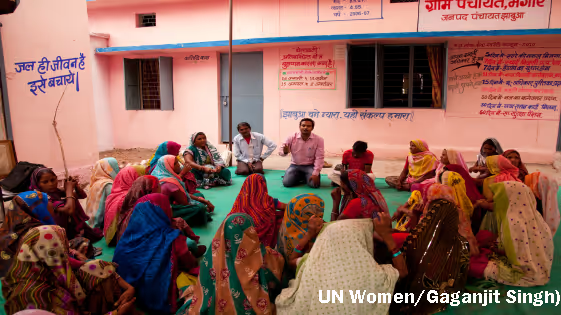
Does being local matter? Administrative decentralisation and human development
In this post, Chaudhary and Iyer discuss the administrative decentralisation reforms brought about by the Panchayati Raj Act, and measure the effect of decentralisation on the provision of public services and human development outcomes. States implemented these decentralisation reforms at different times, and to different extents. Their findings show that devolution of only functions to the local level, without a devolution of functionaries or funds, results in a decline in the quality of public service.

Analysing e-governance service delivery outcomes: Insights from eTaal
In this piece, Trivedi and Mumtaz attempt to analyse the performance of e-governance service delivery across different tiers of government and service categories, through the volume of end-to-end electronic transactions occurring during service delivery. They use the data aggregated by the eTaal portal to conduct a temporal analysis, and demonstrate an exponential growth in the adoption of e-governance services in India. They emphasise the pathway for bridging the gaps in e-governance service delivery through an accelerated, unified, platform-driven approach.
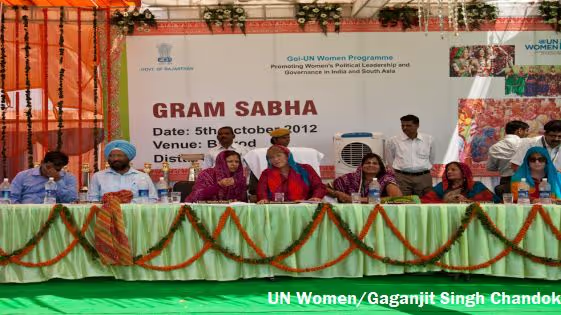
राजनीतिक पद का समय और बेईमानी में लैंगिक अंतर: स्थानीय राजनीति से प्राप्त साक्ष्य
राजनीति में महिलाओं की हिस्सेदारी अधिक होना वर्तमान साहित्य में कम भ्रष्टाचार का संकेत माना गया है | ईमानदारी को एक अंतर्निहित या स्थिर चरित्र विशेषता के रूप में देखा जाता है। हालाँकि, पश्चिम बंगाल में निर्वाचित 400 ग्राम पंचायत सदस्यों से एकत्रित की गई जानकारी का उपयोग करते हुए किये गए इस अध्ययन से पता चलता है कि किसी राजनीतिक पद धारण करने की स्थिति में यह बदल जाता है – राजनीति में अनुभवहीन महिला राजनेताओं के पुरुषों की तुलना में बेईमान होने की संभावना कम होती है, लेकिन अनुभवी राजनेताओं के संदर्भ में यह 'लैंगिक अंतर' समाप्त हो जाता है। इस अध्ययन में इसका कारण अनुभव के साथ मजबूत राजनीतिक नेटवर्क तथा कम जोखिम की संभावना माना गया है।

Improving admissions to technical colleges in India
Following their note on the issues that may arise from the ambiguity of EWS reservation policies, Aygün, Turhan, and Yenmez provide a critique of the multi-run deferred-acceptance algorithm currently used to implement de-reservation in the admission procedure of technical colleges. They outline three major limitations – the assignment of students to their less-preferred programmes, the potential disadvantage associated with reporting reserved category membership, and the scope for preference misreporting – and conclude by putting forth their own choice procedure for admissions to technical college programmes.
Challenges of executing EWS reservation efficiently
A recent Supreme Court judgement excluded members of reserved categories from the scope of EWS. Aygün, Turhan, and Yenmez look at the implications of this decision, including reserved category members having to choose between applying for positions on the basis of their caste or income, and the ambiguity about how EWS reservations are defined. They corroborate their findings with examples of recent court cases, and highlight the issues likely to arise with implementation, especially de-reservation.
Design choices for implementing affirmative action
In this expository piece, Ashutosh Thakur explains the various ways in which affirmative action policies can be implemented, and discusses the underlying tradeoffs and issues at hand. He delineates three implementation designs – hard cap, vertical, and horizontal reservation – in the context of poorly and well-performing candidates in hypothetical scenarios. However, in practice, the lack of detailed guidance has resulted in ad-hoc implementations of affirmative action policies that have long-lasting consequences for the political climate and legal discourse.
Introduction to e-Symposium: The architecture of affirmative action
The Supreme Court of India recently upheld an amendment that excluded Scheduled Castes, Scheduled Tribes and Other Backwards Classes from the Economically Weaker Section (EWS) quota, restricting it only to general category applicants. However, the specifics of how this reservation policy is executed can have important social and political implications. Across this week, from 12-16 December, this I4I e-Symposium brings together articles that provide a theoretical basis – using principles of market design, and search and matching theory – for more efficient implementation of reservation policies. Anchored by I4I’s Editor-in-Chief Parikshit Ghosh, the e-Symposium aims to open a discussion on the architecture of affirmative action, from the mechanisms of vertical and horizontal reservations, to ensuring efficiency in meeting diversity targets.
Panchsutras for carrying out a successful Governance Transformation
Following his last piece, which put forth a Governance Matrix that could be used assess a government system’s readiness to drive outcomes, Gaurav Goel puts forth five principles, or panchsutras, which are critical for the success of a governance transformation. Using the example of the Swachh Bharat Mission-Grameen, he shows that these principles are key to not only spurring the system into action, but also maintaining momentum towards achieving a goal, and ensuring long-term sustainability of the transformation
विद्युत अधिनियम में संशोधन: सजग दृष्टिकोण की आवश्यकता
विद्युत अधिनियम, 2003 में हाल ही में प्रस्तावित संशोधन कुछ विधायी परिवर्तनों के साथ लगभग दो दशकों के बाद आया है। इस लेख में, दीक्षित और जोसे बिजली क्षेत्र के विकास- विशेष रूप से उस समय के दौरान प्रौद्योगिकी संचालित परिवर्तनों की समीक्षा करते हैं,और अधिनियम में प्रस्तावित कुछ संशोधनों के इस क्षेत्र के कामकाज पर पड़ने वाले सकारात्मक प्रभावों के बारे में चर्चा करते हैं। साथ ही,वे इन संशोधनों के पहलुओं के चलते आगे उपस्थित होने वाले उन प्रश्नों को भी सामने लाते हैं जिनको सजग दृष्टिकोण से हल किया जाना चाहिए।
The panchayat asset register: An instrument to conserve India’s commons
With common lands making up nearly a quarter of Indian territory, the State has taken steps to protect them from encroachment. The Indian Constitution grants panchayats custodial rights to protect village commons. Chandran and Singh discuss the issues panchayats face in exercising this function, including the lack of knowledge or capacity to maintain asset registers of common lands. They suggest improving access to data and information, and institutionalising land audits to enable better governance of common lands.
The Governance Matrix: Understanding a system’s readiness for change
To explain the gap between the expectation of perfect outcomes and the reality of an imperfect system, Gaurav Goel puts forth The Governance Matrix, a tool which can be used to assess the readiness of a government to successfully implement initiatives. He explains the two axes – political salience and system capacity – along which political systems can move; based on this, he posits four states in which governments can exist, and examines the potential for sustainable change in each of the quadrants.
Time in office and gender gap in dishonesty: Evidence from local politics
Existing literature associates a higher share of women in politics with lower corruption; honesty is viewed as an inherent or static character trait. However, using information collected from 400 elected gram panchayat members in West Bengal, this study finds that spending time in office changes this – inexperienced women politicians are less likely to be dishonest than men, but this ‘gender gap’ disappears among experienced politicians. The study attributes this to reduced risk aversion and stronger political networks with experience.
भारत में पार्टी प्राथमिकताएं और रणनीतिक मतदान
अपने निर्वाचन क्षेत्र में चुनाव परिणामों का सटीक अंदाजा लगाने हेतु ठोस जानकारी उपलब्ध न होने के कारण कई मतदाता मानते हैं कि उनका पसंदीदा उम्मीदवार जीत जाएगा। वर्ष 2017 में उत्तर-प्रदेश में हुए विधानसभा चुनाव के दौरान की मतदाता वरीयताओं को देखते हुए, इस लेख में पता चलता है कि बहुत कम भारतीय 'रणनीतिक मतदाता' हैं। बजाय इसके, परिणाम दर्शाते हैं कि बहुत कम मतदाताओं का मानना था कि उन्हें अपनी पसंदीदा पार्टी के जीतने की उम्मीद थी, इसलिए वे रणनीतिक रूप से मतदान करने की स्थिति में थे।
Party preferences and strategic voting in India
In the absence of compelling information that would allow them to accurately predict election outcomes in their constituency, many voters believe that their preferred candidate will win. Looking at voter preferences during the Uttar Pradesh assembly election in 2017, this article finds that very few Indians are 'strategic voters'. Instead, the results show that very few voters believed that they were in a position to vote strategically, as they expected their favourite party to win.
Electricity Act amendment: The need for a cautious approach
The recently proposed amendment to the Electricity Act, 2003 comes after nearly two decades with few legislative changes. In this post, Dixit and Josey review electricity sector developments, especially technology driven changes during that time, and discuss the positive effects that some of the proposed amendments would have on the sector's functioning. At the same time, they highlight aspects of the amendments that pose further questions and should be approached with caution.
प्रशासनिक प्रसार के जनसांख्यिकीय और विकास परिणाम
भारत में अक्सर मौजूदा जिलों को विभाजित करके नए प्रशासनिक जिलों का निर्माण होता रहा है, जहां पिछले चार दशकों में जिलों की संख्या दोगुनी से अधिक हो गई है। इस लेख में, वर्ष 1991 से 2011 तक के आंकड़ों के मद्देनजर इस विभाजन के आर्थिक परिणामों पर हुए प्रभाव का आकलन किया गया है। यह लेख दर्शाता है कि विभाजन-प्रभावित जिले पहले की तुलना में अधिक समरूप हो गए हैं; यह विभाजन नव-निर्मित जिलों के लिए विशेष रूप से फायदेमंद है, जो विभाजन के पुनर्वितरण लाभों को प्राप्त करते हैं।

The WhatsApp effect: Evidence on political engagement, preferences and polarisation
In recent years, political parties in India have increasingly leveraged WhatsApp as a tool to reach voters, raising concerns about the influence of social media on the democratic process. This article looks at the effects of interpersonal nature of social media and its ability to engage voters. In the context of the 2021 elections in Tamil Nadu, it finds that political WhatsApp groups improve voter knowledge, without increasing polarisation, and only sway the party preferences of moderates.
नौकरशाही नियुक्तियों को मिलने वाले निजी लाभ: भारत में वित्तीय खुलासे से साक्ष्य
हम अक्सर देखते हैं कि नौकरशाहों की तनख्वाह का ढांचा बहुत बंधा हुआ होता है | साथ ही, उन्हें मिलने वाली अन्य आर्थिक सुविधाएं और भत्ते न सिर्फ बेहद कम होते हैं, बल्कि उनमें प्रदर्शन के आधार पर कोई खास फर्क नहीं होता | इस लेख के लिए हमने भारत की 2010-2020 की अचल संपत्ति रिटर्न (आईपीआर) रिपोर्ट को आधार बनाया है, जिसमें नौकरशाहों ने खुद अपनी संपत्ति की जानकारी दी है| यह रिपोर्ट बताती है कि जब अफ़सरों को किसी ‘अहम’ मंत्रालय में पुनर्नियुक्ति कर भेजा जाता है, तो उन्हें निजी फ़ायदों के रूप में अच्छी सुविधाएं मिलती हैं | इन अफ़सरों की अचल संपत्तियों की संख्या और मूल्य दोनों बढ़ते हैं जिसका सीधा मतलब है कि उन्हें अपने काम के चलते निजी तौर पर कहीं ज़्यादा फ़ायदे और आर्थिक सुविधाएं मिलती हैं |
Demographic and development outcomes of administrative proliferation
This creation of new administrative districts by splitting existing districts is a frequent occurrence in India, where the number of districts has more than doubled in the last four decades. Looking at data from 1991 to 2011, this article considers the effect of this fragmentation on economic outcomes. It finds that impacted districts tend to be more homogenous than before; the split is especially advantageous for newly created districts, which reap the redistributive benefits of bifurcation.
डिजिटल सपना: भारत को भविष्य के लिए कौशल-निपुण बनाना
कोविड-19 महामारी ने हमारे जीवन में आम होती जा रही प्रौद्योगिकी की गति को तेज कर दिया है, इसने एक बड़े डिजिटल विभाजन को भी उजागर किया है, जिससे भारत की आबादी का एक बड़ा हिस्सा इस प्रतिमान बदलाव से बाहर हो गया है। वर्ष 2017-18 के राष्ट्रीय नमूना सर्वेक्षण डेटा का उपयोग करते हुए, मुमताज और मोथकूर देश के राज्यों और केंद्र शासित प्रदेशों में डिजिटल साक्षरता में भिन्नता को उजागर करते हैं,और इस संदर्भ में किये गए सरकारी प्रयासों पर चर्चा करते हैं।

Do value-added taxes benefit firms? Evidence from the adoption of state-specific value-added taxes
Value-added tax (VAT) systems have grown popular in the last 30 years, especially among developing countries looking for ways to raise tax revenue efficiently. Using 2000-2012 data on product, state-specific, and firm-specific tax rates, this article examines the staggered adoption of VAT across states between 2003 and 2008 on firms. It finds that the VAT reform increased firm sales by 45% within four years of the reform.
Private returns to bureaucratic appointments: Evidence from financial disclosures in India
Bureaucrats often face rigid salary structures, and face low-powered incentives that have less wage differentiation based on performance. Using bureaucrats’ self-reported asset declarations from the Immovable Property Return (IPR) reports for 2012-2020 in India, this article concludes that officers encounter high-powered incentives – in the form of private returns – on reassignment to an ‘important’ ministry. These officials see their immovable properties increase, both in value and number, and it is concluded that these effects are partly driven by their rent-seeking behaviour.
बिजली की कटौती को कम करने हेतु बिजली संयंत्रों की प्रोत्साहन राशि निश्चित करना
भारत में अपेक्षाकृत उच्च गुणवत्ता वाले बुनियादी ढांचे और बिजली संयंत्रों की पर्याप्त आपूर्ति के बावजूद, उपभोक्ताओं को लगातार बिजली की कटौती का सामना करना पड़ता है। यह लेख भारत में ब्लैकआउट के सन्दर्भ में एक नए स्पष्टीकरण को सामने लाता है: जब बिजली की खरीद लागत बढ़ जाती है, तो उपयोगिताएं बिजली संयंत्रों से कम बिजली खरीदना पसंद करती हैं, जिससे अंतिम उपयोगकर्ताओं तक पहुंचने वाली बिजली की मात्रा सीमित हो जाती है। थोक मूल्य लागत में कमी लाने वाले ‘थोक आपूर्ति सुधार’ ब्लैकआउट को प्रभावी तरीके से कम करने में सहायक हो सकते हैं।
Fixing incentives for power plants to reduce outages
Consumers in India face frequent power outages despite relatively high-quality infrastructure and ample supply of power plants. This article identifies a novel explanation for India’s blackouts: when the cost of purchasing electricity rises, utilities choose to buy less from power plants, thereby restricting the amount of power that reaches end-users. Reforms in wholesale supply that lower wholesale prices may help reduce blackouts in a cost-effective manner.

Does going cashless make you tax-rich? Evidence from India’s demonetisation
During 2014-2017, the share of adults using electronic payments in the developing world increased by over a third, and policymakers have expressed optimism regarding the role of this trend in promoting tax compliance. Leveraging the 2016 demonetisation in India, this article shows that areas that were more impacted by the policy, experienced faster growth in electronic payments and, in turn, average sales reported to the tax authority increased.

भारतीय कानून कितना औपनिवेशिक है?
भारत में औपनिवेशिक शासन और इसकी कार्यप्रणालियों से संबंधित आलोचनाओं के चलते कई प्रसंगों में इसके साथ कानून जोड़े गए हैं, ताकि औपनिवेशिक विरासत की दासत्वपूर्ण परंपरा में परिवर्तन लाया जा सके। इस लेख में, रॉय और स्वामी ने आर्थिक गतिविधियों से संबंधित तीन व्यापक क्षेत्रों- भूमि, कॉर्पोरेट और कंपनी कानून एवं पर्यावरण और प्राकृतिक संसाधन पर ध्यान केंद्रित करते हुए, वर्तमान कानून व्यवस्था में मौजूद औपनिवेशिक शासन के परंपरा-प्राप्त तत्वों को बाहर निकालने का कार्य किया है।
महामारी के समय में बजट और राजनीति
हाल ही में वर्ष 2022-23 के लिए घोषित बजट को राजनीतिक अर्थव्यवस्था के चश्मे से देखते हुए, यामिनी अय्यर तर्क देती हैं कि महामारी के दौरान घोषित किये गए दोनों बजटों में कल्याण से ज्यादा पूंजीगत व्यय पर दिया गया जोर "बाजार के अनुकूल सुधारों" की ओर राजनीतिक आख्यान में बदलाव का सिलसिला मात्र है जो 2019 में मोदी सरकार के फिर से चुने जाने के साथ शुरू हुआ है।
How colonial is Indian law?
Critiques of the colonial rule in India and its legacy have been extended to law – with many allusions to the need to shake off the yoke of the colonial legacy. In this post, Roy and Swamy unpack the legacy of colonial rule in India on its present-day legal system, with a focus on three broad domains pertaining to economic activity – land, corporate and company law, and environment and natural resources.
Budget and politics in pandemic times
Applying a political economy lens to the recently announced Budget 2022-23, Yamini Aiyar contends that the emphasis on capital expenditure over welfare in the two Budgets announced during the pandemic are a mere continuation of a shift in political narrative towards “market-friendly reforms” that began with the Modi government’s re-election in 2019.
बिहार में शराबबंदी: विवेकपूर्ण नीति या व्यर्थ प्रयास?
बिहार में 1 अप्रैल 2016 से शराबबंदी लागू करने का मुख्यमंत्री नीतीश कुमार का निर्णय इस तर्क पर आधारित है कि शराब का सेवन महिलाओं के प्रति हिंसा का प्राथमिक कारण है। इस लेख के जरिये कुमार और प्रकाश तर्क देते हैं कि शराब पर पूर्ण प्रतिबंध से महिलाओं के प्रति हिंसा नहीं रुकेगी- लेकिन शराब महँगी करने से जरूर मदद मिल सकती है।
Improving public service delivery by fixing payment systems
Fixing how funds flow through the government systems grabs far fewer headlines than malnutrition, problems in the education sector, or crumbling infrastructure. In this post, Charity Troyer Moore contends that payment systems are fundamental to improving these development outcomes, and challenges to them pervade government functioning across sectors, programmes, and locations. She examines the key issues, and what Budget 2022-23 can do to fix them.
India’s new National Water Policy: A paradigm shift
In 2019, the Ministry of Jal Shakti set up a committee of independent experts – led by Dr Mihir Shah – to draft a new National Water Policy. To examine the recommendations made by the Committee, Ashwini Kulkarni speaks with Mihir Shah, beginning with a discussion of the key issues constituting the water crisis facing India today – in terms of dichotomies such as agriculture and industry use, rural and urban issues, quality and quantity of water, and so on. Dr Shah explains how the new Policy is a shift away from a supply-centric approach involving dam construction and groundwater extraction, to the management of the demand and distribution of water. He emphasises the importance of weaving our interventions into the contours of nature, rather than having a “command and control” relationship with nature – a lesson that is especially relevant in Covid times. Within the wider context of climate change, drying rivers and falling water tables, Shah noted that the past is no longer a reliable
India’s new National Water Policy: A paradigm shift
In 2019, the Ministry of Jal Shakti set up a committee of independent experts – led by Dr Mihir Shah – to draft a new National Water Policy. To examine the recommendations made by the Committee, Ashwini Kulkarni speaks with Mihir Shah, beginning with a discussion of the key issues constituting the water crisis facing India today – in terms of dichotomies such as agriculture and industry use, rural and urban issues, quality and quantity of water, and so on. Dr Shah explains how the new Policy is a shift away from a supply-centric approach involving dam construction and groundwater extraction, to the management of the demand and distribution of water. He emphasises the importance of weaving our interventions into the contours of nature, rather than having a “command and control” relationship with nature – a lesson that is especially relevant in Covid times. Within the wider context of climate change, drying rivers and falling water tables, Shah noted that the past is no longer a reliabl
वह जीतती है: जातीय आधार पर विभाजित समाजों में महिलाओं का चुनाव
भारतीय संविधान के अनुसार ग्रामीण स्थानीय सरकारों में महिलाओं के लिए कम से कम 33% सीटें आरक्षित हैं, और बिहार उन नौ राज्यों में से है जिन्होंने 50% आरक्षण का विकल्प चुना है। हालांकि, राज्य और केंद्र स्तर पर महिलाओं का प्रतिनिधित्व बहुत कम है। यह लेख पता लगाता है कि बिहार में राज्य-स्तरीय चुनावों को आकार देने के लिए लैंगिक स्थिति (स्त्री-पुरुष) का किस प्रकार से जाति, राजनीतिक अभियानों और भेदभाव के अनुभवों के साथ परस्पर-प्रभाव है।
She wins: Electing women in ethnically divided societies
The Indian Constitution reserves a minimum of 33% of village council head positions for women, and Bihar is among the nine states that have opted for 50% reservation. This note investigates how gender, caste, political campaigns, and experiences of discrimination intersect in the state-level democratic process in Bihar. In particular, it seeks to identify the key factors that impact the electoral success of women candidates.
2021 पश्चिम बंगाल विधानसभा चुनाव: क्या कोविड-19 के बढ़ने से प्रभाव पड़ा?
पश्चिम बंगाल राज्य में हुए हाल के विधानसभा चुनावों में सत्तारूढ़ तृणमूल कांग्रेस विजयी हुई है। इस लेख में घटक और मैत्रा ने 2016, 2019, तथा 2021 के चुनावी आंकड़ों का उपयोग करते हुए, चुनाव लड़ने वाले दलों के वोट शेयरों में बदलाव – सत्ता-समर्थक और सत्ता-विरोधी लहरों के सापेक्ष संतुलन, लैंगिक और धार्मिक ध्रुवीकरण के पहलुओं के साथ-साथ कोविड-19 के बढ़ने से हुए प्रभाव का विश्लेषण किया है।
Escaping the subsidy-quality trap in India’s retail electricity market
Cross-subsidies in retail electricity tariffs leave distribution utilities with neither the incentive nor the capital to improve reliability, particularly for their most subsidised consumers. Using billing data from a private distribution company in Delhi, this article shows that while electricity price subsidies are relatively effective in improving the welfare of poorer residential consumers, reducing power prices for commercial and industrial consumers can help utilities raise more revenue and enhance service quality across the system.
2021 West Bengal Assembly election: Did the Covid-19 surge matter?
In the recent Assembly elections in the state of West Bengal, the ruling Trinamool Congress bucked an anti-incumbency headwind to secure victory. Using electoral data from 2016, 2019, and 2021, Ghatak and Maitra analyse the change in vote shares of the contesting parties, examining the relative balance of pro- and anti-incumbency forces at work, aspects of gender and religious polarisation, as well as the impact of the Covid-19 surge.
औद्योगिक दुर्घटनाओं में हो रही वृद्धि: ‘व्यापार करने में आसानी’ को बढ़ावा देने का परिणाम है?
भारत में हाल के वर्षों में औद्योगिक और वाणिज्यिक प्रतिष्ठानों में आग और विस्फोट से संबंधित गंभीर दुर्घटनाओं में वृद्धि देखी गई है। इस पोस्ट में, आर. नागराज ने तर्क दिया है कि विश्व बैंक के ‘व्यापार करने में आसानी’ से संबंधित वैश्विक सूचकांक में भारत की रैंक को बढ़ाने के लिए औद्योगिक श्रम और संरक्षा विनियमों में ढ़ील देना या बल्कि उन्हें प्रभावी रूप से समाप्त कर देना इसका प्रमुख कारण हो सकता है।
Rising industrial accidents: Fallout of boosting ‘Ease of Doing Business’?
India has witnessed a surge in severe fire and explosion-related accidents in industrial and commercial establishments, in recent years. In this post, R Nagaraj contends that perhaps the dilution – or rather the effective abolition – of industrial labour and safety regulations undertaken to boost India's rank in the World Bank's global index of Ease of Doing Business, may be the culprit.
जब आपराधिकता अपराध को जन्म देती है: निर्वाचित राजनेताओं की भूमिका
राजनीति का अपराधीकरण समाज के लिए एक बहुत बड़ा खतरा बन गया है। यद्यपि साहित्य में आपराधिक रूप से आरोपी नेताओं के आर्थिक परिणामों पर अध्ययन तो किया गया है, लेकिन उनके क्षेत्राधिकार में आपराधिक माहौल पर उनके प्रभाव के बारे में बहुत कम जानकारी उपलब्ध है। 2009-2018 के भारत के आंकड़ों का विश्लेषण कर इस लेख में यह दिखाया गया है कि कमजोर कानून-व्यवस्था वाले जिलों में एक अतिरिक्त आपराधिक रूप से आरोपी नेता 64 अतिरिक्त आपराधिक मामलों का कारण बन जाता है।
The digital dream: Upskilling India for the future
While the Covid-19 pandemic has accelerated the pace at which technology is becoming commonplace in our lives, it has also exposed a stark digital divide, leaving a large proportion of India’s population out of this paradigm shift. Using 2017-18 National Sample Survey data, Mumtaz and Mothkoor highlight variations in digital literacy across states and union territories of the country, and discuss government efforts in this context.
When criminality begets crime: The role of elected politicians
The criminalisation of politics has become a massive threat to society. While the impact of criminally accused leaders on economic outcomes has been studied in the literature, little is known about their effect on the crime environment of the jurisdiction. Analysing data from India for 2009-2018, this article shows that in districts with weak rule of law, an additional criminally accused leader leads to 64 more criminal cases.

Regionalist party representation and tribal insecurity
Observers have long been ambivalent about regionalism as a principle underlying the organisation of politics. Analysing data from India, this article shows that when regionalist parties win elections, there is an increase in local violence, caused by heightened insecurity among local minority groups. This is found to be especially true for electoral constituencies with significant populations of scheduled tribes who have no mandated political representation.
‘संथाल परगना’ में भूमि विवाद: मुद्दे और समाधान
झारखंड के संथाल परगना क्षेत्र के छह में से चार जिलों को नीति आयोग द्वारा ‘आकांक्षी जिलों’ के रूप में वर्गीकृत किया गया है। इस लेख में कर्ण सत्यार्थी ने इस क्षेत्र में कार्यरत भू-राजस्व प्रशासन के अनोखे तरीके का और भूमि विवाद समाधान में शामिल समस्याओं का वर्णन किया है। वे इन प्रणालीगत मुद्दों को हल करने के तरीके सुझाते हैं और तर्क देते हैं कि यह इस क्षेत्र में एक प्रमुख कारक-बाजार सुधार का निर्माण करेगा।

क्या मतदान का अधिकार राजनीतिक व्यवहार को प्रभावित करता है? भारत से ऐतिहासिक साक्ष्य
लोकतंत्र को लंबे समय से बेहतर आर्थिक विकास परिणामों के लिए जाना जाता है। हालांकि यह स्पष्ट नहीं है कि नागरिकों को मतदान का अधिकार देना, राजनीतिक भागीदारी या प्रतियोगिता को प्रभावी बनाए रखने को सुनिश्चित करने के लिए पर्याप्त है या नहीं। एक नए प्रयोग के तहत 1921-1957 के दौरान जिला-स्तरीय डेटासेट को आधार बनाते हुए यह लेख इस बात की जाँच करता है कि भारत में किस प्रकार दो वर्ग-आधारित विस्तार द्वारा राजनीतिक व्यवहार को आकार दिया गया है।

Combating corruption and illicit outflows: A welfare-oriented approach
A discussion of the association between corruption in economies and leakage through illicit outward flows – with important implications for welfare – is missing in the literature. Based on a theoretical framework, this article analyses how policies for controlling corruption, such as the licensing fee, are influenced by the propensity for proceeds from corruption to leak out of the economy.
Land disputes in ‘Santhal Parganas’: Issues and solutions
Four of the six districts in Santhal Parganas division of Jharkhand have been classified as ‘aspirational districts’ by NITI Aayog. In this note, Karn Satyarthi describes the unique manner in which land revenue administration works in the division, and the problems involved in land dispute resolution. He suggests methods to address these systemic issues, and contends that this would constitute a major factor-market reform in the division.
A short history of MNREGA: 20 years in 10 charts
Launched in 2005, the Mahatma Gandhi National Rural Employment Guarantee Act (MNREGA) has completed 20 years. In this post, Drèze and Ramesh reflect on the programme’s achievements, failures, and future. In 10 charts, they present an overview of major trends pertaining to MNREGA such as employment generation, participation of marginalised groups, real wages, administrative expenditures and processes, and variation in performance across states.
What broad lessons have we learned from 115 studies on unconditional cash transfers?
Globally, around 700 million people currently live in extreme poverty, and in recent years, unconditional cash transfers have emerged as a popular tool for poverty alleviation in low- and middle-income countries. This article presents findings from a meta-analysis of 115 studies, which shows that unconditional cash transfers have positive impacts on a range of key economic and social outcomes, including consumption, income, labour supply, and child health and education.
Food deprivation: A thali index reveals what poverty estimates do not
Poverty in India is typically estimated based on a poverty line that identifies the purchasing power needed to satisfy the daily calorific intake deemed necessary. In this post, Balakrishnan and Raj measure the standard of living in terms of a ‘thali meal’. Based on the extent of food deprivation that they find, they argue for a review of poverty measurement in India.
Could better jobs for men have improved gender equality?
Evidence indicates that economic growth can improve gender equality. In this post, Sujata Balasubramanian suggests that India’s high-growth period from 1982-83 to 2011-12 failed to do so substantially. She examines structural changes over those three decades, concluding that the failure was due to insufficient employment – not just for women, but also for poorer men. The analysis therefore emphasises the importance of employment for both pro-poor growth and gender equality.
Do minimum wages reduce inequality in India?
Wage inequality in India has declined over the past two decades. This article examines the role of rising minimum wages in driving this trend. Exploiting state-level variations in legislative minimum wage changes, it finds that minimum wage increases account for 26% of the decline in wage inequality between 1999 and 2018. Moreover, these gains were achieved without adverse effects on employment.
भीख मांगने का अर्थशास्त्र
अनौपचारिक अनुमानों से पता चलता है कि दुनिया की 60% आबादी भिखारियों को भीख देती है। इस लेख में एक आर्थिक गतिविधि के रूप में भीख मांगने का सैद्धांतिक और अनुभवजन्य विश्लेषण प्रस्तुत किया गया है। दिल्ली में वास्तविक भिखारियों और उन्हें भीख देने वालों के साथ किए गए अवलोकन और प्रयोगात्मक सर्वेक्षणों के आधार पर, इस लेख में भिखारियों और दानदाताओं की दिहाड़ी वाले काम, मुफ्त में पैसे कमाने, ईमानदारी और काम करने की क्षमता की प्राथमिकताओं और धारणाओं के बारे में अंतर्दृष्टि प्रस्तुत की गई है।
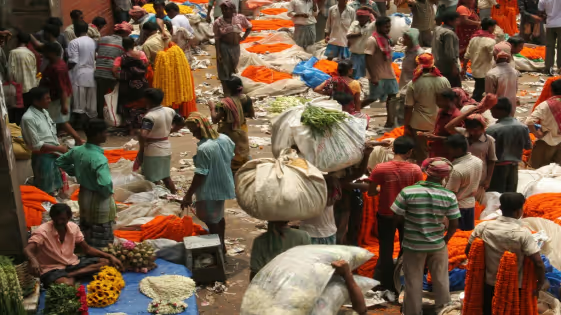
India’s poverty rate does not measure what you think it does
Like all national poverty rates, India’s poverty rate is interpreted as the share of the population that is poor in a given year. In this post, Merfeld and Morduch argue that, in practice, India’s poverty rate is better thought of as the approximate fraction of the year that households experience poverty. They describe how this is rooted in the nature of data collection, and how it changes understandings of poverty and policy in the country.
The economics of begging
Informal estimates suggest that 60% of the world’s population engages in giving to beggars. This article provides a theoretical and empirical analysis of begging as an economic activity. Based on observational and experimental surveys with real beggars and donors in Delhi, it presents various insights into the preferences and perceptions of beggars and donors when it comes to paid work, free-riding, honesty, and ability.
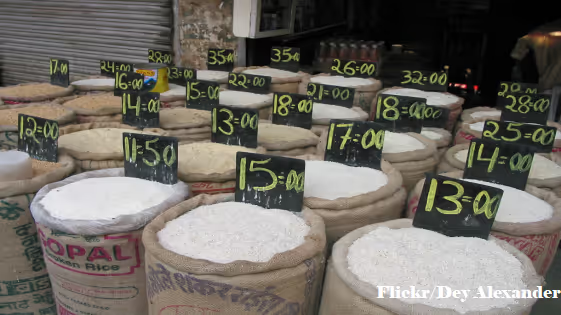
वस्तु-रूपी हस्तांतरण : डेडवेट हानि या लाभ?
क्या सामाजिक सहायता के लिए वस्तु-रूप में दिया जाने वाला हस्तांतरण उपभोक्ता की पसंद को सीमित करके ‘डेडवेट लॉस’ की ओर ले जाता है? इस लेख में महाराष्ट्र में हुए एक प्रयोग से प्राप्त निष्कर्षों को प्रस्तुत किया गया है जिसमें कम आय वाले उत्तरदाताओं को चावल की मुफ्त मात्रा और नकदी की अलग-अलग मात्रा के बीच विकल्प की पेशकश की गई, ताकि चावल के लिए उनकी भुगतान करने की इच्छा का पता लगाया जा सके। इसमें पाया गया कि परिवार में अधिक मोल-भाव करने की क्षमता वाली महिलाएं चावल की अपेक्षा नकदी को ज़्यादा तरजीह देती हैं।
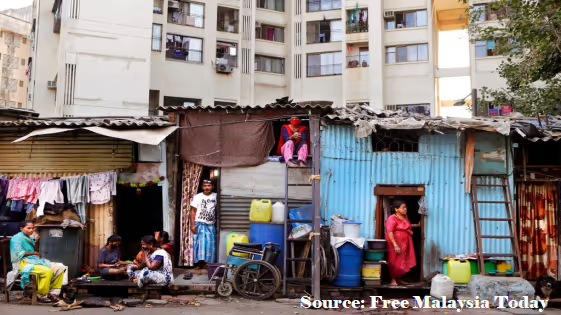
Poverty is bad – but is vulnerability worse?
Official data reveal that poverty in India has declined significantly over time. In this post, Kamila and Wadhwa make the case for policy discourse to shift towards the phenomenon of ‘vulnerability’. Presenting their view on alternative methods of quantifying vulnerability, they highlight the challenges of leveraging existing data for this purpose and the kinds of data that would be needed to capture the essence of vulnerability.
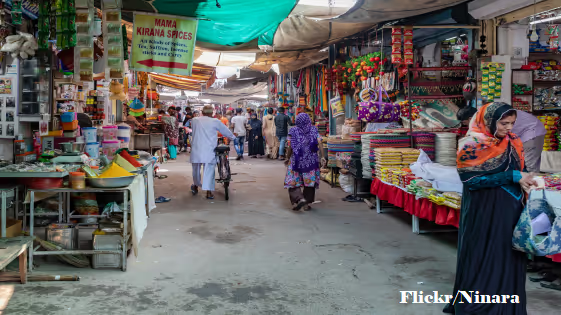
भारत में स्थिर वास्तविक मज़दूरी की समस्या
श्रम ब्यूरो और राष्ट्रीय नमूना सर्वेक्षण कार्यालय के नए नए आँकड़े पिछले एक दशक में भारत में वास्तविक मज़दूरी के वास्तविक ठहराव की ओर इशारा करते हैं। इस शोध आलेख में दास और ड्रेज़ तर्क देते हैं कि यह प्रवृत्ति देश के अनौपचारिक क्षेत्र में गहरे संकट को इंगित करती है तथा इस पर अब तक की तुलना में कहीं अधिक नीतिगत ध्यान दिए जाने की आवश्यकता है।
In-kind transfers: Deadweight losses or gains?
Do in-kind transfers for social assistance lead to ‘deadweight losses’ by restricting consumer choice? This article presents findings from an experiment in Maharashtra, which involved offering low-income respondents the choice between a free quantity of rice and varying amounts of cash to elicit their willingness to pay for rice. It finds that women with higher bargaining power within the household are more likely to choose cash over rice.
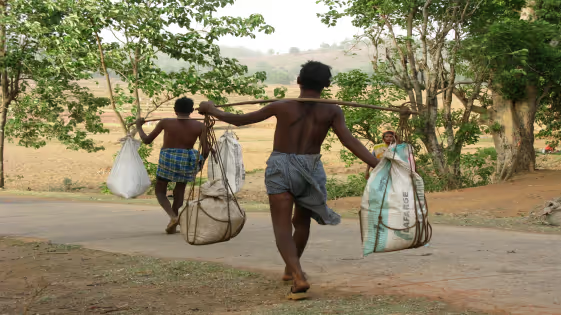
Impact of the Food Security Act on Public Distribution System
‘Leakages’ from the Public Distribution System – that is, grain released by the Food Corporation of India that fails to reach consumers – stood at around 42% in 2011-12 at an all-India level. Passed in 2013, the National Food Security Act guaranteed food security and mandated PDS reforms. As anticipated, based on data from the Household Consumption Expenditure Survey, Reetika Khera shows that leakages were down to 22% by 2022-23.
निम्न आय वाले व्यक्तियों को अनाज सब्सिडी और उनके द्वारा ‘जंक फूड’ की खरीद
सरकारें कम आय वाले समुदायों में कुपोषण को दूर करने के लिए महंगे खाद्य सब्सिडी कार्यक्रमों पर निर्भर हैं, हालाँकि उनका प्रभाव स्पष्ट नहीं है क्योंकि खाद्य खरीद निर्णयों के सम्बन्ध में केवल स्व-रिपोर्ट किए गए डेटा ही उपलब्ध हैं। इस लेख में, ‘पॉइंट-ऑफ़-सेल’ स्कैनर से उपलब्ध डेटा का उपयोग करके मुम्बई में किए गए एक प्रयोग के आधार पर पाया गया है कि कम आय वाले व्यक्ति, विशेष रूप से वे लोग जिनके परिवारों में बच्चे हैं, जिन्हें गेहूँ और चावल की सब्सिडी मिलती है, उन्होंने ‘जंक फूड’ यानी बाहर के कम पोषक आहार पर कम खर्च किया तथा घर में खाना पकाने में अनाज के पूरक मसालों और अन्य खाद्य पदार्थों पर अधिक खर्च किया।
Grain subsidies and junk food purchases among low-income individuals
While governments rely on expensive food subsidy programmes to address malnutrition among low-income communities, their impact is unclear as only self-reported data on food purchase decisions are available. Based on an experiment in Mumbai using data from point-of-sale scanners, this article finds that low-income individuals – especially those living in households with children – who received a wheat and rice subsidy spent less on junk food and more on spices and accompaniments that complement grains in home cooking.
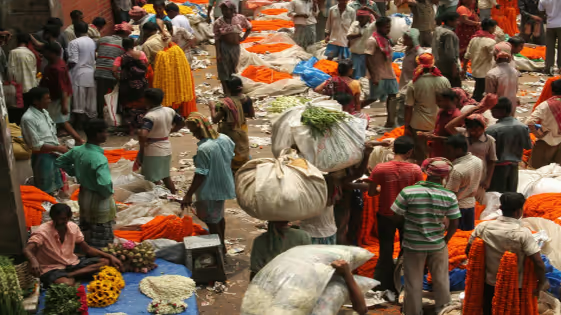
आज कितने भारतीय गरीब हैं?
वर्ष 2022-23 के पारिवारिक उपभोग व्यय सर्वेक्षण के तहत जारी एक तथ्य पत्रक के बाद भारत में गरीबी पर बहस फिर से शुरू हो गई है। इस लेख में घटक और कुमार उल्लेख करते हैं कि शोधकर्ताओं में आम सहमति है कि देश में अत्यधिक गरीबी 5% से कम है। घटक और कुमार इस बात का गहराई से अध्ययन करते हैं कि गरीबी रेखा का निर्धारण कैसे किया जाता है तथा निष्कर्ष निकालते हैं कि गरीबी रेखा की गणना के लिए आवश्यक विस्तृत आँकड़ों के अभाव में, अत्यधिक गरीबी के अनुमानों के बारे में संदेह बना रहेगा।

Why are canteens important when 800 million people get free grains?
Over the past decade, canteens have been established in various parts of India to provide subsidised meals and enhance food security. Based on a survey of canteens conducted across three states, Reetika Khera contends that this social policy intervention has helped ensure dignified meals for millions, created jobs, and fostered a sense of oneness and well-being for many. She advocates for more and guaranteed funding for canteens, revamp and expansion of menus, better infrastructure, and fair wages for staff.
The problem of India’s stagnant real wages
New data from the Labour Bureau and the National Sample Survey Office point to a virtual stagnation of real wages in India over the past decade. In this post, Das and Drèze argue that this trend points to a deep crisis in the country’s informal sector, and warrants a lot more policy attention that it has hitherto received

बदलते समाज में सामाजिक सुरक्षा जाल पर पुनर्विचार करना
इस लेख के सह-लेखक देबाशीष बारिक, पल्लवी चौधरी, बिजय चौहान, ओम प्रकाश शर्मा, दिनेश कुमार तिवारी (एनसीएईआर) और शरण शर्मा (मैरीलैंड कॉलेज पार्क विश्वविद्यालय और एनसीएईआर) हैं। ऐतिहासिक रूप से सामाजिक सुरक्षा जाल के प्रति भारत के दृष्टिकोण में गरीबों की पहचान करना और उन्हें सामाजिक सुरक्षा तक प्राथमिकता प्रदान करना शामिल रहा है। भारत मानव विकास सर्वेक्षण के 2004-05, 2011-12 और 2022-24 में तीन चरणों में एकत्र किए गए आँकड़ों का विश्लेषण करते हुए, इस लेख में पाया गया है कि अर्थव्यवस्था के बढ़ने के साथ-साथ परिवारों को गरीबी में और उससे बाहर निकलने में काफी बदलाव का सामना करना पड़ता है, जिससे गरीबों की सटीक तरीके से पहचान करना और उन्हें लक्षित करना मुश्किल हो जाता है। यह आइडियाज़@आईपीएफ2024 श्रृंखला का तीसरा लेख है।

Rethinking social safety nets in a changing society
This paper was coauthored by Debasis Barik, Pallavi Choudhuri, Bijay Chouhan, Om Prakash Sharma, Dinesh Kumar Tiwari (NCAER) and Sharan Sharma (University of Maryland College Park and NCAER). Historically, India’s approach to social safety nets has involved identifying the poor and providing them with priority access to social protection. Analysing data from the India Human Development Survey, collected in three waves across 2004-05, 2011-12 and 2022-24, this article finds that households face considerable transition in and out of poverty as the economy grows, making it difficult to identify and target the poor in a precise manner. This is the third article in the Ideas@IPF2024 series
Determining how many Indians are poor today
Poverty debates in India have seen a revival since the release of a fact sheet from the 2022-23 household consumption expenditure survey. In this post, Ghatak and Kumar note that the general consensus among researchers is that extreme poverty is under 5%. However, they contest this by digging deeper into how the poverty line is determined and conclude that in the absence of detailed data necessary for calculation of an updated poverty line, doubts will remain about the estimates of extreme poverty
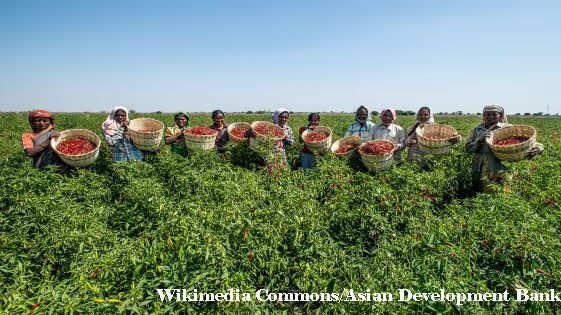
How reforming India’s workfare programme raised private sector earnings
By randomising the rollout of improved, biometric payment infrastructure used to issue National Rural Employment Guarantee Scheme payments in Andhra Pradesh, this study found that this reform raised incomes and reduced poverty. This effect was realised mostly through increases in private labour market earnings, as higher earnings through NREGS put competitive pressure on large landowners who had kept wages low by limiting employment. These findings highlight how critical it is to get implementation of policies and social programmes right..
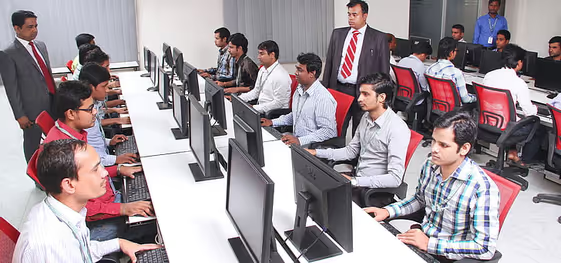
क्या रोज़गार के सृजन से भारत में गरीबी कम हो सकती है?
भारतीय अर्थव्यवस्था में जब लगातार वृद्धि हो रही है, इस बात पर आम सहमति बनी है कि गरीबी को कम करने के लिए अधिक से अधिक नौकरियों का सृजन किया जाना महत्वपूर्ण है। एजाज़ ग़नी उन रुझानों को साझा करते हैं जो दर्शाते हैं कि शहरों और छोटी तथा हाल ही में बनी कम्पनियों द्वारा रोज़गार का सृजन किया जा रहा है, फिर भी अपर्याप्त बुनियादी ढाँचे और विकृत कारकों वाले बाज़ारों के चलते भारत में उद्यमशीलता की वृद्धि धीमी हो गई है। वे यह दर्शाते हैं कि रोज़गार सृजन और गरीबी को कम करने का मार्ग बड़ी कम्पनियों के पीछे चलने में नहीं, बल्कि शिक्षा और बुनियादी ढाँचे में स्थानीय निवेश को बढ़ाने में है।
Could job creation be a driver of poverty reduction in India?
While the Indian economy continues to grow, there is a consensus that creating more jobs is vital to reduce poverty. Ejaz Ghani shares trends which suggest that job creation is being driven by cities and small and young firms, but entrepreneurial growth in India has slowed down due to inadequate infrastructure and distorted factor markets. He suggests that the path to job creation and poverty reduction is scaling up local investments in education and infrastructure, and not chasing large firms.
Persistent problems with PDS: An assessment of the Covid-19 ration scheme
This note summarises the findings of a survey conducted by students at IIT Delhi to evaluate the functioning of the PMGKAY scheme across Uttar Pradesh, Haryana and Punjab. It reveals that many households did not receive their entitled ration during the pandemic, and highlights disparities in the states’ distribution efforts along with long-standing issues of the Public Distribution System like exclusion errors due to difficulty in obtaining ration cards for family members, and Aadhar-linkage.
India’s rising ruralisation defies claims of declining poverty
Building on some of the key contributions to the Great Indian Poverty Debate, Dhananjay Sinha assesses the economic transformation in India over the past few decades. He outlines the lack of private capital expenditure and declining per capita income in India. He also discusses the growth of the agricultural sector, and how this increased ruralisation affects the demand for food grains and other consumer goods. With this evidence, he concludes that the claims of declining poverty may be unfounded.
अज्ञात गरीबों की खोज: अत्यधिक गरीबी में रहने वाले लोगों की पहचान और लक्ष्यीकरण
गरीबी के बारे में अलग-अलग अनुमानों के परिणामस्वरूप कुछ वंचित समुदाय अक्सर सरकारी कल्याण योजनाओं से बाहर रह जाते हैं। सबरवाल और चौधरी बिहार में लागू ‘सतत जीविकोपार्जन योजना’ का अध्ययन करते हैं, जिसमें अत्यधिक गरीबी में रहने वाले लोगों की पहचान करने और यह सुनिश्चित करने के लिए कि उन्हें सामाजिक सुरक्षा योजनाओं तक पहुंच प्राप्त हो, बीआरएसी द्वारा अपनाए गए ‘ग्रेजुएशन अप्रोच’ कार्यप्रणाली के ज़रिए सामुदायिक ज्ञान का उपयोग किया जाता है। वे इस बात की चर्चा करते हैं कि यह लक्ष्यीकरण दृष्टिकोण किस तरह से गैर-मौद्रिक अभाव को ध्यान में रखता है और महिलाओं व अन्य हाशिए पर रहने वाले समूहों का समावेश सुनिश्चित करता है।
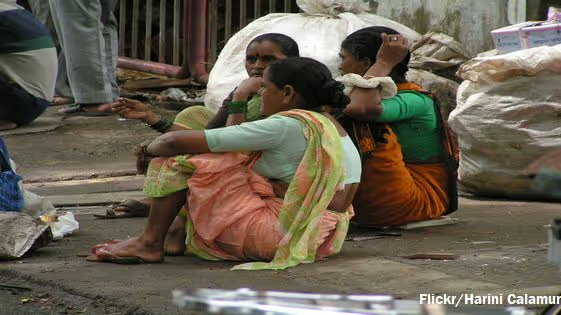
Finding the indiscernible poor: Community knowledge as a targeting approach
Varying estimates of poverty have often resulted in some deprived communities being excluded from government welfare schemes. Sabarwal and Chowdhry look at the case of Satat Jeevikoparjan Yojana in Bihar, which uses the mechanisms recommended by BRAC’s Graduation Approach and harnesses community knowledge to identify those living in extreme poverty and ensure that they receive access to social protection schemes. They discuss how this targeting approach takes into account non-monetary deprivation, and ensures the inclusion of women and marginalised groups.
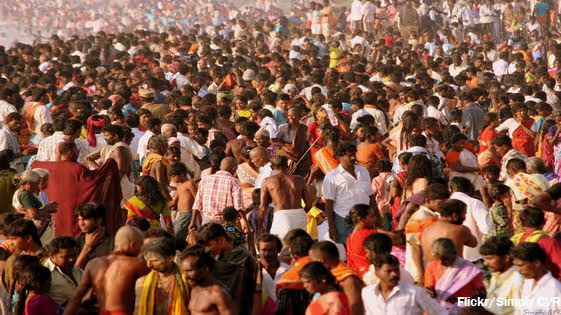
Weighty evidence? Poverty estimation with missing data
Attempts have been made to estimate poverty in India with biased survey data, by adjusting household weights to remove the bias. Based on simulation exercises with artificially contaminated household surveys, Drèze and Somanchi illustrate the limitations of this method. Its ability to correct poverty estimates varies wildly, depending on the nature of the underlying bias, which may be hard to guess – there lies the rub. When the bias changes over time, estimating poverty trends becomes truly problematic.
Statistical priorities for the ‘Great Indian Poverty Debate 2.0’
In the final post of a six-part series on the estimation of poverty in India, Himanshu summarises attempts by researchers to estimate poverty using three varied approaches, given the lack of official consumption expenditure data. He considers the validity of recent estimates against the reality of declining wages. His view remains that if the outstanding statistical issues outlined here aren’t resolved, the upcoming NSS estimates on consumption expenditure will not end, but likely spark, a third round of the poverty debate.
Filling a gaping hole in the World Bank’s global poverty measures
In the fifth post of a six part series on the estimation of poverty in India, Martin Ravallion provides a non-technical summary of Roy and van der Weide's working paper. He discusses some of their main findings, which show that not only has the poverty rate continued to decline, but rural and urban poverty measures have been converging. He notes that although fewer people live at or near the consumption floor, the benchmark has not changed much since 2011.
Extreme poverty in India is yet to be eliminated: A comment on BBV
In the fourth post of a six-part series on the estimation of poverty in India, Sinha Roy and van der Weide reflect on the dramatically different estimates produced by two studies, and the source of the discrepancy. They put the estimates from the papers side by side in order to investigate three likely causes for this – using consistent data sources to determine pass-through rates, incompatibility in pass-through and growth rate series, and the incorporation of subsidies into the calculations of household expenditure.
The Great Indian Poverty Debate, 2.0
In the third post of a six part series on estimating poverty in India, Justin Sandefur considers the approaches employed for projections of poverty estimates since 2011-12 – the last year for which official estimates are available. He highlights the novel and creative solutions used by two recent working papers to fill the gap. But given other economic indicators and quality of National Accounts data, he expresses scepticism over the optimistic headline poverty figures proffered by both papers.
Has India eliminated extreme poverty?
In the second post of a six-part series on Gaurav Datt unpacks the claim that India was on the verge of eliminating extreme poverty, and questions two key assumptions on which it rests. Rather, he shows that the survey capture ratio has been declining, while top income shares have been rising over the last decade. He finally presents some alternative estimates, which call into question the elimination of extreme poverty.
Measuring poverty in the absence of Consumption Expenditure Survey data
In the first post of a six-part series on , Surjit Bhalla and Karan Bhasin discuss issues related to measurement of absolute poverty in India. They summarise their IMF working paper from April 2022, and defend their assumption of unity pass-through and impact of food transfers. They point out shortcomings in certain measurement approaches, including the World Bank’s reliance on the outdated Uniform Recall Period, and cite other poverty estimates which corroborate their own findings.
Introduction to e-Symposium: Estimation of poverty in India
Estimates of poverty in India put forth in two papers published earlier this year – by Bhalla, Bhasin and Virmani; and Roy and van der Weide – have sparked the “Great Indian Poverty Debate 2.0”. Across this week, from 3-8 October, this I4I e-Symposium brings together articles from the authors of the aforementioned papers, and commentaries from other contributors. They dissect the methodology employed by the two papers, and discuss the implications of the findings. Anchored by Maitreesh Ghatak, the e-Symposium aims to provide a nuanced view of the poverty estimates and what they truly say about the incidence and eradication of extreme poverty in India.

The implications of India’s spatial development
Mahatma Gandhi once said, “poverty is the worst form of violence”. In this piece, Ejaz Ghani highlights India’s poverty burden, its regional disparities and convergence thereof. He highlights how the growth process, as well as government transfers, currently benefit leading over lagging regions. He discusses how growth doesn't necessarily reduce poverty, and encourages policymakers to not wait to adopt direct interventions. He concludes with crucial policy suggestions around decentralization, labour mobility, and investments in agriculture to enable lagging regions.

How financial access impacts women’s decision-making role in households
Government programmes which grant women access to financial support often provide assistance which is too small to significantly impact women’s economic position within the household. This article uses data on loans granted to members of NRLP self-help groups and finds that increasing women's access to financial resources enhance their decision-making role within the household. However, only large loans have this effect, while providing women with small loans yields similar results to improving the financial position of the household.
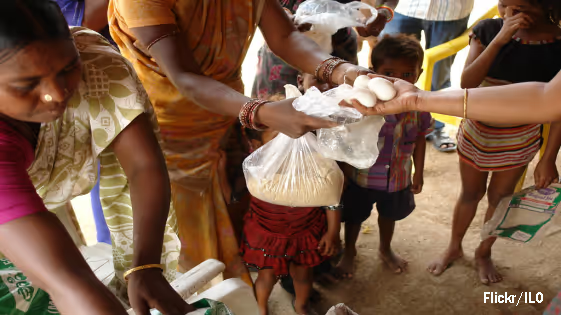
शहरी अपवर्जन (बहिष्करण): कोविड-19 के मद्देनजर भारत में सामाजिक सुरक्षा पर पुनर्विचार करना
कोविड-19 के शुरुआती दिनों में लॉकडाउन के कारण हुई आर्थिक असुरक्षा के चलते कई परिवार अपनी उपभोग जरूरतों को पूरा करने के लिए सरकारी कल्याणकारी योजनाओं पर निर्भर रहने के लिए मजबूर हुए। यह लेख दिल्ली एनसीआर कोरोना वायरस टेलीफोन सर्वेक्षण के जून 2020 के दौर के डेटा का उपयोग करते हुए, दर्शाता है कि विशेष रूप से शहरी क्षेत्रों में कुछ परिवारों को ही खाद्यान्न और नकद अंतरण- दोनों प्राप्त हुए, और शहरी निवासियों की उनके ग्रामीण समकक्षों की तुलना में नकद अंतरण प्राप्त करने की संभावना भी आठ प्रतिशत कम थी।

The post-pandemic global inequality boomerang
Global inequality has fallen over the last three decades, despite a rise in inequality within some countries. This article uses a World Bank database covering the years 1981-2019 to posit that the decline in global inequality will reverse in the coming years, driven by the between-country component of inequality, with the unequal recovery from the Covid crisis likely to hasten the reversal. Thus, the narrative of declining global inequality could prove temporary
Urban exclusion: Rethinking social protection in India in the wake of Covid-19
Economic insecurity caused by lockdowns during the early days of Covid-19 forced many households to rely on government welfare schemes to fulfil their consumption needs. Using data from the June 2020 round of the Delhi NCR Coronavirus Telephone Survey (DCVTS) by NCAER, this article shows that few households received both foodgrains and cash transfers, particularly in urban areas, and urban residents were also eight percentage points less likely to receive cash transfers vis-à-vis their rural counterparts.

Using personalised information delivery to improve uptake of emergency government benefits
Although many governments introduced additional benefits as part of existing welfare schemes for Covid-19 relief, there is often a significant gap between the introduction of, and access to these benefits. Based on a field experiment in Kanpur in Uttar Pradesh, this article shows that simple, low-cost, information provision interventions can improve the accuracy of households' beliefs about the entitlements they are eligible for and increase the amounts they actually receive, improving beneficiaries’ food security and well-being.

हिमाचल की शहरी रोजगार गारंटी योजना की जांच
भारत में अर्थशास्त्रियों द्वारा शहरी रोजगार कार्यक्रम की आवश्यकता के बारे में दिए गए सुझावों के बावजूद, इस संबंध में राष्ट्रीय स्तर की नीति के अमल में आने में कुछ और समय लगेगा। हालांकि, कुछ राज्यों ने ऐसे कार्यक्रमों को लागू किया है और इस लेख में कृष्णा प्रिया चोरागुडी हिमाचल प्रदेश की मुख्यमंत्री शहरी आजीविका गारंटी योजना के मामले की जांच करती हैं। उनका तर्क है कि ऐसी योजनाएं शहरी क्षेत्रों में संपत्ति निर्माण और आजीविका सुरक्षा के साथ-साथ महिलाओं के रोजगार को बढ़ाने की दिशा में एक महत्वपूर्ण कदम हैं।
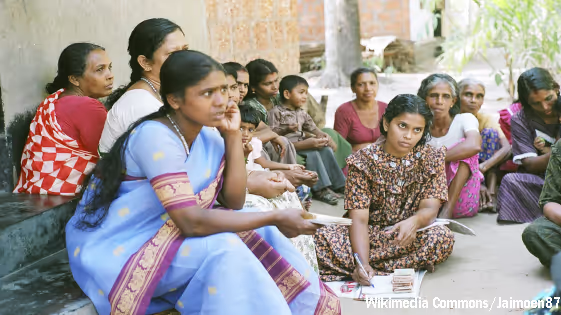
A microfinance model to enhance borrowers’ lifetime utility
Research has shown that providing credit along with services such as savings instruments, can increase the utility that borrowers obtain from credit. Presenting a theoretical model where microfinance institutions offer a ‘locked-in’ savings service and credit, this article shows that the optimal contract is one that enables a borrower to save up the lumpsum amount required to adopt a more efficient technology.
Examining Himachal’s urban employment guarantee
Despite proposals by economists on the need for an urban work programme in India, a national-level policy seems some time away from coming to fruition. However, some states have implemented such programmes and in this note, Krishna Priya Choragudi examines the case of Himachal Pradesh’s Mukhyamantri Shahri Ajeevika Guarantee Yojana. She contends that such schemes are an important step towards asset creation and livelihood security in urban areas, along with enhancing women's employment.

कोविड-19 और दीर्घकालिक गरीबी: ग्रामीण राजस्थान से साक्ष्य
प्रारंभिक गणना के आधार पर, भारत में कोविड-19 के कारण 7.7 से 22 करोड़ लोग गरीबी में आ गए हैं, जिसके अनुसार अब शहरी आबादी में गरीब 60% और ग्रामीण आबादी में 70% हो गए हैं। वर्ष 2002 में ग्रामीण राजस्थान में किए गए सर्वेक्षण के 2021 में किये गए फॉलोअप के आधार पर, यह लेख दर्शाता है कि परिवारों को मार्च 2020-अगस्त 2021 के दौरान अपनी नकद आय का एक-तिहाई और दो-तिहाई के बीच नुकसान हुआ, जबकि उन्होंने अपनी दीर्घकालीन गरीबी में बहुत कम बदलाव देखा या किसी बदलाव का अनुभव नहीं किया।
Covid-19 and long-term poverty: Evidence from rural Rajasthan
Based on preliminary calculations, it is being reported that 77-220 million have fallen into poverty in India on account of Covid-19, with the poor now accounting for 60% of urban, and 70% of rural residents. Based on a 2021 follow-up to a 2002 survey conducted in rural Rajasthan, this article shows that while households lost between one-third and two-thirds of their cash incomes during March 2020-August 2021, they experienced little to no change in long-term poverty.

घोर उपेक्षा: भारत की राष्ट्रीय परिवार लाभ योजना
परिवार में कमाने वाले सदस्य की मृत्यु होने की स्थिति में परिवारों को वित्तीय सहायता प्रदान करने वाली राष्ट्रीय परिवार लाभ योजना (एनएफबीएस) कम बजट आवंटन, प्रतिबंधित कवरेज और प्रशासनिक बाधाओं से घिरी हुई है। इस लेख में, जैस्मीन नौर हाफिज इस योजना के कार्यान्वयन में आने वाली इन कठिनाइयों और अन्य मुद्दों की जांच करती हैं, और भारत के सामाजिक सुरक्षा ढांचे के इस महत्वपूर्ण घटक को सुधारने और इसे मजबूत करने का पक्ष रखती हैं।
गांव में अपराध: क्या सड़क जैसी बुनियादी सुविधाओं से फर्क पड़ता है?
ग्रामीण भारत में गरीबी के उन्मूलन और आर्थिक विकास हेतु अच्छी बुनियादी सुविधाओं तक पहुंच होना महत्वपूर्ण है। यह लेख, भारत मानव विकास सर्वेक्षण (आईएचडीएस) के 2004-05 और 2011-12 के आंकड़ों का विश्लेषण करते हुए दर्शाता है कि पक्की सड़कों से जुड़े गांवों के परिवारों में अपराध, श्रम बल की भागीदारी और पारिवारिक आय के सन्दर्भ में उन गांवों में रहने वालों की तुलना में बेहतर परिणाम पाए गए जहाँ पक्की सड़कें नहीं थी।
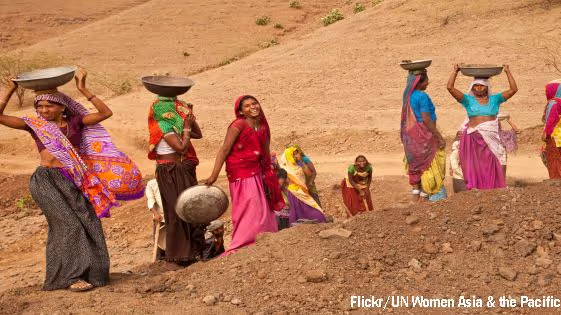
मनरेगा निधि का आवंटन: मांग आधारित काम की गारंटी का भुगतान
केंद्र ने मनरेगा (महात्मा गांधी राष्ट्रीय ग्रामीण रोजगार गारंटी अधिनियम) के लिए वित्त पोषण हेतु अतिरिक्त राशि के रूप में रुपये 25,000 करोड़ की मांग की है। अश्विनी कुलकर्णी ने आधिकारिक आंकड़ों का उपयोग करते हुए सरल गणना के आधार पर यह तर्क दिया है कि वास्तविक निधि की आवश्यकता वास्तव में इससे बहुत अधिक है। चूँकि महामारी ग्रामीण आजीविका पर प्रतिकूल प्रभाव डाल रही है, सरकार को मांग आधारित काम की गारंटी का भुगतान करने के लिए मनरेगा को पर्याप्त धन आवंटित करना चाहिए।
Fatal oblivion: India's National Family Benefit Scheme
The National Family Benefit Scheme (NFBS) – which provides financial assistance to families in the event of the death of a breadwinner – has been plagued by low budget allocations, restricted coverage, and administrative hurdles. In this post, Jasmin Naur Hafiz examines these and other implementation issues facing the scheme, and advocates for revamping and consolidating this critical component of India’s social security framework.
Crime in the village: Does road infrastructure make a difference?
Access to better infrastructure is critical for poverty alleviation and economic development in rural India. Analysing data from the 2004-05 and 2011-12 waves of the India Human Development Survey (IHDS), this article shows that households in villages connected with pucca roads had better outcomes in terms of crime, labour force participation, and family income, relative to those residing in villages with no pucca roads.
MNREGA funds allocation: Honouring the work-on-demand guarantee
The Centre has sought an additional Rs. 25,000 crore as funding for MNREGA (Mahatma Gandhi National Rural Employment Guarantee Act). Based on simple calculations using official data, Ashwini Kulkarni contends that the actual fund requirement is in fact much higher. As the pandemic continues to adversely impact rural livelihoods, the government should allocate sufficient funds to MNREGA, in order to honour the work-on-demand guarantee.
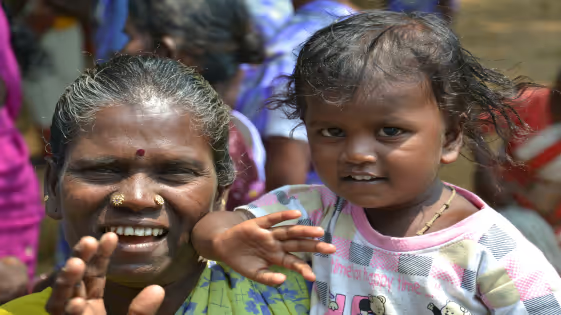
केवल विकास ही नहीं: गरीबी दूर करने में पुनर्वितरण का महत्व
हाल के अध्ययनों से इस बात की पुष्टि मिलती है कि विकासशील देशों में नीतियां और संस्थान विश्व के संपन्न देशों के अनुरूप बदल रहे हैं और इसी वजह से इन देशों की प्रति-व्यक्ति आय औद्योगीकृत देशों के बराबर होने की राह पर है। इस लेख में, एनवॉल्डसन और पांडेय ने तर्क दिया है कि इन देशो में व्याप्त अत्यधिक गरीबी को मिटाने के लिए यह देश-स्तरीय बराबरी पर्याप्त नहीं होगी, क्योंकि इस 'विकास' का फल गरीबों तक नहीं पहुंच रहा है। अतः समावेशी समृद्धि के लिए एक राजनीतिक समाधान- यानी पुनर्वितरण की आवश्यकता होगी।

Covid-19: Impact on migrant workers in Bihar
The nationwide lockdown – imposed in March 2020 to contain the spread of Covid-19 – left large sections of migrant workers in a precarious position, with livelihoods lost, and no means of public transport to get back home. This note presents findings from a survey of over 1,600 households in 12 villages across seven districts of the state of Bihar – a major source of migrant workers – to assess the impact of the pandemic on their lives.
Not by growth alone: The salience of redistribution in poverty eradication
Recent studies posit that per capita incomes of developing countries are finally on track to catch up to those of industrialised countries. In this post, Enevoldsen and Pande contend that this country-level catch-up will not be sufficient to eradicate extreme poverty, as the blessings of this ‘growth’ are not reaching the poor. Inclusive prosperity requires a political solution: redistribution.

Covid-19: Impact on income inequality in India
Even as global inequality was falling, income inequality in India increased during 1990-2019. With the occurrence of Covid-19, the trend of increasing income inequality in the country is expected to not only continue but worsen. Analysing data from the Consumer Pyramids Households Survey, this article shows that inequality has risen sharply during the pandemic, with lower income households having experienced a larger decline in earnings.
सार्वजनिक वितरण प्रणाली (पीडीएस), राष्ट्रीय खाद्य सुरक्षा अधिनियम और कोविड-19
2013 में लागू किया गया राष्ट्रीय खाद्य सुरक्षा अधिनियम (एनएफएसए) सार्वजनिक वितरण प्रणाली (पीडीएस) में मूलभूत सुधार ले आया और सबसे महत्वपूर्ण इसके जरिये कानूनी रूप से भोजन का अधिकार' दिया गया। यह लेख बिहार, ओडिशा और उत्तर प्रदेश में किये गए प्राथमिक सर्वेक्षण के आधार पर, एनएफएसए के लागू होने के बाद और कोविड-19 संकट के दौरान, सार्वजनिक वितरण प्रणाली (पीडीएस) में हुए परिवर्तनों का पता लगाता है।
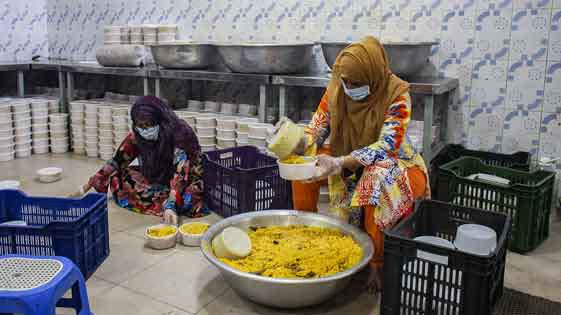
Covid-19 and growing food insecurity: Insights from rural Bihar
Emerging research shows that Covid-19 has had a devastating impact on the already undernourished and marginalised populations, by affecting their access to food and nutrition, and consumption patterns. In this note, Dutta et al. discuss findings from their field study in rural Bihar and highlight three key reasons for reduced food consumption by households – fear of contracting Covid-19, price hikes, and closure of markets.

Spatial disparities in household earnings in India
The per-capita state domestic product of Haryana (India’s richest state) was 5.6 times that of Bihar (poorest state) in 2017-18, up from 3.8 in 1996-97. Differences in urbanisation levels and inability of poorer regions to realise agglomeration benefits, are cited as reasons for the lack of convergence across states. Using 2018-19 Periodic Labour Force Survey data, this article examines spatial disparities in household earnings across the country.
PDS, National Food Security Act, and Covid-19
Introduced in 2013, the National Food Security Act (NFSA) brought about fundamental reforms in the public distribution system (PDS) and most importantly, declared a legal ‘right to food’. Based on a primary survey in Bihar, Odisha, and Uttar Pradesh, this article traces the changes in the PDS post NFSA, and during the Covid-19 crisis.
कोविड-19 संकट ने शहरी गरीबों को कैसे प्रभावित किया है? एक फोन सर्वेक्षण के निष्कर्ष-III
हालांकि भारत में कोविड-19 की दूसरी लहर के सार्वजनिक स्वास्थ्य पर विनाशकारी प्रभाव को सभी जानते हैं परंतु इसके आर्थिक और मनोवैज्ञानिक आयामों पर अपेक्षाकृत कम साक्ष्य उपलब्ध है। दिल्ली के औद्योगिक समूहों में सर्वेक्षण के आधार पर अफरीदी और अन्य ने गरीबों, अनौपचारिक श्रमिकों की आजीविका एवं मानसिक स्वास्थ्य पर महामारी के आज तक के विभिन्न चरणों के गतिशील प्रभावों की जांच की तथा महिलाओं और पुरुषों के अनुभवों की तुलना की है।
Focussing on inequality of opportunity to sustain India’s growth
India has seen a four-fold increase in average incomes since 1990, which has reduced the share of the population living in absolute poverty from 45% to 20%. Yet, there are large and widening inequalities in incomes and opportunities. Analysing microdata from the National Sample Survey, this article provides estimates of the ‘locational premiums’ that residents can earn merely by belonging to a richer sub-region.
कोविड-19 संकट और खाद्य सुरक्षा
2020 में कोविड -19 के प्रसार को रोकने के लिए भारत में लगाए गए राष्ट्रीय लॉकडाउन ने लाखों लोगों को बेरोजगार कर दिया और जो लोग रोज़गार में बने रहे उनकी कमाई में तेजी से कमी आई। बहु-राज्य सर्वेक्षणों के आंकड़ों के आधार पर, द्रेज़ और सोमंची खाद्य-सुरक्षा पर महामारी के विनाशकारी प्रभाव को उजागर करते हैं, और मजबूत राहत उपायों का पक्ष रखते हैं।
How has the Covid-19 crisis affected the urban poor? Findings from a phone survey - III
While the devastating impact of the second Covid-19 on public health in India is well-known, there is relatively little evidence on its economic and psychological dimensions. Based on surveys in industrial clusters of Delhi, Afridi et al. examine the dynamic effects of the different phases of the pandemic, on livelihoods and mental health of poor, informal workers – and how the experiences of women and men compare.
The changing demand for welfare in rural Pakistan
The proliferation of cash transfer programmes in developing countries has raised concern regarding a crowding-out effect on citizens' demands for investment in universal public services. Based on a household survey in rural Pakistan, this article shows that this is not necessarily true. It notes important sub-national differences in programme effects, with greater positive spillovers in settings where public services are functional and valued by citizens.
The Covid-19 crisis and food security
India’s national lockdown in 2020, imposed to contain the spread of Covid-19, threw millions of people out of work and sharply reduced earnings for those who remained employed. Based on data from multi-state surveys, Drèze and Somanchi highlight the devastating impact of the pandemic on food security, and make a case for stronger relief measures.
कोविड-19: भारत की झुग्गी-बस्तियों में स्वास्थ्य तथा आर्थिक प्रभाव
प्रारंभिक अनुमानों में यह कहा गया था कि कोविड-19 से झुग्गी-बस्तियों में रहने वाले लोग सबसे बुरी तरह प्रभावित होंगे क्योंकि वे अत्यधिक घनी बसी आबादी में रहते हैं, वहां साझा नल होते हैं और वहां सामाजिक दूरी का पालन करना असंभव होता है। इस लेख में, डाउन्स-टेपर, कृष्णा और रेन्स, इन कमजोर समुदायों पर महामारी के स्वास्थ्य और आर्थिक प्रभावों का पता लगाने, और इससे निपटने के लिए निवासियों द्वारा समय के साथ अपनाई गई रणनीतियों को समझने के लिए, बेंगलुरु और पटना में 40 झुग्गी-बस्तियों में सर्वेक्षण डेटा का उपयोग करते हैं।
Covid-19: Health and economic impacts in Indian slums
Initial predictions suggested that slum communities – densely packed, with shared water taps, and an impossibility of social distancing – would be particularly hard-hit by Covid-19. In this note, Downs-Tepper, Krishna and Rains, use data from surveys in 40 slums across Bengaluru and Patna, to track the health and economic impacts of the pandemic on these vulnerable communities, and to understand the strategies employed by residents to cope with these impacts over time.

Examining district-level performance of Ujjwala: The case of Chhattisgarh and Jharkhand
Launched in 2016, Pradhan Mantri Ujjwala Yojana (PMUY) aims to encourage the adoption of liquefied petroleum gas (LPG) for cooking. Using National Sample Survey data for 2014 and 2017, this article examines the impact of PMUY in two states with low LPG usage – Chhattisgarh and Jharkhand. It finds intra-state disparities in LPG usage and PMUY enrolment: regions with relatively low usage rates pre-PMUY had low enrolment, with higher enrolment in urban than in rural areas.
लॉकडाउन के दौरान शहरी भारत में कितनी नौकरियां गईं?
कोविड -19 के प्रसार को रोकने के लिए मार्च 2020 में लगाए गए राष्ट्रव्यापी लॉकडाउन ने विशेष रूप से भारत की शहरी अर्थव्यवस्था को बुरी तरह प्रभावित किया। अप्रैल-जून 2020 की अवधि के लिए आवधिक श्रम-बल सर्वेक्षण के आंकड़ों का उपयोग करते हुए, मित्रा और सिंह ने शहरी क्षेत्रों में नौकरी के नुकसान की जांच की। वे पाते हैं कि कृषि की तुलना में माध्यमिक और तृतीयक क्षेत्र अधिक प्रतिकूल रूप से प्रभावित हुए और पुरुषों की तुलना में अधिक महिलाएं श्रम-बल से बाहर हो गईं।
How many jobs were lost in urban India during lockdown?
The nationwide lockdown imposed in March 2020 to contain the spread of Covid-19, disrupted economic activity – particularly in urban India. Using data from the Periodic Labour Force Survey for the period April-June 2020, Mitra and Singh examine job losses in urban areas. They find that the secondary and tertiary sectors were more adversely affected than agriculture, and more women than men dropped out of the labour force.
कोविड-19: बिहार की सरकारी योजनाएँ कमजोर आबादी की सहायता कितने अच्छे से कर रहीं हैं?
कोविड-19 महामारी और उससे जुड़े लॉकडाउन का तत्काल प्रतिकूल प्रभाव ऐसे प्रवासी श्रमिकों और उनके परिवारों पर काफी अधिक देखा गया जिनकी अपने मूल गांवों में सरकारी योजनाओं तक पहुंचने की क्षमता अनिश्चित थी। जून-जुलाई 2020 में बिहार के ग्रामीण क्षेत्रों में किये गए एक सर्वेक्षण से प्राप्त आंकड़ों का विश्लेषण करते हुए सरीन एवं अन्य यह पाते हैं कि प्रवासियों के परिवारों को भोजन में कटौती करने और मानसिक स्वास्थ्य के मुद्दों से पीड़ित होने की संभावना अधिक थी, भले ही उन्होंने गैर-प्रवासी परिवारों की तुलना में अधिक आय होने की जानकारी दी हो।
ड्यूएट-विकेंद्रीकृत शहरी रोजगार और प्रशिक्षण: संशोधित
सितंबर 2020 में, शहरी रोजगार के लिए ज्यां द्रेज़ का ड्यूएट (विकेंद्रीकृत शहरी रोज़गार एवं प्रशिक्षण) नामक प्रस्ताेव आइडियाज फॉर इंडिया पर प्रस्तु त किया गया था।इसके बाद आयोजित एक गहन परिसंवाद में ख्याततिप्राप्त अर्थशास्त्रियों एवं पेशेवरों ने उस प्रस्ता व पर अपने-अपने मत व्यपक्तख किए। इस पोस्ट में द्रेज़ ने अपने मूल प्रस्तादव को महत्वंपूर्ण मायने में अद्यतन करते हुएयह सुझाव दिया है कि यह कार्यक्रम शहरी महिलाओं के लिए होना चाहिए और उनके द्वाराही संचालित किया जाना चाहिए।परिसंवाद के प्रतिभागियों के प्रश्नों और महत्वकपूर्ण टिप्प णियों में से कुछ के उत्त्र देते हुए द्रेज़ यह तर्क देते हैं कि ड्यूएट की प्रभावकारिता का आकलन करने का सर्वोत्तम तरीका उसको अमल में लाने का एक अवसर देना है।

Covid-19: Addressing stigma and misconceptions
Throughout the Covid-19 pandemic in India, there has been stigmatisation of patients and their families, and discriminatory attitudes towards marginalised groups as well as frontline workers. Based on an experiment conducted in Uttar Pradesh during June-August 2020, this article shows that providing reliable and focussed information on the transmission of the Virus can play an important role in addressing associated misconceptions, stress, and stigma.
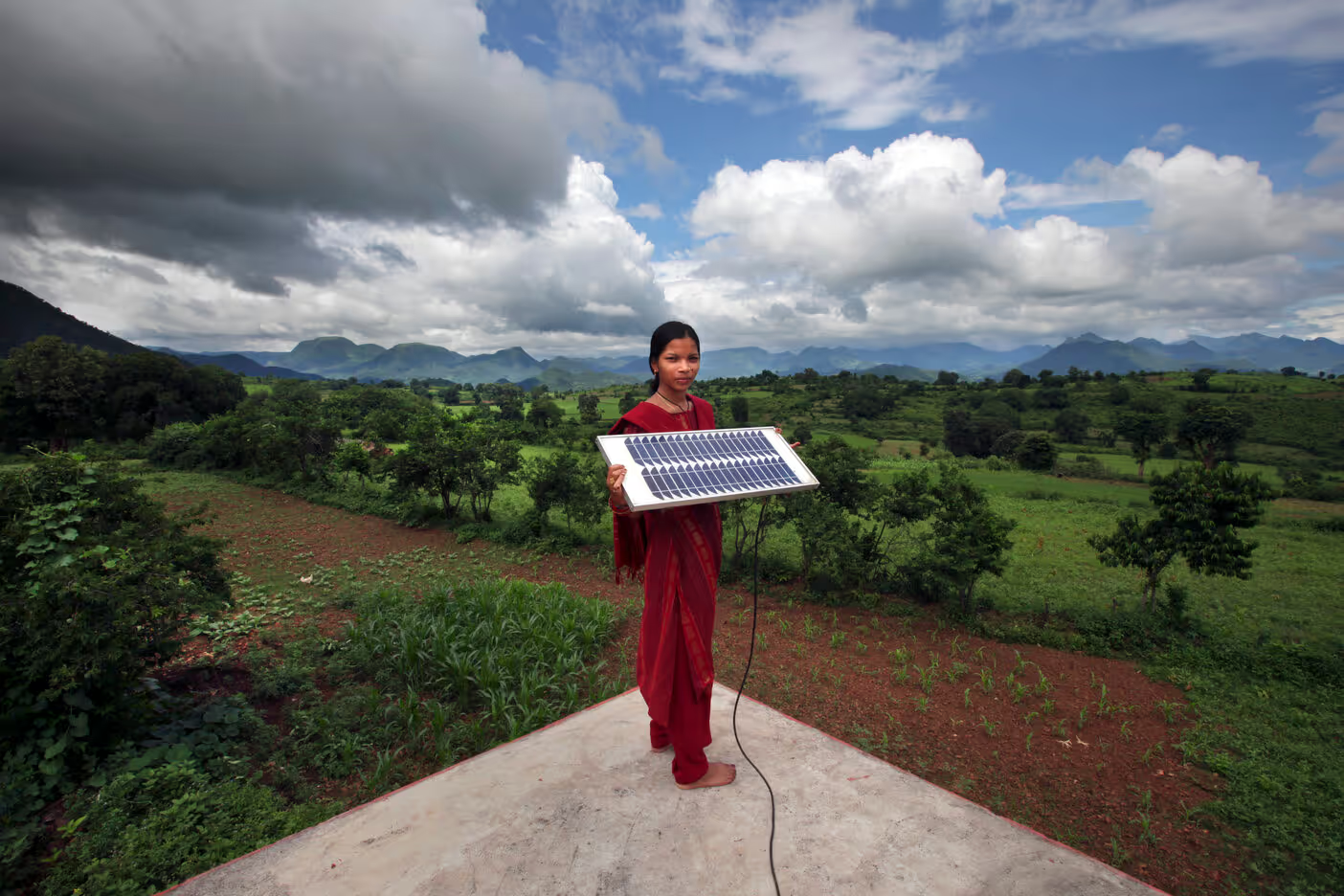
Energy access for marginalised communities: Evidence from rural India
While overall energy access of Indian households has improved rapidly over the past decade, access to clean fuel is still low as compared to electricity. Besides, social structures and hierarchies continue to substantially influence rural development processes in the country. Using data from a household panel survey conducted in six Indian states during 2015-2018, this article analyses inequities in access to clean fuel and electricity among scheduled castes/tribes.
Covid-19: How well are government schemes supporting Bihar’s vulnerable populations?
The immediate adverse impact of the Covid-19 pandemic and associated lockdown was visibly greater for migrant workers and their households, whose ability to access government schemes in their villages of origin was uncertain. Analysing data from a survey in rural Bihar in June-July 2020, Sarin et al. find that household with migrants were more likely to cut down on food and suffer from mental health issues – even as they reported higher incomes than non-migrant households.
DUET re-examined
In September 2020, Jean Drèze’s proposal for an urban work programme called DUET (Decentralised Urban Employment and Training) was presented on I4I. This was followed by an extensive symposium in whicheminent economists and practitioners provided their perspectives on the proposal. In this post, Drèze updates his original proposal in one important respect, by suggesting that the programme should be run by and for urban women. Responding to some of the key comments and questions of the symposium contributors, he argues that the best way to assess the efficacy of DUET in practice is to give it a chance.

DUET: Employment programme in public works in small towns
Given the severe problems of unemployment and under-employment in urban India, particularly among the country’s burgeoning youth population, Pranab Bardhan emphasises the need for an employment programme in urban public works. In his view, such a programme should be inclusive, local government-driven, and prioritise projects that serve environmental and health goals in small towns.
DUET: Towards employment as a universal right
Debraj Ray contends that we should push forward with the agenda of employment as a universal right, and DUET would move that needle. He discusses two aspects of the proposal – keeping track of workers, and keeping track of projects.
DUET: A proposal for an urban work programme
Jean Drèze presents a proposal for a simple scheme of subsidised public employment in urban areas, generated by multiple public institutions on their own initiative.
A review of the coverage of PDS
The coverage of the Public Distribution System (PDS) has been of wide interest due to the pandemic and lockdown. Based on government data sources, Khera and Somanchi estimate the state-wise coverage of PDS and map the categories of food support. They find that despite the expansion of PDS with the enactment of the National Food Security Act, and state ‘top-ups’ beyond central support, over 400 million people are excluded from it.
कोविड-19: बिहार लौटते प्रवासी मजदूर, ग्रामीण आजीविका तथा सामाजिक सुरक्षा
कोविड-19 के प्रसार को कम करने के लिए लागू किए गए लॉकडाउन के कारण अनेक प्रवासी मजदूरों ने अपना रोज़गार गँवाया और उनमें से करीब 30 लाख से ज्यादा प्रवासी दूसरे राज्यों से बिहार लौटे। इस विषय पर प्रोफेसर फरजाना अफ़रीदी (I4I संपादकीय बोर्ड सदस्य) के साथ बातचीत करते हुए श्री अरविंद कुमार चौधरी (प्रमुख सचिव, ग्रामीण विकास विभाग, बिहार सरकार) ने बिहार लौटे मजदूरों के हित में सरकार द्वारा उठाए गए कदमों पर प्रकाश डाला है। जिसमे उन्होने मनरेगा, गरीब कल्याण रोज़गार अभियान, जल जीवन योजना, आदि पहलकदमियों के बारे में विस्तृत जानकारी दी है।
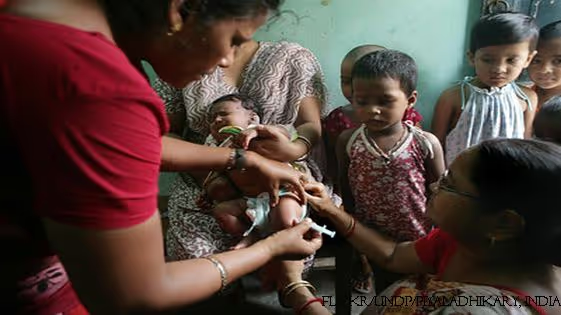
Covid-19: Willingness to vaccinate among slum-dwellers
Vaccination is among the success stories in modern-day medicine, and is seen by the WHO as a key element of the response to the Covid-19 pandemic. In this note, Augsburg et al. discuss findings from a survey of 4,000 slum dwellers in two cities of Uttar Pradesh, on their willingness to vaccinate and pay for it. They contend that, as billions are poured into a vaccine’s development and tackling supply difficulties, policymakers should also prepare for the next challenges: compliance and ability to pay.
भूख और अनिश्चितता: ओडिशा के खानाबदोश भविष्यश-वक्ताजओं की स्थिति
अबिनाश दाश चौधरी, जो भारत में कोविड-19 से जुड़े मानवीय संकट पर पाक्षिक डेटा प्रस्तुत करने के लिए शोधकर्ताओं के एक नेटवर्क के हिस्से के रूप में काम करते हैं, ने इस लेख में दक्षिण ओडिशा के पारंपरिक भविष्यं-वक्ता ओं की वर्तमान स्थिति के बारे में बताया है। लॉकडाउन से पहले यह जनजाति अपना जीवन यापन करने के लिए गाँवों और कस्बों में घूमती रहती थी, लेकिन लॉकडाउन के चलते इस जनजाति के लोगों के आने-जाने पर पूर्ण-प्रतिबंध लग गया है जो उनके आय स्रोतों के लिए हानिकारक साबित हुआ है।
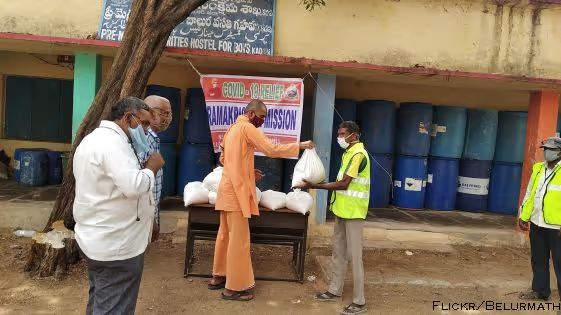
Covid-19: How long can consumption be sustained in lockdown?
In May 2020, the Finance Minister announced an economic relief package totaling Rs. 20 trillion, in response to the Covid-19 crisis. However, the actual stimulus is estimated to be only 1.3% of GDP. In this post, Khan and Abraham assess the earning loss of workers during different phases of the lockdown, and contend that, even if we consider just the earning loss of workers in the informal sector, the actual stimulus in the package should have amounted to at least 3% of GDP.
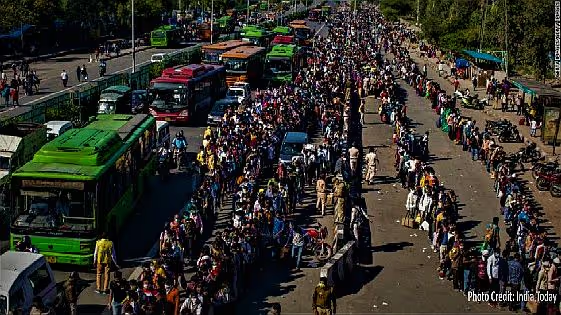
Pandemic as a lens: Identifying and addressing livelihood vulnerabilities
Based on the findings from a phone survey of around 5,000 Indian workers, the authors explore the impact of the Covid-19 economic lockdown on two forms of livelihood vulnerabilities: employment insecurity and food insecurity. They argue that the policy response needs to go beyond addressing the immediate consequences of this specific shock; this juncture posits the need for structural reforms that seek to address and fill these gaps concretely rather than suturing temporarily.

कोविड-19 राहत: क्या महिला जन धन खाते नकद हस्तांतरण के लिए सही विकल्प हैं?
भले भारत सरकार द्वारा कोविड-19 हेतु राहत पैकेज की घोषणा की गई है, जिसमें खाद्य राशन प्रदान किए जाने के साथ-साथ नकद हस्तांतरण को भी उचित स्थान दिया गया है, परंतु नकद हस्तांतरण हेतु महिला जन धन बैंक खातों की सूची का उपयोग करने के बारे में स्थिति स्पष्ट नहीं है। इस लेख में, अनमोल सोमांची यह दिखाते हैं कि कैसे आधे से कुछ कम परिवार इस नकद हस्तांतरण से वंचित रह जाएंगे, और इस व्यवस्था में क्या कमियाँ हैं।
Covid-19 relief: Are women Jan Dhan accounts the right choice for cash transfers?
While the relief package announced by the Government of India for Covid-19 rightly complements food rations with cash transfers, the case for using the list of women Jan Dhan bank accounts for the latter is not clear. In this post, Anmol Somanchi estimates the coverage of these accounts, and finds that more than half of all women, andshows that a little less than half of all households are likely be excluded from cash relief and discusses other limitations of this approach.

कोविड-19 संकट ने शहरी गरीबों को कैसे प्रभावित किया है? फोन सर्वेक्षण के निष्कर्ष - II
हालांकि कई टिप्पणीकारों ने चल रहे कोविड-19 संकट के कारण प्रवासियों की दुर्दशा को उजागर किया है, परंतु शहरी झुग्गी-झोंपडी बस्तियों में रह रहे कम आय वाले परिवारों के बारे में कम ही ज्ञात है। अफरीदी, ढिल्लों एवं रॉय ने 24 मार्च को कोविड लॉकडाउन की घोषणा के बाद दिल्ली के औद्योगिक क्षेत्रों में परिवारों के यादृच्छिक प्रतिदर्श के बीच, उनकी आजीविका और शारीरिक एवं भावनात्मक कल्याण पर प्रभाव का आकलन करने के लिए 3 अप्रैल को फोन-सर्वेक्षण करना शुरू किया। हाल ही के अपने नोट में, शोधकर्ताओं ने लॉकडाउन की प्रारंभिक, अधिक कठोर अवधि (3 से 19 अप्रैल) के निष्कर्षों पर चर्चा की। इस अनुवर्ती नोट में, वे प्रतिबंधों में कुछ रियायतों के साथ लागू लॉकडाउन के दूसरे चरण (20 अप्रैल से 3 मई) के निष्कर्षों की रिपोर्ट करते हैं।
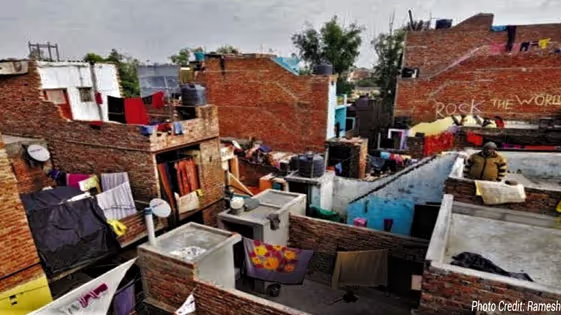
कोविड-19 संकट ने शहरी गरीबों को कैसे प्रभावित किया है? - फोन सर्वेक्षण के निष्कर्ष - I
यद्यपि कई टिप्पणीकारों ने वर्तमान कोविड-19 संकट के कारण प्रवासियों की दुर्दशा पर प्रकाश डाला है, परंतु शहरी झुग्गी झोंपडी बस्तियों में रह रहे कम आय वाले परिवारों के बारे में बहुत कम ज्ञात है। इस नोट में, अफरीदी, ढिल्लों एवं रॉय ने दिल्ली के औद्योगिक क्षेत्रों में 413 परिवारों के नमूनों के आधार पर उनकी आजीविका, एवं शारीरिक और भावनात्मक कल्याण पर प्रभाव के संबंध में फोन सर्वेक्षण द्वारा प्राप्त निष्कर्षों पर चर्चा की है। वे इस संकट के लिंग आधारित अनुभव में भी कुछ अंतर्दृष्टि प्रदान करती हैं।
Covid-19: A tailor’s tale
This note presents a narrative that is based on an interview conducted on 15 April with a tailor who walked most of the way from Jaipur to his home in Farrukhabad district in Uttar Pradesh, after the announcement of the national lockdown
How has Covid-19 crisis affected urban poor? Findings from a phone survey - II
While several commentators have highlighted the plight of migrants due to the ongoing Covid-19 crisis, less is known about how low-income families living in urban shanty towns are faring. Afridi et al. began conducting a phone survey on 3 April – after the Covid lockdown was announced on 24 March – among a sample of households in the industrial areas of Delhi, to assess the impact on their livelihoods, and physical and emotional well-being. In their recent note, the researchers discussed findings from the initial, more stringent period of the lockdown (3-19 April). In this follow-up note, they report findings from Phase 2 of the lockdown, following some easing of restrictions (20 April-3 May).
Webinar: Impact of Covid-19 on informal and migrant workers in India
The International Growth Centre (IGC), in collaboration with I4I, organised a Webinar on 'The impact of Covid-19 on informal and migrant workers in India', with Jean Drèze (Ranchi University), Farzana Afridi (Indian Statistical Institute), Purnima Menon (IFPRI), and Shahid Vaziralli (IGC), on 13 May 2020.

भ्रष्टाचार और बहिष्करण को संतुलित करना: आधार को पीडीएस में शामिल करना
सार्वजनिक रूप से प्रदान की जाने वाली वस्तुओं और सेवाओं के लाभार्थियों को इन लाभों को प्राप्त करने के लिए अपनी पहचान कैसे साबित करनी चाहिए? यह लेख, झारखंड राज्य में सार्वजनिक वितरण प्रणाली (पीडीएस) में बायोमेट्रिक प्रमाणीकरण के आधार पर अधिक कड़ी पहचान आवश्यकताओं के प्रभावों के अध्ययन को हमारे सामने रखता है। यह अध्ययन झारखंड राज्य में 1.5 करोड़ लाभार्थियों के बड़े पैमाने पर एक प्रयोग के तौर पर किया गया है। इसमे यह पाया गया है कि भ्रष्टाचार को कम करने के प्रयासों में, इस प्रक्रिया के कारण कुछ कम आय वाले परिवार अपने लाभ से वंचित हो गए हैं।
How has Covid-19 crisis affected the urban poor? Findings from a phone survey - I
While several commentators have highlighted the plight of migrants due to the ongoing Covid-19 crisis, less is known about how low-income families living in urban shanty towns are faring. In this note, Afridi et al. discuss findings from a phone survey of a sample of 413 households in the industrial areas of Delhi, on the impact on their livelihoods, and physical and emotional well-being. They also provide some insights into the gendered experience of this crisis.

कोविड-19: ऑनलाइन कक्षाएं और डिजिटल विभाजन
भारत में कोविड-19 का संक्रमण बढ़ने के कारण विश्वविद्यालयों को बंद रखने का औचित्यपूर्ण दबाव है। ऑनलाइन शिक्षण एक ऐसी व्यवस्था है जिस पर कई संस्थान विचार कर रहे हैं, लेकिन क्या भारतीय छात्रों के पास ऑनलाइन पढ़ाई हेतु मज़बूत नेटवर्क है? इस पोस्ट में, अभिरूप मुखोपाध्याय का तर्क है कि भारतीय घरों में इंटरनेट की उपलब्धता दयनीय है, और विशेषकर ग्रामीण भारत में रहने वाले ‘अनावासी छात्रों’ के घरों तक इंटरनेट की पहुंच की और भी कमजोर है। ऑनलाइन शिक्षण इसलिए अधिकांश संस्थानों के लिए निरर्थक कार्य है।

Balancing corruption and exclusion: Incorporating Aadhaar into PDS
How should recipients of publicly provided goods and services prove their identity in order to access these benefits? This article reports findings from a large-scale experiment across 15 million beneficiaries to evaluate the effects of more stringent identification requirements based on biometric authentication, on the delivery of subsidised food through Public Distribution System in the state of Jharkhand. It finds that attempts to reduce corruption has cost some low-income households their benefits in the process.
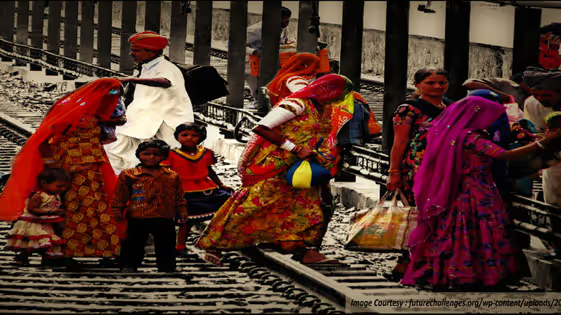
कोविड-19: समाज के कमजोर वर्ग की सहायता तत्काल कैसे की जा सकती है
केंद्र सरकार ने अभी तक इस बात की कोई घोषणा नहीं की है कि भारत में फैले कोविड-19 को नियंत्रित करने के लिए लॉकडाउन के कारण पहले से ही सामना कर रहे आर्थिक आपातकाल से निपटने की उसकी क्या् योजना है। इस पोस्ट में रीतिका खेरा लोगों की तत्काल मदद करने के लिए नकदी से लेकर शहरी क्षेत्रों में प्रवासियों के लिए वस्तुह देकर सहायता तथा स्वास्थ्य संबंधी आवश्यक उपायों के बारे में कुछ सुझाव दिया है।
Covid-19: What can be done immediately to help vulnerable population
With over 80% of India’s workforce employed in the informal sector and one-third working as casual labour, Covid-19's spread and subsequent unplanned lockdowns, have created economic havoc in the lives of millions. In this post, Reetika Khera puts forward suggestions on what can be done to help people immediately, ranging from cash and in-kind assistance to special measures for migrants in urban areas and urgent health-related measures.
Trends in India’s regional export diversification
The recent disruptions in global trade point to the emergence of a ‘new normal’, where flows of goods are vulnerable to factors such as conflicts, uncertain tariffs, and export restrictions. In this post, Sharmila Kantha examines the trends in India’s exports between 2017 and 2024 and deliberates on how the country can respond to this new normal through regional diversification in terms of its export markets.

India’s new FTAs: Strategic shift to developed economies
The recently concluded India-UK Free Trade Agreement is a part of a wider shift in India’s global economic strategy, which has involved a renewed focus on FTAs with developed countries. In this post, Sharmila Kantha contends that, in a changing global trade regime, India must tread with care to balance the markets to its West and East and align its geopolitical and geo-economic objectives

The tariff tantrums
President Trump’s administration has imposed steep tariffs on countries across the world, ostensibly to promote fair trade and reduce US trade deficits. However, Parikshit Ghosh argues that these “reciprocal” tariffs lack clear economic logic and reflect a mercantilist worldview. He notes that India should be prepared for a global recession in the face of this policy, and should tap into the strength of its domestic markets

How firms adapt supply chains to climate risk
Amidst growing climate risks, localised weather events such as floods or droughts pose a threat to the links between firms and their suppliers. Using data from India, this article analyses how businesses adapt their sourcing strategies to mitigate climate risks, and the broader economic implications of their responses. It finds that while supply chain diversification by firms enhances economic stability, it may deepen regional disparities.

Red flags in EU’s green trade policies
The approach to aligning trade practices with sustainability has shifted from soft commitments to mandatory regulations and standards. In this post, Abrol and Singh reflect on how two such policies – the EU Deforestation Regulation and the corporate sustainability due diligence directive – may adversely impact trade from developing countries. They contend that these regulations should recognise country-level differences and provide greater regulatory space for developing countries to pursue catch-up policies.

वर्ष 2024 पर एक नज़र
नव वर्ष 2025 की हार्दिक शुभकामनाएं! हिंदी भारत की सर्वाधिक बोली जाने वाली भाषाओं में से एक है और एक प्रकार से यह सम्पर्क सूत्र का काम भी करती रही है। इस महत्व को समझते हुए आई4आई के पोर्टल पर काफी संख्या में विभिन्न विषयों पर शोध-आधारित लेख हिंदी में प्रकाशित होते आये हैं। वर्ष 2024 में आई4आई पर कुल 196 लेख, राय-आधारित परिप्रेक्ष्य और फील्ड नोट प्रकाशित हुए जिनमें से 57 हिंदी में थे। इसी दौरान हमने तीन सम्मेलनों से जुड़ी सामग्री को भी होस्ट किया। 2024 की कुछ प्रमुख बातों को आज हम यहाँ साझा कर रहे हैं। आई4आई (I4I) से जुड़े रहने के लिए आपका धन्यवाद! साक्ष्य-आधारित नीति को बढ़ावा देने के लिए हम प्रतिबद्ध हैं और इस वर्ष तथा आगामी वर्षों में विकास व वृद्धि सम्बन्धी और अधिक सामग्री आपके समक्ष प्रस्तुत करते रहेंगे।
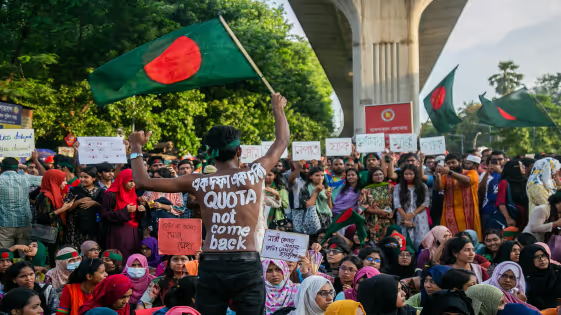
How the Bangladesh unrest may impact India’s trade
Bangladesh has been a major export market for India, with India traditionally enjoying a strong trade surplus with its neighbour. In this post, Pandey and Sharma provide an overview of recent trends in India-Bangladesh trade, and consider how Bangladesh’s ongoing political turmoil may impact its import demand, prospects of an India-Bangladesh free trade agreement, and India’s role in global textile trade.

भारत के तेल निर्यात में बदलते रुझान और पैटर्न के निहितार्थ
शर्मिला कांता इस बात की चर्चा करती हैं कि भारत के तेल और गैस उत्पादन में गिरावट की प्रवृत्ति और वैश्विक माँग में उतार-चढ़ाव को देखते हुए, विशेष रूप से भारत के निर्यात में पेट्रोलियम उत्पादों की उच्च हिस्सेदारी चिंता का विषय क्यों है। वह भारत के तेल निर्यात और आयात की मात्रा और मूल्य के कुछ रुझान साझा करती हैं, साथ ही उन प्रमुख देशों के आँकड़े भी दर्शाती हैं जिनके साथ भारत व्यापार करता है। वह उत्पादन बढ़ाने और भारत के तेल निर्यात की स्थिरता सुनिश्चित करने हेतु कुछ नीतिगत सुझावों के साथ निष्कर्ष प्रस्तुत करती हैं।
EU’s ‘Carbon Border Adjustment Mechanism’: How will it impact trade?
Introduced in 2023 by the European Union, the ‘Carbon Border Adjustment Mechanism’ will apply a carbon price on emissions embedded in the production of carbon-intensive goods imported to the region. In this post, Gupta, Pandey and Sapatnekar contend that the initiative can impact trade competitiveness and profitability of exporters, favouring nations with faster decarbonisation ability and robust carbon pricing systems

पिछले तीन दशकों में भारत में मोटे अनाज की खपत और व्यापार
गत वर्ष, 2023 को 'अंतर्राष्ट्रीय कदन्न वर्ष’ के रूप में मनाया गया। जलवायु परिवर्तन के झटकों को देखते हुए बढ़ती जनसँख्या को भविष्य के खाद्य संकट से बचाने में मोटे अनाजों की एक बड़ी भूमिका हो सकती है। कदन्न के विषय में अपने इस लेख के माध्यम से, मनन भान ने ‘सन्निहित क्षेत्र’ की एक अवधारणा प्रस्तुत की है जिसमें उपभोग के बिन्दु पर भूमि के उपयोग को ध्यान में रखते हुए नकारात्मक प्रभावों का बोझ उत्पादकों के बजाय उपभोक्ताओं पर डाला जाता है। वे मोटे अनाजों के उत्पादन की भूमि क्षेत्र में गिरावट और उत्पादकों तथा उपभोक्ताओं, दोनों को लाभ पहुँचाने हेतु स्थाई तरीके से कदन्न की खेती, उन के व्यापार और खपत का विस्तार करने की क्षमता को प्रस्तुत करते हैं।
Implications of shifting trends and patterns in India’s oil exports
Sharmila Kantha outlines why the high share of petroleum products in India's exports is a concern – particularly considering the declining trend in India's oil and gas production and fluctuating global demand. She shares some trends in the volume and value of India's oil exports and imports, as well as statistics on the key countries with which it trades. She concludes with some policy suggestions to increase production and ensure the stability of India's oil exports.
Making the most of Indian millets: Lessons from the International Year of Quinoa
In the fourth post of the e-Symposium on ‘Carrying forward the promise of International Year of Millets’, Pallavi Agrawal reflects on the success story of quinoa, and how the International Year of Quinoa in 2013 was harnessed to market the crop’s health benefits and expand its cultivation to other countries and increase demand. She suggests some ways in which India can capitalise on the current millets buzz – including marketing it as a superfood, expanding production to satisfy to global demand, and investing in better processing and improving value chains.
India’s millets consumption and trade over the last three decades
In the first post of the e-Symposium on ‘Carrying forward the promise of International Year of Millets’, Manan Bhan introduces the concept of ‘embodied land area’, which accounts for land use at the point of consumption and places the burden of negative impacts on consumers rather than producers. He notes the decline in land area under use for the production of millets and sorghum, and the potential to expand millet cultivation, trade and consumption in a sustainable manner to benefit both producers and consumers.
क्या परिवहन में ढाँचागत विकास से ग्रामीण भूमि असमानता बढ़ती है?
परिवहन से जुड़े आधारभूत संरचना में निवेश से व्यापार लागत कम होती है और गांव शहरी बाज़ारों के साथ जुड़ जाते हैं। यह लेख दर्शाता है कि इस स्थानिक एकीकरण के कारण ग्रामीण भारत में भूमि असमानता बढ़ने का अनपेक्षित परिणाम भी निकल सकता है। यह लेख, औपनिवेशिक रेलमार्ग स्थानों और स्वर्णिम चतुर्भुज राजमार्ग नेटवर्क से गांव की दूरी के आधार पर बाज़ार तक पहुँच के प्रभावों को पृथक करके देखता है। अध्ययन से पता चलता है कि एकीकरण से भूमिहीन परिवारों की संख्या में और उत्पादक कृषि प्रौद्योगिकी को अपनाने में वृद्धि होती है, जिससे बड़े खेत और भी बड़े हो जाएंगे और भूमि असमानता बढ़ जाएगी।

Growing threats to global trade
After an era of hyperglobalisation in the 1990s, there has been a clear change in policy and public attitude toward global trade. This article looks at the recent backlash against globalisation and the role that different factors played in contributing to it. It considers the effect of the pandemic and geopolitical pressures due to the conflict in Ukraine, and warns that protectionism could make the world less resilient, more unequal, and more conflict-prone.
Does development of transport infrastructure increase rural land inequality?
Investments in transport infrastructure reduce trade costs and lead to integration of villages with urban markets. This article suggests that this spatial integration could have the unintended consequence of increasing land inequality in rural India. It isolates the effects of market access using colonial railroad locations and the distance of a village from the Golden Quadrilateral highway network. The study finds that integration also increases the share of landless households and the adoption of productive farming technology, which would lead to large farms getting bigger and increase land inequality
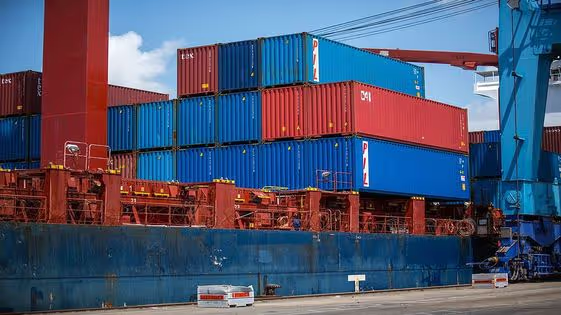
Economic integration and the transmission of democracy
Dramatic increases in globalisation resulted in autocratic countries being exposed to the institutions and values of their democratic trade partners. Exploiting improvements in air transportation relative to sea shipping that occurred over the last five decades, and combining survey data with country level measures of democracy from 1960 to 2015, Tabellini and Magristretti document that trade with democracies increases both citizens’ support for democracy and countries’ democracy scores, and investigate the feasibility of the mechanisms through which this democratisation occurs.
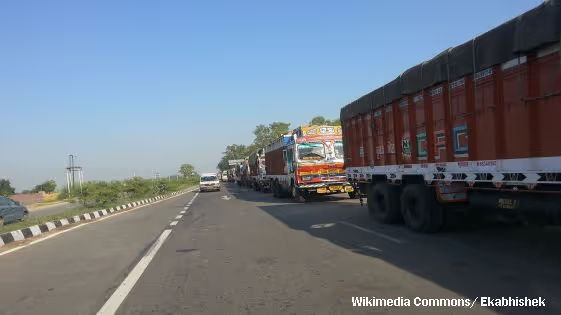
Lockdown-induced trade disruptions and adaptations by firms
In the face of trade disruptions, firms can reorient their trade to minimise risk. This article documents a fall in inter-state trade in India during the Covid-19 lockdown, that continues until December 2020. This is explained by ‘reshoring’, as plants more dependent on inter-state sales (and input-sourcing) shifted to intra-state sales (and input-sourcing). The extent of reshoring is determined by a new measure – Scope for Home Expansion – that captures excess home production which can be diverted within the state
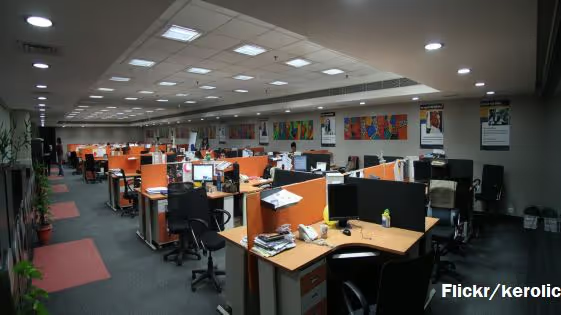
The impact of services trade on non-tradable services in India
A share of India's service sector growth can be attributed to tradable services, which can also have positive productivity impacts on manufacturing. This article looks at the effect of services trade on employment growth in non-tradable services. It finds that an increase in tradable services employment led to an increase in employment in non-tradable services from 1990 to 2013, and that this is explained by increases in consumer demand. The impact is larger among female workers and small firms.

क्या भारत में निर्यात-उन्मुख विनिर्माण मॉडल के दिन लद गए हैं?
भारत अपनी तेजी से बढ़ती कामकाजी उम्र की आबादी हेतु अच्छी तनख्वाह वाली लाखों नौकरियां सृजित करने की चुनौती का सामना कर रहा है, अतः देवाशीष मित्र विश्लेषण करते हैं कि कौन-से क्षेत्र और किस प्रकार की रणनीतियां अच्छी नौकरियां उपलब्ध करा सकती हैं। उनका मानना है कि निर्यात-उन्मुख विनिर्माण मॉडल को सफल बनाने में चार कारक सहायक हो सकते हैं- श्रम में सुधार; मुक्त व्यापार समझौतों पर हस्ताक्षर तथा उनका कार्यान्वयन और विशेष आर्थिक क्षेत्रों की स्थापना; और वैश्विक आपूर्ति श्रृंखलाओं में भागीदारी। इससे भारत को उत्पादक नौकरियां सृजित करने हेतु देश में उन्नत-प्रौद्योगिकी के साथ-साथ अपने श्रम का लाभ उठाने में सहायता मिलेगी।
Opportunities, risks and realities of India’s participation in global value chains
Despite its manufacturing capability, India, unlike other Asian countries, has failed to integrate into global value chains (GVCs). In this post, Karishma Banga discusses the nature of India’s GVC integration, primarily through forward participation; the sectors that fuel productive linkages; and the factors that have caused low integration – lack of well-developed, labour-intensive industries, large domestic market, labour market rigidities and low FDI. Finally, she recommends strategies to maximise gains for domestic firms integrating into GVCs.
How tradable services can aid the jobs challenge in India
Although the rising demand for services has led to its increased contribution to employment in many developing countries and globally, India's growth in services has not translated into a proportionate increase in employment. Rupa Chanda examines two factors which need to be considered if services are to play a bigger role in job creation– improving the quality of jobs along with increasing formalisation of labour, and investing in skills and training to face technological changes.
Has the export-oriented manufacturing model reached its sell-by date for India?
As India faces the challenge of creating millions of well-paying jobs for its rapidly growing working-age population, Devashish Mitra analyses which sectors and what strategies can provide these good jobs. He posits that four factors can help the export-oriented manufacturing model succeed – further labour reforms; the signing and implementation of free trade agreements and establishing special economic zones; and participation in global supply chains. This will allow India to leverage its labour, along with advanced-country technology, to create productive jobs
Safeguarding strategic interests with development finance? India's response to China's expanding footprint in the Global South
Studies have suggested that both India and China use grants and concessional loans as a means to gain favour with developing countries. Using 2007-2014 data on development projects implemented by the two economies, this article shows that India tends to make financial commitments and increase its local presence as a response to China’s development activities, in order to compete for commercial influence.

Global supply chain disruptions: Causes and the way ahead
The impact of the Covid-19 pandemic has been disastrous for the global supply chains, with persistent effects since early 2020, and knock-on effects now gaining intensity. In this post, Sharmila Kantha discusses the factors responsible for supply chain disruptions, the global impact of the crisis, and the ways in which India – and the world – and private businesses can navigate the situation to build long-term resilience against similar crises.
Current state of play in India’s services trade
Since the 1990s liberalisation reforms, the services sector has been seen as a key driver of India’s economy. Against the backdrop of the WTO Ministerial Conference, Anil Kumar Kanungo examines the current state of India’s services trade – India’s participation in multilateral trade organisations and agreements, barriers to services trade, and opportunities and prospects for growth.
Global value chain participation and intermediate export sophistication
While the dominance of global value chains (GVCs) in production processes is a widely accepted fact, the impact of participation in GVCs is still being explored. Using data from a sample of 100 nations for 1999-2018, this article examines the improvement in productivity brought about by GVC participation, and its role in the upgradation of intermediate exports – the main channel through which countries participate in GVCs.

India’s trade protectionism and low-productivity vicious cycle
Amid rising populism and anti-globalisation movements across the world, Atmanirbhar Bharat represents India’s adoption of trade protectionism. While the country’s inward-oriented economic policies tend to be viewed with a predominantly ideological lens, Srijan Shukla presents an alternate political economy framework, which attributes the underlying protectionist tendencies to a vicious cycle of low productivity.

कोविड-19 से लड़ने के लिए वैश्विक आपूर्ति श्रृंखलाओं का लाभ उठाना
जब भारत में कोविड-19 की दूसरी लहर आई, तो ऑक्सीजन, चिकित्सा उपकरणों और जीवन रक्षक दवाओं की कमी के कारण स्वास्थ्य संकट और बढ़ गया। इस लेख में, सी वीरामणि और अन्वेषा बसु तर्क देते हैं कि भारत सरकार के आत्मनिर्भर या आत्मनिर्भरता के रुख के विपरीत, वैश्विक आपूर्ति श्रृंखलाओं पर भरोसा करना अप्रत्याशित स्वास्थ्य झटकों का सामना करने के लिए एक बेहतर रणनीति है।
Leveraging global supply chains to fight Covid-19
When the second wave of Covid-19 hit India, the health catastrophe was compounded by shortages of oxygen, medical equipment, and life-saving drugs. In this post, C Veeramani and Anwesha Basu contend that contrary to the Indian government’s Atmanirbhar or self-reliance stance, relying on global supply chains is a better strategy to achieve resilience against unexpected health shocks.

Boosting India’s capital goods’ exports
Union budget 2021-22 has proposed a sharp 34.5% hike in capital expenditure, which is expected to boost the capital goods sector. While the sector has grown since liberalisation, its share in the global export market is under 1%, and there is heavy dependence on imports. Analysing trade data for the sector from 2008-09–2018-19, this article suggests that India has not been able to fully leverage free trade agreements due to non-tariff barriers and low competitiveness.
Import competition, formalisation, and role of contract workers
Given the recent expansion in the participation of developing countries in global trade, it is important to understand the role of trade in the composition of employment in these countries. Analysing the case of Indian manufacturing and Chinese imports, this article shows that import competition leads to an increase in the share of formal-sector employment – driven by greater usage of contract workers in the formal sector – and higher aggregate labour productivity.

Trade disruption, industrialisation, and how the sun set on British rule in India
It is argued that by keeping India open to imports of cheap British manufactures, the imperial power made it excessively difficult for Indian industry to emerge in the early 20th century. This article examines this by studying the impact of World War I-related drop in net imports from Britain during 1913-1917 on Indian industrialisation. It finds that the protection offered by this trade shock had a positive effect on Indian industry, and that 24% of industrial employment growth in this period can be attributed to it.

Inequality and trade: Simulation evidence for 54 developing nations
Questions about who benefits from free trade – and at what cost – have resurfaced as part of the backlash against globalisation. This article uses data from 54 low- and middle-income countries to show that in a majority of cases, trade liberalisation increases both incomes and inequality. Most of the trade-offs between them resolve in favour of liberalisation; despite exacerbating income disparities, trade liberalisation creates overall social welfare gains.
आरसीईपी व्यापार समझौता – मौका छोड़ दिया गया?
हाल ही में प्रधानमंत्री नरेंद्र मोदी ने घोषणा की है कि भारत दक्षिण पूर्व एशियाई देशों और इसके मुक्त-व्यापार भागीदारों के बीच क्षेत्रीय व्यापक आर्थिक भागीदारी (रीजनल कोंप्रिहेंसिव इकनॉमिक पार्टनर्शिप - आरसीईपी) समझौते में शामिल नहीं होगा। ऐसा इसलिए किया गया क्योंकि सरकार को चिंता थी कि कुछ आरसीईपी देशों से आयात में वृद्धि का प्रभाव भारतीय कृषि और उद्योग पर पड़ सकता है। पुख्ता शैक्षणिक साक्ष्यों का उपयोग करते हुए अग्रवाल और मल्होत्रा यह चर्चा कर रहे हैं कि अगर इस रुख पर पुनर्विचार करना हो तो सरकार का किन बातों पर ध्यान देना जरूरी होगा।
Should India reconsider participating in e-commerce negotiations at the WTO ?
India is planning to bring about a national e-commerce policy. However, the government has decided to stay away from negotiations at the World Trade Organization platform to set international e-commerce rules due to many concerns. In this post, Shikha and Prakash argue that it will be prudent to join the negotiation and participate actively to highlight India’s concerns and guide the discussion towards a fair negotiation.
युवाओं के आत्म पहचान में सहायक बनता सामाजिक उद्देश्य
‘उभरती वयस्कता’ का तात्पर्य किेशोरावास्था से युवावास्था में प्रवेश की अवस्था है, जहां उभरते वयस्क अपनी प्रामणिकता, जागरूकता, व्यक्तिगत परिभाषा और विश्व साक्षात्कार की खोज हेतु अथक प्रयासरत रहते हैं और आत्म पहचान के विकास हेतु इसे जीवन की एक जटिल अवस्था के रूप में लेते हैं। इस लेख में जयनेत्री मर्चेन्ट अपने शैक्षणिक कार्यक्रम निर्माण के बारे में बता रहीं हैं जिसका उद्देश्य भारत के युवा वर्ग जो कि एक उद्देश्यपूर्ण एवं सार्थक जीवन की तलाश में हैं, उनके एवं एवं समाज की समस्याओं के बीच की खाई को पाटना है।
RCEP trade agreement: The road not taken?
Prime Minister Modi recently announced that India would not be joining the Regional Comprehensive Economic Partnership (RCEP) agreement between Southeast Asian Nations and its free-trading partners. It is mainly due to concerns on the impact that it would have on Indian agriculture and industry because of increased imports from some RCEP countries. Using rigorous academic evidence, Agrawal and Malhotra discuss what the government should reflect on, if it were to reconsider its stance.
Exports, global production sharing, and job creation in India
Is it in the interest of a country to promote strong local linkages for its domestic industries or to participate in global production sharing activities wherein linkages are globally dispersed? This article informs this debate by empirically analysing which one of these strategies would result in higher levels of domestic value added and employment in a developing country like India.
What explains India’s poor performance in garment exports?
India has been losing its share of the world garment trade over time – it went down from 6% in 2013 to 3.5% in 2016. This article examines the Indian garment industry based on a survey of garment manufacturers in India. It discusses the constraints and nature of competition faced by the industry, and suggests a number of policy changes in order to boost exports.

The new globalisation and income inequality
Trade in intermediates (or ‘unbundling of production') and trade in capital have become increasingly important in last 25 years. This article shows that trade in intermediates generates a reallocation of capital across countries that exacerbates world inequality in both income and welfare. Unbundling of production hurts middle-income countries but helps those with high productivity. Trade in intermediates also increases within-country inequality, and this increase is U-shaped in the aggregate productivity level of the country.

How operational efficiency of India's ports impacts its manufacturing exports
The average turnaround time of Indian ports has come down significantly since 2010, indicating improvement in their operational efficiency. However, it still is more than two times the level in some of the best-performing ports in the world. This article provides estimates showing that if the average turnaround time could be cut down by 50%, India’s manufacturing exports may increase by at least 20-25%.
Trade agreements and their impact on India’s apparel exports
Slow progress of the Doha Round of WTO negotiations has led to a proliferation of regional and bilateral trade agreements, and consequent increase in trade among their members. While India continues to be among the top apparel-exporting countries, its apparel exports have stagnated in recent years. In this post, Mukherjee, Sinha, Sarma, and Paul investigate the impact of trade agreements on India’s apparel trade.
Tapping export destinations for growth
TThe trade environment today is becoming increasingly murky and stormy, despite a strengthening global economy. India’s position – never very remarkable – is being further battered, and its embattled manufacturers and exporters face a risky external marketplace. Against this backdrop, Sharmila Kantha assesses which markets India should tap to intensively promote its exports in a targeted manner.

Trade rules in e-commerce: Opportunities and concerns for India
India, which is among the fastest growing markets for e-commerce in the world, submitted a formal document to the WTO in December 2017 opposing any negotiations on trade in the sector. In this post, Mukherjee and Kapoor discuss the country’s opportunities and concerns with regard to e-commerce, and suggest next steps for policy and regulation.
The Study of the Food Processing Industry in Bihar
The aim of the project is to understand the driving force for industrial development in the food processing sector in Bihar. The findings of the study revealed that development in food processing in Bihar has not been broad-based. Food processing units are concentrated in rice milling, which outnumbers other units and are in stiff competition with neighbouring states such as West Bengal. The study provides some strategies which can improving the food processing sector in Bihar.
Industrial Agglomeration and (the Lack of) Competition
This project's objective is to use theoretically-motivated empirics to examine the relationship between market power and industrial agglomeration/clusters in order to better evaluate the impacts of development policies that promote or support industrial clusters. The project also undertook a comparative analysis which examines the extent to which these findings are common both within and across India and China, and in what ways they differ.
One Nation, Many Worlds: Varieties of Developmental Regimes in India
The project developed a theory on developmental regimes through a systematic examination of the variation in policy priorities across Indian states. The findings from the project suggest that two factors influence policy outcomes – wealth and demographic presence.
Foreign market access and competition in India's textile and clothing industries: Impacts on firms and workers
This project aims to estimate the effects of foreign market access and export competition on plants and workers in the textiles and clothing industries in India.
Should the rupee trade with Russia be revived?
The issue of revival of the bilateral rupee-denominated trade between India and Russia is back on the table after a break of over 20 years. This column contends that while there is justification for India’s hesitancy in reviving this trade, the prevailing conditions are such that it makes eminent sense for both sides - provided appropriate precautions are taken.
Indo-Korea trade pact: Harnessing the potential in services
India and Korea signed a Comprehensive Economic Partnership Agreement (CEPA) in 2009, which resulted in an increase of 42% in bilateral trade between 2009-10 and 2012-13. This column examines the CEPA with the objective of identifying potential areas for harnessing services trade between the two countries.
Does the India-EU trade pact make sense for India? - II
In this article, Swati Dhingra, Assistant Professor of Economics at the LSE, contends that the proposed India-EU trade agreement is one-sided and would harm India’s economic interests. In her view, India should leverage its position as a regional power to extract a better deal.
Does the India-EU trade pact make sense for India? - I
During the 13th India-EU Summit in Brussels last month, leaders from both sides welcomed the re-engagement on the stalled India-EU Free Trade Agreement. In this article, Devashish Mitra, Professor of Economics at Syracuse University, argues that this trade pact is not a good idea from India’s point of view, and suggests a few alternatives to the current approach.
Trade liberalisation and intergenerational occupational mobility in urban India
While the trade reforms of the 90s led to a rapid increase in trade in India, there are concerns regarding the likely impact of the reforms on inequality. This column shows that innovation induced by international trade led to an increase in the employment share of high-skill occupations, which in turn, allowed an increasing number of sons from underprivileged backgrounds to enter better occupations than their respective fathers.
India-ASEAN economic linkages: Challenges and way forward
India’s ‘Look East’ policy picked up steam with the conceptualisation of the Indian-ASEAN Free Trade Agreement in 2003. This column analyses the broad trends in India-ASEAN trade over the past decade, delves into the challenges involved in the economic relationship, and explores possible options for the way forward.
Creating a services value chain between India and Thailand
In the past two decades, India has signed several bilateral and regional comprehensive free trade agreements with Southeast Asian countries, which are likely to enhance services trade, investment and cooperation in the region. This column explores the prospects for creation of a services value chain between India and Thailand. It contends that integrating services may facilitate growth in Indian manufacturing by supporting production networks.
Getting more out of India's 'Tourist Visa on Arrival' scheme
The Government of India has extended the ‘Tourist Visa on Arrival’ scheme - now expected to be renamed ´Visa Online (ETA)´ scheme - from five countries in 2010 to 44 countries in 2014. In this article, Natasha Agarwal and Magnus Lodefalk highlight some of the limitations in the design and implementation of the scheme, and make recommendations for maximising its economic benefit and effectiveness.
Boosting Indo-Pak agricultural trade
Despite close geographical proximity of India and Pakistan and implementation of SAFTA almost a decade ago, trade potential between the two countries remains largely unexploited. This column analyses trends in Indo-Pak trade in agriculture, which constitutes 43.6% of total Indo-Pak trade, and highlights opportunities for expanding trade in this sector.
Mega-trading blocs: Where does India stand?
Emerging multilateral trading agreements, resulting in mega-trading blocs, seem to be replacing global negotiations through the WTO. In this article, Sharmila Kantha assesses the potential impact of these trading agreements on India, and contends that Indian policymakers and businesses would need to factor them into their future plans.
International trade, domestic labour laws and India’s manufacturing sector
India has a multitude of restrictive labour laws and these have been found to adversely affect economic performance of manufacturing firms. This column illustrates how the impact of trade liberalisation on the domestic manufacturing sector depends on labour laws. It contends that more flexible labour laws will enable India to compete better in global markets.
Protectionism under the guise of food security
India has backed out of the commitment it made at the WTO negotiations in Bali in November 2013. The implicit explanation is that the government needs to accumulate food grain stocks to provide subsidised grain to the poor and ensure food security. In this article, Kotwal, Murugkar and Ramaswami critique this reasoning and India’s position on the issue.
India's WTO problem: A proposal
India is threatening to block the WTO Trade Facilitation Agreement unless its agricultural policies are exempted from multilateral scrutiny. This article contends that while India’s objectives on agriculture are valid, its tactics in withholding support for TFA are perhaps less so. India should withdraw its opposition, reformulate its position on agriculture to persuade others of its merits, and revisit the WTO issue in the near future.
Impact of trade reforms on labour’s share of firm revenues
The decline in labour’s share of national income in recent decades – a potential cause of rising inequality – has coincided with an increase in world trade. This column analyses the impact of trade reforms in India on labour’s share of total revenue at the firm level. It finds that the share of labour has been rising with reforms for small, labour-intensive firms.
Turning to the pharmaceutical sector for enhancing India-Pakistan trade
Various efforts have been made to normalise trade relations between India and Pakistan in the past few years; yet, several barriers remain. This column examines the trade potential in pharmaceuticals – a fast growing sector in world trade – between the two countries. It finds that there is huge, untapped potential in Indo-Pak pharmaceuticals trade, and suggests policy measures to propel trade and investment in the sector.
Trade as aid
Preferential or duty/quota-free trade access to developing countries, as a form of foreign aid by developed countries, is considered to have both pros and cons. This column analyses data from Bangladesh’s apparel industry to show that it not only leads to gains for the access granting and access receiving countries, but also trade creation for the rest of the world.
An Indian trade paradox
India’s trading partners often complain about the restrictiveness of India’s trade regime. This column argues that they are both right and wrong. While India´s economy is ‘closed’ in terms of trade policy, it is ‘open’ in terms of trade outcomes. Tariff barriers in the services sector are among the highest in the world; but given its size, India trades more than a typical country does.
Bali conundrum: WTO and Indian agriculture
The outcome of the recent WTO meetings at Bali is a stopgap arrangement, which implies that the Indian government does not have to make any changes in the implementation of the new Food Security Act in the near future. In this article, the authors suggest disentangling consumer support and producer support via cash transfers so that India can build a safety net for its poor without violating WTO agreements.
Exchange-rate pass-through by Indian and Chinese exporters
The pricing behaviour of exporters in emerging markets confirms that the already well-reported decline in exchange rate sensitivity of import prices is due to export prices becoming more sensitive to exchange rate changes.
Potato Traders in West Bengal: A Survey of Contractual Relations and Market Structure
This study consists of a pilot survey of a random subset of phorias (middlemen) and larger traders who operate in 72 villages of West Medinipur and Hugli districts in West Bengal and their corresponding potato markets.
Middleman Margins, Credit and Information Constraints: Potato Markets in West Bengal, India
This project investigates how potato farmers in West Bengal sell their crop to local traders, the determinants of farm-gate prices and margins earned by traders. Specifically, it examines the role of asymmetric information regarding prices in neighbouring wholesale markets where local traders resell these potatoes.
Linkages among Capital Flows, Trade, and Growth in Developing Economies
International economic integration puts a country’s fortunes partly into the hands of others. When integration takes the form of financial interdependence, the potential domestic impact of external events is magnified manifold.
Trade and the financial crisis: a focus on developing countries
Motivated by the 2008-2009 financial crisis and the trade collapse, this project analyses the effect of past banking crises (1976-2002) on trade with a focus on African exporters.

Trump’s tariffs and India’s strategic response
India-US trade relations have taken a sudden and sharp turn for the worse, with the US imposing a 50% tariff rate on imports from India. In this post, Gulati, Rao and Suntwal highlight that the impact is heavily concentrated in labour-intensive sectors, which sustain millions of livelihoods. They recommend a multi-pronged strategic response: smart negotiations with the US, immediate and targeted relief to hard-hit sectors, diversification of export markets, and strong domestic reforms to restore competitiveness.
Night shift bans and female employment in Indian manufacturing
Do laws designedto protect women from unsafe working conditions constrain the demand for theirlabour? This question sits at the centre of global debates about protectivelegislation in labour markets. Our recent research (Gupta et al.2025) examines what happened when Indian states lifted long-standing bansthat prevented women from working night shifts in factories. Our findings offerimportant lessons for policymakers seeking to expand female employment,particularly considering the significant labourreforms that have been recently initiated by many state governments.

बदलती दुनिया में ‘भविष्य की नौकरियों’ के लिए योजना
जलवायु परिवर्तन, बढ़ता हुआ स्वचालन तंत्र और वैश्विक आर्थिक नीतियों जैसे बाहरी कारक आने वाले वर्षों में भारत के रोज़गार के परिदृश्य को निर्धारित करने में महत्वपूर्ण भूमिका निभाएंगे। गत माह अंतर्राष्ट्रीय श्रमिक दिवस के अवसर पर, आई4आई की उप-प्रबंध संपादक निकिता मजूमदार ने श्रमिकों की भलाई और उत्पादकता सुनिश्चित करने तथा भविष्य में सुरक्षित नौकरियों तक समान पहुँच सुनिश्चित करने के लिए इन चुनौतियों के समाधान पर कुछ शोध सारांश प्रस्तुत किया था, जिसे आज यहाँ दिया जा रहा है।

Global software piracy: Does US Special 301 pressure matter?
Section 301 of the US Trade Act seeks to combat global software piracy, with non-compliance by partner countries potentially leading to trade sanctions. Examining data from 1994-2017 involving 83 countries, this article shows that the process has no significant impact on international software piracy overall. It finds that countries that are below-median in terms of development, State capacity, and institutional quality, are unable and/or unwilling to bend to such pressure. By contrast, multilateral enforcement of stronger intellectual property protection appears to be an effective instrument in curbing piracy.

Manufacturing share in GDP: Comparing India with China and South Korea
: It is commonly believed that Indian manufacturing performance is weak, as the sector has not been able to capture a large enough GDP share. Presenting a comparison of manufacturing share in gross domestic product in India, China and South Korea, Bishwanath Goldar argues that this can be explained predominantly by changing terms of trade between manufacturing and services, and manufacturing translating technological and productivity advances into lower prices and better-quality products for customers in India.

Planning for ‘jobs of the future’ in a changing world
Following decades of structural transformation, in the coming years, external factors including climate change, increasing automation, and global economic policies will all play a role in determining India’s employment landscape. To mark International Workers’ Day on 1 May, I4I Deputy Managing Editor Nikita Mujumdar summarises some research on addressing these challenges to ensure worker well-being and productivity, and equitable access to future-proof jobs.

भारत के औद्योगिक कार्यबल में महिलाओं की हिस्सेदारी में वृद्धि
पहली मई को दुनिया भर में श्रमिकों के हितों के लिए समर्पित दिवस के रूप में मान्यता प्राप्त है। इसी परिपेक्ष में प्रस्तुत है यह लेख। हाल के वर्षों में, भारत में विनिर्माण क्षेत्र के रोज़गार में औसत वार्षिक वृद्धि दर कुल रोज़गार से अधिक हो गई है। इस लेख में गोलदार और अग्रवाल दर्शाते हैं कि इस प्रवृत्ति के साथ-साथ औद्योगिक कार्यबल में महिलाओं की हिस्सेदारी में वृद्धि हुई है, जो कुल मिलाकर महिलाओं के स्वामित्व वाले विनिर्माण उद्यमों के अनुपात में हुई वृद्धि के कारण है। वे अपने निष्कर्षों में महिलाओं के स्वामित्व वाली इकाइयों की उत्पादकता बढ़ाने के उपायों की आवश्यकता पर भी प्रकाश डालते हैं।
Wartime mobilisation and economic development in India
Can temporary wartime mobilisation permanently reshape an economy? This article shows that Indian districts that received more orders related to World War II saw greater transformation from agriculture to industry and services more than six decades later – with the majority of this structural transformation driven by procurement in heavy industries. These districts also experienced higher consumption levels, urbanisation rates and nighttime luminosity.
Complementarity between labour and energy in Indian manufacturing
As India develops its carbon markets to mitigate climate change, it is important to consider the short-term costs for industry. Analysing data on formal manufacturing from 2009-10 to 2019-20, this article finds that energy and labour are complementary inputs in production – if an intervention such as a carbon tax raises the cost of energy and reduces its use in manufacturing, employment will go down as well.
महिलाओं के कार्यबल की क्षमता को बढ़ाना
शैक्षिक उपलब्धि और स्वास्थ्य परिणामों में उल्लेखनीय प्रगति के बावजूद, महिलाओं की आर्थिक भागीदारी को बढाने में भारत पीछे है, जिसके चलते तेज़ और समावेशी आर्थिक विकास का लक्ष्य बाधित हो रहा है। इस लेख में दर्शाया गया है कि अंशकालिक रोज़गार को औपचारिक बनाने तथा पुरुषों और महिलाओं के बीच अवैतनिक देखभाल कार्य को पुनर्वितरित करने से श्रम-बल में महिलाओं की भागीदारी छह प्रतिशत अंकों से बढ़कर, 37% से 43% हो सकती है।
Unlocking women’s workforce potential
Despite significant progress in educational attainment and health outcomes, India lags in enabling women’s economic participation, which, in turn, impedes the goal of fast and inclusive economic growth. This article shows that formalising part-time employment and redistributing unpaid care work between men and women could raise female labour force participation by six percentage points, from 37% to 43%. This is the first post of a five-part series to mark International Women’s Day 2025.

Old or new: What’s driving employment growth in formal manufacturing?
As the government undertakes various initiatives for manufacturing, it is important to understand what type of firms drive employment growth in the sector. Based on data on registered firms from the Annual Survey of Industries from 2000-2016, this article highlights the importance of older, larger firms in creating jobs. It suggests that policies should encourage entry of new medium-sized plants and facilitate growth of dynamic, incumbent small and medium firms.
प्रौद्योगिकी में प्रगति तथा रोज़गार में बदलाव : भारत में हालिया रुझान
भारतीय अर्थव्यवस्था में तेज़ी से हो रही प्रौद्योगिकी प्रगति का क्या असर रोज़गार पर हो रहा है? इस सवाल का पता लगाने के लिए, कथूरिया और देव ने इस लेख में ‘उपभोक्ता पिरामिड पारिवारिक सर्वेक्षण’ के डेटा का विश्लेषण किया है। उन्होंने विशेष रूप से कोविड-19 के बाद के दौर में विभिन्न क्षेत्रों में कम कुशल श्रमिकों की हिस्सेदारी में लगातार गिरावट और रोज़गार की संभावनाओं में कमी को रेखांकित किया है। वे इन श्रमिकों, ख़ासकर महिलाओं को प्रशिक्षित करने पर बल देते हैं ताकि वे उच्च-कौशल, उच्च-भुगतान वाली नौकरियों तक पहुँच सकें।
क्या डिजिटलीकरण भारत की सार्वजनिक स्वास्थ्य सेवा प्रणाली में सेवारत कर्मियों के लिए दोधारी तलवार है?
प्रौद्योगिकी को अक्सर स्वास्थ्य सेवा की अक्षमताओं के समाधान के रूप में सराहा जाता है, जबकि भारत के मान्यता-प्राप्त सामाजिक स्वास्थ्य कार्यकर्ताओं (आशा) पर इसके प्रभाव की स्थिति जटिल है। चार राज्यों में किए गए एक गुणात्मक शोध अध्ययन के आधार पर, इस लेख में आशा कार्यकर्ताओं में डिजिटलीकरण के ऐसे अनुभवों की जाँच की गई है, जिसमें डिजिटल उपकरण कार्य-प्रक्रियाओं में सुधार करते हैं और नए बोझ व असमानताएं पैदा करते हैं।
Technological advancement and employment changes: Recent trends in India
What is the impact of rapid technological advancements on employment in the Indian economy? In this post, Kathuria and Dev analyse ‘Consumer Pyramids Household Survey’ data to explore this question. They note a consistent decline in the share of low-skilled workers across sectors, along with reduced employment prospects, particularly in the post-Covid-19 era. They advocate for training these workers – especially women – so that they can transition into higher-skill, higher-paying jobs.
Feminisation of India’s industrial workforce
In recent years, the average annual growth rate in manufacturing employment has exceeded that of aggregate employment in India. In this post, Goldar and Aggarwal demonstrate that this trend is accompanied by an increase in the share of women in the industrial workforce – largely driven by a rise in the proportion of women-owned manufacturing enterprises. Their findings also highlight the need for measures to enhance productivity of women-owned units.
Is digitalisation a double-edged sword for workers in India's public healthcare system?
While technology is often celebrated as a solution to healthcare inefficiencies, its impact on India’s Accredited Social Health Activists (ASHAs) tells a more complex story. Drawing on qualitative research conducted across four states, this note examines the uneven experiences of digitalisation among ASHAs, with digital tools both improving work processes and creating new burdens and inequities.

एक उज्जवल भविष्य : झारखंड के एक गाँव में सौर ऊर्जा माइक्रो-ग्रिड
राष्ट्रीय ऊर्जा संरक्षण दिवस, जो हर साल 14 दिसंबर को मनाया जाता है, भारत में ऊर्जा संरक्षण और संधारणीय प्रथाओं को बढ़ावा देने के महत्व को रेखांकित करता है। 2024 की थीम सामूहिक ऊर्जा-बचत प्रयासों के प्रभाव पर जोर देती है- 'सस्टेनेबिलिटी को बढ़ावा देना : हर वाट महत्वपूर्ण है'। इसी सन्दर्भ में प्रस्तुत इस आलेख में एक सौर माइक्रो ग्रिड की चर्चा की गई है। छोटी-छोटी बस्तियों वाला, झारखंड का सिमडेगा जिला, नीति आयोग के 'आकांक्षी जिलों' में शामिल हैं जो अभी तक ग्रिड-आधारित बिजली से नहीं जुड़ा है। लेखकों ने इस लेख में चर्चा की है कि कैसे चेंझेरिया गाँव में सौर माइक्रो-ग्रिड की स्थापना से आजीविका के अवसर पैदा हुए हैं, साथ ही पारिवारिक जीवन को आसान और अधिक उत्पादक बनाया है। उन्होंने इस पहल के वित्तीय पहलुओं को रेखांकित किया है और टिकाऊ व्यवसाय मॉडल विकसित करने के महत्व पर भी प्रकाश डाला है।

भारत के कुल रोज़गार में विनिर्माण क्षेत्र का हिस्सा : प्रदर्शन खराब नहीं है
भारत में नौकरियों के बारे में उपलब्ध आँकड़े पिछले 50 वर्षों में भारत के कुल रोज़गार में विनिर्माण के हिस्से में मामूली वृद्धि ही दर्शाते हैं। इस लेख में बिश्वनाथ गोलदार ने इस बात पर प्रकाश डाला है कि विनिर्माण से सेवाओं के अलग हो जाने के कारण, विनिर्माण द्वारा उपयोग की जाने वाली सेवाओं की आउटसोर्सिंग समय के साथ तेज़ी से बढ़ी है। यदि इसे ध्यान में रखा जाए, तो रोज़गार सृजन में विनिर्माण का प्रदर्शन उतना निराशाजनक नहीं है जितना कि आकँड़े बताते हैं।
Post-Covid informal manufacturing growth: How states fared
Recently released official data show an expansion in informal manufacturing in India in the post-pandemic period. In this post, Goldar and Aggarwal conduct a cross-state analysis and highlight that Bihar led the growth story in terms of the number of enterprises and employment generation. An additional notable trend is of the feminisation of industrial labour. Financial assistance by the government helped support the recovery, particularly in rural areas.

भारत में पेटेंट का संरक्षण : नवाचार, मूल्य निर्धारण और प्रतिस्पर्धा पर प्रभाव
भारत में जब पेटेंट सम्बन्धी मज़बूत कानून पेश किए गए, तब यह आशंका जताई गई थी कि इससे नवाचार में पर्याप्त लाभ के बगैर कीमतें बढ़ जाएंगी। यह लेख इस बात का सबूत देता है कि पेटेंट संरक्षण सम्बन्धी मज़बूत कानून ने पेटेंट की संख्या और गुणवत्ता में वृद्धि की और विनिर्माण फर्मों द्वारा किए जा रहे अनुसंधान और विकास खर्च में वृद्धि हुई है। प्रक्रिया से जुड़े नवाचारों और आउटपुट वृद्धि ने उत्पादन लागत को कम किया, जबकि यह लागत बचत कम उपभोक्ता कीमतों के बजाय उच्च मूल्य-लागत मार्जिन में तब्दील हो गई।
Share of manufacturing in India’s total employment: No mean performance
Available jobs data show only a modest increase in the share of manufacturing in India’s total employment in the last 50 years. In this post, Bishwanath Goldar highlights that the outsourcing of services used by manufacturing has grown speedily over time, due to the splintering of services from manufacturing. If this is accounted for, the performance of manufacturing in job creation is not as dismal as indicated by the data.
Patent protection in India: Impact on innovation, pricing and competition
When stronger patent laws were introduced in India, there were fears that it would lead to higher prices without substantial gains in innovation. This article provides evidence that stronger patent protection increased the number and quality of patents, and R&D spending among manufacturing firms. While process innovations and output growth led to lower production costs, these cost savings translated into higher price-cost margins rather than lower consumer prices.
How can India become a manufacturing powerhouse?
India’s manufacturing sector has been stagnant over the past 20 years, in terms of contribution to national output as well as employment generation. In this article, Ejaz Ghani locates the explanation in the diverging paths of industrialisation and urbanisation, market distortions pertaining to land and finance, excessive focus on large enterprises rather than smaller, informal ones, and the misconception that services growth is crowding-out manufacturing.
कॉर्पोरेट भारत में महिलाओं का नेतृत्व- फर्मों का प्रदर्शन और संस्कृति
कम्पनी अधिनियम 2013 के तहत, भारत में सभी सूचीबद्ध फर्मों को अपने बोर्ड में कम से कम एक महिला को रखना आवश्यक है। इस लेख में पाया गया है कि बोर्ड में कम से कम एक के महिला होने से बड़ी और मध्यम आकार की फर्मों के लिए बेहतर आर्थिक प्रदर्शन और कम वित्तीय जोखिम होता है। इसके अलावा, बोर्ड पदों पर महिलाओं की अधिक हिस्सेदारी कर्मचारी रेटिंग और भावना स्कोर के साथ सकारात्मक रूप से जुड़ी हुई है। यह आइडियाज़@आईपीएफ2024 शृंखला का पहला आलेख है।

Bringing work home: Flexible work arrangements as ‘gateway jobs’ for women
Millions of women stay out of the workforce despite having a desire for paid work, often because available opportunities are incompatible with traditional norms of household roles. Based on an experiment in West Bengal, this article shows that flexible work arrangements significantly raise women’s take-up of jobs. Although home-based work reduces worker productivity, once women have some experience with flexible work, they are more likely to accept future outside-the-home jobs.

Can shared social identity minimise corporate frictions?
A separation between owners and managers of firms gives rise to various problems known as ‘agency conflicts’. This article explores whether having a shared social identity between managers and board members can help reduce frictions and improve firm performance. Analysing data from Indian firms, it finds that homophily enhances firm value in the long run – despite the costs associated with in-group favouritism.
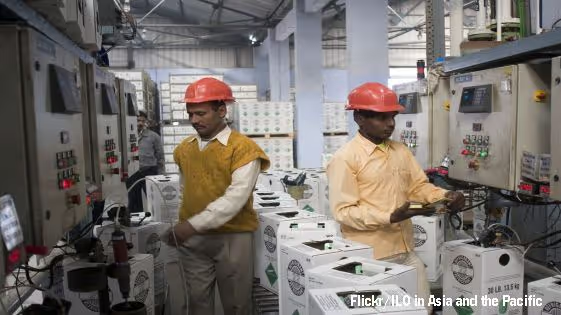
Creating good jobs for young Indians: Insights from recent research
Young Indians – who are often more educated and have greater aspiration than their previous generations –are seeking ‘good jobs’. Yet, such jobs are not available to the majority. To mark International Workers’ Day, I4I Deputy Managing Editor Nikita Mujumdar summarises some recent research on job creation amidst the structural transformation of the economy, rapid urbanisation, and rise of digital labour market platforms.
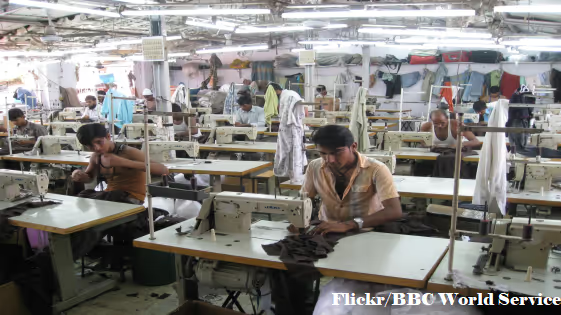
भारत के विनिर्माण क्षेत्र के श्रमिकों में निवेश और उत्पादकता
पहली मई को दुनिया भर में श्रम दिवस मनाया जाता है और आधुनिक विश्व की अर्थ व्यवस्था और प्रगति में श्रम, श्रम बाज़ार व श्रमिकों की महत्वपूर्ण भूमिका है। इसी सन्दर्भ में आज के इस लेख में, अध्वर्यु एवं अन्य भारत में घटती विनिर्माण उत्पादकता तथा राज्यों और उद्योगों में व्याप्त भिन्नता से सम्बंधित कुछ तथ्यों का संकलन प्रस्तुत करते हैं। वे श्रमिक उत्पादकता बढ़ाने की क्षमता वाले चार प्रमुख क्षेत्रों- सॉफ्ट स्किल्स, आवाज़ यानी उनका मत, भौतिक वातावरण और प्रबन्धकीय गुणवत्ता में निवेश के बारे में मौजूदा साहित्य की जाँच करते हैं, जिसमें भारतीय और वैश्विक दोनों सन्दर्भों में किए गए अध्ययनों पर प्रकाश डाला गया है। वे सम्भावित कारणों के साथ यह निष्कर्ष निकालते हैं कि क्यों कम्पनियाँ श्रमिकों में पर्याप्त निवेश नहीं कर रही हैं।

How do private players respond to public entry in pharmaceutical markets?
In 2012, the government of West Bengal outsourced the operation of key public pharmacies to private players – creating fair-price shops for selected generic medicines. How has the private sector responded to this policy intervention? Analysing the impact on prices of different categories of medicines, this article finds that the private sector response hinges on the extent to which consumer preferences are ‘sticky’.

A brighter future: Harnessing solar energy in a Jharkhand village
Simdega district in Jharkhand – one of NITI Aayog’s ‘Aspirational Districts’ – comprises small habitations that are not yet connected to grid-based electricity. In this note, Goswami and co-authors discuss how the installation of a solar micro-grid in village Chinjheria created livelihood opportunities, while also making domestic lives easier and more productive. They outline the financial aspects of the initiative, highlighting the importance of developing sustainable business models.
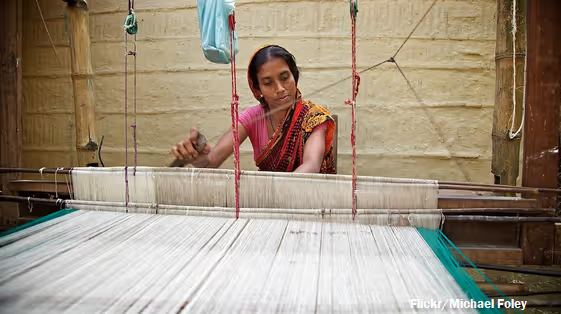
पीढ़ी-दर-पीढ़ी बुनाई : ग्रामीण भारत में पारिवारिक व्यवसायों में उत्पादकता लाभ
हर साल 12 फरवरी को मनाए जाने वाले राष्ट्रीय उत्पादकता दिवस का उद्देश्य अर्थव्यवस्था में उत्पादकता, नवाचार और निपुणता के महत्त्व पर ज़ोर देना है। इसी सन्दर्भ में प्रस्तुत इस लेख में पारिवारिक स्वामित्व वाले बुनाई उद्यम की चर्चा की गई है। आंध्र प्रदेश और तेलंगाना में बुनाई का कार्य अक्सर एक पारिवारिक उद्यम है। 1,800 से अधिक परिवारों के डेटा का उपयोग करते हुए, हैममेकर एवं अन्य द्वारा किया गया मिश्रित-विधियों का मूल्याँकन यह दर्शाता है कि पीढ़ी-दर-पीढ़ी बुनाई व्यवसाय में जुटे परिवार बुनाई कार्य में अधिक कमाते हैं और केवल एक पीढ़ी के बुनकरों वाले परिवारों की तुलना में उनकी पारिवारिक आय अधिक होती है। हालाँकि, पाया गया कि उत्पादकता के ये लाभ पूरे परिवार में समान रूप से वितरित नहीं होते हैं, क्योंकि वे उन महिला बुनकरों के लिए विस्तृत एजेंसी के रूप में तब्दील नहीं होते जो इन व्यवसायों का हिस्सा होती हैं।

How R&D tax credits can drive price competition in Indian industries
In the last few decades, tax credits have been introduced in many developing countries to incentivise investment in research and development (R&D). Looking at the staggered introduction of R&D tax credits across industries, this study finds that increases in tax credits were effective in increasing R&D expenditure, while leading to a decline in prices. This decline is primarily driven by a decline in markup, conditional on cost, as opposed to the passthrough of cost savings to prices

Weaving through generations: Productivity gains in family-owned businesses in rural India
In Andhra Pradesh and Telangana, weaving is often a family enterprise. Using data from over 1,800 households, this ongoing mixed-methods evaluation by Patel et al. shows that households with multi-generational weaving businesses earn more in weaving revenue and have greater household incomes relative to households with only one generation of weavers. However, it notes that these gains in productivity are not equally distributed across the household, as they do not translate into greater agency for the women weavers who are part of family-owned businesses.
Insights from the rollout of LAKSHYAM – an integrated performance management system
In rural parts of India, Lekhpals or patwaris play an important role in upholding property rights by maintaining land records – however, there is no effective system to track their performance. In this note, Sarthak Agrawal describes the implementation of LAKSHYAM, a system for holistic assessment and management of Lekhpals, in his tehsil, Soraon, in Uttar Pradesh. He describes the system design, and the effect providing incentives had on worker outcomes, revenue board performance, and accountability.
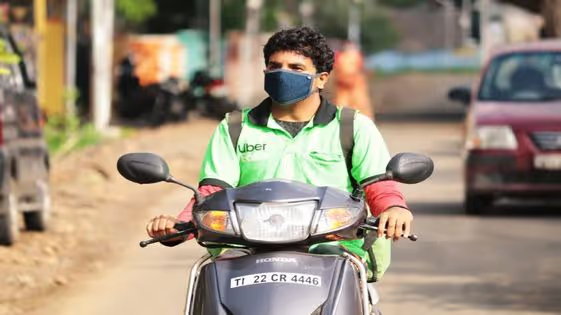
'प्लेटफ़ॉर्म’ अर्थव्यवस्था का अध्ययन करने के लिए श्रम बाज़ार के आँकड़े एकत्रित करना
हालाँकि भारत डिजिटल श्रम बाज़ार प्लेटफार्मों के मामले में एक अग्रणी देश के रूप में उभरा है, लेकिन गिग (अस्थाई और अल्पावधि के काम व सेवाएं) अर्थव्यवस्था के बारे में कम डेटा उपलब्ध है। नेहा आर्य सीपीएचएस में प्लेटफ़ॉर्म श्रमिकों के बारे में डेटा एकत्र करने के लिए सीएमआईई द्वारा किए गए प्रयासों की व्याख्या करती हैं और इस डेटासेट का उपयोग भारत के गिग और प्लेटफ़ॉर्म श्रमिकों की जनसांख्यिकीय संरचना को स्पष्ट करने के लिए करती हैं। उनका मानना है कि इस गतिशील श्रम बाज़ार में श्रमिकों के लिए सुरक्षा सुनिश्चित करने और काम की गुणवत्ता में सुधार करने के लिए उच्च गुणवत्ता वाले डेटा को बनाए रखना आवश्यक है।

DP-WEE Panel Discussion: Status and rights of platform and gig workers
A virtual panel discussion was organised by the Digital Platforms and Women’s Economic Empowerment (DP-WEE) programme, funded by the Bill and Melinda Gates Foundation, to understand the status and legal rights of the workforce in India’s digital economy. The discussion was moderated by Farzana Afridi (Head, DP-WEE) and Bhavya Gupta (PhD scholar, Jawaharlal Nehra University), and featured Uma Rani (International Labour Organization), Sona Mitra (IWWAGE), Nikhil Dey (Mazdoor Kishan Shakti Sangthan), Bornali Bhandari (NCAER) and Apoorv Kulkarni (OMI Foundation).
Supporting women weavers: Learnings from producer companies
The lack of market demand and low earnings, as well as competition from power looms, has led to declining participation of artisans in India's handloom industry. In this note, Dang et al. share some insights gained through conversations with women weavers and other members of the weaving community, which reveal the need for greater technical and management training and provision of suitable working conditions for weavers to ensure the long-term sustainability of weaving enterprises.
Collecting labour market statistics to study the platform economy
Although India has emerged as a leader in digital labour market platforms, there is a dearth of data about the gig economy. Neha Arya describes the efforts taken by the CMIE to collect data on platform workers in the CPHS, and uses this dataset to describe the demographic composition of India’s gig and platform workers. She suggests that maintaining high quality data is necessary to ensure security and improve the quality of work for workers in this dynamic labour market.

A review of women’s engagement with digital labour market platforms
Summarising some findings from ongoing work being done as part of the DP-WEE project, Sneha Ganguly highlights how the emergence of digital labour platforms have the potential to improve women's access to jobs, reduced gendered bias in certain roles, and allow women to flexibly monetise existing assets. She discusses the need for facilitating skilling, providing greater access to technology for women, as well as ensuring safety in the workplace and offering financial incentives to achieve a gender balanced workforce.
How worker investments can fuel productivity in India’s manufacturing sector
In the second article in the Ideas@IPF2023 series, Adhvaryu et al. synthesise some facts on India’s declining manufacturing productivity and variations across states and industries. They examine existing literature on investments in four key areas with the potential to increase worker productivity – soft skills, voice, physical environment, and managerial quality – highlighting studies conducted in both the Indian and global context. They conclude with possible reasons why firms may not be adequately investing in workers.

आर्टिफिशियल इंटेलिजेंस और सेवा-आधारित विकास : भारतीय नौकरी विज्ञापनों से साक्ष्य
भारत में नौकरियों की सबसे बड़ी वेबसाइट से रिक्तियों की ऑनलाइन सूचनाओं के एक नए डेटासेट का उपयोग करते हुए, कोपेस्टेक एवं अन्य, वर्ष 2016 के बाद से सेवा क्षेत्र में आर्टिफिशियल इंटेलिजेंस से संबंधित कौशल की मांग में विकसित देशों में हुई प्रगति से मिलती-जुलती दसियों गुना वृद्धि को दर्शाते हैं । वे पाते हैं कि प्रतिष्ठानों द्वारा एआई कौशल की मांग का गैर-एआई पदों में श्रम की मांग और मजदूरी के शीर्ष प्रतिशतक पर नकारात्मक प्रभाव पड़ता है, जो उच्च-कौशल, प्रबंधकीय व्यवसायों और गैर-नियमित, बौद्धिक कार्यों के विस्थापन के कारण होता है।
AI and services-led growth: Evidence from Indian job adverts
Using a new dataset of online vacancies from India’s largest jobs website, Copestake et al. document near-exponential growth in the demand for artificial intelligence-related skills in the services sector since 2016, coinciding with the take-off in developed countries. They find that the demand for AI skills by establishments has a negative impact on labour demand for non-AI roles and on the top percentile of wages, driven by the displacement of high-skilled, managerial occupations and non-routine, intellectual tasks.
Implicit costs of factor allocation for Indian firms
Looking at variations in factor misallocation across states, Chaurey et al. measure trends in factor adjustment costs incurred by firms between 1999 and 2014. They find that adjustment costs for labour and land across India fell during this period, with the decline in labour adjustment costs declining significantly faster in states with fast growing manufacturing. They discuss other factors which affect adjustment costs, including firm size and governance quality of state, and the pattern between misallocation and low growth.
The gendered employment effects of mobile internet access in developing countries
In the third post of I4I’s month-long campaign to mark International Women’s Day 2023, Goldberg and Chiplunkar look at 3G internet coverage in 14 countries, and find that access to mobile internet allows women to enter the labour force, and start small businesses and get service-sector wage jobs. However, they notice that 3G access also leads to better employment opportunities for men, who leave their unpaid agricultural jobs to be filled by women.
Bringing skilling and productive employment closer to women
On International Women’s Day, Farzana Afridi considers a key issue in the creation of good jobs for women – the provision of skilling. She discusses the lack of physical and financial access to skill training, shortage of demand-relevant and high-quality programmes, and inefficient matching with jobs post-training. While highlighting recent government proposals to address these concerns – such as launching a unified Skill India Digital Platform – she contends that a more gender-sensitive approach is needed.
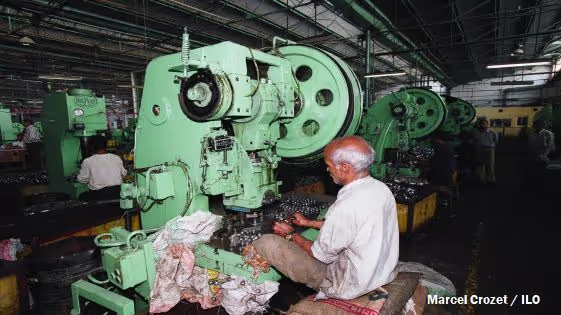
Formalisation of informal manufacturing enterprises in India
Employment in India’s organised manufacturing sector has grown rapidly since 2004. This article finds that about 15% of this growth can be attributed to the formalisation of previously informal enterprises, and expects that, as the new labour code is implemented, the output and employment of relatively bigger informal manufacturing establishments will rise significantly, with concomitant gains in productivity. The productivity potential of such informal enterprises needs to be adequately exploited with investment in ICT and other fixed assets.
I4I@10 | First Ashok Kotwal Memorial Lecture: The future of development
What is the 'fourth' fundamental law of capitalism? Will capital ‘inherit the earth’? Has the pandemic quickened the intuitive appeal of the capital-labour substitution? Should sovereign funds be based on corporate wealth, not just natural resources? Would Universal Basic Income work in a relatively poor country like India? In the first annual Ashok Kotwal Memorial Lecture, Professor Debraj Raj talks about the future of development, and the contribution of labour, capital and automation in growth. After a quick introduction, he dispels the notion of balanced growth by showing that, far from being constant, the share of labour is falling, over time, across countries, and within sectors. Presenting employment elasticities of different sectors, and labour shares for many economies, he establishes the ubiquity of capital-labour substitution. We see GDP growth has outpaced employment growth in India too, even though there is an abundance of cheap labour. ...

The promise of technology for women’s employment
The growth of digital labour platforms holds tremendous potential to improve employment outcomes for India’s young, urban population. In this post, Farzana Afridi discusses the challenges in leveraging this technology – especially for women, given their lower access to technology, skills, capital and public spaces. She calls for the creation of a data ecosystem – including public and private sources – to analyse the issues and develop suitable policies to fully realise the sector’s promise.
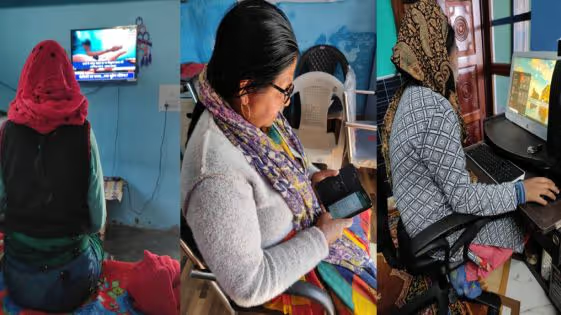
वास्तविकताओं का प्रतिबिंब: महिला सूक्ष्म उद्यमियों की नज़र से डिजिटल टेक्नॉलजी
महामारी के दौरान भौतिक बाजारों से लेकर ई-कॉमर्स प्लेटफॉर्म तक हुए बाजारों के विस्तार के कारण भारत में पहले से मौजूद डिजिटल लैंगिक विभाजन और भी बढ़ गया है। ऑटो-फ़ोटोग्राफ़ी का तरीका अपनाते हुए, सेवा भारत की टीम ने महिला सूक्ष्म उद्यमियों से 'डिजिटल' शब्द की उनकी समझ को व्यक्त करने के लिए कहा। उन्होंने पाया कि जो टेक्नॉलजी महानगरीय क्षेत्रों में सामान्य हो सकती है, वह ग्रामीण क्षेत्र के गरीबों की नजर में महत्वपूर्ण और आकांक्षी है। उनके निष्कर्ष, देश भर की महिलाओं के नजर में डिजिटल सशक्तिकरण क्या है — इसकी बारीक समझ को सामने लाते हैं।

संकट के दौरान फर्मों के राजनीतिक संबंधों की भूमिका
शोध कहता है कि आर्थिक संकट की स्थिति में किसी फर्म के लिए राजनीतिक संबंध मायने रखते हैं। इस लेख में, भारत में फर्मों के राजनीतिक कनेक्शन के बारे में एक अद्वितीय डेटा सेट के माध्यम से पाया गया कि दुर्लभ संसाधनों की प्राप्ति के लिए फर्में अपने इन कनेक्शनों का लाभ उठा सकती हैं। इस प्रकार से 'कनेक्टेड' फर्में, ‘गैर-कनेक्टेड’ फर्मों की तुलना में अल्पावधि ऋण प्राप्त करने और नोटबंदी (विमुद्रीकरण) के समय में बकाया भुगतान में देरी करने में सक्षम थीं, और इनकी आय, बिक्री और व्यय में भी बढ़ोतरी परिलक्षित हुई है।
Mirroring realities: Digital technology through the eyes of women microentrepreneurs
The expansion of markets from physical spaces to e-commerce platforms during the pandemic widened the pre-existing digital gender divide in India. Employing the method of ‘auto-photography’, the team at SEWA Bharat asked women microentrepreneurs to capture their understanding of the term ‘digital’. They found that technology which may be commonplace in metropolitan areas, is significant and aspirational for the rural poor. Their findings bring forth a nuanced understanding of what digital empowerment looks like for women across the country.

The role of political connections of firms during a crisis
Research has shown that political connections matter for a firm during times of economic crisis. This article refers to a unique data set of political connections of firms in India, and finds that firms can leverage these connections to access scarce resources. ‘Connected firms were able to increase access to short-term credit and delay payments owed in the aftermath of demonetisation, and reported higher income, sales and expenses as compared to non-connected firms.

विकासशील देशों में उन्नति से जुड़ी बाधाएं
हाल के दशकों में, उन्नत विश्व प्रौद्योगिकियों को अपनाये जाने से मदद मिलने के कारण कुछ हद तक कई देशों में तेजी से विकास हुआ है। इस लेख में, एरिक वरहोजेन ने उन कारकों के बारे में चर्चा की है जो विकासशील देशों की फर्मों में उन्नति को प्रेरित करते हैं। उन्होंने हाल के उस शोध पर प्रकाश डाला है जिसमें उन्नति पर सकारात्मक प्रभाव डालने वाले दो कारकों को दर्शाया गया है- विकसित देशों या बहुराष्ट्रीय कंपनियों जैसे अमीर उपभोक्ताओं को बिक्री; और सलाहकारों या अन्य फर्मों से सीखकर जानकारी में वृद्धि करना।
Changing the frame: Making small firms compete like large ones
Although small firms have natural advantages, they face constraints when it comes to reach and scale; this prevents them from competing with larger firms. Pankaj Chandra shares business models from Italy, China, Japan, and various parts of India, where firms have become a part of a network that collectively acts as a large firm. These clusters allow firms to coordinate functions and collaborate in order to grow.
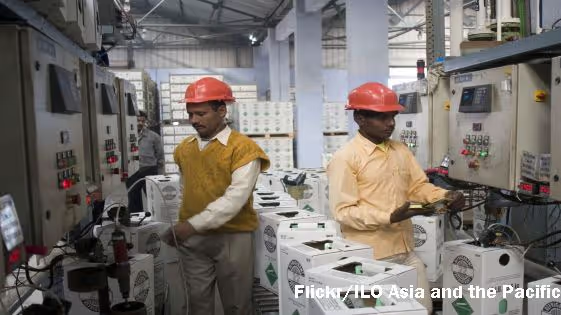
श्रम प्रतिबंधों में ढील का प्रभाव: राजस्थान में रोजगार से संबंधित साक्ष्य
भारत में कड़े श्रम कानून फर्मों के विकास में बाधा डाल सकते हैं और अनौपचारिक एवं अनुबंध वाले रोजगार बढ़ा सकते हैं। यह लेख, औद्योगिक विवाद अधिनियम (आईडीए) में संशोधन के बाद राजस्थान में स्थित फर्मों से संबंधित साक्ष्यों को देखते हुए दर्शाता है कि श्रम कानूनों में ढील देने से कुल रोजगार और उत्पादन पर कोई खास असर नहीं पड़ा है। इसके विपरीत, श्रम कानूनों में दी गई ढील के चलते अनुबंध वाले श्रमिकों में वृद्धि हुई है और स्थायी कार्य-बल में कमी आई है। हालांकि इस अध्ययन का अनुमान है कि संशोधन से प्रभावित फर्मों की निहित श्रम लागत में कमी आई है।
Introduction to e-Symposium: The good jobs challenge in India
One of the primary concerns for India is the question of jobs – specifically good quality jobs. Why has India lagged in creating opportunities for its working age population, and how different sectors can be leveraged to create good jobs? In this e-Symposium, anchored by Kunal Sen and Nirvikar Singh, six experts will weigh in on the different facets of the job-creation conundrum, from the perspective of the manufacturing sector, cities, trade, clusters, financing small firms, and the tradeable service sector.
Barriers to upgrading in developing countries
In recent decades, several countries have seen rapid development, aided in part by the adoption of advanced technologies. In this post, Eric Verhoogen looks at recent research to highlight the factors that drive upgrading in developing-country firms. He identifies two factors that have a positive effect on upgrading – selling to richer consumers such as developed countries or MNCs, and increasing know-how by learning from consultants or other firms.
The effect of easing labour restrictions: Evidence on employment in Rajasthan
Stringent labour laws in India can hinder firms’ growth and increase the incidence of informal and contract employment. Looking at evidence from firms in Rajasthan after the amendment of the Industrial Disputes Act, this article finds that relaxing labour laws did not significantly affect total employment and output. Counterintuitively, it increased employment of contract workers and reduced the permanent workforce. The study however estimates that the implicit labour cost fell for firms impacted by the amendment.

जन्म बनाम योग्यता: भारत में उद्यमशीलता पर जाति व्यवस्था का प्रभाव
भारत में जाति व्यवस्था के प्रचलन के कारण सामाजिक गतिशीलता प्रतिबंधित रही है। यह लेख इस बात को दर्शाता है कि जाति असमानताओं की वजह से फर्मों में संसाधनों का गलत तरीके से आवंटन हुआ है। इस लेख में निम्न और उच्च जाति के उद्यमियों के संदर्भ में उत्पादकता और वित्तीय स्थितियों में व्याप्त अंतर को समझा गया है और पाया गया कि इसका धन-संपत्ति एवं आय असमानता तथा कुल कारक उत्पादकता पर व्यापक आर्थिक प्रभाव पड़ता है।

The future of work from home
With the outset of the Covid-19 pandemic, work from home became the norm in 2020. However, even though mobility restrictions have been lifted, many workplaces all over the world continue to follow a model of remote or hybrid working. This has raised questions about worker productivity, work-life balance, and the future of commuting and cities. In this edition of I4I Conversations, Prof. Nirvikar Singh (University of California, Santa Cruz) and Prof. Nicholas Bloom (Stanford University) talk about the future of work. They delve into Prof Bloom's seminal work on management practices and work from home prior to the pandemic. They discuss the effects of flexibility on productivity, happiness and building managerial capital. They go on to speak about trends in remote work over the last few years, and how that has differed across countries. This leads to further discussion about the impact on cities and the environment, as more people move to suburbs and commute to work. They also touch ..
The future of work from home
With the outset of the Covid-19 pandemic, work from home became the norm in 2020. However, even though mobility restrictions have been lifted, many workplaces all over the world continue to follow a model of remote or hybrid working. This has raised questions about worker productivity, work-life balance, and the future of commuting and cities. In this edition of I4I Conversations, Prof. Nirvikar Singh (University of California, Santa Cruz) and Prof. Nicholas Bloom (Stanford University) talk about the future of work. They delve into Prof Bloom's seminal work on management practices and work from home prior to the pandemic. They discuss the effects of flexibility on productivity, happiness and building managerial capital. They go on to speak about trends in remote work over the last few years, and how that has differed across countries. This leads to further discussion about the impact on cities and the environment, as more people move to suburbs and commute to work. They also touch ..
Birth versus worth: Impact of the caste system on entrepreneurship in India
The prevalence of the caste system has restricted social mobility in India. This article further looks at how caste disparities have contributed to the misallocation of resources across firms. It quantifies the differences in productivity and financial conditions for low- and high-caste entrepreneurs, and finds that this has macroeconomic implications on wealth and income inequality and aggregate total factor productivity
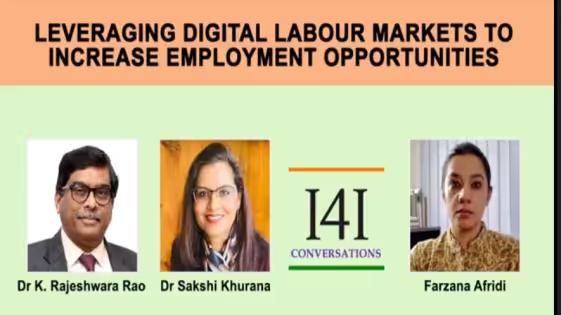
Leveraging digital labour markets to increase employment opportunities
India’s relatively young population, the pace of adoption of smartphones and digital technology, and rapid urbanisation has contributed to the growth of digital labour markets. In recent years, we have seen the proliferation of gig work and labour market platforms like Uber, Urban Company, Swiggy and others. This growth has accelerated in the wake of the Covid-19 pandemic with India currently accounting for 8% of the world’s digital labour platforms. In this edition of I4I Conversations, Prof. Farzana Afridi (Indian Statistical Institute) speaks with Dr K Rajeswara Rao and Dr Sakshi Khurana (NITI Aayog) to examine how job-matching technology platforms could be harnessed to increase employment opportunities, through skill-matching and technology-based job allocation. In reference to the NITI Aayog report ‘India's Booming Gig and Platform Economy: Perspectives and Recommendations for the Future of Work’, released on 27 June 2022, they discuss how the flexibility and low entry ...

Leveraging digital labour markets to increase employment opportunities
India’s relatively young population, the pace of adoption of smartphones and digital technology, and rapid urbanisation has contributed to the growth of digital labour markets. In recent years, we have seen the proliferation of gig work and labour market platforms like Uber, Urban Company, Swiggy and others. This growth has accelerated in the wake of the Covid-19 pandemic with India currently accounting for 8% of the world’s digital labour platforms. In this edition of I4I Conversations, Prof. Farzana Afridi (Indian Statistical Institute) speaks with Dr K Rajeswara Rao and Dr Sakshi Khurana (NITI Aayog) to examine how job-matching technology platforms could be harnessed to increase employment opportunities, through skill-matching and technology-based job allocation. In reference to the NITI Aayog report ‘India's Booming Gig and Platform Economy: Perspectives and Recommendations for the Future of Work’, released on 27 June 2022, they discuss how the flexibility and low entry ...
भारतीय विनिर्माण उद्योग में हिंदू-मुस्लिम एकता और फर्म का उत्पादन- एक क्षेत्र प्रयोग से साक्ष्य
उपलब्ध प्रमाण दर्शाते हैं कि खराब सामाजिक संबंधों और श्रमिकों में पसंद-आधारित भेदभाव के चलते जातिगत विविधता फर्म के उत्पादन को कम कर सकती है। यह लेख, पश्चिम बंगाल के एक विनिर्माण संयंत्र में किये गए एक प्रयोग के आधार पर दर्शाता है कि लगातार अत्यधिक समन्वय की आवश्यकता वाले कार्यों को करने वाली टीमों में यदि अलग-अलग धर्म के श्रमिक शामिल हैं तो शुरू में टीम का उत्पादन कम हो जाता है। तथापि,उत्पादकता पर पड़ने वाला यह नकारात्मक प्रभाव लंबे समय में कम हो जाता है, साथ ही लगातार कम समन्वय वाली टीमों की तुलना में आउट-ग्रुप दृष्टिकोण में सुधार होता है।
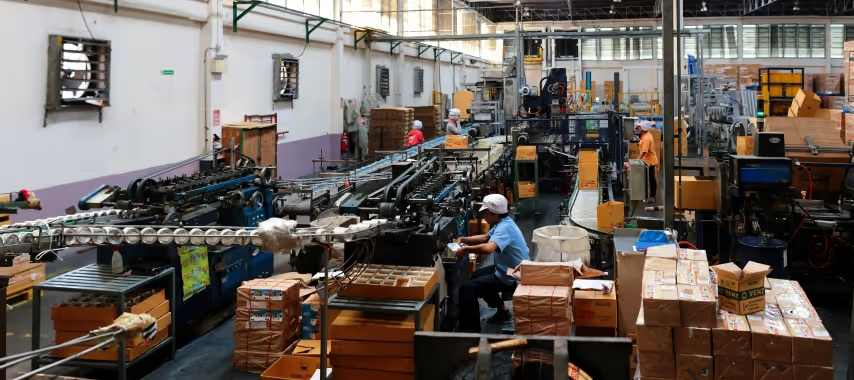
Hindu-Muslim integration and firm output in Indian manufacturing: Evidence from a field experiment
Evidence suggests that ethnic diversity can lower firm output due to poor social ties and taste-based discrimination among workers. Based on an experiment in a manufacturing plant in West Bengal, this article shows that religious mixing initially leads to lower team output in teams performing tasks requiring higher continuous coordination. However, this negative effect on productivity reduces in the longer run, with out-group attitudes improving vis-à-vis teams with lower continuous coordination.

Automation and inequality
Public discourse around automation has seen some take a fairly alarmist view – with concerns around its impact on employment, wages, the labour share of national income, and inequality. Others take a more optimistic view – that short-run turbulence and long-run increases in welfare are the typical outcomes of any technological change. In this context, Dilip Mookherjee (Boston University) speaks with Pascual Restrepo (Boston University) to discuss the evidence around the developed and developing country experience with automation, and whether the optimistic or alarmist view is bearing out in reality. Prof Restrepo outlines the definition of automation technology – differentiating it from ‘augmenting’ technologies – and contends, that like most things in economics, the answer lies somewhere in the middle of the alarmist and optimist views. They foray into discussing evidence on automation and technological change for developed countries: decline in the labour share of national income,,,

Automation and inequality
Public discourse around automation has seen some take a fairly alarmist view – with concerns around its impact on employment, wages, the labour share of national income, and inequality. Others take a more optimistic view – that short-run turbulence and long-run increases in welfare are the typical outcomes of any technological change. In this context, Dilip Mookherjee (Boston University) speaks with Pascual Restrepo (Boston University) to discuss the evidence around the developed and developing country experience with automation, and whether the optimistic or alarmist view is bearing out in reality. Prof Restrepo outlines the definition of automation technology – differentiating it from ‘augmenting’ technologies – and contends, that like most things in economics, the answer lies somewhere in the middle of the alarmist and optimist views. They foray into discussing evidence on automation and technological change for developed countries: decline in the labour share of national ...
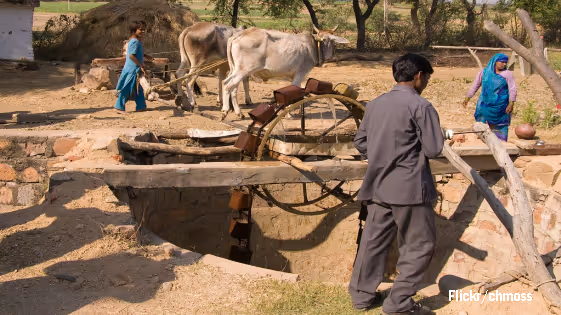
Temperature, labour reallocation, and industrial production
While it is well-established that agricultural production is vulnerable to weather shocks, less is known about how those affected respond or the economic consequences of any responses. Analysing data from India, this article shows that higher temperatures are associated with reductions in agricultural production, employment, and wages – but workers are able to relocate to other sectors such as manufacturing within the district.
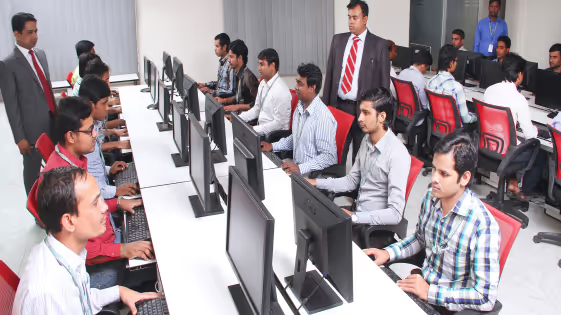
व्यापार, आंतरिक प्रवास और मानवीय पूंजी: भारत में आईटी में तेजी का फायदा किसे हुआ
भारतीय अर्थव्यवस्था में 1993-2004 के दौरान व्यापार में विस्तार हुआ और आईटी में तेजी आई। कुछ चुनिंदा बड़े शहरों में केंद्रित उच्च कौशल-गहन क्षेत्र में हुए शानदार विकास ने देश भर में असमानता को कैसे प्रभावित किया? यह लेख दर्शाता है कि नौकरियों और शिक्षा तक अच्छी पहुंच वाले जिलों में पैदा हुए व्यक्तियों को आईटी निर्यात में प्रत्येक प्रतिशत की वृद्धि के लिए 0.51% का लाभ मिला, जबकि दूरस्थ जिलों में यही लाभ 0.05% रहा।
Trade, internal migration, and human capital: Who gained from India’s IT boom?
The Indian economy experienced trade expansion and an IT boom during 1993-2004. How did the spectacular growth in a high skill-intensive sector – concentrated in a few big cities – affect inequality across the country? This article shows that individuals born in districts with good access to jobs and education received welfare gains of 0.51% for every percentage increase in IT exports, vis-à-vis 0.05% in remote districts.

Debt contract enforcement and product innovation
Weak enforcement of debt contracts can have undesirable consequences for financial development, as difficulty in recovering claims from distressed firms causes banks to reduce lending. Leveraging the staggered implementation of debt recovery tribunals across Indian states, this article shows that the legal reform had a positive impact on product growth in firms – as such innovation require considerable upfront investment and access to credit.
Contract labour and firm growth in India
There is considerable evidence indicating that the Industrial Disputes Act (IDA), 1947 – which made it illegal for large companies to downsize – had a powerful disincentive effect for entrepreneurs in India. Using Annual Survey of Industries data, this article shows that constraints on large firms diminished since the early 2000s largely due to exploitation of a loophole pertaining to contract labour, rather than a de jure change in the labour laws.
Intellectual property rights and wage inequality
Technology has become central to most everyday activities. But will incentives for technological change – such as those induced by Covid-19 – cause deeper distortions in the global economy, especially through wage inequality? To examine this issue, this article analyses data on Indian manufacturing firms during 1990-2006, and shows that stronger incentives for innovation through intellectual property resulted in inequality across virtually the entire economy.

श्रमिकों की उत्पादकता बढ़ाने के लिए उनकी वित्तीय चिंताओं को दूर करना
वित्तीय बाधाओं का असर श्रमिकों की मानसिक स्थिति पर हो सकता है और इसके कारण कार्य के दौरान श्रमिक के अधिक विचलित रहने से उसकी उत्पादकता प्रभावित हो सकती है। ओडिशा में छोटे पैमाने के निर्माण-उद्योग के श्रमिकों पर किये गए एक प्रयोग के आधार पर यह लेख दर्शाता है कि अनुबंध की अवधि की समाप्ति से पहले श्रमिकों को यदि अंतरिम भुगतान किया जाता है तो उनकी उत्पादकता में 7.1% की वृद्धि होती है – और यही वृद्धि गरीब श्रमिकों के सन्दर्भ में 13.3 प्रतिशत होती है; साथ ही उनके फोकस और कार्य नियोजन में भी सुधार ध्यान चूक में कमी के द्वारा प्रतीत होता है।
Inequality, labour market trends, and the welfare State
All around the world, rising levels of inequality – particularly in the last 3-4 decades – have been recognised as a major issue. In this context, David Green (University of British Columbia) and Parikshit Ghosh (I4I Editorial Board; Delhi School of Economics) discuss various factors including trade and globalisation; gradual ideological shift to the 'right'; the changing nature of work – role of technological advancements, hierarchies created by higher education, and 'rents' rather than returns to skill. They also examine social protection – going beyond income support to also provide public services and foster communities, identifying rents in the economy to generate tax revenue to fund welfare, shifting from redistribution as charity to redistribution as justice and how Covid-19 can jumpstart this attitudinal change. This is the second edition of I4I Conversations.
Alleviating financial concerns to enhance worker productivity
Financial constraints can have psychological consequences and affect productivity by making workers more distracted during work. Based on an experiment among small-scale manufacturing workers in Odisha, this article shows that an interim payment before the end of the contract period raises worker productivity by 7.1% – with a higher increase of 13.3% for poorer workers– and also appears to improve planning and focus with a decline in attentional lapses.
श्रम-प्रधान उद्योगों में श्रमिकों की अनुपस्थिति का सामना करना
श्रम-प्रधान उद्योगों में श्रमिकों की अनुपस्थिति फर्मों की उत्पादकता में हानि का कारण बनती है, जिसके चलते श्रमिकों के लिए उत्पादकता-आधारित प्रोत्साहन की संभावना कम होती है। कर्नाटक में किये गए एक अध्ययन के आधार पर, यह लेख इस बात की जाँच करता है कि अपनी लाइनों पर श्रमिकों की विशेष रूप से कम उपस्थिति का सामना करते समय फैक्ट्री लाइन-मैनेजर किस प्रकार से आपस में श्रमिकों का अदल-बदल करते हैं, और यह लेख लाइनों में अपने श्रमिकों की तैनाती में सुधार करने पर फर्मों को मिलने वाले वित्तीय लाभों का अनुमान भी लगाता है।

अल्पकालिक बीमारी और परिवार में श्रम का प्रतिस्थापन
गरीब कृषि परिवारों में स्वास्थ्य-संबंधी झटकों की वजह से होने वाले चिकित्सा खर्चों का असर उनके पास के सीमित संसाधनों पर पड़ता है और इसके परिणामस्वरूप रोजगार के संभावित उत्पादक दिनों का नुकसान होता है। ग्रामीण भारत के आंकड़ों के आधार पर, यह लेख दर्शाता है कि एक बार की बीमारी के कारण बीमार व्यक्ति की औसत मासिक मजदूरी आय में 7% की गिरावट आती है। इसके साथ ही, परिवार के पुरुष मुखिया की बीमारी के कारण उसकी पत्नी की बाजार में श्रम आपूर्ति में औसतन 3.2% की वृद्धि होती है।
Dealing with worker absenteeism in labour-intensive industries
Worker absenteeism in labour-intensive industries causes productivity losses for firms, and reduced potential for productivity-based incentives for workers. Based on a study in Karnataka, this article investigates how factory line-managers trade workers amongst themselves when facing particularly low attendance on their lines, and estimates the financial gains that firms can make when they improve the distribution of workers across lines.
Short-term illness and intra-household labour substitution
For poor, agricultural households, health shocks strain limited resources on medical expenses, and result in loss of potential productive work-days. Based on data from rural India, this article shows that an illness episode causes a 7% decline in the ill individual’s average monthly wage income. Further, the male household head’s illness leads to the wife increasing her market labour supply by 3.2%, on average.
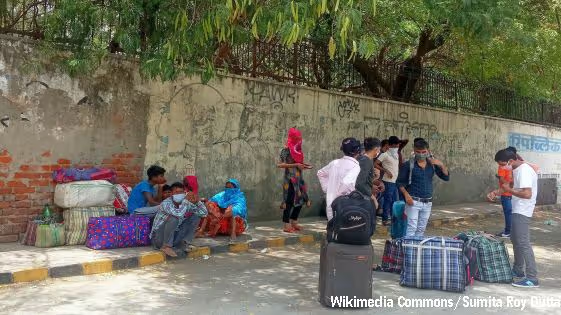
कोविड -19 लॉकडाउन और प्रवासी श्रमिक: बिहार और झारखंड के व्यावसायिक प्रशिक्षुओं का सर्वेक्षण – II
कोविड -19 और इससे संबंधित लॉकडाउन के कारण बड़े पैमाने पर लोगों की नौकरियां चली गई, जिसके फलस्वरूप शहरों से प्रवासी श्रमिकों का पलायन हुआ। इस लेख में, चक्रवर्ती एवं अन्य, उनके द्वारा ग्रामीण बिहार और झारखंड के युवा व्यावसायिक प्रशिक्षुओं पर किये गए सर्वेक्षण से निकाले गए निष्कर्षों जैसे रोजगार पर पड़े गंभीर प्रभाव, अनौपचारिकीकरण में वृद्धि, पुन:प्रवासन की कमी और महिलाओं पर पड़े प्रतिकूल प्रभाव पर प्रकाश डालते हैं । वे युवाओं को नौकरी खोजने में मदद करने के लिए एक डिजिटल हस्तक्षेप की भी जाँच करते हैं।
Covid-19 lockdown and migrant workers: Survey of vocational trainees from Bihar and Jharkhand - II
Covid-19 and the associated lockdowns have led to widespread job losses, and a subsequent exodus of migrant workers from the cities. In this note, Chakravorty et al. discuss findings from their survey of young vocational trainees from rural Bihar and Jharkhand. They highlight the severe impact on employment, increased informalisation, lack of re-migration, and disproportionate adverse effects on women.

Would a four-day work week benefit women?
In February 2021, the Indian government stated that it may allow firms the flexibility of having a four-day work week, while retaining the norm of 48 hours of work per week. In this post, Koustav Majumdar assesses the potential impacts of such a policy change on women and their workforce participation – given that women are known to disproportionately bear the burden of domestic work on a day-to-day basis.
Can technology mitigate the impact of heat on worker productivity?
Exposure to high heat causes productivity losses, with reduction in cognitive function as a key channel. A direct reduction in heat exposure via technologies such as air conditioning is not possible for outdoor tasks. This article presents results from a randomised experiment in Odisha where the use of a digital mode – rather than the traditional pen-and-paper mode – for household surveys helped mitigate some of these heat-induced productivity losses.
India’s new labour codes: A pre-condition for long-run growth
The Ministry of Labour and Employment has recently notified four new labour codes, which are expected to be implemented from April 2021. Assessing the impact of the policy changes around hiring-and-firing, trade union membership, and working hours, Aakanksha Shrawan argues that the proposed reforms would be game-changing both for domestic employers, and foreign firms who are contemplating investing in India.
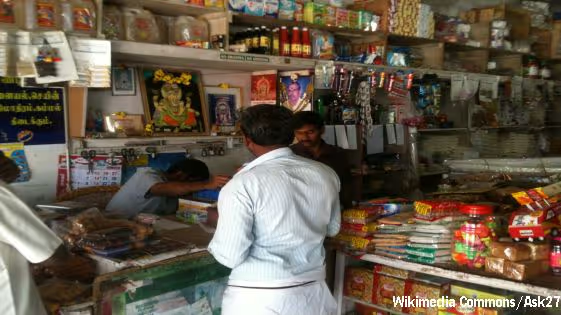
‘Outside’ managers’ productivity, firm dynamics, and economy growth
In developed countries, many industrial giants have humble beginnings as small, family-owned businesses, but nonetheless expand to hundreds of thousands of employees over time by relying on professional managers running key operations. Why does this not occur to the same degree in India? This article explores how the lower productivity of ‘outside’ managers in developing economies impacts firm growth.

Expectations, wage hikes, and worker voice
Understanding how exit decisions of workers are affected by their ability to voice their concerns, is a central question in labour economics. Based on an experiment in 12 garment factories in Karnataka around the time of a wage hike, this article shows that providing workers a channel to express grievances – through an anonymous employee satisfaction survey – reduces quit rates, especially for those most disappointed with the wage hike.
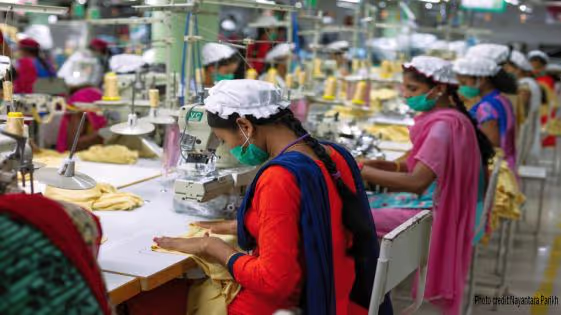
No line left behind: How firms match workers and managers
Various studies consistently affirm the importance of strong worker-manager dynamics in driving productivity. Based on analysis of worker-level productivity data, information on orders, and interviews with managers of a large garment manufacturing firm in India, this article suggests that when it comes to labour-allocation decisions, productivity sometimes takes a back seat to managing complex relationships with buyers, who can take their business to the factory down the road.

Managerial quality and productivity dynamics
It is well known that managerial quality impacts firm productivity and growth. Which managerial skills, traits, and practices contribute most to productivity? Are all such traits easily observable? Are such traits appropriately rewarded in pay? Based on two years of daily, line-level production data from a large Indian garment firm and rich survey data on line managers, this article seeks to address these questions.

Does India gain from high-skilled migration to the US?
India is the most important source of migrants globally, and the US is the main host country for its high-skilled migrants. Is the phenomenon of high-skilled emigration ‘brain drain’, or is it creating potential providers of ‘knowledge remittances’ for the home country? Based on data on US immigrant inventors from India, this article investigates the rate and determinants of return migration.

The changing task content of jobs in India
The ongoing wave of technological revolution across the globe is set to fundamentally change the way goods are produced and services are delivered. Using a task-based framework, this article seeks to examine the impact of technology on the nature of jobs in India. It finds that in keeping with global trends, non-routine cognitive task intensities of jobs have increased, and manual task contents – both routine and non-routine – have declined.
Mapping the Urban World: Integrating High-resolution Satellite Imagery and Night Light Data
This project aims to improve current approaches to chart urban extent across the globe by integrating night light (NTL) data with Landsat 30m resolution satellite images. By applying state-of-the-art machine-learning techniques, this project hopes to produce a comprehensive global mapping of urbanization in close to real time.

An offline alternative for Aadhaar-based biometric authentication
While decision on the constitutionality of Aadhaar by the Supreme Court of India remains a matter of speculation, it has become abundantly clear that most of the use cases for Aadhaar-based biometric authentication (ABBA) have turned out to be deeply problematic. In this post, Banerjee and Sharma outline the tentative design sketch of an alternate offline protocol, with digitisation and identity verification objectives similar to ABBA, which may be more accurate and free of the negatives.

The impact of robotisation on the world economy: A forward-looking review
Robots have long existed in human imagination and only recently in the real world. The baggage of past imagination often intrudes into our understanding of how real robots will affect our economic lives. This explainer rigorously defines ‘robots’ and artificial intelligence; presents empirical evidence and analysis on the impacts of robotisation on production processes and aggregate economic outcomes; and puts forth policy recommendations for ensuring social benefits from robotisation at minimal cost.
Management and India’s economic growth
India has produced a well-recognised elite of managers, some of whom have demonstrated their capabilities in premier firms outside the country. In this post, Nirvikar Singh discusses existing empirical evidence from India that demonstrates the importance of managerial skills for economic growth, and recommends policy measures that can promote good management.
India’s R&D expenditure: Composition matters
While gross expenditure on R&D in India has been on the rise in recent years, it is dominated by public investment. In this post, Sanjib Pohit contends that the current system of allocating public funds for R&D is geared towards low-risk, low-return incremental research, and should instead promote innovative research. He also recommends encouraging private investment in ‘core’ R&D activities via tax incentives.
Tripura’s bamboo sector: Potential and challenges
About a third of the total area of Tripura is covered by bamboo, and bamboo has emerged as a key thrust area for the state’s industrial development. Based on a field visit that was undertaken to study skill development in Tripura’s bamboo sector, Bornali Bhandari discusses the livelihood-based approach of Tripura Bamboo Mission vis-à-vis a market-based approach adopted by a private bamboo wood manufacturing unit.
Role of private sector in the holistic skilling of India’s workforce
Low skill levels of workers are a key reason for low labour productivity in developing countries. In this article, Adhvaryu et al. discuss research that centres around two important questions in this context: who should conduct and pay for skilling, and what kind of skills does the workforce need?
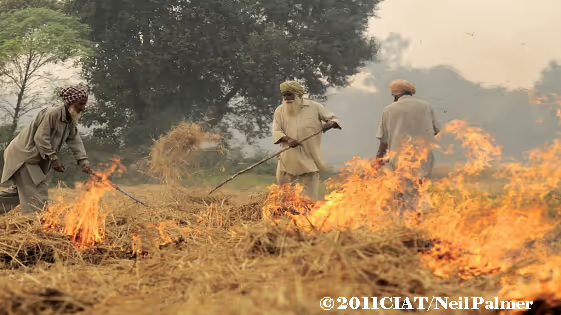
Clearing the air: Do India’s crop burning bans really work?
In December 2015, the National Green Tribunal instituted a ban on crop residue burning across five states. Utilising satellite data on crop fires and administrative data on fines levied, this article examines the efficacy of the ban. It finds that the ban did have a sizeable downward impact on fire counts – but with a lag of a year, and effects lasting for at most two years.

Yamuna River pollution: Problem of governance, not infrastructure
Despite decades of efforts to clean Delhi’s Yamuna, the river remains severely polluted. In this post, Naina Sharma contends that the situation is reflective of gaps in governance, rather than technical shortcomings. Outlining the problems with sewage management in the capital city and weak enforcement of applicable norms, she emphasises the rationalisation of institutional framework and collective public action to address the issues.
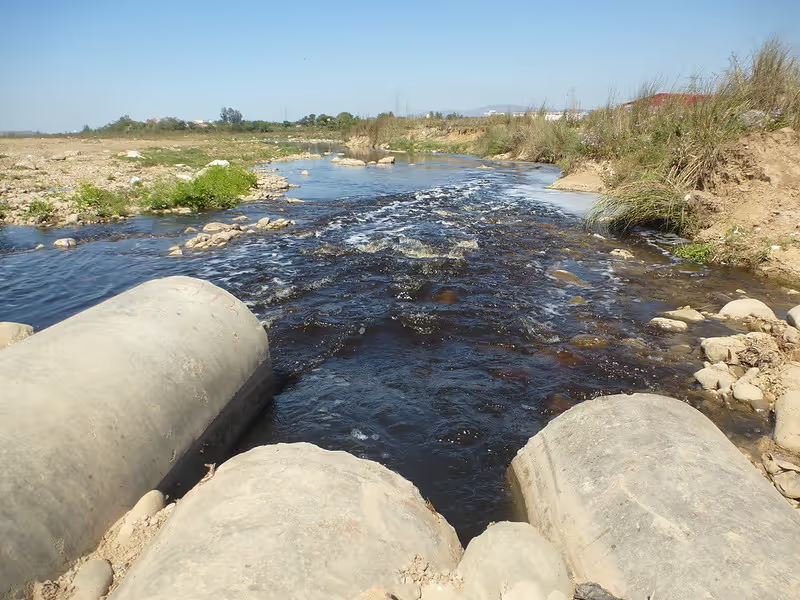
क्या औद्योगिक जल प्रदूषण कृषि उत्पादन को नुकसान पहुँचाता है?
वर्ष 1973 से प्रतिवर्ष जून की 5 तारीख का विश्व पर्यावरण दिवस के रूप में पालन किया जाता है। पर्यावरण के सभी घटकों, पर्यावास और प्राणियों का आपसी सम्बन्ध अति सूक्ष्म और जटिल होता है, यह दिन इसी जागरूकता के प्रसार-प्रचार और कार्यवाही को समर्पित है। पर्यावरण दिवस पर प्रस्तुत इस लेख में औद्योगिक जल प्रदूषण पर चर्चा की गई है। हालांकि सभी प्रमुख भारतीय शहरों में झीलों, नदियों में नियमित रूप से ज़हरीला झाग दिखाई देता है, जल प्रदूषण पर वायु प्रदूषण जितना ध्यान नहीं दिया जाता है। औद्योगिक जल प्रदूषण के कृषि पर प्रभाव की जांच करते हुए इस लेख में दर्शाया गया है कि औद्योगिक स्थलों के नीचे की ओर की नदियों में प्रदूषक तत्वों की सांद्रता यानी सेचुरेशन में अचानक बड़ी वृद्धि हुई है। इसके बावजूद, फसल की पैदावार पर कोई महत्वपूर्ण प्रभाव नहीं पड़ा है।
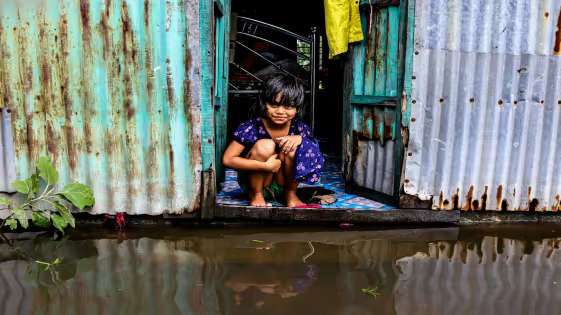
Climate Change: An unfolding public health crisis
Climate change is no longer merely an environmental issue; it is emerging as a profound threat to human health and well-being. In this post, Chandra, Sen Gupta, and Zheng discuss the diverse and complex pathways through which climate change affects health. They contend that by investing in infrastructure, empowering vulnerable populations, and implementing evidence-based policies, we can mitigate the health risks posed by a changing climate.

Addressing water scarcity in Maharashtra: Need for a policy shift
In the 1980s, Maharashtra played a pioneering role in promoting integrated watershed development to address water scarcity. In this post, Tiwale and Sankar contend that in recent years, the state has shifted to technocratic, quick-fix, and fragmented approaches to water management. They discuss two schemes – the Jalyukt Shivar Abhiyan and Farm Pond on Demand – and recommend an integrated, bottom-up approach with science-based solutions, demand-side measures and appropriate institutional arrangements

क्या शिक्षा से जलवायु कार्रवाई की प्रेरणा मिल सकती है?
हर साल 22 अप्रैल को दुनिया भर में पृथ्वी दिवस मनाया जाता है जो पर्यावरण की रक्षा और स्थिरता को बढ़ावा देने के लिए समर्पित एक वैश्विक आंदोलन है। जलवायु संकट के और भी गंभीर होने के साथ ही, आज पृथ्वी के संरक्षण की हमारी साझा जिम्मेदारी पहले से कहीं अधिक महत्वपूर्ण हो गई है। विकासशील देशों में युवा वर्ग जलवायु परिवर्तन के बारे में चिंतित हैं और इसके लिए उचित कदम उठाने के लिए तैयार हैं लेकिन व्यवहारिक जानकारी और ज्ञान की कमी के कारण वे विवश हैं। पृथ्वी दिवस पर प्रस्तुत इस लेख में मसूद और सबरवाल विश्वबैंक की हालिया रिपोर्ट से प्राप्त अंतर्दृष्टि पर चर्चा करते हैं, जिसमें बताया गया है कि शिक्षा किस प्रकार जलवायु से जुड़ी कार्रवाई को आगे बढ़ाने के लिए इस विसंगति को दूर कर सकती है। वे जलवायु परिवर्तन से उत्पन्न होने वाले जोखिम से शैक्षिक प्रणालियों की सुरक्षा की आवश्यकता पर भी प्रकाश डालते हैं।
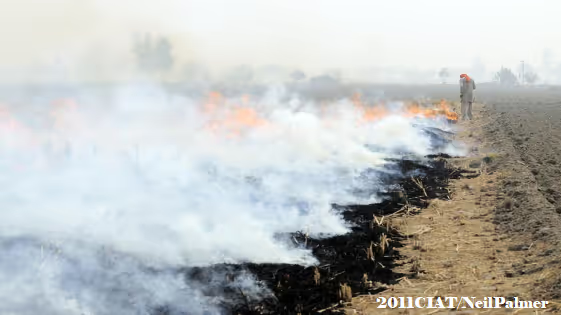
Grain procurement and seasonal air pollution
To provide farmers with stable remunerative prices for their produce, the government commits to buy all surplus grain at minimum support prices. This article demonstrates that when procurement prices are higher, farmers are encouraged to specialise and produce more rice, leading to an increase in crop-residue burning and air pollution. The mortality costs of pollution are estimated to be larger than gains to producers from higher prices

तृतीय अशोक कोतवाल स्मृति व्याख्यान- स्वैच्छिक कार्बन बाज़ार : विकासशील अर्थव्यवस्थाओं में चुनौतियाँ और अवसर
हमारे संस्थापक प्रधान संपादक अशोक कोतवाल की याद में वर्ष 2022 में ‘अशोक कोतवाल स्मृति व्याख्यान’ की शुरुआत विकास के प्रमुख मुद्दों पर एक वार्षिक व्याख्यान के रूप में की गई थी। 11 दिसंबर 2024 को संपन्न इस व्याख्यान के तीसरे संस्करण में, प्रोफेसर रोहिणी पांडे ने स्वैच्छिक कार्बन बाज़ारों और विकासशील अर्थव्यवस्थाओं में संबंधित चुनौतियों और अवसरों के बारे में बात की। इस व्याख्यान की रिकॉर्डिंग अब विडियो प्रारूप में उपलब्ध है।
Third Ashok Kotwal Memorial Lecture: Voluntary Carbon Markets: Challenges and Opportunities in Developing Economies
The Ashok Kotwal Memorial Lecture was instituted in 2022, in memory of our founding Editor-in-Chief, as an annual lecture on key issues in development. For the third edition on 11 December 2024, Professor Rohini Pande spoke about voluntary carbon markets, and the associated challenges and opportunities in developing economies. A recording of the lecture is now available to view.

Construction sector and air pollution: Evidence from India
The construction sector has emerged as a significant yet often overlooked contributor to worsening air quality in India. Exploring the link between construction activities and air pollution, this article shows that heavy-duty diesel equipment used on construction sites lead to NO₂ emissions. This highlights the need to incorporate NO₂ reduction targets into national policies, which currently mainly focus on particulate matterThe construction sector has emerged as a significant yet often overlooked contributor to worsening air quality in India. Exploring the link between construction activities and air pollution, this article shows that heavy-duty diesel equipment used on construction sites lead to NO₂ emissions. This highlights the need to incorporate NO₂ reduction targets into national policies, which currently mainly focus on particulate matter.
Does industrial water pollution harm agricultural production?
While toxic foam regularly appears on lakes and rivers in major Indian cities, water pollution has not received as much attention as air pollution. Examining the impact of industrial water pollution on agriculture, this article demonstrates that there is a large, sudden rise in pollutant concentrations in nearby rivers downstream of industrial sites. Despite this, there is no significant impact on crop yields.
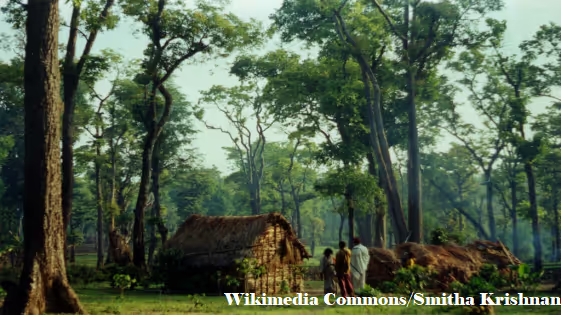
Female legislators and forest conservation
While women are known to be more concerned about the environment than men, do these preferences translate into action when women hold political power? This article shows that in constituencies reserved for historically marginalised communities, when female politicians win close races against male candidates, there is an immediate positive effect on forest conservation efforts. In other constituencies, the benefits accumulate over time.

Financing the climate transition of India’s power sector
A cornerstone of India’s climate transition plan is to shift towards a high-efficiency, low-emission power sector. In this post, Vardhan and Tilotia outline the investment and financing challenges associated with such a shift, by consolidating existing projections under various scenarios for the power sector, and assessing these against available financial resources. Further, they examine policy options that could enhance the flow of capital into such investments.
Can education propel climate action?
While youth in the developing world are anxious about climate change and ready for action, they are constrained by a lack of information and knowledge. In this post, Masood and Sabarwal discuss insights from a new World Bank Report outlining how education can address this disconnect to drive climate action. They also highlight the need to safeguard educational systems from the threats posed by climate change.
बदलती जलवायु के साथ अनुकूलन के लिए स्वैच्छिक गतिशीलता- सतत विकास लक्ष्यों को प्राप्त करने की राह
हालांकि जलवायु परिवर्तन के प्रभाव दुनिया की पूरी आबादी को प्रभावित करते हैं, कुछ लोग अपनी भौगोलिक और सामाजिक-आर्थिक स्थिति के कारण, अन्य लोगों की तुलना में अधिक जोखिम में हैं। अन्य देशों के जलवायु परिवर्तन-प्रेरित गतिशीलता के उदाहरणों का हवाला देते हुए, सम्पूर्णा सरकार यह चर्चा करती हैं कि राष्ट्र जोखिम में रहने वाली आबादी की सुरक्षा व कल्याण कैसे सुनिश्चित कर सकते हैं। वह भारतीय सरकार के समक्ष आगे के रास्ते का सुझाव रखती हैं ताकि स्थिर, अस्थाई रूप से गतिशील और विस्थापित आबादियों को स्वैच्छिक गतिशीलता में सक्षम बनाया जा सके। साथ ही, उनके मूल निवास का पारिस्थितिक पुनरुद्धार भी किया जा सके।
Voluntary mobility to adapt to changing climate: A pathway to achieving SDGs
While the impacts of climate change affect all populations across the world, some are more at risk than others based on their geographical and socioeconomic positioning. Drawing on examples of climate change-led mobility from other countries, Sampurna Sarkar discusses how States can ensure the safety and well-being of at-risk populations. She recommends a way forward for the Indian government to enable immobile, temporarily mobile, and displaced populations to transition to a state of voluntary mobility, while also conducting eco-restoration of origin locations.
सुंदरबन में मानव-वन्यजीव संघर्ष का प्रबंधन
बाघों के लिए विशिष्ट रूप से अनुकूलित घर होने के साथ-साथ, सुंदरबन इस क्षेत्र में मानव आबादी के लिए आजीविका का एक स्रोत भी है। डांडा और मुखोपाध्याय इस लेख में मानव-वन्यजीव संघर्ष के स्वरूप और जलवायु परिवर्तन के बढ़ते प्रभाव के बारे में चर्चा करते हैं। वे चुनौतियों से निपटने के लिए किए गए उपायों का विवरण देते हुए इन्हें सुंदरबन में बाघों के संरक्षण के व्यापक प्रयास के के दायरे में रखते हैं।
बदलती जलवायु में बाघों का संरक्षण
बाघ वन साम्राज्य के सबसे राजसी जीवों में से एक हैं। सफ़ेद बाघ और रॉयल बंगाल टाइगर से लेकर साइबेरियन बाघ तक, इन की कई प्रजातियाँ हैं और इनमें से प्रत्येक अपने निवास स्थान पर गर्व से राज करती है। जलवायु परिवर्तन, अवैध वन्यजीव व्यापार और पर्यावास को हानि के कारण बाघों की आबादी तेज़ी से घट रही है। बाघ, घास के मैदानों, उष्णकटिबंधीय वर्षावनों, बर्फीले जंगलों और यहाँ तक कि मैंग्रोव दलदलों सहित विभिन्न प्राकृतिक आवासों में जीवित रह सकते हैं। उनकी इस अनुकूलन क्षमता के बावजूद, 20वीं सदी की शुरुआत से इन शानदार जीवों की संख्या में 95% से अधिक की गिरावट आई है। इस लुप्तप्राय प्रजाति के संरक्षण के बारे में जागरूकता बढ़ाने के लिए प्रति वर्ष 29 जुलाई को अंतर्राष्ट्रीय बाघ दिवस के रूप में मनाया जाता है। अंतर्राष्ट्रीय बाघ दिवस का उद्देश्य बाघों को बचाने के लिए व्यक्तियों, समूहों, समुदायों और सरकारों को एक साथ लाना है। इसी उपलक्ष्य में प्रस्तुत है यह लेख। भारत और बांग्लादेश का सुन्दरबन क्षेत्र एकमात्र मैंग्रोव बाघ निवास स्थान है जो वैश्विकस्तर पर बाघों के संरक्षण के सर्वोच्च प्राथमिकता वाले स्थान हैं। इ
Advancing evidence-based tiger conservation
In the world’s most populated nation, natural landscapes are dramatically and rapidly being altered by human enterprise. In this context, Pranav Chanchani advocates for data-driven policymaking to sustain tigers in India – encompassing appropriate linkages to information on social and ecological drivers of tiger population. He emphasises developing a nuanced understanding of where and how tigers can be conserved beyond Protected Areas, reconsidering entrenched assumptions about what works for conservation, redefining criteria and milestones for success, and interdisciplinary scientific inquiry. This post is the second in a three-part series on tiger conservation in India
Managing human-wildlife conflict in the Sundarbans
Besides being home to uniquely adapted tigers, the Sundarbans are a source of livelihood for the human population in the region. In this post, Danda and Mukhopadhyay discuss the nature of human-wildlife conflict that arises, and the exacerbating impact of climate change. They detail the measures undertaken to address the challenges, situating these within the wider effort towards tiger conservation in the Sundarbans. This post is the second in a three-part series on tiger conservation in India.
Tiger conservation in a changing climate
The Sundarbans of India and Bangladesh – the only mangrove tiger habitat – is a top priority for global tiger conservation. Discussing the extreme climate vulnerability of the region, Anamitra Anurag Danda argues that efforts need to go beyond what has been envisaged under the ‘Global Tiger Recovery Program 2.0’ for 2023-2034 – failing which the species may become early victims of climate change-induced habitat loss. This post is the first in a three-part series on tiger conservation in India.
Introduction to e-Symposium: Tiger conservation in India
Despite a recent upward trend in tiger populations in India, the tiger remains on the endangered species list. Saving the tiger, therefore, is not a fait accompli but a continuous struggle that must be informed by scientific monitoring and analysis. Following Global Tiger Day on 29 July, Ideas for India will host a three-part series, anchored by Parikshit Ghosh, bringing together experts to discuss the challenges of tiger conservation, from human-animal conflict, to the unique ecosystem of various habits and climate-induced threats.
Eco-budget in Karnataka: Opportunities and challenges
In its 2022-23 budget, the government of Karnataka announced an allocation of Rs. 100 crore to compensate for the negative impact of natural events and human activities on forests. In this post, M Balasubramanian contends that while this is a welcome step, the financial allocation – based on an evaluation of the economic loss of forest ecosystem services – is insufficient. He highlights the need to improve data and methods used for estimating losses.

Panel discussion: Creating a sustainable growth strategy for India
The previous I4I post presented videos from the first session of the India Sustainable Growth Conference hosted at LSE in May, wherein researchers, policymakers and other stakeholders deliberated on how India can balance its climate and growth objectives. This post features videos from the second session – a panel discussion on ‘Creating a sustainable growth strategy for India’.
लाल में रहते हुए हरित होने के प्रयास
स्वीडन के स्टॉकहोम में 5 से 16 जून, 1972 को आयोजित पहली पर्यावरण संगोष्ठी के परिणामस्वरूप 1973 की 5 जून को 'मात्र एक पृथ्वी' के थीम से मनाए जाने वाले विश्व पर्यावरण दिवस ने एक लम्बी अवधि का सफर तय कर लिया है। परन्तु क्या पृथ्वी के समस्त देशों और भारत ने भी पर्यावरण को मानव कल्याण योग्य बनाए रखने की दिशा में उतना ही लम्बा सफर तय किया है? इस महत्वपूर्ण अवसर पर I4I के प्रधान संपादक परीक्षित घोष भारत की पर्यावरण नीति, सामाजिक सुरक्षा जाल और व्यापक आर्थिक प्रबंधन में सामंजस्य स्थापित करने वाले एक समग्र दृष्टिकोण की चर्चा करते हैं। जलवायु सम्बन्धी ज़रूरतें कब और कहाँ से उत्पन्न होंगी, इसके पूर्वानुमान में आ रही कठिनाई को देखते हुए, वे देश के लिए एक समेकित हरित निधि का विचार प्रस्तुत करते हैं।
India Sustainable Growth Conference: A recap
India is at the forefront of the global challenge of sustainable growth – adaptation to climate change and mitigation of its adverse effects must take place simultaneously with efforts to alleviate poverty and improve development indicators. The India Sustainable Growth Conference, hosted at LSE in May, brought together researchers, policymakers, and other stakeholders to share ideas on how to tackle the challenges confronting the India in this regard.
Financing India’s green structural transformation
While India has launched an ambitious green structural transformation programme – with some initial successes to its credit – it is still nascent and there is a need to mobilise more resources. In this post, Ejaz Ghani outlines how global risk pooling, fiscal reforms, public-private partnerships and innovative financial instruments can help finance green growth – thereby enabling India to achieve both poverty reduction and climate risk mitigation.
सतत विकास की दिशा में भारत के अवसर
गत सप्ताहांत लन्दन स्कूल ऑफ़ इकोनॉमिक्स एंड पोलिटिकल साइंस में 'भारत सतत विकास सम्मेलन' का आयोजन किया गया जिसमें नोबेल पुरस्कार से सम्मानित प्रो. एस्थर दुफ्लो समेत कई प्रतिष्ठित अर्थशास्त्रियों, विशेषज्ञों व शोधार्थियों ने भाग लिया। इंटरनेशनल ग्रोथ सेंटर (आईजीसी), एलएसई एसटीआईसीईआरडी के पर्यावरण और ऊर्जा कार्यक्रम, वारविक विश्वविद्यालय और भारतीय सांख्यिकी संस्थान द्वारा संयुक्त रूप से आयोजित इस सम्मेलन का उद्देश्य, पर्यावरण अर्थशास्त्र पर काम करने वाले दुनिया भर के शोधकर्ताओं और अग्रणी संकायों को भारत में नीति निर्माताओं के साथ लाना था। इसी सन्दर्भ में टिम डोबरमन और निकिता शर्मा अपने इस लेख के माध्यम से तर्क देते हैं कि भारत के लिए पर्यावरणीय क्षति को न्यूनतम रखते हुए जीवन-स्तर बढ़ाने को प्राथमिकता देने वाले विकास पथ को चुनना अति महत्वपूर्ण है।
Going green while being in the red
In the third post of a three-part blog series, I4I Editor-in-Chief Parikshit Ghosh advocates for a holistic approach that harmonises India’s environmental policy, social safety nets, and macroeconomic management. Given the difficulty of predicting where and when climate-related needs will arise, he puts forth the idea of a consolidated green fund for the country.
India’s opportunity for sustainable growth
In the second post of a three-part blog series, Tim Dobermann and Nikita Sharma contend that it is important for India to choose a growth trajectory that prioritises raising living standards while minimising environmental decline. They discuss how innovations in at least two areas – energy and conservation – are helping India realise this opportunity.
The why and how of environmental protection: Examining the evidence
In the first post of a three-part blog series, I4I Editorial advisor Nalini Gulati summarises a selection of studies on the adverse impact of environmental degradation on human health as well as economic outcomes, followed by ideas from research on how effective policy design and implementation can mitigate the damage and enable conservation of the environment.
क्या कोयला-आधारित बिजली संयंत्रों को बन्द करना व्यवहार्य है? वैश्विक दृष्टिकोण सर्वेक्षण से प्राप्त साक्ष्य
हर साल 22 अप्रैल को मनाया जाने वाला ‘पृथ्वी दिवस’ आधुनिक पर्यावरण जन-आन्दोलन के जन्म की सालगिरह को चिह्नित करता है और पर्यावरण के प्रति मनुष्य के दायित्व को रेखांकित करता है। इस अवसर पर प्रस्तुत शोध आलेख में कोयला-आधारित बिजली संयंत्रों पर चर्चा की गई है और उन्हें खत्म करने की इच्छाशक्ति, लाभ व लागत पर साक्ष्य दिए गए हैं। कोयले से चलने वाले बिजली संयंत्र अत्यधिक प्रदूषणकारी ऊर्जा-स्रोत हैं, लेकिन लोग इसके बारे में या तो अनजान हैं या खराब वायु गुणवत्ता के बारे में अपना असंतोष व्यक्त करने में असमर्थ हैं। इस लेख में 51 निम्न और मध्यम आय वाले देशों के सर्वेक्षण डेटा का उपयोग करते हुए, कोयला बिजली को चरणबद्ध तरीके से समाप्त करने के लिए भुगतान की नागरिकों की इच्छा की गणना की गई है। इसमें बिजली संयंत्र के समीप रहने वाले निवासियों की भलाई को मापा गया है और गणना की गई है कि उन्हें होने वाला वायु गुणवत्ता लाभ सौर और पवन ऊर्जा उत्पादन की लागत से अधिक होगा।
Safeguarding agricultural households against climate shocks
Extreme climate events are taking place more often and for longer, jeopardising the economic stability of agricultural households. This article shows that coping strategies adopted by households in response to climate shocks – such as occupational diversification and sale of livestock – yield lower returns relative to normal circumstances. A larger proportion of the educated agricultural workforce takes up casual labour, while livestock is sold at distress prices.
India Sustainable Growth Conference, 2-4 May 2024
Hosted by the International Growth Centre, LSE STICERD’s Economics of Environment and Energy Programme, University of Warwick and Indian Statistical Institute, the India Sustainable Growth Conference will be held at the London School of Economics and Political Science during 2-4 May 2024. This conference serves as a platform for sharing ground-breaking ideas on sustainable economic growth and the environment, with a focus on the challenges and opportunities in India. It will bring together policymakers, academic leaders, and industry experts to discuss innovative research and strategies,
क्या भारत में वायु प्रदूषण का प्रभाव स्वास्थ्य के अलावा भी कहीं पड़ता है?
भारत में होने वाला वायु प्रदूषण मनुष्य के स्वास्थ्य के लिए एक महत्वपूर्ण खतरा है, इस तथ्य को अब व्यापक रूप से माना जा रहा है। लेकिन बहुत कम ऐसे साक्ष्य प्रचलित हैं, जो यह दर्शाते हैं कि वायु प्रदूषण विभिन्न प्रकार के कार्यों को करने की क्षमता में कमी और निर्णय लेने की क्षमता में कमी जैसे तरीकों के माध्यम से उन लोगों के दैनिक कामकाज को हानि पहुँचाता है, जिनको चिकित्सा या निदान योग्य कोई बीमारी नहीं है। एग्विलर-गोमेज़ एवं अन्य विभिन्न उद्योगों में प्रदूषण के 'गैर-स्वास्थ्य प्रभावों’ और परिवेशीय प्रदूषण पर लोगों की प्रतिक्रिया के तरीकों पर यह शोध प्रस्तुत करते हैं।
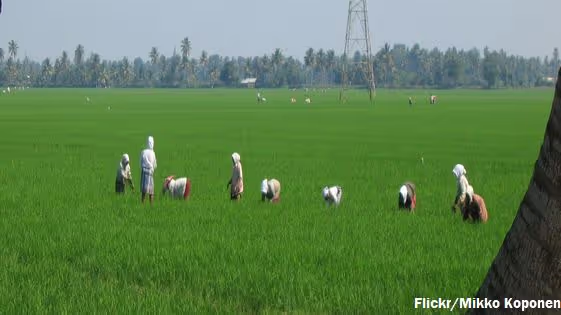
भारत की फसलों पर जलवायु परिवर्तन का प्रभाव
हर साल, 16 अक्तूबर को विश्व खाद्य दिवस के रूप में मनाया जाता है। इसी दिन वर्ष 1945 में संयुक्त राष्ट्र के खाद्य एवं कृषि संगठन की स्थापना हुई थी। इसे मनाने का उद्देश्य वैश्विक भुखमरी से निपटना और उसे पूरी दुनिया से खत्म करना है। खाद्य और इसलिए, भुखमरी का सीधा सम्बन्ध कृषि और कृषि उत्पादों से है। वर्तमान जनसंख्या वृद्धि और जलवायु परिवर्तन के परिप्रेक्ष्य में कृषि उत्पादकता पहले से कहीं अधिक महत्त्वपूर्ण हो गई है। इस लेख में, मौसम में बदलाव की अल्पकालिक घटनाओं तथा दीर्घकालिक जलवायु परिवर्तन के प्रभाव के कारण धान, मक्का और गेहूं की पैदावार में आने वाले अन्तर पर प्रकाश डाला गया है और पाया गया कि तापमान का नकारात्मक प्रभाव लम्बे समय की तुलना में अल्पावधि में अधिक होता है। इस लेख में फसल की पैदावार पर होने वाले वर्षा के प्रभाव की भी चर्चा की गई है और जलवायु परिवर्तन के अनुकूल स्वनिर्धारित कृषि प्रबंधन नीतियों की आवश्यकता पर प्रकाश डाला गया है।
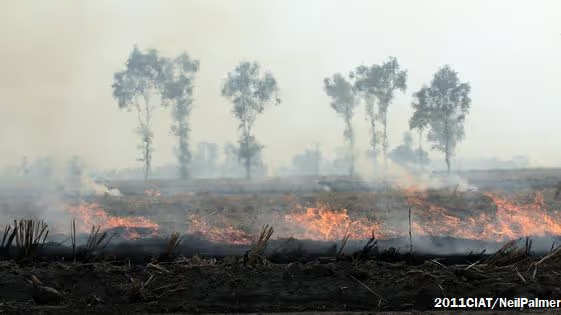
Do women leaders improve environmental outcomes? Evidence from crop fires in India
This study looks at how women leadership improves environmental outcomes. Using satellite data from India, it compares incidence of crop fires between constituencies where women narrowly won or lost elections against men and finds that female legislators decrease crop fire incidence and lower particulate emissions. A survey to understand mechanisms suggests that female leaders are more likely to consider crop fires a serious issue, weigh their impacts on child health, and implement crop residue management policies.

Does India’s air pollution impact more than just health?
Air pollution presents a significant risk to human health in India, a fact which is now widely appreciated. Less well-known is a body of evidence suggesting that air pollution harms the day-to-day functioning of those with no diagnosable health harms, through avenues such as impaired decision-making and reduced capabilities in a wide range of tasks. Aguilar-Gomez et al. outline this research on the ‘non-health’ impact of pollution in various industries, and the ways in which people respond to ambient pollution.
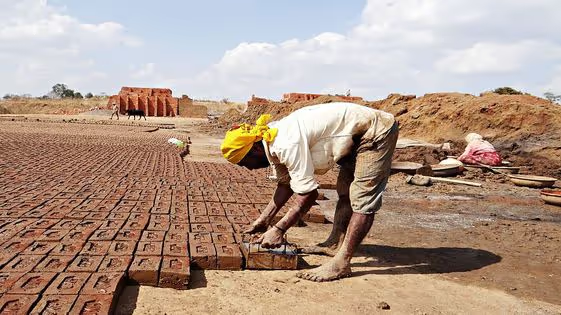
क्षेत्रीय असमानताओं पर जलवायु परिवर्तन के आघात का प्रभाव
पिछले तीन दशकों में, तापमान में वृद्धि के कारण कृषि और औद्योगिक क्षेत्र के श्रमिकों को खपत में कमी का सामना करना पड़ा है, जबकि सेवा क्षेत्र में खपत की वृद्धि दर्ज हुई है। इस लेख में विभिन्न क्षेत्रों में जलवायु परिवर्तन के प्रभावों की व्यापकता पर चर्चा की गई है और तापमान परिवर्तनशीलता में बदलाव के कारण घरेलू उपभोग की असमानता में तेज़ वृद्धि की ओर विशेष रूप से ध्यान आकर्षित किया गया है। इसमें सामाजिक सुरक्षा योजनाओं के महत्त्व और नीतियों के अनुकूलन में सहायता के लिए, जलवायु परिवर्तन के आर्थिक प्रभावों के बारे में डेटा की आवश्यकता पर भी ज़ोर दिया गया है।
How feasible is it to phase out coal-fired power plants? Evidence from a global attitudes survey
Coal-fired power plants are a highly polluting energy source but people are either unaware or unable to convey their dissatisfaction about living with poor air quality. Using survey data from 51 low- and middle-income countries, this article calculates citizens' willingness to pay to phase-out coal power. It measures the wellbeing of residents in close proximity to a power plant, and calculates that the air quality benefits accruing to them would exceed the costs of solar and wind energy generation.
Effects of climate shocks on sectoral inequality
Over the last three decades, agricultural and industrial sector workers have suffered consumption losses due to temperature rise while those in the services sector saw consumption increases. This article discusses the broad range of impacts of climate change across sectors, and highlights the stark rise in inequality of household consumption due to increased temperature variability. It emphasises the need for social protection schemes, and data on the economic impacts of climate change to aid the design of adaptation policies.

Pivoting to evidence-based tiger conservation
In light of the recently released tiger population estimates for India, Pranav Chanchani discusses what needs to be done make data-driven decisions to sustain tiger population as natural landscapes are being altered by human enterprise. He suggests that data on the social and ecological drivers of variation in the tiger population – including prey, cover and human tolerance for tigers – is essential for the species’ effective conservation. This evidence-based conservation will also provide a more nuanced understanding of where and how tigers can effectively be conserved beyond Protected Areas.
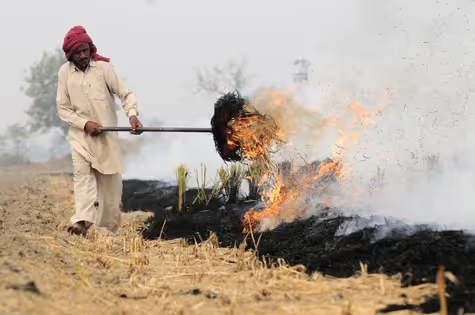
भारत में पराली जलना कम करने के लिए स्थानांतरण भुगतान डिज़ाइन करना
पराली जलाने से होने वाले वायु प्रदूषण का स्वास्थ्य पर गंभीर प्रभाव पड़ता है, ख़ासकर उत्तर भारत में। पर्यावरण के अनुकूल प्रथाओं को अपनाने के लिए सशर्त नकद हस्तांतरण कार्यक्रम की शुरुआत के बावजूद, किसानों में इस प्रक्रिया में तरलता और विश्वास की कमी है। यह लेख पंजाब में किए गए एक अध्ययन का वर्णन करता है और बताता है कि यद्यपि कार्यक्रम के अनुपालन में चुनौतियों का सामना हो सकता है, आंशिक अग्रिम भुगतान वाले अनुबन्ध पराली जलने को कम करने और पराली जैसे फसल अवशेषों के कुशल प्रबंधन में उपकरणों व तकनीक के उपयोग को बढ़ाने में मदद कर सकते हैं।
Designing transfer payments to reduce crop burning in India
Air pollution caused due to crop burning has severe health impacts, particularly in north India. Despite the introduction of a conditional cash transfer programme to adopt environmentally friendly practices, farmers lack liquidity and trust in the process. This article describes a study undertaken in Punjab, and reveals that although the programme may face challenges with compliance, contracts that include partial upfront payments can help reduce crop burning and increase the use of equipment to manage crop residue.

जलवायु परिवर्तन और नदी प्रदूषण : भारत में उच्च गुणवत्ता के पर्यावरण डेटा की आवश्यकता
भारत में जल प्रदूषण को नियंत्रित करने और जल संसाधनों की सुरक्षा के लिए गहन डेटा संग्रह और निगरानी की आवश्यकता है। पोहित और मेहता इस लेख में, एनसीएईआर और टीसीडी की एक परियोजना का वर्णन करते हैं, जिसमें उत्तर प्रदेश और पश्चिम बंगाल में गंगा नदी के प्रमुख स्थानों पर पानी की गुणवत्ता मापदंडों से संबंधित आंकड़े एकत्र करने के लिए नावों से जुड़े स्वचालित सेंसरों का उपयोग किया गया। वे इस बात पर ज़ोर देते हैं कि कैसे इन निष्कर्षों से प्रदूषण के स्रोतों को समझने में मदद मिल सकती है ताकि प्रभावी नीतिगत हस्तक्षेप और प्रदूषकों द्वारा नियामक अनुपालन सुनिश्चित किया जा सके।
Climate change and riverine pollution: The need for high-quality environment data in India
Controlling water pollution and protecting water resources in India requires comprehensive collection and monitoring of data. In this article, Pohit and Mehta describe a project undertaken by NCAER and TCD, which used automated sensors attached to boats to collect data on water quality parameters at key points along the Ganga river in Uttar Pradesh and West Bengal. They emphasise how these findings can help understand the sources of pollution to ensure effective policy interventions and regulatory compliance by polluters.
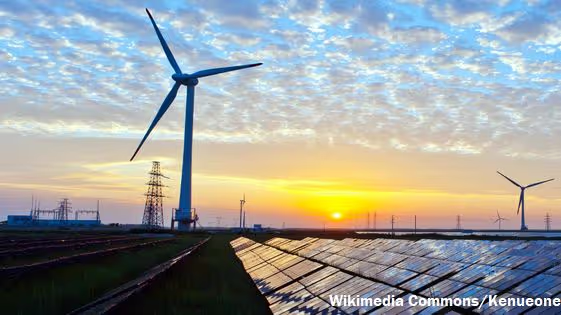
Keeping development at the forefront of India’s long-term climate strategy
India’s Long Term Low Emissions Development Strategy (LT-LEDS) sets out multiple low-carbon transitions, highlighting that climate action will be intimately tied to developmental processes. In this article, Chandra et al. identify some of the challenges and opportunities embedded within these transitions, and reflect on how these will impact developmental priorities such as employment and energy security. To operationalise the LT-LEDS effectively, they argue that India will benefit from planning now to minimise the trade-offs between low-carbon futures and development.
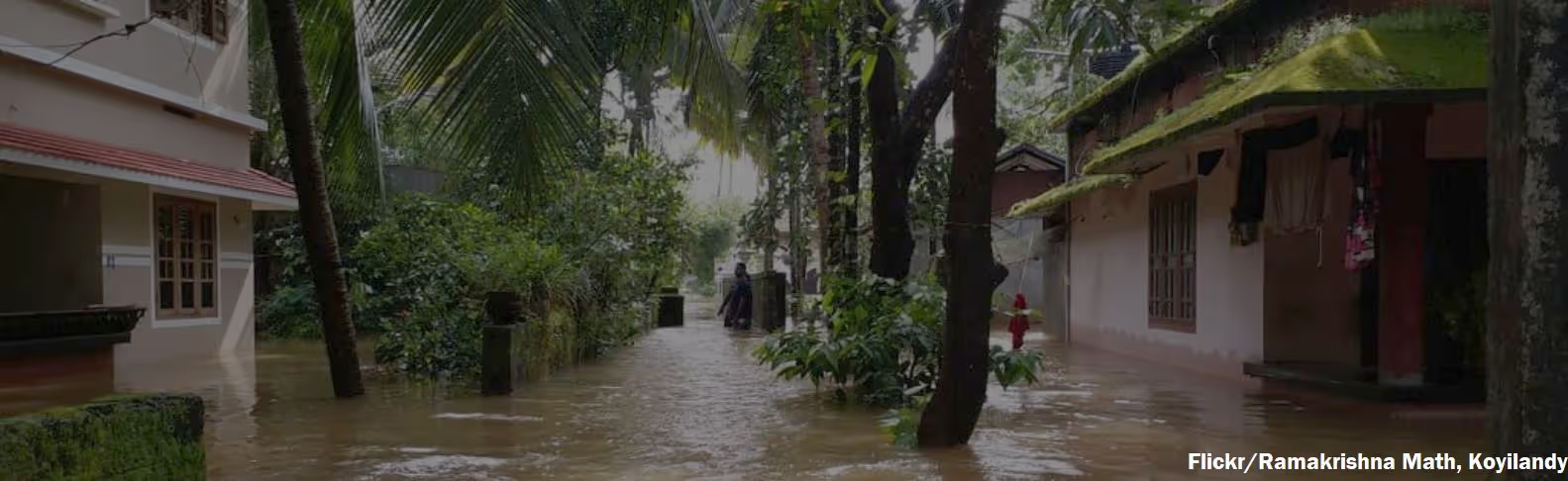
प्राकृतिक आपदाओं की आर्थिक गतिशीलता: केरल में आई बाढ़ से साक्ष्य
इस लेख में, प्राकृतिक आपदाओं के आर्थिक प्रभाव को समझने हेतु एक स्वाभाविक प्रयोग (नैचुराल एक्सपेरिमेंट) को डिजाइन करने के लिए, वर्ष 2018 में केरल में आई बाढ़ का संदर्भ लिया गया है, जब वहां पड़ोसी राज्यों कर्नाटक और तमिलनाडु की तुलना में बहुत अधिक बारिश हुई थी। पारिवारिक और जिला-स्तरीय डेटा का उपयोग करते हुए, इस अध्ययन में पाया गया है कि भले बाढ़ के कारण आई आपदा के दौरान आर्थिक गतिविधियां कम हुई हों, श्रम बाजार की स्थितियों और सरकार के पुनर्निर्माण के प्रयासों के चलते सभी पड़ोसी राज्यों की तुलना में आपदा के बाद के उछाल के दौरान ऋण की मांग, पारिवारिक आय और मजदूरी में वृद्धि हुई है।
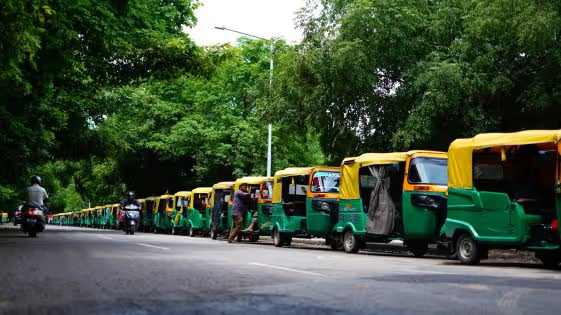
कोलकाता में ऑटो रिक्शा हेतु अवैध ईंधन के उपयोग के बारे में साक्ष्य
कलकत्ता उच्च न्यायालय ने वर्ष 2008 में वायु की गुणवत्ता में सुधार के प्रयास में आदेश दिया कि कोलकाता और ग्रेटर कोलकाता में सभी पेट्रोल ऑटो को बदल कर पेट्रोल के स्थान पर तरलीकृत पेट्रोलियम गैस (एलपीजी) ईंधन से चलाया जाए। तथापि, इस परिवर्तन की प्रभावशीलता की जांच करते हुए इस लेख में पाया गया है कि कई ऑटो ड्राइवर अधिक प्रदूषणकारी संस्करण का होने के बावजूद, खाना पकाने के एलपीजी का उपयोग करना पसंद कर रहे हैं क्योंकि यह ईंधन की लागत को कम करता है। आदेश के अनुपालन में यह कमी कमजोर कानून प्रवर्तन और फिलिंग स्टेशनों की कमी के कारण और बढ़ जाती है।

मानव और पारिस्थितिकी तंत्र स्वास्थ्य किस प्रकार से आपस में जुड़े हुए हैं: भारत में गिद्धों की संख्या में गिरावट से साक्ष्य
भारत के किसान परंपरागत रूप से अपने मृत मवेशियों के शवों के निपटान हेतु गिद्धों पर भरोसा करते आये हैं। किन्तु आकस्मिक विषाक्तता के चलते भारत में गिद्धों की संख्या कम हो जाने के कारण मृत मवेशियों के शवों की सफाई रूक-सी गई है और स्वच्छता का माहौल बिगड़ गया है। फ्रैंक और सुदर्शन इस लेख में, गिद्धों की संख्या में गिरावट के कारण सार्वजनिक स्वास्थ्य पर हो रहे नुकसान के परिणामों का अनुमान लगाते हुए दर्शाते हैं कि गिद्धों की संख्या के सबसे निचले स्तर पर आ जाने की अवधि के दौरान मनुष्य की मृत्यु-दर में वृद्धि हुई है, और वे यह भी दर्शाते हैं कि पारिस्थितिकी तंत्र में गिद्धों की भूमिका को आसानी से पुनर्स्थापित नहीं किया जा सकता है।

Economic dynamics of natural disasters: Evidence from the Kerala floods
To understand the economic impact of natural disasters, this article uses the 2018 floods in Kerala – a time when it received higher rainfall than the neighbouring states of Karnataka and Tamil Nadu ¬– to design a natural experiment. Using household and district-level data, the study finds that although flooding lowered economic activity during the disaster, the demand for credit, household income and wages all increased relative to the neighbouring states during the post-disaster boom, facilitated by labour market conditions and government’s reconstruction efforts.
How human and ecosystem health are intertwined: Evidence from vulture population collapse in India
Livestock farmers in India have historically relied on vultures to dispose of dead animals. However, the collapse of vulture populations in India due to accidental poisoning has prevented the scavenging of carcasses, worsening sanitation. In this post, Frank and Sudarshan estimate the consequences of the loss of vultures on public health and estimate that human mortality increased during the period when vultures reached their new collapsed population level, and note that vultures’ role in the ecosystem cannot be easily replicated.
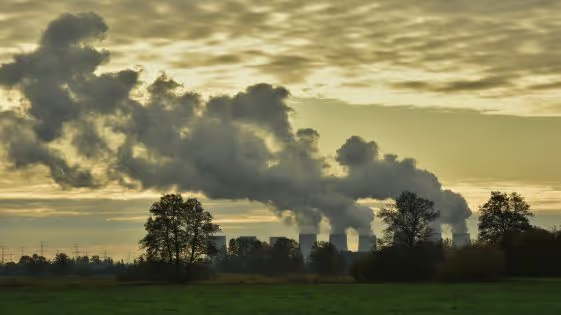
भारतीय कानून जलवायु-संबंधी नियमन किस प्रकार से कर सकता है?
बढ़ती हुई जलवायु परिवर्तन चिंता का समाधान केवल नीति के माध्यम से शायद पर्याप्त नहीं है। इस लेख में, दुबाश और श्रीधर कहते हैं कि जलवायु-संबंधित कानून से अर्थव्यवस्था के व्यापक परिणामों को सुनिश्चित किया जा सकता है, और जलवायु कानून को लागू करने की उम्मीद करने वाले देशों के समक्ष ऐसे नौ विचार प्रस्तुत करते हैं जिनको जलवायु परिवर्तन से प्रभावी ढंग से निपटने के लिए अपनाया जाना चाहिए। वे व्यापक राजनीतिक संदर्भ को ध्यान में रखते हुए, यह सुनिश्चित करते हुए कि पर्यावरण और विकास दोनों उद्देश्यों को पूरा किया जा सके; इन कानूनों को डिजाइन करने के संभावित तरीकों पर चर्चा करते हैं।
How could Indian law tackle climate governance?
As climate change becomes an increasing concern, addressing the problem only through policy may not be enough. In this piece, Dubash and Sridhar suggest that legislation around climate can ensure economy-wide outcomes, and put forth nine considerations that countries hoping to implement climate law should satisfy to effectively tackle climate change. They discuss possible approaches to design these laws – taking into account the broader political context – to make sure that both environmental and development objectives are met.
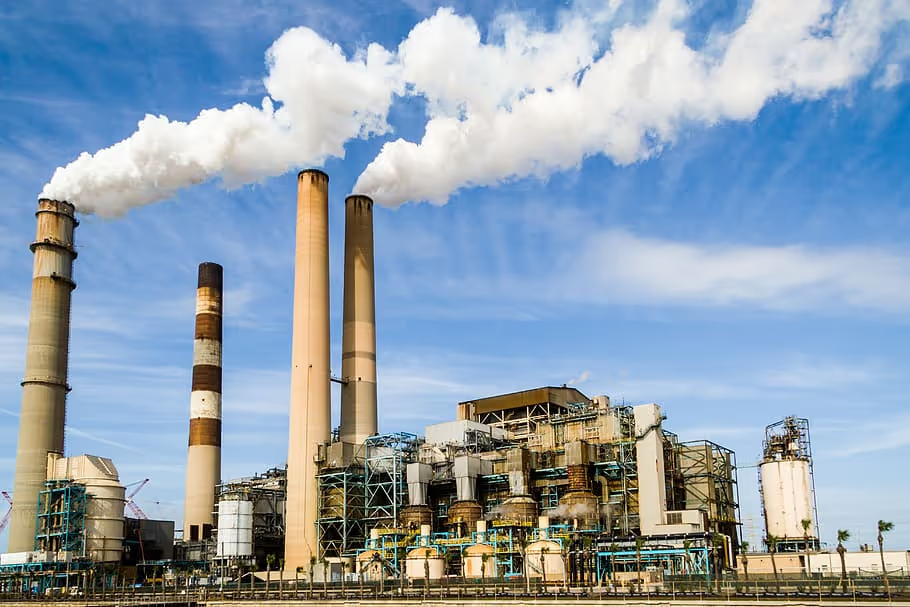
Trade-offs in carbon trading: Can a carbon market yield benefits for India?
The creation of a national carbon market in India, depending on its institutional setup, policy integration, and design could offer a mechanism for reducing emissions, or it could result in serious economic costs. Srivastava and Swain put forth seven key considerations for its design – including India's growth objectives, trade balance, fiscal revenues, and the effect on its MSMEs. To ensure its success, they highlight the need to integrate it with a comprehensive policy package to quell broader political economy challenges.

Learnings from emissions trade in India
India, and many developing nations in other parts of the world take solace in the U-shaped Kuznets curve: a belief in this inverse relationship between income and environmental quality results in not enough efforts being made to tackle pollution and environmental degradation in these countries. There is an urgent need for policy which can protect societies and people from the adverse effects of climate change. In this edition of I4I Conversations, Anant Sudarshan and Michael Greenstone discuss their work as environmental economists, and the many ways in which they have been able to use research to help guide policy. This includes their work on emissions trading in Surat, the cap-and-trade market in Gujarat, and clean cookstoves in Orissa. In that context, they list some of the difficulties with environmental regulation, such as the reluctance to install emissions monitors and falsification of the readings. They also delve into the trade-off between finding energy sources that are ...
Learnings from emissions trade in India
India, and many developing nations in other parts of the world take solace in the U-shaped Kuznets curve: a belief in this inverse relationship between income and environmental quality results in not enough efforts being made to tackle pollution and environmental degradation in these countries. There is an urgent need for policy which can protect societies and people from the adverse effects of climate change. In this edition of I4I Conversations, Anant Sudarshan and Michael Greenstone discuss their work as environmental economists, and the many ways in which they have been able to use research to help guide policy. This includes their work on emissions trading in Surat, the cap-and-trade market in Gujarat, and clean cookstoves in Orissa. In that context, they list some of the difficulties with environmental regulation, such as the reluctance to install emissions monitors and falsification of the readings. They also delve into the trade-off between finding energy sources that are ...
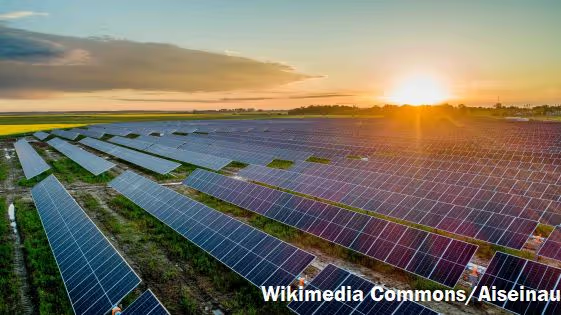
सौर ऊर्जा को अपनाने के लिए सूचना-संबंधी बाधाओं को कम करना: भारत से प्रायोगिक साक्ष्य
अभी भी बड़ी संख्या में लोगों को विश्वसनीय और उच्च गुणवत्ता वाली बिजली आपूर्ति नहीं हो रही है। इस अंतर को ऑफ-ग्रिड सौर प्रौद्योगिकियां कम कर सकती हैं,तथापि इन्हें कम अपनाया गया है। इस लेख में तीन भारतीय राज्यों में सौर गृह-प्रणालियों को अपनाये जाने संबंधी सूचना प्रावधान की भूमिका पर प्रकाश डाला गया है, और यह पाया गया कि भले ही इन प्रौद्योगिकियों में वास्तविक रूप में टेक-अप आय और क्रेडिट बाधाओं के कारण कम रहा हो, संभावित ग्राहक जिन्हें इनकी बेहतर जानकारी दी गई थी,उन्होंने सौर उत्पादों में अधिक रुचि व्यक्त की है।
Reducing information barriers to solar adoption: Experimental evidence from India
A large number of people lack access to reliable and high-quality electricity supply. Off-grid solar technologies can fill this gap, but adoption remains low. This article looks at the role of information provision on the adoption of solar home-systems in three Indian states, and finds that potential customers who were better informed expressed a greater interest in solar products, even though actual take-up remained low due to income and credit constraints.
Pledges, plans, and actions: An analysis of India’s Panchamrit pledges
In anticipation of India updating its Nationally Determined Contributions (NDCs), Aman Srivastava and Ashwini Swain evaluate the climate pledges made by Prime Minister Modi at COP26. In the context of historical trends and growth and development objectives, they discuss the feasibility and implications of reducing India’s emissions intensity and increasing the share of renewables in its energy mix. They use this analysis to suggest potential ways forward towards ensuring greater clarity and cohesion among these pledges.
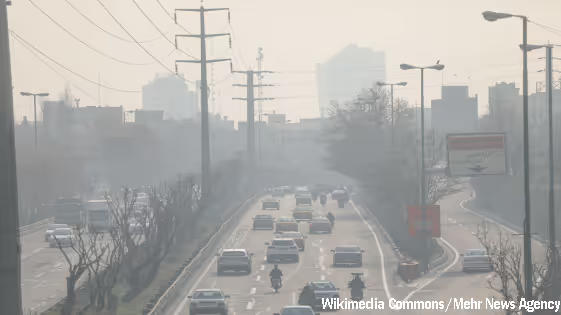
भारत में पर्यावरणीय क्षरण में सुधार लाने में नियामक नवाचार की भूमिका
येल पर्यावरण प्रदर्शन सूचकांक की 180 देशों की सूची में भारत अंतिम स्थान पर है। अनंत सुदर्शन भारत में पर्यावरणीय क्षरण के व्यापक आर्थिक और विकासात्मक प्रभावों की जांच करते हैं। इस विषय पर उपलब्ध साहित्य और अपने स्वयं के अनुभव-जन्य कार्यों के आधार पर,वे तर्क देते हैं कि नियामक गतिरोध के चलते इसका समाधान पाना कठिन हो गया है, साथ ही अपनी पर्यावरण नीति में आशाजनक नवाचारों को पर्याप्त रूप से लागू करने में भारत विफल रहा है। उनका सुझाव है कि इस बारे में अधिक अनुसंधान-नीति सहयोग और व्यापक अनुशासनात्मक विशेषज्ञता से भारत में पर्यावरण नियमन को लाभ होगा।
The role of regulatory innovation in reversing India’s environmental degradation
In the Yale Environmental Performance Index, India ranked last out of 180 countries. Anant Sudarshan examines the broader economic and developmental costs of environmental degradation. Based on the literature and his own empirical work he argues that regulatory stagnation has made it harder to find solutions, with India failing to sufficiently engage with promising innovations in environmental policy. He suggests that environmental governance in India would benefit from more research-policy collaboration and broader disciplinary expertise.

जलवायु संबंधी अपने लक्ष्यों को पूरा करने में भारत की प्रगति
जलवायु परिवर्तन पर पेरिस समझौते के तहत भारत का लक्ष्य ग्रीनहाउस गैस उत्सर्जन की तीव्रता को वर्ष 2005 के स्तर से वर्ष 2030 तक 33-35% तक कम करना है। मनीषा जैन ने ‘आइडियाज फॉर इंडिया’ में प्रकाशित अपने पिछले लेख में दर्शाया था कि लक्ष्य की ओर अनुमानित प्रगति बाहरी और देश के डेटा स्रोतों में भिन्न होती है। इस लेख में,आगे के विश्लेषण के आधार पर वे तर्क देती हैं कि भारत के जलवायु लक्ष्यों को बढ़ाने के दायरे और इसकी शमन रणनीतियों की प्रभावशीलता से संबंधित सवालों का हल विभिन्न डेटासेट में अलग-अलग मिलता है।
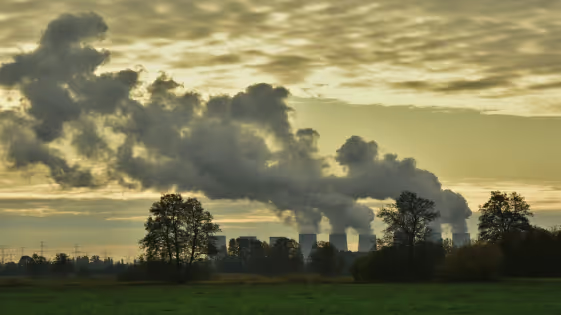
In extremity and externality: Need for policies to protect children from environmental crises
Despite the undeniable threats of climate change, little consideration has been given to creating social safety nets for the vulnerable or engendering resilience in institutions disrupted by extreme climate events. In this post, Despite the undeniable threats of climate change, little consideration has been given to creating social safety nets for the vulnerable or engendering resilience in institutions disrupted by extreme climate events. In this post, Nikita Sharma considers the impact of climate change on economies and individuals, particularly children whose health and education are impeded as a result of extremities and externalities, and the need for policy to support them alongside those to mitigate the climate crisis.
Carbon dioxide emissions from India’s industries: Data sources and discrepancies
Industries are one of the most significant contributors to energy-related carbon-dioxide (energy-CO2) emissions in India – the share of industries in the total emissions was 25%, second only to power generation. In this post, Manisha Jain examines the trends, and differences in the two data sources on manufacturing emissions in India – International Energy Agency estimates, and country-level data reported by the central government to the United Nations Framework Convention on Climate Change.
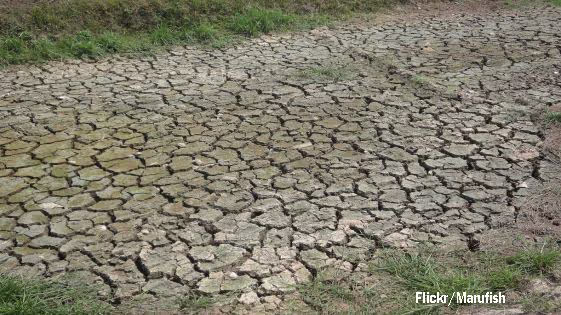
जलवायु संकट में भारत की संघीय प्रणाली की पुनर्कल्पना
सभी देशों की तरह भारत के लिए भी, जलवायु परिवर्तन एक अत्यंत तेजी से बढती समस्या बन गई है। इस लेख के जरिये पिल्लई एवं अन्य तर्क देते हैं कि इस समस्या के समाधान के लिए भारत की संघीय प्रणाली की पुनर्कल्पना करने की आवश्यकता है, क्योंकि भारत के संविधान में जलवायु संबंधी कई क्षेत्रों में राज्यों के महत्वपूर्ण कर्त्तव्य निर्धारित किये गए हैं। वे जलवायु नीति में संस्थागत सुधार हेतु एक नए दृष्टिकोण का सुझाव देते हैं, जो राष्ट्रीय लक्ष्यों के लिए अपने कार्यों का समन्वय करते हुए राज्यों को पर्याप्त लचीलापन देगा।
Reimagining Indian federalism in the climate crisis
Climate change is an increasingly urgent problem for India, as for all countries. In this post, Pillai et al. contend that addressing the issue requires reimagining Indian federalism, as the Indian Constitution gives states a crucial role in several arenas of climate action. They propose a new approach to institutional reform in climate policy, one that gives states adequate flexibility while coordinating their actions for national goals.
Economics and the environment
Published in February 2021 by the UK government, the ‘Dasgupta Review’ calls for changes in how we think, act and measure economic success to protect and enhance our prosperity and the natural world. Against the backdrop of the Review, in the fourth edition of I4I Conversations, E. Somanathan speaks with Partha Dasgupta, tracing the origins of his interest in environmental economics – a consistent theme of his academic work that spans several fields of economics – and how his thinking on the issue has evolved over the years. They foray into economic theorising of the ecology’s imprint on collective behaviours; fusing micro and macro perspectives on the embeddedness of the economy in nature; the complexities of accounting for natural wealth in economic terms and enhancing this wealth via small institutional changes; how average yields of primary producers such as algae are much higher than of virtually any other investment; how the millions of small errors we are making are adding up t
Economics and the environment
Published in February 2021 by the UK government, the ‘Dasgupta Review’ calls for changes in how we think, act and measure economic success to protect and enhance our prosperity and the natural world. Against the backdrop of the Review, in the fourth edition of I4I Conversations, E. Somanathan speaks with Partha Dasgupta, tracing the origins of his interest in environmental economics – a consistent theme of his academic work that spans several fields of economics – and how his thinking on the issue has evolved over the years. They foray into economic theorising of the ecology’s imprint on collective behaviours; fusing micro and macro perspectives on the embeddedness of the economy in nature; the complexities of accounting for natural wealth in economic terms and enhancing this wealth via small institutional changes; how average yields of primary producers such as algae are much higher than of virtually any other investment; how the millions of small errors we are making are adding up

On the economic geography of climate change
Climate change is a defining challenge of our times. In this post, Peri and Robert-Nicoud introduce a special issue of the ‘Journal of Economic Geography’ on climate change, which provides foundations for well-informed policymaking by addressing two main themes of the economic geography of climate change. First, climate change yields heterogeneous effects across space, and second, a crucial aspect of human adaptation to climate change is geographic mobility.

संपन्न शहरी परिवारों में जल संरक्षण को प्रेरित करना
पानी की मांग को कम करना - विशेष रूप से संपन्न, शहरी घरों में - सार्वभौमिक पहुंच सुनिश्चित करने और इसे एक किफायती मूल्य पर बनाए रखने के लिए बढ़ती आपूर्ति के बोझ को कम कर सकता है। बेंगलुरू में किये गए एक क्षेत्र-प्रयोग के आधार पर यह लेख दर्शाता है कि 'आदत-परिवर्तन' के हस्तक्षेप से किसी भी आर्थिक प्रोत्साहन या प्रतिबंधों के बिना घरेलू पानी की खपत में 15-25% की कमी लाई जा सकती है और ये परिणाम हमारे अध्ययन की दो साल की अवलोकन अवधि के लिए बने रहे हैं।
Balancing economic development and climate goals
Although India is on track to meet its target under the Paris Climate Agreement, the fast pace of urbanisation could worsen the problem of climate change. In this post, Ejaz Ghani outlines the policy instruments available to promote green growth in the cities and enhance energy efficiency, and contends that there can be huge payoffs from linking urbanisation with climate change
Inducing water conservation in affluent urban households
Reducing the demand for water – particularly in affluent, urban households – can lower the burden of increasing supply to ensure universal access, and sustaining it at an affordable price. Based on a field experiment in Bengaluru, this article shows that ‘habit-change’ interventions can lead to a 15-25% reduction in household water consumption without economic incentives or restrictions and these results persisted for the two-year observation period of the study.
Sustainable livelihoods and resilience through community forest management
The Scheduled Tribes and Other Traditional Forest Dwellers (Recognition of Rights) Act, 2006 adopts a rights-based approach to forest conservation and seeks to place local communities at the centre of forest governance. In this note, Santosh Gedam presents the case of the Pachgaon village in the state of Maharashtra, which – through the recognition of community forest resource rights enshrined in the Act – has made significant progress in sustainably and equitably managing common-pool resources and generating local livelihoods.

The importance of a climate stimulus in India
The Covid-19 pandemic has plunged India into recession, and substantial stimulus from the government is required to jump-start the economy. In this post, Ingmar Schumacher contends that while systemic sectors should be bailed out – even if these are polluting – it would be a mistake to not take advantage of the double dividends that come with transitioning towards a more sustainable economy.
Environmental relocation and firm outcomes
Industrial relocation policies have become increasingly popular as a policy tool to combat pollution in the developing world. Using Economic Census data from 2005 and 2013, this article examines the impact of an industrial relocation policy in Delhi, and shows that relocation caused a long-term change in the location and concentration of firms. The data also indicate distributional consequences – with firms that were relocated across larger distances being less likely to remain open in the long run

India’s progress in meeting its climate goals
India’s target under the Paris Agreement on climate change, is to reduce greenhouse gas emission intensity by 33-35% by 2030, from the 2005 level. In a previous I4I post, Manisha Jain showed that the estimated progress towards the target varies across external and country data sources. Based on further analysis, in this post, she argues that the different datasets give different answers to questions about the scope of raising India’s climate targets, and the effectiveness of its mitigation strategies.

Reducing the flow of plastic to oceans in India
Growing consumer demands are causing the generation of colossal amounts of plastic waste, and the poor state of waste management implies that large proportions of this litter is making its way into the oceans. Based on an exploratory study across India in 2019 – with focus on ‘hotspots’ in Chennai, Mangalore, and Kochi – Kumar et al. outline nine actions that can be taken to mitigate this issue.
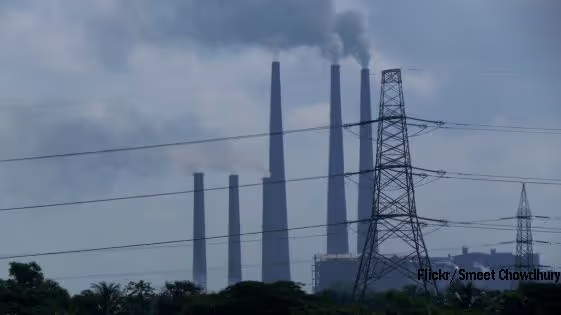
Tracking India’s greenhouse gas emission intensity target
One of the targets in India’s ‘Nationally Determined Contributions’ under the United Nations Framework Convention on Climate Change, is to reduce the greenhouse gas emission intensity of GDP by 33-35% by 2030, from 2005 level. In this post, Manisha Jain examines the differences in data on India’s emission intensity between country reports and third-party sources, and suggests ways to improve official reporting.
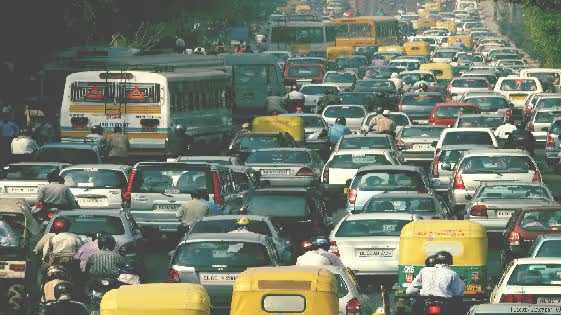
कोविड-19, जनसंख्या और प्रदूषण: भविष्य के लिए एक कार्ययोजना
वर्तमान में चल रही कोविड-19 महामारी के बहुआयामी प्रभाव दिख रहे हैं और इसने हमारे समक्ष दो दीर्घकालिक मुद्दे भी रख दिये हैं। वे हैं - जनसंख्या और प्रदूषण। इस आलेख में ऋषभ महेंद्र एवं श्वेता गुप्ता ने कोविड-19 मामलों पर जनसंख्या घनत्व के प्रभाव का आकलन किया है और यह बताया है कि वायु प्रदूषण से कोविड-19 का क्या संबंध है? साथ हीं उन्होने वर्तमान संकट के संदर्भ में और भविष्य के लिए नीतिगत सुझाव दिए हैं।
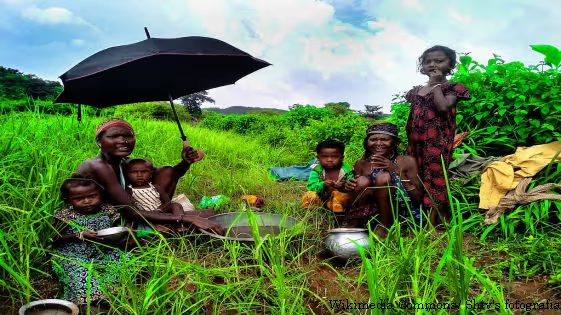
Implementing Forest Rights Act: Story of two villages in Maharashtra
The Forest Rights Act, 2006 was a landmark forest legislation in India, which recognised individual and community rights over forest resources. However, as of November 2018, only 44.83% of titles have been distributed among the total number of claims received across the country. Based on field studies in Maharashtra, Sayak Sinha describes the various issues in the implementation of the Act that make it difficult for the historically marginalised tribals and forest-dwellers to obtain rights.
Covid-19, population, and pollution: A roadmap for the future
The impact of the ongoing Covid pandemic is turning out to be multidimensional, and among the long-run considerations that it has brought to the fore are population and pollution. In the run up to World Environment Day on 5 June, Rishabh Mahendra and Shweta Gupta discuss these issues in the context of the current crisis, and draw policy lessons for the future.

Covid-19: Green stimulus to revive a comatose economy
The economic impacts of Covid-19 in India are likely to be quite steep. Singh and Mohan contend that any stimulus package to restart the economy has to be ‘green’; it must encourage an economic path that reduces the carbon intensity of the economy, instead of propping up business models that have no place in a future low-carbon world. They further discuss what steps can be taken in three key areas: electricity, transport, and the urban economy, to deliver broad-based growth and improve environmental outcomes.
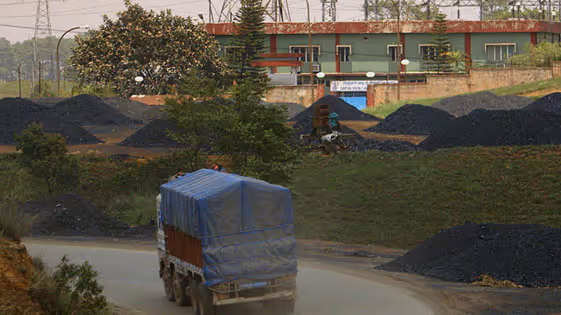
बच्चों के स्वास्थ्य पर कोयले का प्रभाव: भारत के कोयला विस्तार से साक्ष्य
हाल के वर्षों में, भारत में कोयले से हो रहे बिजली उत्पादन में बड़ी तेजी से बढ़ोतरी हुई है। यह लेख भारत में कोयले से होने वाले बिजली उत्पादन से बच्चों के स्वास्थ्य और मानव संसाधन पर पड़ने वाले प्रभावों की पड़ताल करता है। यह ज्ञात होता है कि जो बच्चे मध्यम आकार के कोयला प्लांट के संपर्क वाले क्षेत्रों में जन्म लेते हैं उनकी लंबाई ऐसे बच्चों की तुलना में कम होती है जो कोयला प्लांट से संपर्क से दूर स्थित क्षेत्रों में पैदा होते हैं। वायु प्रदूषण का प्रभाव कोयला प्लांटों के करीब रहने वाले बच्चों में अधिक होते हैं।
Impacts of water loss on low-income farmers in Karnataka
Worsening environmental conditions threaten to undermine progress in reducing rural poverty. This article studies the effects of increasing water scarcity in India. It finds that drying up of wells results in a precipitous and persistent decline in farm income and wealth, with little evidence of agricultural adaptation. However, farmers take up relatively more off-farm employment opportunities, particularly in locations with a more developed manufacturing sector.
Delhi’s air: Parikshit Ghosh speaks with Mohan P George
Edited excerpts from an in-depth interview with Dr. Mohan P George (Senior Scientist, Delhi Pollution Control Committee), conducted by Parikshit Ghosh (Member of the I4I Editorial Board; Associate Professor, Delhi School of Economics) on the crucial public policy problem of air pollution in Delhi.
The child health impacts of coal: Evidence from India’s coal expansion
In recent years, electricity generation from coal has rapidly increased in India. This article explores the consequences of India’s large and ongoing coal plant expansion on child health and human capital. It finds that children who are born exposed to a median-sized coal plant are shorter than those who are born with no coal plant exposure. Supporting air pollution as a channel, effects are larger among children living closer to coal plants.
जलवायु क्षति के लिए अनुकूलन - विकासशील देशों के लिए वरदान या अभिशाप?
जलवायु पर अलग-अलग देशों की प्रतिबद्धताओं से यह साफ है कि पूरी दुनिया ग्लोबल वार्मिंग के ऐसे स्तर का सामना करने वाली है जिसकी सीमा सहनीय जलवायु नुकसान पहुंचाने वाले स्तर से काफी ऊपर होगी। और आगे चल के इन नुकसानों की सबसे ज्यादा खामियाजा विकासशील देशों को हीं भुगतना पड़ेगा। इस पोस्ट में, इंगमार शूमाकर का तर्क है कि जलवायु को नियंत्रित करने के लिए अंतर्राष्ट्रीय सहयोग में योगदान देना विकासशील देशों के हित में हीं होगा।
IGC Panel Discussion: Pollution, climate change, and growth in India
In September 2019, the International Growth Centre (IGC) organised a panel discussion in New Delhi to bring together experts to deliberate on issues related to pollution, climate change, and growth in India. The panellists for the discussion were Michael Greenstone (Energy Policy Institute at the University of Chicago), Nicholas Stern (London School of Economics) and Ulka Kelkar (World Resources Institute). The session was chaired by Kanika Chawla (CEEW Centre for Energy Finance).

Climate migration frightens... climate poverty is frightening!
There has been much discourse on how long-term climate change will affect human mobility in the 21st century. This article estimates the long-term welfare and mobility responses to climate change. Depending on the scenario, climate change will force between 210 and 320 million people to move, mostly within their own countries. Massive international flows of climate refugees are unlikely, except under generalised and persistent conflicts. The poorest economies will be hardest hit, thus increasing global inequality and extreme poverty.
IGC Panel Discussion: Should electricity be a right?
In September 2019, the International Growth Centre (IGC) hosted a panel discussion in New Delhi to bring together experts to discuss whether a basic minimum quantity of electricity should be available to all and what action could be taken to solve the problem of restricted power supply. The panellists included Robin Burgess (IGC and London School of Economics and Political Science), Anant Sudarshan (University of Chicago), Michael Greenstone (University of Chicago), and R. Lakshmanan (Rural Electrification Corporation Ltd). The discussion was moderated by Rahul Tongia (Brookings India).
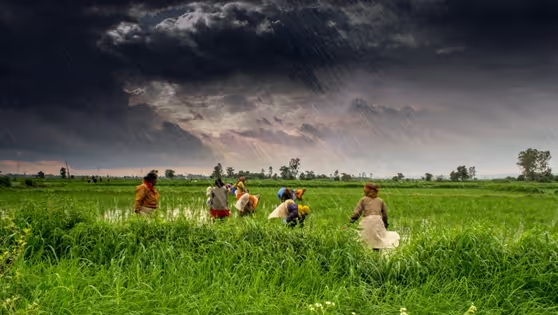
उषारमुक्ति परियोजना: नदियों को पुनर्जीवित करने के लिए संस्थानों का संगम
पश्चिम बंगाल सरकार की एक परियोजना ‘उषारमुक्ति’ को राज्य के पश्चिमी हिस्से में नागरिक समाज संगठनों के सहयोग से क्रियान्वित किया जा रहा है, ताकि मिट्टी और पानी के संरक्षण के लिए मनरेगा के तहत जल विभाजक (जलग्रहण क्षेत्र) गतिविधियां की जा सकें। इस नोट में, अश्विनी कुलकर्णी ने परियोजना क्षेत्र में किए अपने दौरे के आधार पर इसके पीछे के मुख्य विचार और अभिनव कार्य प्रणाली का वर्णन किया है।
Is adaptation to climate damages a blessing or curse for developing nations?
Pathways reflecting current climate action commitments by different nations mean a global warming level much higher than the level at which the world will be faced with manageable climate damages. Furthermore, developing countries are going to face the maximum brunt of these damages. In this post, Ingmar Schumacher argues that it is in the interests of developing countries to pursue full international cooperation on mitigation of climate change.
Usharmukti project: A confluence of institutions for rejuvenating rivers
Usharmukti, a project of the Government of West Bengal, is being carried out in collaboration with civil society organisations in the western part of the state, to carry out watershed activities under MNREGA to conserve soil and water. In this note, Ashwini Kulkarni describes the main idea behind and working of the innovative project from her visit to the project area.
प्रारंभिक जीवन और वायु प्रदूषण से संपर्क: भारत में बच्चों पर प्रभाव
भारत की आधी से ज्यादा आबादी ऐसी हवा में सांस लेती है जिसमें पीएम 2.5 की मात्रा राष्ट्रीय परिवेश वायु गुणवत्ता मानकों द्वारा तय किए गए वार्षिक सीमा से ज्यादा है। इस लेख में जियो-कोडेड जनसांख्यिकी और भारतीय स्वास्थ्य सर्वेक्षण के आंकड़ों को उपग्रह पीएम 2.5 डेटा के साथ मिलाकर बच्चों के स्वास्थ्य पर बाहरी वायु प्रदूषण के प्रभाव की जांच की गई है। हमारी जांच से पता चलता है कि जो बच्चे अपने प्रारंभिक जीवन में प्रदूषण के उच्च स्तर में सांस लेते हैं उनके बाल्यावस्था में स्वास्थ्य प्रदूषण के निम्न स्तर के संपर्क में रहने वाले बच्चों की तुलना में ज्यादा खराब होते हैं।

Early-life exposure to air pollution: Effect on child health in India
More than half of Indian population gets exposed to PM2·5 greater than the annual limit recommended by the National Ambient Air Quality Standards. This article examines the effect of outdoor air pollution on child health by combining satellite PM2.5 data with geo-coded Demographic and Health Survey of India. It finds that children exposed to high levels of pollution in their early lives have worse child health outcomes than those exposed to lower levels of pollution.
क्या कम खर्च और विकल्प देकर गोवा को प्लास्टिक-मुक्त बनाया जा सकता है
प्लास्टिक-प्रदूषण से बिगड़ते हालात को देखकर समुद्री विशेषज्ञों को आशंका है कि वर्ष 2050 तक समुद्र में मछलियों से अधिक प्लास्टिक होगा। इस फील्ड नोट में शिशिर खरे ने गोवा में हो रहे प्लास्टिक-प्रदूषण के समाधान के लिए वहाँ के एक सरकारी विद्यालय के बच्चों द्वारा अपनी शिक्षिकाओं के मार्गदर्शन में शुरू किए गए मूहीम की व्याख्या की है — जिस से वहाँ के लोग और प्रशासन इस मुद्दे को लेकर जागरूक हुए हैं।

How much do households contribute to ambient air pollution in India?
Burning solid fuels like firewood in homes for cooking, heating, and other energy services is the single largest source of air pollution exposure in India. In this post, Chowdhury, Chafe, Pillarisetti, Lelieveld, Guttikunda, and Dey compare the estimates of the percentage contribution of household fuel combustion to ambient air pollution, from seven independent studies. They argue that cleaning up household fuel use benefits those directly exposed, in addition to having broader population benefits by reducing ambient air pollution.
The ‘Right to Energy’ and carbon tax: A game changer in India
India's carbon emissions in 2014 were more than three times its level in 1990. While the emissions have increased sharply, their distribution across income groups is extremely skewed. The poor in India who contribute the least to climate change face the maximum brunt. In this post, Azad and Chakraborty discuss a proposal of taxing carbon while redistributing the revenue to the poor by giving them access to free energy up to a limit.
Compensatory afforestation funds: A means or an end?
India has one of the most ambitious targets for forest cover as part of its Nationally Determined Contributions to the Paris Agreement which will require considerable land and financial resources. In this post, Shubham Sharma argues that mere creation of a fund for compensatory afforestation, when natural forests are diverted for development might not be the best solution. Integrated solutions are required to address the causes of diversion of forest land.
Street vending: Understanding emotional markups and market interactions
Despite the ubiquity of street vending in urban landscapes and its significance as a livelihood choice among the poor, it is challenging to collect comprehensive data on vendors – especially children. Based on fieldwork in Delhi, this article analyses buyer-seller interactions and transactions, to understand behaviour on both sides of this informal market. Understanding the complexities of street vending and street-connected children can serve as a crucial input into building resilient and inclusive cities.
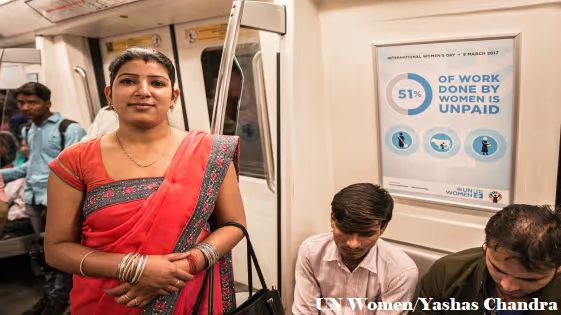
भारत के तेज़ी से बढ़ते शहरीकरण का महिलाओं के सशक्तिकरण पर क्या प्रभाव पड़ता है?
माना जाता है कि शहरी क्षेत्रों में रहने वाली महिलाओं को उनके ग्रामीण समकक्षों की तुलना में अधिक सामाजिक, आर्थिक और राजनीतिक अवसर और स्वतंत्रता प्राप्त होती है। साथ ही, शोध से यह पता चलता है कि शहरी वातावरण में महिला सशक्तिकरण में कई बाधाएँ भी हैं। इस लेख में भारत के तेज़ी से बढ़ते शहरीकरण और लैंगिक असमानता की निरंतरता को ध्यान में रखते हुए, महिलाओं के परिणामों पर शहरीकरण के प्रभाव का विश्लेषण किया गया है और उसके मिलेजुले परिणाम प्राप्त हुए हैं।

भारत में ज़मीन की महँगाई और इसके उपाय
भारत में ज़मीन की कीमत उसके मौलिक मूल्य की तुलना में अधिक है, जिसके चलते देश में आर्थिक विकास प्रभावित हो रहा है। इस लेख में, गुरबचन सिंह दो व्यापक कारकों- शहरी भारत में लाइसेंस-परमिट-कोटा राज और ग्रामीण भारत में भूमि अधिग्रहण अधिनियम 2013 के सन्दर्भ में यह स्पष्ट करते हैं कि ऐसा क्यों है। वे इस व्यवस्था को चरणबद्ध तरीके से समाप्त करने और अंततः अधिनियम के मूल्य-निर्धारण प्रावधानों को समाप्त करने की सिफारिश करते हैं।
What are the effects of India’s rapid urbanisation on women’s empowerment?
Women in urban areas, compared to their rural counterparts, are thought to enjoy greater social, economic, and political opportunities and freedoms. At the same time, research shows barriers to women’s empowerment remain widespread in urban environments. Given India’s rapid urbanisation and the persistence of gender inequality, this article analyses the effect of urbanisation on women's outcomes – and finds mixed results.
Why is land expensive in India, and what can be done about it?
The price of land in India is high relative to its fundamental value, impacting economic development in the country. In this post, Gurbachan Singh explains why this is so, in terms of two broad factors – the license-permit-quota Raj in urban India, and the Land Acquisition Act, 2013 in rural India. He recommends phasing out the Raj, and eventually abolishing the pricing provisions of the Act.
क्या भारत के शहर उसके महत्वाकांक्षी शून्य उत्सर्जन (नेट ज़ीरो) लक्ष्य तक पहुंचने में बाधा बन रहे हैं?
विश्व के शहरों में प्रति व्यक्ति उत्सर्जन राष्ट्रीय औसत से काफी कम है, जबकि दिल्ली और कोलकाता जैसे बड़े भारतीय शहरों में राष्ट्रीय औसत से दोगुना तक उत्सर्जन होता है। शाह और डाउन्स इस बात का पता लगाते हैं कि भारत में हो रहा शहरीकरण देश के राष्ट्रीय डीकार्बोनाइज़ेशन प्रयासों को कैसे नाकाम कर सकता है। वे सुझाव देते हैं कि जलवायु परिवर्तन के प्रभाव को स्थापित करने और राज्यों और राष्ट्रीय सरकारों को मिलकर काम करने के लिए विकेंद्रीकृत दृष्टिकोण अपनाना पड़ेगा।
Evidence of illegal fuel use by auto rickshaws in Kolkata
In 2008, in an attempt to improve air quality, the Calcutta High Court mandated that all petrol autos in Kolkata and Greater Kolkata be replaced by liquified petroleum gas (LPG) fuelled autos. However, while investigating the effectiveness of this transition, this article finds that many auto drivers prefer to use cooking LPG – despite it being a more polluting variant – as it reduces fuel costs. This lack of compliance is exacerbated by weak law enforcement and a shortage of refuelling stations.
अच्छी नौकरियां सुनिश्चित कराने में शहरों की भूमिका
भारत में तेजी से हो रहे शहरीकरण के मद्देनजर, राणा हसन उन विभिन्न कारकों पर प्रकाश डालते हैं जो बड़े शहरों को छोटे नगरों और ग्रामीण क्षेत्रों से अलग करते हैं: रोजगार के अधिक अवसर, अधिकतम मजदूरी, बड़े विनिर्माण और व्यावसायिक क्षेत्र, और अधिक नवाचार। हालांकि शहर श्रमिकों और फर्मों को पहले से ही आकर्षित करते आए हैं, उन्होंने इस बात की चर्चा की है कि शहरों को रोजगार सृजन के लिए और अधिक अनुकूल बनाने हेतु क्या किया जा सकता है। वे नीतिगत सुझाव देते हुए परिवहन और बुनियादी ढांचे में निवेश बढ़ाने और बेहतर समन्वित आर्थिक और शहरी नियोजन का सुझाव देते हैं।
The role of cities in ensuring good jobs
In light of India's rapid urbanisation, Rana Hasan looks at various factors which set large cities apart from smaller cities and rural areas: more job opportunities, higher wages, large manufacturing and business sectors, and greater innovation. Although cities already attract workers and firms, he discusses what can be done to make cities even more conducive to job creation. He puts forth policy suggestions and calls for increased investment in transportation and infrastructure and better coordinated economic and urban planning.
Are cities holding India back from reaching its ambitious net zero targets?
While per capita emissions in global cities are significantly lower than the national average, large Indian cities like Delhi and Kolkata emit up to double the national average. Shah and Downes look at how urbanisation in India could derail national decarbonisation efforts. They suggest a more decentralised approach, where local and national governments work together to minimise the impact of climate change.
प्रवासन-प्रेरित मांग के प्रति शहरी भारत की आवास आपूर्ति प्रतिक्रिया
क्या भारत में शहरी आवास आपूर्ति ने आवास की बढ़ती मांग के साथ तालमेल बिठाया है? यह लेख, वर्ष 2001 और 2011 के बीच के जनगणना संबंधी आंकड़ों का उपयोग करते हुए प्रवासन से प्रेरित आवास मांग की प्रतिक्रिया के रूप में आवास की बाजार आपूर्ति का अध्ययन करता है। यह दर्शाता है कि किसी राज्य में होने वाली राजमार्ग निवेश और सूखा जैसी बहिर्जात घटनाएं अंतर्राज्यीय प्रवासन में परिवर्तन के माध्यम से दूसरे राज्य में आवास की मांग को प्रभावित करती हैं। आवास आपूर्ति के बारे में इस लेख के निष्कर्ष 2000 के दशक के दौरान की भारत की शहरी सभ्यता और प्रत्याशित निर्माण के अस्तित्व के अनुरूप हैं।
Urban India's housing supply response to migration-induced demand
Has urban housing supply in India kept pace with rising demand? Using Census data between 2001 and 2011, this article studies the market supply of housing in response to migration-induced housing demand. It shows that exogenous events like highway investments and droughts in one state affect housing demand in another state through changes in inter-state migration. The article’s findings on housing supply are consistent with the existence of urban gentrification and speculative construction in India during the 2000s.
शहर-नियोजन को लोकतांत्रिक बनाना: 'मैं भी दिल्ली' अभियान से कुछ विचार
दिल्ली मास्टर प्लान 2041 के अंतर्गत नागरिकों के विचारों को शामिल करना सुनिश्चित करने हेतु वर्ष 2018 में ‘मैं भी दिल्ली’ अभियान शुरू किया गया था। इस संदर्भ में, शलाका चौहान शहर-नियोजन प्रक्रियाओं में सह-निर्माण और नागरिकों की भागीदारी की भूमिका पर चर्चा करती हैं, जिसमें यह विश्वास में निहित है कि अभिव्यक्ति हेतु पर्याप्त सहभागी साधन और उपकरण उपलब्ध कराए जाने पर हर कोई शहर-नियोजन में अपना योगदान दे सकता है।
Making city planning democratic: Reflections from ‘Main Bhi Dilli’ campaign
‘Main Bhi Dilli’ campaign was launched in 2018 to ensure inclusion of citizen voices in the Delhi Master Plan 2041. In this context, Shalaka Chauhan discusses the role of co-creation and citizen participation in city-planning processes, rooted in the belief that everybody can contribute to city planning when provided with adequate participatory means and tools to express themselves.

ठोस कचरा प्रबंधन संबंधी चुनौतियां: पटना शहर का मामला
अपर्याप्त योजना के साथ तेजी से शहरीकरण ने भारत के कई शहरों में ठोस कचरा प्रबंधन की समस्याओं को जन्म दिया है। इस नोट में, उमा शरमिष्ठा बिहार राज्य के पटना शहर में एक क्षेत्र अध्ययन से प्रारंभिक निष्कर्षों पर चर्चा करती हैं, जिसमें कचरा प्रबंधन प्रक्रियाओं की वर्तमान स्थिति के साथ-साथ इस मुद्दे पर नागरिकों और अधिकारियों के दृष्टिकोण की भी जांच की गई है।
Challenges of solid waste management: The case of Patna city
Rapid urbanisation with insufficient planning has led to problems of solid waste management in several Indian cities. In this note, Uma Sarmistha discusses preliminary findings from a field study in the city of Patna in Bihar state, which examines the present state of waste management processes, as well as the perspectives of citizens and authorities on the issue.
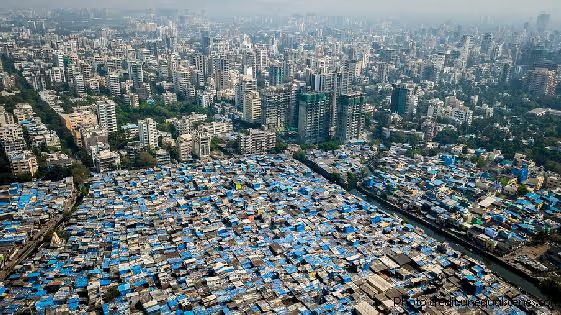
Residential segregation in urban India and persistence of caste
B.R. Ambedkar had exhorted lower-caste people to move towards cities to defy localism and benefit from the virtues of cosmopolitanism that urbanisation might provide. Using 2011 enumeration block-level Census data for five major cities in India – Bengaluru, Chennai, Delhi, Kolkata, and Mumbai – this article finds that not only are Indian cities highly segregated, but population size seems to have no association with the extent of segregation. In fact, the largest cities are some of the most segregated.
Mobility and congestion in urban India
Urban transportation in developing countries is prioritised for massive investments, yet little is known about the determinants of urban mobility in these countries. This article applies a methodology for measuring the performance of overall motor vehicle transportation in a city to the 154 largest cities in India. It finds substantial differences in mobility speeds across large Indian cities but that the variation is driven primarily by uncongested mobility, not by congestion delays.
Special purpose vehicles for smart cities: A question on governance
All 100 cities selected to become ‘smart cities’ under the Smart Cities Mission in India have Special Purpose Vehicles (SPVs) incorporated in them. In this note, Meenakshi Sinha posits that the SPV-driven mode of governance of cities is fraught with power asymmetries that are likely to bolster elite control over city’s resources and urban spaces of governance; thus, aggravating the class inequalities across cities.
भारत में मौसमी प्रवास और स्वास्थ्य: रिसर्च और प्रैक्टिस के लिए बाधाएं
भारत में मौसमी प्रवासी (सीजनल माइग्रेंट) श्रमिक ऐसे माहौल में अस्थायी अनौपचारिक काम करते हैं जिसमें मजदूरी, काम के घंटों, और जीवनदशा पर मौजूद श्रम संबंधी कानूनों की सक्रियता से उपेक्षा की जाती है। इसका सबसे महत्वपूर्ण प्रभाव श्रमिकों और उनके बच्चों के स्वास्थ्य से संबंधित परिणामों पर होता है। इस नोट में वर्मा और रविंद्रनाथ ने प्रवासियों की स्वास्थ्य संबंधी स्थितियों और इलाज संबंधी व्यवहार के बारे में गहराई से छानबीन करने और उनकी जरूरत के अनुरूप स्वास्थ्य कार्यक्रमों का निर्माण और क्रियान्वयन करने में आने वाली बाधाओं के बारे में बताया है।

Seasonal migration and health in India: Constraints for research and practice
Seasonal migrants in India engage in temporary informal work in work environments that actively flout labour laws on wages, work hours, and living conditions. The most significant impact of this is on the health outcomes of workers and their children. In this note, Varma and Ravindranath describe the roadblocks in conducting in-depth enquiries into migrants’ health status and healthcare-seeking behaviour, and designing and implementing health programmes conducive to their needs.
Rural-urban migration in Bihar
Over the last decade, Bihar has experienced rapid economic growth and increasing urbanisation. The purpose of this project was to investigate the patterns of migration in Bihar. The study found that migrants from Bihar are taking up less agricultural work than in the past and are increasingly moving to work in construction instead. The overwhelming majority of migration in Bihar is cyclical labour migration. Because the majority of migration in Bihar is cyclical, migrants are often unable to access their social entitlements when they are working away from home. This is because social entitlements are currently based on a sedentary model and can only be claimed in the jurisdiction in which an individual is registered. The government should therefore consider making social and political rights portable.
How India’s internal borders inhibit migration
Indians, particularly men seeking education and jobs, display a puzzling reluctance to cross state borders. This article explores the reasons for this migration pattern. A major culprit is India’s system of ‘fragmented entitlements’, whereby welfare benefits are administered at the state level, and state residents get preferential treatment in higher education and government employment. These administrative rules prevent more efficient allocation of labour across the country.
How Urban is India?
This project seeks to develop a dataset on the extent and location of de facto urbanisation – settlements with characteristics commonly thought of as urban – in India.
Urban Corridors: Strategies for economic and urban development
The aim of this project is to investigate the impact of India’s corridor model as a strategy for urbanisation and urban development through the lens of land and economic development. Research questions include: Is India’s corridor development policy a strategy for urbanisation (inter alia), or is urbanisation a by-product?
Constraints and prospects of Financing via Municipal Bonds in India: An analysis with case Studies
In order to meet the challenges created by growing urbanisation, municipal corporations in India need to incur huge expenditure to support urban infrastructure in the coming decades.
Rapid urbanisation, rural-to-urban migration, and rural development: Evidence from 8,000 Indian towns
Rapid urbanisation and declining rural poverty are central features of many developing countries today, but there is little research on their relationship, especially on the impacts of rapid urbanisation on peri-urban and rural areas close to cities. Rural areas are expected to benefit from urban growth, but it is unclear whether these benefits take place via labour markets, goods markets, or rural-to-urban migration. There are many channels through which cities and their hinterlands are connected, but there is little research on the impact of urban growth on the rural hinterland; most of the current research focuses on structural transformation and the effects of agricultural productivity growth on cities rather than the reverse channel.
Congestion pricing to solve traffic jams? Not so fast!
The Lieutenant Governor of Delhi recently said that the city is likely to become the first in India to have congestion charges in certain stretches. This column reports results from an experimental pilot in Bangalore that seeks to assess the effectiveness of congestion pricing as a solution to chronic traffic congestion.
Real estate cross-subsidisation for infrastructure financing: A precarious solution for urban development?
A means of urban development financing that has emerged in Indian cities is real estate cross-subsidisation, whereby land along the mass rapid transit system corridors is offered to private developers for commercial real estate projects, which can then be sold to generate revenue. Based on case studies in Karnataka and Kerala, Meenakshi Sinha provides insights into some of the governance challenges associated with such processes.
Understanding Slum Formation and Designing an Urban Housing Policy for Poor in Bihar
This project identifies the spatial pattern of the urban poor living in slums of four districts of Bihar. It also identified direct and indirect determinants of their settlement locations and understand the impact of various policies, including housing policy and market, on establishment of the informal settlement. The findings of the paper showed that people living in slums of Patna are a classic example of chronic poor.
Smart congestion pricing: Testing travel incentives to reduce congestion in Bangalore
Severe peak-time traffic congestion is endemic in large cities in developing countries, both on roads as well as in public transportation, with important negative consequences. There is a pressing need to improve understanding of how people make travel decisions, and to experiment with new technologies to realign private and social interest.
India's slum leaders - II
The second part of the two-part column on slum leaders discusses who these leaders are - their age, professions, and relationships with political parties - and how they build support within their communities.
Moving in or dropping out? India's female migrants and urban labour force integration
One important, yet understudied, constraint to female labour force participation is women’s inability to successfully migrate to where the jobs are – cities.
Does it matter how we assess living standards in slums?
According to the 2011 Census, 17.4% of all urban households in India reside in slums. Analysing data from a household survey of slums in Delhi, Kolkata, and Mumbai, this column assesses living standards of slum-dwellers in terms of monetary and non-monetary indicators. It argues that policy choice and design for improving living conditions in slums need to be adequately tempered according to the nature and veracity of deprivations.
India's slum leaders - I
India’s demographic shift to cities has been accompanied by a number of pressing governance and developmental challenges, among the most serious of which is the rampant spread of slum settlements. Within these poor urban neighbourhoods, certain residents rise to prominent positions of local authority. Based on resident and leader surveys conducted during 2015-2016 in Jaipur and Bhopal, this two-part column provides insights on these informal slum leaders.
Financing Indian cities
Indian cities are fund-starved and unprepared to handle the stresses of rapid urbanisation in the country. Urban local bodies and municipal corporations, particularly in tier-2 and tier-3 cities, do not have the necessary autonomy or capacity to raise revenue. In this article, Nandan Sharalaya discusses options available to the government for financing cities, above and beyond the traditional model of public-private partnerships.
The puzzle of Indian urbanisation
The global experience has been that as countries develop, rural-to-urban migration accelerates, and decelerates only when the urbanisation level is very high – usually well over 50%. In contrast, migration in India began decelerating when urbanisation was below 25%. In the article, Pronab Sen deconstructs this puzzle.
Household responses to information, communication of actions of community, incentives on solid waste management actions: A case study of Delhi households
Delhi generates huge amounts of municipal solid waste per day. Given rising incomes, the already burgeoning mountains of waste will only grow further.
Constructing housing for the poor without destroying their communities
The Pradhan Mantri Awas Yojana aims to achieve housing for all by 2022. However, vacancy of 23% was reported last year in urban housing built under the programme. In this article, Rohini Pande, contends that take-up can be increased if policies are designed in a way that allows the intended beneficiaries to preserve their social networks when they relocate.
The North-South urban paradox
Why is northern India experiencing faster urban growth but slower urbanisation relative to the South? This column addresses this question by highlighting the interconnection between the demographic transition and urban processes in India.
Estimating economic value to the State from land title regularisation: Evidence from India
Nearly one in every six urban Indian residents lives in a slum that is created on encroached land. More than half of this land belongs to the government which often, for a variety of political, social and legal compulsions, is able to neither retrieve the land nor formally hand it over to the slum dwellers.
Moving towards better definitions of 'urban' in India
According to the 2011 Census, 31% of the country is ‘urban’. Using definitions of urbanisation that are different from those used by the government, this column demonstrates that this figure may be an underestimate. It is important to recognise and fix the flaws in the current method of defining urban areas as it forms the basis for important policies such as eligibility for government schemes.
The missing men
Studies on skewed sex ratios in India typically focus on female deficits attributed to factors such as gender discrimination. This column finds that regions covering over 200 million people in India experience mass male out-migration with a marked impact on working-age group sex ratios. These regions are remittance economies with gendered labour markets that secure higher wages for men in the service economy but provide limited prospects for the upward mobility of women.
Driving restrictions in Delhi: Real benefits and warning signs
The driving restrictions policy that Delhi experimented with in January was implemented for a second time in April for a fortnight. This column finds that the policy lowered traffic congestion; the impact was notable in size and consistent over the two rounds. However, drivers managed to partly circumvent the policy legally, and the policy caused some disruption to economic activity.
The Growth of Cities in India, 1870-2020
The aim of this project is to understand the determinants of city growth in India in the short run and over the long period. By analysing data on cities from every decennial Census conducted in India between 1872 and 2011 and economic, demographic, social and geographic data obtained from other sources, the project seeks to address the following research questions:
Data-jam: Could data reduce road congestion in Dhaka?
While urbanisation is key to economic growth, failure to address the downsides of the process - such as congestion - may deter the ability of cities to achieve their full growth potential. This column examines the challenges of road congestion in Dhaka, and explores the potential for traffic data to uncover evidenced-based policy designs that can effectively mitigate the problem.
The Changing Face of Circular Migration in Bihar
The aim of this project is to investigate the changing patterns of circular migration from rural Bihar, the place of origin for many of India's labour/seasonal migrants. The study focuses specifically on ways to develop better support policies for internal migrants, which officials at the Urban Development Department have been discussing with the IGC.
One step forward, one step back? Ahmedabad's evolving urban policy
India’s urbanisation process has come to be characterised by haphazard growth of cities, the costs of which are borne disproportionately by the poor. This column analyses Ahmedabad’s urban policy over the past two decades and the impact on slum dwellers. While the city’s urbanisation process has traditionally been a rewarding collaboration between the local government and civil society, recent changes present a challenge to this legacy.
India on the move: The commuting worker
About 25 million workers in India commute daily for work, from rural to urban areas or vice versa, or have no fixed place of work. This column finds that rural households with at least one rural-to-urban commuting worker are better off than those with no commuting workers. It makes a case for shifting the focus of labour mobility discussions from migration to commuting.
Growing through cities in India
Do cities grow through specialisation or diversity? This column measures specialisation and diversity for the manufacturing and services sectors in India. It finds that Indian districts with a broader set of industries exhibit greater employment growth. This is particularly true for low population densities, rural areas and unorganised sector, reflecting knowledge flow and the inclusive nature of employment growth due to diversity.
A unique, informal banking system of rickshaw drivers in cities
Seasonal, rural migrants that drive rickshaws in cities have little or no access to formal financial institutions. Based on a survey of over 100 rickshaw drivers in Delhi, this article highlights a unique mechanism used by the drivers for remitting earnings to their families back in villages, obtaining short-term loans, and managing their savings.
What makes cities more competitive in India?
Policymakers in both developed and developing countries want to make cities more competitive, attract new entrepreneurs, boost economic growth, and promote job creation. This column shows that the two most consistent factors that bring entrepreneurs in manufacturing and services to a district in India are its education and quality of local physical infrastructure.
India's spatial disparities: Have big cities become too congested?
A key driver of the Indian economy is its rapidly growing service sector. This column compares the spatial growth pattern of the sector in India and other countries. It is found that while in US and Europe, the service sector is becoming increasing concentrated in medium-sized locations, high-density locations in India such as Mumbai and Chennai continue to attract more service sector jobs, causing congestion.
JNNURM and environmental sustainability
Can entrepreneurship be a vehicle for social mobility in India? This column analyses data from micro, small and medium enterprises, and finds clear and persistent caste and gender disparities in virtually all enterprise characteristics in the sector. It makes a case for concerted policy action to correct historical caste-based inequalities.
Electricity demand in urban Indian households: Influencing consumer behaviour
The huge and fast growing urban middle class of India uses a significant amount of electricity at their homes. This column argues that there is a need to focus on managing demand of electricity, and demonstrates how social norms can be used to encourage households to consume less electricity.
Is India's manufacturing sector moving out of cities?
While urbanisation is moving ahead at a rapid pace in India, industrialisation has slowed down. What explains this disconnect between urbanisation and infrastructure? This column presents results of a study that suggests that the formal manufacturing sector is moving from urban to rural locations, and the informal sector is moving from rural to urban locations.
JNNURM: An Opportunity for Environmentally Sustainable Urbanisation
This project undertakes an analysis of the sustainability of the Jawaharlal Nehru National Urban Renewal Mission (JNNURM), the largest chunk of public sector funding channeled into urban India till date.
How financial stress impacts consumer confidence
The financial turmoil of 2008 and the subsequent recession amplified the association between vulnerabilities in the financial markets and the real economy. Examining the behavioural responses of Indian households to financial stress, this article finds that rising financial stress raises household pessimism about the economy – more substantially affecting current perceptions than future outlooks. Further, the impact varies by demographic characteristics such as income and education.
Can the microcredit model be improved?
Microcredit is frequently touted as an effective policy tool to fight global poverty. However, studies suggest that the long-term impact on recipients’ lives is limited. In this post, Mushfiq Mobarak of Yale University, and Vikas Dimble of Tata Centre for Development, argue that new research reveals microcredit can help more people by modifying and extending its model.
किसान क्रेडिट कार्ड कार्यक्रम: ऋण की उपलब्ध्ता का विस्तार या ऋण का प्रसार?
किसान क्रेडिट कार्ड कार्यक्रम – भारत में कृषि उधार में एक महत्वपूर्ण सुधार – का आरम्भ हुए लगभग 20 वर्ष हो गए हैं। हालांकि, लक्षित लाभार्थियों पर इसके प्रभाव का थोड़ा अनुभवजन्य साक्ष्य है। इस लेख में पाया गया है कि इस कार्यक्रम का कृषि उत्पादन और प्रौद्योगिकी अपनाने पर महत्वपूर्ण सकारात्मक प्रभाव पड़ा है। इसका संभावित कारण यह है कि कृषि ऋण की पहुँच के विस्तार के बजाय पहले से ही कृषि ऋण तक पहुँच वालों की उधार लेने की क्षमता बढ़ गई है।

Amalgamation of public sector banks: The task ahead
The central government has proposed amalgamation of three public sector banks (PSBs), the first stage of which has been completed. This strategic move is touted to be the beginning of transformation of PSBs into smart and agile entities to compete with their private peers. In this post, K. Srinivasa Rao discusses reasons for amalgamation, strengths and challenges of the new amalgamated entity, and ingredients for success of amalgamations in the PSB space.

What ails the Indian banking sector?
Non-performing assets (NPAs) of Indian banks have risen from under 3% to over 13% in the past couple of years, making the state of the banking sector one of the biggest challenges facing the country in accelerating investments and growth. In this post, Dr Pronab Sen diagnoses the causes of the current NPA problem, and proposes solutions.
Measuring the equilibrium impacts of credit: Evidence from India’s 2010 microfinance crisis
In October 2010, the government of Andhra Pradesh issued an emergency ordinance, bringing microfinance activities in the state to a complete halt and causing a nationwide shock to the liquidity of lenders, especially those with loans in the affected state. Using this massive dislocation in the microfinance market, this article identifies the “general equilibrium” impacts of a reduction in credit supply, which encompass changes to wages, employment, and consumption in the economy.
Financial inclusion in India: Progress and prospects
Financial inclusion is globally considered as a critical indicator of development and well-being of society. In this post, Srinivasa Rao traces the financial inclusion journey in India so far, and discusses prospects for the future.
The cycle of debt among vendors in India and the Philippines
Many street vendors rely on daily or weekly loans from moneylenders to finance working capital. Given the high interest rates, why do they not use a little bit of each day’s earnings to buy working capital, thus borrowing less? To explore this question, this article discusses three experiments that were conducted in India and Philippines, which involved giving cash grants and brief financial training to indebted vendors.

Explainer: Conceptual foundations of cryptocurrencies
In recent times, cryptocurrencies have become a subject of intense deliberations among policymakers, market participants, investors, and other stakeholders. Whether cryptocurrencies will revolutionise banking and payment systems or is the euphoria surrounding cryptocurrencies like a bubble waiting to burst ̶ only time will tell. In this explainer, Pandey and Sharma attempt to decode the mechanics of cryptocurrencies and simplify the jargon used in the discussion on cryptocurrencies.

Explainer: India’s payments banks
In August 2015, the RBI issued in-principle licences to 11 entities to establish payments banks in India – a unique format of banking which has not been used anywhere else in the world. Fully based on modern technology, these banks are expected to bring the huge unbanked population of India under the formal banking system. In this explainer, Rahul Choudhury describes the evolution of payments banks, the opportunities they offer, and the challenges they face.

New resolution framework for stressed assets: Challenges and opportunities
The Insolvency and Bankruptcy Code (IBC), 2016 aims to expedite resolution of stressed assets, and provide an exit route to failed entities. A simplified, generic framework has been developed by RBI for stressed assets of Rs. 20 billion and above, effective from March 2018. In this post, Srinivasa Rao draws lessons from the ongoing resolution processes of the first lot of large delinquent corporate loan accounts for which IBC has been invoked.

Does your cultural background affect your credit profile?
In many economies – both developed and developing – economic transactions tend to cluster by ethnic or social group. Using data from a large, state-owned bank in India, this article presents evidence that social proximity between lenders and borrowers, increases access to credit and reduces default. The findings suggest that the information benefits of social proximity outweigh the effects of taste-based discrimination.
Public bank privatisation: No panacea for the ills of the banking sector
The recent Punjab National Bank fraud has rekindled the debate on bank privatisation, often considered a solution for the poor management in public sector banks. In this article, Sengupta and Roy contend that privatisation may solve other problems in the Indian economy, free up fiscal resources, and may even reduce corruption, but it is not a solution for regulatory weaknesses.
Where is the cash?
In recent weeks, reports of currency shortages have emerged from several parts of the country. In this post, Nalini Gulati contends that the cash crunch appears to be temporary and is likely to be resolved once the demand-supply mismatch is addressed. What may persist is the ‘ATM run’ and it is important to examine that issue. #CashCrunch Body: In November 2016, Prime Minister Modi announced that Rs. 500 and Rs. 1,000 notes were no longer legal tender and needed to be exchanged for new currency, thus withdrawing 86% of the cash in the economy. The cash shortage that followed had a significant adverse impact on the informal sector in particular, which predominantly uses cash for transactions and depends largely on informal cash credit. In recent weeks, reports of currency shortages have emerged from several parts of the country. The government is attributing the cash crunch to “unusual†high demand for currency, while maintaining that there is sufficient cash supply for normal transaction
Informal Insurance under Group Lending with Individual Liability
This study aims to provide empirical support to the hypothesis that informal insurance plays an important role in the context of group lending under individual liability, and to evaluate the impact of informal insurance on repayment rates.
A study on the impact of financial market reforms on investment, financing and governance structures of the publicly traded firms in India
This project empirically studies financial benefits of equity market integration at the firm level in emerging economies. It explores the unique setting of public firms cross-listing on a new domestic stock exchange, as a means to enhance their access to capital and overcome market frictions in previously fragmented equity markets.
Repayment flexibility, contract choice, and investment decisions among Indian microfinance borrowers
Borrowers’ difficulties to comply with repayment obligations, for entrepreneurial and consumption motives, have pushed several microfinance institutions to introduce some degree of flexibility during the loan cycle.
Understanding the recent ordinance amending the Insolvency and Bankruptcy Code
The Insolvency and Bankruptcy Code, 2016 (IBC) is a landmark reform for India. One year after the notification of the law, an Ordinance to amend IBC has been promulgated, which bars several categories of persons and entities from participating in the IBC processes. In this article, Sengupta and Sharma discuss how the Ordinance goes against some of the core principles of the IBC and analyse how it is likely to impact bankruptcy outcomes.
Huge bank losses, frauds, and economic risks
Banks have incurred humongous losses in India. The public authorities have taken corrective measures primarily in the form of strengthening laws, audits, and the enforcement processes. In this article, Gurbachan Singh argues that while this is indeed required, at the margin there is a much greater and urgent need to improve assessment of the economic risks in a dynamic economy.
Have policy initiatives in emerging Asian economies improved firms' access to external finance?
Since the 1997-98 Asian financial crisis, policymakers in Asia have initiated a series of reforms aimed at developing and strengthening the regional financial markets. This column provides new evidence on the response of corporate financial choices to the introduction of these policy initiatives, in terms of external finance access and investment.
Do exchange listings help ease financial constraints of SMEs?
Small and medium enterprises (SMEs) are viewed as an engine of economic growth and source of job creation. In an attempt to ease their financial constraints, India and some other countries, have experimented with enabling SMEs to access public markets by listing their shares on exchanges with less stringent criteria. This column analyses the impact of listing on the fortunes of SMEs in India.
A vision and action plan for financial sector development and reforms in India
In this article, Agarwal and Prasad present a summary of their new Brookings India report, which takes stock of financial sector development in India, identifies areas of improvement, outlines long-term objectives for financial sector development and reforms, and provides policy recommendations to achieve the long-term objectives.
Bubble in bitcoin or elsewhere?
The price of Bitcoin has skyrocketed. Gurbachan Singh contends that there may or may not be a bubble in cryptocurrencies. If there is a bubble, then the prices will fall eventually, and the story will end there. If, however, there is no bubble in cryptocurrencies, then there can be interesting implications for other important assets.
Facilitating foreign investment in rupee-denominated debt
On 22 September 2017, the RBI notified that rupee-denominated offshore bonds – popularly known as ‘masala bonds’ – will no longer form part of the limit for investment in corporate bonds by foreign portfolio investors. In this article, Radhika Pandey contends that while this is a step in the right direction, more needs to be done to complete the reform to simplify and rationalise the current regulatory framework.
What did demonetisation do to domestic agricultural markets?
When the note ban was announced a year ago, many feared that it would hit agriculture and informal sectors the hardest given the widespread use of cash for transacting in these sectors. Based on analysis of data from 2,953 mandis across India for 35 major agricultural commodities for the period 2011-2017, this column finds that there are lingering impacts of demonetisation on farmers and adverse distributional consequences overall.
Recapitalisation of public sector banks, and financial repression
Government of India recently announced its decision to infuse Rs. 2.11 trillion of fresh capital into public sector banks, financed partly through recapitalisation bonds. In this article, Dr Gurbachan Singh discusses how by opting for normal government bonds instead, issues of financial instability and financial repression could have been avoided. Government of India recently announced its decision to infuse Rs. 2.11 trillion of fresh capital into public sector banks, financed partly through recapitalisation bonds. In this article, Dr Gurbachan Singh discusses how by opting for normal government bonds instead, issues of financial instability and financial repression could have been avoided.
Should India hold US$400 billion of foreign exchange reserves?
RBI’s foreign exchange reserves have now crossed the US$400 billion mark. In this article, Dr Gurbachan Singh discusses why India’s Central Bank should not hold such large reserves.
Why are finances of Indian states deteriorating?
The combined stock of debt owed by Indian states is about 21% of GDP, and is proliferating. In this article, Ananya Kotia discusses why the stock of the states’ debt is unsustainable today despite their commendable adherence to hard limits on borrowing flows imposed by India’s fiscal rule framework.
Caste and credit: Not such a woeful tale?
Caste is an enduring predictor of economic status in India and caste-based discrimination continues to pervade several spheres of life. What about rural lending? This column suggests that most caste-wise differences in access to loans reflect differences in application rates and only a smaller part are due to discrimination: backward caste-members are a lot less likely to apply for loans than the advantaged groups.
Stock market participation in the aftermath of an accounting scandal
An emerging literature shows that exposure of fraud in the corporate sector leads to a fall in trust on part of households and decline in their stock market participation. Analysing data on daily investor account holdings from India, this column finds that contrary to international experience, an event such as the Satyam scandal did not have a big impact on investor activity.
Financial inclusion: Concepts, issues, and policies for India
The International Growth Centre recently brought out a synthesis paper (Singh 2017) that lays out the basic concepts surrounding financial inclusion, and reviews a wide range of IGC and other studies on financial inclusion. At a workshop organised by the IGC in collaboration with Ideas for India and Indian Statistical Institute, Rohini Pande (Harvard Kennedy School), S. Krishnan (State government of Tamil Nadu), Ashok Bhattacharya (Business Standard), and R Gopalan (ex-Ministry of Finance) discussed the key lessons emerging from research, implications for policy, and areas where further work is needed.
Post demonetisation: Is digital finance in India's future?
Analysing RBI data from June 2017 – six months after demonetisation was announced on 9 November 2016 – Mukherjee and Wadhwa show that reliance on cash has reverted to pre-demonetisation levels, and the sharp increases in digital transactions did not sustain. While consumers don’t seem ready to give up cash just yet, the experience proves that the digital financial ecosystem of India is in good health.
Towards financial prescription
The Securities and Exchange Board of India has proposed that the distributors of mutual funds should only be allowed to sell financial products and not act as financial advisers for customers. Drawing analogies from the regulatory frameworks for driving on public roads and practising medicine, Gurbachan Singh contends that this is a step in the right direction but much more needs to be done to regulate financial advice.
Bank financing of stressed firms
There is anecdotal evidence that banks in India have been extending credit to highly distressed firms. By delaying recognition of bad loans, banks may improve their own profitability in the short run, but in the long run, this has only exacerbated the non-performing asset crisis in the banking sector. This column provides preliminary empirical evidence that banks have indeed been throwing good money after bad.
Strategy for dealing with the banking crisis
To deal with India’s banking crisis, Prof. Ajay Shah of NIPFP recommends a two-pronged strategy – more financing for firms, and RBI reforms.
The size of personal bank credit in India
In May 2016, the Insolvency and Bankruptcy Code law was passed by Indian Parliament and received presidential assent. The law consists of provisions for both corporate and personal insolvency. However, only the corporate insolvency provisions are being implemented. In this article, Sane and Sharma focus on personal credit extended by banks with a view to informing policy actions on personal insolvency provisions of the Code.
Has regulatory intervention been effective in maintaining stability of Indian banks?
To address the challenges that Indian corporates faced in the early 2000s in meeting their debt-servicing obligations to banks/financial institutions, RBI introduced a corporate debt restructuring programme in 2002. This column finds that in the absence of a strong legal system, this out-of-court regulatory mechanism has indeed helped Indian banks remain stable, as there has been no bank failure in India unlike in other countries.
A five-minute loan to unlock micro-entrepreneurship in India
Micro-entrepreneurs are grossly underserved by traditional lenders, as they typically do not have collateral or credit histories to make them creditworthy. In this article, Pande, Memon and Goyal of Dalberg Global Development Advisors, describe how digital infrastructure created by ‘India Stack’ can help provide paperless, presence-less, and cashless credit to micro-entrepreneurs, in a way that is sustainable for lenders.
Aadhaar, demonetisation, and the poor
There is a view that an Aadhaar-centred apparatus of digital inclusion can shield the poor from the problematic effects of demonetisation. In this article, Silvia Masiero argues that constraints of technology ownership, access to informational networks, and infrastructural readiness prove the argument wrong. Other means are needed to reduce the severe humanitarian consequences of sudden cashlessness.
Assessing the impact of demonetisation through the gender lens
In this article, Mitali Nikore, Senior Consultant at PwC India, highlights how demonetisation is impacting women differentially, and offers policy suggestions on how the negative effects can be mitigated.
Demonetisation: A thunderbolt in search of a target
In this article, Ajit Karnik, Professor of Economics at Middlesex University, Dubai, examines the various rationales that have been trotted out to justify demonetisation and finds little evidence to back these up. In his view, this seems to have been done mainly because a dramatic gesture was required to keep the supporters of the current government enthused.
On demonetisation
On the evening of 8 November, the Prime Minister announced on national television that Rs. 1,000 and 500 notes are no longer legal tender, and must be exchanged at the banks for newly issued currency. This major policy intervention has sparked a country-wide debate. Will it curb black money? Is it going to nudge us towards a cashless society? How much will be the collateral damage from the liquidity shock and is it a price worth paying?
Post-demonetisation: Can the old notes return?
Banks in India are reported to have received about 87.7% of the demonetised currency notes so far. In this article, Badri Sunderarajan argues that when once all the old notes have come in, it would make sense to reintroduce them into the system as legal tender.
India’s demonetisation drive: Politics trumps economics
In this article, Siddhartha Mitra, Professor of Economics at Jadavpur University, argues that even though demonetisation fails the standard economic cost-benefit test with regard to its stated objectives, it may still make for sound political arithmetic.
Demonetisation: Some very counterintuitive effects in practice
Due to demonetisation, holders of black money lose if they cannot exchange their notes or sell these in the black market. It is widely reasoned that this implies an equal financial gain for the public authorities. In this article, Gurbachan Singh shows that this logic is flawed.
Will demonetisation lead to a protracted economic slowdown?
In this article, Pandey and Sengupta argue that the impact of the contractionary demand shock triggered by the note ban will gradually radiate from cash-intensive activities to virtually every sector of the economy.
The demonetisation boondoggle
In this article, Amartya Lahiri, Professor of Economics at the University of British Columbia, argues that all public policy must rely on a clear-headed cost-benefit analysis and the recent demonetisation move fails the test.
why demonetisation?
In this article, Sarmistha Pal, Chair in Financial Economics at the University of Surrey, examines whether the current government’s stance in tackling black money has significantly differed from its predecessor, and how far it is willing to go in this respect.
Demonetisation and agricultural markets
In this article, Aggarwal and Narayanan contend that demonetisation alone cannot turn agricultural markets cashless. Such a shift would require sustained and focussed effort to expand the reach of formal institutions, especially for credit and storage.
Consequences of the demonetisation shock
In this article, Sudipto Mundle, Emeritus Professor at NIPFP, contends that we are likely to see a significant dip in economic activity till January 2017 or even till the end of the current financial year because of the disruptive demonetisation shock.
Notes ban: Modinomics vs. Moditics
Maitreesh Ghatak, Professor of Economics at the London School of Economics, contends that while the ban on high-denomination currency notes is bad economics, it is a brilliant political move.
Demonetisation and rural cooperative banks
The RBI has barred rural cooperative banks from exchanging or accepting the denotified Rs. 1,000 and 500 notes. In this article, Ajay Vir Jakhar of Bharat Krishak Samaj - a non-partisan association of farmers - argues that if rural cooperative banks sink, so will farmers.
A monetary economics view of the demonetisation
The demonetised Rs. 1,000 and 500 notes were 86% of the total volume of cash in India. In this article, Ajay Shah, Professor at NIPFP, argues that if a significant scale of firm failure were to come about, it would convert a temporary shock into a deeper and more long-term recession.
Going cashless but thinking cash?
In this article, Bappaditya Mukhopadhyay, Professor of Economics and Finance at the Great Lakes Institute of Management, contends that switching from a predominantly cash-based to cashless economy needs a positive, exogenous shock and the recent currency ban could be the perfect opportunity for that. To give India’s cashless economy the push it needs, the government could allow mobile and other digital payment platforms to accept deposits in demonetised notes.
Picking up the pieces
In an earlier article , Pronab Sen, Country Director, IGC India Central, examined some of the economic consequences of the recent demonetisation of Rs. 1,000 and 500 notes in India, and concluded that the potential damage could be substantial, both in terms of growth and equity.
Policymaking in the ‘grey zone’
Prerna Mukharya, Founder of Outline India – a social enterprise that focuses on data collection, impact assessments and evaluation studies, predominantly working with rural populations in remote areas – discusses the impact of the currency ban on their work.
Currency shock: Does the gain justify the strain?
On the evening of 8 November, PM Modi announced that 1,000 and 500 rupee notes will cease to be legal tender post-midnight. In this article, Parikshit Ghosh, Associate Professor of Economics at the Delhi School of Economics, contends that there are bigger, juicier and relatively low-hanging fruit the government is not reaching for, in the fight against black money.
Kisan Credit Card programme: Expanded access to credit or expansion of credit?
Kisan Credit Card programme - a key reform in agricultural lending in India - has been operational for almost 20 years now. However, there is little empirical evidence of its impact on intended beneficiaries. This column finds that the programme has had significant positive impact on agricultural production and technology adoption. It is likely that the channel is enhanced borrowing ability of the already unconstrained, rather than expanded access to credit.
Assessing the impact of listing on access to finance for small and medium enterprises
Small and medium enterprises are globally viewed as an engine of economic growth. However, growth in this sector is often limited by access to external finance due, in part, to SMEs being informationally opaque.
Public sector banks: The more things change, the more they stay the same
Banks Board Bureau has been set up to help the government appoint heads of public sector banks (PSBs) and to advise on important issues in banking. In this article, Gurbachan Singh asks basic questions – what is the rationale for PSBs? Was there a rationale for the nationalisation of banks even in 1969? In his view, privatisation is needed but as a second-best solution, meaningful autonomy can be useful.
Land and financial misallocation in India
Optimising the allocation of factors of production – land, capital and labour - improves productivity. In India, where evidence suggests land is severely misallocated to inefficient manufacturing firms, access to financing is disproportionately tied to access to land. This column examines the link between the misallocation of land and access to capital through financial markets. A very strong positive correlation emerges between the two, consistent with the fact that land and buildings can provide strong collateral support for accessing finance from the credit market.
How do disclosures affect financial choices? The case of life insurance in India
Given the importance of insurance, and the regulatory push towards improved disclosures.
Are small and medium enterprises constrained by the inability to raise funds from the equity markets? Evidence from the creation of a new platform in the Bombay Stock Exchange
Small and medium enterprises employ 40% of India’s workforce, and account for 45% of the manufacturing output and 40% of the total exports of the country. However, productivity in the sector is very low and it contributes only 17% to the GDP.
Access to credit and female labour supply in India
While microfinance is believed to have the potential to increase female labour force participation, short-term experimental evaluations of microfinance have not found significant economic benefits for women.
Socially disadvantaged groups and microfinance in India
The benefits of microfinance are in the details. This column takes a look at lending by commercial banks in India to self-help groups – smaller, informal community-based groups – as a new and successful microfinance initiative. Different ways of thinking about getting credit to the poorest and most marginalised in society can work, but only if the institutions are properly geared up for their customers
The Indian banking system: A ticking time bomb
In response to RBI’s call to accelerate the recognition of stressed assets, publicly traded banks in India added nearly Rs. 1 trillion in bad loans in the quarter ending December 2015. In this article, Ashish Pandey, a finance professional, proposes a multipronged approach to addressing the Non-Performing Assets crisis in the Indian banking system.
Recapitalising public sector banks by disinvesting in RBI: Right and wrong
The Economic Survey 2015-16 put forth the argument that the Government of India could reduce its capital in the RBI from its current large level and use it to increase its capital in public sector banks, which face a capital shortage. RBI Governor Raghuram Rajan has stated that this argument is not valid. In this article, Prof. Gurbachan Singh contends that while the argument does not hold in general, it does so for all practical purposes under the present conditions.
Achieving financial inclusion: Going cashless
A World Bank survey reveals that while about half of all individuals in India had bank accounts in 2014, only 12% had made a cashless transaction in the past year. In this article, Bappaditya Mukhopadhyay, Professor of Economics and Finance at the Great Lakes Institute of Management, contends that cashless transactions can be encouraged by ensuring that payments – beyond government transfers - are made directly into the bank accounts of recipients.
How doorstep banking increased savings and income in Sri Lanka
Recent findings in development economics indicate that microloans are likely to perform best when accompanied by financial education, insurance, and savings products. This column presents evidence from an experiment in Sri Lanka, which involved offering saving accounts with door-to-door deposit collection services to otherwise unbanked rural households. It suggests that the programme incentivised participants to increase savings by increasing their income.
Increasing economic divide within backward castes
While the high level of socioeconomic inequality between the forward and backward caste groups in India is well documented, there is little research on inequalities within the backward caste groups. This column finds that economic divide within Scheduled Castes and within Scheduled Tribes has been on the rise over the past three decades.
Financial inclusion for the poor: Using RCTs for effective programme design
While the Pradhan Mantri Jan Dhan Yojana – the Indian government’s flagship financial inclusion scheme - is impressive in its mission, it does not seem to have achieved meaningful results so far. In this article, Ruchira Bhattamishra, Senior Fellow at the Centre for Development Research, Sustainability and Technical Advancement, makes a case for the use of the Randomised Controlled Trial methodology for impact evaluation to gather credible evidence on the effectiveness of pilot financial programmes/particular components of programmes, before the government invests heavily in scaling them up.

When higher volatility is good news
Conventional wisdom suggests that access to financial services such as banks and bond markets, providing savings and borrowing instruments, allows smoothing consumption over lifetime, irrespective of income fluctuations. Yet, India and other emerging economies have witnessed an increase in consumption volatility relative to income volatility after financial sector development. This column argues that large permanent income shocks in emerging economies explain this puzzle.
Cash to cashless
The RBI is in discussion with the government on ways to reduce cash usage in the economy and to promote the use of cashless instruments. This column presents results from a study that estimates the extent of cashless transactions in the economy, and analyses the enabling factors and bottlenecks.

JAM and the pursuit of nirvana
The Finance Ministry is proposing to roll all subsidies into a single, lump-sum cash transfer to households, on the back of the JAM (Jan Dhan Yojana, Aadhaar, Mobile numbers) trinity. In this article, Jean Drèze, Honorary Professor at the Delhi School of Economics, argues that a single-minded focus on high-tech cash transfers as a foundation for social policy in India is fraught with dangers.
Foreign currency borrowing by Indian firms: What do we know?
As foreign currency borrowing by Indian firms has been increasing, concerns have surfaced about rising associated risks. Hence, recent policy changes seeking to make the regulatory regime simpler and more transparent are timely. This column addresses several important questions regarding foreign currency borrowing of Indian firms, the answers to which can provide a firmer basis for ongoing policy formulation.
Are banks responsive to credit demand shocks in rural India?
The output of Kharif crops is estimated to decrease by about 2% this year due to deficient monsoon rains in some Indian states. How responsive are commercial banks to a credit demand shock in rural India? Analysing data on rainfall and agricultural credit during 1993-2010, this column finds that banks increase the supply of agricultural credit to farmers following a drought, but that the additional credit is directed towards existing customers.
Emergence of Bandhan as a bank: A new era in the Indian banking industry
At a time when the Indian banking industry is experiencing a steep rise in bad loans, Bandhan – an MFI with a near 100% loan recovery rate – has converted into a bank. Based on a survey of 112 Bandhan clients in West Bengal, this column highlights the features of Bandhan’s lending model that have enabled it to keep its bad loans at negligible levels.
Inclusive finance for inclusive growth: A gender perspective
While research has established that financial inclusion programmes lead to economic upliftment of poor families owing to the participation of women, the evidence on the impact of such programmes on women empowerment is mixed. Based on a household survey data in India, this column finds that female-headed households that participate in financial inclusion programmes gain more in terms of economic well-being, vis-à-vis male-headed households.
Foreign borrowing by Indian firms: Implications for growth and macroeconomic stability
This project analyses the pattern of external borrowing by Indian firms, an exercise that has as yet not been carried out. It identifies possible drivers of such borrowing.
Reining in gold imports
In an attempt to reduce gold imports, the Indian government has proposed three new schemes – gold monetisation, sovereign gold bonds, and domestic production of branded gold coins. In this article, Prof. Gurbachan Singh diagnoses the market failure and government failure involved in large gold imports, and provides a broad perspective on the issue. He examines the potential effectiveness of the schemes, and suggests policy alternatives.
Barriers to basic banking in India
The Indian government is promoting the Jan Dhan Yojana, Aadhaar and mobile banking – or the “JAM trinity” — as the pathway to financial inclusion. But are banks capable or even willing take on their role in this ambitious agenda? Based on a field study in Chennai, this column highlights the range of costs and constraints imposed by banks on customers attempting to enter the formal financial sector.
Impact of American FDI in India
The United States is one of India’s largest trade and investment partners. This column discusses the impact of American FDI in India in terms of direct effects such as job creation, exports and technology transfers, as well as indirect effects like spillovers from R&D and adoption of best practices. It also highlights challenges faced by American firms while investing in India.
Can bank account-based payments boost savings?
?The Finance Ministry plans to focus on mobilising savings in the next phase of PMJDY, the financial inclusion scheme. This column presents results from an experiment in Chhattisgarh, which tests whether the method of payment of wages and other transfers affects household finances. It finds that people that are paid through their bank account save more than those that are paid in cash.
The financial inclusion agenda and Aadhaar
The central government is pushing financial inclusion in a big way. In this article, MS Sriram discusses the role of identity in financial inclusion, and the importance of Aadhaar in this context. He argues that while Aadhaar has facilitated opening of bank accounts by providing a verifiable identity to the poor, it has distracted the financial inclusion agenda by claiming to be a ‘fix-all’ solution.
Foreign Fund Flows and Stock Returns: Evidence from India
This project studies the impact of foreign institutional investor (FII) flows on stock returns in India. It exploits stock-level daily trading data for FII purchases and FII sales to separate stocks into those experiencing abnormally high and low FII flow innovations.
Financing India's infrastructure growth
Interest rates in the developed economies are still at very low levels, while investors are looking for high and stable returns for their money. This article outlines an innovative proposal for financing India’s infrastructure needs via government bonds targeted at foreign investors, with returns linked to the growth rates in the country.
Challenges and priorities for financial sector reform in India
I4I Editor Nirvikar Singh (Professor, University of California, Santa Cruz) interviews K.P. Krishnan (Former Additional Secretary, Department of Economic Affairs, Ministry of Finance) on the central government’s plans and priorities for financial sector reform, and associated challenges. Dr Krishnan provides his perspective on issues including the regulatory architecture, financial inclusion initiatives, strengthening the banking system, and infrastructure financing.
Finance and growth in China and India: Have firms benefited from capital-market expansion?
Financial sectors in India and China are fast expanding. This column presents a new dataset on the capital-raising activity and performance of publicly listed firms in the two countries. It suggests that at least a part of the fast growth in India and China seems to come from firms that are able to raise funds from capital markets. However, benefits are restricted to the largest firms.
How well does DBT work on the ground?
PM Modi has emphasised fast-tracking roll-out of the Adhaar-based Direct Benefits Transfer programme. In this note, Sweta Trayambak – who has worked with the district administration of Ramgarh in Jharkhand on the roll-out of DBT - highlights the key strengths of the programme, and problems faced in implementation on the ground.
Financial inclusion of women: Myth or reality?
Research indicates that initiatives targeted at financial inclusion of women have had limited success. This column contends that limited formal ownership of material assets by women and a lack of understanding of their socio-economic and cultural constraints are key explanations. It recommends innovative measures to promote financial inclusion and entrepreneurship among women.
Corporate debt market in India: Issues and challenges
While it is true that the Indian corporate debt market has transformed itself into a much more vibrant trading field for debt instruments from the elementary market that it was about a decade ago, there is still a long way to go. This column systematically lays down the issues and challenges facing the corporate debt market in India.

Estimating losses to consumers due to mis-sold life insurance policies
Mis-selling of financial products has prompted regulators in India to work on consumer protection in financial markets. However, evidence on actual mechanisms and extent of mis-selling is lacking. This column estimates losses to consumers owing to mis-selling of Unit Linked Insurance Products in India between 2004-2005 and 2009-2010 – one of the biggest episodes of malpractice in the country’s finance sector.
Changing dynamics of the Indian gold market
The demand for gold and its import have been on the rise in India, despite rising gold prices. The RBI has responded by introducing various measures to curb the demand for gold and gold loans. This column discusses the implications of these measures, and suggests complementing such curbs with innovative financial products that can act as substitutes for gold loans.
What is mitigating a financial crisis in India?
The recent turmoil in the currency market and the general slowdown in growth in India are disturbing. However, India has by and large performed better in terms of macro-financial stability as compared to many parts of the world. This column discusses the problems confronting policymakers, and current policy responses and associated costs, and suggests alternative policies.
Foreign investors under stress: Evidence from India
Emerging market policymakers are concerned about the effects of foreign portfolio flows on financial stability. This column focuses on the behaviour of investors in extreme events, allowing for the possibility that what happens under stressed market conditions may differ from day-to-day outcomes. The findings for India suggest that while on good days, foreign investors exacerbate the boom by bringing in additional capital, no significant effects are found on very bad days in the local economy.
A right time for inflation-indexed bonds?
While the introduction of inflation-indexed bonds in India has been hailed by many as a step in the right direction, this column argues that their success will depend on how serious the government is about taming inflation. These bonds will help the government reduce its debt only if they are accompanied by anti-inflationary monetary and fiscal policies.
The market for inflation-indexed bonds
On 15 May 2013, the Reserve Bank of India announced that it would begin monthly issues of inflation-indexed bonds starting June 2013. These bonds, wherein in the principal amount adjusts according to changes in the price level, are already in use in the developed world and their introduction in India is a welcome development. However, they are likely to have different implications for India given the presence of the Statutory Liquidity Ratio regulation in the country.
The Chit fund crisis: Should not put all financial intermediaries in the same bracket
The government has announced a bailout package for the participants of unregulated saving schemes that have been put at risk by the current Chit fund crisis in West Bengal. In this article, Banerjee and Ghatak caution against putting deposit-takers and micro-lenders in the same bracket while considering stricter financial regulation to prevent recurrence of such events.
Helping the poor to save
Do poor people save? This column portrays the saving and financial behaviours and preferences of the poor. It recommends designing and marketing savings products that address the constraints they currently face.
Helping India's informal manufacturing sector to grow
India’s informal manufacturing sector is dominated by small household enterprises that keep everything within the family – but these firms are often the least productive. Why aren’t these small enterprises making the changes needed to bloom and grow? This column asks whether the problem is access to finance and what can be done about it.

I4I has a new website!
Thank you for your patience while we complete the migration of all recent content, and ensure that everything works smoothly.
Policy Roundup: 50 years post Emergency, forest rights, ethanol policy
This post presents our monthly curation of developments in the policy landscape – highlighting I4I content pertaining to coercive sterilisation of males during India’s period of Emergency; challenges in the implementation of the Forest Rights Act, 2006; and recent measures to promote ethanol production in the country.

Why statisticians matter for nation-building
In a data-driven era, the role of statisticians in shaping national development is more vital than ever. Yet, their presence in key policy domains remains limited. In this post, Pramanik and Das contend that, to change this, we must modernise academic curricula, reform professional training, and promote meaningful collaboration between statisticians, computer scientists, and development practitioners.

Policy Roundup: India-UK FTA, good monsoon, medium firms
This post presents our monthly curation of developments in the policy landscape – highlighting I4I content pertaining to the India-UK free trade agreement, predictions of an above-normal monsoon this year, and new initiatives by the government to support medium-sized enterprises.
Policy Roundup: Heat waves, smart cities, poverty debate
This post presents our monthly curation of developments in the policy landscape – highlighting I4I content pertaining to extreme heat predictions for Indian summer and the environmental impacts of coping via air conditioning, making cities climate-smart, and identifying the country’s poor
Policy Roundup: State budgets, time use survey, natural calamities
This post presents our monthly curation of developments in the policy landscape – highlighting I4I content pertaining to state budgets, gender gaps in time use, and mitigating the impact of natural calamities.
Policy Roundup: Union Budget and “Sabka Vikas”
Following the release of the Economic Survey of India and the Union Budget for 2025-26 – which reflect the official assessment of the state of the Indian economy and the government’s priorities and plans going forward – this special edition of the Policy Roundup spotlights research pertaining to selected themes under health, school education, and women’s work, which also form a part of the vision for “Viksit Bharat@2047”.
Policy Roundup: 1.5 degree breach, Trump’s America, ASER 2024
This post presents our monthly curation of developments in the policy landscape – highlighting I4I content pertaining to the widespread negative effects of climate change and what can be done to mitigate global warming; how uncertainty around immigration policies impacts job markets; improving students’ learning outcomes via evidence-based policy innovations, and closing digital gender gaps to achieve faster economic growth.

I4I's 2024 Highlights
In 2024, Ideas for India featured 196 research-based Articles, opinion-based Perspectives, and Notes From the Field, of which 57 were available in Hindi; hosted content from three conferences, and introduced two new content types. Some of the highlights are shared below.

Making sense of the 2024 Economics Nobel
The 2024 Nobel Prize in Economics has been awarded to Acemoglu, Johnson and Robinson “for studies of how institutions are formed and affect prosperity”. In this post, Pulapre Balakrishnan evaluates the econometric approach and representation of colonialism – as linked to institutions – in some of their prominent works. Balakrishnan contends that any account of economic phenomena must commence with a theoretical model including a clearly specified motive force; in his view, this is lacking in the laureates’ contribution.
Economics Nobel 2024: Igniting discussion beyond the academy
The 2024 Nobel Prize in Economics has been awarded to Acemoglu, Johnson and Robinson “for studies of how institutions are formed and affect prosperity”. In this post, Patrick Francois contend that the contribution of the laureates lies in opening up a whole new set of facts from history, to change the way we think about one of the biggest of the ‘big questions’ in economics – why are some places rich and others poor?
Policy Roundup: Delhi smog, US immigration, industrial policy
This post presents our monthly curation of developments in the Indian policy landscape – highlighting I4I (and IGC) content pertaining to Delhi’s seasonal smog problem, anti-pollution and adaptation measures, high-skilled migration from India to the US, and steps being taken by Indian states to promote industrial development.

Ashok Kotwal Memorial Lecture: Rohini Pande on 'Regulating Carbon Emissions through Nature-based Solutions'
We invite you to join us on 11 December 2024, for the third annual Ashok Kotwal Memorial Lecture. This year, the lecture will be delivered by Professor Rohini Pande, who will draw on insights gained from the design of pollution compliance markets and environmental audits in India, to discuss how they can provide guidance on how to redesign the voluntary carbon market so that lower income countries can access international climate funds through nature-based activities.

Synthetic Control Method: Opportunity for policy evaluation
Policy evaluation involves estimating the effect of an intervention, by comparing outcomes in units subjected to the intervention with otherwise similar units not subjected to intervention. However, this may be challenging if there is no appropriate comparison group. In this post, Karan Bhasin discusses how the ‘Synthetic Control Method’ can work in such cases, and its application for evaluating the impact of policies such as inflation targeting.

Policy Roundup: Fed rate cut, ageing South India, Cyclone Dana, crypto regulation
This post presents our monthly curation of developments in the Indian policy landscape – highlighting I4I content pertaining to the impact of US monetary policy announcements on emerging economies, fertility differences across Indian states, resilience and adaptation vis-à-vis climate events, and the need for a regulatory framework for cryptocurrency.

Policy Roundup: Women’s safety, social security, clean air
This post presents our monthly curation of developments in the Indian policy landscape – highlighting (recent and upcoming) I4I content pertaining to the issue of women’s safety at home, the need to prepare for ‘ageing India’, and the non-health impacts of air pollution. We take a look at state anti-rape bills, new health coverage for seniors over 70 years of age, and the Unified Pension Scheme for central government employees.
Policy Roundup: Women’s safety, sub-caste quotas, Bangladesh unrest
This Policy Roundup presents I4I content pertaining to recent developments in the Indian policy landscape – highlighting the issue of women’s safety and how it affects their work participation, and the Supreme Court judgement allowing sub-classification within Scheduled Castes and Scheduled Tribes for affirmative action policies. We also take a look at the speculation around the potential trade implications of the political unrest in Bangladesh.
Policy Roundup: Union Budget and Economic Survey
Following the release of the latest Economic Survey of India and the first Union Budget of the new government, this Policy Roundup applies a ‘jobs’ lens to these documents – presenting key takeaways and highlighting I4I content pertaining to youth employment, skilling, women’s work participation, care economy, and the MSME sector.
आईडियाज़@आईपीएफ2024 श्रृंखला : एनसीएईआर के भारत नीति मंच से शोध
नेशनल काउंसिल ऑफ एप्लाइड इकोनॉमिक रिसर्च हर साल भारत नीति मंच, इंडिया पॉलिसी फोरम (आईपीएफ) की मेज़बानी करता है। यह एक ऐसा मंच है जहाँ अर्थशास्त्री और नीति-निर्माता सार्वजनिक नीति के लिए उनकी प्रासंगिकता हेतु शोध विचारों का विश्लेषण करते हैं। दिनांक 2-3 जुलाई को आयोजित आईपीएफ के 21वें संस्करण के बाद, आइडियाज़ फॉर इंडिया (आइ4आइ) हिन्दी और अंग्रेज़ी दोनो में, आइडियाज़@आईपीएफ2024 श्रृंखला प्रस्तुत कर रहा है, जिसका परिचय एनसीएईआर के वरिष्ठ सलाहकार प्रदीप कुमार बागची द्वारा इस एंकर पोस्ट में प्रस्तुत है। दिनांक 18 जुलाई से 8 अगस्त के बीच आई4आई के हिन्दी अनुभाग में आईपीएफ में प्रस्तुत नीति-प्रासंगिक अर्थशास्त्र शोध के सारांश प्रकाशित होंगे, जिसमें कॉर्पोरेट भारत में महिला नेतृत्व, विदेशी मुद्रा भंडार रखने की लागत और लाभ से लेकर पंजाब राज्य में सामाजिक सुरक्षा जाल और आर्थिक विकास तक के विषय शामिल होंगे।
Ideas@IPF2024 series: Research from NCAER’s India Policy Forum
Every year, National Council of Applied Economic Research hosts the India Policy Forum, a platform where economists and policymakers dissect research ideas for their relevance to public policy. Following the 21st edition of IPF held on 2-3 July, Ideas for India presents the Ideas@IPF2024 series, introduced in this anchor post by NCAER Senior Advisor Pradip Kumar Bagchi. Between 10-16 July, we will host summaries of policy-relevant economics research presented at the IPF, on themes ranging from female leadership in corporate India, costs and benefits of holding foreign exchange reserves to social safety nets and economic development in the state of Punjab.
Policy Roundup: India has a new government
In the aftermath of the 2024 Lok Sabha election results, this post presents a curation of developments in the Indian policy landscape – highlighting I4I content on how coalition governments have historically brought about policy reforms, and varied evidence on the effects of a constituency having an elected representation from the ruling party. It also touches upon the representation of independent candidates, and the share of women in ministerial positions.

Policy Roundup: Voting, wealth redistribution, state of health
This post presents our monthly curation of recent developments in the Indian policy landscape – highlighting I4I content pertaining to issues ranging from electronic voting machines, vote-buying, and political dynasties, to the rise of metabolic diseases in the country. We also take a look at the discourse on wealth redistribution and inequality, and key Supreme Court rulings including on childcare leave for women, 2G spectrum allocation, and the right to be free from climate change.
Policy Roundup: Elections, black money, state of the economy
This post presents our curation of key developments in the Indian policy landscape in recent months – highlighting I4I content pertaining to the issues of synchronised elections, funding of political parties, farmers’ protests, and India’s 2016 demonetisation in the context of 'black money'. We also take a look at the latest monetary policy statement by the Reserve Bank of India, and the current discourse on the new consumption survey and the jobs situation in the country.

रॉबर्ट सोलोव और 'राष्ट्रों की संपन्नता'
अर्थशास्त्र में नोबेल पुरस्कार विजेता रॉबर्ट सोलोव की हाल ही, दिसम्बर 2023 में मृत्यु हुई। उन्हें श्रद्धांजलि अर्पित करते हुए, I4I के प्रधान सम्पादक परीक्षित घोष इस दिवंगत के कुछ योगदानों को रेखांकित करते हैं और अर्थव्यवस्था के लिए उदाहरणों व रूपकों के माध्यम से इस बात पर प्रकाश ड़ालते हैं कि किस प्रकार से सोलोव मॉडल में गणितीय ढाँचे में विकास को मद्धम करने (टेपर करने) का विचार प्रस्तुत किया गया है। इस मॉडल के सन्दर्भ में वे भारत में कैच-अप विकास की जाँच करते हैं और जन-साधारण की समृद्धि के लिए, जो कई देशों के लिए एक सपना बन के रह गया है, सामान्य समझ से परे देखने की आवश्यकता पर ज़ोर देते हैं।
Robert Solow and the ‘Wealth of Nations’
In a tribute to Robert Solow, I4I’s Editor-in-Chief Parikshit Ghosh outlines some of the late Nobel Laureate’s contributions to macroeconomics, and uses examples and metaphors for the economy to explain how the Solow model presents the idea of tapering growth in a mathematical framework. He examines catch-up growth in India in the context of this model, and highlights the need to look beyond the usual suspects to find the path to mass prosperity that remains elusive to many nations.

Claudia Goldin’s Nobel Prize winning research
On Sunday, Claudia Goldin will be awarded the Nobel Prize in Economic Sciences for her work on women’s progress in the workforce. In this piece, Farzana Afridi reflects on the significance of Goldin’s win and the contribution of her research to understanding the gender dynamics of labour markets. She also delves into the implications of this research for developing countries like India, where female labour force participation has remained low despite economic growth, and why this matters for economic growth.
Ashok Kotwal Memorial Lecture: Pranab Bardhan on 'Inequality, Labour & Social Democracy'
We invite you to join us on 30 November, 2023, for the second edition of I4I’s annual Ashok Kotwal Memorial Lecture. This year, the lecture will be delivered by Prof. Pranab K. Bardhan, who will concentrate on the rising inequality arising from declining labour shares of income. He will explore the reasons for decay of labour organisations globally and explore the reasons for this decay in terms of globalisation: the pattern of technological change, elements of labour fragmentation particularly in developing countries, and increasing corporate concentration.

Ideas@IPF2023 series: NCAER’s India Policy Forum– where research meets policy
Every year, the National Council of Applied Economic Research (NCAER) hosts the India Policy Forum (IPF), a platform where economists and policymakers dissect five research ideas for their utility to public policy. To commemorate the 20th anniversary of the conference, Ideas for India launches the Ideas@IPF2023 series, introduced in this anchor by NCAER’s Anupma Mehta. Across this week, from 10-14 July, we host the five articles summarising cutting-edge empirical work at the intersection of economics and policy.

फिल्में किस तरह से नकारात्मकता (स्टिग्मा) और पसंद को प्रभावित करती हैं- भारतीय फार्मास्युटिकल उद्योग से साक्ष्य
हाल ही में, शैक्षिक मनोरंजन सार्वजनिक स्वास्थ्य मुद्दों के समाधान के लिए एक मंच के रूप में उभरा है। इस लेख में, अग्रवाल, चक्रवर्ती और चैटर्जी जांच करते हैं कि क्या फिल्में स्वास्थ्य देखभाल के प्रति नकारात्मकता या स्टिग्मा को दूर कर सकती हैं और क्या भारतीय फार्मास्युटिकल बाज़ार में उपभोक्ता के लिए औषधियों के विकल्प और पसंद को बढ़ा सकती हैं? वे फर्म-स्तरीय बाज़ार की प्रतिक्रियाओं का विश्लेषण करके भारत में मनोविकार नाशक दवाओं के बाज़ार पर बॉलीवुड फिल्म ‘माई नेम इज़ ख़ान’ की रिलीज़ के प्रभाव का पता लगाते हैं। शोधकर्ता फिल्म के कारण पैदा हुई सकारात्मकता के कारण बाज़ार में दवाओं की किस्मों की आपूर्ति में वृद्धि पाते हैं।
How movies impact stigma and choice: Evidence from the pharmaceutical industry
Recently educational entertainment is emerging as a platform for addressing public health issues. In this article, Aggarwal, Chakrabarti, and Chatterjee investigate whether movies can destigmatise accessing healthcare and increase consumer choice in the Indian pharmaceutical market. They explore the impact of the release of the Bollywood movie ‘My Name is Khan’ on the market for antipsychotic drugs in India by analysing firm-level market responses, and find an increase in supply of drug varieties due to the destigmatisation caused by the movie.
भारत के सुरक्षित मातृत्व कार्यक्रम के अनपेक्षित सकारात्मक परिणाम
भारत के प्रमुख मातृ स्वास्थ्य हस्तक्षेप, जननी सुरक्षा योजना के माध्यम से संस्थानों में प्रसव करवाने का विकल्प चुनने वाली महिलाओं को सशर्त नकद हस्तांतरण उपलब्ध कराया गया है। इस अध्ययन में चटर्जी और पोद्दार ने बच्चों के शैक्षिक परिणामों पर इस कार्यक्रम के बड़े सकारात्मक स्पिलओवर (लाभ) को दर्शाया है। उन्होंने पाया कि ये स्पिलओवर मानव पूंजी में निवेश में वृद्धि और कार्यक्रम के महिला लाभार्थियों की प्रजनन वरीयताओं में बदलाव के माध्यम से घर में पहले से पैदा हुए बड़े बच्चों को मिलते हैं।

I4I@10: Annual lecture and panel discussion
We invite you to join us on 22 December, 2022, as we bring to you Ideas for India’s annual lecture and panel discussion to celebrate 10 years of I4I! Featuring an in-person meeting for the first time in three years, this hybrid event will feature academics, policymakers and practitioners from across the world.

Stewardship as the way forward in fighting global antimicrobial resistance
With the World Health Organization's emphasis on stewardship and working together against antimicrobial resistance (AMR), the authors consider the importance of certain agents in preventing AMR. Looking at the 2010 super bug crisis in India, they find that the withdrawal of multinational firms from the carbapenem market caused Indian firms to fill the void and physicians to switch their product preferences. They highlight the importance of scientific publications in reporting and monitoring outbreaks, and the need to incentivise antibiotic innovation.

Banks, finance and the 2022 Economics Nobel Prize
This year the Nobel Prize in Economics was awarded to Ben Bernanke, Douglas Diamond and Philip Dybvig for their work on the role of banks in the economy, particularly during financial crises. In this piece, Amartya Lahiri summarises their seminal works – Diamond and Dybvig on the essence of traditional banks, and Bernanke on the financial crisis during the Great Depression – and describes their impact on the understanding of modern-day financial crises, and the Laureates’ contribution to the field of economics.

Jacques Drèze’s intellectual journey
Eminent economist Jacques Drèze passed away on 25 September 2022 at the age of 93. Professor Drèze was known for his contributions to economic theory and public policy, from general equilibrium analysis to employment strategies in Europe. He founded the Centre for Operations Research and Econometrics (CORE), one of Europe’s leading centres for research in economics. In this piece, his son Jean Drèze remembers his father’s journey as an economist and scholar.
Potential to further strengthen the Census Act
In reference to the Census (Amendment) Rules introduced in March 2022, Garhwal and Sapre outline the scope to further strengthen the Census Act and its administration. With the introduction of self-enumeration and increased digitisation in data collection, authors make suggestions to address two issues – the delay in release of census tables and challenges that census operations may face with digital form filling.

I4I@10: A quick look at a decade in the making
On the 10th anniversary of Ideas for India (I4I), we take a look at some of our major achievements and key moments since our launch on 19 July, 2012. Spearheaded by the late Prof. Ashok Kotwal and a group of prominent economists at the International Growth Centre, I4I was intended to showcase economic and policy research which was evidence-based and accessible. In the decade that followed, I4I was able to achieve that mission by hosting over 2,000 unique ideas – from articles, to perspectives and notes from the field. Our reach has expanded beyond the website, and I4I articles have been reprinted and mentioned around 300 times in external publications and translated into 4 other languages. The success was in no small part due to the efforts of the Editorial Board – a diverse and erudite group of economists and civil society leaders, now headed by Prof. Parikshit Ghosh as Editor-in-Chief – and the authors who have worked with the I4I team to share their ideas with a wider ....

The man who loved forests
On Ideas for India’s 10th anniversary, our Editor-in-Chief Parikshit Ghosh pens a tribute honouring the late Ashok Kotwal, whose vision and values percolated our portal’s character to make it a veritable ‘forest’ of ideas; a collaborative and self-sustaining ecosystem of engaged I4I contributors and readers has been possible only by building bridges across ideological and disciplinary chasms in the decade gone by.
Introducing I4I's new Editor-in-Chief & Co-Editors
Ideas for India (I4I) is pleased to announce the appointment of Prof. Parikshit Ghosh as its new Editor-in-Chief. He succeeds I4I's founding Editor-in-Chief, the late Prof. Ashok Kotwal.
अंतर्निहित प्रयोगों में जोखिम
शोधकर्ताओं और नीति-निर्माताओं द्वारा एक टीम के रूप में किये जा रहे 'अंतर्निहित प्रयोगों' में रुचि बढ़ रही है। क्षमता के पैमाने के अलावा,इन प्रयोगों का मुख्य आकर्षण किये गए शोध को शीघ्र ही नीति में परिवर्तित करने की सुविधा वाले प्रतीत होना है। बिहार में किये गए एक केस स्टडी पर चर्चा करते हुए, जीन ड्रेज़ तर्क देते हैं कि ऐसे दृष्टिकोण से नीति और अनुसंधान दोनों बिगड़ जाने का खतरा है।

Prof. Rohini Somanathan remembers Prof. Ashok Kotwal
Prof Rohini Somanathan pens a heartfelt tribute to our founder Editor-in-Chief Ashok Kotwal.
Prof. Bharat Ramaswami remembers Prof. Ashok Kotwal
Prof Bharat Ramaswami pens a heartfelt tribute to our founder Editor-in-Chief Prof. Ashok Kotwal.
Ashwini Kulkarni remembers Prof. Ashok Kotwal
Ashwini Kulkarni pens a heartfelt tribute to our founder Editor-in-Chief Prof. Ashok Kotwal.
Prof. Anand Swamy remembers Prof. Ashok Kotwal
Prof. Anand V. Swamy writes a heartfelt account of how Prof. Ashok Kotwal came to influence him.
A tribute to Prof. Ashok Kotwal by Prof. Pranab Bardhan
Prof. Pranab Bardhan pens a heartfelt tribute to our founder Editor-in-Chief Prof. Ashok Kotwal.
Memories of Ashok Kotwal
Prof. Jean Drèze pens a heartfelt tribute to our founder Editor-in-Chief Prof. Ashok Kotwal.
A tribute to Prof. Ashok Kotwal by Prof. Ashwini Deshpande
Prof. Ashwini Deshpande pens a heartfelt tribute to our founder Editor-in-Chief Prof. Ashok Kotwal.
A tribute to Prof. Ashok Kotwal by Prof. Amartya Lahiri
Prof. Amartya Lahiri pens a heartfelt tribute to our founder Editor-in-Chief Prof. Ashok Kotwal.
The inimitable Ashok Kotwal
Prof Sanjay Subrahmanyam pens a heartfelt remembrance for our founder Editor-in-Chief Prof. Ashok Kotwal.
A tribute to Prof. Ashok Kotwal by Prof. Patrick Francois
Prof. Patrick Francois pens a heartfelt tribute to our founder Editor-in-Chief Prof. Ashok Kotwal.
A tribute to Prof. Ashok Kotwal by Prof. Madhav Badami
Prof Madhav Badami pens a heartfelt remembrance for our founder Editor-in-Chief Prof. Ashok Kotwal.

Remembering our Editor-in-Chief Prof. Ashok Kotwal
We regret to inform you that our Editor-in-Chief, Prof. Ashok Kotwal, passed away on 28 April 2022. Apart from being a founding member of Ideas for India, he was Professor Emeritus at the Department of Economics at University of British Columbia, Senior Fellow at (BREAD) Bureau for Research and Economic Analysis in Development and an Associate, (ThRed) Theoretical Research in Economic Development. It is a huge loss for his family, friends, colleagues, and all of us at Ideas for India. He was an integral part of I4I from its inception in 2012, and his vision will continue to guide us in the years to come. If you would like to share your messages of remembrance for Prof. Ashok Kotwal, please send them to managing.editor@ideasforindia.in and we will post them on this page for you.

A tribute for my mentor, Ashok
Former I4I Managing Editor Nalini Gulati pens a heartfelt tribute to our founding Editor-in-Chief Prof. Ashok Kotwal.
Farewell to Nalini!
I4I Editor-in-Chief Ashok Kotwal pens a farewell note for outgoing Managing Editor Nalini Gulati.
Improving survey quality using paradata: Lessons from the India Working Survey
To improve the credibility of survey data, several monitoring tools are used by researchers – such as ‘paradata’, which have gained prominence with the growth of computer-aided interviewing. In this post, Goel et al. discuss how paradata were used in the ‘India Working Survey’ conducted in the states of Karnataka and Rajasthan in 2020, to streamline enumerator practices and enhance data quality.
On the perils of embedded experiments
There is growing interest in ‘embedded experiments’, conducted by researchers and policymakers as a team. Aside from their potential scale, the main attraction of these experiments is that they seem to facilitate speedy translation of research into policy. Discussing a case study from Bihar, Jean Drèze argues that this approach carries a danger of distorting both policy and research.
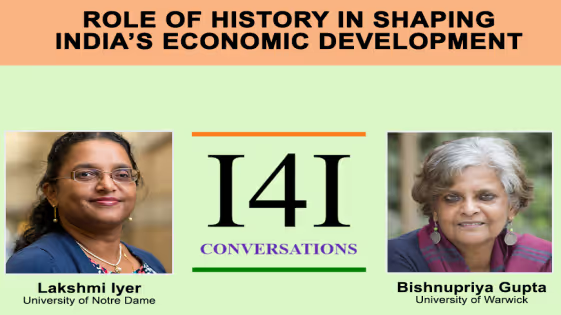
Role of history in shaping India’s economic development
As India is now completing 75 years of Independence, two big questions loom over the conversation around India’s economic development: How successful was the Indian economy before and during colonial rule, as compared to the postcolonial period? What is the role of history – historical events, actors, and institutions – in shaping India’s development trajectory? This is the focus of the sixth edition of I4I Conversations, with Bishnupriya Gupta and Lakshmi Iyer. Gupta and Iyer deliberate on how applying a historical lens may change our conclusions about India’s progress –particularlyhow demand-side estimates of GDP (gross domestic product) per capita date the beginning of India’s economic decline to a century before British colonial rule. Gupta also discusses the misperception that Indian industrialisation was stifled during colonial rule, how we should evaluate 20th century economic progress in light of the historical evidence, and the long-run effects of historical land-tenure .....
I4I is hiring!
I4I is looking to hire a Managing Editor. The I4I Managing Editor reports to the Editor-in-Chief who has the ultimate responsibility of screening content, launching new initiatives, soliciting contributions by suitable experts, etc. The Managing Editor is expected to work very closely with the Editor-in-Chief in developing and implementing the overall strategy, and take day-to-day responsibility for the smooth functioning of the portal and maintaining the high quality of I4I. The Managing Editor will edit technical content, such that it is accessible and engaging for a wide, lay audience. This job therefore requires adequate proficiency in economics and econometrics and an excellent command over the English language.
Note from the I4I Team: Happy Holidays!
We are now closed for Christmas and New Year, until Monday, 3 January 2022. We would like to thank all our readers and contributors for supporting I4I through the year, and helping us reach over one million page views in 2021! We will be back in the New Year with new articles, perspectives, notes from the field, e-symposia, events, and conversations. The I4I Team wishes all readers a Merry Christmas and Happy New Year!

Nobel Prize in Economics 2021: Clarity, transparency, and credibility in empirical research
This year’s Nobel Prize in Economics has been awarded to David Card – for his empirical contributions to labour economics – and Joshua Angrist and Guido Imbens – for their methodological contributions to the analysis of causal relationships. In this post, Thomas Lemieux discusses the contribution of the Nobel laureates in revolutionising the way empirical work is conducted in micro-oriented fields, particularly through the use of natural experiments to answer important economic questions, and new econometric tools to interpret the results.

Culture and development
How did human society evolve from being organised predominantly around large kin-based networks, to one with strong notions of individualism? To examine this question, Joseph Henrich (Harvard University) and Patrick Francois (University of British Columbia) discuss the interactions between informal norms, formal institutions, and psychology, based on examples and evidence from around the world. With the realisation in the West that kin-based societies have limited scalability, and the Church facilitating the breakdown of these units, certain psychological traits emerged and solidified – the central premise of Henrich’s book "The WEIRDest people in the world: How the West became psychologically peculiar and particularly prosperous". As these societies gained an ascendant position, the new norms and institutions proliferated and affected the rest of the world, via pathways such as Industrial Revolution and exports. Finally, they deliberate on how the possibility of substantial psychologi

Culture and development
How did human society evolve from being organised predominantly around large kin-based networks, to one with strong notions of individualism? To examine this question, Joseph Henrich (Harvard University) and Patrick Francois (University of British Columbia) discuss the interactions between informal norms, formal institutions, and psychology, based on examples and evidence from around the world. With the realisation in the West that kin-based societies have limited scalability, and the Church facilitating the breakdown of these units, certain psychological traits emerged and solidified – the central premise of Henrich’s book "The WEIRDest people in the world: How the West became psychologically peculiar and particularly prosperous". As these societies gained an ascendant position, the new norms and institutions proliferated and affected the rest of the world, via pathways such as Industrial Revolution and exports. Finally, they deliberate on how the possibility of substantial psychologi
Left and right: Examining the evolution of political ideologies
With the advent of globalisation, the struggle between the ‘left’ and ‘right’ – as defined in Marxian terms – rapidly evolved from one between economic ideologies, to cultural wars. In this context, I4I Editor-in-Chief Ashok Kotwal engages in a deep-dive with Prof. Pranab Bardhan (University of California, Berkeley) on issues ranging from growing resentment towards educated elite, shifts in the form of capital and employment patterns, role of communities, to emergence of illiberal political movements, and the different types of nationalism and populism. This is the first edition of I4I’s new feature “Conversations”, which would present in-depth discussions with experts on ‘big picture’ or futuristic topics.
Left and right: Examining the evolution of political ideologies
With the advent of globalisation, the struggle between the ‘left’ and ‘right’ – as defined in Marxian terms – rapidly evolved from one between economic ideologies, to cultural wars. In this context, I4I Editor-in-Chief Ashok Kotwal engages in a deep-dive with Prof. Pranab Bardhan (University of California, Berkeley) on issues ranging from growing resentment towards educated elite, shifts in the form of capital and employment patterns, role of communities, to emergence of illiberal political movements, and the different types of nationalism and populism. This is the first edition of I4I’s new feature “Conversations”, which would present in-depth discussions with experts on ‘big picture’ or futuristic topics.
Under the thumb of history?
In June 2021, Nobel Laureate Abhijit Banerjee (Ford Foundation International Professor of Economics, MIT) delivered the inaugural Shaibal Gupta Memorial Lecture organised by Asian Development Research Institute, broadly discussing the role of history in development economics. An important body of recent work emphasises the idea of the ‘long arm of history’, that is, history cannot be escaped totally and has durable effects. For example, countries that were British colonies several years ago, continue to have British-style legal systems. However, Prof. Banerjee contends that there is no logical reason why persistence has to mean determinism – it could just be that things are slow to change due to inertia or coordination failures. Persistence does not necessarily guarantee that there will be no change; just that change takes place in unexpected ways, for instance, long-term consequences on a country’s economy on account of sudden death of the leader. At some level, one can never answer

I4I at 10: Zooming over the last nine years, and looking ahead
As ‘Ideas for India’ enters its 10th year, Editor-in-Chief Ashok Kotwal reflects on its growth as a credible, ideologically neutral, and accessible platform for evidence-based policy analysis, and presents the vision for the future.
सूचना का प्रावधान और खाद्य सुरक्षा: शहरी भारत में एक क्षेत्रीय अध्ययन
हालांकि लाखों लोगों के दैनिक भोजन की खपत का एक महत्वपूर्ण भाग स्ट्रीट फूड है, तथापि इन खाद्य आपूर्ति श्रृंखलाओं की विश्वसनीयता और सुरक्षा लोगों के स्वास्थ्य के सन्दर्भ में एक प्रमुख सार्वजनिक चिंता बनी हुई है। यह लेख कोलकाता में किए गए एक क्षेत्र प्रयोग के आधार पर दर्शाता है कि स्ट्रीट फूड सम्बन्धी सुरक्षा खतरों को कम करने के लिए विक्रेताओं को सूचना का प्रावधान और प्रशिक्षण पर्याप्त नहीं है।
Information provision and food safety: A field study in urban India
While street food accounts for a significant proportion of the daily food consumption of millions of people, the reliability and safety of these food supply chains remain a key public health concern. Based on a field experiment in Kolkata, this article shows that information provision and training of vendors may not be sufficient for reducing street food safety hazards.

How effective are unenforced mandates for corporate social responsibility?
By enacting the Companies Act in 2013, India became the first country in the world to mandate spending by large corporations on socially responsible initiatives. Using firm data from 2010 and 2016, this article shows that the Act increased expenditure levels on corporate social responsibility as well as their reporting. However, the hybrid mandatory-voluntary nature of the Act has led to some under compliance.

Obituary: Dr Shaibal Gupta
Dr Shaibal Gupta, IGC India’s Bihar programme head, sadly passed away on 28 January 2021. He was one of India’s pre-eminent social scientists, widely regarded as the leading expert on the economics and politics of Bihar.
I4I के 2020 के हाइलाइट: प्रधान संपादक की टिप्पणी
अब जब हम वर्ष 2021 में प्रवेश कर रहे हैं, प्रधान संपादक अशोक कोटवाल पीछे मुड़ कर देखते हैं कि पिछला वर्ष कितना अभूतपूर्व और महत्त्वपूर्ण रहा है। साथ ही उन्होंने आइडियास फॉर इंडिया के 2020 के मुख्य हाइलाइट भी प्रस्तुत कर रहे हैं।

I4I 2020 highlights: Note from the Editor-in-Chief
As we near the end of 2020, Editor-in-chief Ashok Kotwal reflects on the unprecedented and momentous year that was, and presents key highlights from I4I.
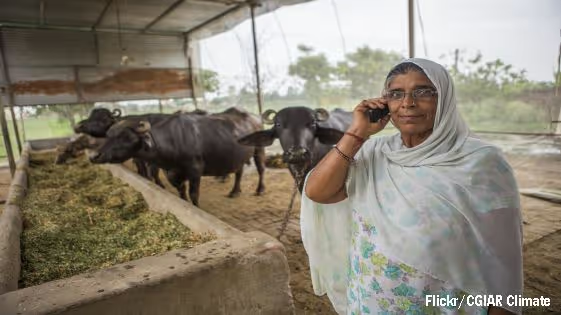
भारत में सामाजिक और आर्थिक अनुसंधान के लिए फोन सर्वेक्षण पद्धति
कोविड-19 के प्रसार को रोकने हेतु लगाई गई पाबंदियों और सामाजिक दूरी के दिशानिर्देशों के मद्देनजर फेस-टू-फेस सर्वेक्षणों के माध्यम से डेटा संग्रह करने में बड़ी बाधाओं का सामना करना पड़ा है। इस पोस्ट में कॉफ़ी एवं अन्य ने उनके द्वारा सामाजिक नज़रिया, भेदभाव, और सार्वजनिक राय पर वर्ष 2016 के बाद भारत के सात राज्यों एवं शहरों में किए गए मोबाइल फोन सर्वेक्षण करने के अपने अनुभव को साझा किया है।
Phone survey methodology for social and economic research in India
Data collection using face-to-face surveys has faced a roadblock in the wake of restricted mobility and social distancing guidelines to contain the spread of Covid-19. In this post, Coffey et al. describe their experience of conducting a mobile phone survey about social attitudes, discrimination, and public opinion, which has been carried out in seven states and cities in India since 2016.
Covid-19: Journey of a construction firm through the lockdown
To check the spread of Covid-19, Government of India announced a stringent, three-week national lockdown on 25 March 2020 – with some easing of restrictions in subsequent phases. This note chronicles the journey of a construction firm and their workers over a four-month period following the announcement.
RCTs for policymaking: Ethical and methodological considerations
The last decade has seen an increased adoption of randomised controlled trials (RCTs) for answering policy questions in developing countries. RCTs are being preferred over other research methods mainly for their reduced risk of bias. However, multiple researchers have cautioned against the acceptance of this hierarchy in research designs. In this post, Sneha P situates this debate in the Indian context and discusses when RCTs are appropriate for informing decision-making in policy.

Doing our bidding: Auctions and the greater common good
This year’s Nobel Prize in Economics has been awarded to Paul Milgrom and Robert Wilson for improvements to auction theory and inventions of new auction formats. In this post, Parikshit Ghosh discusses the evolution of auction theory and the significant contributions of the Laureates.

In the eyes of the beholder: How artisans set prices for their products
The developing world is replete with people working in low-income, but creative occupations, such as artisanship. However, little is concretely known about how they set prices for their products. Based on a study of a handicraft cluster in South India, this article finds that artisans who are attached to their creative output offer significant discounts to discerning buyers, even when these buyers have a high willingness to pay.

लोक-स्वास्थ्य कैसे बने राजनीतिक प्राथमिकता
आज सारा विश्व कोरोना महामारी की समस्या से जूझ रहा है जिस पर अनेक कोणों से शोधकर्ताओं ने प्रामाणिक आलेख प्रस्तुत किए हैं। भावेश झा द्वारा इस आलेख में आम जनता के स्वास्थ्य को राजनीतिक प्राथमिकता कैसे प्राप्त हो विषय पर सम्यक प्रकाश डाला गया है। इसमें उन्होने यह मान्यता स्थापित करने की कोशिश की है कि जन-स्वाथ्य से जुड़े नवीन शोध व जानकारी शोधपत्रों से निकलकर सरल भाषा में आम जन तक पहुँचे।
सेवानिवृत्ति के बाद की नियुक्तियों की राजनीति: सर्वोच्च न्याेयालय में भ्रष्टाचार?
भारतीय न्यायपालिका न्यायिक स्वतंत्रता की रक्षा करती है। कार्यकारी हस्तक्षेप से सावधान रहते हुए न्यायाधीश अपने संस्थागत हितों को बचाते हैं। लेकिन क्या भारत की न्यायिक व्यवस्था न्यायिक स्वतंत्रता के उल्लंघन से पीड़ित है? 1999 और 2014 के बीच सर्वोच्च न्यासयालय के फैसलों के एक युनीक डेटासेट तथा सर्वोच्ची न्या्यालय के सेवानिवृत्त न्यायाधीशों के कैरियर-ग्राफ का उपयोग करते हुए इस आलेख में पाया गया कि सेवानिवृत्ति के बाद न्यायाधीशों की सरकारी पदों पर की गई नियुक्तियों में वृद्धि, उनके लिए मामलों को राज्य के पक्ष में तय करने के लिए एक शक्तिशाली प्रोत्साहन के रूप में कार्य करती है।

कोविड-19 लॉकडाउन और आपराधिक गतिविधियाँ: बिहार से साक्ष्य
कोविड-19 महामारी से लड़ने के लिए लागू किया गया लॉकडाउन समाज के लिए व्यापक रूप से परिणामकारी था। रुबेन का यह आलेख पुलिस से प्राप्त अद्यतन सूचना का उपयोग करते हुए बिहार में आपराधिक गतिविधियों पर लॉकडाउन के प्रभाव का विश्लेषण करता है। परिणाम बताते हैं कि लॉकडाउन ने कुल अपराध में 44% की कमी की। अन्य अपराधों के साथ, हत्याओं (61%), चोरी (63%), और महिलाओं के खिलाफ अपराध (64%) जैसे विभिन्न प्रकार के अपराधों के संबंध में बड़े नकारात्मक प्रभाव देखे गए हैं।
Covid-19 lockdown and criminal activity: Evidence from Bihar
The lockdown imposed to fight the Covid-19 pandemic has had wide-ranging consequences for the society. This article analyses the impact of the lockdown on criminal activity in Bihar using up-to-date police information reports. The results show that the lockdown decreased aggregate crime by 44%. Large negative effects are observed for diverse types of crimes such as murder (61%), theft (63%), and crimes against women (64%), among others.
The institutional partnership model: Embedding evidence into the policy equation
One path for capitalising on government interest in evidence-informed policymaking is for the research community to build long-term institutional partnerships with governments to create an ecosystem where data and evidence become vital inputs for policy decisions. In this note, Sharanya Chandran draws from her experience of working closely with the Government of Punjab to generate evidence to address the state's top policy priorities, and argues for the promise of the institutional partnership model.
The SHRUG: A new high-resolution data platform for research on India
The Socioeconomic High-resolution Rural-Urban Geographic Dataset on India (SHRUG) is a new data source that describes socioeconomic development in India. In this post, Asher, Lunt, and Novosad describe its construction and particular advantages over existing datasets for research on economic development.
लिंग आधारित हिंसा के लिए मौत की सजा: एक टूटी हुई व्यवस्था के लिए अस्थाई समाधान
2018 में, भारत सरकार ने लैंगिक अपराधों से बालकों का संरक्षण (पोकसो) अधिनियम, 2012 और भारतीय दंड संहिता में संशोधन किया है, जिसमें 12 वर्ष से कम उम्र के बच्चों के बलात्कार के दोषियों के लिए मौत की सजा का प्रावधान है। श्रीराधा मिश्रा का तर्क है कि मृत्युदंड न्याय का भ्रम प्रदान कर सकता है, दृष्टिकोण में यह पूरी तरह से प्रतिशोधी है और यौन हिंसा की समस्या से निपटने के लिए किसी भी निवारक समाधान की पेशकश नहीं करता है।
बच्चों के अभियान द्वारा एक गाँव को नशा-मुक्त बनाने की यात्रा
केवल दो वर्षों में, महाराष्ट्र के सांगली जिले में एक स्कूल के छात्रों और उनके शिक्षक के प्रयासों ने पूरे गांव के शराब की लत को समाप्त कर दिखाया। इस नोट में, शिरीष खरे ने इस बात पर प्रकाश डाला है कि गाँव के लोगों की कहानियों के बारे में बात करने और उन्हें साझा करने से यह परिवर्तन कैसे लाया गया।

Death penalty for gender-based violence: A band-aid solution for a broken system
In 2018, Government of India amended the Protection of Children against Sexual Offences (POCSO) Act, 2012 and the Indian Penal Code to provide for death penalty for rape of children under 12 years of age. Shreeradha Mishra argues that while capital punishment might provide the illusion of justice, it is purely retributive in approach, and does not seek to offer any preventive solutions to tackle the problem of sexual violence.
स्कूल में मूल्यवर्धन-प्रयोगशाला की बदौलत ग्रामीणों ने बनाया बगीचा
महाराष्ट्र के जिला कोल्हापुर के वालवे खुर्द में स्थित एक प्राथमिक स्कूल के छत्रों और शिक्षकों ने पर्यावरण के मुद्दे को पुस्तकों से बाहर निकाला और व्यवहारिक रुप से अपनाया। इस नोट में, शिरीष खरे ने स्कूल के शिक्षकों द्वारा छत्रों से पेड़ लगवाने, पेड़ बचाने और उन्हें पेड़ों के उपयोग के बारे में बताने जैसी अनुभवों को साझा किया है।
Note from I4I Team: Happy Holidays!
We are now closed for Christmas and New Year, until Thursday, 2 January 2020. We will be back in the New Year with new articles, perspectives, notes from the field, e-symposia, explainers, videos, and podcasts. The I4I Team wishes all readers a Merry Christmas and Happy New Year!
A village’s journey of alcohol de-addiction due to children’s campaigning
In just two years, the alcohol addiction of an entire village could be eliminated due to the efforts of a school’s students and their teacher in Sangli district of Maharashtra. In this note, Shirish Khare highlights how this change was brought about by talking to and sharing the stories of people from the village.

इस साल के अर्थशास्त्र नोबेल की दास्तान
इस पोस्ट में मैत्रीश घटक इस बात पर विचार-विमर्श कर रहे हैं कि कैसे रैन्डमाइज्ड कंट्रोल ट्राइयल्स (आरसीटी; यादृच्छिकीकृत नियंत्रित परीक्षणों) को — जिसके प्रयोग की अगुआई इस वर्ष के अर्थशास्त्र में नोबेल पुरस्कार विजेता बैनर्जी, डुफ्लो और क्रेमर ने की थी — गरीबों के जीवन को सीधे प्रभावित करने वाले कार्यक्रमों एवं व्यवधानों के साथ वास्तविक जीवन में सफलतापूर्वक लागू किया गया। घटक इस बात का दावा करते हैं कि ये परीक्षण केंद्रीकृत नीति निर्माण की शीर्ष-पाद पद्धति में अत्यावश्यक सुधार उपलब्ध करा सकते हैं।
What lies behind this year's economics Nobel
In this post, Maitreesh Ghatak discusses how randomised controlled trials – the use of which was pioneered by this year’s economics Nobel Laureates, Banerjee, Duflo, and Kremer – have been successfully applied in real life with programmes and interventions that directly impact the poor. He contends that they can provide a much-needed corrective to the top-down approach of centralised policymaking.
Three Nobel Laureates who incited a movement
This year’s Nobel Prize for Economics has been awarded to the trio responsible for revolutionising the field of development economics: Abhijit Banerjee, Esther Duflo, and Michael Kremer. In this post, Siwan Anderson discusses their pioneering work and its impact on the lives of millions of poor people across the globe. She contends that this year’s Prize is also a long-awaited acknowledgement of women in the economics profession
Helping youth discover self-identity through social purpose
‘Emerging adulthood’ refers to the transitory phase from adolescence to adulthood, when young adults are on an intense search for authenticity, awareness, personal definition, and exploration of worldviews, making it a crucial life stage for identity development. In this post, Jainetri Merchant talks about NIRMAN, an educational programme which aims to bridge the chasm between society’s problems and India’s youth who are in search for a purposeful and meaningful life.

A tribute to Marty Weitzman
Prof. Martin Weitzman who was among the most influential economists in the world passed away on 27 August 2019. His work on the uncertainty about how bad the impacts of a changed climate could be has made a huge difference to how economists think about climate change. In this post, Prof. E. Somanthan of the Indian Statistical Institute, Delhi Centre pays a tribute to him.
I4I turns 7!
As I4I completes seven years, Editor-in-Chief Ashok Kotwal reflects on the achievements and challenges, and the vision going forward.
रिसर्च और पॉलिसी के बीच फासला कम करने के लिए प्रमुख आर्थिक संस्थानों ने हाथ मिलाया
सुविज्ञ निर्णय लेने के लिहाज से प्रमाण-आधारित रिसर्च की बेहतर जानकारी देने के लिए लंदन स्कूल ऑफ इकनॉमिक्स स्थित इंटरनेशनल ग्रोथ सेंटर (आइजीसी) और शिकागो विश्वविद्यालय स्थित टाटा सेंटर फॉर डेवलपमेंट (टीसीडी) ने कॉलेबरेशन किया है।
Leading economic institutes join hands to bridge research-policy gap
The International Growth Centre at the London School of Economics and Tata Centre for Development at the University of Chicago collaborate to better communicate evidence-based research for informed decision-making, through 'Ideas for India'.

Field missions and data stories
Data lies at the heart of research and policymaking in the social sector. But where does this data really come from? In this note, Prerna Mukharya (Founder, Outline India, Track your metrics), shares experiences from fieldwork in different parts of the country and presents insights into the complicated and challenging process of data collection.
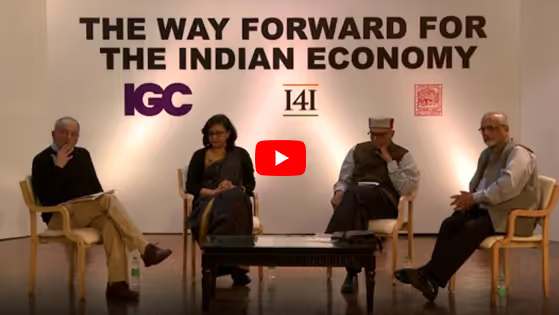
I4I Panel Discussion: The way forward for the Indian economy
In December 2018, I4I organised a panel discussion on ‘The Way Forward for the Indian Economy’ with K.P. Krishnan (Ministry of Skill Development and Entrepreneurship), T.N. Ninan (Business Standard), and Ila Patnaik (NIPFP). Ashok Kotwal (Editor-in-Chief, I4I) – the moderator of the discussion – set the context and laid out the key issues for deliberation in a blog post prior to the event. The panellists presented their views on issues including banking sector stress and infrastructure financing; possibility of India following an export-led growth path; the country’s business environment, including factor markets and law and order; skilling of the labour force; rural distress; India and the 4th Industrial Revolution; and the quality of our institutions.