
.svg)
.svg)
%201.svg)
%201.svg)
.svg)

.svg)
.svg)
Articles

Internal migration and spatial reorganisation of agriculture
While migrants and their urban destinations are extensively studied, less is known about how their departure transforms the rural economies they leave behind. Analysing Indian data, this article shows that migrant-sending households near cities reduce farm size and investment rather than replacing workers with capital. On the other hand, non-migrant, remote households expand production in response to falling land prices and rising crop prices


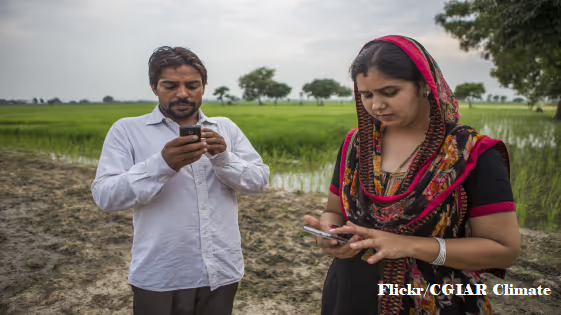
Information is power: ICT and agricultural productivity
One reason for low agricultural productivity in developing countries is that farmers lack sufficient information or guidance in the use of modern agricultural methods. This article examines the impact of an Information and Communication Technology initiative in Bangladesh, involving call centres that enable farmers to consult experts regarding agricultural practices. It finds that, post intervention, villages with access to phone service experienced a 50% reduction in agricultural inefficiency at the plot level.

Impact of climate change on smallholder dairy farmers in India
A considerable number of agricultural households in India engage in livestock rearing and milk production to supplement their income and improve household nutrition. This article examines how global warming impacts smallholder dairy farmers, particularly through a decline in milk yields. It finds a significant negative impact of higher maximum or minimum temperatures on milk yield, with the highest impact for the range above 350C.
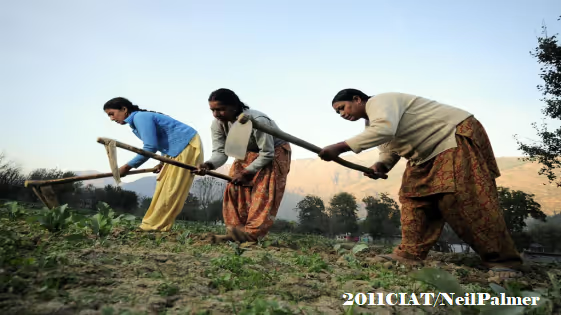
The agricultural productivity gap: Informality matters
There are various explanations in the literature for the observed productivity gap between agriculture and other sectors, in developing countries. Using Indian data, this article questions the standard view of the two-sector productivity gap. It shows that while the productivity gap between the farm sector and informal non-farm sector is negligible, a worker in the formal non-farm sector is 3-4 times more productive than a worker in the farm sector.
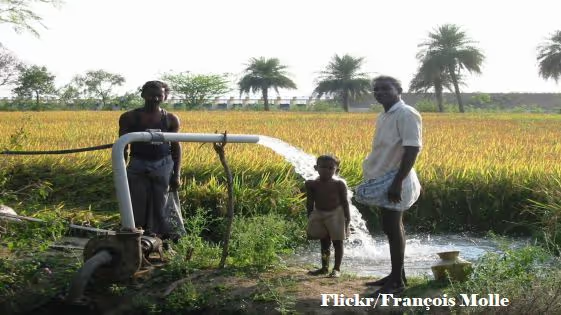
Watering the seeds of the rural economy: Evidence from groundwater irrigation in India
Over time, technological advancements accompanied with government energy subsidies have made groundwater the single largest source of irrigation in India. This study evaluates the impact of access to groundwater irrigation on the spatial and sectoral distribution of rural economic activity. It finds a significant improvement in agricultural production accompanied with modest consumption gains, as well as a substantial increase in population density. Access to groundwater also appears to provide additional employment opportunities for agricultural wage labour from surrounding non-irrigated villages.
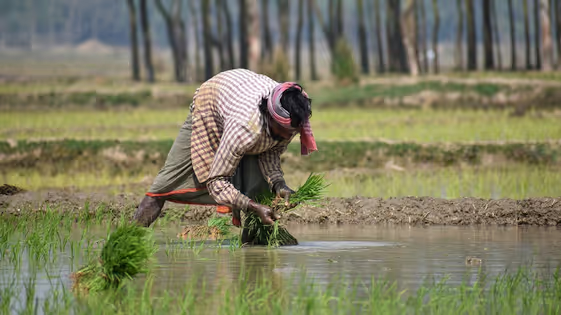
The role of caste in agricultural technology diffusion
Local social structures, such as the jati-caste system in India, can play an important role in the extent of diffusion of new and beneficial agricultural technologies. This article builds on an existing study of paddy farmers in Odisha and finds that village-level caste homogeneity supports the diffusion of a flood-resistant seed variety, while fragmentation deters it. De Janvry et al. note differences in diffusion rates based on the frequency of flooding, and the caste identity of the initial recipient.

Why next-generation economic reforms are crucial for reviving investment
While corporate profitability and banks' lending ability have been on the rise for some time, corporate investment remains sluggish. In this post, Gupta and Sachdeva argue that investment levels of India Inc. are consistent with their assessment of future demand growth. Unleashing the next generation of reform, with a priority given to land, can make (large) Indian firms more competitive globally – improving growth and spurring investment.

The growing burden of state subsidies
Delivery of welfare benefits to citizens by state governments in India often takes the form of subsidies. Analysing budgetary data from seven Indian states for the period between 2018-19 and 2022-23, this article documents how explicit subsidies are straining state finances and compromising development expenditure. Further, it presents new evidence on how subsidy categorisation in government accounts masks their true fiscal impact.

Uneven resilience: Why some emerging markets better navigate US monetary policy cycles
As the US dollar and monetary policy continue to have a significant impact on global financial dynamics, some emerging markets are observed to be more resilient than others to the policy cycles. Analysing data on a large sample of emerging markets, this article highlights the role of consistent strategy that strengthens macroeconomic fundamentals and institutional quality across all phases of the cycle.

Food, fuel, and facts: Distributional effects of global price shocks
The recent upsurge in global prices of essential commodities of food and fuel, warrants an analysis of the distributional ramifications, especially within developing economies. This article examines Indian household consumption and income data, and finds that on average, increases in these prices adversely affects consumption in the country. While rise in food prices unequivocally exacerbates consumption inequality, the effect of oil prices is more nuanced.

Does rural electrification cause economic development?
The last unelectrified Indian village is now connected to the grid. Given the large investments required for these infrastructure projects, value-for-money is an important consideration. Examining the impact of the Rajiv Gandhi Rural Electrification Programme, which expanded electricity access in 400,000 villages during 2005-2011, this article shows that the economic benefits of the intervention likely do not outweigh the costs below a certain population threshold.
Forecasting long-run Indian GDP using high-dimensional big data
This article describes an attempt to forecast of India's long-run GDP, which uses using quarterly data on macroeconomic variables from 1996-2021, and a dynamic factor model to establish long-run trends. It explains how the model controls for exogenous shocks, including rising temperatures and oil prices, as well as changes in monetary and fiscal policies. It suggests that growth will depend either on the implementation of strategies to deal with these exogenous shocks, or on public investment and public service delivery.
Effect of food prices on inflation: Is monetary policy an effective tool?
With rising inflation becoming a global concern, Balakrishnan and Parameswaran discuss some explanations for the high inflation in India. They find that inflation was driven by a domestic rise in food prices rather than by imports. They also dismantle the claim that inflation is being driven by oligopolistic corporate pricing, before evaluating the efficacy of raising repo rates in controlling inflation. They conclude that inflation cannot be managed by monetary policy alone and must include supply-side management of agricultural prices.
Little evidence for 'too much finance'
The current consensus that the finance-growth nexus is more complex than previously assumed has led to concerns about ‘too much finance’. Using a large panel dataset over six decades, this article finds some evidence of a detrimental effect of ‘too much finance’, but not for highly financially developed countries or for the long-term growth trajectories of countries with intermediate levels of financial development.
Foreign currency corporate borrowing: Risks and policy responses
Non-financial corporations in emerging market economies increasingly rely on foreign currency debt,and are exposed to currency depreciations and sudden stops in capital flows. Analysing data on 1,786 Indian firms during 2004-2019, this article shows that favourable global funding conditions are a much more significant determinant of foreign currency borrowing than firm-level factors. Further, it suggests that RBI’s macroprudential policies have been effectively mitigating these risks.

Goods and services tax: Estimating optimal rates
Introduced in India in 2017, a key feature of the goods and services tax (GST) system is that the tax rate for a particular commodity is uniform across the country. Based on a counterfactual framework that incorporates regional diversity in prices and spending to estimate optimal commodity tax rates, this article argues for a departure from this universal GST practice in India.

India’s service-led economic growth
Structural transformation that involves a shift from agriculture straight to services, is a cause of concern to many scholars as an expanding service sector might be a pale substitute to technical progress in manufacturing as the main engine of growth. Analysing microdata from India for 1987-2011, this article shows that lack of pronounced industrialisation does not mean that growth is bound to fall. However, India’s service-led growth is strikingly pro-rich.
Business sentiments and labour markets
The Covid-19 pandemic and associated lockdowns have had a significant adverse impact on jobs and livelihoods. Using 2006-2021 data from a survey on business sentiments, this article examines fluctuations in firms’ hiring of temporary/casual and permanent workers across three major economic events – the Global Financial Crisis, demonetisation, and the Covid-19 crisis. It shows that firms use temporary workers to adjust to changes in the demand of their products in response to macroeconomic uncertainty – increasing vulnerability among workers.
West Bengal’s economic performance relative to India over the last three decades
Against the backdrop of the ongoing elections in West Bengal, Maitreesh Ghatak examines how the state’s economic performance compares with that of the country as a whole, over the past three decades. He highlights that despite West Bengal’s lack of economic dynamism, its agricultural growth rate as well as the growth rate of consumption expenditure in its rural areas, that house 72% of the population, has been higher than the national average.
From abundant global liquidity to selective lending: How corporate finance has changed
Global credit has experienced significant changes in the last two decades. Analysing data on 1,160 Indian firms for the 2000-2017 period, this article shows that in the period following the global financial crisis, abundant global credit allowed firms to take advantage of relatively cheap financing abroad. However, since 2013, lenders are differentiating across borrowers and firms’ access to external finance has declined, with an associated reduction in their real investment activities.
Inflation targeting in India: An interim assessment
Inflation targeting in India is a work-in-progress, with a five-year review due by March 2021. This article presents an interim assessment suggesting that significant progress has already been achieved to date: this is evident in the reduced volatility of a range of inflation-related outcomes and in the stronger anchoring of inflation expectations, which appears to have enhanced the ability of the RBI to respond to the exceptional Covid-19 shock.
Evaluating inflation targeting in India
In March 2021, India will complete five years since the adoption of the inflation targeting framework by the government and RBI. Analysing inflation data since 1996 using alternative models, this article argues that the ‘output gap model’ that underlies the current regime is not the best descriptor of inflation trends in India.

Which jobs were ‘lost’ during India’s Covid-19 lockdowns? Evidence from online vacancy postings
Covid-19 and associated lockdowns across countries have had a devastating impact on the global economy and labour markets. In India, recent data show a historic economic contraction by 23.9% over the last quarter. Using real-time data from a large online job portal, this article finds that hiring activity (in mostly urban, formal-sector jobs) declined dramatically due to the national lockdown and these job losses affected less-educated, young, and female job seekers more than others.

Does easing controls on foreign borrowing boost firm performance?
The literature shows that rigid capital-control policies adversely influence international trade, but overlooks the relationships among access to external financing, firm-level productivity, and exporting performance. Using a dataset of 11,612 Indian firms over 1988-2014, this article finds a significant effect of capital-account liberalisation through an export-oriented policy initiative, on firms' productivity and exporting activity. The effect is stronger for financially vulnerable firms, as measured by high debt and low liquidity.
Unmaking ‘Make in India’
The current government has attempted to improve India’s ranking in the World Bank’s Doing Business Indicators, but with limited success. This article shows that ‘deals’ between the State and businesses, rather than the rules laid out by the State, characterise the State–business relationship. Indian states with weaker quality of governance provide higher proportions of ‘good deals’ in terms of the speed of obtaining licences, such that easing business regulations does not necessarily lead to higher productivity
The supply-side effects of India’s demonetisation
What were the effects of the 2016 Indian demonetisation that removed 86% of currency in circulation overnight, on the production side of the economy? By combining data from financial statements and surveys of firms and workers, this article finds that firms that use cash more and obtain larger shares of labour or material inputs from the informal sector, experienced declines in these input shares after demonetisation. Further, casual labourers were more likely to report being unemployed post demonetisation.
Perceived obstacles among Indian firms: What happens to innovation efforts?
For countries like India where large numbers of small- and medium-sized firms cannot access formal credit and face widespread bureaucratic corruption, long-run survival and consequent distributional implications are important. Based on firm-level micro-data, this article shows that obstacles, as perceived by firms in the form of corruption and access to finance, jointly reduce their probability to innovate.

The pandemic and the package
The government has announced a package of fiscal and monetary policy actions, and broader economic reforms to set the economy back on track after the Covid-19 lockdown. In this post, Sengupta and Vardhan argue that instead of announcing many small-ticket items that further complicate matters of targeting and delivery, the package could have been split into two main parts: partial credit guarantees and direct lending programmes for targeted micro, small, and medium enterprises; and direct benefit transfers to low-income households

How did demonetisation affect household consumption?
‘Demonetisation’ announced in India in 2016 made 86% of cash in circulation illegal tender overnight. This article finds that it led to a decline in household consumption in the initial months after demonetisation. The decline in consumption was the highest for the richest households, while the poorest households had the least impact on consumption. However, poor households had to rely on informal credit to maintain their consumption.
Rural infrastructure development and economic activity
Estimating the effects of physical infrastructure investments on economic growth has remained challenging, especially in rural settings. This article studies the effects of a rural infrastructure grants programme launched to facilitate physical infrastructure development in the most economically backward districts in India. It provides evidence on the effectiveness of the programme, especially on microenterprises, with stronger impacts in electricity and road-intensive industries, and in villages that had paved roads and electricity prior to the programme
The electoral consequences of India’s demonetisation
It is widely believed that there may have been little or no electoral consequences of India’s demonetisation in 2016. This article analyses voter behaviour following demonetisation. It finds that places with fewer banks were more adversely affected by demonetisation, and that this was associated with fewer votes for the ruling party BJP and its allies. However, there were no impacts in BJP-stronghold areas.
Fiscal policy and economic activity in South Asia
The Indian economy is currently experiencing a sharp slowdown, and the government has reacted with corporate tax cuts and a large infrastructure initiative. Using annual data from 1987-2017 for six South Asian countries including India, this article analyses the relationship between fiscal policy and economic activity in the region and finds that it amplified boom-and-bust cycles.
Taxation and supplier networks: Evidence from India
Do tax systems distort firm-to-firm trade? This article considers the effect of tax policy on supplier networks in the state of West Bengal in India. It finds that on average, firms buy 12% more from VAT-paying suppliers when they themselves choose to pay VAT. It also shows that forcing all of a firm’s trading partners to pay the VAT would increase that firm’s propensity to pay the VAT.
Should low-income countries open up to foreign capital? The India experiment
In 2001 and 2006, India introduced the automatic approval of foreign direct investments of up to 51% of domestic firms’ equity to industries in which foreign investment was initially restricted. This article studies the effects of this policy change on firms and finds that better access to foreign capital reduces misallocation and stimulates growth, with the highest gains where local capital markets are least developed.
Cash and the economy: Evidence from India’s demonetisation
‘Demonetisation’ announced in India in December 2016 made 86% of cash in circulation illegal tender overnight, with new notes gradually introduced over the next several months. This article combines novel data sources to quantify impacts on economic activity and credit growth after the unprecedented natural experiment. Districts experiencing more severe demonetisation shocks had relative reductions in economic activity, faster adoption of alternative payment technologies, and lower bank credit growth.
Public debt through the ages
The history of sovereign debt evolved over time along with the purposes for which governments borrowed: first State-building, then public-good provision, and most recently social welfare and entitlements. Although many periods when debt-to-GDP ratios rose explosively culminated in funding crises, debasements, and restructurings, less widely appreciated are episodes of successful debt consolidation achieved through rapid growth or budgetary discipline. This article analyses the economic and political circumstances that made these debt consolidation episodes possible.

The return of the policy that shall not be named: Principles of industrial policy
The 'Asian miracles' and their industrial policies are often considered as statistical accidents that cannot be replicated. This article argues that we can learn more about sustained growth from these miracles than from the large pool of failures, and that industrial policy is instrumental in achieving sustained growth. Successful policy uses State intervention for early entry into sophisticated sectors, strong export orientation, and fierce competition with strict accountability
A silver lining in India’s employment scenario
The latest jobs data released by the government showed a record high unemployment rate of 6.1% in 2017-18, but a rise in the share of workers with a regular job in urban areas. In this post, Mehta and Kumar argue that government’s recent initiatives like the goods and services tax and social security schemes for workers have improved employment quality in urban areas with a rise in formal employment.
Government securities market: Price discovery and the cost of Indian government borrowing
The government securities (G-Secs) market has substantial effects on other markets as the producer of risk-free interest rate benchmarks. Over 2017-18, there was a sharp rise in the interest rates of 10-year G-Secs unrelated to fundamentals. This article explores its causes and sheds light on the working of G-Secs market in India, and on pitfalls of monetary management in an emerging market.

Agriculture and the Union Budget: policies and prospects
In this post, Shoumitro Chatterjee and Mekhala Krishnamurthy analyse the key proposals in the Union Budget 2019 pertaining to reforms in agricultural market, ease of doing business for farmers, and agricultural research and extension.

The great disinflation in emerging and developing economies
Emerging market and developing economies (EMDEs) have achieved a remarkable decline in inflation since the early 1970s. Whether EMDEs can continue enjoying the benefits of low inflation will depend on the confluence of structural and policy-related factors that have fostered global disinflation over the past decades being sustained. Against this backdrop, this article analyses the factors supporting disinflation in EMDEs, and whether EMDEs can sustain low inflation.
Firm survival in India: Status of firms formed over the last 30 years
The dynamic process of new firm formation and exit of weaker firms contributes to the evolution of industries and expansion of the economy. This article analyses the status of all new firms formed in India over 1981-2011, and their survival over time. It finds that, on average, roughly 45% of new firms survive more than 20 years. Apart from the surviving firms that are active, another 20% of the firms become dormant, which raises some concerns.

Is India’s ‘new’ investment cycle poised for upturn?
Recent statistics have drawn attention to the turning of India’s investment cycle since the second half of 2017-18. In this piece, Isha Gupta examines the different components of investment demand and critically evaluates the industrial growth rate in the past few years. She contends that quoting near-term data undermines industry-specific instability and overlooks the structural shift of the economy to a lower investment rate and real output growth, which is yet to gain momentum.
Does service quality predict households’ willingness to pay for electricity connections in rural India?
While rural electrification has been a high priority for governments in the developing world, the factors that make individual households more likely to pay for electricity have received insufficient attention. Using data on rural households from six Indian states, this article finds that service quality has a substantial impact on willingness to pay for connections, which is critical for improving access.
Firm formation in India: The last 40 years
Research shows that entrepreneurship or new firm formation can be an important driver of economic development. This article studies the extent of new firm formation in India over the last 40 years and documents patterns that emerge. It shows that new firm formation has steadily grown over the last 40 years implying shifting concentration of economic activity from a limited number of firms to a large number of new entrants.
Everything you know about cross-country convergence is (now) wrong
A quarter-century after the empirical growth literature set out to explain why poor countries are not catching up with rich ones, cross-country regressions have mercifully gone out of fashion. In this post, Dev Patel, Justin Sandefur, and Arvind Subramanian point out that in the interim, the core facts have changed.

How tax incentives influence household financial saving
Indian households tend to hold a high fraction of their wealth in non-financial assets such as real estate and gold. Tax policy has been used to incentivise saving in financial assets and encouraging long-term saving. Analysing aggregate national accounts data, this article finds that while aggregate financial saving has remained stable, tax breaks have been influential in driving saving into specific products, like insurance and pensions.
The missing profits of nations
Between 1985 and 2018, the global average statutory corporate tax rate fell by more than half. This article uses new macroeconomic data to argue that profit-shifting is a key driver of this decline. Close to 40% of multinational profits were artificially shifted to tax havens in 2015, and this massive tax avoidance – and the failure to curb it – are in effect leading more and more countries to give up on taxing multinational companies.
The online marketplace as a source for price data
The Indian e-commerce industry is set to grow at over 30% over the next decade, potentially making the online market a repository of information related to some key parameters of the economy such as inflationary pressures. To assess the credibility of online price information, this article compares the official food and beverages consumer price index with an online price index created with data from a leading online retailer.
Community networks and the growth of private enterprise in China
China has witnessed the same degree of industrialisation in three decades as Europe did in two centuries – without the preconditions that are generally believed to be necessary for economic development, that is, effective legal systems or well-functioning financial institutions. Analysing unique administrative data on the universe of registered firms in the country, this article shows that community networks organised around the birth county paved the way for entrepreneurs to flourish.

Digital India Land Records Modernisation Programme: Assessing impact in Himachal Pradesh and Maharashtra
Government of India launched the National Land Records Modernisation Programme in 2008, with the aim of establishing a system of titles to ensure conclusive proof of land ownership. The programme was revamped in 2014, with its inclusion in the Digital India initiative. This article presents findings from an impact assessment of the programme in Himachal Pradesh and Maharashtra, and draws implications for policy formulation pertaining to land records management
The effect of place-based development policies: Evidence from Indian SEZs
Since the introduction of the Special Economic Zones (SEZ), Act in 2005, India has invested roughly 0.5% of its GDP annually into this programme. Using nighttime lights data and firm- and worker-level survey data, this article analyses the influence of SEZs on the local economy, focusing on the level and formalisation of economic activity, and the inclusiveness of such a policy.
Labour market effects of workfare programmes: Evidence from MNREGA
India’s Mahatma Gandhi National Rural Employment Guarantee (MNREGA), the world’s largest workfare programme, provided employment to 51 million households in 2016. Assessing the impact of MNREGA on the private sector and labour markets, this article shows that the programme has crowded out private sector employment, lowered rural-to-urban migration in the states that implemented it well, and increased wages in both rural and urban India.
Fostering social connections
This column describes an ongoing study that analyses data from Delhi’s labour-intensive garment factories to explore the relationship between trust among workers and productivity. Using the strength of pre-existing social ties among workers as proxy for the value of trust, it finds that being socially connected has significant implications for worker productivity.
Jobless growth? From speculation to statistical analysis
This column investigates the relationship between economic growth and net job creation in India and South Asia. If economic growth was truly jobless, as is often claimed, labour productivity would be increasing very rapidly. But how real is the alleged joblessness?
Management practices and productivity in India
In this article, Bloom and Patnaik bring together research that analyses management practices of firms, and how they relate to firm productivity and performance. They highlight the importance of undertaking a large-scale representative survey of management practices in India.
Catching up: India’s transition from a colonial economy
The decline and stagnation of the Indian economy was reversed after independence. This column suggests although productivity in agriculture and industry rose after 1947, it was the service sector that led Indian growth. A strong focus on higher education under colonial policy created an advantage for the service sector, but slow expansion in primary education was a disadvantage relative to the high-growth East Asian economies.
‘Nowcasting’ the Indian economy: A new approach to know the now-GDP
Bhadury and Pohit describe NCAER’s new ‘nowcasting’ model, which seeks to predict India’s GDP numbers at frequent intervals − typically on a monthly or quarterly basis − by exploiting the incremental information in published data on economic indicators.
Does mandatory CSR expenditure affect firm value? Evidence from Indian firms
Section 135 of the Companies Act, 2013 mandates all Indian firms above certain size or profit threshold to spend at least 2% of net profit earned in preceding three years on Corporate Social Responsibility (CSR) from 2014-15 onwards. The existing literature is divided on whether CSR spending helps improve firm performance. Analysing firm-level data from India for 2006-2016, this column finds that CSR spending has a significant positive impact on firm value.
Waiting for jobs
Assessing the extent of job creation in India is constrained by lack of comprehensive, real-time employment data. This column presents statistics from a detailed analysis of multiple data sources and surveys to examine latest employment trends. It confirms the languid pace of job creation in India, particularly in the organised sector, over the last few years.
Is small beautiful? A critical evaluation of MSME policy and performance in India
Micro, small and medium enterprises (MSMEs) have significance in a labour-abundant country like India, and various policies are in place to promote the sector. Analysing MSME data from various sources, this column shows that the structure of manufacturing MSMEs has changed significantly in the last decade: the share of capital-intensive industries in output has increased; labour productivity remains very low with possible replacement of labour with capital.
Structural transformation and spillovers from ‘Industrial Areas’
A defining feature of economic development is the reallocation of labour from subsistence agriculture to manufacturing. To shed light on this process, this column analyses Karnataka’s Industrial Areas (IAs) programme that facilitated the establishment of industrial firms in rural areas. It finds that IAs caused a large increase in the number of firms and employment with substantial spillovers to neighbouring villages, and triggered a classic ‘structural transformation’ of the economy.
Why are geniuses destroying jobs in Uganda?
In this article, Lant Pritchett discusses how technological progress is being driven in rich countries by distorted prices and availability of labour and is then inefficiently and uneconomically destroying jobs all over the world, making the dreams of billions around the world of escaping poverty and achieving prosperity through productive work harder and harder to achieve.
India’s GDP: Deflating the right way
A non-ending debate on the GDP growth numbers brought out by the Central Statistics Office has been doing the rounds. In light of the mismatch between recent trends in the growth rate and an array of high-frequency macroeconomic growth indicators, this column discusses the shortcomings of the deflation methodology used to calculate growth rates.
Impact of community mobilisation on land rights governance
Homestead land rights, that is, the security a household enjoys over the plot of land on which its dwelling is built, shape livelihoods and living standards for poor and marginalised populations in rural areas. This column reports initial findings from an impact evaluation of a programme that seeks to improve homestead rights in Bihar through the formation of village-level community-based organisations.
Purchasing power parity: Some concerns
In this article, Dr Gurbachan Singh discusses how it may be problematic to make international comparisons using PPP that is based on observed prices, and why effective prices should be used instead.
Stock market participation in the aftermath of an accounting scandal
An emerging literature shows that exposure of fraud in the corporate sector leads to a fall in trust on part of households and decline in their stock market participation. Analysing data on daily investor account holdings from India, this column finds that contrary to international experience, an event such as the Satyam scandal did not have a big impact on investor activity.
What does the new IIP series tell us about the state of manufacturing in India?
In May 2017, the Central Statistics Office released the new series of the Index of Industrial Production with 2011-12 as the base year, after a comprehensive revision of computation methods. The series almost entirely reverses the performance picture of Indian manufacturing, showing sharp upward revisions in the growth of activity. This column finds that the new index is likely to show inflated growth during times of falling inflation. Thus, deciphering the actual change in production continues to be difficult.
The economic and political consequences of India's demonetisation
The ruling party at the centre won the Uttar Pradesh state election despite its demonetisation policy having some negative economic impacts on the Indian economy. By combining primary data from surveys of wholesale and retail traders, with secondary data on wholesale markets, this column seeks to analyse why this was so.
Changes in the nature of female workforce participation in India
Declining female workforce participation in India is a matter of grave concern, and a puzzle in the face of increased overall economic growth. This column shows that although the proportion of working women – based on estimates from the National Sample Survey - has fallen, there is improvement in terms of the number of days of work by women in the workforce, especially in rural areas.
Should emerging markets worry about US monetary policy announcements?
Emerging economies are routinely affected by monetary policy announcements in the US. This column finds that US monetary policy surprises have a significant impact on emerging economies’ exchange rates, equity prices, and bond yields. The impact is larger for surprise tightening of policy than for surprise easing, and disproportionately larger for large surprises. The spillover effects of policy announcements of other advanced economies are much weaker than those of the US.
Economic benefits of transportation infrastructure: Historical evidence from India and America
Significant public finance is devoted to transportation infrastructure, the economic benefits of which are often unclear. This column analyses two major railroad projects in India and US in the 19th century. It finds that the economic gains from transportation infrastructure can be substantial, and the true economic impact may not be known until years after a project is completed.
Impact of disinvestment policy on public sector enterprises in India
To address operational inefficiencies in PSEs without comprising on their social objectives, disinvestment policy is often used. However, there are concerns regarding the extent of impact on firm performance since disinvestment may involve transfer of ownership but not control. Analysing data from 1991-2010 on all manufacturing PSEs owned by the central government, this column shows that the average annual efficiency score of disinvested enterprises rose by almost 20%.
How the American Dream led to India's IT boom
In the context of the ongoing global debate on migration policies, this column shows that the H-1B visa programme of the US had a powerful impact on the US IT sector, and played a prominent role in spreading the boom to India.
Highway network designs and regional economic development
The Indian National Highway Development Project and its components such as the Golden Quadrilateral or the North-South and East-West corridors are planned to alleviate constraints due to insufficient transport infrastructure. This column compares the effects of the Golden Quadrilateral with a counterfactual highway network that is designed to approximately maximise national income while connecting all intermediate-sized cities.
The dangers that lie beneath India's IT layoffs
The ongoing layoffs in India’s IT sector are at a scale that has not been seen since the global financial crisis of 2008. In this article, Maitreesh Ghatak, Professor of Economics at LSE, contends that while this is a major shock, the country’s demographic dividend, and global trends such as automation, demand an economic strategy that prioritises job creation more broadly.
Budget subsidies of the central government and 14 major Indian states: 1987-88 and 2011-12
In this article, Mundle and Sikdar of NIPFP, present their estimates of the flow of subsidies through the budgets of the central government and 14 major Indian states in 1987-88 and 2011-12. The estimates show that the overall level of subsidies rela-tive to GDP has declined, as has the share of non-merit subsidies. This suggests some improvement in efficiency in this aspect of public expenditure.
Chasing one's own tail: Dealing with tax non-compliance
A key, stated objective of the recent denotification of high-denomination currency notes was to eliminate black money arising from tax evasion, and to expand the tax net. In this article, Sangram Gaikwad and Kailash Gaikwad, officers of the Indian Revenue Service, outline the challenges faced by the tax administration in dealing with rampant evasion in direct taxation, and what can be done to address the issue.
Rural electrification in India: Focus on service quality
India has set an ambitious goal of achieving high-quality electricity supply for all households by 2019, and impressive progress has been made in increasing the number of household electricity connections. However, this column finds that the quality of electricity service to rural households is dismal and this is considered to be a major problem by rural households. There is a need for rationalising rural electricity tariffs to ensure cost recovery in exchange of improved service quality.
The historical roots of India's booming service economy
India stands out from other emerging economies because its growth has been led by the service sector rather than labour-intensive manufactures. This column summarises recent research showing that India has a long history of strength in services, and its service-led development may play to historical strengths rather than hindering its progress.
Riding the energy transition: Oil beyond 2040
The motor vehicle was very quick to replace horses in the early 20th century, and the advent of the electric car suggests that another profound shift in transportation and energy could be around the corner. This column projects how different rates of electric car adoption will affect oil demand and consumption over the next three decades. In a fast-adoption scenario, oil prices could converge to the level of current coal prices by the early 2040s. Even under a slow-adoption scenario, oil could become obsolete before it is depleted.
How did de-reservation of small-scale industry affect employment?
To protect small, labour-intensive manufacturing enterprises and boost employment, the Indian government reserved certain products for exclusive production by such enterprises. This policy was gradually phased out during 1997-2015. This column finds that dismantling of the reservation, in fact, led to increases in overall employment, driven by entrants into the de-reserved product space and incumbents that were previously constrained by the policy’s size limits.
Is the structure of Indian manufacturing geared towards job creation?
Government of India has envisaged adding 100 million jobs in manufacturing by 2022. This column finds that the structure of the country’s manufacturing sector is misaligned with the objective of job creation. Subsectors that have low potential to generate jobs dominate the manufacturing profile. To generate jobs, more employment-intensive subsectors should be promoted.
Food processing industries: Lessons from Bihar
For an industrially backward state like Bihar, placing food processing as the lead sector for industrial development is a natural choice from the perspective of resource advantage and interlinked sectoral development. The state government has provided targeted front-loaded capital subsidies for new units in the sector. This column reports on a primary survey of industries that assesses the strengths and drawbacks of the present policy environment and institutions.
Studying revisions in Indian GDP data
The GDP numbers for a given year undergo a sequence of revisions based on data availability. The periodic revisions are meant to reveal the true picture of the economy, and affect macroeconomic forecasting and policymaking. Large, frequent, and uncertain data revisions can raise questions of data credibility and lead to imprecise inputs for policymaking. In this article, Sapre and Sengupta highlight several issues in the revisions in India's GDP series.
Minimum wage legislation for domestic workers: Does it work?
Between 2005 and 2009, for the first time, seven Indian states notified minimum wages for domestic workers. This column evaluates the impact of the legislation in terms of real wages and employment opportunities for domestic workers in four of these states. It finds that notifying minimum wages by itself has limited impact; there is a need for strong and transparent monitoring mechanisms.
How do electricity shortages affect industry in India?
Poor electricity supply is widely recognised as a key impediment to firm growth and productivity. This column finds that average reported level of electricity shortages in India reduces annual plant revenues and producer surplus of the average manufacturing plant by 5-10%. While productivity losses are smaller, shortages distort plant size distribution due to significant economies of scale in generator costs.
Are grain procurement shocks inflationary?
Central banks in emerging markets grapple with understanding the inflationary impact of grain procurement shocks because the precise link between the agriculture sector and the rest of the economy may not be well understood. This column presents a framework to understand how the government’s grain procurement policy in India can be inflationary, and what the appropriate monetary policy response should be.
Analysing worker responses to a contract change
Higher-powered incentives are generally believed to increase worker productivity. In the context of an Indian tea plantation, this column examines a contract change wherein baseline wages were increased and incentive piece rates were lowered or kept unchanged. It finds that output increased by 20-80% in the following month but fell to original levels thereafter. Possible explanations for the observed impact are explored.
A comparison of automobile industries in India and China
The automobile sector in both India and China developed due to waves of investment in these countries since the late 1980s. This column discusses how India’s automobile sector has grown differently from that of other developing countries, especially China. In contrast to China, India has relied much more heavily on domestically-grown lead firms and has hence, benefitted at a slower pace from global best practices.
Why is labour mobility in India so low?
Rural-to-urban migration is surprisingly low in India, compared with other large developing countries, leaving higher paying job opportunities unexploited. This column shows that well-functioning rural insurance networks are partly responsible, as they incentivise adult males to remain in villages. Policies that provide private credit to wealthy households or government safety nets to poor households would encourage greater labour mobility, but could have unintended distributional consequences.
Painful spillovers from slowing BRICS growth
A synchronous growth slowdown has hit emerging markets, especially the BRICS, since 2010, with the potential for significant adverse spillovers to the rest of the world. This column estimates that a 1 percentage point decline in BRICS growth could reduce global growth by 0.4 percentage points, and growth in other emerging markets by 0.8 percentage points, over the following two years.
Does democracy cause growth?
Many analysts view democracy as a neutral or negative factor for growth. This column discusses new evidence showing that democracy has a robust and sizeable pro-growth effect. It finds that a country that switches from non-democracy to democracy achieves about 20% higher GDP per capita over the subsequent three decades.
Why outward FDI should be encouraged
The ‘Make in India’ programme seeks to incentivise global investors to manufacture in India. In this article, Natasha Agarwal, an independent research economist argues that efforts should also be made to support Indian businesses to invest abroad as several direct and indirect benefits accrue to the home country from outward foreign direct investment.
Union Budget 2016: Focus on reforms and fiscal commitments
The Union Budget 2016-17 was presented by the Finance Minister earlier this week. In this article, Rathin Roy, Director of the National Institute of Public Finance and Policy, applauds the Budget for maintaining prudence, enhancing the government’s credibility as a fiscal manager, and initiating important, unglamorous reforms.
Land in India: Market price vs. fundamental value
The Real Estate (Regulation and Development) Bill, 2015, is focused on protecting the few home buyers who can afford to buy homes but does not address the issue of high land prices, which is a very serious problem. This column demonstrates that the market prices of land in India are very high compared to fundamental values, and to market prices in developed countries.
Can India beat this slowdown?
RBI Governor Raghuram Rajan has cautioned the government against seeking to generate economic growth by increasing public spending and hence, adding to the fiscal deficit. In this article, Jayan Jose Thomas, Associate Professor of Economics at Indian Institute of Technology, Delhi, puts forth the view that the only engine that can pull the Indian economy forward at the moment is government expenditure.
How foreign inflows impact Indian manufacturing firms
In the past few decades, India has emerged as one of the preferred destinations for foreign investors, with the manufacturing sector receiving a substantial proportion of total capital inflows coming into the country. Analysing firm-level data from the Indian manufacturing sector during 2001-2010, this column finds that while capital inflows significantly boost investment capacity of large firms, they do not seem to impact other performance indicators.
Household savings and India's current account deficit
India’s current account deficit widened consistently in the post-crisis period between 2008-09 and 2012-13. This column finds that while the public sector was the key driver of this trend in the first two years, the increased consumption/investment by households was responsible for the high deficit in the later period. It recommends that policymakers should now incentivise household savings rather than consumption/investments, which implies limited scope for further interest rate cuts.
Has the recession which began in 2012 ended?
The high growth rates visible in the new GDP data suggest that the recession which began in the first quarter of 2012 has now ended. Based on analysis of data on firms, investment and Balance of Payments, this column argues that the new GDP data does not square with other data which indicates slow growth and a continuation of the 2012 recession.
Road to riches: An evaluation of India's rural road programme
Access to roads is believed to be essential for economic growth and poverty alleviation. This column evaluates the short-term impact of Pradhan Mantri Gram Sadak Yojana – India’s flagship rural road programme. It finds positive effects on trade between villages and cities, primary school enrolment, and use of productivity-enhancing agriculture inputs. However, school dropout rates among teenagers increased owing to better access to jobs.
Political distortions in the Indian electricity sector
While political interference is believed to be a major problem plaguing the electricity sector in India, there is little empirical evidence on the existence of political distortions or on their economic costs. This column demonstrates that Indian state governments increase the supply of electricity to constituencies that have bye-elections by diverting electricity away from non-election constituencies.
How interest rates affect financial decisions of Indian households
RBI has cut interest rates three times this year so far. While rate cuts are welcomed by the Indian corporate sector, their impact on households is less discussed. This column analyses the relationship between deposit rates and financial decisions of households. It finds that lower rates reduce net financial savings of households, which in turn reduces the resource pool available to the corporate sector.
Rise of informality in India's tradable manufacturing sector
The vast informal sector in India affects everything from poverty to growth. This column presents new facts on how Indian job growth in manufacturing is concentrated in informal tradable industries, especially one-person establishments. These features are most closely linked to the urbanisation of informal Indian manufacturing, but subcontracting and rising female participation also appear to play noteworthy roles.

Land acquisition, industrialisation, and displaced households
Does industrialisation on acquired land benefit those displaced? Evaluating the long-term livelihood effects of the first Special Economic Zone in the state of West Bengal, this column finds that the impact on displaced households is mixed. While they are more likely to be employed in the industrial zone, their returns to education are lower than that of other households.
Growth and inequality: The contrasting stories of India and Brazil
The development paths of India and Brazil are, in some ways, mirror images of one another. While growth and inequality were both high in Brazil until 1980 and then declined – first growth declined in the 1980s, and later inequality – the reverse is true for India. This column compares the experiences of the two countries, examining their patterns of growth and inequality and the factors that underpin them.
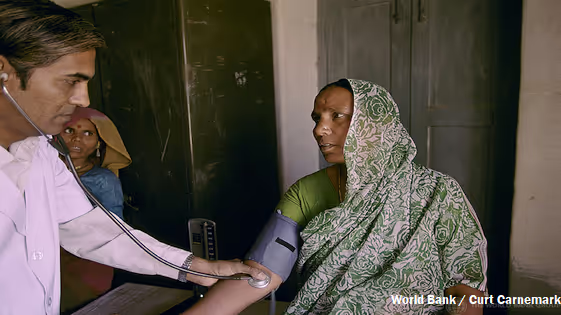
India’s primary healthcare reform: Improved service delivery, reduced mortality
On average, a 60-year-old in India can expect to live for about 19 years, four years less than their counterparts in high-income countries – with the gap being partly driven by poor access to quality healthcare services. Based on data from Rajasthan, this article shows that adding a mid-level healthcare worker to public healthcare facilities in rural areas – a reform undertaken at scale across the country – improves service provision, increases patient visits, and decreases all-age mortality rates.

Lighting the path to learning: Can electricity boost children’s test scores?
When households gain access to electricity, children are more likely to be enrolled in school. But do they also perform better? Based on West Bengal’s universal household electrification programme and nationally representative data, this article shows that children in families with electricity access score higher on reading and math tests. The key mechanisms are identified as longer study time, higher household incomes, and reduced need for fuel collection.

The unintended effect of alcohol prohibition on adolescents’ mental health
Alcohol consumption is typically initiated during adolescence, with long-lasting implications on adult health, economic stability, and well-being. Analysing Bihar’s alcohol ban, this article finds adverse impacts on adolescents’ mental health – driven by increased access to illegal alcohol from neighbouring states and higher consumption of home-brewed and locally produced alcohol. Additionally, there was an increase in risky behaviours and deterioration in the adolescent social environment.

How police patrols reduced severe street harassment in India
Street harassment is a pervasive issue, with negative impacts on women’s safety and mobility in urban public spaces. Based on an experiment conducted in collaboration with the Hyderabad City Police, this article demonstrates that visible, anti-harassment policing strategies combined with efforts to transform underlying social attitudes, can make a difference.
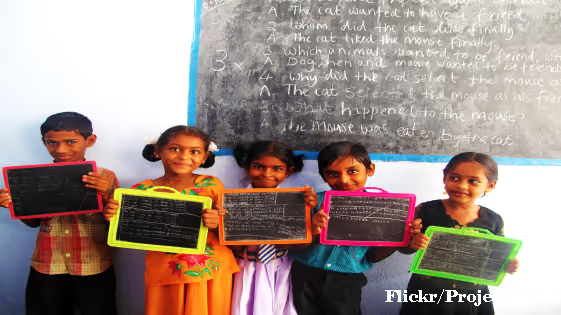
Enhancing foundational learning through parent-teacher collaboration
Despite advancements in primary school enrolment, over 50% of pupils in rural India fail to achieve core literacy, while 44% lack numeracy skills at the end of grade 5. Based on a randomised experiment in rural Uttar Pradesh this article finds that community participation, facilitated through a collaborative and participatory approach between parents and teachers, enhances accountability in schools, and significantly improves children’s foundational learning.
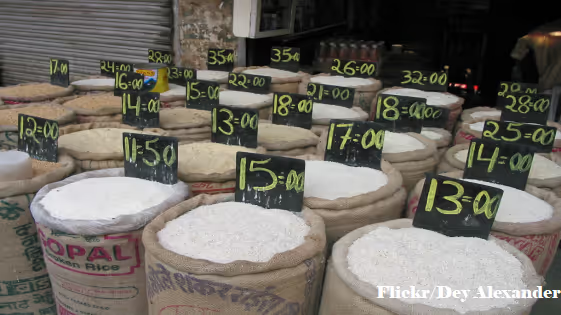
The wide-ranging benefits of India’s Public Distribution System
India’s Public Distribution System (PDS) is the world’s largest food transfer programme and India’s most far-reaching social safety net, accounting for 60% of the country’s social assistance budget at one time. This article shows that the expansion of the PDS, following the National Food Security Act, prevented approximately 1.8 million children from being stunted, while also raising wage incomes and improving dietary diversity.
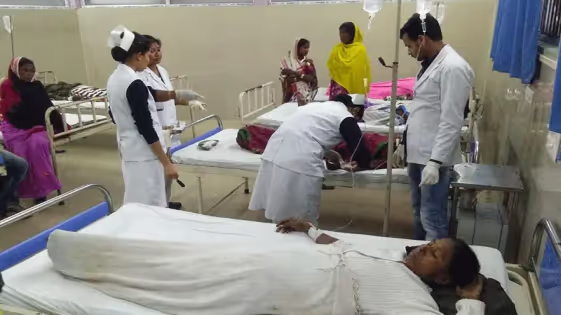
Network membership and demand for health insurance
Despite being free and having liberal eligibility criteria, the adoption of public health insurance in India remains low. This article examines how informal networks influence adoption behaviour, in the context of Andhra Pradesh’s Aarogyasri programme. It shows that network type matters: information networks do not significantly impact the uptake of public insurance, whereas financial networks actually facilitate, rather than hinder, public insurance adoption.
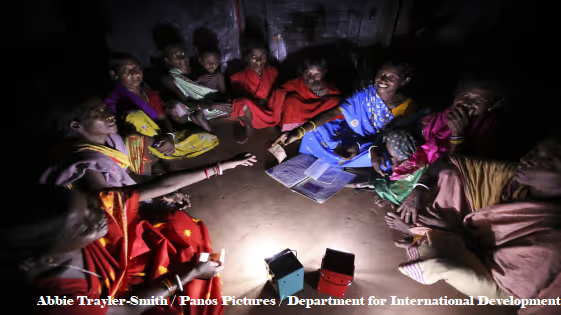
Powering progress: How reliable community electrification boosts women’s autonomy
While there has been significant progress in expanding access to grid electricity in India, the reliability of electricity remains a concern. Based on five national-level datasets spanning over a period of almost two decades., this article shows that improved reliability of electricity at the community level is beneficial for women’s empowerment in terms of mobility, participation in household decision-making, health autonomy, and safety.
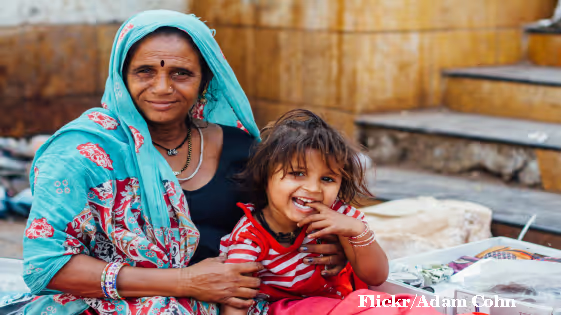
Empowering daughters: How conditional cash transfers can shift cultural norms
During the last 30 years, Indian governments have implemented over 20 programmes that reward parents who have daughters and invest in them after birth. Yet, very little is known about these programmes’ effectiveness in reducing son preference and shifting cultural norms. Analysing the impact of a scheme with many typical design features, the article finds that such programmes are rightfully part of the policy toolkit and deserve more attention.

Competitive jobseekers: When sharing less leaves firms at a loss
For efficient matching of jobs and workers in the labour market, it is essential that information on job postings reaches suitable jobseekers. While social networks play a key role in this regard, competition for jobs may disincentivise information-sharing. Based on an experiment with college students in Mumbai, this article finds that these disincentives reduce the overall quality of applicants and hires.

Street safety and girls’ secondary schooling in India
Street harassment in India is still a constraint on women's education, dimming their future. Analysing the case of ‘SHE teams’ in the state of Telangana, this article shows that the introduction of special police units dedicated to women's safety on streets led to a significant increase in girls finishing grade 12. Further, it establishes that the impact is not driven by non-street safety determinants of schooling.

Contraception as a pathway to better child nutrition and health
India is home to one-third of the world’s stunted children, and half of all under-five mortality can be attributed to undernutrition. Existing literature has shown an association between larger families and poorer child health outcomes. Based on analysis of data from the National Family Health Survey, 2019-2021, this article finds that reducing fertility through increased use of contraception can lead to significant improvements in child health and malnutrition indicators.
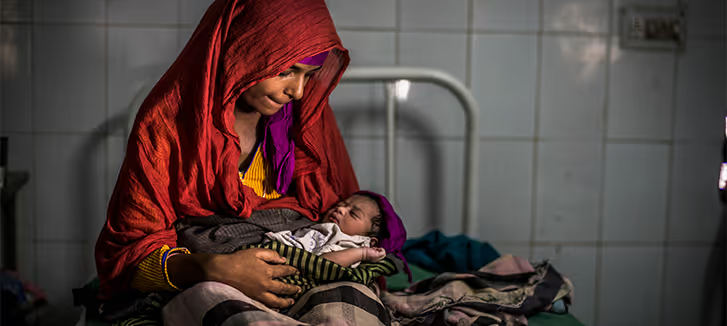
Does subsidising publicly provided services discipline markets or distort demand?
Prior research has documented the failure of India’s flagship safe motherhood programme in reducing perinatal mortality, despite substantially increasing the share of mothers delivering at public healthcare facilities – presenting a conundrum for policymakers. Examining responses to the programme across various segments of the maternal healthcare market, this article locates the explanation in the interactions between public and private healthcare providers.
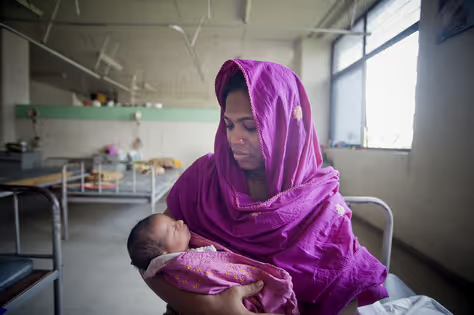
Did Covid-19 pandemic increase incidence of low-birth-weight among newborns?
Globally, one in four babies are born with low birth weight, with long-term impacts on health and economic outcomes. This article uses Indian data from 2019-2021 to analyse the impact of the Covid-19 pandemic on birth outcomes, given the disruption of essential maternal and neonatal services. It finds that infants born post-pandemic had 45 grams lower birth weight, with 3% greater incidence of low birth weight than infants born before the pandemic.
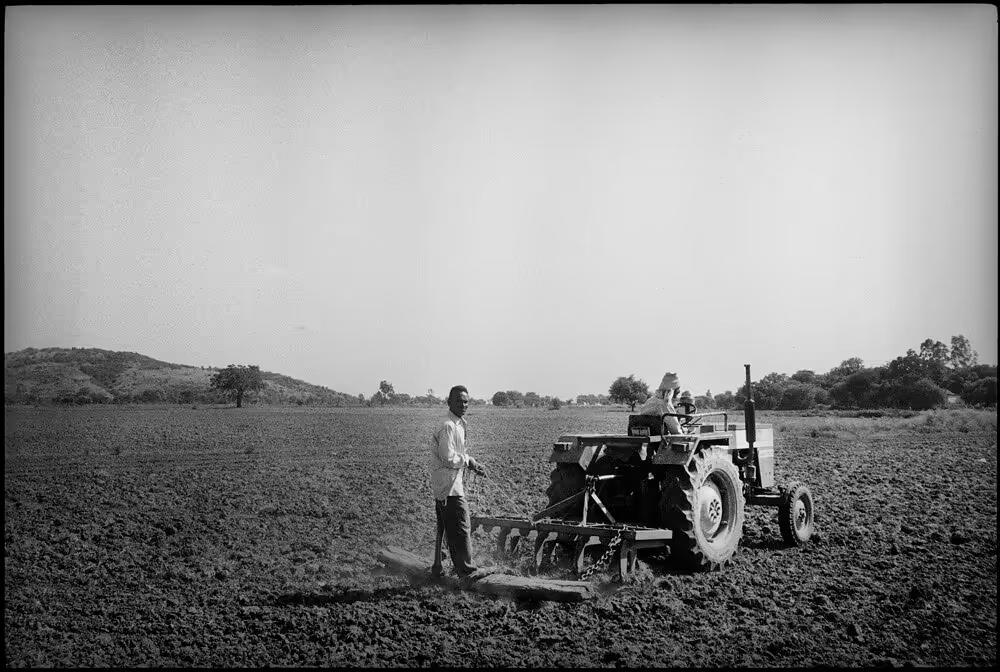
Historical land policies and socioeconomic development: The case of Uttar Pradesh
Uttar Pradesh is characterised by significant intra-state variation in developmental outcomes, with research suggesting that this could be partially attributable to the long-run effects of differences in colonial land policies within the state. Comparing areas that underwent land reforms in the 19th century with those that did not, this article demonstrates that the former experienced positive long-run effects on wealth and human capital – including among lower-caste households whose ancestors did not receive land under the reforms.

Reversing the trend: Improving toilet access for better test scores
Poor sanitation is associated with adverse health outcomes among children, which in turn are linked with poor educational outcomes. Leveraging the staggered implementation of ‘Swachh Bharat Mission’ across districts in India during 2014-2018, this article shows that exposure to the programme improves children’s test performance in the short term, with larger estimated benefits the longer districts were exposed to the programme

Water water everywhere, not a drop to drink? Information and enabling access to clean water
Over 50 million people in India are exposed to arsenic-contaminated water, leading to adverse health outcomes – especially for children. Yet, the demand for private, safe drinking water remains low in the affected areas. Based on an experiment in Assam, this article demonstrates how combining water quality awareness interventions with a reduction of transactional complexity in obtaining related government benefits can help address the issue.

How teachers’ beliefs can shape motivation and student learning
While teacher effort is crucial for student learning, evidence suggests that this is not what teachers themselves believe. This article presents findings from a randomised experiment involving a psycho-social intervention targeted at teachers. It shows that teachers exposed to the intervention exhibit greater confidence in their ability to raise student learning and exert more effort

Aiding the search for good jobs: Evidence from Uganda
To design policies that lead young labour-market entrants to good jobs, it is important to understand job search processes and what affects the ability to find gainful employment. Based on an experiment in Uganda involving two interventions – vocational training and matching workers with firms – this article shows that while training enhances optimism about employment prospects, matching causes discouragement and poorer labour market outcomes in the long run.
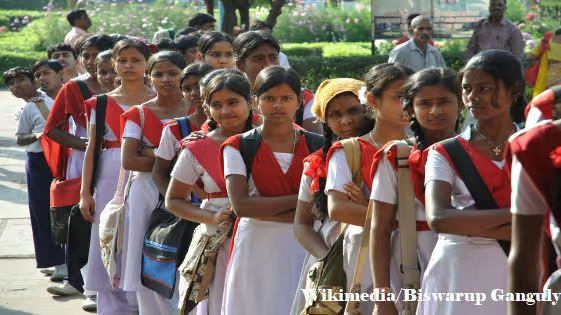
How investing in girls’ education can reduce domestic violence in India
One-third of women in India aged 15-49 report experiencing domestic violence. This article examines the impact of an increase in education among girls due to the District Primary Education Programme – a large-scale school expansion programme – on domestic violence in adulthood. It finds a significant decline in domestic violence, via pathways such as positive shifts in gender attitudes among women, improvements in partner quality, and increased access to information.
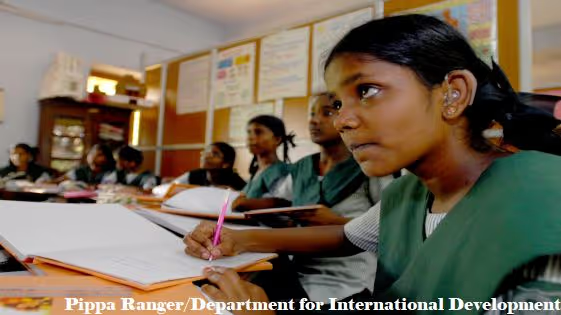
Enhancing secondary school learning: Role of remedial camps and teacher flexibility
A key dilemma in Indian education is that while children are enrolled in school, they are not actually learning. Based on an experiment in Odisha, this article explores possible solutions to the learning deficit in secondary schooling. It finds that tailored remedial programmes improve learning and correct teachers’ beliefs regarding learning levels. However, gains from increasing teacher autonomy in lesson plans are not significant.
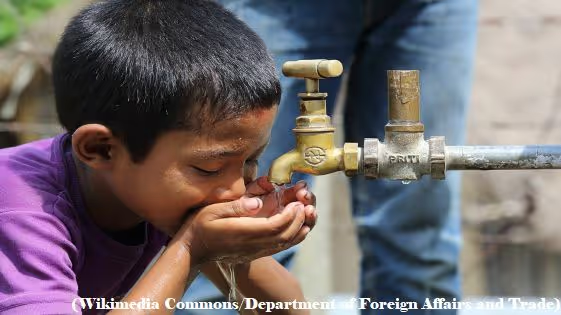
Can safe drinking water improve children’s educational outcomes?
It is well-established that treated water has health benefits, but can it also enhance children’s educational outcomes? Analysing India Human Development Survey data, this article provides evidence in this context – identifying pathways such as decreased incidence of diarrhoea, lesser time spent on fetching water, and reduced expenditure on short-term morbidity allowing for higher spend on education. Further, the impact is more pronounced for girls.
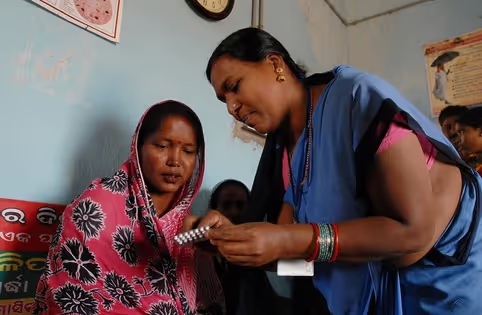
Impact of India’s Mission Parivar Vikas on fertility rates and family planning
India’s large-scale family planning programme, Mission Parivar Vikas, improves access to contraception, offers monetary incentives to beneficiaries for programme adoption, and disseminates information on family planning with the objective of reducing the prevailing high rates of fertility in 146 districts. Using data from multiple rounds of the NFHS, this article documents evidence of a decline in number of births as a result of the intervention, accompanied by reduced fertility preferences of women and men, and increased adoption of contraception.
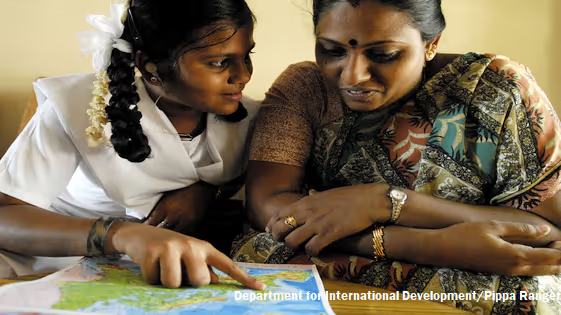
How socioeconomic status shapes parental beliefs about child academic achievement
This article highlights the prevalence of socioeconomic disparities in parental beliefs about their child’s performance – often outpacing actual disparities in academic performance. Analysis using data from India, the USA, Kenya, and Ghana shows that parents with lower socioeconomic status – as measured by household consumption and caste identity – are more likely to think that their child is below average. It explores the factors that could drive these beliefs and quantifies the impact of below-average parental beliefs on educational investment in children. This article highlights the prevalence of socioeconomic disparities in parental beliefs about their child’s performance – often outpacing actual disparities in academic performance. Analysis using data from India, the USA, Kenya, and Ghana shows that parents with lower socioeconomic status – as measured by household consumption and caste identity – are more likely to think that their child is below average. It explores the factor
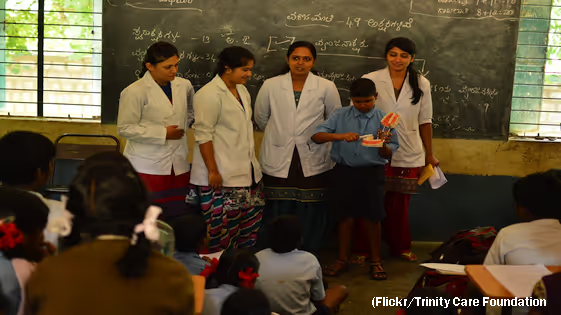
The role of caste and gender in determining science education in India
Studying science at the higher secondary level is essential to pursue further STEM education in India. However, based on recent research, this article documents the prevalence of gender- and caste-based disparities in the choice to study science. It highlights the role of households’ socioeconomic status, lack of access to schooling, and false beliefs and biases in explaining these disparities, and suggests that the social identity of teachers could have an impact on the uptake of science by disadvantaged groups.

Home-based learning through low-cost mobile teaching: Findings from Odisha
Evaluating the effectiveness of a low-cost Home-Based Learning programme implemented during the Covid-19 school closures in Odisha, this article finds that it improved the mathematics and language learning outcomes of children in under-resourced communities. With a rise in hybrid teaching and learning, the findings suggest that such technology-based learning interventions have the ability to provide a safety net in the event of sudden school closures and cushion against a decline in learning levels.
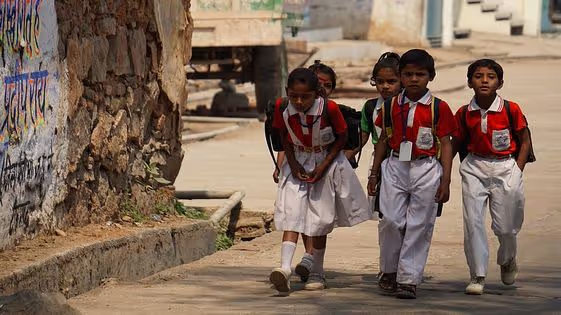
Building resilient education systems: Evidence from five countries
With education disrupted due to the Covid-19 pandemic for over a billion children worldwide, this article emphasises the need to create an education system that is resilient and maintains continuity despite such shocks. It describes an intervention conducted across five developing countries to leverage existing, low-cost family-owned assets – mobile phones – and summarises its effect on children's learning outcomes and wellbeing. It reveals how the original proof-of-concept can be successfully scaled across various country contexts, without showing diminishing returns.
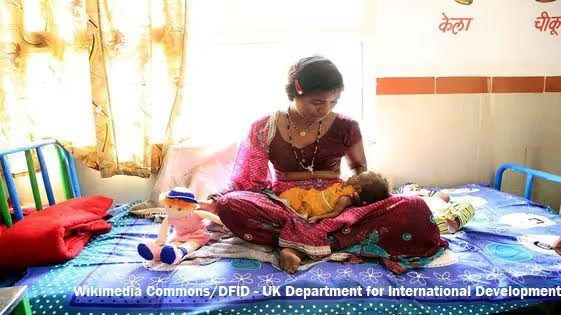
How does a ban on sex-selective abortions affect child health?
Widespread access to sex selection technologies has further skewed the male-biased sex ratio in India. However, this article suggests that the ban on prenatal sex determination may have adverse consequences on the health and mortality outcomes of the surviving children. Looking at children born between in the decade before and after the ban, it finds that the ban led to an increase in the proportion of unwanted girls, and increased competition for resources among children in large families.

Overcoming socio-cultural resistance towards biogas technology
Cultural taboos are often described as an insurmountable barrier to adoption of domestic toilet-linked anaerobic digesters (TLADs). This study provides a better understanding of the socio-cultural resistance towards TLADs through findings from interviews with households in Assam, and demonstrates that this resistance can be negotiable in certain circumstances. It highlights various pathways to adoption of TLADs and suggests ways in which the implementation of the national biogas programmes could become more effective.
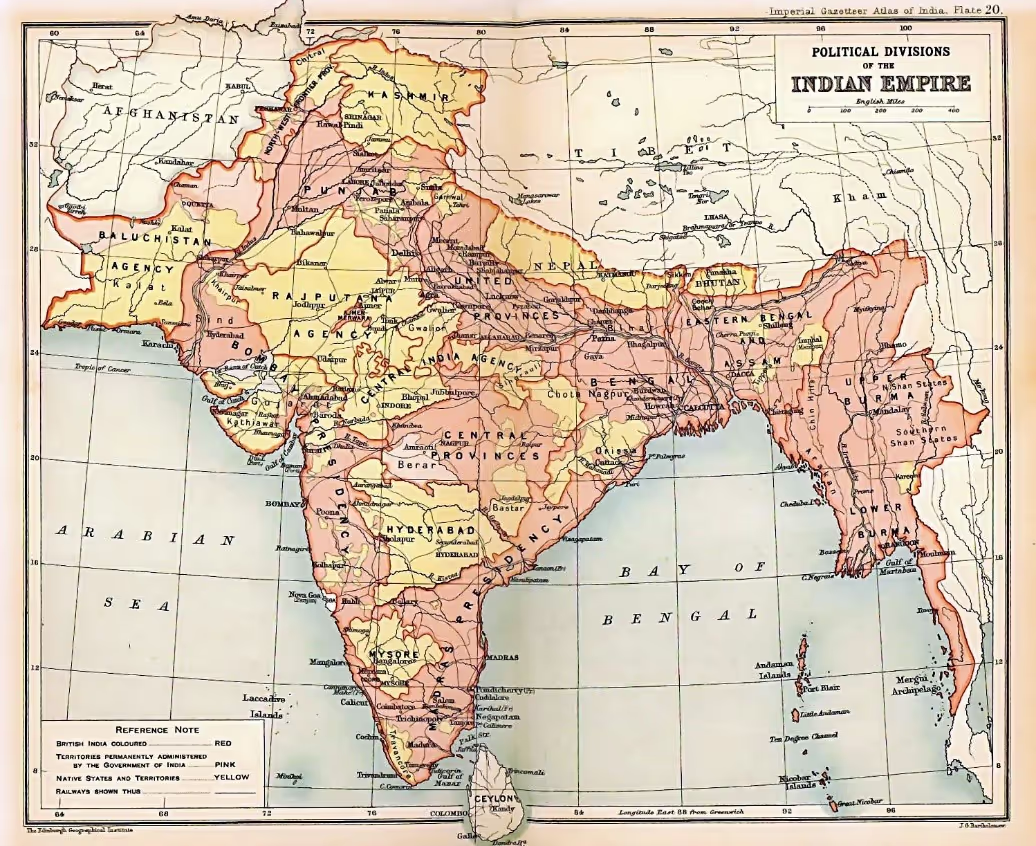
Women empowerment in India: Does colonial history matter?
Examining whether colonial history matters for women’s contemporary economic outcomes in India, this article shows that women who live in areas that were under direct British rule are better off in terms of almost all measures of women empowerment. It argues that legal and institutional changes brought in by the British in favour of women, and West-inspired social reforms in the 19th century may be relevant to explaining this long-term link.

Access to clean drinking water and women’s safety in India
In this study, Sekhri and Hossain use district-level data to find empirical evidence that groundwater scarcity results in an increase in sexual violence against women. They argue that in households without access to clean drinking water, women often have to walk far from home to collect water, making them more vulnerable to sexual violence. Since they establish that water shortages increase the risk faced by women water collectors, it makes the case for increased investment in water infrastructure.
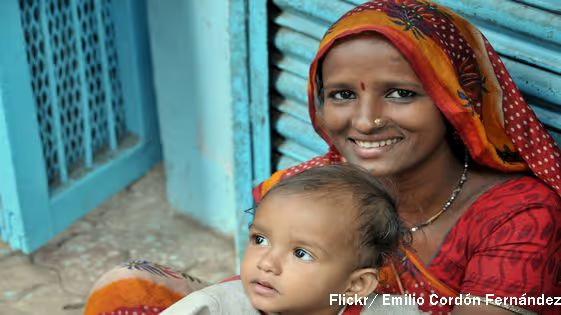
Herself, and her child: Are they worse off due to Covid-19?
Lockdowns imposed to contain the spread of Covid-19 led to loss of employment and income. They also created greater food insecurity, with women and children being more vulnerable to such shocks. In this context, based on surveys in rural Bihar, Husain et al. discuss the impact of the lockdown on the dietary practices of women and children, and how these were impacted by their access to government welfare programmes during this period.
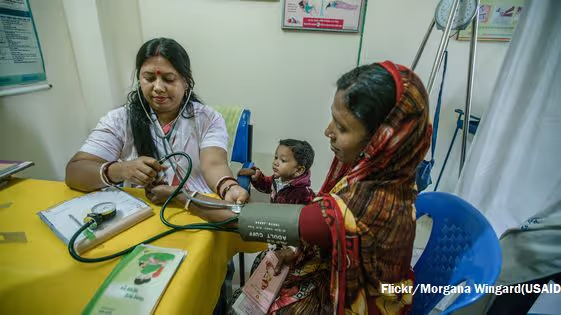
Sweet cash: Women’s demand for healthcare in developing countries
Agrawal et al. explore the role of gender-based preferences for demand of healthcare. Using CPHS data they find that the positive income shock – generated by a change in the mandated rates of contribution to the EPF – leads to a 11.6% decline in healthcare expenses driven by less expenditure on consultations and medications. However, this decline is not explained by women having better health outcomes and suggests that women, especially married women, prefer using the increased income on household goods

Empowering patients with information to improve hospital accountability
Despite the expansion of free healthcare for the poor throughout India, many hospitals continue to charge patients out-of-pocket fees. In this study, Dupas and Jain investigate whether informing patients of their benefits helps hold hospitals accountable. They survey dialysis patients in Rajasthan entitled to insurance under a government scheme and find the impact of the information intervention manifests differently in private and public hospitals, with a decrease in out-of-pocket payments

The unintended positive consequences of India’s safe motherhood programme
India’s flagship maternal health intervention, Janani Suraksha Yojana, provided conditional cash transfers to women opting for institutional deliveries. In this study, Chatterjee and Poddar document large positive spillovers of this programme on children’s educational outcomes. They find that these spillovers accrue to the already born elder children in the household through increased investments in human capital and changes in fertility preferences among women beneficiaries of the programme.
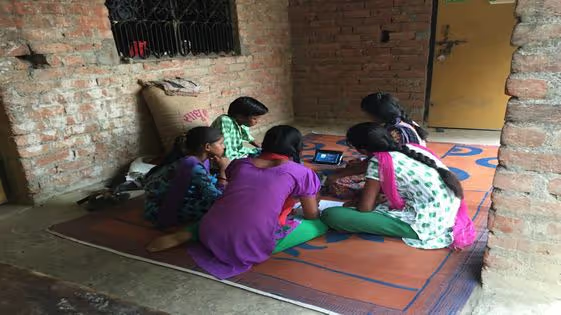
Low-tech and teacher support interventions during school closures
School closures during Covid-19 significantly impacted early childhood education, especially in households without sufficient parental engagement. Using data from households affiliated with Balwadis and preschools in Mumbai and Pune, Vernekar et al. find that those with access to a structured educational technology programme reported higher engagement levels. This effect was even greater for households that also received teacher support. They make a case for using such ed-tech programmes for blended schooling to minimise learning inequalities in case of future shocks.

Time poverty for girls: Implications for educational attainment and workforce participation
In the fifth post of I4I’s month-long campaign to mark International Women’s Day 2023, Priyadarshini et al. leverage time use data from a study in Bihar, and find that girls take on a majority of domestic duties, and spend significantly less time studying or preparing for entrance exams. However, they note that since the pandemic, male participation in unpaid household work has increased. They also present qualitative evidence which shows that attitudes towards the conventional division of work are slowly changing among some youth.
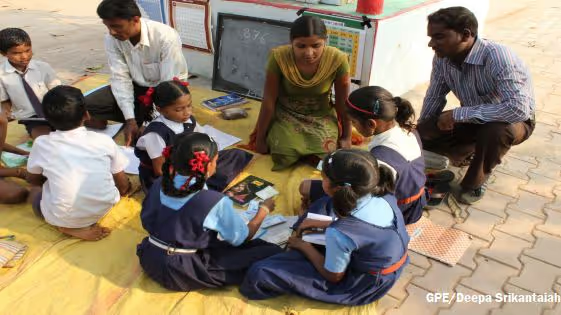
Understanding intergenerational educational mobility with conflicting evidence
There is a growing literature on intergenerational educational mobility that explores how parental education influences the educational attainment of children. This article compares three empirical models widely used to study intergenerational educational mobility. Using data from India, China and Indonesia, it finds that conclusions regarding educational mobility vary substantially across different models. . It argues that rank-based measures are not suitable for understanding the effects of economic policy, and suggests that policy advice should focus on the measures based on years of schooling.
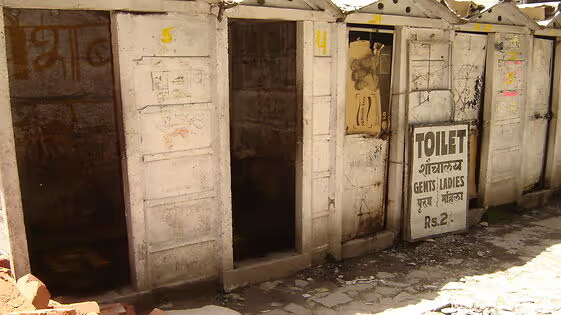
Is open defecation still prevalent in rural north India?
In an attempt to understand open defecation in four focus states in the aftermath of the Swachh Bharat Mission, Vyas and Gupta evaluate the findings of the NFHS-5. They note that the NFHS is likely to underestimate open defection rates due to their use of data collected at the household level, and the possibility of response bias. After adjusting the estimates, they find that about half of rural Indians in the focus states defecated in the open in 2019-21.

Phone-based assessment data: Triangulating schools’ learning outcomes
Recent research has shown that schools often report overestimated learning outcomes, as they fear adverse consequences if they report poor performance. In this post, Gupta et al. describe a pilot study to measure reliability and validity of phone-based assessments, in which they tested students in Uttar Pradesh both over the phone and in person. They reveal that students performed similarly in both modes, and put forth some recommendations to state government looking to scale phone assessments and improve data reliability.
India’s early years mathematics curriculum: Continuity, discontinuity and progression
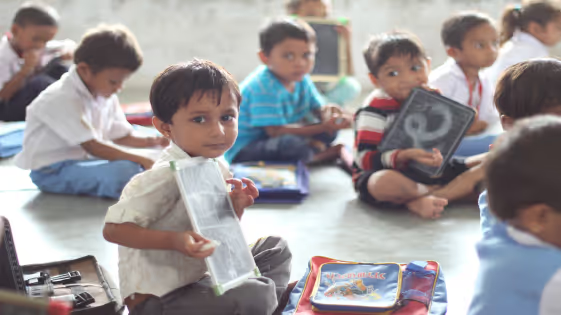
Research has shown the importance of building strong foundations for learning, as the development of cognitive skills in preschool and early primary years is predictive of later mathematical achievement. This article examines the national curriculum for mathematics and learning materials used in three states and finds that state textbooks do not always follow the prescribed content and there is a lack of continuity between the curriculum followed during preschool and early years of primary school.

Insuring India: PM-JAY’s targeting problem
India’s largest health insurance programme is targetted at poor and vulnerable populations who would be least able to afford medical care. However, this article by Chhabra and Smith shows that a large proportion of beneficiaries of both national and state health insurance schemes belong to the top half of the welfare distribution. They suggest using alternative eligibility criteria to increase awareness and uptake of schemes, as a path towards universal health coverage.
High scoring but poor: The misallocation of talent in higher education
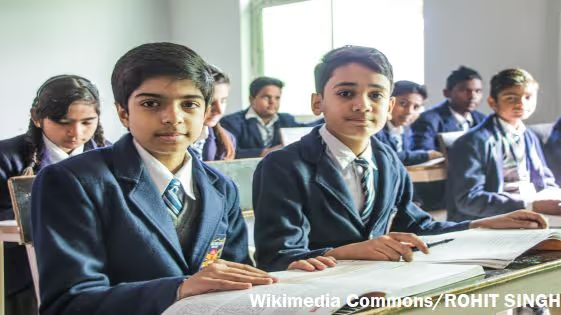
As labour market returns to college education have increased, more young adults now receive some form of higher education than ever before. Yet, college attendance remains low for children from poor socioeconomic backgrounds. This article investigates that disparity. It finds that family background remains as, if not more, important than academic preparedness for college attendance–poor students at the top of their class are just as likely to attend college as rich students at the bottom of the class.

Access to antenatal care and its influence on children’s cognitive development
Research has shown that maternal health affects later-life outcomes of children. Using data from the Young Lives survey in Andhra Pradesh and Telangana, this article shows that antenatal care has an impact on the cognitive scores of children during mid-childhood, with scores increasing if mothers had between five and eight antenatal visits, with significant variations by caste. Based on this finding, the authors suggest that the government’s current mandate of four minimum antenatal visits is worth rethinking.
The impact of community-based depression treatment in India
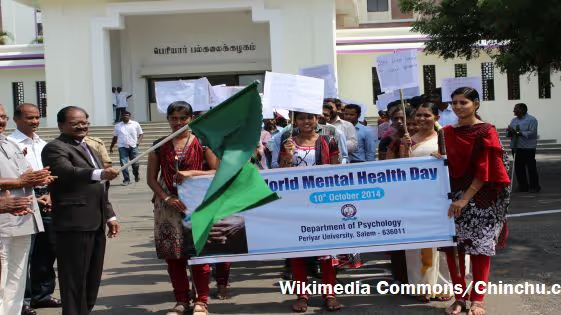
Although the prevalence of depression may have adverse economic impacts, especially in developing countries, treatment options in India are limited by a shortage of providers. This article looks at the impact of providing community-based depression treatment to low-income adults, and finds that it improves mental health and schooling outcomes for older children, and reduces risk tolerance. Additionally, pairing pharmacotherapy with livelihoods assistance provides additional benefits at a low additional cost.

To invest in sanitation or not? The role of gender differences in perceptions
Although sanitation is essential for health, many households remain without a toilet due to financial constraints. This article describes the extent to which perceptions of costs and benefits of sanitation investments vary by gender and within the household. It demonstrates how these intra-household gender differences impact the success of a sanitation microcredit intervention in Maharashtra. Impacts of these differences on intervention success are largely concentrated in households where the woman is involved in the decision-making process.
Access to health insurance in India: Direct and spillover effects
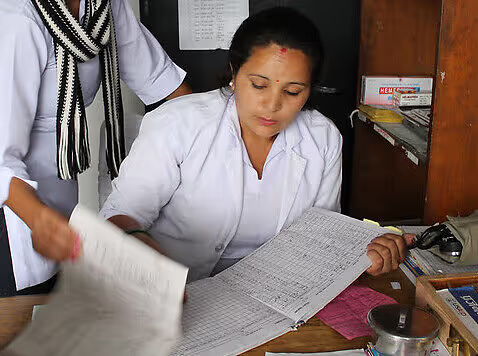
Many low-income households in India have been pushed into poverty by high healthcare costs. Uptake of the Rashtriya Swasthya Bima Yojana, the government-run national health insurance programme for below poverty line households, has been less than optimal. This article examines the impact of offering hospital insurance to a sample of above poverty line households in Karnataka. It finds significant peer effects in increasing insurance utilisation; hospital insurance however doesn’t have any significant effect on health outcomes.
Assessing the extent and fiscal cost of teacher shortages in India
The New Education Policy has proposed that the one million teacher vacancies in public elementary schools be filled imperatively. Using 2019-20 District Information System for Education (u-DISE) data, this article assesses this estimate of teacher shortages across India. Accounting for the prevalence of teacher surpluses and ‘fake’ student enrolment, it finds that there is a net surplus of about 100,000 teachers instead of the much-publicised shortage of a million teachers.
Using machine learning to target neonatal and infant mortality
India accounts for one-fourth of the world’s neonatal mortalities, and this has likely been exacerbated by the Covid-19 pandemic – due to lockdowns and lack of access to critical antenatal and postnatal care. Analysing 2011-12 India Human Development Survey (IHDS)-II data, this article uses machine learning to build predictive models of neonatal and infant mortality incidence, and identify the early warning signs, and consequently those at high-risk of neonatal and infant mortality.
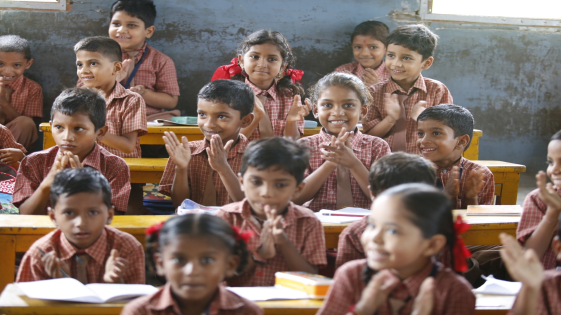
Does increasing female representation in school management improve school quality?
The 2009 Right to Education Act (RTE) mandated public and private aided schools to constitute School Management Committees (SMCs) to improve accountability in schools through community participation. Using 2012-2018 Indian administrative data on schools and ASER (Annual Status of Education Report) data, this article shows that higher female representation in SMCs is associated with higher school quality, measured in terms of number of teachers hired, qualification of teachers, academic resources, student enrolment, and learning outcomes
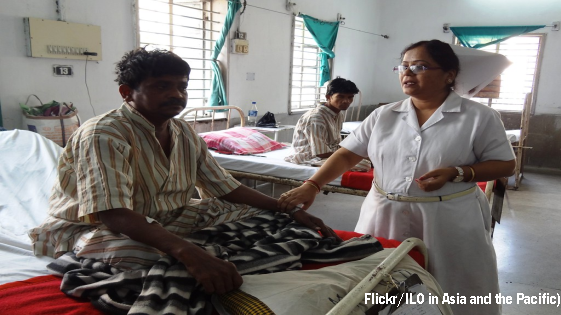
How RSBY impacted healthcare utilisation and spending
Social Health Insurance seeks to protect the poor from high health spending, and encourage healthcare utilisation. Analysing 2004-05 and 2011-12 Indian Human Development Survey data, this article finds that Rashtriya Swasthya Bima Yojana increased the likelihood of hospitalisation for long-term illness, and of doctor visits for short-term illness. While out-of-pocket health expenditure rose, there was a decline in the number of days lost due to illness.
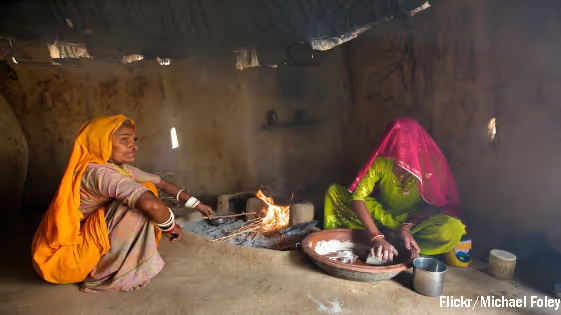
How cleaner cookstoves and fuels could benefit women’s health and the environment
With lesser access to financial resources and greater domestic responsibilities, women face the brunt of the climate change crisis. In particular, women are more affected by indoor air pollution caused by unclean cookstoves or fuel. In this post, Sharma and McDonough discuss evidence from research interventions in India examining and promoting the uptake of cleaner alternatives for cooking – in order to improve women’s health and the environment.

Gender difference in mathematics learning in rural India
A growing body of evidence in developed countries has indicated that female disadvantage prevails and persists in mathematics learning outcomes, with the likely causes being social factors, cultural norms, teacher bias, and parental attitudes, among others. Using nationally representative data from India, this article shows that a gender gap exists in mathematics – across age groups, and with no evidence of convergence over time.
Economic development, the nutrition trap, and metabolic disease
Two recently documented facts run counter to the conventional wisdom that economic development leads to better health: the absence of a clear link between income and nutritional status in developing countries; and the increased prevalence of metabolic disease, among normal individuals, that is, those who are not necessarily overweight, with economic development. This article provides a single explanation for these seemingly unrelated observations.
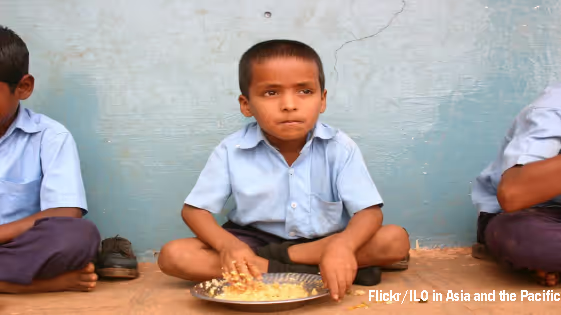
Food insecurity and child malnutrition: New empirical evidence from India
Child malnutrition is among the most pressing public health issues in India today. Equally alarming is the country’s food security crisis. Analysing ‘Young Lives Survey’ data from the states of Andhra Pradesh and Telangana, this article shows that there are sizeable negative effects of food insecurity on children’s nutrition – particularly among those towards the upper end of the health distribution.
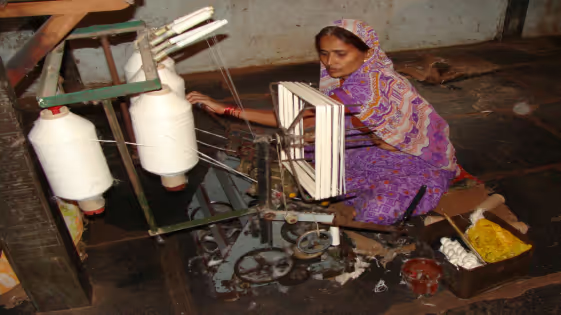
Urbanisation, gender, and social change: Do working women enjoy more agency?
Women’s limited work participation in India is not only of economic significance, but also has ramifications for their well-being and societal status. Based on a household survey in four north Indian urban clusters, this article finds a strong association between women’s work status and household decision-making agency, adding another dimension to our understanding of the link between women and work in India. However, the strength of this linkage is uneven and contingent on location, work categories, decision domains, and decision types.
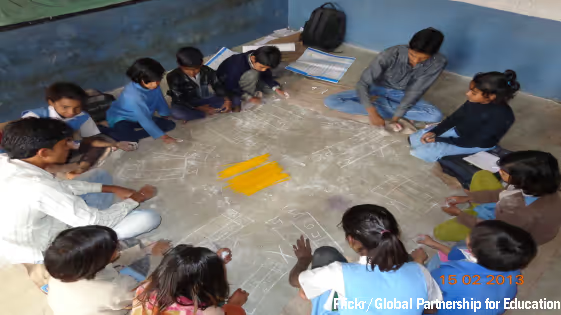
Assessing the assessments: Taking stock of India’s ‘learning outcomes’ data
As India recovers from the pandemic and the new National Education Policy is implemented, availability of reliable data on ‘learning outcomes’ is crucial. In this post, Johnson and Parrado assess the reliability of three main sources of learning outcomes data: government-run National Achievement Survey, independently conducted Annual Status of Education Report, and India Human Development Survey – and highlight the pressing need for better learning outcomes data at the national level.

Incentivising quality of public infrastructure: Does it work?
Community toilets in slums are often poorly maintained, and upgrading facilities is difficult due to low willingness-to-pay among potential users and ‘free riding’. Based on an experiment in Uttar Pradesh, this article examines the impact of one-time facility upgrade and cash incentives to caretakers. While there are improvements in the quality of facilities and reduced free-riding, more residents practise open defecation, with poor public health outcomes.
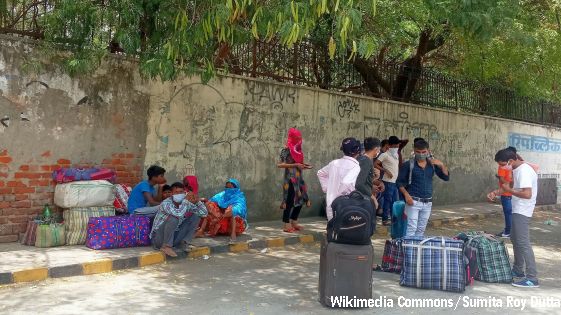
Examining Covid-19 travel restrictions in developing countries
At the outset of the Covid-19 pandemic, the developing world took many of the same policy steps as developed nations to contain the spread, including lockdowns. This article uses evidence from India to show that domestic travel bans may actually have increased Covid-19 cases in developing countries with large urban-rural migrant populations. While travel bans are in place, spread is temporarily stopped, but when travel is finally permitted, migrants return home possibly carrying many more infections than if they had been allowed to leave early.
Covid-19 and mental health: How have children been faring?
Dr John Vijay Sagar Kommu of NIMHANS examines the factors affecting the mental health of children during the pandemic and the role of caregivers and mental health professionals in helping children navigate this ‘new normal’. He recommends a staggered reopening of schools, focussing on extra-curricular activities, to improve children’s well-being

Covid-19 and mental health: Fighting the “infodemic”, one phone call at a time
COVID-19 information communication strategies globally have been dominated by SMS and voice recording based campaigns. The most pervasive Indian government campaign was a pre-recorded message that played before phone calls. We conducted a randomised controlled trial in 2020 using phone surveys and found in-person phone calls are at least as effective as text messages and voice recordings at providing knowledge, in addition to having a positive impact on mental health. We find a reduction in anxiety and depression from in-person phone calls along with a small increase in knowledge levels, when compared with the aforementioned modes. We think this could have implications for large scale information delivery campaigns. Meta description: Strategies to communicate information regarding Covid-19 in India have predominantly included text messages and recorded voice messages at the start of phone calls. Based on a remote survey of garment workers in Karnataka, this article shows that using pho

Covid-19 and mental health: Improving women’s mental well-being via telecounselling
Public health emergencies such as Covid-19 disproportionally cause mental health problems among women due to factors such as their inferior socioeconomic position in the household, greater care responsibilities, and risk of intimate partner violence. Based on a field study in rural Bangladesh, this article shows that a low-cost telecounselling intervention can effectively improve women’s mental health in resource-poor settings.
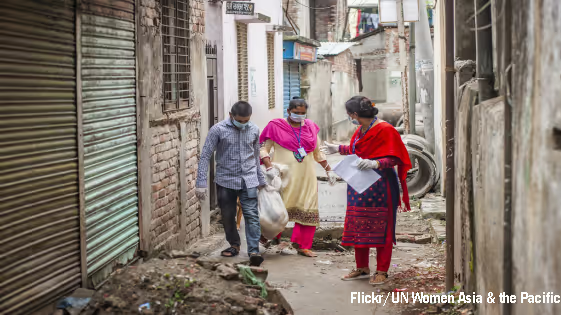
The intergenerational mortality tradeoff of Covid-19 lockdown policies
The introduction of lockdown policies to contain the transmission of Covid-19 led to a debate on what type of lockdowns were warranted, and whether the benefits justified the accompanying economic contractions. In this context, this article seeks to quantify the intergenerational mortality trade-off in pandemic mitigation in low- and middle-income countries, as the disease and lockdown policies affect the mortality of younger and older people differently.
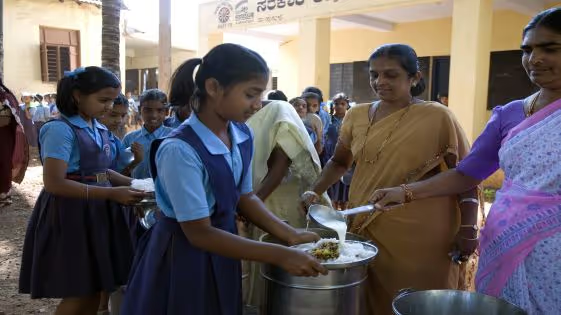
The power of school feeding programmes to improve nutrition
India has the world’s highest number of undernourished children and the largest school-feeding programme – the Mid-Day Meal (MDM) scheme – but limited evidence is available on the intergenerational impact of the programme. Based on data from the National Family Health Survey and National Sample Survey, this article shows if a mother was a beneficiary of MDM during schooling, there is a 20-30% reduction in height deficits of her children.
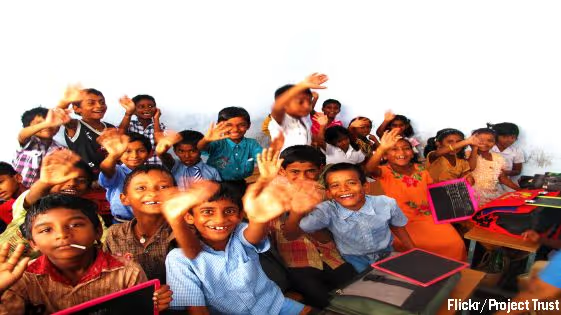
Start what you finish! Risk and schooling investments
Economic shocks prompt parents to work more in order to reduce the fallout, and children may spend more time helping in the household or on the family farm, thereby interrupting their schooling. Analysing data from rural India, this article shows that a 100% increase in risk – in the form of more volatile agricultural production and consumption – reduces the probability that a child attends school by 4-5%.

Grandads, dads, and sons: Examining multigenerational mobility in India
While studies have examined the association in socioeconomic status between parent and offspring, there has been relatively little research on multigenerational mobility, especially in the developing country context. Analysing data from the India Human Development Survey, this article shows that there is upward mobility in terms of education but not for occupation – with stark differences across social groups.

Covid-19: Does obesity play a role?
Overnutrition is a major public health issue in India. Being overweight or obese has been linked to the development of health conditions that make individuals more susceptible to severe illness due to Covid-19. Using district-level data on Covid-19 and anthropometric data from National Family Health Survey, this article presents evidence of a strong, significant association between overnutrition indicators and Covid-19 prevalence and case fatality rates.
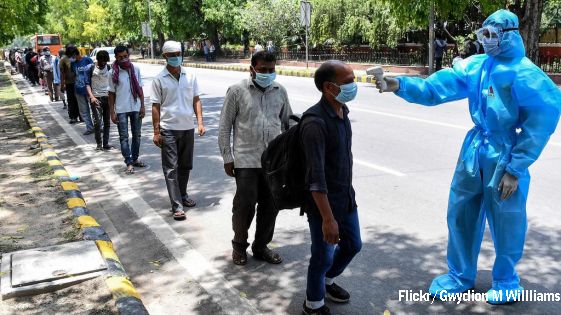
Economic consequences of Covid-19 lockdowns: Lessons from India’s first wave
As India combats the second wave of Covid-19, the impact on economic activity remains a major concern. Drawing lessons from the first wave in 2020, this article provides an assessment of how containment measures have influenced aggregate economic outcomes. It finds that economic recovery was lower by 9.3% in districts where mobility restrictions were maximum – relative to those with minimal restrictions – and incomes were hit harder than consumption.
Informing youth about job opportunities to make training programmes more effective
Launched in 2014 by the central government, Deen Dayal Upadhyaya Grameen Kaushalya Yojana seeks to provide skills-based training to rural, marginalised youth, and to place them in salaried jobs. Based on an experiment conducted in Bihar and Jharkhand, this article shows that providing detailed information about the programme and prospective jobs to the trainees, helps align their expectations with realities, and enhances job retention.
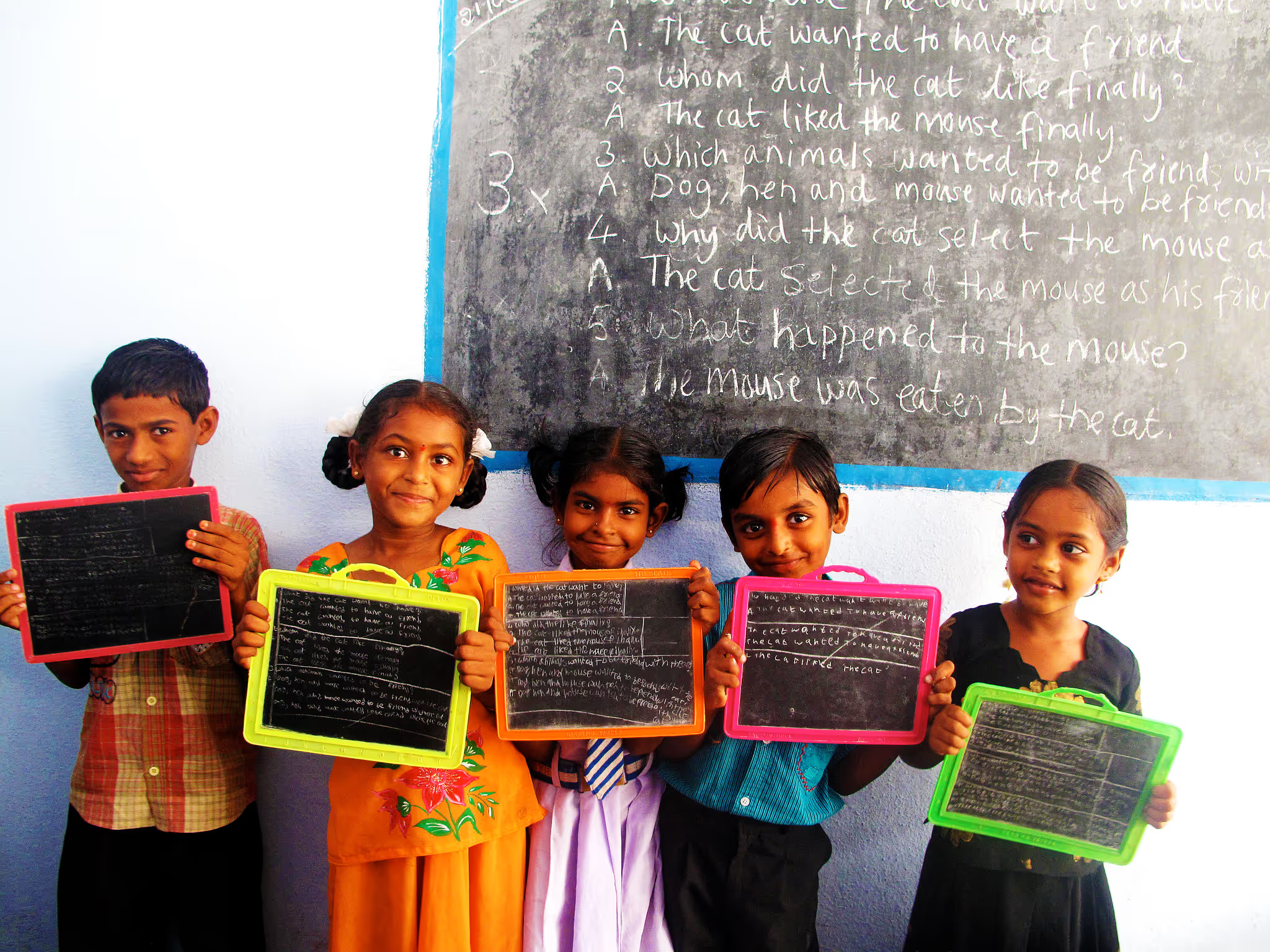
Dynamics of achievement gap between public and private school students
The achievement gap between public and private school students is well-documented in the literature on education in India, but there has not been sufficient focus on the dynamics of this gap over time. Analysing Young Lives Survey data on student test scores from Andhra Pradesh and Telangana, this article suggests that very little convergence is expected, as students make their way through middle and high school.

Covid-19 vaccine hesitancy: Trends across states, over time
Delay in acceptance or refusal of vaccine against Covid-19 despite its availability, is a key hindrance in achieving optimal vaccination coverage among populations around the globe. Using data from a Facebook survey – conducted in partnership with University of Maryland and Carnegie Mellon – this article explores vaccine hesitancy in India, and trends across states and over time.
Women left behind: Gender disparities in utilisation of government health insurance
Equity in healthcare is a key goal of health policy in India. Analysing administrative data from Rajasthan, this article highlights substantial gender gaps in the utilisation of subsidised hospital care under the state health insurance programme. These disparities persist despite substantial programme expansion, and seem to be driven by households being less willing to allocate resources to female vis-à-vis male health.
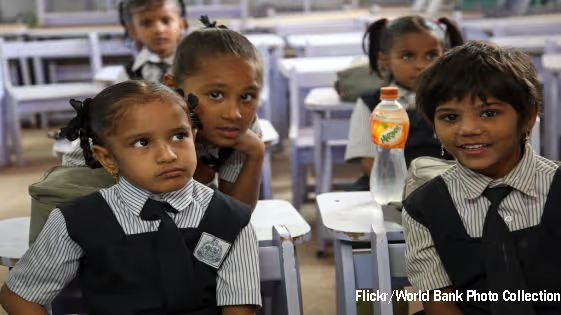
Teacher-student gender matching and learning outcomes
Studies have found positive effects of teacher-student gender matching on students’ learning outcomes in certain countries. Based on a theoretical model – tested empirically with survey data from Andhra Pradesh – this article shows that the positive effect in the Indian context seems to be a consequence of higher quality female teachers and more competent female students ‘self-selecting’ into urban, private schools on account of gender norms and institutional structures of teacher hiring.
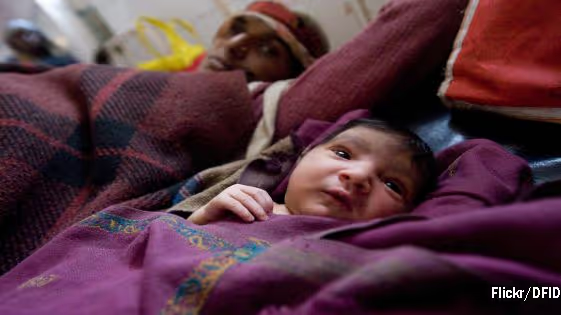
Evaluating India’s maternal cash transfer programmes
Over the years, India has implemented several programmes to overcome the issue of poor maternal and child health which can affect long-term physical and cognitive development. Using nationally representative data to study the impact of the current state maternity health benefits programme, this article shows that the programme has positive effects on infant health and immunisation rates and does not increase fertility rates unlike the previous programme. However, the results indicate that the programme’s effects are not sufficient to substantially improve health outcomes in children and mothers.

What can we learn about Swachh Bharat Mission from NFHS-5 factsheets?
Swachh Bharat Mission was introduced by Government of India in 2014 to eliminate open defecation. Based on data from the National Family and Health Survey (NFHS)-5 factsheets, this article shows that the sanitation situation has broadly remained the same between NFHS-4 in 2014 and NFHS-5 in 2019. Half of the rural population in the states of Uttar Pradesh, Madhya Pradesh, Bihar, and Rajasthan, continue to defecate in the open.
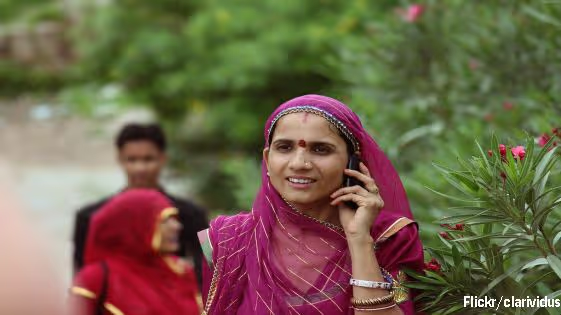
Covid-19: Debunking fake news among slum-dwellers
Urban slum-dwellers are among the groups that are most at-risk of Covid-19, and their precarious situation is further compounded by rampant misinformation regarding the Virus. Based on a survey of about 4,000 households in slum areas in Uttar Pradesh, this article shows that recorded phone messages from doctors giving information on Covid-19 – along with high financial incentives to pay attention – can debunk related fake news.

Rising obesity in rural India, under the growing urban shadow
According to the National Family Health Survey (NFHS), 2015-16, nearly 20% of India’s population is obese. This article shows that the country’s obesity trends have followed the nature of its economic transformation whereby urban growth impacts rural development. It finds that an additional kilometre of urban influence on surrounding villages leads to an increase in obesity incidence among approximately 3,000 rural women.
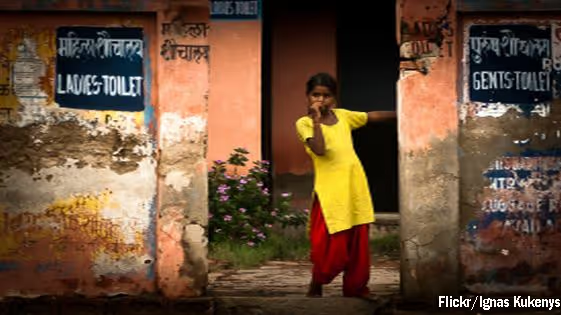
Collective action for environmental health: Evidence from sanitation in rural India
Access to and sustained use of improved household latrines have long been both a challenge as well as a policy priority in India, particularly in rural areas. Recognising the importance of social mechanisms that underlie household sanitation choices, this article utilises experimental games conducted in rural Bihar and Odisha, to examine how social factors, such as gender, influence preferences for improved sanitation.
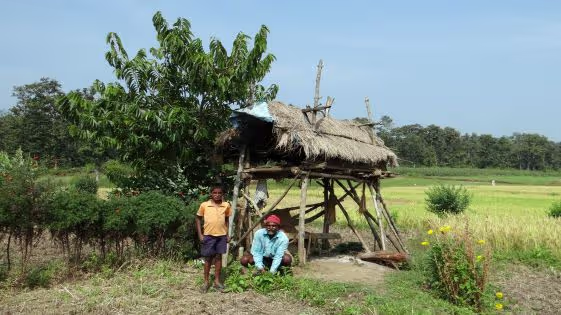
Does non-farm growth in rural areas reduce intergenerational educational mobility?
While the growth of the non-farm sector in a rural economy is known to reduce poverty, it may also exacerbate inequality. Comparing rural India and rural China the study finds that there is lower intergenerational education mobility in the former. Farmers’ sons in India attain higher schooling relative to non-farm sons when the father has low education, but the advantage flips when the father has over 10 years of education.
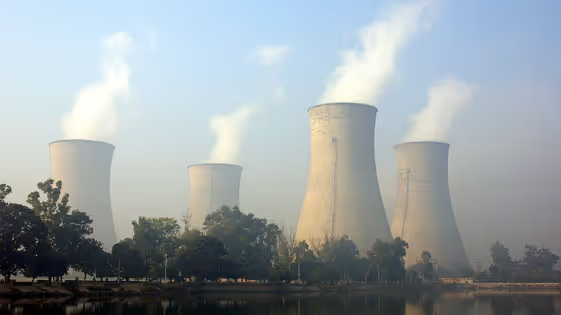
Pollution from coal-based power units and anaemic status of children and women
An extensive literature has considered the impact of air pollution on health. While studies have mainly focussed on outcomes such as general morbidity and mortality, this article evaluates the impact of pollution caused by coal-based power units on the anaemic status of young children and prime-age women in India. Factoring in these additional costs strengthens the case for a progressive shift to renewable energy and reduced reliance on coal.

Using phone surveys to measure mental health
The public health and humanitarian crises caused by Covid-19 have led to greater recognition of the issue of poor mental health. Although mental health can affect work and quality of life much like physical health, it remains under-researched. In this article, Coffey et al. show that mobile phone surveys can be a valuable medium for incorporating mental health measurement into population-level health surveys.
What will determine the costs of Prime Minister’s Jan Arogya Yojana?
The Pradhan Mantri Jan Arogya Yojana was launched in 2018 with the aim of covering hospitalisation expenses of the vulnerable 40% of the population, to protect them against financial risk arising out of catastrophic health expenses. It is touted as a game changer in the Indian health sector. Indrani Gupta and Abhijit Roy argue that if costs supersede the allocated funds for the programme, it may substitute other critical investments in the health sector and introduce distortions in the health services market.
Understanding school choices under RTE’s 25% mandate
Section 12(1)(c) of the Right To Education Act mandates non-minority status private schools to reserve at least 25% seats for the disadvantaged and weaker sections of the society. This article analyses the impact of the mandate on changing school choices of relatively disadvantaged households based on a sample of over 1,600 households in urban Ahmedabad. It finds that the mandate expanded choice of schools for the participating eligible households.
Why do parents invest in girls’ education? Evidence from rural India
Adolescent girls in rural Rajasthan frequently leave education early and marry young. This article develops a novel methodology to elicit average parental preferences over a daughter's education and age of marriage, and subjective beliefs about the evolution of her marriage-market prospects. It finds that prospects of finding a desirable groom are an important driver of girls’ education Policies that help girls stay in school can prevent early marriage.

Sustained health benefits of ICDS: Later life evidence
Child malnutrition is a serious concern for India where more than half of the children under age five are moderately or severely malnourished. The Integrated Child Development Services (ICDS) launched in 1975, target long-term nutrition and holistic development of children. Analysing data from the India Human Development Survey-II, this article evaluates the causal impact of ICDS exposure in rural areas on children’s health outcomes in later years of their lives.
Right to Education Act: Trends in enrolment, test scores, and school quality
A decade ago, India joined a range of countries that mandate free, compulsory education for school-aged children. Passed in August 2009, India’s Right to Education Act was potentially transformative legislation, yet detailed analysis of its impact on the country’s educational outcomes has been slow to emerge. This article uses three national datasets to consider whether the Act is associated with changes in student enrolment, test scores, pupil-teacher ratios, school infrastructure, and other indicators of educational health and standing.
It runs in the family: Parents’ education and child learning outcomes
Early life learning is known to influence later life outcomes like schooling, employment, and income. It is thus vital to identify strategies to enhance child learning in schools. This article examines the effects of parental education on child learning outcomes by leveraging the variation in access to schooling for parents arising out of the implementation of a national school construction policy in India.

Labelled loans and sanitation investments
Rural Indian households report lack of affordability as the main reason for not having a toilet. This article investigates – through an experiment in rural Maharashtra – whether microcredit labelled for sanitation can increase sanitation investments. It finds that targeted households demand the sanitation loans, and toilet uptake increases by 9 percentage points; however, roughly half of the loans were not used for sanitation
Hindu-Muslim fertility differentials in India: District-level estimates from Census 2011
The 2011 Indian Census data show a higher growth rate of Muslim population compared to the Hindu population. This article provides an in-depth picture of Hindu-Muslim fertility differentials at the district level and their trends at the state level. It shows that fertility transition has been steady during the last decade; overall convergence of fertility rates between Hindus and Muslims has been underway but significant regional variations persist.
Choosing among children: Early childhood investments in India
Early childhood development programmes have become increasingly common in developing countries. This article analyses historical administrative data from the roll-out of India’s Integrated Child Development Services programme and finds significant long-term positive health, education, and labour-market impacts for adults who were exposed to the programme as children. However, siblings of children with greater programme exposure have worse outcomes as parents reallocated investments away from them.
The long-term consequences of medical missions in colonial India
Health outcomes vary substantially across India. Is this variation exclusively determined by present-day factors, or can it be traced back to historical events? This article studies the long-term consequences of the Protestant medical missionary enterprise that spread throughout the country in the 19th century. It finds a robust positive association between proximity to a medical mission and current individuals’ health outcomes.
Gender, electoral competition, and sanitation in India
The negative impact of poor sanitation is more pronounced for women than men and therefore, women have a stronger desire to improve sanitation. Analysing district-level data from 15 major Indian states for the period 2006-2011, this article finds that female legislators are more likely than their male counterparts to deliver high-quality latrines – even after considering the role of electoral competition in policy choices of politicians.
Child height in India: New data, familiar challenges
Children in India are among the shortest in the world. This article uses the National Family Health Survey (NFHS-4) data to examine the complexity and diversity of child height in the country. It finds that India's overall average child height-for-age improved between 2005-06 and 2015-16. Although important, this increase is small relative to India’s overall height deficit and its economic progress.

Should students be rewarded for attending school regularly?
A growing literature examines whether incentives can increase effort and improve school performance of underprivileged students. This article discusses an experiment conducted in non-formal schools in the slums of Ahmedabad, Gujarat to assess the effect of a short-term reward scheme for attending a target number of school days. It finds increased attendance but reduced performance and intrinsic motivation amongst those who need the greatest boost in effort and performance.
Here comes the sun(set): It puts children to sleep and affects global educational outcomes
Emerging out of the British Empire in the mid-20th century, India reckoned a single time zone would serve as a unifying force, and adopted the Indian Standard Time across her territorial boundaries. However, India spans roughly 30° longitude, corresponding with a two-hour difference in average solar time from east to west. This article provides evidence that arbitrary clock conventions – by generating long-term differences in sleep – influence the geographic distribution of educational attainment levels.
Child health, fertility, and sex ratio: India vs. Bangladesh
Despite having lower per capita income, Bangladesh has superior performance over India on key welfare indicators. This article compares the experiences of India and Bangladesh on several key indicators during 1990-2015 using two different datasets. It finds better performance of Bangladesh on infant mortality rate with a lower boy-girl sex ratio at birth than India. While both countries record an impressive decline in fertility rates, this was accompanied by a worsening of the sex ratio in India but not in Bangladesh.

Providing information on school quality in a dysfunctional public education system
Insufficient school accountability and limited parental awareness of school quality can result in poor learning outcomes of students. This article reports the results of a randomised experiment in rural Rajasthan to better understand how greater awareness among schools and households of extant learning levels can lead to changes in student performance in an education market with both public and private providers of primary schooling.

Income risks and schooling investment in rural Bihar
Income and earnings are highly volatile in developing countries as a majority of the population relies on agriculture or informal jobs for their livelihood. Based on a primary survey in rural Bihar, this article seeks to quantify income risks faced by households, their effect on schooling investment, and whether the effect is different for male and female children.
How sanitation facilities in schools can improve educational outcomes
The Indian government launched the School Sanitation and Hygiene Education programme in 1999 to build latrines in schools. Analysing data from nearly 140,000 schools in 2003 - some of which received a latrine and some that did not - this article shows that latrine construction positively impacted educational outcomes like enrolment, dropout rates, and number of students who appeared for and passed exams.

Expected income support and child health
Government of India’s maternity support programme – Pradhan Mantri Matru Vandana Yojana – seeks to provide income support to pregnant women and lactating mothers in rural India. Evaluating the programme in Bihar, this article finds that even though payments are delayed, the programme leads to significant improvement in the first child’s health. The likely channel is an increase in the interval between the first and second birth
How MNREGA reduced women’s labour force participation
By guaranteeing 100 workdays annually per household in rural India, MNREGA seeks to enhance economic security and alleviate poverty. This article shows that while the programme has successfully achieved these goals, it has inadvertently reduced rural women’s labour force participation and consequently their well-being and household bargaining power. This is because it has reduced the need for women to serve as additional workers in times of male income instability.
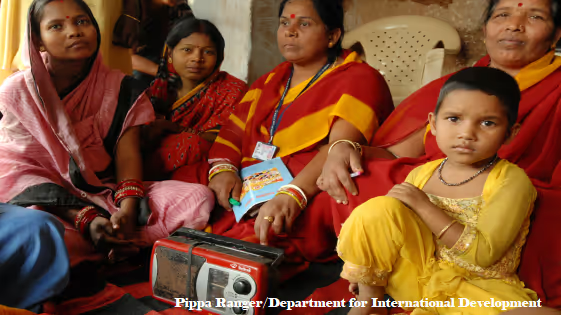
Tuning into empowerment: How community radio affects gender equality
India’s Community Radio Policy, 2006, enables educational institutions and NGOs to establish community radio stations to address local development issues via locally produced content. This article shows that exposure to community radio improves women’s outcomes in terms of education, marriage and fertility. The evidence makes a case for leveraging grassroots media to address gender inequality at scale in developing countries.
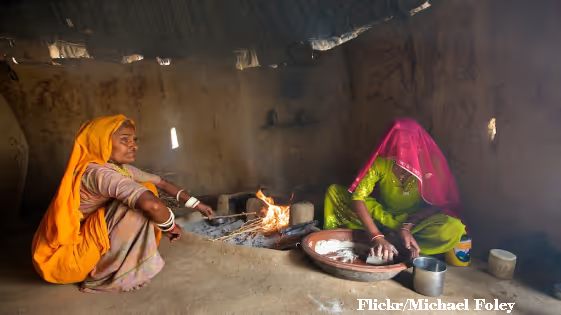
Raising the value of women’s time for a transition to clean fuels
A majority of women in rural India continue to use traditional fuels, adding to the time that they devote to domestic work. In this post, Farzana Afridi discusses findings from a survey in Madhya Pradesh, showing that switching to a clean fuel leads to time saving of about 20 minutes per day on average – but no corresponding increase in women’s workforce participation. She contends that raising the value of women’s work in the labour market can incentivise clean fuel adoption
Girls in tech: Evaluating IIT’s Supernumerary Seats Scheme
Introduced in 2018, the Supernumerary Seats Scheme seeks to improve gender ratios among undergraduate engineering students at IITs, which have historically been male dominated. This article shows that the initiative has been successful in getting more females into these elite institutions. Further, on average, although girls start off with lower entry ranks, they are able to match up with their male counterparts academically over the duration of the programme
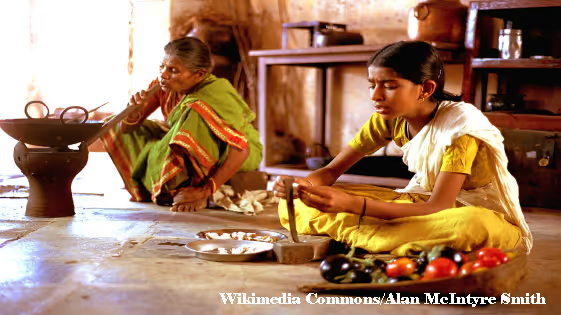
What is behind the recent rise in women’s workforce participation?
Women’s workforce participation in India increased from 32% in 2022-23 to 37% in 2023-24, with the rise concentrated in rural areas. This article demonstrates that this significant change may be driven by additional clarifications in instructions to enumerators, resulting in several women who were earlier classified as outside the labour force now being considered self-employed. This highlights the need to exercise caution while interpreting the rising workforce participation as sustainable employment growth
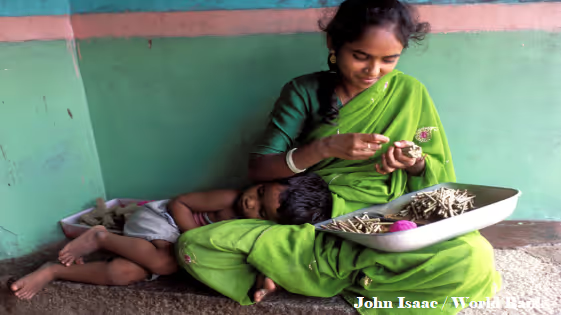
Female labour force participation: Measurement and data quality
Official data revealed a sharp decline in female labour force participation in India between 2004-05 and 2011-12, despite fast economic growth in the country. Examining the measurement of women’s work and data quality issues, this article identifies three explanations for the low observed female labour force participation: inconsistent treatment of non-market work, more women in higher education, and the disproportionate time spent by women on childcare

Pedalling towards gender equality and empowerment
In Bihar, India and in rural Zambia, the government introduced programmes to address gender gaps in education by providing adolescent girls with bicycles for their commute to school. Discussing the immediate and long-term impacts of these initiatives, this article provides insights into designing more effective and sustainable policies to promote gender parity in education. This is the fifth post of a five-part series to mark International Women’s Day 2025.

Can job ad language help explain the gender gap in the Indian labour market?
Women applying for jobs tend to earn a lot less than men of the same age and education qualifications. Understanding the factors contributing to this disparity is crucial for addressing gender inequality in the labour market. This article explores one such factor: the wording of job advertisements and how it is linked to applicant behaviour. It finds that women might be deterred from applying to high-salary jobs due to implicit gender associations, together with explicit preferences. This is the fourth post of a five-part series to mark International Women’s Day 2025.
Does electrification illuminate women's lives?
A key reason for women’s low labour force participation in developing countries is the burden of unpaid domestic work. Analysing data from rural Bangladesh, this article assesses whether electrification can make a difference by increasing access to time-saving technologies. It finds that women in electrified homes are able to divert some time away from housework to farm work and leisure, and have a greater say in decision-making. This is the third post of a five-part series to mark International Women’s Day 2025.

Mind matters: How destigmatisation drives help-seeking in Nepal
Common mental health problems such as anxiety and depression constitute a significant public health challenge, with stigma being a key barrier to seeking proper care. Based on a study in Nepal, the article shows that low-cost, well-targeted interventions such as information campaigns or celebrity endorsements, can encourage people to seek support and bridge the gaps in treatment.

Road to empowerment: Rural roads programme and women's outcomes
Lack of spatial mobility is recognised as a critical constraint on women's socioeconomic participation. This article presents findings from a study examining the impact of India’s rural roads programme, on women’s outcomes. While the construction of all-weather roads alleviates women’s mobility restrictions and improves social norms and female education, there is limited effect on female employment – with men benefitting more in this regard instead.
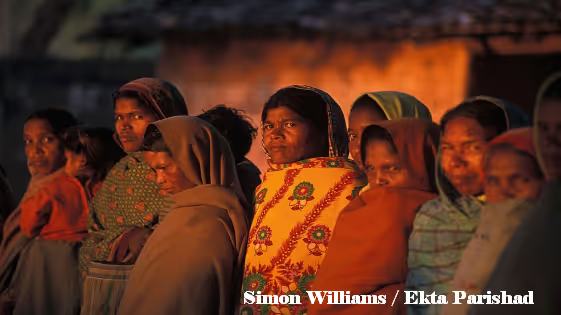
Economic development and crime against women
With economic development, technology becomes more skill-intensive than brawn-intensive, increasing the earning potential of women. Analysing Indian data from 2004-2012, this article shows that the decreasing gender gap is associated with more rapes and indecent assaults against women, particularly in areas where gender bias is high. The key mechanism behind this is male backlash against female empowerment, in settings where social institutions have traditionally favoured men.

Defensive cooperation: Understanding pro-social attitudes in Indian Muslims
Mainstream theories of development predict greater willingness to contribute to public goods in more homogeneous settings. This article reports findings from a study in Delhi slums to assess how Hindus and Muslims respond to social pressure promoting their contribution to community sanitation initiatives. In contrast to theory, it shows that social accountability mechanisms are more effective among Muslims – reflecting coping strategies by minorities to navigate hostile sociopolitical environments.
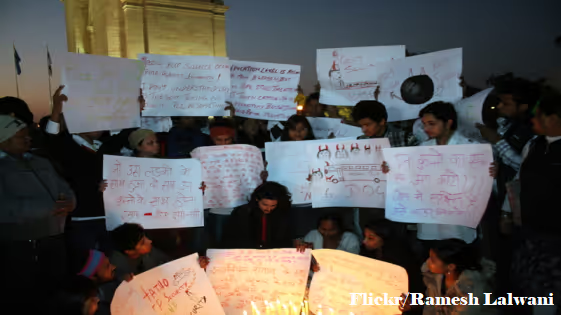
Reporting of gender-based violence: Why public activism and dialogue matter
The recent case of an on-duty female doctor being brutally raped and murdered in a Kolkata hospital, has sparked nation-wide protests and yet again raised serious questions and concerns around women’s safety in India. Examining the impact of the ‘Nirbhaya’ incident in Delhi in 2012 and the resultant social movement, this article finds that there was an increase of 27% in the reporting of gender-based violence following the incident
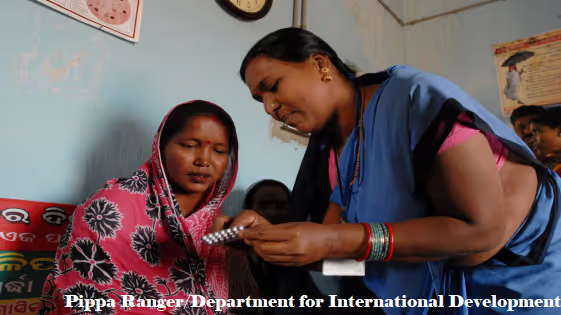
Decisions and dynamics: Unpacking the impact of contraceptive decisions on domestic violence
Women’s empowerment in the form of intra-household bargaining power, employment, and education have been documented to both reduce and increase the prevalence of intimate partner violence (IPV). Using data from the latest wave of the National Family Health Survey (NFHS-5), this article investigates how a woman’s contraceptive use decisions could affect IPV, and shows that independently deciding to use contraceptives puts her at a greater risk of physical, sexual, and emotional violence.

Why firms should appoint ‘networked’ women directors
India has introduced regulations mandating companies to appoint woman directors on their boards, to improve gender balance at the top. In this context, this article traces the evolution of women-director networks in listed firms during 2010-2020. It finds that networked women directors are more involved in board activities, and positively impact firm performance through bridging information gaps and improving corporate governance.
Affirmative action in credit markets: Can it enhance minorities’ welfare?
In 2009, as part of a Government of India programme to improve the welfare of religious minorities, commercial banks were directed to increase credit to these groups. This article finds that the policy led to an increase in access to bank credit among religious minorities in the targeted areas. This in turn reduced the consumption gap between non-minorities and minorities, without any adverse welfare effects on the latter group.

Analysing gender bias in school textbooks in India
If we want girls’ education to help build gender equality, a basic first step is ensuring we are not giving children sexist textbooks. This article analyses gender bias in school textbooks in India and whether this varies across states. Further, it checks for any association between gender representation in books and prevailing attitudes towards women and girls in society.
Paternalistic discrimination against women in the labour market
Women in many low-income countries are often excluded from the labour market. This article proposes a new explanation in the form of paternalistic discrimination – the preferential hiring of men to protect women from dangerous or unpleasant tasks. Based on a field experiment in Bangladesh involving night-shift jobs and provision of worker transport and subsidies, it finds evidence of such discrimination among employers

Beneath the colours: Unveiling Holi's impact on violence against women
While social norms are considered important to the issue of violence against women (VAW), there is little research on how norms impact VAW in public places. Analysing police data from Bihar, this article finds a stark increase of 170% in assaults against women during the festival of Holi as compared to otherwise similar days. The effect varies across districts with different perceptions among women and men regarding VAW.
Can conversations about minorities reduce discrimination? Evidence from anti-transgender discrimination in Chennai
Discriminatory behaviour is known to adversely impact equity and efficiency in a range of economic and social domains. In the context of discrimination against transgender people in urban Chennai, this article examines whether discrimination may be reduced by peer-to-peer communication among majority-group members about a minority. It finds that such communication has significant positive effects, driven by group members persuading one another to be more pro-transgender. Main Text:

Female leadership in corporate India: Firm performance and culture
Under the Companies Act, 2013, all listed firms in India are required to have at least one woman on their board. This article finds that having at least one woman on board leads to better economic performance and lower financial risk for large and medium-sized firms. Further, higher share of women in board positions is positively associated with employee ratings and sentiment scores. This is the first article in the Ideas@IPF2024 series
Forced male sterilisation and violence against women: Evidence from ‘Emergency India’
During 1975-1977, the Government of India introduced a programme involving forced sterilisation of men, in order to achieve population control as a poverty alleviation measure. Leveraging the varying degree of coercion employed under the programme across districts in the country, this article finds that forced vasectomies led to an increase in violence against women – effects that persist well beyond the period of the intervention.
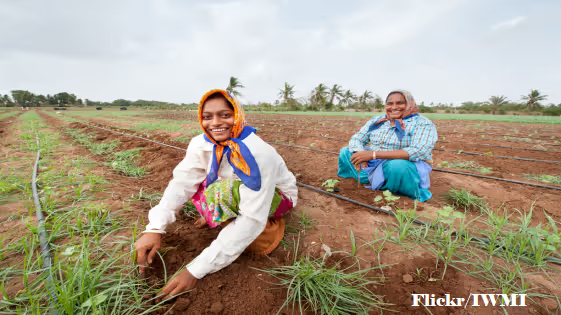
Soil characteristics, women’s workforce participation and intra-household consumption distribution
When women’s participation in agriculture increases relative to men, does the intra-household distribution of consumption become more gender-equitable? Is there a positive impact on children’s access to consumption resources within households? This article analyses 2011 Consumption Survey Data and finds that regions where geographical conditions favour greater participation of women in agriculture, have significantly higher shares of consumption resources among both women and children within the household.
Mahila Samakhya: Women’s education through empowerment
While girls are now at par with boys in school enrolment, they continue to lag behind in terms of the number of years spent in formal education. In this context, this article assesses the impact of the ‘Mahila Samakhya’ programme – which sought to empower women within local communities in rural India in order to challenge traditional gender roles that may be restricting girls’ education – on educational gains.

All is not well: Unintended consequences of maternity leave policy in India
In 2017, mandated paid maternity leave for women employees in India was increased from 12 weeks to 26 weeks. Analysing data for 160,000 households, this article finds that the policy change caused a fall in employment and income among women in the high-fertility age group. This was driven by a rise in firms’ ‘reservation productivity’ for hiring these women, since employers alone finance the leave.
Coping through acceptance: What shapes attitudes towards intimate partner violence
In many instances, tolerance for intimate partner violence (IPV) exists even among its victims, with women justifying their partners' behaviour as a coping mechanism. This article investigates the causal effect of IPV on attitudes towards violence, and the extent to which the length of exposure to abuse impacts that. Exploiting differences in legal drinking age across states, it finds that a lower drinking age increases exposure to violence, which in turn leads to an increase in wives' tolerance towards it.
The distributional consequences of political reservations
This article identifies and attempts to fill in the gaps in understanding the effects of reservations for Scheduled Castes (SCs) in Panchayats. Using data from a state-wide census, multiple administrative datasets and primary survey data from Bihar, it finds that reservations reduce asset inequality between scheduled castes and others, both in the short run and more substantially, in the long run. It investigates the mechanisms through which this takes place – including greater targeting of public goods, access to welfare programmes and improved political participation. In this context, they also show that reservation works best when sub-castes within SCs are few and their population in the GP is neither too small nor too large.
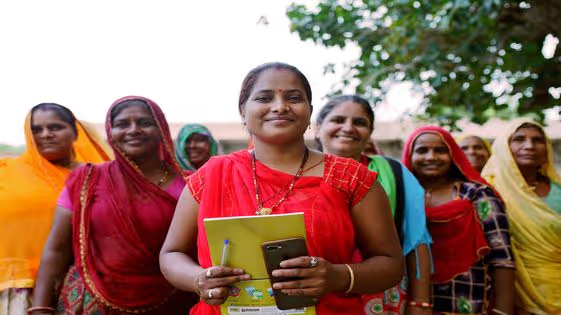
Bring a friend: Leveraging financial and peer support to improve women’s reproductive agency
In the second of two articles about women’s fertility and family planning, S Anukriti et al. highlight findings which reveal that women are more likely to avail of family planning services if they are accompanied by one of their peers to the clinic. They suggest that peer support could also reduce social isolation, enable greater mobility, and overcome the resistance from mothers-in-law and other family members, with the findings of this intervention having broader implications for women’s empowerment.
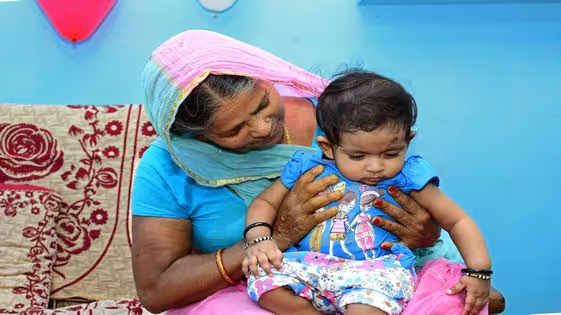
Convincing the Mummy-ji: Improving mother-in-law approval of family planning in India
In the first of two articles about women’s fertility and family planning, Anukriti et al. discuss the influence that mothers-in-law have on women’s access to family planning services, with them on average preferring more children and sons than the women and their husbands. They describe the effects of an intervention that provides access to subsidised family planning to women in Uttar Pradesh. The intervention increased conversations about family planning between women and their mothers-in-law, with a consequent increase in mothers-in-law’s approval of family planning, and significantly, an increase in daughters-in-law’s clinic visits.

How class and caste influence school choice
Families' socioeconomic status impacts how parents make decisions regarding their children's education. Taking into account the interplay of caste and class, this paper finds that when families are too rich or too poor their caste identity does not affect their decisions about school choice. However, it is in the middle of the wealth distribution that caste identity matters most – students from disadvantaged castes whose parents are not as well connected in the labour market see lower returns to education.
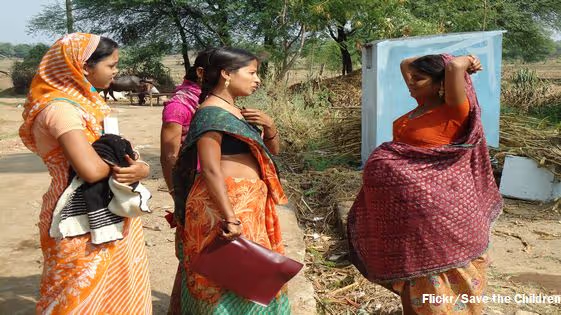
Hindu-Muslim fertility differentials in India: An update
Building on past research, Saswata Ghosh and Pallabi Das estimate the state- and district-level fertility differentials between Hindus and Muslims using data from the latest round of the NFHS. They show that although the fertility transition has advanced further in most states during the last decade, and fertility rates between Hindus and Muslims have also converged, some regional variations persist.
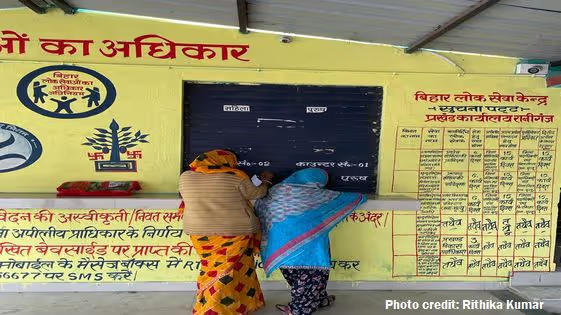
Left behind or left ahead? Implications of male migration on female political engagement
In the eleventh post of I4I’s month-long campaign to mark International Women’s Day 2023, using data from both the IHDS and a survey conducted in rural Bihar, Rithika Kumar finds that migration-driven male absence is leading to the feminisation of everyday political engagement in rural India. This is through an alternate pathway: women are empowered despite remaining financially dependent on the household. However, she finds that the periodic return of migrant men and the dominance of joint family systems constrains this positive effect and in fundamentally altering household dynamics

The effect of domestic violence on cardiovascular risk
In the tenth post of I4I’s month-long campaign to mark International Women’s Day 2023, Seetha Menon investigates the causal relationship between domestic violence and increased risk of cardiovascular disease among women. Using data from NFHS-4, and instrumenting the price of gold at the time of marriage as a source of variation in domestic violence, she finds a positive effect of domestic violence on hypertension in women but finds no effect on the partnered men

The impact of religious violence and social conflict on women’s age of marriage
In the ninth post of I4I’s month-long campaign to mark International Women’s Day 2023, Debnath et al. explore the effects of Hindu-Muslim riots on decisions around women's marriage. They find that the incidence of religious violence lowers the age of marriage for women– likely motivated by the desire to marry girls off early to reduce their vulnerability to sexual violence. They find that early marriage also impacts women’s educational attainment, and their age at which they have children.
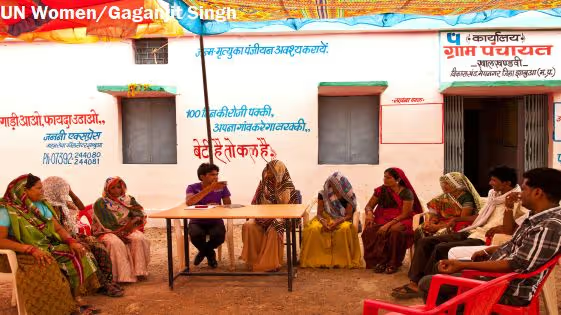
The empowering effects of employment on married women
In the seventh post of I4I’s month-long campaign to mark International Women’s Day 2023, Madeline McKelway and Julia Redstone outline the findings of a study investigating the empowerment effects on married women of an employment opportunity in carpet weaving in Uttar Pradesh. They note that although the intervention increased women's participation in the training programme and involvement in household decision making, the employment effects were not long-lasting, as participation in paid work came at the cost of women's leisure time.
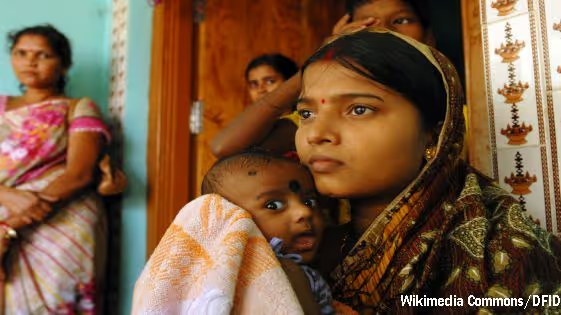
Living with the in-laws: Effect on women’s employment in India
In the fourth post of I4I’s month-long campaign to mark International Women’s Day 2023, Rajshri Jayaraman considers the negative correlation between high rates of co-residence with in-laws and low rates of labour force participation among women in India. She establishes a causal relationship between the two and explores three possible channels through which co-residence could reduce women’s employment – a negative income effect from accessing shared household resources; an increase in domestic responsibilities; and conservative gender norms which restrict women's agency.
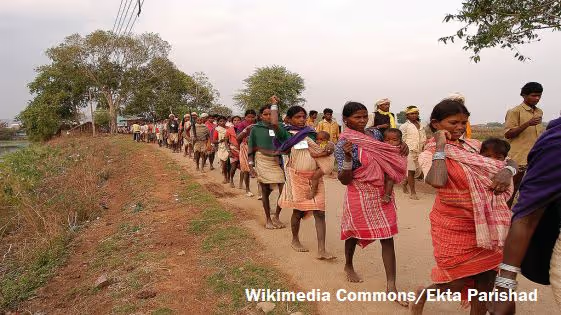
The state of Adivasi livelihoods after 75 years of planned development
Despite efforts to ensure their wellbeing, the Adivasi community remains one of the most deprived in India. In this post, Chaudhuri and Ghosh discuss the findings of a study surveying the livelihood status of the Adivasi population in Jharkhand and Odisha. Using personal interviews, focus group discussions and household surveys, they find that Adivasis lag behind the rest of the country in not only household income, but also nutritional outcomes, access to roads and public transport, literacy and landholdings

Motherhood, childcare and wages in India
Despite studies emphasising the role of parenthood as central to gender wage inequality in wealthy countries, these wage dynamics in developing countries are poorly understood. This article looks at the association between having children and women’s wages in India. It quantifies the contribution of motherhood to gender wage inequality across urban and rural contexts. Wage reductions associated with motherhood are negligible for rural women, but large for urban women, who have better educational and job characteristics.
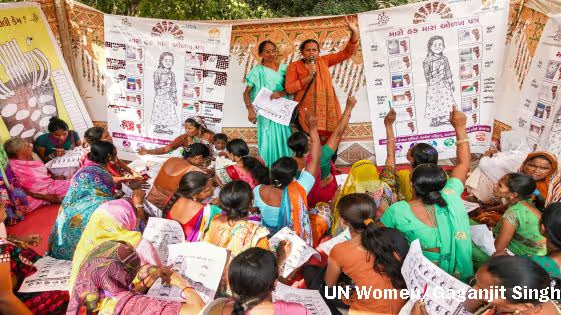
Caste-based differences in self-help groups: Evidence from a rural livelihood programme
The National Rural Livelihood Mission aims to increase income and improve wellbeing for rural households. Using survey data from nine states in India, this article analyses the existence of caste-based differences in self-help groups within the NRLM programme. It finds that members of disadvantaged groups are equally likely to be elected as an office bearer. Further representation of disadvantaged groups in leadership positions increases participation, access to benefits and other related outcomes amongst members from the disadvantaged group.

'Indian Matchmaking': The marriage market penalty for working women
Despite female education rates rising, India has one of the lowest female labour force participation rates globally. Using data gathered through profiles on Shaadi.com, this article by Diva Dhar estimates the penalty in the marriage market for women who choose to work after marriage. By looking at how women’s career choices are determined by marital incentives, this article also highlights the role that gender norms play in female labour force participation rates in India.
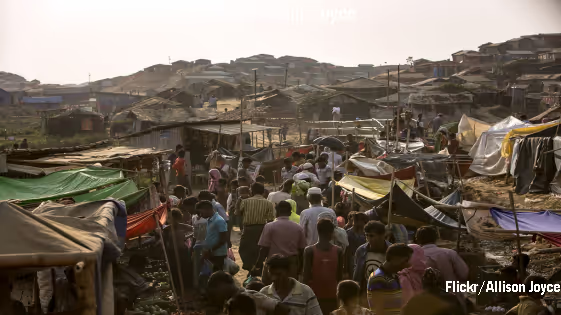
The psychosocial value of employment: Evidence from a refugee camp
Many of the world’s most vulnerable groups – including refugees –lack access to employment opportunities, which along with the obvious benefit of income generation also produces psychosocial benefits for individuals. Based on a field experiment in Bangladesh with Rohingya refugees, this article inspects the effect of providing refugees with employment, and finds that it leads to improved well-being and self-worth, compared to those who receive only a wage-equal amount of cash assistance.
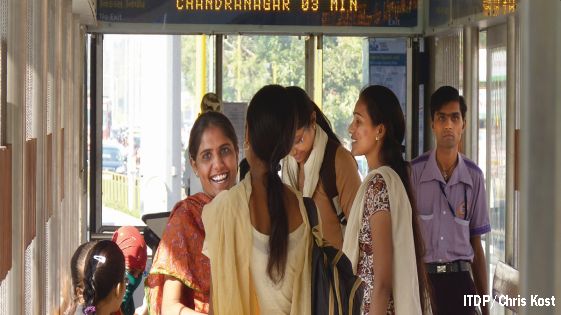
Hypergamy violation and domestic violence
Whether violation of hypergamy – when the wife’s economic status equals or exceeds that of her husband’s – increases or decreases domestic violence is a priori ambiguous. Analysing 2015-2016 National Family Health Survey data, this article shows that women in non-hypergamous marriages are at least 14% more likely to face domestic violence than those in hypergamous marriages; as husbands in non-hypergamous marriages are more likely to use violence as an instrument to establish authority at home.
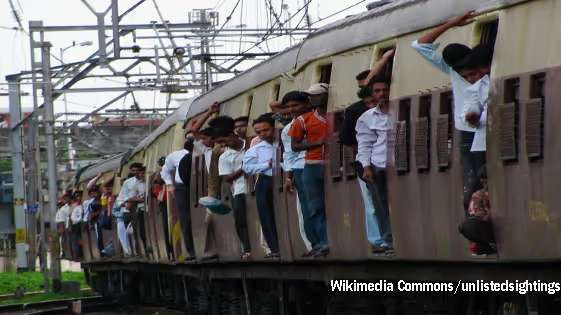
The impact of displacement on women’s marriage outcomes: Evidence from the partition of India
Women and children are made particularly vulnerable by displacement – the high incidence of gender-based violence and vulnerability to child marriage is well-documented in literature. Using data from Pakistan’s 1973 Housing, Economic, Demographic Characteristics survey, this article examines the impact of displacement during the partition of India (1947-1949) on the outcomes of young women, and finds that adolescent displaced women were more likely to get married at the time of partition, and experienced higher child marriage and fertility rates.

Caste inequalities within socio-religious groups: Evidence from Uttar Pradesh
The Mandal Commission and Sachar Committee reports, among others, have indicated the existence of caste inequalities within the four major caste groups. However, data on this subject remain limited. Using data from a novel 2014-2015 survey conducted in Uttar Pradesh, this article shows that within-group inequalities among upper castes are significantly less, relative to the within-group inequalities observed among both Hindu and Muslim OBCs and Dalits.

A signal to end child marriage: Evidence from Bangladesh
Child marriage remains common even where female schooling and employment opportunities have grown. Based on a field study in Bangladesh, this article seeks to experimentally evaluate the impact of a financial incentive to delay marriage alongside a girls’ empowerment programme. While girls eligible for two years of the incentive are 19% less likely to marry underage, the empowerment programme failed to decrease adolescent marriage.
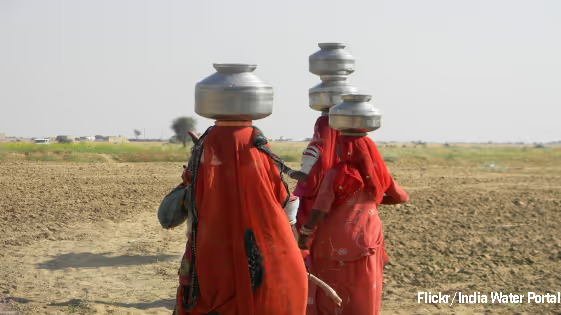
Who benefits from indoor piped drinking water supply? A gender analysis
In India, there is limited access to indoor piped drinking water (IPDW) in households, and this has a disproportionate impact on women as they bear the burden of fetching water. Using 2005-2012 India Human Development Survey data, this article shows that household access to IPDW can help reduce gender differences in employment, especially in rural areas and both in terms of farm and non-farm employment.

Gender-caste intersectionality in discrimination: Do patients care about doctor’s social identity?
Due to widespread prevalence of discrimination based on social identity, India provides a unique setting for studying caste-gender intersectionality in discrimination. Based on a field experiment in Uttar Pradesh, this article shows that when patients prefer male doctors over female doctors, caste-related prejudices can worsen this gender discrimination. Given the increasing share of low-caste professionals in India, this gender-caste intersectionality can exacerbate gender disparities among professionals.
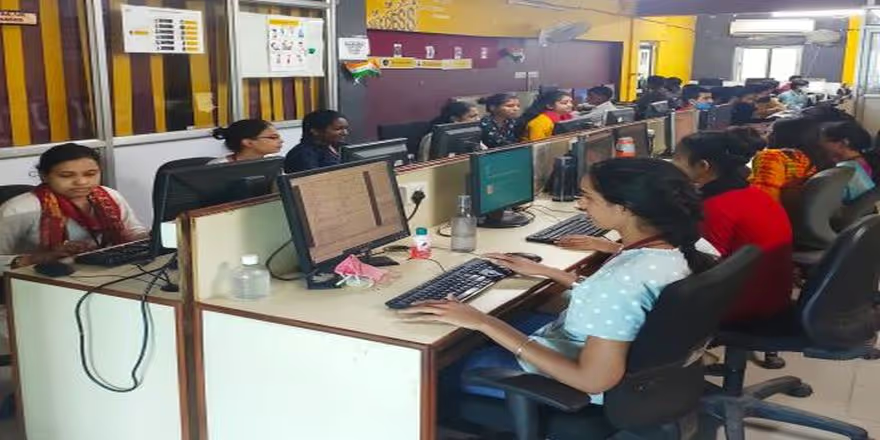
Does the gender of your co-worker matter? Evidence from call centres
Several theories suggest that gender integration in the workplace may have negative effects in gender-segregated societies. Based on an experiment conducted with 765 employees in call centres located in five Indian cities, this article shows that being assigned to a mixed-gender team – Vis-a-vis same-gender team – has no effect on either productivity or number of days that an employee is present at work.
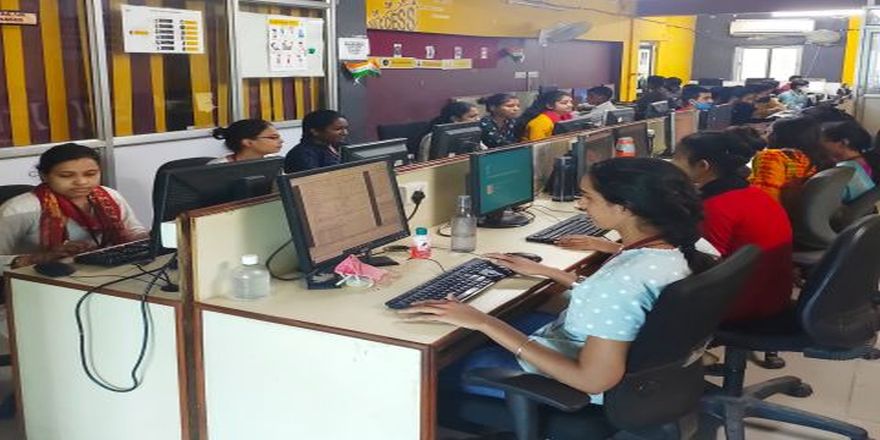
Does the gender of your co-worker matter? Evidence from call centres
Several theories suggest that gender integration in the workplace may have negative effects in gender-segregated societies. Based on an experiment conducted with 765 employees in call centres located in five Indian cities, this article shows that being assigned to a mixed-gender team – Vis-a-vis same-gender team – has no effect on either productivity or number of days that an employee is present at work.
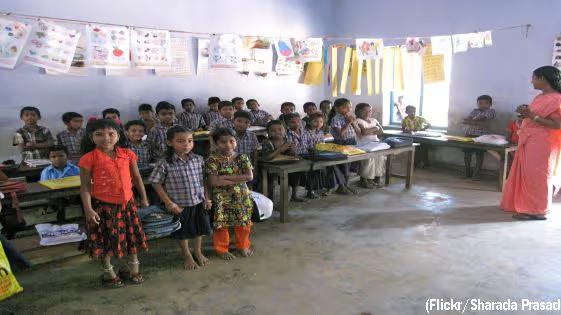
Nakusha: Son preference, ‘unwanted’ girls, and gender gaps in schooling
Indian society is commonly associated with a strong cultural preference for sons. Using nationally representative data from 1986-2017, this article examines parental investment in the education of sons vis-à-vis daughters. It finds that while gender gaps in the quantity of schooling have declined significantly for all children, those in the quality of education have increased – especially in families with unwanted girls.
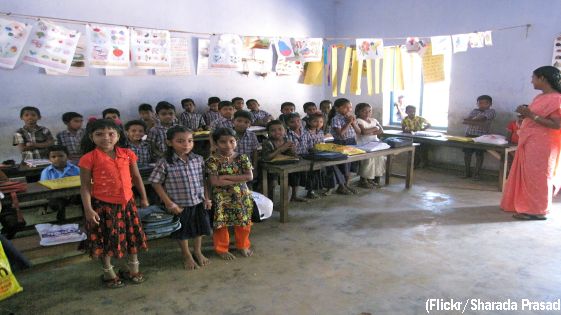
Nakusha: Son preference, ‘unwanted’ girls, and gender gaps in schooling
Indian society is commonly associated with a strong cultural preference for sons. Using nationally representative data from 1986-2017, this article examines parental investment in the education of sons vis-à-vis daughters. It finds that while gender gaps in the quantity of schooling have declined significantly for all children, those in the quality of education have increased – especially in families with unwanted girls.

Covid-19: ‘Shadow pandemic’ and violence against women
Violence against women is a problem worldwide, with economic costs ranging from 1% to 4% of global GDP. This article investigates if the magnitudes and types of violence against women have changed during the Covid-19 lockdowns in India. It shows that domestic violence and cybercrime complaints have increased, while rape and sexual assault complaints have decreased, in districts with the most stringent restrictions.

Covid-19: ‘Shadow pandemic’ and violence against women
Violence against women is a problem worldwide, with economic costs ranging from 1% to 4% of global GDP. This article investigates if the magnitudes and types of violence against women have changed during the Covid-19 lockdowns in India. It shows that domestic violence and cybercrime complaints have increased, while rape and sexual assault complaints have decreased, in districts with the most stringent restrictions.
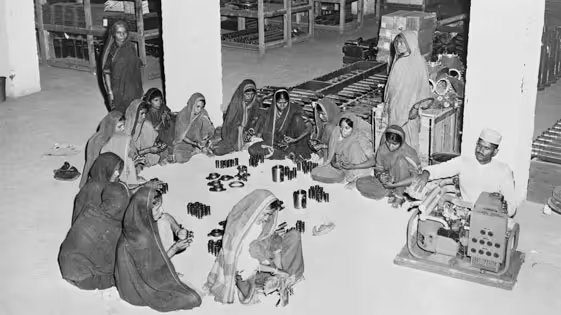
Demographic shocks and female labour force participation: Evidence from 1918 flu pandemic
The Influenza pandemic of 1918 killed about 5% of India’s population. This article finds that districts most adversely affected by influenza mortality saw a temporary increase in the country’s female labour force participation in 1921, driven in part, by distress labour supply by widows and higher wages. The increase was concentrated in the service sector, and had been reversed by 1931.

Demographic shocks and female labour force participation: Evidence from 1918 flu pandemic
The Influenza pandemic of 1918 killed about 5% of India’s population. This article finds that districts most adversely affected by influenza mortality saw a temporary increase in the country’s female labour force participation in 1921, driven in part, by distress labour supply by widows and higher wages. The increase was concentrated in the service sector, and had been reversed by 1931.
How mothers-in-law influence women’s social networks and reproductive health
Restrictive social norms and strategic constraints imposed by family members can limit women’s access to and benefit from social networks. Based on a survey in rural Uttar Pradesh, this article shows that a young, married woman who lives with her mother-in-law has 36% fewer close peers outside the home – in comparison to a similar woman who does not co-reside with the mother-in-law – which in turn reduces her access to, and utilisation of reproductive health services.
How mothers-in-law influence women’s social networks and reproductive health
Restrictive social norms and strategic constraints imposed by family members can limit women’s access to and benefit from social networks. Based on a survey in rural Uttar Pradesh, this article shows that a young, married woman who lives with her mother-in-law has 36% fewer close peers outside the home – in comparison to a similar woman who does not co-reside with the mother-in-law – which in turn reduces her access to, and utilisation of reproductive health services.

Does caste identity still matter for occupational choice?
In today’s India, to what extent do people avoid jobs solely due to their sense of caste identity? This article discusses an experiment in rural Odisha that involves offering one-day jobs to workers interested in temporary work. It finds that workers are willing to forego substantial earnings, sometimes as much as 10 times their daily wages, to avoid work that conflicts with their caste identity.
Does caste identity still matter for occupational choice?
In today’s India, to what extent do people avoid jobs solely due to their sense of caste identity? This article discusses an experiment in rural Odisha that involves offering one-day jobs to workers interested in temporary work. It finds that workers are willing to forego substantial earnings, sometimes as much as 10 times their daily wages, to avoid work that conflicts with their caste identity.

Son preference, maternal health, and women’s survival: A cross-cultural analysis
Lifetime risk of maternal death in developing countries is 33 times higher as compared to the developed world. This article examines the role of cultural norms in influencing maternal morbidity and mortality. It finds that, in societies with a strong cultural preference for sons and generally poor reproductive health conditions, women with a first-born girl are more likely to suffer from anaemia, and less likely to survive to older ages, relative to those with a first-born boy.
Son preference, maternal health, and women’s survival: A cross-cultural analysis
Lifetime risk of maternal death in developing countries is 33 times higher as compared to the developed world. This article examines the role of cultural norms in influencing maternal morbidity and mortality. It finds that, in societies with a strong cultural preference for sons and generally poor reproductive health conditions, women with a first-born girl are more likely to suffer from anaemia, and less likely to survive to older ages, relative to those with a first-born boy.

Decentralisation and spatial (mis)allocation of irrigation water
Canal water – an important source of irrigation in India – often tends to be unequally distributed among farmers within a geographical area. Based on a survey in the state of Odisha, following the decentralisation of the management of canal irrigation systems, this article finds that the policy reform has positive impacts – but the details of the institutional design matter.
The influence of local politicians in the private education market
Private schooling has experienced rapid expansion in India – both in terms of number of schools and student enrolment. Analysing data from 2005-2017, this article shows that constituencies represented by ruling party-aligned politicians experience significantly higher growth in private schools, relative to those represented by opposition leaders, potentially through the influence exerted by the former over the bureaucracy. However, this does not translate into improvements in educational quality.

How immigration policy uncertainty affects labour markets
President Trump’s re-election has reignited debate over H-1B visa policies, a temporary high-skill work visa programme wherein 70% of visas are held by Indians. Analysing jobs data from India from the period around Trump’s first victory in 2016, this article finds that increased uncertainty around US immigration policies – without any change in visa quotas and procedures – caused firms to relocate jobs from the US to India.
Fiscal transfers and natural calamities: Does political alignment matter?
Fiscal transfers from the central government serve as an important mechanism for state governments to mitigate adverse impacts of extreme climate events. This article demonstrates that higher allocations are made to states that are politically aligned with the Centre. Further, the scope for such partisan politics is greater in case of slow onset events such as droughts, as compared to floods that manifest relatively quickly.

Is it better to be governed by an elected leader or appointed bureaucrat?
The division of governance functions and responsibilities between politicians and bureaucrats varies, both across and within political regimes. Based on an experiment in Karnataka, this article examines the impact of being governed by an elected leader versus an appointed bureaucrat. It shows that while politicians better align expenditure with citizen preferences and deliver social assistance rapidly, bureaucrats are less prone to elite capture and excel at specialised tasks
Why political competition matters when inequality is high
In a high-inequality setting, local politicians with secure positions may favour the rich by diverting resources towards them, at the cost of the poor. To test this hypothesis, this article analyses data from rural India, and demonstrates that lower political competition worsens the impact of inequality on public provisioning as well as developmental outcomes such as infant mortality.

Expected or unexpected? Strategic communication around audits to maximise deterrence
Even with evidence on how audits can be designed to be more effective in deterring corruption by bureaucrats, in practice, budget constraints restrict governments from being able to conduct audits with the quality or intensity necessary to further deter corrupt behaviour. Analysing the case of social audits for MNREGA in Jharkhand, this article shows that, with the same audit resources, providing information to bureaucrats about their audit can be more effective in lowering misappropriated expenditures than unexpected audits.
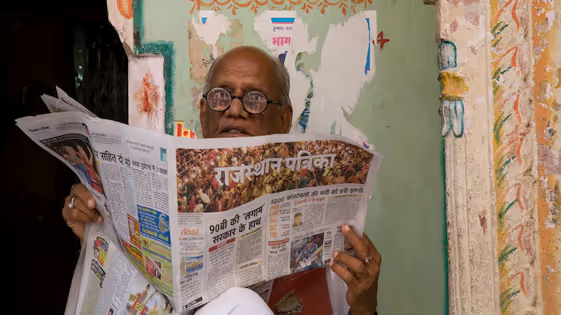
Political determinants of newspaper markets in India
Newspapers are an important source of political information for Indian voters. This article looks at how political factors influence the newspaper market. Using the announcement of delimitation in the mid-2000s as an exogenous shock, it finds that there was an increase in newspaper circulation in districts whose electoral importance increased after the announcement. It notes that, in the short run, this change was driven by a shift in supply, as voters were still unaware of the political shock.

Impact of fiscal decentralisation and ethnic heterogeneity on choice of local polity
In this article, based on Chapter 7 of 'Decentralised Governance’, Mitra and Pal utilise Indonesia’s fiscal decentralisation to local communities in 2001 to examine how FD may differentially affect the choice of local polity and generate local political entrepreneurship in ethnically homogenous and heterogenous communities. Utilising local income and local development as proxies for local political entrepreneurship, they document that ethnically diverse electoral democracies were more effective to initiate political entrepreneurship in Indonesia, which in turn facilitated the alignment of diverse population groups.
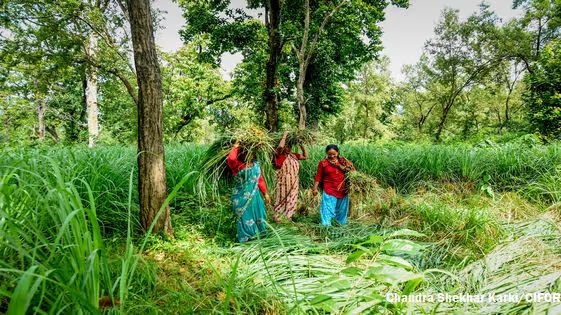
Forest Rights Act: An account of contradictory conservation laws
In the second of two articles about the implementation of Forest Rights Act, Bharti Nandwani uses data on land conflicts to investigate why land disputes increased after the introduction of FRA. She points to the prevalence of contradictory legislation, highlighting the case of compensatory afforestation funds which are disbursed in a way that encroaches upon land cultivated by forest dwellers. She emphasises the need to recognise the superior knowledge of those communities and give them the responsibility of managing and conserving forests

Forest Rights Act: Political participation of indigenous communities
In the first of two articles about the implementation of Forest Rights Act, Bharti Nandwani looks at the implication of increased demand for land title recognition on political participation of Scheduled Tribes in Odisha. She examines possible channels through which the FRA can empower beneficiaries, such as through increased income or accessing grievance redressal, and suggests that recognising the rights of indigenous communities and increasing their access to welfare programmes could aid in conservation and reduce conflict.
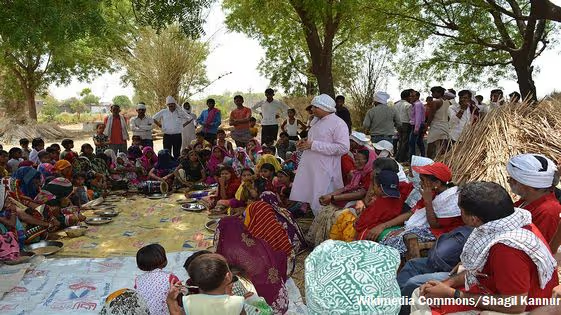
Facilitating risk-sharing through self-help groups in Bihar
While the self-help group (SHG) programme in Bihar has improved access to low-cost credit for women, this article evaluates whether it improves risk-sharing by examining differences in village-level variance of consumption growth. It finds that improvements in risk-sharing occurred only in blocks with significant numbers of pre-existing SHGs. This suggests the importance of the programme’s administrative capacity in the form of a ‘community cadre’, that comprises members of existing SHGs and is responsible for the creation of new groups.
Impact of Bihar’s alcohol ban on intimate partner violence
This article examines the impact of a complete ban on the sale and consumption of alcohol in Bihar in 2016 on the incidence of intimate partner violence against women. Using NFHS data, it finds that after the ban, women in Bihar reported that their husbands were less likely to consume alcohol, and they were less likely to experience domestic violence. It also highlights the complementary role of self-help groups in increasing women’s empowerment and making them less susceptible to abuse.

The costs of extreme competition for government jobs
Indian states have highly competitive examinations for public service recruitment, with many youth remaining unemployed for long periods to compete for these government vacancies. Kunal Mangal looks at the effect of a government hiring freeze in Tamil Nadu on candidate application behaviour and long-term labour market outcomes of candidates who were not selected. He suggests two policies for the recruitment process which can reduce the social cost of exam preparation
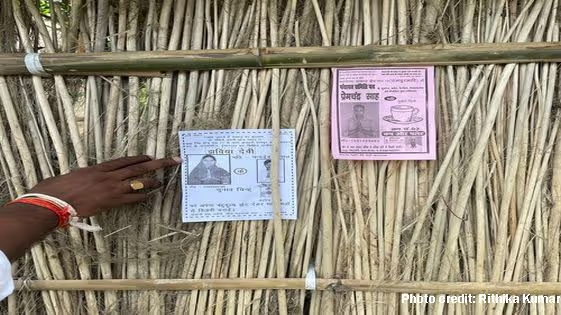
How women in politics impact maternal mortality
In the twelfth post of I4I’s month-long campaign to mark International Women’s Day 2023, Bhalotra et al. show that mortality during and after childbirth remains high, even where the knowledge and resources to avoid this are available, and demonstrate that raising the share of women in parliament can trigger action. Leveraging the introduction of gender quotas across developing countries, they identify reductions in maternal mortality, through increased skilled birth attendance and prenatal care utilisation, alongside a decline in fertility and an increase in schooling.
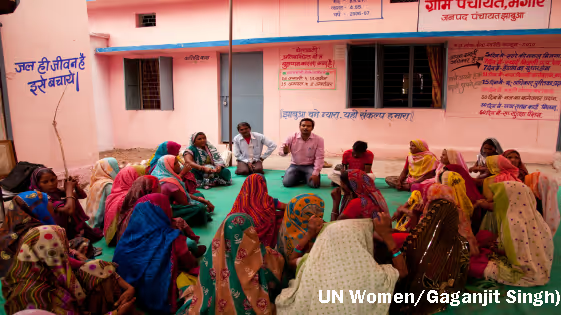
Does being local matter? Administrative decentralisation and human development
In this post, Chaudhary and Iyer discuss the administrative decentralisation reforms brought about by the Panchayati Raj Act, and measure the effect of decentralisation on the provision of public services and human development outcomes. States implemented these decentralisation reforms at different times, and to different extents. Their findings show that devolution of only functions to the local level, without a devolution of functionaries or funds, results in a decline in the quality of public service.
Time in office and gender gap in dishonesty: Evidence from local politics
Existing literature associates a higher share of women in politics with lower corruption; honesty is viewed as an inherent or static character trait. However, using information collected from 400 elected gram panchayat members in West Bengal, this study finds that spending time in office changes this – inexperienced women politicians are less likely to be dishonest than men, but this ‘gender gap’ disappears among experienced politicians. The study attributes this to reduced risk aversion and stronger political networks with experience.
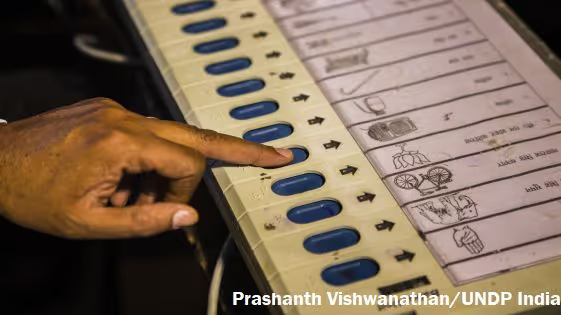
Party preferences and strategic voting in India
In the absence of compelling information that would allow them to accurately predict election outcomes in their constituency, many voters believe that their preferred candidate will win. Looking at voter preferences during the Uttar Pradesh assembly election in 2017, this article finds that very few Indians are 'strategic voters'. Instead, the results show that very few voters believed that they were in a position to vote strategically, as they expected their favourite party to win.

The WhatsApp effect: Evidence on political engagement, preferences and polarisation
In recent years, political parties in India have increasingly leveraged WhatsApp as a tool to reach voters, raising concerns about the influence of social media on the democratic process. This article looks at the effects of interpersonal nature of social media and its ability to engage voters. In the context of the 2021 elections in Tamil Nadu, it finds that political WhatsApp groups improve voter knowledge, without increasing polarisation, and only sway the party preferences of moderates.
Demographic and development outcomes of administrative proliferation
This creation of new administrative districts by splitting existing districts is a frequent occurrence in India, where the number of districts has more than doubled in the last four decades. Looking at data from 1991 to 2011, this article considers the effect of this fragmentation on economic outcomes. It finds that impacted districts tend to be more homogenous than before; the split is especially advantageous for newly created districts, which reap the redistributive benefits of bifurcation.

Do value-added taxes benefit firms? Evidence from the adoption of state-specific value-added taxes
Value-added tax (VAT) systems have grown popular in the last 30 years, especially among developing countries looking for ways to raise tax revenue efficiently. Using 2000-2012 data on product, state-specific, and firm-specific tax rates, this article examines the staggered adoption of VAT across states between 2003 and 2008 on firms. It finds that the VAT reform increased firm sales by 45% within four years of the reform.

Private returns to bureaucratic appointments: Evidence from financial disclosures in India
Bureaucrats often face rigid salary structures, and face low-powered incentives that have less wage differentiation based on performance. Using bureaucrats’ self-reported asset declarations from the Immovable Property Return (IPR) reports for 2012-2020 in India, this article concludes that officers encounter high-powered incentives – in the form of private returns – on reassignment to an ‘important’ ministry. These officials see their immovable properties increase, both in value and number, and it is concluded that these effects are partly driven by their rent-seeking behaviour.

Fixing incentives for power plants to reduce outages
Consumers in India face frequent power outages despite relatively high-quality infrastructure and ample supply of power plants. This article identifies a novel explanation for India’s blackouts: when the cost of purchasing electricity rises, utilities choose to buy less from power plants, thereby restricting the amount of power that reaches end-users. Reforms in wholesale supply that lower wholesale prices may help reduce blackouts in a cost-effective manner.

Does going cashless make you tax-rich? Evidence from India’s demonetisation
During 2014-2017, the share of adults using electronic payments in the developing world increased by over a third, and policymakers have expressed optimism regarding the role of this trend in promoting tax compliance. Leveraging the 2016 demonetisation in India, this article shows that areas that were more impacted by the policy, experienced faster growth in electronic payments and, in turn, average sales reported to the tax authority increased.
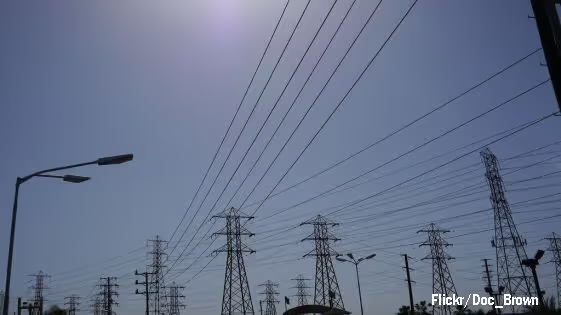
Escaping the subsidy-quality trap in India’s retail electricity market
Cross-subsidies in retail electricity tariffs leave distribution utilities with neither the incentive nor the capital to improve reliability, particularly for their most subsidised consumers. Using billing data from a private distribution company in Delhi, this article shows that while electricity price subsidies are relatively effective in improving the welfare of poorer residential consumers, reducing power prices for commercial and industrial consumers can help utilities raise more revenue and enhance service quality across the system.

Regionalist party representation and tribal insecurity
Observers have long been ambivalent about regionalism as a principle underlying the organisation of politics. Analysing data from India, this article shows that when regionalist parties win elections, there is an increase in local violence, caused by heightened insecurity among local minority groups. This is found to be especially true for electoral constituencies with significant populations of scheduled tribes who have no mandated political representation.

Combating corruption and illicit outflows: A welfare-oriented approach
A discussion of the association between corruption in economies and leakage through illicit outward flows – with important implications for welfare – is missing in the literature. Based on a theoretical framework, this article analyses how policies for controlling corruption, such as the licensing fee, are influenced by the propensity for proceeds from corruption to leak out of the economy.
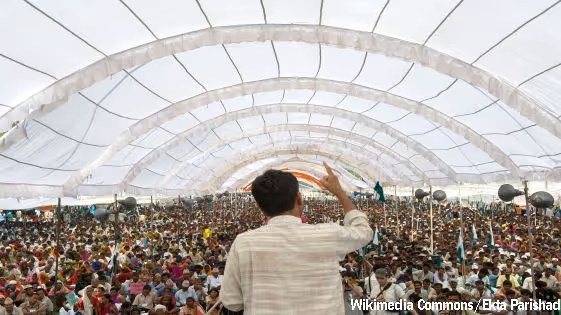
Ethnic identities, public spending, and political regimes
Do democracies discriminate less against minorities as compared to non-democracies? How does the dominance of an ethnic group affect discrimination under various political regimes? Presenting a theoretical model to address these questions, this article shows that political regime changes can favour or disfavour minorities – in terms of allocation of spending on public goods – depending on the size of the ethnic majority.
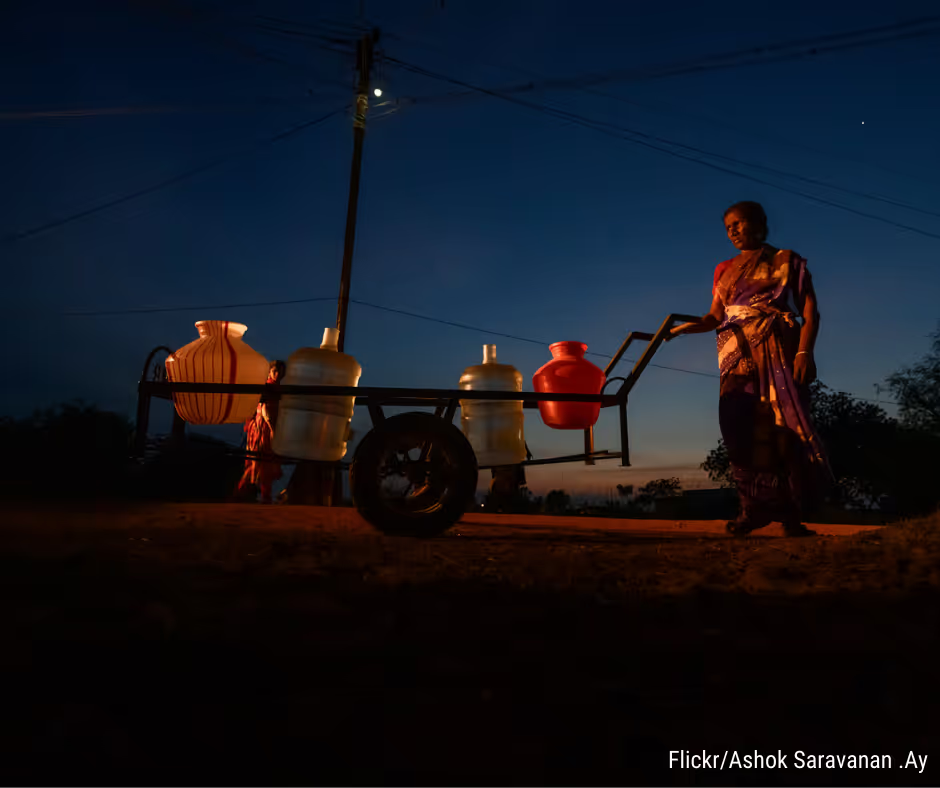
Diversity and public goods: Why the geographical unit of analysis matters
Research has shown that regions with higher caste diversity have lower share of villages with essential public goods. This article challenges this finding and shows that empirical models estimated at higher levels of geographical aggregation mask a considerable amount of variation. Any meaningful statistical relationship between diversity and public goods needs to be sensitive to geographical scale as the nature of local politics plays an important role.

Does the right to vote affect political behaviour? Historical evidence from India
Democracies are known to have better economic development outcomes over the longer run. However, it is not clear whether giving citizens the right to vote is sufficient for ensuring an effective degree of political participation or competition. Creating a novel, district-level dataset from 1921-1957, this article examines how political behaviour is shaped by two class-based extensions of voting rights in India.
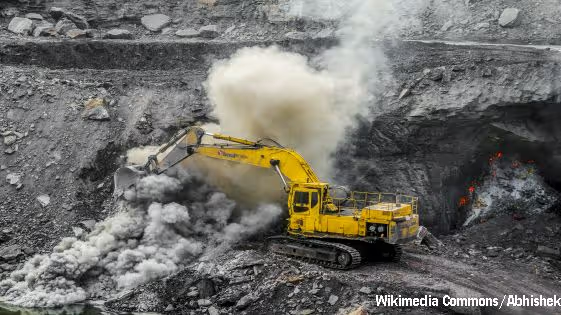
Digging for dirt: Rent-seeking among elected politicians in India’s mineral belt
The Indian mining industry is no stranger to corruption scandals and every year dozens of environmental activists are murdered for exposing illegal mining activities. This article discusses the impact of mining on political behaviour and finds that mineral rent booms increase the likelihood of criminally charged politicians entering office (adverse selection) and result in increased assets of politicians already in office (moral hazard).
Synchronised elections, voter behaviour, and governance outcomes
An active policy proposal of the Government of India is to hold national elections at the same time as the assembly elections of all the states. This article examines whether holding national and state elections simultaneously affects voter decisions, and consequently, electoral outcomes in India. It finds that synchronised elections increase the likelihood of the same political party winning constituencies in both tiers by 21%.
Citizen-State relations: Countryside and city
To what extent do citizens expect officials to respond to local problems, and how do they make demands on the State to advance their well-being? Based on surveys in Madhya Pradesh and Rajasthan, this article finds that urban slum residents are less likely to believe that they will get a direct response from an official, and more likely to report the presence of ‘political brokers’ – as compared to similarly poor rural residents.
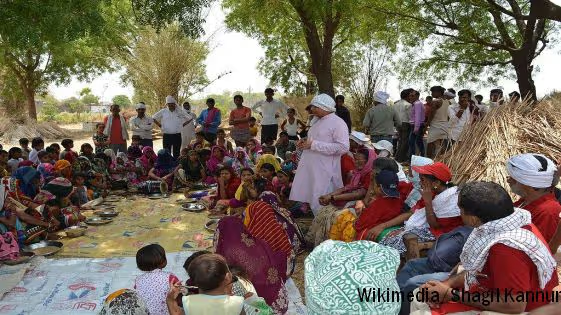
Does political reservation work, and for whom?
Does political reservation undermine or promote development, and for whom? This article presents an analysis of India’s Scheduled Areas, which reserve political office for the historically disadvantaged Scheduled Tribes. Focusing on the effects on MNREGA, it shows that reservation delivers no worse outcomes overall. There are large gains for targeted minorities, which come at the cost of the relatively privileged rather than other minorities.
The politics of post-retirement appointments: Corruption in the Supreme Court?
The Indian judiciary bats for judicial independence. Wary of executive interference, judges ferociously protect their institutional turf. But does India’s judicial system suffer from an underhanded breach of judicial independence? Using a novel dataset of Supreme Court decisions between 1999 and 2014, and career trajectories of retired Supreme Court judges, this article finds that an increase in post-retirement appointments for judges to government positions acts as a powerful incentive for them to decide cases in favour of the State.

Court congestion, caste identity, and business performance
Effective contract enforcement is the key for the formation and expansion of business enterprises. But how does improvement in court performance matter differently to different caste groups? This article shows that the benefit of an efficient judiciary is higher for first-time entrepreneurs within communities that lack traditional informal business networks. This implies that besides other factors, improvements in court quality can be instrumental in enhancing social mobility.

How district courts influence firm growth
The Economic Survey 2018-19 highlights that the single biggest constraint to ease of doing business in India is contract enforcement and dispute resolution, and increasing capacity in lower judiciary is crucial. This article estimates that adding one judge to a court with vacancy increases bank lending by 0.5% a year later, which affects credit availability, production, and profitability of firms located within the court’s jurisdiction.
Electoral cycles and incomplete public works projects: An analysis of the MPLAD scheme
The successful execution of public works programmes undertaken by governments often hinges on the completion of a vast array of local-level projects intended to create tangible amenities to improve the lives of citizens. However, in practice, a significant proportion of projects often remain incomplete. This article examines what drives incomplete projects under the Member of Parliament Local Area Development Scheme (MPLADS), a constituency development fund for public works projects in India.

Do politicians receive special treatment in courts?
Do Members of Legislative Assemblies (MLAs) facing pending criminal cases receive favourable treatment in the Indian legal system? This article uncovers opposite effects of winning office, depending on the political alignment with the state ruling party. It shows that having cases disposed of without conviction during an MLA's period in the legislature is 17% more likely for ruling party MLAs, and 15% less likely for other MLAs.

How democratic are the states of India?
India is often credited for its success as the world’s largest democracy – but does the degree of democracy vary across Indian states? This article develops an index to map the development of subnational democracy across states over time. Drawing on newly assembled data for 1985-2013, it demonstrates that threats to subnational democracy come from multiple directions, including the central government and non-State armed actors.
Political alignment and economic outcomes: Evidence from legislative assembly elections in India
Theory suggests better economic outcomes prevail when providers at different levels of government are politically aligned. While politicians are jointly responsible for several policies, other policies are entirely provided by a single politician. This article studies the development effects of political alignment between local legislative constituency representatives and state governments in India. It finds that regions where such political alignment exists get fewer policies that are entirely provided by a single politician.

Ujjwala 2.0: What should be done next?
Stopping the use of wood and other solid fuels for cooking and other household uses is crucial to mitigating air pollution and its staggeringly high health impacts in India. In 2016, the government announced Ujjwala scheme, which provides financial assistance to poor households to meet the upfront cost of LPG connection. In this post, Sagar and Tripathi provide suggestions to design Ujjwala 2.0 to ensure that poor households continue to use LPG.
India’s emerging crisis of representation
Article 81 of the Indian Constitution requires that each state receive Lok Sabha seats in proportion to its population and allocate those seats to constituencies of roughly equal size. However, the chronic unwillingness of the political class to reallocate seats in light of the country’s changing demographics has led to severe and entrenched malapportionment. In this piece, Vaishnav and Hintson explore this issue, and put forth potential solutions.

Curbing leakage in public programmes: Evidence from Direct Benefit Transfer policy for LPG subsidies
Many developing countries subsidise access to essential commodities with in-kind transfer programmes, where beneficiaries receive goods at subsidised prices while non-beneficiaries have to pay the market price. The resulting ‘dual pricing’ provides incentives to intermediaries to divert subsidised goods to non-beneficiaries. This article studies a policy reform in India to transfer fuel subsidies directly to the programme beneficiaries’ bank accounts and finds a significant reduction in the subsidy leakage.

Do roads bring votes in rural India?
A large-scale rural roads programme in India has provided access to over two-third of villages that lacked a paved road in 2001. Do citizens reward incumbent governments electorally for these improvements in connectivity and well-being? Using data from elections and roads provision for 2000-2017, the article suggests that citizens do not vote on the basis of policy even when they have access to rich information about the policy’s provision.
Oral democracy
Critical scrutiny of the challenges of electoral democracy including elite capture, corruption, and patronage has led to a revival of the idea of direct democracy – giving power directly to groups of people to make collective decisions. This article analyses discussions held in 300 village meetings from four South Indian states to understand the role of the State and the necessity of literacy for a vibrant deliberative democracy.
Are transparency and accountability enough? Open corruption and why it exists
While India’s federal anti-corruption ombudsmen have just taken up their work, awareness of the complexity of corruption is growing. This article studies whether highly accountable Indian village council presidents favour their own households while making observable allocations of public works jobs. It finds that corruption can exist even when it is visible and punishable, plausibly because it serves as a reward for efforts put into programme implementation.
Should civil servants be allowed to serve in their home areas?
Bureaucrats form an essential part of State capacity. Should they be allowed to serve in their home areas? This article finds that Indian Administrative Service officers assigned to their home states perform worse than comparable officers assigned to non-home states, are perceived to be more corrupt and less able to withstand illegitimate political pressure. This performance gap is particularly pronounced in the later career stages when there is more room for patronage and capture of bureaucracy by local political elite.

Rethinking cadre allocation procedures in civil services
The allocation procedure of All-India Services’ officers to states is an important aspect of personnel administration in the public sector. This article shows that a change in allocation policy in 2008 resulted in lower quality officers being systematically assigned to disadvantaged states. It examines the causes of these imbalances and impact on State capacity and development outcomes, and explores alternate mechanisms.
(Un)ease of doing business: How congested courts hinder firm productivity
The strength of contract enforcement determines how firms source inputs and organise production, and hence influences productivity. Using microdata on Indian manufacturing, this article quantifies the impact of congestion and delays in Indian courts of justice on aggregate productivity. It finds on average across states, if court congestion were reduced to be in line with the least congested state, industrial productivity will increase by roughly 5%.
Out of power? Political capture of the Indian electricity sector
Although power generation has been growing exponentially in India, the quality of electricity supply remains poor. This article argues that political corruption is among the root causes behind unreliable electricity supply. Using data from West Bengal, it shows that billed electricity consumption is lower and actual consumption is higher for constituencies of the winning party after an election, as politicians systematically allow the manipulation of electricity bills.

Like father, like son? The economic impacts of political dynasties in India
Political dynasties remain ubiquitous in democratic countries even though many societies democratised to end hereditary rule. This article studies how dynastic politics affects economic development in India. It finds that the incentive to establish a dynasty encourages politicians to exert more effort and perform better in office. However, dynastic descendants perform worse than regular politicians because they inherit voters loyal to their family and face weaker performance incentives. This results in a ‘reversal of fortune’ development pattern.
Are independent candidates unimportant for political representation?
Independent candidates are often deemed ‘frivolous’ or ‘spoilers’ by mainstream political figures and authorities, although there is little to no evidence on their effect on elections. This article finds that independent candidates decrease the chances that a Lok Sabha constituency elects a member of the party or coalition that forms the national government. It suggests that participation by independents has a high price – a lesser role for the constituency in policymaking

Does choice of procurement contract matter for cost and quality of highways?
In the past, infrastructure projects in India have suffered from long delays, massive cost overruns, and poor quality of assets. A widely held belief is that public private partnerships (PPPs) can solve these problems. To examine this claim, this article compares the performance of PPPs with traditionally procured highway projects. It finds that project delivery is faster but construction costs are significantly higher for PPPs than for non-PPP roads. Moreover, quality of road surface is better for the former compared to the latter.
How leader identity impacts group coordination
In principle, leaders can facilitate group coordination towards a common goal but in diverse societies, their effectiveness may depend upon their social identity, and how citizens react to leader identity. Based on a lab-in-field experiment in India, this article investigates the role of leader religion in improving coordination, and the effectiveness of two policies that are often used to aid disadvantaged groups: intergroup contact, and affirmative action.

Do Indian voters mind their representatives getting rich in office?
Asset declarations, requiring politicians to disclose their financial information, are becoming increasingly common across the world. In India, financial declarations are part of public affidavits filed as a prerequisite for candidacy for political office. Using data from Indian affidavits, along with original experimental and survey data, this article examines how information on politicians' wealth accumulation may impact citizens’ evaluations of politicians and their voting behaviour.
How governance and public expenditure impact human development
The state of Madhya Pradesh displays wide variance in human development outcomes across its districts. This article examines the link between public expenditure, quality of governance, and human development in the state. It finds that development expenditure by itself is insufficient in achieving human development; public expenditure has better outcomes in districts with better governance indicators.

Do dishonest people gravitate towards the public sector in India?
The corruption level in the public sector may not only depend on punishments and systems put in place to deter corruption, but also on who chooses to enter the sector. This article finds that people who show dishonesty in a lab game both gravitate toward public service and engage in corruption once there. Modifying recruitment processes to screen out corruptible applicants may help ensure a cleaner and more effective bureaucracy.

The strategic logic of money flows in Indian elections
Why do political candidates give voters handouts during election campaigns, even when they are unable to monitor voter behaviour? Based on a qualitative study in Mumbai, this article argues that competitive elections prompt candidates to distribute handouts for strategic reasons: candidates expect opponents to distribute handouts and hence do so themselves to split votes of handout-reactive voters – rather than to attempt to ‘buy’ votes per se.
Sunlight as disinfectant: Disclosure requirements and corruption in India
It is believed that transparency and free access to information can root out corruption and malfeasance in government. This article finds that the introduction of asset disclosure rules for candidates for political office in India in November 2003 led to weeding out of ‘bad’ politicians by encouraging exit from politics and increasing the likelihood of incumbents being re-elected
Enfranchising your own? Polling officer identity and electoral outcomes
The provision of free and fair elections is a public service critical to maintaining accountability and responsiveness of elected officials. This article examines the administration of polling stations and shows that voting outcomes can be influenced by the religious and caste composition of the teams of officers who manage stations on election day. It also provides evidence on the importance of the form of identification possessed by voters.

Election by community consensus: Effects on political selection and governance
Multiple states in India incentivise village communities to elect their political representatives by community consensus, doing away with the need for state governments to organise official secret ballot elections. This article analyses the effects of these incentives in Gujarat for the period 2011-2015. It finds that such elections, like other community-based processes, are prone to capture by the local elite, and can lead to worse governance overall

Do political parties matter for ethnic violence? The Congress and Hindu-Muslim riots in India
India has seen frequent violent clashes between Hindus and Muslims since independence. This column analyses an important yet largely overlooked driver of ethnic violence: the ruling political party at the local level. In particular, it provides the most credible test to date of the effect of local Congress incumbency on Hindu-Muslim violence in the country.
Breaking the clientelist trap: Can reform create demand for good governance in Bihar?
How has over a decade of rapid and programmatic policy reform in Bihar affected voters? Based on a household survey comparing political attitudes of residents on either side of the Bihar-Jharkhand border, this column shows that Bihar’s policy reforms have raised voters’ expectations, but have not yet produced a fundamental change in their willingness to vote against clientelist politicians.
The power of enforcement: State capacity and child marriage in India
In an attempt to deter child marriage, a recent Supreme Court verdict has criminalised sexual relations between a man and minor wife. Worldwide, more than 700 million women alive today were married before their 18th birthday, and one in three child brides are in India. Analysing data from the India Human Development Survey, this article demonstrates that strong State capacity can play a significant role in reducing child marriage.

Three barriers that make it hard for policymakers to use the evidence that development researchers produce
There has been a surge in policy research globally over the past two decades that is geared to promote evidence-based policymaking. But can policymakers put this evidence to use? Based on a survey of civil servants in India and Pakistan, this column finds that simply presenting evidence to policymakers doesn’t necessarily improve their decision-making.
Drawing the line: The short- and long-term consequences of partitioning India
Colonial rule in India culminated in the birth of two nations, forcing the displacement of millions. This column analyses the economic and political consequences of the Partition in 1947. It finds that differences in the distribution of education and organisational skills across communities and the extent to which communities and regions traded with each other, played a key role in shaping the bloody nature of the upheaval during the Partition itself, and its long-term consequences.
Political decentralisation, female leadership, and health in rural Bihar
Political decentralisation and female representation in governance are known to improve social welfare by influencing policy decisions in favour of women and children. Analysing data from rural Bihar, this column finds that having a female leader at the village council level has a strong positive association with institutional births, and child survival rates for richer households.
Midday meals scheme: Are corruption claims exaggerated?
Soon after Aadhaar was made compulsory for availing midday meals in schools, the government claimed that the move had helped expose several instances of schools siphoning off funds under the scheme by reporting inflated student enrolment. Comparing official data with that from the Indian Human Development Survey, this column shows that corruption in the scheme is less than what is being alleged - and not of the nature that Aadhaar can check.
Juvenile delinquency and income disparity across Indian states
The gravity and frequency of juvenile crime incidents in recent years point towards the urgent need for rigorous analysis of the issue. Based on data from Indian states, this column shows that juvenile crime tends to rise with rise in per-capita income – but at a diminishing rate. Further, higher levels of adult crime enhance the positive impact of per capita income on juvenile crime rates.
Consumption spikes and election delays
There is ample anecdotal evidence on political parties bribing voters with cash or consumption goods prior to elections, in India and other developing countries. However, there is an expected lack of hard evidence on the extent and form of vote-buying. Using data from Indian states, this column analyses consumption patterns of households around elections, and finds a spike for some items just before elections.
Do Gram Panchayat leaders favour their own constituencies in MNREGA fund allocation?
Political incentives are known to play a role in the allocation of public resources from upper- to lower-tier governments. This column seeks to examine whether ruling parties in local governments favour their own constituencies in allocating MNREGA funds, if they target their core supporters or swing voters, and if this has any electoral returns.
Governance performance of Indian states: 2001-02 and 2011-12
Defining governance as service delivery, this column develops a measure of the quality of governance – also adjusting for the impact of the level of development - and provides a ranking of major Indian states. The analysis suggests that there are two distinct paths of development in the less- and more-developed states.
The devil is in the details: Successes and limitations of bureaucratic reform
To address absenteeism among staff at public healthcare facilities, the government of Karnataka introduced an innovative biometric device to monitor and enforce attendance rules. This column presents findings of a large randomised evaluation of the programme. While some health gains were achieved, imperfect enforcement illustrates the limits of monitoring solutions if there are constraints on full implementation in practice.
Politician's pain is poor man's gain: Income distribution in close-election constituencies
Studies have highlighted the role of electoral competition in directing the flow of public funds. Analysing data from India, this column finds lower income inequality and polarisation in tightly contested constituencies, implying that the poor gain more from electoral competition relative to the rich.
Can the female sarpanch deliver? Evidence from Maharashtra
One-third of all seats in village councils are reserved for women. The government has proposed an increase in quota to 50%, and in the period of reservation from five to 10 years. Based on a survey conducted in Maharashtra, this column finds that availability of basic public services for women is better in female-headed villages - when the female head has been in the job for 3-3.5 years.
Building connections: Political corruption and road construction in India
Rural infrastructure programmes of the government create new opportunities for growth but also for corruption. This column studies India’s flagship rural road construction programme and finds evidence that local politicians favour members of their caste or kinship networks in the allocation of contracts. This raises construction costs, adversely affects road quality, and increases the likelihood of ‘missing’ roads.
Justice delayed is development denied: The effect of slow courts on economic outcomes in India
India's formal judicial system is infamously slow, even for a developing country. What is less well established is whether this matters to economic outcomes. This column uses state-level variation in the speed of courts coupled with the fact that certain industries rely on contract enforcement more than others, to show that slow courts in India have a substantial negative impact on output and employment growth in the formal manufacturing sector.
W(h)ither the State? 25 years of economic liberalisation
24 July 2016 marked 25 years of liberalisation of the Indian economy. In this article, Parikshit Ghosh, Associate Professor of Economics at Delhi School of Economics, contends that liberalisation did not mean the State should wither away and let markets rule the roost; it redefined complementary roles for the State and markets, making each more important than before.
Does good governance reduce foodgrain diversion in PDS?
In 2011-12, various states undertook measures to curb leakages of foodgrains from the Public Distribution System. Some of the pioneer states also implemented the National Food Security Act - a rights-based approach to food security - in 2013. Against the backdrop of these reforms, this column analyses whether there is any marked difference in the leakage pattern of foodgrains across states.
When does politics work for development?
Political interference in the bureaucracy is generally viewed with suspicion. Yet, in a democracy, should we not expect politicians to push bureaucrats to work for the best interests of citizens? This column shows that bureaucrats implement MNREGA much better in places where politicians are able to claim credit for improvements. This is good news for democratic accountability, and carries important implications for the design of development programmes.
Food Security Act: How are India's poorest states faring?
The National Food Security Act was passed in 2013. This column reports findings from a recent survey on the status of the Act in six of India’s poorest states. Chhattisgarh, Madhya Pradesh, Odisha and West Bengal are doing quite well - the PDS is in good shape and most people are covered; however, Bihar and Jharkhand are yet to complete essential PDS reforms.
The alcoholic mammaries of the welfare State
Tamil Nadu is known to give away more freebies to voters than any other state and these are financed mainly by massive revenues from liquor sales. In this article, Swaminathan Aiyar, Consulting Editor of the Economic Times, contends that while using liquor revenue to improve basic State services like education and health is defensible, using it for freebies is a political race between parties to the fiscal bottom.
Impact of Electronic Voting Machines on electoral frauds, democracy, and development
In an attempt to curb electoral malpractices, Electronic Voting Machines were introduced on a national scale by the Election Commission of India in the 1990s. Using data from state assembly elections during 1976-2007, this column analyses the impact of the machines on electoral processes. It finds that the change in voting technology made elections more competitive, which in turn promoted development.
Local political elite capture and BPL card allocation
There is significant anecdotal evidence for the fact that local political connections at the grassroots level is an important channel through which leakages take place in welfare schemes in India such as the PDS. Analysing data from a nationally representative household survey, this column finds that politically-connected households are more likely to be allocated a BPL card - a gateway to obtaining various benefits from the government.
Regulating land markets: The colonial inheritance
State intervention in markets is usually thought of as a post-independence phenomenon. However, this column demonstrates that extensive State intervention in land and credit transactions can be traced back to policies adopted by the British Raj in India, beginning in the late 19th century.
Access to energy in rural India: A survey of six states
While access to energy is crucial for socioeconomic development, statistically representative surveys on the issue are missing in India. Based on a survey on energy access in six energy-poor states in north India, this column finds that although domestic electricity connections in rural areas have increased rapidly, quality of supply remains poor. In terms of clean cooking fuels, people strongly prefer LPG but poor availability and high upfront costs of connections limit access.
Criminally accused politicians and economic outcomes
Despite a history of widely contested and transparent elections, and presence of vibrant and open media, an increasing number of criminally accused politicians are being elected in India. Based on an analysis of elections to State Legislative Assemblies during 2004-2008 in 20 states, this column finds that electing a politician accused of a serious or financial crime adversely affects economic growth and public service delivery in the constituency.
Connecting the red corridor: Infrastructure provision in conflict areas
The government’s efforts to develop rural infrastructure have been particularly intense in the 90-odd districts that are affected by Maoism. How successful has the implementation of flagship infrastructure programmes been in these areas? This column finds that disruption of programmes by Maoists, as reported by newspapers, is not nearly as pervasive as one might think.
Economic development and Maoist insurgency
The Indian government’s two-pronged strategy to counter Maoist insurgency involves economic development and military repression. Analysing data for 2006-2011, this column finds that increasing wages led to a small but statistically significant increase in conflict. It suggests that when the reason for conflict is absence of rights of low-income local communities on natural resources, this strategy by itself will not solve the problem and may even exacerbate it.
What do we know about corruption in India?
Despite ample media coverage of corruption, there remains a gap between headline-making scandals, policy options under discussion, and the actual evidence base drawn from empirical research on corruption. Based on an extensive review of the literature on corruption in India, this column highlights the underlying factors driving corruption, establishes a classification of corrupt activities, and distills five general principles that should guide future reform efforts.
Is the MNREGA fund crunch making the programme clientelistic?
Fund allocation for MNREGA has seen a steady decline in real terms over the last few years. Analysing official MNREGA data along with survey data from Rajasthan, this column shows that in the face of limited financial resources, local implementers are more likely to allocate MNREGA jobs based on discretion and political motives.
The significance of local power structures in Bihar's coupon-based PDS
In 2007, Bihar introduced the coupon system in PDS to curb leakages at fair price shops. This column argues that even though the administrative logic of the coupon system is fundamentally sound, such reform can be effective only when accompanied by institutional transformations that broker change in the existing local politics of inclusion and exclusion.
PDS computerisation: What other states can learn from Kerala
Given the leakage in the Public Distribution System, Indian states are being encouraged to computerise their PDS. This column analyses Kerala’s experience with PDS computerisation and highlights mechanisms through which technology combats leakage in the state’s PDS. However, it argues that computerisation needs to be coupled with deeper interventions to remove incentives for corruption.
Do ruling coalition-affiliated MLAs bring more development to their constituencies?
Despite the dismantling of the License Raj in the 1990s, interaction with government officials remains an important impediment to doing business in India. This column analyses the role of politics in determining which regions succeed and fail, and finds that MLAs from ruling parties make it easier for firms to do business in their constituencies. They do so not by providing public goods, but by helping firms clear bureaucratic hurdles that would otherwise hinder their operations.
Citizens' trust in local politicians and implications for good governance
The new state of Telangana was carved out of Andhra Pradesh in June 2014, after a prolonged movement by the people of Telangana region for a separate state. Based on field experiments among citizens in the two successor states, this column finds greater trust in politicians in Andhra relative to Telangana, which may facilitate effective functioning of the State and signal citizens’ expectations from the government.
How effective are gram sabhas?
Village panchayats across India are mandated to organise local public meetings called gram sabhas several times a year, wherein villagers discuss issues such as local public good provision. This column finds that gram sabhas are indeed effective in altering the composition of local public goods provided. Promoting the institution of gram sabha can make policymaking more sensitive to the preferences of discriminated groups such as women.
The Chhattisgarh experience and the National Food Security Act
Many of the reforms introduced under the National Food Security Act are modeled on PDS reforms implemented in Chhattisgarh. These reforms are widely believed to be responsible for the state’s success in improving the distribution of food grains through PDS. However, this column shows that Chhattisgarh’s success pre-dates most of the reforms on which the Act is modeled.
Maoist violence and MNREGA
The spate of Maoist attacks on security personnel in Chhattisgarh this week serves as a reminder that Moaist insurgency is the single biggest internal security threat faced by India. This column analyses the impact of MNREGA on Maoist violence and finds a spike in police-initiated attacks on Maoists following the implementation of the job guarantee scheme in 2006. This is possibly because MNREGA provides credibility to the government’s commitment to development, making the local population more willing to share information on Maoists.
Assessing the quality and usefulness of MNREGA assets in Maharashtra
Questions have been raised regarding the quality and usefulness of assets created under MNREGA. To examine the validity of the scepticism, this column reports results from a study of MNREGA assets in Maharashtra. While the assets are largely found to be useful and durable, the study suggests that greater attention to design and maintenance, and local participation in the decision-making process can lead to further improvement.
A short history of MNREGA: 20 years in 10 charts
Launched in 2005, the Mahatma Gandhi National Rural Employment Guarantee Act (MNREGA) has completed 20 years. In this post, Drèze and Ramesh reflect on the programme’s achievements, failures, and future. In 10 charts, they present an overview of major trends pertaining to MNREGA such as employment generation, participation of marginalised groups, real wages, administrative expenditures and processes, and variation in performance across states.
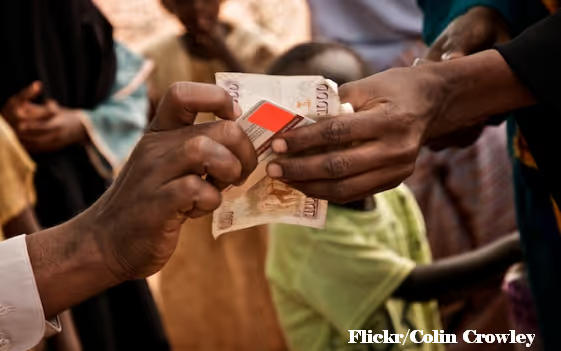
What broad lessons have we learned from 115 studies on unconditional cash transfers?
Globally, around 700 million people currently live in extreme poverty, and in recent years, unconditional cash transfers have emerged as a popular tool for poverty alleviation in low- and middle-income countries. This article presents findings from a meta-analysis of 115 studies, which shows that unconditional cash transfers have positive impacts on a range of key economic and social outcomes, including consumption, income, labour supply, and child health and education.
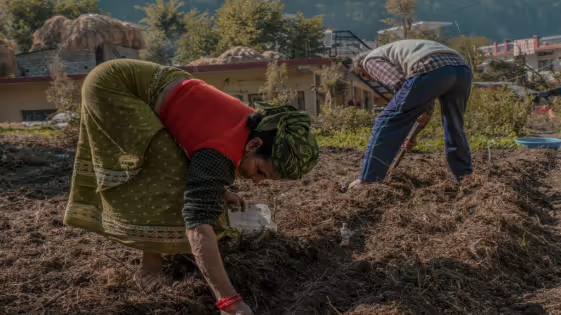
Could better jobs for men have improved gender equality?
Evidence indicates that economic growth can improve gender equality. In this post, Sujata Balasubramanian suggests that India’s high-growth period from 1982-83 to 2011-12 failed to do so substantially. She examines structural changes over those three decades, concluding that the failure was due to insufficient employment – not just for women, but also for poorer men. The analysis therefore emphasises the importance of employment for both pro-poor growth and gender equality.
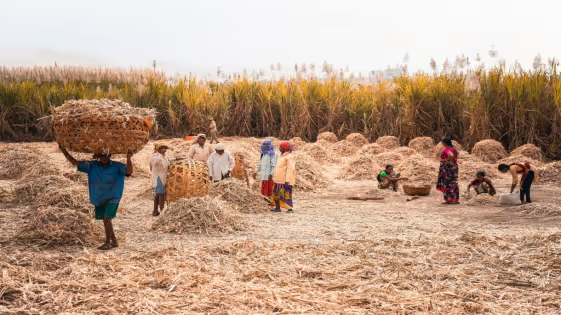
Do minimum wages reduce inequality in India?
Wage inequality in India has declined over the past two decades. This article examines the role of rising minimum wages in driving this trend. Exploiting state-level variations in legislative minimum wage changes, it finds that minimum wage increases account for 26% of the decline in wage inequality between 1999 and 2018. Moreover, these gains were achieved without adverse effects on employment.
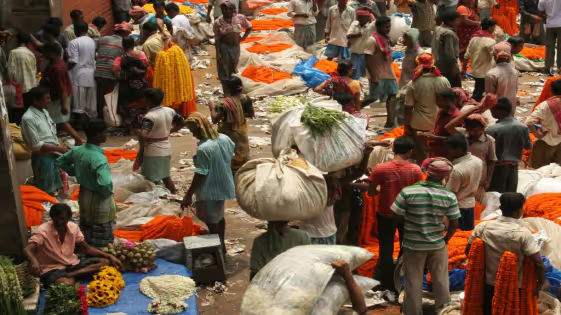
India’s poverty rate does not measure what you think it does
Like all national poverty rates, India’s poverty rate is interpreted as the share of the population that is poor in a given year. In this post, Merfeld and Morduch argue that, in practice, India’s poverty rate is better thought of as the approximate fraction of the year that households experience poverty. They describe how this is rooted in the nature of data collection, and how it changes understandings of poverty and policy in the country.

The economics of begging
Informal estimates suggest that 60% of the world’s population engages in giving to beggars. This article provides a theoretical and empirical analysis of begging as an economic activity. Based on observational and experimental surveys with real beggars and donors in Delhi, it presents various insights into the preferences and perceptions of beggars and donors when it comes to paid work, free-riding, honesty, and ability.
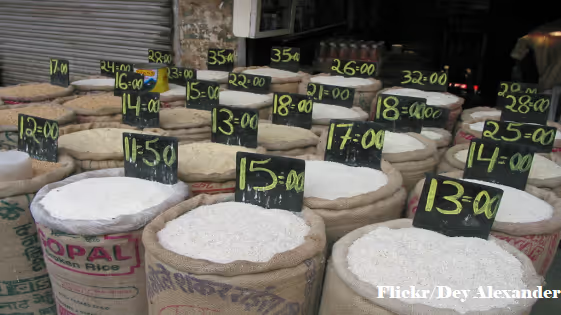
In-kind transfers: Deadweight losses or gains?
Do in-kind transfers for social assistance lead to ‘deadweight losses’ by restricting consumer choice? This article presents findings from an experiment in Maharashtra, which involved offering low-income respondents the choice between a free quantity of rice and varying amounts of cash to elicit their willingness to pay for rice. It finds that women with higher bargaining power within the household are more likely to choose cash over rice.
Grain subsidies and junk food purchases among low-income individuals
While governments rely on expensive food subsidy programmes to address malnutrition among low-income communities, their impact is unclear as only self-reported data on food purchase decisions are available. Based on an experiment in Mumbai using data from point-of-sale scanners, this article finds that low-income individuals – especially those living in households with children – who received a wheat and rice subsidy spent less on junk food and more on spices and accompaniments that complement grains in home cooking.

Rethinking social safety nets in a changing society
This paper was coauthored by Debasis Barik, Pallavi Choudhuri, Bijay Chouhan, Om Prakash Sharma, Dinesh Kumar Tiwari (NCAER) and Sharan Sharma (University of Maryland College Park and NCAER). Historically, India’s approach to social safety nets has involved identifying the poor and providing them with priority access to social protection. Analysing data from the India Human Development Survey, collected in three waves across 2004-05, 2011-12 and 2022-24, this article finds that households face considerable transition in and out of poverty as the economy grows, making it difficult to identify and target the poor in a precise manner. This is the third article in the Ideas@IPF2024 series
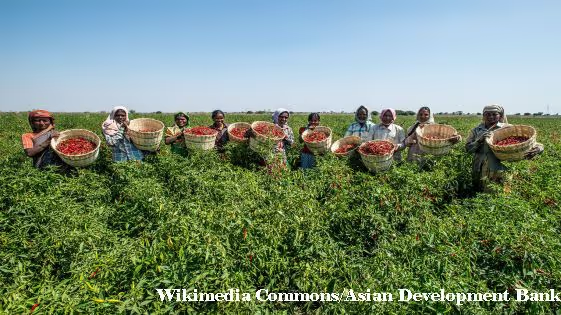
How reforming India’s workfare programme raised private sector earnings
By randomising the rollout of improved, biometric payment infrastructure used to issue National Rural Employment Guarantee Scheme payments in Andhra Pradesh, this study found that this reform raised incomes and reduced poverty. This effect was realised mostly through increases in private labour market earnings, as higher earnings through NREGS put competitive pressure on large landowners who had kept wages low by limiting employment. These findings highlight how critical it is to get implementation of policies and social programmes right..

The implications of India’s spatial development
Mahatma Gandhi once said, “poverty is the worst form of violence”. In this piece, Ejaz Ghani highlights India’s poverty burden, its regional disparities and convergence thereof. He highlights how the growth process, as well as government transfers, currently benefit leading over lagging regions. He discusses how growth doesn't necessarily reduce poverty, and encourages policymakers to not wait to adopt direct interventions. He concludes with crucial policy suggestions around decentralization, labour mobility, and investments in agriculture to enable lagging regions.

How financial access impacts women’s decision-making role in households
Government programmes which grant women access to financial support often provide assistance which is too small to significantly impact women’s economic position within the household. This article uses data on loans granted to members of NRLP self-help groups and finds that increasing women's access to financial resources enhance their decision-making role within the household. However, only large loans have this effect, while providing women with small loans yields similar results to improving the financial position of the household.

The post-pandemic global inequality boomerang
Global inequality has fallen over the last three decades, despite a rise in inequality within some countries. This article uses a World Bank database covering the years 1981-2019 to posit that the decline in global inequality will reverse in the coming years, driven by the between-country component of inequality, with the unequal recovery from the Covid crisis likely to hasten the reversal. Thus, the narrative of declining global inequality could prove temporary
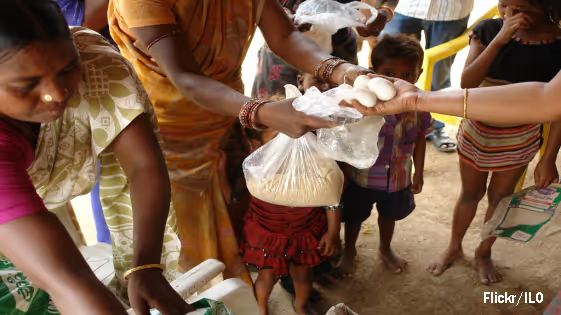
Urban exclusion: Rethinking social protection in India in the wake of Covid-19
Economic insecurity caused by lockdowns during the early days of Covid-19 forced many households to rely on government welfare schemes to fulfil their consumption needs. Using data from the June 2020 round of the Delhi NCR Coronavirus Telephone Survey (DCVTS) by NCAER, this article shows that few households received both foodgrains and cash transfers, particularly in urban areas, and urban residents were also eight percentage points less likely to receive cash transfers vis-à-vis their rural counterparts.

Using personalised information delivery to improve uptake of emergency government benefits
Although many governments introduced additional benefits as part of existing welfare schemes for Covid-19 relief, there is often a significant gap between the introduction of, and access to these benefits. Based on a field experiment in Kanpur in Uttar Pradesh, this article shows that simple, low-cost, information provision interventions can improve the accuracy of households' beliefs about the entitlements they are eligible for and increase the amounts they actually receive, improving beneficiaries’ food security and well-being.
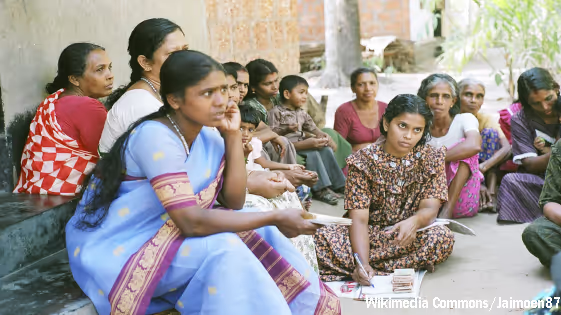
A microfinance model to enhance borrowers’ lifetime utility
Research has shown that providing credit along with services such as savings instruments, can increase the utility that borrowers obtain from credit. Presenting a theoretical model where microfinance institutions offer a ‘locked-in’ savings service and credit, this article shows that the optimal contract is one that enables a borrower to save up the lumpsum amount required to adopt a more efficient technology.

Covid-19 and long-term poverty: Evidence from rural Rajasthan
Based on preliminary calculations, it is being reported that 77-220 million have fallen into poverty in India on account of Covid-19, with the poor now accounting for 60% of urban, and 70% of rural residents. Based on a 2021 follow-up to a 2002 survey conducted in rural Rajasthan, this article shows that while households lost between one-third and two-thirds of their cash incomes during March 2020-August 2021, they experienced little to no change in long-term poverty.

Crime in the village: Does road infrastructure make a difference?
Access to better infrastructure is critical for poverty alleviation and economic development in rural India. Analysing data from the 2004-05 and 2011-12 waves of the India Human Development Survey (IHDS), this article shows that households in villages connected with pucca roads had better outcomes in terms of crime, labour force participation, and family income, relative to those residing in villages with no pucca roads.

Covid-19: Impact on income inequality in India
Even as global inequality was falling, income inequality in India increased during 1990-2019. With the occurrence of Covid-19, the trend of increasing income inequality in the country is expected to not only continue but worsen. Analysing data from the Consumer Pyramids Households Survey, this article shows that inequality has risen sharply during the pandemic, with lower income households having experienced a larger decline in earnings.

Spatial disparities in household earnings in India
The per-capita state domestic product of Haryana (India’s richest state) was 5.6 times that of Bihar (poorest state) in 2017-18, up from 3.8 in 1996-97. Differences in urbanisation levels and inability of poorer regions to realise agglomeration benefits, are cited as reasons for the lack of convergence across states. Using 2018-19 Periodic Labour Force Survey data, this article examines spatial disparities in household earnings across the country.
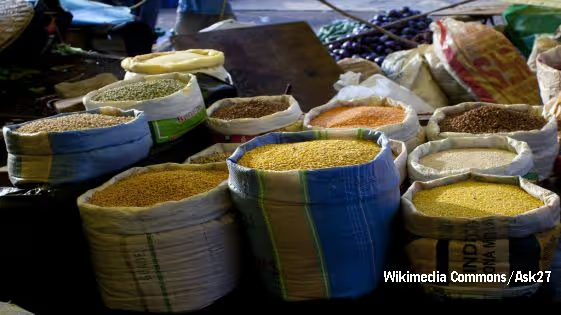
PDS, National Food Security Act, and Covid-19
Introduced in 2013, the National Food Security Act (NFSA) brought about fundamental reforms in the public distribution system (PDS) and most importantly, declared a legal ‘right to food’. Based on a primary survey in Bihar, Odisha, and Uttar Pradesh, this article traces the changes in the PDS post NFSA, and during the Covid-19 crisis.
Focussing on inequality of opportunity to sustain India’s growth
India has seen a four-fold increase in average incomes since 1990, which has reduced the share of the population living in absolute poverty from 45% to 20%. Yet, there are large and widening inequalities in incomes and opportunities. Analysing microdata from the National Sample Survey, this article provides estimates of the ‘locational premiums’ that residents can earn merely by belonging to a richer sub-region.
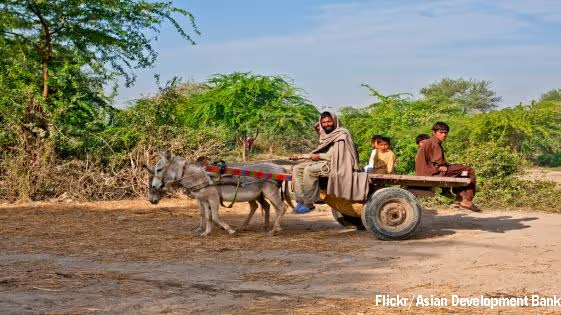
The changing demand for welfare in rural Pakistan
The proliferation of cash transfer programmes in developing countries has raised concern regarding a crowding-out effect on citizens' demands for investment in universal public services. Based on a household survey in rural Pakistan, this article shows that this is not necessarily true. It notes important sub-national differences in programme effects, with greater positive spillovers in settings where public services are functional and valued by citizens.

Examining district-level performance of Ujjwala: The case of Chhattisgarh and Jharkhand
Launched in 2016, Pradhan Mantri Ujjwala Yojana (PMUY) aims to encourage the adoption of liquefied petroleum gas (LPG) for cooking. Using National Sample Survey data for 2014 and 2017, this article examines the impact of PMUY in two states with low LPG usage – Chhattisgarh and Jharkhand. It finds intra-state disparities in LPG usage and PMUY enrolment: regions with relatively low usage rates pre-PMUY had low enrolment, with higher enrolment in urban than in rural areas.

Covid-19: Addressing stigma and misconceptions
Throughout the Covid-19 pandemic in India, there has been stigmatisation of patients and their families, and discriminatory attitudes towards marginalised groups as well as frontline workers. Based on an experiment conducted in Uttar Pradesh during June-August 2020, this article shows that providing reliable and focussed information on the transmission of the Virus can play an important role in addressing associated misconceptions, stress, and stigma.
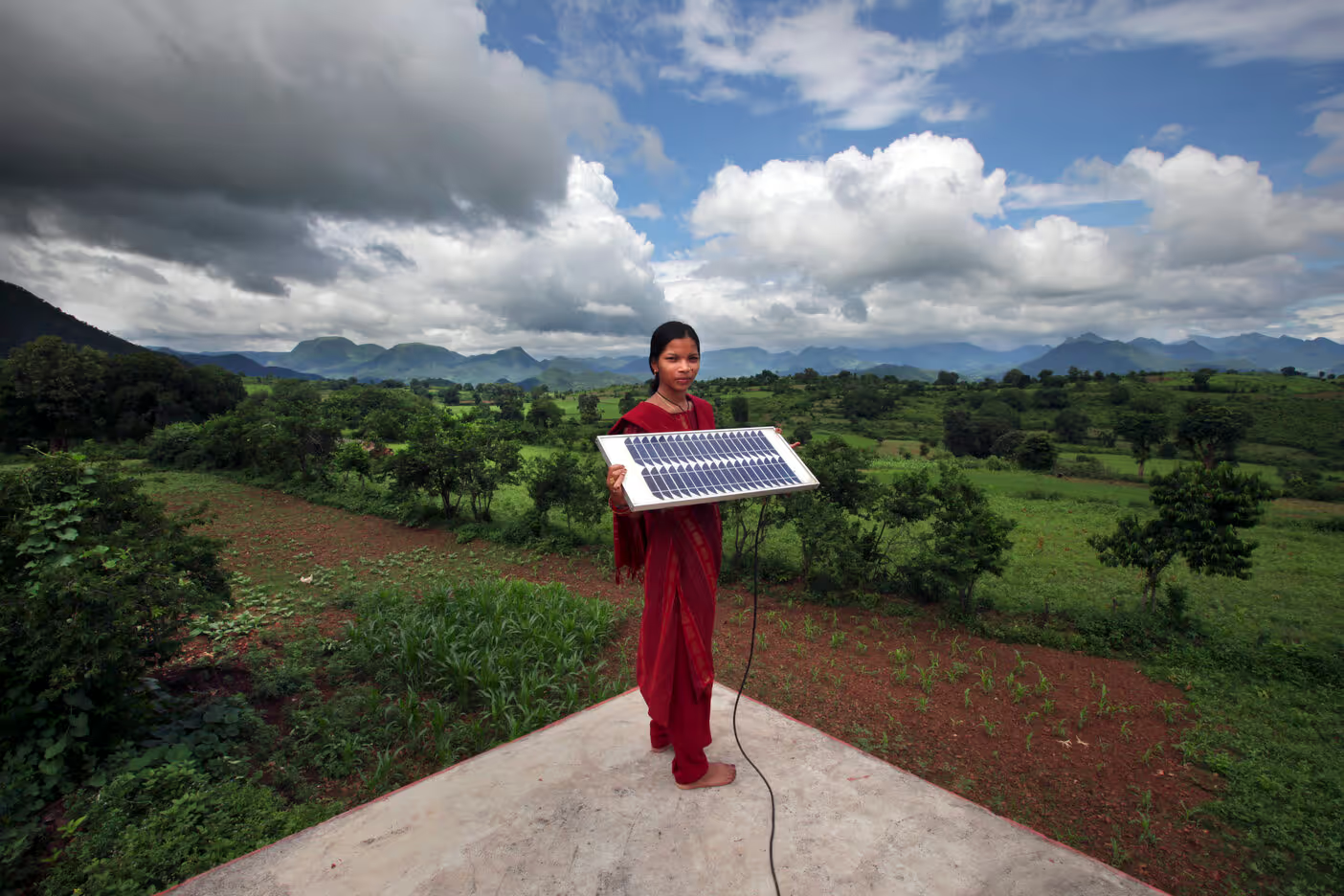
Energy access for marginalised communities: Evidence from rural India
While overall energy access of Indian households has improved rapidly over the past decade, access to clean fuel is still low as compared to electricity. Besides, social structures and hierarchies continue to substantially influence rural development processes in the country. Using data from a household panel survey conducted in six Indian states during 2015-2018, this article analyses inequities in access to clean fuel and electricity among scheduled castes/tribes.

Balancing corruption and exclusion: Incorporating Aadhaar into PDS
How should recipients of publicly provided goods and services prove their identity in order to access these benefits? This article reports findings from a large-scale experiment across 15 million beneficiaries to evaluate the effects of more stringent identification requirements based on biometric authentication, on the delivery of subsidised food through Public Distribution System in the state of Jharkhand. It finds that attempts to reduce corruption has cost some low-income households their benefits in the process.

Populism: Why in rich countries and in good times
Economic anxiety and insecurity are often cited as drivers of populism, so why has populism emerged over the past few years in rich countries and in good times? This article argues that when the economy is strong, everyone fares well but the rich fare especially well, fuelling inequality and resentment. Populism in the form of anti-globalisation may reduce everyone’s consumption, but it affects the rich disproportionately and thus appeals to many voters in richer countries. In poorer countries, however, voters are less willing to give up consumption for equality.
What is happening to rural welfare, poverty, and inequality in India?
An analysis of the draft National Statistical Office report that the Government has decided not to put out shows a deterioration in 2017-18 in consumption and poverty levels in rural India. The reasons may be the demonetisation of 2016 and the shoddy introduction of goods and services tax (GST) in 2017. This article carries the analysis forward with some additional results and analyses relating to trends and levels of consumer expenditure in rural India.
Economic mobility in India: Estimation using ‘noisy’ data
There has been a dramatic rise in inequality in India post-liberalisation. This article finds economic mobility to be markedly low, with at least seven out of 10 poor households remaining poor or at-risk of being poor during 2005-2012. It also finds that Muslims, lower-caste groups, and rural households are in a more disadvantageous position in terms of escaping poverty or transitioning into poverty compared to Hindus, upper-caste groups, and urban households.
Household-level effects of affordable housing: Evidence from Mumbai
Programmes involving sale of subsidised houses to lower-middle class households have been spearheaded in all major Indian cities. This article studies the effects of one such programme implemented through lotteries in Mumbai, on winners’ attitudes. It finds that winning an apartment increases beneficiaries’ knowledge about local politics, and their reported political participation to improve neighbourhoods. It also has large positive effects on educational attainment and employment outcomes of their children.
Challenges in decentralised implementation of centrally mandated anti-poverty programmes
Even when the central government is committed to a jobs guarantee, rationing of work opportunities can arise under decentralised implementation in poor places. This article examines India’s efforts to implement such a scheme and finds that there are two main drivers of this rationing: local administrative costs and local corruption. Partial administrative reforms by the Centre can have perverse effects. Deeper policy reforms are needed to assure that stipulated rights for poor people are attained in practice.

Wealth inequality, class, and caste in India: 1961-2012
The level of wealth inequality in India is close to that of some highly unequal countries in the world. This article assesses the long-term evolution of wealth inequality in the country for the period 1961-2012, and finds a strong rise in wealth concentration within the top decile of the population. It also explores the changing relationship between class and caste and the mechanisms behind rising inequality.
NYAY e-Symposium: Crucial to look into taxes for financing
Prof. S. Subramanian (National Fellow, Indian Council of Social Science Research) emphasises the importance of dealing directly with the question of enhanced taxation and some estimate of the likely order of magnitude of the required enhancement – in order to accommodate an income transfer scheme.
Cash transfers and adult labour outcomes in developing countries
The basic economic model of labour supply predicts that when an adult receives an unexpected cash windfall they should work less and earn less. This underlies concerns that cash transfers will undermine work ethics and make recipients lazy. In this post, Baird et al. discuss how missing markets, price effects, and dynamic and general equilibrium effects can make this intuition misleading in low- and middle-income countries.
In which countries do children have the best chances to surpass their parents' education?
Intergenerational mobility contributes to social stability and cohesion, and is associated with higher, more inclusive economic growth in the long-term. This article presents global trends in absolute intergenerational mobility, captured by the share of a generation that surpassed their parents in education. It shows that the global picture on absolute mobility is sobering, particularly for the developing world, as it has stopped rising at a much lower level of overall education attainment than in high-income economies.
Intergenerational mobility across the world: Where socioeconomic status of parents matters the most (and least)
Intergenerational mobility is important for fairness and economic efficiency in a society. This article uses data from a new global study spanning five decades to show that average relative mobility is lower in developing economies, with no sign of the gap with developed countries getting smaller. Also, income mobility in several developing economies is much lower than their levels of educational mobility would lead us to expect. Labour market deficiencies appear to be contributing to this gap between mobility in education and income.
How income gains from globalisation are distributed
Globalisation stirs a diverse range of sentiments and views: some credit globalisation for boosting economic well-being while others blame it for worsening inequality. This article examines the effect of globalisation on income among and within countries, and shows that globalisation is associated with income convergence across countries and income divergence within countries. Targeted redistributive policies and investments in education are needed to ensure that the benefits of globalisation are enjoyed by all.
Enhancing nutrition among the poor: UBI vs. welfare programmes
Some proponents of universal basic income (UBI) for India believe that the unconditional cash transfer should replace existing welfare programmes. Based on analysis of National Sample Survey data, this article presents speculative evidence on the potential nutrition-enhancing role of UBI vis-à-vis that of in-kind transfers via the public distribution system and midday meal scheme
Who does not get caught by social safety nets?
While implementation failure is an oft-cited reason for low coverage rates of welfare programmes, even relatively well-implemented programmes can fail to reach intended recipients. Based on an experiment involving the target group of the widow pension scheme in Delhi, this article examines barriers to take-up such as lack of information and transaction costs, and whether certain types of individuals are systematically left out of programmes.
Rags to riches? Understanding social mobility in India
To what extent is an individual’s status in society determined by the position of his or her parents? Analysing data from the Indian Human Development Survey, 2011-2012, this column finds that the probability of large intergenerational, occupational ascents in India is very low, and in fact, many face high risk of downward mobility.
Estimating intergenerational income mobility in rural India
For developing countries, it is difficult to find income mobility studies that rely on datasets linking parents with their children. Using a panel dataset spanning 1994-2012, this column presents improved estimates of intergenerational income mobility in rural India, which is found to be higher than analogous evidence from other developing countries. While India is progressing towards cross-caste equality, it is at a disappointingly slow rate.
Understanding livelihood resilience in Bihar
This column develops a livelihood resilience index including three key components – bio-physical, economic, and social resources – and estimates the index for districts in the state of Bihar.
Price risk and poverty
There is an ongoing policy debate in India on whether grain entitlements under PDS should be converted into cash transfers. This column shows that in the face of high price variability, in-kind transfers such as the PDS can be superior to cash transfers as they could significantly reduce the strength of the relationship between prices and caloric intake, hence, shielding households from price risk.
Inequality and economics: Tony Atkinson's enduring lessons
Sir Tony Atkinson, the doyen of inequality economics, passed away in January. This article, by a longstanding friend and co-author, outlines his contributions to the analysis and measurement of inequality – and many other areas of economics, including taxation, social protection, and the welfare State. The ultimate goal of Atkinson’s research was to translate economic analysis into policy actions: economics is a tool for understanding the world and taking informed decisions on policies, but economists must strive to communicate their results beyond the narrow circles of decision-makers, making them accessible for public discussion.
The decline of rural earning inequality in India
While earnings inequality remained virtually unchanged in urban India between 2004-05 and 2011-12, it declined sharply in rural India over this period. This column finds that although the change in the distribution of education among paid workers had an inequality-increasing effect, there was a net decline in rural inequality because returns to increased levels of education improved more for low-earning workers than high-earning ones.
Income inequality in a globalising world
Since the turn of the century, income inequality has risen to be among the most prominent policy issues of our time. This column looks at inequality trends in recent decades. While relative global inequality has fallen, insufficient economic convergence, together with substantial growth in per capita incomes, has resulted in increased absolute inequality since the mid-1970s. The inclusivity aspect of growth is now more imperative than ever.
Inequality in the typical country in the last 25 years
While inequality has received a great deal of attention in the public debate in recent times, the poor quality of data available on this issue is a constraint. Based on a recently-compiled database of the World Bank, this column presents the trend for within-country inequality for the average country.
What do we know about the wealthy in India? A pre-liberalisation analysis
Academic attention on the metamorphosis and concentration of wealth has so far excluded poor countries. This column analyses wealth distribution in India, post-independence and pre-liberalisation. It finds that during this period of modest economic growth, the importance of the elite, especially the top 0.01%, declined quite dramatically relative to national income.
Poverty reduction in India: Revisiting past debates with 60 years of data
There has been much debate about the poverty impacts of economic growth and structural transformation in developing countries. This column revisits these issues using a newly constructed dataset of poverty measures for India spanning 60 years. There has been a downward trend in poverty measures since 1970, with an acceleration post-1991, despite rising inequality. Post-1991 data suggest stronger inter-sectoral linkages. Urban consumption growth came with gains to both the rural and urban poor. The primary/secondary/tertiary composition of growth has ceased to matter, as all three sectors contributed to poverty reduction.
Insights from long-term studies of Indian villages
Much of our knowledge of change in rural areas depends on longitudinal village studies. Drawing upon a number of village studies carried out over the years in India, this column provides a broad picture of how the economic and social structures of villages are changing, and the consequences for production, employment, migration, inequality and other key issues.
Afterword: What lies ahead for MNREGA?
In an afterword to the e-symposium on ‘10 years of MNREGA and the way forward’, I4I Editor Farzana Afridi contends that the evidence summarised in the e-symposium suggests that MNREGA is not merely a poverty alleviation programme. Given its multiple potential benefits, MNREGA needs more than mere lip service or it risks dwindling into irrelevance.
How has MNREGA impacted the lives of women and children in India?
In this article, Subha Mani, Professor of Economics at Fordham University, summarises evidence that shows that MNREGA has mostly positively impacted the lives of women and children in India.
MNREGA and its assets
Critics of MNREGA believe that the programme is a dole to dig a hole and hence, a huge waste of resources and that it would be better to simply provide cash. In this article, Sudha Narayanan, Associate Professor at the Indira Gandhi Institute of Development Research, argues that evidence from various states on the quality of MNREGA assets suggests that this ‘dole-hole’ view of is largely unfounded.
MNREGA's impact on rural labour markets
In this article, Laura Zimmermann, Assistant Professor of Economics at the University of Georgia, provides an overview of the research on the impact of the initial phase of MNREGA on rural labour markets in India. The evidence suggests that the programme has served as an important short- and long-term safety net, and has had some employment generation effects during the agricultural off-season. However, the effect on rural casual wages is less clear.
Bringing global evidence into the MNREGA discourse
MNREGA – the largest public works programme in the world – completed 10 years this month. In this article, Inayat Anaita Sabhikhi, Project Officer, United Nations Development Programme, at the Ministry of Rural Development, summarises evidence on MNREGA from four recent reports of international and national organisations. She contends that MNREGA’s high global rankings among social security programmes and the positive evidence on its impact should boost efforts to strengthen its implementation.
Beyond leaky pipes: Fixing enrolment systems of welfare schemes
Policy initiatives of JAM (Jan Dhan Yojana, Aadhaar, Mobile numbers) trinity and direct benefit transfer focus on unclogging the supply of benefits under welfare schemes by reducing payment leakages. This column shows that bottlenecks to the entry of deserving beneficiaries into such schemes and misallocation of resources to the ineligible are even more significant, and deserve similarly high-profiled attention.
The coexistence of prosperity and poverty in India
Credit Suisse recently reported that the richest 10% Indians own about 75% of the country’s wealth, highlighting the growing problem of inequality. This column presents trends in inequality in India during 1961-62 – 2002-03 based on relative, absolute and intermediate measures. It demonstrates that growth may be considered inclusive or exclusive depending on the measure of inequality used.
Can microcredit improve food security among the rural poor?
A core objective of microcredit in Bangladesh is to make the rural poor more food secure. To what extent has this been achieved? Analysing household data from Bangladesh, this column finds that participants of microcredit programmes are more food secure, with improved calorie availability, reduced child stunting and better maternal nutritional status. However, programme participation in itself does not improve dietary diversity.
Are self-help groups helpful?
While a lot of funding goes towards community-driven development projects, rigorous evidence on their socioeconomic impact is limited. This column evaluates the impact of JEEViKA – a rural livelihoods project in Bihar that seeks to empower marginalised women by organising them into self-help groups. It also highlights the importance of understanding how these initiatives work, and the challenges involved in evaluating their impact.
Private investment and income disparity across Indian states
Liberalisation reforms in India in the 1990s offered private investors the freedom to choose their investment location in the country. This column finds that income disparity across low-income states in India increased in the post-reform period, while it reduced across middle-income states. This is largely explained by private investment, which in turn depends on human capital and infrastructure of states.
Financial literacy: When, what and how
The need for financial literacy and its importance for financial inclusion have been widely recognised. Based on various research studies on financial literacy initiatives, this column outlines financial services’ needs of a poor household at various stages of its life cycle. It contends that customising financial literacy programmes according to the stage of life of targeted individuals is crucial for their effectiveness.
Impact of MNREGA on labour markets
There is an active, ongoing debate on whether MNREGA should be retained in its current form. This column reports on research which suggests that MNREGA increased rural and urban wages and reduced seasonal rural-to-urban migration. It argues that the effect of MNREGA on labour markets should play a role in the discussion on whether and how to reform the scheme.
Workfare as an effective way to fight poverty: The case of India's MNREGA
The fundamental appeal of a workfare programme, vis-à-vis a welfare programme, is that it helps in targeting the beneficiaries. This column assesses the welfare impact of MNREGA on poor rural households. It finds that the programme had a significant effect on extreme poverty in the first few years of implementation by improving food security, financial inclusion and mental health.
The 'urban sprawl' and declining rural-urban inequality
India has experienced rapid urbanisation in the past three decades. Has urbanisation impacted the economic wellbeing of rural and urban workers? This column finds that the rural-urban wage gap has shrunk dramatically over this period. This is largely explained by the process of ‘urban sprawl’, which involves assimilation of rural areas into adjoining urban areas, and the resulting relative increase in urban labour supply.
MNREGA: Populist leaky bucket or successful anti-poverty programme?
MNREGA – the world’s largest workfare programme - formed the backbone of the UPA government’s anti-poverty programme, and may well represent its most important legacy in the long run. This column reviews various studies on its performance, and provides a perspective on its broader macroeconomic effects. It argues that while MNREGA was far from perfect in terms of implementation, it was much more effective than other existing schemes in benefitting the poor.
Going beyond the Gujarat versus rest of India debate on growth rates
This column attempts to widen the ongoing growth rates-based debate on ‘Gujarat vs. rest of India’ by ranking Indian states on prices, cost of living, household expenditures and inequality, which measure how well states have truly fared in the past two decades. It highlights the spatial differences in terms of these indicators, and finds that prices vary across states at any given point in time. Inequalities have risen significantly in recent years, though there are sharp differences across states. It also shows that Gujarat has always ranked highly in terms of living standards.
Growth, structural change, and poverty reduction: Evidence from India
Poverty reduction in India has been relatively slow even in years of high economic growth. A possible explanation is that growth has mainly been driven by sectors that generate fewer jobs for the poor. This column analyses this explanation and finds that structural change or the reallocation of jobs from low productivity to high productivity sectors, plays a key role in reducing poverty.
Why is Maharashtra's average income five times that of Bihar?
Income gaps among Indian states are large, persistent and increasing over time. Differences in technology and efficiency in production processes have been found to be the primary explanation for income gaps across countries. Does the same apply to Indian states? This column attempts to answer this question, with a particular focus on Bihar – the state with the lowest average income in the country.
Migrating out of poverty: The role of finance
Financial liberalisation has been controversial as it is not clear whom the expanded credit allocation actually benefits. Using variation across time and states in India, this column finds strong evidence that financial deepening reduces rural poverty, especially among the self-employed. Financial deepening is also found to be associated with an inter-state migration trend from rural areas into the tertiary sector in urban areas.
Lack of aspirations as a poverty trap
Much of the literature on chronic poverty focuses on external constraints as impediments to escaping the poverty trap. A new strand of research suggests psychological factors such as a lack of aspirations and low self-esteem could reinforce these traps. This column presents results from an ongoing study that demonstrates that it is possible to change these psychological factors.
Boosting shared prosperity in South Asia
Two-thirds of the poor in India and other South Asian countries live in the lagging regions. This column examines whether there are poverty traps that make it difficult to achieve shared prosperity, and if the current fiscal decentralisation arrangements in South Asia are working to the benefit of the poor regions. It highlights the need for shifting the locus of policy from the national to sub-national level, and from leading to lagging regions.
Why is poverty declining so slowly in India?
Despite two decades of fast growth of per capita GDP, India has experienced a very slow decline in poverty. The column suggests that this disconnect between GDP growth and poverty decline can largely be attributed to the positive feedback emanating from a skill biased growth pattern.
Creating entrepreneurs: A big new idea in development
Can the world’s poorest people become entrepreneurs? This column outlines results from an evaluation of the Ultra Poor programme in Bangladesh, a scheme that the NGO behind it claims is a staggering success.
South Asia's bottom half billion
South Asia has more people in extreme poverty than Sub-Saharan Africa. This column asks why such conditions continue in the second fastest growing region in the world. It argues that growth is extremely important and necessary but not sufficient for reducing poverty – policymakers need to combine it with social policies that will provide better education, healthcare, and bring about social change
Why some poverty-fighting programmes show no net impact
An increasingly popular way to tackle acute poverty is ‘targeting the ultra-poor’. The scheme provides not only money but also training and support and has been hailed a huge success in its origin country Bangladesh. But this column evaluates a copycat scheme in southern India and finds that the gains are met by losses elsewhere and that, overall, the effect is minimal.
The resurgence of poverty
Policymakers who aim only at lifting people out of poverty miss an essential fact: even as many people move out of poverty, many others fall back into it. This column argues that tackling poverty requires not only helping the existing poor, but also preventing the growth of future poverty

Right to Food: Let's get it right
The proposed inter-state resource allocation in the upcoming National Food Security Bill is anti-poor. It will result in unequal treatment of equally poor individuals across rich and poor states. This column explains why, and poses some questions for the way forward.
A national shame: Hunger and malnutrition in India
One area where India’s development falls desperately short is nutrition. Child malnutrition rates are higher in India than in many parts of sub-Saharan Africa. This column argues that there can be no excuses. Policymakers need to better understand the reasons behind this ‘national shame’ and need to start doing something about i
Walking the poverty line
As India’s Planning Commission seeks to review its measurement of poverty, the issue has become a hot topic for public debate. This column argues that while poverty lines should be used as benchmarks for policy, they should not be used to decide who receives benefits and who doesn’t – nor should they distract us from the real issues of poverty.

How firms adapt supply chains to climate risk
Amidst growing climate risks, localised weather events such as floods or droughts pose a threat to the links between firms and their suppliers. Using data from India, this article analyses how businesses adapt their sourcing strategies to mitigate climate risks, and the broader economic implications of their responses. It finds that while supply chain diversification by firms enhances economic stability, it may deepen regional disparities.
Does development of transport infrastructure increase rural land inequality?
Investments in transport infrastructure reduce trade costs and lead to integration of villages with urban markets. This article suggests that this spatial integration could have the unintended consequence of increasing land inequality in rural India. It isolates the effects of market access using colonial railroad locations and the distance of a village from the Golden Quadrilateral highway network. The study finds that integration also increases the share of landless households and the adoption of productive farming technology, which would lead to large farms getting bigger and increase land inequality
Economic integration and the transmission of democracy
Dramatic increases in globalisation resulted in autocratic countries being exposed to the institutions and values of their democratic trade partners. Exploiting improvements in air transportation relative to sea shipping that occurred over the last five decades, and combining survey data with country level measures of democracy from 1960 to 2015, Tabellini and Magristretti document that trade with democracies increases both citizens’ support for democracy and countries’ democracy scores, and investigate the feasibility of the mechanisms through which this democratisation occurs.
Lockdown-induced trade disruptions and adaptations by firms
In the face of trade disruptions, firms can reorient their trade to minimise risk. This article documents a fall in inter-state trade in India during the Covid-19 lockdown, that continues until December 2020. This is explained by ‘reshoring’, as plants more dependent on inter-state sales (and input-sourcing) shifted to intra-state sales (and input-sourcing). The extent of reshoring is determined by a new measure – Scope for Home Expansion – that captures excess home production which can be diverted within the state

The impact of services trade on non-tradable services in India
A share of India's service sector growth can be attributed to tradable services, which can also have positive productivity impacts on manufacturing. This article looks at the effect of services trade on employment growth in non-tradable services. It finds that an increase in tradable services employment led to an increase in employment in non-tradable services from 1990 to 2013, and that this is explained by increases in consumer demand. The impact is larger among female workers and small firms.
Safeguarding strategic interests with development finance? India's response to China's expanding footprint in the Global South
Studies have suggested that both India and China use grants and concessional loans as a means to gain favour with developing countries. Using 2007-2014 data on development projects implemented by the two economies, this article shows that India tends to make financial commitments and increase its local presence as a response to China’s development activities, in order to compete for commercial influence.
Global value chain participation and intermediate export sophistication
While the dominance of global value chains (GVCs) in production processes is a widely accepted fact, the impact of participation in GVCs is still being explored. Using data from a sample of 100 nations for 1999-2018, this article examines the improvement in productivity brought about by GVC participation, and its role in the upgradation of intermediate exports – the main channel through which countries participate in GVCs.

Boosting India’s capital goods’ exports
Union budget 2021-22 has proposed a sharp 34.5% hike in capital expenditure, which is expected to boost the capital goods sector. While the sector has grown since liberalisation, its share in the global export market is under 1%, and there is heavy dependence on imports. Analysing trade data for the sector from 2008-09–2018-19, this article suggests that India has not been able to fully leverage free trade agreements due to non-tariff barriers and low competitiveness.

Import competition, formalisation, and role of contract workers
Given the recent expansion in the participation of developing countries in global trade, it is important to understand the role of trade in the composition of employment in these countries. Analysing the case of Indian manufacturing and Chinese imports, this article shows that import competition leads to an increase in the share of formal-sector employment – driven by greater usage of contract workers in the formal sector – and higher aggregate labour productivity.

Trade disruption, industrialisation, and how the sun set on British rule in India
It is argued that by keeping India open to imports of cheap British manufactures, the imperial power made it excessively difficult for Indian industry to emerge in the early 20th century. This article examines this by studying the impact of World War I-related drop in net imports from Britain during 1913-1917 on Indian industrialisation. It finds that the protection offered by this trade shock had a positive effect on Indian industry, and that 24% of industrial employment growth in this period can be attributed to it.

Inequality and trade: Simulation evidence for 54 developing nations
Questions about who benefits from free trade – and at what cost – have resurfaced as part of the backlash against globalisation. This article uses data from 54 low- and middle-income countries to show that in a majority of cases, trade liberalisation increases both incomes and inequality. Most of the trade-offs between them resolve in favour of liberalisation; despite exacerbating income disparities, trade liberalisation creates overall social welfare gains.
Exports, global production sharing, and job creation in India
Is it in the interest of a country to promote strong local linkages for its domestic industries or to participate in global production sharing activities wherein linkages are globally dispersed? This article informs this debate by empirically analysing which one of these strategies would result in higher levels of domestic value added and employment in a developing country like India.
What explains India’s poor performance in garment exports?
India has been losing its share of the world garment trade over time – it went down from 6% in 2013 to 3.5% in 2016. This article examines the Indian garment industry based on a survey of garment manufacturers in India. It discusses the constraints and nature of competition faced by the industry, and suggests a number of policy changes in order to boost exports.

The new globalisation and income inequality
Trade in intermediates (or ‘unbundling of production') and trade in capital have become increasingly important in last 25 years. This article shows that trade in intermediates generates a reallocation of capital across countries that exacerbates world inequality in both income and welfare. Unbundling of production hurts middle-income countries but helps those with high productivity. Trade in intermediates also increases within-country inequality, and this increase is U-shaped in the aggregate productivity level of the country.

How operational efficiency of India's ports impacts its manufacturing exports
The average turnaround time of Indian ports has come down significantly since 2010, indicating improvement in their operational efficiency. However, it still is more than two times the level in some of the best-performing ports in the world. This article provides estimates showing that if the average turnaround time could be cut down by 50%, India’s manufacturing exports may increase by at least 20-25%.
Trade agreements and their impact on India’s apparel exports
Slow progress of the Doha Round of WTO negotiations has led to a proliferation of regional and bilateral trade agreements, and consequent increase in trade among their members. While India continues to be among the top apparel-exporting countries, its apparel exports have stagnated in recent years. In this post, Mukherjee, Sinha, Sarma, and Paul investigate the impact of trade agreements on India’s apparel trade.
Should the rupee trade with Russia be revived?
The issue of revival of the bilateral rupee-denominated trade between India and Russia is back on the table after a break of over 20 years. This column contends that while there is justification for India’s hesitancy in reviving this trade, the prevailing conditions are such that it makes eminent sense for both sides - provided appropriate precautions are taken.
Indo-Korea trade pact: Harnessing the potential in services
India and Korea signed a Comprehensive Economic Partnership Agreement (CEPA) in 2009, which resulted in an increase of 42% in bilateral trade between 2009-10 and 2012-13. This column examines the CEPA with the objective of identifying potential areas for harnessing services trade between the two countries.
Trade liberalisation and intergenerational occupational mobility in urban India
While the trade reforms of the 90s led to a rapid increase in trade in India, there are concerns regarding the likely impact of the reforms on inequality. This column shows that innovation induced by international trade led to an increase in the employment share of high-skill occupations, which in turn, allowed an increasing number of sons from underprivileged backgrounds to enter better occupations than their respective fathers.
Creating a services value chain between India and Thailand
In the past two decades, India has signed several bilateral and regional comprehensive free trade agreements with Southeast Asian countries, which are likely to enhance services trade, investment and cooperation in the region. This column explores the prospects for creation of a services value chain between India and Thailand. It contends that integrating services may facilitate growth in Indian manufacturing by supporting production networks.
Boosting Indo-Pak agricultural trade
Despite close geographical proximity of India and Pakistan and implementation of SAFTA almost a decade ago, trade potential between the two countries remains largely unexploited. This column analyses trends in Indo-Pak trade in agriculture, which constitutes 43.6% of total Indo-Pak trade, and highlights opportunities for expanding trade in this sector.
International trade, domestic labour laws and India’s manufacturing sector
India has a multitude of restrictive labour laws and these have been found to adversely affect economic performance of manufacturing firms. This column illustrates how the impact of trade liberalisation on the domestic manufacturing sector depends on labour laws. It contends that more flexible labour laws will enable India to compete better in global markets.
Impact of trade reforms on labour’s share of firm revenues
The decline in labour’s share of national income in recent decades – a potential cause of rising inequality – has coincided with an increase in world trade. This column analyses the impact of trade reforms in India on labour’s share of total revenue at the firm level. It finds that the share of labour has been rising with reforms for small, labour-intensive firms.
Turning to the pharmaceutical sector for enhancing India-Pakistan trade
Various efforts have been made to normalise trade relations between India and Pakistan in the past few years; yet, several barriers remain. This column examines the trade potential in pharmaceuticals – a fast growing sector in world trade – between the two countries. It finds that there is huge, untapped potential in Indo-Pak pharmaceuticals trade, and suggests policy measures to propel trade and investment in the sector.
Trade as aid
Preferential or duty/quota-free trade access to developing countries, as a form of foreign aid by developed countries, is considered to have both pros and cons. This column analyses data from Bangladesh’s apparel industry to show that it not only leads to gains for the access granting and access receiving countries, but also trade creation for the rest of the world.
An Indian trade paradox
India’s trading partners often complain about the restrictiveness of India’s trade regime. This column argues that they are both right and wrong. While India´s economy is ‘closed’ in terms of trade policy, it is ‘open’ in terms of trade outcomes. Tariff barriers in the services sector are among the highest in the world; but given its size, India trades more than a typical country does.
Exchange-rate pass-through by Indian and Chinese exporters
The pricing behaviour of exporters in emerging markets confirms that the already well-reported decline in exchange rate sensitivity of import prices is due to export prices becoming more sensitive to exchange rate changes.
Night shift bans and female employment in Indian manufacturing
Do laws designedto protect women from unsafe working conditions constrain the demand for theirlabour? This question sits at the centre of global debates about protectivelegislation in labour markets. Our recent research (Gupta et al.2025) examines what happened when Indian states lifted long-standing bansthat prevented women from working night shifts in factories. Our findings offerimportant lessons for policymakers seeking to expand female employment,particularly considering the significant labourreforms that have been recently initiated by many state governments.

Global software piracy: Does US Special 301 pressure matter?
Section 301 of the US Trade Act seeks to combat global software piracy, with non-compliance by partner countries potentially leading to trade sanctions. Examining data from 1994-2017 involving 83 countries, this article shows that the process has no significant impact on international software piracy overall. It finds that countries that are below-median in terms of development, State capacity, and institutional quality, are unable and/or unwilling to bend to such pressure. By contrast, multilateral enforcement of stronger intellectual property protection appears to be an effective instrument in curbing piracy.
Wartime mobilisation and economic development in India
Can temporary wartime mobilisation permanently reshape an economy? This article shows that Indian districts that received more orders related to World War II saw greater transformation from agriculture to industry and services more than six decades later – with the majority of this structural transformation driven by procurement in heavy industries. These districts also experienced higher consumption levels, urbanisation rates and nighttime luminosity.
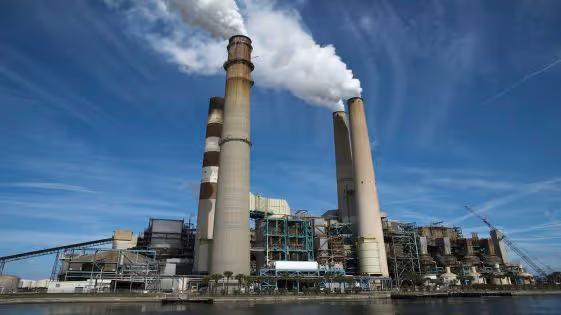
Complementarity between labour and energy in Indian manufacturing
As India develops its carbon markets to mitigate climate change, it is important to consider the short-term costs for industry. Analysing data on formal manufacturing from 2009-10 to 2019-20, this article finds that energy and labour are complementary inputs in production – if an intervention such as a carbon tax raises the cost of energy and reduces its use in manufacturing, employment will go down as well.
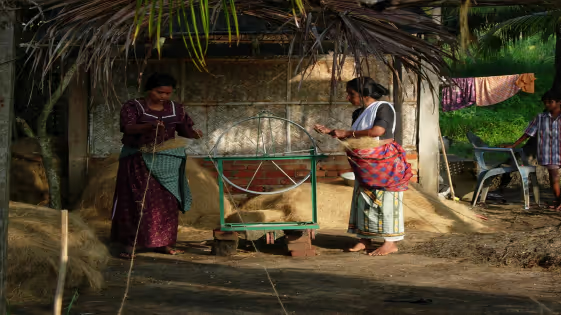
Unlocking women’s workforce potential
Despite significant progress in educational attainment and health outcomes, India lags in enabling women’s economic participation, which, in turn, impedes the goal of fast and inclusive economic growth. This article shows that formalising part-time employment and redistributing unpaid care work between men and women could raise female labour force participation by six percentage points, from 37% to 43%. This is the first post of a five-part series to mark International Women’s Day 2025.

Old or new: What’s driving employment growth in formal manufacturing?
As the government undertakes various initiatives for manufacturing, it is important to understand what type of firms drive employment growth in the sector. Based on data on registered firms from the Annual Survey of Industries from 2000-2016, this article highlights the importance of older, larger firms in creating jobs. It suggests that policies should encourage entry of new medium-sized plants and facilitate growth of dynamic, incumbent small and medium firms.
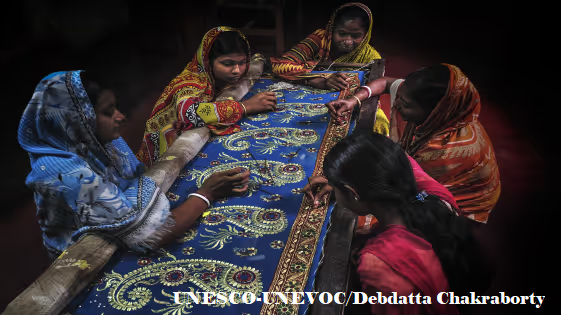
Post-Covid informal manufacturing growth: How states fared
Recently released official data show an expansion in informal manufacturing in India in the post-pandemic period. In this post, Goldar and Aggarwal conduct a cross-state analysis and highlight that Bihar led the growth story in terms of the number of enterprises and employment generation. An additional notable trend is of the feminisation of industrial labour. Financial assistance by the government helped support the recovery, particularly in rural areas.

Patent protection in India: Impact on innovation, pricing and competition
When stronger patent laws were introduced in India, there were fears that it would lead to higher prices without substantial gains in innovation. This article provides evidence that stronger patent protection increased the number and quality of patents, and R&D spending among manufacturing firms. While process innovations and output growth led to lower production costs, these cost savings translated into higher price-cost margins rather than lower consumer prices.


Bringing work home: Flexible work arrangements as ‘gateway jobs’ for women
Millions of women stay out of the workforce despite having a desire for paid work, often because available opportunities are incompatible with traditional norms of household roles. Based on an experiment in West Bengal, this article shows that flexible work arrangements significantly raise women’s take-up of jobs. Although home-based work reduces worker productivity, once women have some experience with flexible work, they are more likely to accept future outside-the-home jobs.

Can shared social identity minimise corporate frictions?
A separation between owners and managers of firms gives rise to various problems known as ‘agency conflicts’. This article explores whether having a shared social identity between managers and board members can help reduce frictions and improve firm performance. Analysing data from Indian firms, it finds that homophily enhances firm value in the long run – despite the costs associated with in-group favouritism.

How do private players respond to public entry in pharmaceutical markets?
In 2012, the government of West Bengal outsourced the operation of key public pharmacies to private players – creating fair-price shops for selected generic medicines. How has the private sector responded to this policy intervention? Analysing the impact on prices of different categories of medicines, this article finds that the private sector response hinges on the extent to which consumer preferences are ‘sticky’.

How R&D tax credits can drive price competition in Indian industries
In the last few decades, tax credits have been introduced in many developing countries to incentivise investment in research and development (R&D). Looking at the staggered introduction of R&D tax credits across industries, this study finds that increases in tax credits were effective in increasing R&D expenditure, while leading to a decline in prices. This decline is primarily driven by a decline in markup, conditional on cost, as opposed to the passthrough of cost savings to prices

Weaving through generations: Productivity gains in family-owned businesses in rural India
In Andhra Pradesh and Telangana, weaving is often a family enterprise. Using data from over 1,800 households, this ongoing mixed-methods evaluation by Patel et al. shows that households with multi-generational weaving businesses earn more in weaving revenue and have greater household incomes relative to households with only one generation of weavers. However, it notes that these gains in productivity are not equally distributed across the household, as they do not translate into greater agency for the women weavers who are part of family-owned businesses.
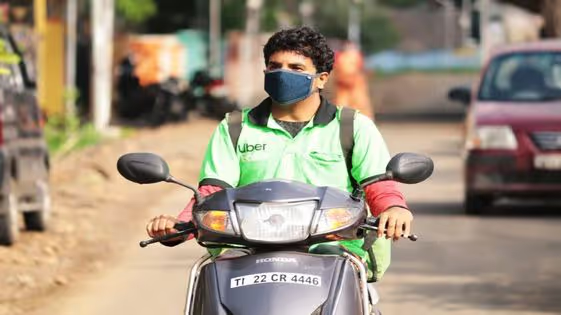
Collecting labour market statistics to study the platform economy
Although India has emerged as a leader in digital labour market platforms, there is a dearth of data about the gig economy. Neha Arya describes the efforts taken by the CMIE to collect data on platform workers in the CPHS, and uses this dataset to describe the demographic composition of India’s gig and platform workers. She suggests that maintaining high quality data is necessary to ensure security and improve the quality of work for workers in this dynamic labour market.

AI and services-led growth: Evidence from Indian job adverts
Using a new dataset of online vacancies from India’s largest jobs website, Copestake et al. document near-exponential growth in the demand for artificial intelligence-related skills in the services sector since 2016, coinciding with the take-off in developed countries. They find that the demand for AI skills by establishments has a negative impact on labour demand for non-AI roles and on the top percentile of wages, driven by the displacement of high-skilled, managerial occupations and non-routine, intellectual tasks.
Implicit costs of factor allocation for Indian firms
Looking at variations in factor misallocation across states, Chaurey et al. measure trends in factor adjustment costs incurred by firms between 1999 and 2014. They find that adjustment costs for labour and land across India fell during this period, with the decline in labour adjustment costs declining significantly faster in states with fast growing manufacturing. They discuss other factors which affect adjustment costs, including firm size and governance quality of state, and the pattern between misallocation and low growth.

The gendered employment effects of mobile internet access in developing countries
In the third post of I4I’s month-long campaign to mark International Women’s Day 2023, Goldberg and Chiplunkar look at 3G internet coverage in 14 countries, and find that access to mobile internet allows women to enter the labour force, and start small businesses and get service-sector wage jobs. However, they notice that 3G access also leads to better employment opportunities for men, who leave their unpaid agricultural jobs to be filled by women.
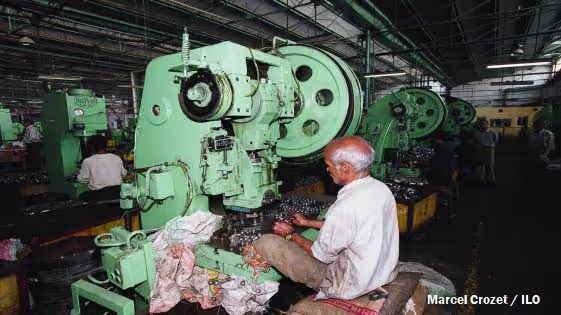
Formalisation of informal manufacturing enterprises in India
Employment in India’s organised manufacturing sector has grown rapidly since 2004. This article finds that about 15% of this growth can be attributed to the formalisation of previously informal enterprises, and expects that, as the new labour code is implemented, the output and employment of relatively bigger informal manufacturing establishments will rise significantly, with concomitant gains in productivity. The productivity potential of such informal enterprises needs to be adequately exploited with investment in ICT and other fixed assets.

The role of political connections of firms during a crisis
Research has shown that political connections matter for a firm during times of economic crisis. This article refers to a unique data set of political connections of firms in India, and finds that firms can leverage these connections to access scarce resources. ‘Connected firms were able to increase access to short-term credit and delay payments owed in the aftermath of demonetisation, and reported higher income, sales and expenses as compared to non-connected firms.
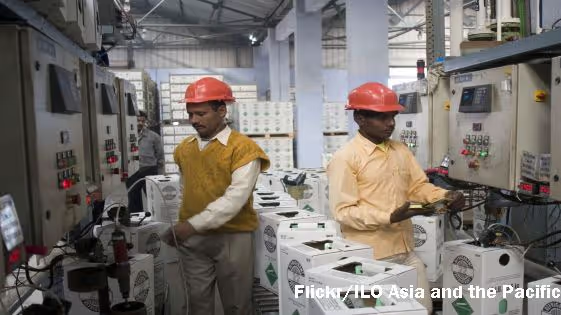
The effect of easing labour restrictions: Evidence on employment in Rajasthan
Stringent labour laws in India can hinder firms’ growth and increase the incidence of informal and contract employment. Looking at evidence from firms in Rajasthan after the amendment of the Industrial Disputes Act, this article finds that relaxing labour laws did not significantly affect total employment and output. Counterintuitively, it increased employment of contract workers and reduced the permanent workforce. The study however estimates that the implicit labour cost fell for firms impacted by the amendment.

Birth versus worth: Impact of the caste system on entrepreneurship in India
The prevalence of the caste system has restricted social mobility in India. This article further looks at how caste disparities have contributed to the misallocation of resources across firms. It quantifies the differences in productivity and financial conditions for low- and high-caste entrepreneurs, and finds that this has macroeconomic implications on wealth and income inequality and aggregate total factor productivity
Hindu-Muslim integration and firm output in Indian manufacturing: Evidence from a field experiment
Evidence suggests that ethnic diversity can lower firm output due to poor social ties and taste-based discrimination among workers. Based on an experiment in a manufacturing plant in West Bengal, this article shows that religious mixing initially leads to lower team output in teams performing tasks requiring higher continuous coordination. However, this negative effect on productivity reduces in the longer run, with out-group attitudes improving vis-à-vis teams with lower continuous coordination.
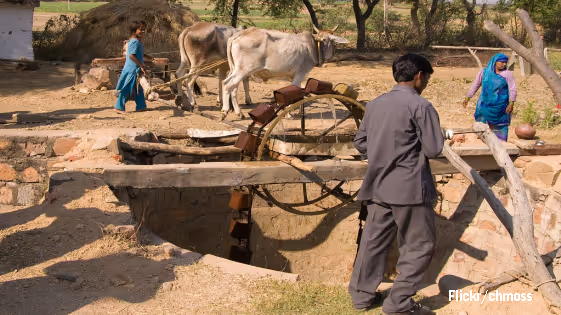
Temperature, labour reallocation, and industrial production
While it is well-established that agricultural production is vulnerable to weather shocks, less is known about how those affected respond or the economic consequences of any responses. Analysing data from India, this article shows that higher temperatures are associated with reductions in agricultural production, employment, and wages – but workers are able to relocate to other sectors such as manufacturing within the district.
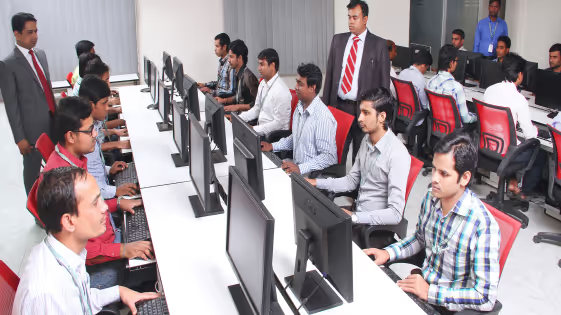
Trade, internal migration, and human capital: Who gained from India’s IT boom?
The Indian economy experienced trade expansion and an IT boom during 1993-2004. How did the spectacular growth in a high skill-intensive sector – concentrated in a few big cities – affect inequality across the country? This article shows that individuals born in districts with good access to jobs and education received welfare gains of 0.51% for every percentage increase in IT exports, vis-à-vis 0.05% in remote districts.

Debt contract enforcement and product innovation
Weak enforcement of debt contracts can have undesirable consequences for financial development, as difficulty in recovering claims from distressed firms causes banks to reduce lending. Leveraging the staggered implementation of debt recovery tribunals across Indian states, this article shows that the legal reform had a positive impact on product growth in firms – as such innovation require considerable upfront investment and access to credit.
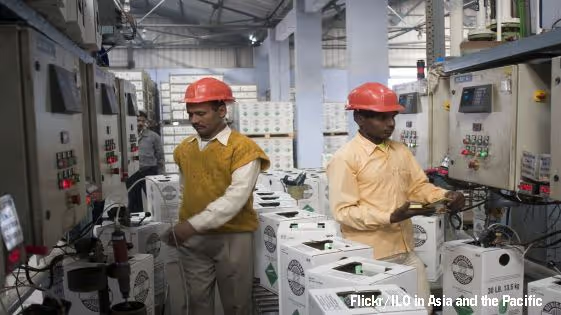
Contract labour and firm growth in India
There is considerable evidence indicating that the Industrial Disputes Act (IDA), 1947 – which made it illegal for large companies to downsize – had a powerful disincentive effect for entrepreneurs in India. Using Annual Survey of Industries data, this article shows that constraints on large firms diminished since the early 2000s largely due to exploitation of a loophole pertaining to contract labour, rather than a de jure change in the labour laws.
Intellectual property rights and wage inequality
Technology has become central to most everyday activities. But will incentives for technological change – such as those induced by Covid-19 – cause deeper distortions in the global economy, especially through wage inequality? To examine this issue, this article analyses data on Indian manufacturing firms during 1990-2006, and shows that stronger incentives for innovation through intellectual property resulted in inequality across virtually the entire economy.

Alleviating financial concerns to enhance worker productivity
Financial constraints can have psychological consequences and affect productivity by making workers more distracted during work. Based on an experiment among small-scale manufacturing workers in Odisha, this article shows that an interim payment before the end of the contract period raises worker productivity by 7.1% – with a higher increase of 13.3% for poorer workers– and also appears to improve planning and focus with a decline in attentional lapses.
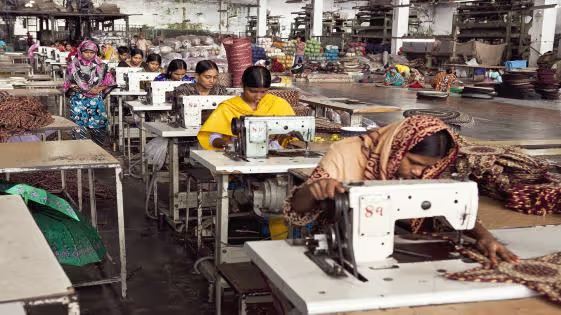
Dealing with worker absenteeism in labour-intensive industries
Worker absenteeism in labour-intensive industries causes productivity losses for firms, and reduced potential for productivity-based incentives for workers. Based on a study in Karnataka, this article investigates how factory line-managers trade workers amongst themselves when facing particularly low attendance on their lines, and estimates the financial gains that firms can make when they improve the distribution of workers across lines.

Short-term illness and intra-household labour substitution
For poor, agricultural households, health shocks strain limited resources on medical expenses, and result in loss of potential productive work-days. Based on data from rural India, this article shows that an illness episode causes a 7% decline in the ill individual’s average monthly wage income. Further, the male household head’s illness leads to the wife increasing her market labour supply by 3.2%, on average.
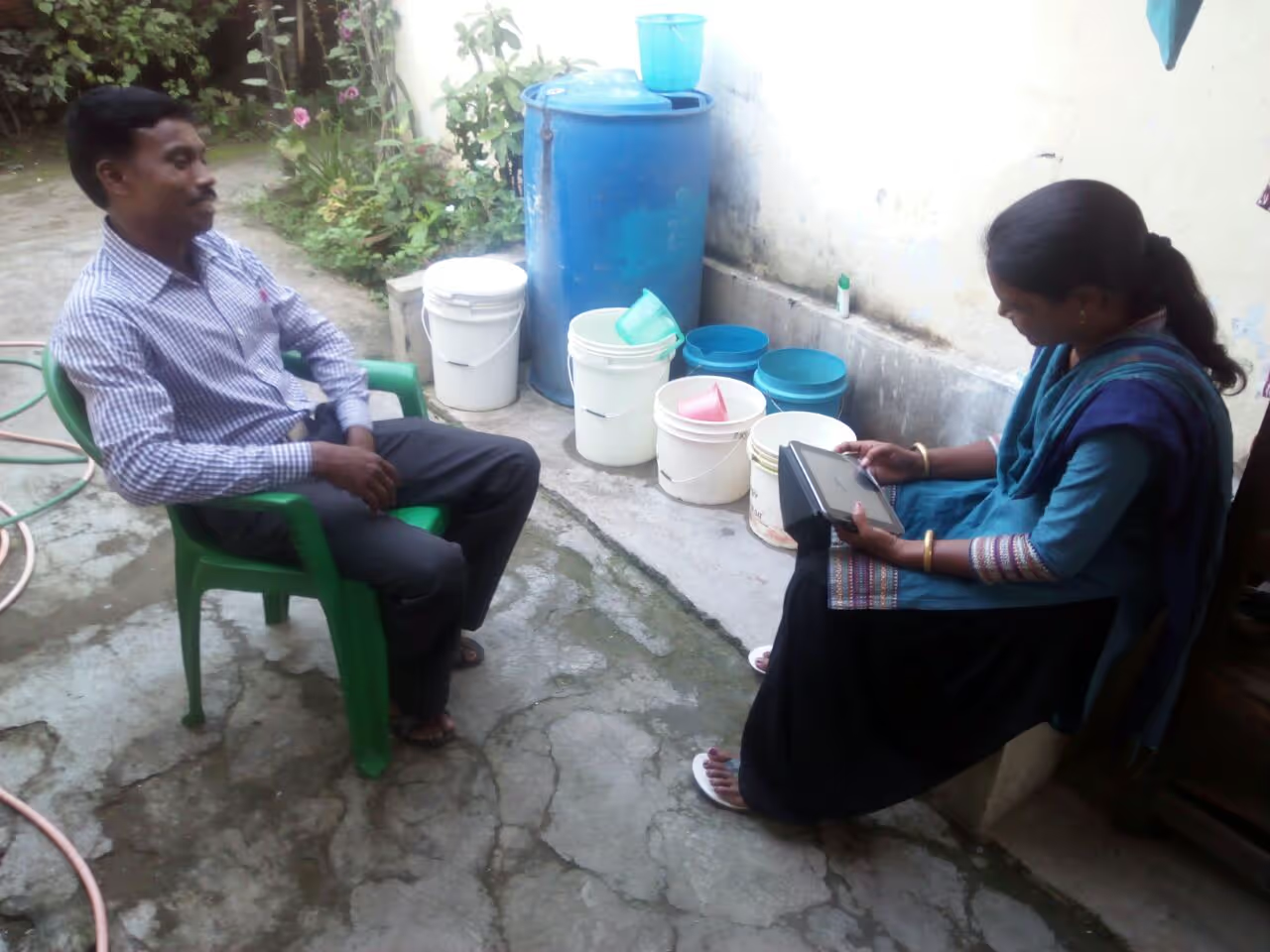
Can technology mitigate the impact of heat on worker productivity?
Exposure to high heat causes productivity losses, with reduction in cognitive function as a key channel. A direct reduction in heat exposure via technologies such as air conditioning is not possible for outdoor tasks. This article presents results from a randomised experiment in Odisha where the use of a digital mode – rather than the traditional pen-and-paper mode – for household surveys helped mitigate some of these heat-induced productivity losses.
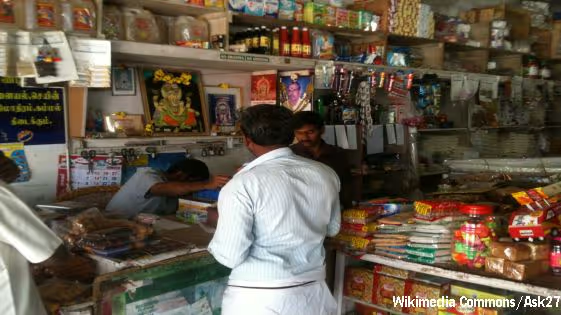
‘Outside’ managers’ productivity, firm dynamics, and economy growth
In developed countries, many industrial giants have humble beginnings as small, family-owned businesses, but nonetheless expand to hundreds of thousands of employees over time by relying on professional managers running key operations. Why does this not occur to the same degree in India? This article explores how the lower productivity of ‘outside’ managers in developing economies impacts firm growth.

Expectations, wage hikes, and worker voice
Understanding how exit decisions of workers are affected by their ability to voice their concerns, is a central question in labour economics. Based on an experiment in 12 garment factories in Karnataka around the time of a wage hike, this article shows that providing workers a channel to express grievances – through an anonymous employee satisfaction survey – reduces quit rates, especially for those most disappointed with the wage hike.
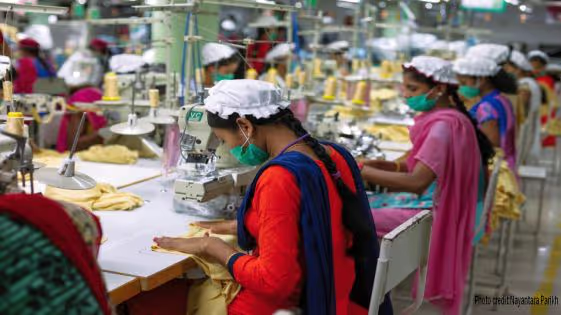
No line left behind: How firms match workers and managers
Various studies consistently affirm the importance of strong worker-manager dynamics in driving productivity. Based on analysis of worker-level productivity data, information on orders, and interviews with managers of a large garment manufacturing firm in India, this article suggests that when it comes to labour-allocation decisions, productivity sometimes takes a back seat to managing complex relationships with buyers, who can take their business to the factory down the road.
Managerial quality and productivity dynamics
It is well known that managerial quality impacts firm productivity and growth. Which managerial skills, traits, and practices contribute most to productivity? Are all such traits easily observable? Are such traits appropriately rewarded in pay? Based on two years of daily, line-level production data from a large Indian garment firm and rich survey data on line managers, this article seeks to address these questions.

Does India gain from high-skilled migration to the US?
India is the most important source of migrants globally, and the US is the main host country for its high-skilled migrants. Is the phenomenon of high-skilled emigration ‘brain drain’, or is it creating potential providers of ‘knowledge remittances’ for the home country? Based on data on US immigrant inventors from India, this article investigates the rate and determinants of return migration.

The changing task content of jobs in India
The ongoing wave of technological revolution across the globe is set to fundamentally change the way goods are produced and services are delivered. Using a task-based framework, this article seeks to examine the impact of technology on the nature of jobs in India. It finds that in keeping with global trends, non-routine cognitive task intensities of jobs have increased, and manual task contents – both routine and non-routine – have declined.

Manufacturing, management and mysteries
The private sector is crucial to India’s development. This column asks how it can be more effective. Looking at a large sample of Indian manufacturers it suggests that what many firms may be missing is good management.
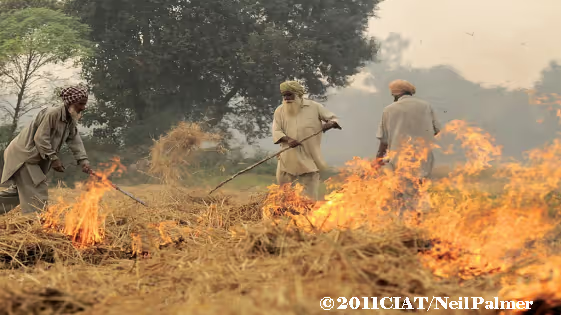
Clearing the air: Do India’s crop burning bans really work?
In December 2015, the National Green Tribunal instituted a ban on crop residue burning across five states. Utilising satellite data on crop fires and administrative data on fines levied, this article examines the efficacy of the ban. It finds that the ban did have a sizeable downward impact on fire counts – but with a lag of a year, and effects lasting for at most two years.
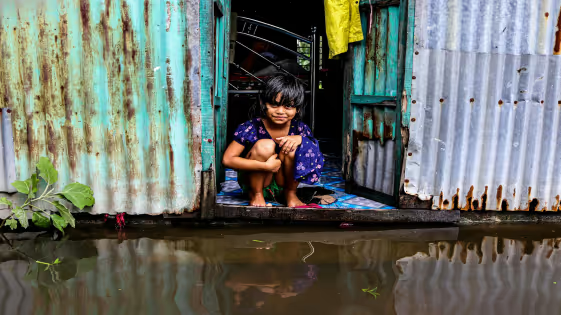
Climate Change: An unfolding public health crisis
Climate change is no longer merely an environmental issue; it is emerging as a profound threat to human health and well-being. In this post, Chandra, Sen Gupta, and Zheng discuss the diverse and complex pathways through which climate change affects health. They contend that by investing in infrastructure, empowering vulnerable populations, and implementing evidence-based policies, we can mitigate the health risks posed by a changing climate.

Grain procurement and seasonal air pollution
To provide farmers with stable remunerative prices for their produce, the government commits to buy all surplus grain at minimum support prices. This article demonstrates that when procurement prices are higher, farmers are encouraged to specialise and produce more rice, leading to an increase in crop-residue burning and air pollution. The mortality costs of pollution are estimated to be larger than gains to producers from higher prices

Construction sector and air pollution: Evidence from India
The construction sector has emerged as a significant yet often overlooked contributor to worsening air quality in India. Exploring the link between construction activities and air pollution, this article shows that heavy-duty diesel equipment used on construction sites lead to NO₂ emissions. This highlights the need to incorporate NO₂ reduction targets into national policies, which currently mainly focus on particulate matterThe construction sector has emerged as a significant yet often overlooked contributor to worsening air quality in India. Exploring the link between construction activities and air pollution, this article shows that heavy-duty diesel equipment used on construction sites lead to NO₂ emissions. This highlights the need to incorporate NO₂ reduction targets into national policies, which currently mainly focus on particulate matter.

Does industrial water pollution harm agricultural production?
While toxic foam regularly appears on lakes and rivers in major Indian cities, water pollution has not received as much attention as air pollution. Examining the impact of industrial water pollution on agriculture, this article demonstrates that there is a large, sudden rise in pollutant concentrations in nearby rivers downstream of industrial sites. Despite this, there is no significant impact on crop yields.

Female legislators and forest conservation
While women are known to be more concerned about the environment than men, do these preferences translate into action when women hold political power? This article shows that in constituencies reserved for historically marginalised communities, when female politicians win close races against male candidates, there is an immediate positive effect on forest conservation efforts. In other constituencies, the benefits accumulate over time.
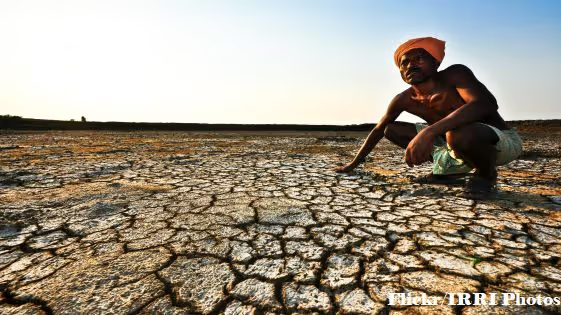
Safeguarding agricultural households against climate shocks
Extreme climate events are taking place more often and for longer, jeopardising the economic stability of agricultural households. This article shows that coping strategies adopted by households in response to climate shocks – such as occupational diversification and sale of livestock – yield lower returns relative to normal circumstances. A larger proportion of the educated agricultural workforce takes up casual labour, while livestock is sold at distress prices.
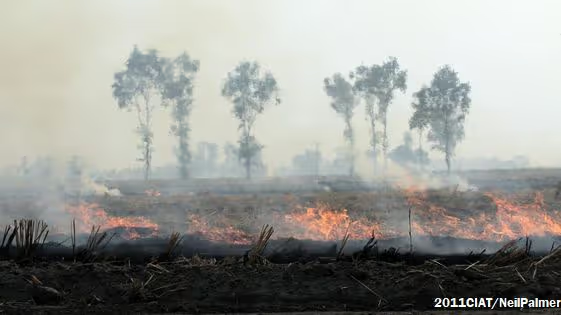
Do women leaders improve environmental outcomes? Evidence from crop fires in India
This study looks at how women leadership improves environmental outcomes. Using satellite data from India, it compares incidence of crop fires between constituencies where women narrowly won or lost elections against men and finds that female legislators decrease crop fire incidence and lower particulate emissions. A survey to understand mechanisms suggests that female leaders are more likely to consider crop fires a serious issue, weigh their impacts on child health, and implement crop residue management policies.
How feasible is it to phase out coal-fired power plants? Evidence from a global attitudes survey
Coal-fired power plants are a highly polluting energy source but people are either unaware or unable to convey their dissatisfaction about living with poor air quality. Using survey data from 51 low- and middle-income countries, this article calculates citizens' willingness to pay to phase-out coal power. It measures the wellbeing of residents in close proximity to a power plant, and calculates that the air quality benefits accruing to them would exceed the costs of solar and wind energy generation.
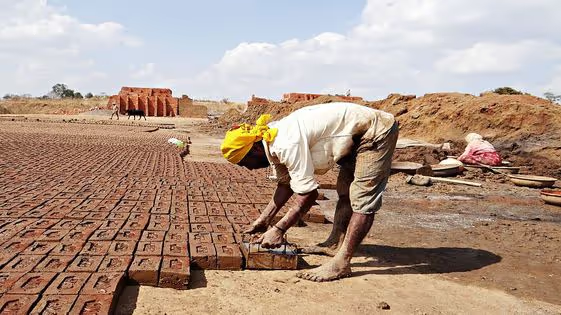
Effects of climate shocks on sectoral inequality
Over the last three decades, agricultural and industrial sector workers have suffered consumption losses due to temperature rise while those in the services sector saw consumption increases. This article discusses the broad range of impacts of climate change across sectors, and highlights the stark rise in inequality of household consumption due to increased temperature variability. It emphasises the need for social protection schemes, and data on the economic impacts of climate change to aid the design of adaptation policies.
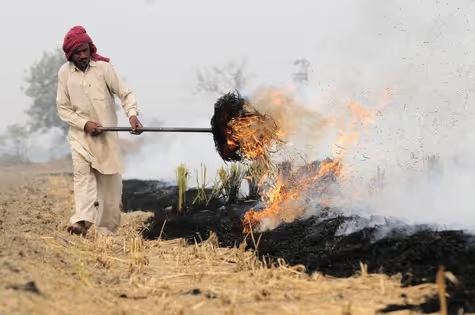
Designing transfer payments to reduce crop burning in India
Air pollution caused due to crop burning has severe health impacts, particularly in north India. Despite the introduction of a conditional cash transfer programme to adopt environmentally friendly practices, farmers lack liquidity and trust in the process. This article describes a study undertaken in Punjab, and reveals that although the programme may face challenges with compliance, contracts that include partial upfront payments can help reduce crop burning and increase the use of equipment to manage crop residue.

Economic dynamics of natural disasters: Evidence from the Kerala floods
To understand the economic impact of natural disasters, this article uses the 2018 floods in Kerala – a time when it received higher rainfall than the neighbouring states of Karnataka and Tamil Nadu ¬– to design a natural experiment. Using household and district-level data, the study finds that although flooding lowered economic activity during the disaster, the demand for credit, household income and wages all increased relative to the neighbouring states during the post-disaster boom, facilitated by labour market conditions and government’s reconstruction efforts.

How human and ecosystem health are intertwined: Evidence from vulture population collapse in India
Livestock farmers in India have historically relied on vultures to dispose of dead animals. However, the collapse of vulture populations in India due to accidental poisoning has prevented the scavenging of carcasses, worsening sanitation. In this post, Frank and Sudarshan estimate the consequences of the loss of vultures on public health and estimate that human mortality increased during the period when vultures reached their new collapsed population level, and note that vultures’ role in the ecosystem cannot be easily replicated.
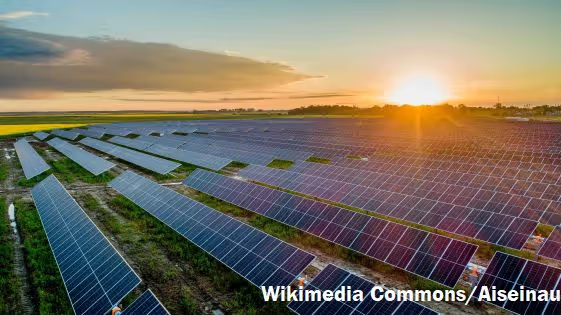
Reducing information barriers to solar adoption: Experimental evidence from India
A large number of people lack access to reliable and high-quality electricity supply. Off-grid solar technologies can fill this gap, but adoption remains low. This article looks at the role of information provision on the adoption of solar home-systems in three Indian states, and finds that potential customers who were better informed expressed a greater interest in solar products, even though actual take-up remained low due to income and credit constraints.
Inducing water conservation in affluent urban households
Reducing the demand for water – particularly in affluent, urban households – can lower the burden of increasing supply to ensure universal access, and sustaining it at an affordable price. Based on a field experiment in Bengaluru, this article shows that ‘habit-change’ interventions can lead to a 15-25% reduction in household water consumption without economic incentives or restrictions and these results persisted for the two-year observation period of the study.
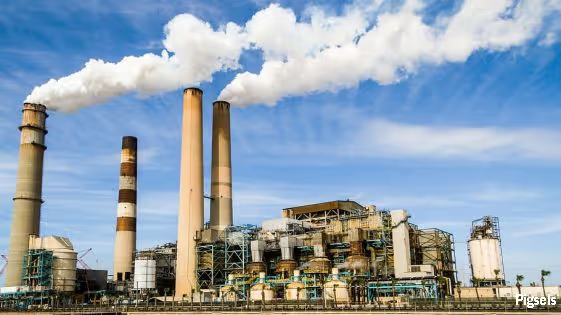
Environmental relocation and firm outcomes
Industrial relocation policies have become increasingly popular as a policy tool to combat pollution in the developing world. Using Economic Census data from 2005 and 2013, this article examines the impact of an industrial relocation policy in Delhi, and shows that relocation caused a long-term change in the location and concentration of firms. The data also indicate distributional consequences – with firms that were relocated across larger distances being less likely to remain open in the long run
Impacts of water loss on low-income farmers in Karnataka
Worsening environmental conditions threaten to undermine progress in reducing rural poverty. This article studies the effects of increasing water scarcity in India. It finds that drying up of wells results in a precipitous and persistent decline in farm income and wealth, with little evidence of agricultural adaptation. However, farmers take up relatively more off-farm employment opportunities, particularly in locations with a more developed manufacturing sector.
The child health impacts of coal: Evidence from India’s coal expansion
In recent years, electricity generation from coal has rapidly increased in India. This article explores the consequences of India’s large and ongoing coal plant expansion on child health and human capital. It finds that children who are born exposed to a median-sized coal plant are shorter than those who are born with no coal plant exposure. Supporting air pollution as a channel, effects are larger among children living closer to coal plants.

Climate migration frightens... climate poverty is frightening!
There has been much discourse on how long-term climate change will affect human mobility in the 21st century. This article estimates the long-term welfare and mobility responses to climate change. Depending on the scenario, climate change will force between 210 and 320 million people to move, mostly within their own countries. Massive international flows of climate refugees are unlikely, except under generalised and persistent conflicts. The poorest economies will be hardest hit, thus increasing global inequality and extreme poverty.

Early-life exposure to air pollution: Effect on child health in India
More than half of Indian population gets exposed to PM2·5 greater than the annual limit recommended by the National Ambient Air Quality Standards. This article examines the effect of outdoor air pollution on child health by combining satellite PM2.5 data with geo-coded Demographic and Health Survey of India. It finds that children exposed to high levels of pollution in their early lives have worse child health outcomes than those exposed to lower levels of pollution.

How much do households contribute to ambient air pollution in India?
Burning solid fuels like firewood in homes for cooking, heating, and other energy services is the single largest source of air pollution exposure in India. In this post, Chowdhury, Chafe, Pillarisetti, Lelieveld, Guttikunda, and Dey compare the estimates of the percentage contribution of household fuel combustion to ambient air pollution, from seven independent studies. They argue that cleaning up household fuel use benefits those directly exposed, in addition to having broader population benefits by reducing ambient air pollution.

Gone with the wind: Crop-burning and the human costs of pollution
Globally, an estimated 4 million people die prematurely because of air pollution every year. This article exploits seasonal changes in air quality arising due to agricultural fires – used by farmers to clear land for planting – to estimate the causal impact of air pollution on infant mortality across India. It finds that an increase in particulate matter by 10 micrograms per cubic metre results in nearly 96,000 additional under-five deaths annually.
Rural electrification and structural transformation: A guar(anteed) bet?
Is large-scale electrification necessary for the structural transformation of rural economies? This article combines two natural experiments in India – an exogenous agricultural boom in the northwest of the country with the simultaneous nationwide roll-out of its rural electrification scheme – to shed light on this question. It shows that electrification significantly increased non-agricultural employment in villages where economic opportunity complemented infrastructure. When these complementary conditions were lacking, electrification had almost no discernible impact.

Understanding India’s energy and emissions future
India is an important player in global climate change mitigation, and it is crucial to understand its energy and emissions future. Projections for India’s 2030 CO2 emissions from energy range from 9% to 169% above 2012 levels – a small increase to well over a doubling in 18 years. Based on an interpretive review of seven studies, this article concludes that a doubling of CO2 emissions is a likely upper bound and that this trajectory is consistent with India’s Paris pledge
Temperature and human capital in India
A large proportion of the population in India has agrarian livelihoods that remain climate-exposed. The number of hot days per year in the country are expected to double by the end of this century. This column shows that higher-than-normal temperatures in a particular year lead to a contemporaneous reduction in agricultural incomes, and large negative impacts on children’s human capital outcomes in the subsequent year.
Indoor air pollution and stunting among Indian children
While the conversation on air quality has been focussed largely on outdoor air pollution, millions of deaths occur due to indoor air pollution as well. Based on 2005–2006 National Family Health Survey data, this column presents strong evidence that exposure to indoor air pollution from burning solid fuels increases the probability of stunting among children in India.
Are India's government-subsidised solar shops thriving or barely surviving?
Government of India’s Akshay Urja programme sought to support the establishment of at least one shop per district for the sale of subsidised solar-powered technologies. Based on a survey of shop owners, this column finds that while the programme has been successful in establishing a network of solar shops across the country, many of the owners struggle to connect their products to large markets of consumers.
Off-grid solar power and the future of rural electrification in India
Off-grid solar power is a potential alternative to grid extension in rural electrification. This column reports results from a recent experiment with an off-grid lighting intervention in Uttar Pradesh. While little evidence of broader socioeconomic changes was found, the study suggests that kerosene subsidies likely hold back the expansion of off-grid solar markets, and that there are many ways in which benefits of off-grid solar power can be enhanced.
Sacrificing consumption to mitigate catastrophic risks
Many scientists agree that the probability of a rare environmental disaster increases as the stock of greenhouse gases accumulate in the atmosphere. This column asks how much consumption current generations should be willing to sacrifice to reduce the risk of such a future catastrophe. If there were a way of immediately eliminating the risk of all future catastrophes, society should be willing to sacrifice 16% of its consumption in perpetuity to achieve this. A sacrifice of 5.8% of annual consumption could bring about a 30% reduction in emissions, in line with the reductions contemplated in agreements such as the Kyoto Protocol.
Clearing the air
In this article, Naini Jayaseelan, former Secretary, Environment, Government of National Capital Territory of Delhi, discusses the pitfalls of basing policies to curb air pollution on comparisons of air quality indices across countries or cities.
Demand for environmental quality information and household response to information: Evidence from Bihar
Groundwater contaminated with arsenic is a serious public health threat in rural India. This column presents results from a field experiment conducted in Bihar to assess the demand for fee-based testing of wells for arsenic, and to study the behavioural responses of households to well-specific arsenic information.

Happy Seeder: A solution to agricultural fires in north India
It is believed that much of the pollution in Delhi in November every year originates in the neighbouring states of Punjab and Haryana where farmers burn their fields to dispose of crop residue. This column discusses a simple, practical and cost-effective solution to deal with the problem.
Solar micro-grids in India: A reality check
Much of India’s strategy to reduce the use of fossil fuels relies on a transition to solar energy. Based on a survey of potential solar micro-grid customers in Bihar, this column highlights the challenges associated with solar electricity becoming a sustainable and scalable solution, and the need for a new approach.
The hidden productivity benefits of energy-saving technology: Evidence from LEDs in Indian factories
Energy-efficient technologies are an increasingly relevant policy priority, given growing consensus on the need to tackle climate change. This column examines the productivity benefits of adopting one such technology – LED lighting – for manufacturing firms in India. It finds that improved productivity resulting from LED lighting’s lower heat emissions makes adopting such technology far less costly than previous anticipated, particularly for labour-intensive firms in hot climates.
How much will people pay for clean air? Evidence from China
Policymakers in emerging economies such as India and China are ramping up efforts to confront pollution. A new study of the air purifiers market in China finds that people are willing to pay a lot to get rid of pollution, but the amount varies widely depending on a person’s income. This sort of metric can enable policymakers to assign values to their policies and guide their decisions.
Improved cooking stoves in India: Evaluating long-run impacts
Improved cooking stoves are increasingly seen as an important technology to address indoor air pollution. While laboratory experiments have shown that they could have big effects on smoke exposure and emissions, this column finds limited long-run health and environmental impacts of an improved cooking stove programme in Odisha. This indicates the importance of testing interventions in real-world conditions taking into account willingness to pay, usage, and changes over time.
Ganga pollution cases: Impact on infant mortality
In response to a writ petition against pollution of the river Ganga due to industrial waste, the Supreme Court of India in 1987 mandated the tanneries in Kanpur, Uttar Pradesh to either clean up or shut down. This column finds that the ruling resulted in a significant drop in river pollution, which in turn reduced infant mortality in the city.
India's energy efficiency
India is the fourth largest energy consumer in the world but is not well endowed with energy resources, making efficiency in energy use very important. This column analyses the spatial dynamics of electricity usage in India’s manufacturing sector. Such an understanding can help in defining a more focused and targeted energy policy.
How development affects climate sensitivity of electricity demand in India
The annual average temperature in India in 2009 was about 0.91°C above the average temperature recorded during the 1961-1990 period. This column analyses the impact of daily weather as well as long-term climate change on electricity demand in India, and how income growth influences this relationship. It shows that the marginal effect of hotter climate on electricity demand is greater when incomes are higher.
Can solar micro-grids deliver basic electricity access in Indian villages?
About one-third of India´s population remains without access to basic electricity services. This column discusses preliminary lessons from an experiment in rural Uttar Pradesh that seeks to set up solar micro-grids in unelectrified habitations. It finds that while the cost of solar power is a potential obstacle to its adoption, the technology does generate substantial benefits in the form of improved lighting and reduced kerosene expenditures.
Solar power for street vendors? Lessons from an experiment in Bihar
Rapid urbanisation in developing countries is aggravating the issue of insufficient access to energy for basic needs such as lighting. This column discusses lessons from an experiment in Bihar wherein street vendors were provided solar-powered lights, the batteries of which were charged at centralised stations installed in urban marketplaces. Based on problems encountered in terms of the mode and cost of operation, it suggests that the provision of electric grid connections, with stand-alone solar lights as backup, may be a better approach.
Pricey diesel
India was recently ranked 174th out of 178 countries, on air pollution. A key contributing factor is diesel vehicles. This column shows that diesel subsidies benefit the rich more than the poor, and emphasises the need to change current regulation to enforce fuel improvement measures. Although such policies seem expensive, the positive effects on sickness, health expenditures and productivity would outweigh the costs.
Can a clean energy agenda take off in Delhi?
Energy transition in cities, through energy conservation measures and increased reliance on renewable energy, has become a key focus of climate change policies. This column outlines the clean energy agenda of the power sector in Delhi, and discusses the endorsement of or resistance to the agenda by public institutions, power distribution companies and users of electricity.
Deforestation in the Himalayas: Myths and reality
It is widely believed that the extent of deforestation in developing countries is large and growing over time, and that this has significant adverse effects on local livelihoods. This column presents findings of a study of the mid-Himalayan region, and contends that forest degradation, not deforestation is the key problem. It discusses the determinants of degradation and what can be done to limit it.
Proposing a solution for Indo-US 'solar wars'
India’s national solar programme mandates the use of domestically manufactured components in solar power installations in the country. The US has filed a WTO case against India, alleging that the policy discriminates against US exports. This column proposes a solution that would address the concerns of US as well as create a domestic market for solar products produced in India.
Four changes to trade rules to facilitate climate change action
Global climate cooperation has collapsed but the need for action has not disappeared. This column argues that only radical technological progress can reconcile climate-change goals with development. It argues that four changes in WTO trade rules could facilitate climate-change action and technological advances without unduly damaging trade.
Running out of water, walking away from farming
Groundwater tables are falling in India. What will happen when water actually runs out? This column analyses the impact of water scarcity on farmers in Gujarat. It finds that farmers are failing to or choosing not to adapt to the availability of less water. They are forced to shrink cultivation, leave farming or migrate to cities - thereby, reducing food production.
In pursuit of low-carbon electricity
The policy debate on low-carbon energy often tends to focus solely on setting targets. This column argues that the State’s capacity to meet targets and the strategies followed to build the required capacity are equally important. Meeting the targets requires creative manoeuvres such as involving and incentivising market players to participate.
Did the metro help reduce air pollution in Delhi?
The Delhi metro has been operational for over a decade now. Has it helped reduce the high levels of air pollution? This column presents initial findings from research that suggests that the metro has encouraged people to switch from private to public mode of travel, resulting in positive effects on air quality in the city.
The unsustainability of fossil fuel use in India
India’s dependence on fossil fuel is widely regarded as unsustainable. This column highlights that this unsustainability is not just environmental in character, but is emerging as a macroeconomic one as well, leading to challenges for India on multiple fronts – discovering new sources of hydrocarbon deposits, developing new renewables and strengthening the macroeconomic fundamentals by making India a more attractive destination for FDI.
Low-carbon development in Indian agriculture: A missed opportunity?
The agricultural sector is the largest contributor of Greenhouse Gases in India. Yet, it has not received due importance in India’s climate change mitigation strategy. This column says that India must prioritise the agriculture sector for domestic climate change mitigation if it is serious about its voluntary commitment to reduce the carbon intensity of its GDP by 20-25% of the 2005 level by 2020.
India's energy consumption: The next 20 years
The environment is a concern the world over – and India is no exception. This column plots India’s energy consumption through to 2032, asking where the challenges lie and where policy reform might make a difference.
US-China relations: Role reversal will slow climate change
This column proposes a new approach to climate change that involves China, and eventually other developing countries, offering inducements to the West to take steps to foster a private-sector led green technology revolution.
Eliminating Delhi's November smog
Around this time every year, the air in Delhi becomes almost unbearable. As politicians and the press point fingers, this column offers up a happy solution.
The Clean Development Mechanism in India – is it working?
The Clean Development Mechanism of the Kyoto Protocol allows developing countries to profit from climate friendly projects, and India is second only to China in using the mechanism to help reduce its carbon emissions. But, unlike China, India does not have a national policy. This column argues that as a result the profits are not going to the states that need them most.
Has environmental regulation been successful in India?
India has an impressive number of environmental regulations – but have they been a success? This column presents evidence that while initiatives such as catalytic converters for cars have reduced air pollution, there has been far less success in tackling water pollution. It argues that regulators will only be effective when they are given enough power and legitimacy.

Street vending: Understanding emotional markups and market interactions
Despite the ubiquity of street vending in urban landscapes and its significance as a livelihood choice among the poor, it is challenging to collect comprehensive data on vendors – especially children. Based on fieldwork in Delhi, this article analyses buyer-seller interactions and transactions, to understand behaviour on both sides of this informal market. Understanding the complexities of street vending and street-connected children can serve as a crucial input into building resilient and inclusive cities.
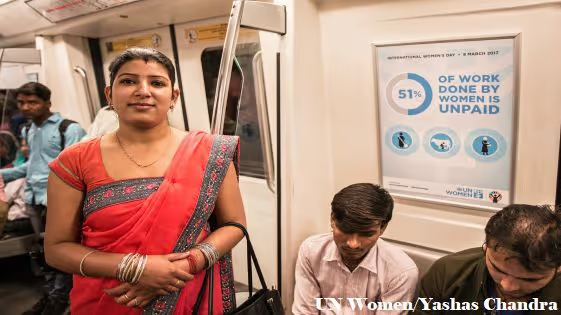
What are the effects of India’s rapid urbanisation on women’s empowerment?
Women in urban areas, compared to their rural counterparts, are thought to enjoy greater social, economic, and political opportunities and freedoms. At the same time, research shows barriers to women’s empowerment remain widespread in urban environments. Given India’s rapid urbanisation and the persistence of gender inequality, this article analyses the effect of urbanisation on women's outcomes – and finds mixed results.
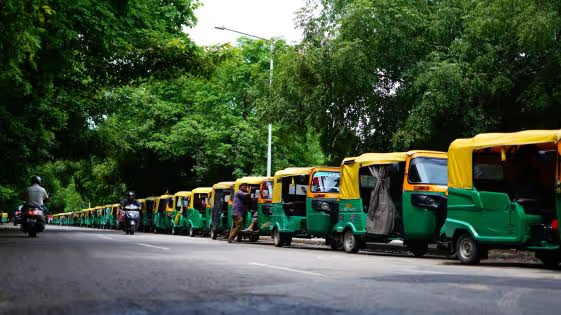
Evidence of illegal fuel use by auto rickshaws in Kolkata
In 2008, in an attempt to improve air quality, the Calcutta High Court mandated that all petrol autos in Kolkata and Greater Kolkata be replaced by liquified petroleum gas (LPG) fuelled autos. However, while investigating the effectiveness of this transition, this article finds that many auto drivers prefer to use cooking LPG – despite it being a more polluting variant – as it reduces fuel costs. This lack of compliance is exacerbated by weak law enforcement and a shortage of refuelling stations.
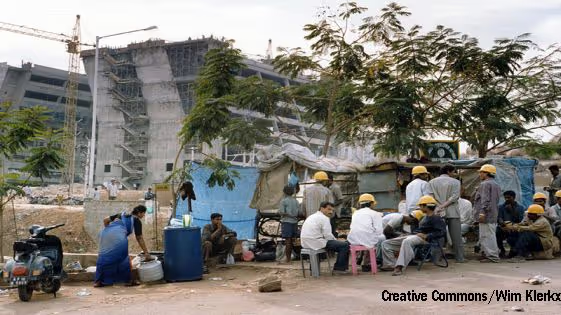
Urban India's housing supply response to migration-induced demand
Has urban housing supply in India kept pace with rising demand? Using Census data between 2001 and 2011, this article studies the market supply of housing in response to migration-induced housing demand. It shows that exogenous events like highway investments and droughts in one state affect housing demand in another state through changes in inter-state migration. The article’s findings on housing supply are consistent with the existence of urban gentrification and speculative construction in India during the 2000s.
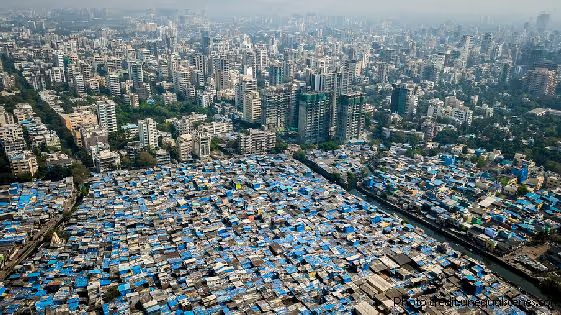
Residential segregation in urban India and persistence of caste
B.R. Ambedkar had exhorted lower-caste people to move towards cities to defy localism and benefit from the virtues of cosmopolitanism that urbanisation might provide. Using 2011 enumeration block-level Census data for five major cities in India – Bengaluru, Chennai, Delhi, Kolkata, and Mumbai – this article finds that not only are Indian cities highly segregated, but population size seems to have no association with the extent of segregation. In fact, the largest cities are some of the most segregated.
Mobility and congestion in urban India
Urban transportation in developing countries is prioritised for massive investments, yet little is known about the determinants of urban mobility in these countries. This article applies a methodology for measuring the performance of overall motor vehicle transportation in a city to the 154 largest cities in India. It finds substantial differences in mobility speeds across large Indian cities but that the variation is driven primarily by uncongested mobility, not by congestion delays.
How India’s internal borders inhibit migration
Indians, particularly men seeking education and jobs, display a puzzling reluctance to cross state borders. This article explores the reasons for this migration pattern. A major culprit is India’s system of ‘fragmented entitlements’, whereby welfare benefits are administered at the state level, and state residents get preferential treatment in higher education and government employment. These administrative rules prevent more efficient allocation of labour across the country.
Congestion pricing to solve traffic jams? Not so fast!
The Lieutenant Governor of Delhi recently said that the city is likely to become the first in India to have congestion charges in certain stretches. This column reports results from an experimental pilot in Bangalore that seeks to assess the effectiveness of congestion pricing as a solution to chronic traffic congestion.
India's slum leaders - II
The second part of the two-part column on slum leaders discusses who these leaders are - their age, professions, and relationships with political parties - and how they build support within their communities.
Does it matter how we assess living standards in slums?
According to the 2011 Census, 17.4% of all urban households in India reside in slums. Analysing data from a household survey of slums in Delhi, Kolkata, and Mumbai, this column assesses living standards of slum-dwellers in terms of monetary and non-monetary indicators. It argues that policy choice and design for improving living conditions in slums need to be adequately tempered according to the nature and veracity of deprivations.
India's slum leaders - I
India’s demographic shift to cities has been accompanied by a number of pressing governance and developmental challenges, among the most serious of which is the rampant spread of slum settlements. Within these poor urban neighbourhoods, certain residents rise to prominent positions of local authority. Based on resident and leader surveys conducted during 2015-2016 in Jaipur and Bhopal, this two-part column provides insights on these informal slum leaders.
The North-South urban paradox
Why is northern India experiencing faster urban growth but slower urbanisation relative to the South? This column addresses this question by highlighting the interconnection between the demographic transition and urban processes in India.
Moving towards better definitions of 'urban' in India
According to the 2011 Census, 31% of the country is ‘urban’. Using definitions of urbanisation that are different from those used by the government, this column demonstrates that this figure may be an underestimate. It is important to recognise and fix the flaws in the current method of defining urban areas as it forms the basis for important policies such as eligibility for government schemes.
The missing men
Studies on skewed sex ratios in India typically focus on female deficits attributed to factors such as gender discrimination. This column finds that regions covering over 200 million people in India experience mass male out-migration with a marked impact on working-age group sex ratios. These regions are remittance economies with gendered labour markets that secure higher wages for men in the service economy but provide limited prospects for the upward mobility of women.
Driving restrictions in Delhi: Real benefits and warning signs
The driving restrictions policy that Delhi experimented with in January was implemented for a second time in April for a fortnight. This column finds that the policy lowered traffic congestion; the impact was notable in size and consistent over the two rounds. However, drivers managed to partly circumvent the policy legally, and the policy caused some disruption to economic activity.
Data-jam: Could data reduce road congestion in Dhaka?
While urbanisation is key to economic growth, failure to address the downsides of the process - such as congestion - may deter the ability of cities to achieve their full growth potential. This column examines the challenges of road congestion in Dhaka, and explores the potential for traffic data to uncover evidenced-based policy designs that can effectively mitigate the problem.
One step forward, one step back? Ahmedabad's evolving urban policy
India’s urbanisation process has come to be characterised by haphazard growth of cities, the costs of which are borne disproportionately by the poor. This column analyses Ahmedabad’s urban policy over the past two decades and the impact on slum dwellers. While the city’s urbanisation process has traditionally been a rewarding collaboration between the local government and civil society, recent changes present a challenge to this legacy.
India on the move: The commuting worker
About 25 million workers in India commute daily for work, from rural to urban areas or vice versa, or have no fixed place of work. This column finds that rural households with at least one rural-to-urban commuting worker are better off than those with no commuting workers. It makes a case for shifting the focus of labour mobility discussions from migration to commuting.
Growing through cities in India
Do cities grow through specialisation or diversity? This column measures specialisation and diversity for the manufacturing and services sectors in India. It finds that Indian districts with a broader set of industries exhibit greater employment growth. This is particularly true for low population densities, rural areas and unorganised sector, reflecting knowledge flow and the inclusive nature of employment growth due to diversity.
What makes cities more competitive in India?
Policymakers in both developed and developing countries want to make cities more competitive, attract new entrepreneurs, boost economic growth, and promote job creation. This column shows that the two most consistent factors that bring entrepreneurs in manufacturing and services to a district in India are its education and quality of local physical infrastructure.
India's spatial disparities: Have big cities become too congested?
A key driver of the Indian economy is its rapidly growing service sector. This column compares the spatial growth pattern of the sector in India and other countries. It is found that while in US and Europe, the service sector is becoming increasing concentrated in medium-sized locations, high-density locations in India such as Mumbai and Chennai continue to attract more service sector jobs, causing congestion.
JNNURM and environmental sustainability
Can entrepreneurship be a vehicle for social mobility in India? This column analyses data from micro, small and medium enterprises, and finds clear and persistent caste and gender disparities in virtually all enterprise characteristics in the sector. It makes a case for concerted policy action to correct historical caste-based inequalities.
Electricity demand in urban Indian households: Influencing consumer behaviour
The huge and fast growing urban middle class of India uses a significant amount of electricity at their homes. This column argues that there is a need to focus on managing demand of electricity, and demonstrates how social norms can be used to encourage households to consume less electricity.
Is India's manufacturing sector moving out of cities?
While urbanisation is moving ahead at a rapid pace in India, industrialisation has slowed down. What explains this disconnect between urbanisation and infrastructure? This column presents results of a study that suggests that the formal manufacturing sector is moving from urban to rural locations, and the informal sector is moving from rural to urban locations.
How financial stress impacts consumer confidence
The financial turmoil of 2008 and the subsequent recession amplified the association between vulnerabilities in the financial markets and the real economy. Examining the behavioural responses of Indian households to financial stress, this article finds that rising financial stress raises household pessimism about the economy – more substantially affecting current perceptions than future outlooks. Further, the impact varies by demographic characteristics such as income and education.
Can the microcredit model be improved?
Microcredit is frequently touted as an effective policy tool to fight global poverty. However, studies suggest that the long-term impact on recipients’ lives is limited. In this post, Mushfiq Mobarak of Yale University, and Vikas Dimble of Tata Centre for Development, argue that new research reveals microcredit can help more people by modifying and extending its model.
Measuring the equilibrium impacts of credit: Evidence from India’s 2010 microfinance crisis
In October 2010, the government of Andhra Pradesh issued an emergency ordinance, bringing microfinance activities in the state to a complete halt and causing a nationwide shock to the liquidity of lenders, especially those with loans in the affected state. Using this massive dislocation in the microfinance market, this article identifies the “general equilibrium” impacts of a reduction in credit supply, which encompass changes to wages, employment, and consumption in the economy.
The cycle of debt among vendors in India and the Philippines
Many street vendors rely on daily or weekly loans from moneylenders to finance working capital. Given the high interest rates, why do they not use a little bit of each day’s earnings to buy working capital, thus borrowing less? To explore this question, this article discusses three experiments that were conducted in India and Philippines, which involved giving cash grants and brief financial training to indebted vendors.

Does your cultural background affect your credit profile?
In many economies – both developed and developing – economic transactions tend to cluster by ethnic or social group. Using data from a large, state-owned bank in India, this article presents evidence that social proximity between lenders and borrowers, increases access to credit and reduces default. The findings suggest that the information benefits of social proximity outweigh the effects of taste-based discrimination.
Have policy initiatives in emerging Asian economies improved firms' access to external finance?
Since the 1997-98 Asian financial crisis, policymakers in Asia have initiated a series of reforms aimed at developing and strengthening the regional financial markets. This column provides new evidence on the response of corporate financial choices to the introduction of these policy initiatives, in terms of external finance access and investment.
Do exchange listings help ease financial constraints of SMEs?
Small and medium enterprises (SMEs) are viewed as an engine of economic growth and source of job creation. In an attempt to ease their financial constraints, India and some other countries, have experimented with enabling SMEs to access public markets by listing their shares on exchanges with less stringent criteria. This column analyses the impact of listing on the fortunes of SMEs in India.
What did demonetisation do to domestic agricultural markets?
When the note ban was announced a year ago, many feared that it would hit agriculture and informal sectors the hardest given the widespread use of cash for transacting in these sectors. Based on analysis of data from 2,953 mandis across India for 35 major agricultural commodities for the period 2011-2017, this column finds that there are lingering impacts of demonetisation on farmers and adverse distributional consequences overall.
Caste and credit: Not such a woeful tale?
Caste is an enduring predictor of economic status in India and caste-based discrimination continues to pervade several spheres of life. What about rural lending? This column suggests that most caste-wise differences in access to loans reflect differences in application rates and only a smaller part are due to discrimination: backward caste-members are a lot less likely to apply for loans than the advantaged groups.
Stock market participation in the aftermath of an accounting scandal
An emerging literature shows that exposure of fraud in the corporate sector leads to a fall in trust on part of households and decline in their stock market participation. Analysing data on daily investor account holdings from India, this column finds that contrary to international experience, an event such as the Satyam scandal did not have a big impact on investor activity.
Bank financing of stressed firms
There is anecdotal evidence that banks in India have been extending credit to highly distressed firms. By delaying recognition of bad loans, banks may improve their own profitability in the short run, but in the long run, this has only exacerbated the non-performing asset crisis in the banking sector. This column provides preliminary empirical evidence that banks have indeed been throwing good money after bad.
The size of personal bank credit in India
In May 2016, the Insolvency and Bankruptcy Code law was passed by Indian Parliament and received presidential assent. The law consists of provisions for both corporate and personal insolvency. However, only the corporate insolvency provisions are being implemented. In this article, Sane and Sharma focus on personal credit extended by banks with a view to informing policy actions on personal insolvency provisions of the Code.
Has regulatory intervention been effective in maintaining stability of Indian banks?
To address the challenges that Indian corporates faced in the early 2000s in meeting their debt-servicing obligations to banks/financial institutions, RBI introduced a corporate debt restructuring programme in 2002. This column finds that in the absence of a strong legal system, this out-of-court regulatory mechanism has indeed helped Indian banks remain stable, as there has been no bank failure in India unlike in other countries.
Kisan Credit Card programme: Expanded access to credit or expansion of credit?
Kisan Credit Card programme - a key reform in agricultural lending in India - has been operational for almost 20 years now. However, there is little empirical evidence of its impact on intended beneficiaries. This column finds that the programme has had significant positive impact on agricultural production and technology adoption. It is likely that the channel is enhanced borrowing ability of the already unconstrained, rather than expanded access to credit.
Land and financial misallocation in India
Optimising the allocation of factors of production – land, capital and labour - improves productivity. In India, where evidence suggests land is severely misallocated to inefficient manufacturing firms, access to financing is disproportionately tied to access to land. This column examines the link between the misallocation of land and access to capital through financial markets. A very strong positive correlation emerges between the two, consistent with the fact that land and buildings can provide strong collateral support for accessing finance from the credit market.
How doorstep banking increased savings and income in Sri Lanka
Recent findings in development economics indicate that microloans are likely to perform best when accompanied by financial education, insurance, and savings products. This column presents evidence from an experiment in Sri Lanka, which involved offering saving accounts with door-to-door deposit collection services to otherwise unbanked rural households. It suggests that the programme incentivised participants to increase savings by increasing their income.
Increasing economic divide within backward castes
While the high level of socioeconomic inequality between the forward and backward caste groups in India is well documented, there is little research on inequalities within the backward caste groups. This column finds that economic divide within Scheduled Castes and within Scheduled Tribes has been on the rise over the past three decades.
When higher volatility is good news
Conventional wisdom suggests that access to financial services such as banks and bond markets, providing savings and borrowing instruments, allows smoothing consumption over lifetime, irrespective of income fluctuations. Yet, India and other emerging economies have witnessed an increase in consumption volatility relative to income volatility after financial sector development. This column argues that large permanent income shocks in emerging economies explain this puzzle.
Cash to cashless
The RBI is in discussion with the government on ways to reduce cash usage in the economy and to promote the use of cashless instruments. This column presents results from a study that estimates the extent of cashless transactions in the economy, and analyses the enabling factors and bottlenecks.
Foreign currency borrowing by Indian firms: What do we know?
As foreign currency borrowing by Indian firms has been increasing, concerns have surfaced about rising associated risks. Hence, recent policy changes seeking to make the regulatory regime simpler and more transparent are timely. This column addresses several important questions regarding foreign currency borrowing of Indian firms, the answers to which can provide a firmer basis for ongoing policy formulation.
Are banks responsive to credit demand shocks in rural India?
The output of Kharif crops is estimated to decrease by about 2% this year due to deficient monsoon rains in some Indian states. How responsive are commercial banks to a credit demand shock in rural India? Analysing data on rainfall and agricultural credit during 1993-2010, this column finds that banks increase the supply of agricultural credit to farmers following a drought, but that the additional credit is directed towards existing customers.
Emergence of Bandhan as a bank: A new era in the Indian banking industry
At a time when the Indian banking industry is experiencing a steep rise in bad loans, Bandhan – an MFI with a near 100% loan recovery rate – has converted into a bank. Based on a survey of 112 Bandhan clients in West Bengal, this column highlights the features of Bandhan’s lending model that have enabled it to keep its bad loans at negligible levels.
Inclusive finance for inclusive growth: A gender perspective
While research has established that financial inclusion programmes lead to economic upliftment of poor families owing to the participation of women, the evidence on the impact of such programmes on women empowerment is mixed. Based on a household survey data in India, this column finds that female-headed households that participate in financial inclusion programmes gain more in terms of economic well-being, vis-à-vis male-headed households.
Barriers to basic banking in India
The Indian government is promoting the Jan Dhan Yojana, Aadhaar and mobile banking – or the “JAM trinity” — as the pathway to financial inclusion. But are banks capable or even willing take on their role in this ambitious agenda? Based on a field study in Chennai, this column highlights the range of costs and constraints imposed by banks on customers attempting to enter the formal financial sector.
Impact of American FDI in India
The United States is one of India’s largest trade and investment partners. This column discusses the impact of American FDI in India in terms of direct effects such as job creation, exports and technology transfers, as well as indirect effects like spillovers from R&D and adoption of best practices. It also highlights challenges faced by American firms while investing in India.
Can bank account-based payments boost savings?
?The Finance Ministry plans to focus on mobilising savings in the next phase of PMJDY, the financial inclusion scheme. This column presents results from an experiment in Chhattisgarh, which tests whether the method of payment of wages and other transfers affects household finances. It finds that people that are paid through their bank account save more than those that are paid in cash.
Finance and growth in China and India: Have firms benefited from capital-market expansion?
Financial sectors in India and China are fast expanding. This column presents a new dataset on the capital-raising activity and performance of publicly listed firms in the two countries. It suggests that at least a part of the fast growth in India and China seems to come from firms that are able to raise funds from capital markets. However, benefits are restricted to the largest firms.
Financial inclusion of women: Myth or reality?
Research indicates that initiatives targeted at financial inclusion of women have had limited success. This column contends that limited formal ownership of material assets by women and a lack of understanding of their socio-economic and cultural constraints are key explanations. It recommends innovative measures to promote financial inclusion and entrepreneurship among women.
Corporate debt market in India: Issues and challenges
While it is true that the Indian corporate debt market has transformed itself into a much more vibrant trading field for debt instruments from the elementary market that it was about a decade ago, there is still a long way to go. This column systematically lays down the issues and challenges facing the corporate debt market in India.

Estimating losses to consumers due to mis-sold life insurance policies
Mis-selling of financial products has prompted regulators in India to work on consumer protection in financial markets. However, evidence on actual mechanisms and extent of mis-selling is lacking. This column estimates losses to consumers owing to mis-selling of Unit Linked Insurance Products in India between 2004-2005 and 2009-2010 – one of the biggest episodes of malpractice in the country’s finance sector.
Changing dynamics of the Indian gold market
The demand for gold and its import have been on the rise in India, despite rising gold prices. The RBI has responded by introducing various measures to curb the demand for gold and gold loans. This column discusses the implications of these measures, and suggests complementing such curbs with innovative financial products that can act as substitutes for gold loans.
What is mitigating a financial crisis in India?
The recent turmoil in the currency market and the general slowdown in growth in India are disturbing. However, India has by and large performed better in terms of macro-financial stability as compared to many parts of the world. This column discusses the problems confronting policymakers, and current policy responses and associated costs, and suggests alternative policies.
Foreign investors under stress: Evidence from India
Emerging market policymakers are concerned about the effects of foreign portfolio flows on financial stability. This column focuses on the behaviour of investors in extreme events, allowing for the possibility that what happens under stressed market conditions may differ from day-to-day outcomes. The findings for India suggest that while on good days, foreign investors exacerbate the boom by bringing in additional capital, no significant effects are found on very bad days in the local economy.
The market for inflation-indexed bonds
On 15 May 2013, the Reserve Bank of India announced that it would begin monthly issues of inflation-indexed bonds starting June 2013. These bonds, wherein in the principal amount adjusts according to changes in the price level, are already in use in the developed world and their introduction in India is a welcome development. However, they are likely to have different implications for India given the presence of the Statutory Liquidity Ratio regulation in the country.
Helping the poor to save
Do poor people save? This column portrays the saving and financial behaviours and preferences of the poor. It recommends designing and marketing savings products that address the constraints they currently face.
Helping India's informal manufacturing sector to grow
India’s informal manufacturing sector is dominated by small household enterprises that keep everything within the family – but these firms are often the least productive. Why aren’t these small enterprises making the changes needed to bloom and grow? This column asks whether the problem is access to finance and what can be done about it.
Formally insuring the informally insured
Rainfall is critical for the livelihoods of millions of Indians – yet many have no formal insurance if the rains fail. This column looks at what happens when a new formal insurance policy based on the weather is offered at random to farmers and farm workers across several states in India.
Microfinance and predatory lending: The same old story?
Once hailed as a near-miraculous way of lending money to the poor, microfinance is now often seen as exploitation – and governments are stepping in. This column looks at another point in India’s history where lawmakers have intervened in lending practices: following the Deccan Riots between farmers and moneylenders in 1876. It argues that in hindsight this was an overreaction – and perhaps there is a lesson for today.

Making sense of the 2024 Economics Nobel
The 2024 Nobel Prize in Economics has been awarded to Acemoglu, Johnson and Robinson “for studies of how institutions are formed and affect prosperity”. In this post, Pulapre Balakrishnan evaluates the econometric approach and representation of colonialism – as linked to institutions – in some of their prominent works. Balakrishnan contends that any account of economic phenomena must commence with a theoretical model including a clearly specified motive force; in his view, this is lacking in the laureates’ contribution.

How movies impact stigma and choice: Evidence from the pharmaceutical industry
Recently educational entertainment is emerging as a platform for addressing public health issues. In this article, Aggarwal, Chakrabarti, and Chatterjee investigate whether movies can destigmatise accessing healthcare and increase consumer choice in the Indian pharmaceutical market. They explore the impact of the release of the Bollywood movie ‘My Name is Khan’ on the market for antipsychotic drugs in India by analysing firm-level market responses, and find an increase in supply of drug varieties due to the destigmatisation caused by the movie.

Stewardship as the way forward in fighting global antimicrobial resistance
With the World Health Organization's emphasis on stewardship and working together against antimicrobial resistance (AMR), the authors consider the importance of certain agents in preventing AMR. Looking at the 2010 super bug crisis in India, they find that the withdrawal of multinational firms from the carbapenem market caused Indian firms to fill the void and physicians to switch their product preferences. They highlight the importance of scientific publications in reporting and monitoring outbreaks, and the need to incentivise antibiotic innovation.
Information provision and food safety: A field study in urban India
While street food accounts for a significant proportion of the daily food consumption of millions of people, the reliability and safety of these food supply chains remain a key public health concern. Based on a field experiment in Kolkata, this article shows that information provision and training of vendors may not be sufficient for reducing street food safety hazards.

How effective are unenforced mandates for corporate social responsibility?
By enacting the Companies Act in 2013, India became the first country in the world to mandate spending by large corporations on socially responsible initiatives. Using firm data from 2010 and 2016, this article shows that the Act increased expenditure levels on corporate social responsibility as well as their reporting. However, the hybrid mandatory-voluntary nature of the Act has led to some under compliance.

Obituary: Dr Shaibal Gupta
Dr Shaibal Gupta, IGC India’s Bihar programme head, sadly passed away on 28 January 2021. He was one of India’s pre-eminent social scientists, widely regarded as the leading expert on the economics and politics of Bihar.

In the eyes of the beholder: How artisans set prices for their products
The developing world is replete with people working in low-income, but creative occupations, such as artisanship. However, little is concretely known about how they set prices for their products. Based on a study of a handicraft cluster in South India, this article finds that artisans who are attached to their creative output offer significant discounts to discerning buyers, even when these buyers have a high willingness to pay.

Covid-19 lockdown and criminal activity: Evidence from Bihar
The lockdown imposed to fight the Covid-19 pandemic has had wide-ranging consequences for the society. This article analyses the impact of the lockdown on criminal activity in Bihar using up-to-date police information reports. The results show that the lockdown decreased aggregate crime by 44%. Large negative effects are observed for diverse types of crimes such as murder (61%), theft (63%), and crimes against women (64%), among others.
Understanding cultural persistence and change
When does culture persist and when does it change? This column examines a determinant that has been put forth in the anthropology literature: the variability of the environment from one generation to the next. It finds that populations with ancestors who lived in environments with more stability from one generation to the next place a greater importance in maintaining tradition today, and exhibit more persistence in their traditions over time.
Fundamental errors in the voting booth margins
Psychologists have long documented that we over-attribute people's actions to innate characteristics rather than to circumstances. This column shows that when we commit this ‘fundamental attribution error’ as voters; we over-ascribe politicians’ success to personal characteristics that merit re-election. Although this mistake can improve politicians’ incentives in ordinary times, the theory also explains lack of institutional reform and poor institutional choices, such as decreased demand for a free press and preferences for dictatorship.
Clicks and editorial decisions: How does popularity shape online news coverage?
Identifying whether newspaper editors focus on what is ‘newsworthy’ or what is ‘trendy’ when choosing stories is important for the design of media regulation. This column shows how the popularity of an article, reflected by online clicks, influences the coverage of the story. However, this strategy operates differently for ‘hard’ and ‘soft’ news and hence, does not lead to a general decline of the quality of content.
The perplexing case of Gujarat
The common perception is that Gujarat has performed a lot better than the rest of India in terms of development, particularly in the past decade. This column analyses data recently compiled by the Raghuram Rajan Committee and finds that while Gujarat has been among the top performing states in terms of output growth; the fast growth has not translated into meaningful development in the state.
Sign up to our newsletter to receive new blogs in your inbox
.svg)
Just One Step Away!
Complete your signup to start getting the latest news, stories, and updates delivered straight to your inbox.