
.svg)
.svg)
%201.svg)
%201.svg)
.svg)

.svg)
.svg)
Notes from the Field

Exploring urban perceptions around freshness of vegetables
With urban Indians increasingly seeking healthy lifestyles, the demand for fresh produce has escalated. In this note, Raj, Purushothaman and Sadashiva discuss findings from their survey in Bengaluru, exploring perceptions around the ‘freshness’ of produce among different consumer groups, and factors influencing consumer choices. They contend that a relationship of trust between producers and consumers can enable convergence of quality, nutrition and food safety in farm produce


Odisha Millets Mission: An update at the end of IYM 2023
In the sixth and final post of the e-Symposium on ‘Carrying forward the promise of International Year of Millets’, Banerjee and Kundu discuss the extent to which policies implemented as a part of the Odisha Millets Mission improved the production, processing and procurement of the crop. Building on previous work by the Bharat Rural Livelihoods Foundation, they also look at how the Mission was impacted by Covid-19 and other challenges including poor awareness and public perception. They highlight how Odisha's efforts, preceded the International Year of Millets 2023, and how its success can become a model for other Indian states to follow.
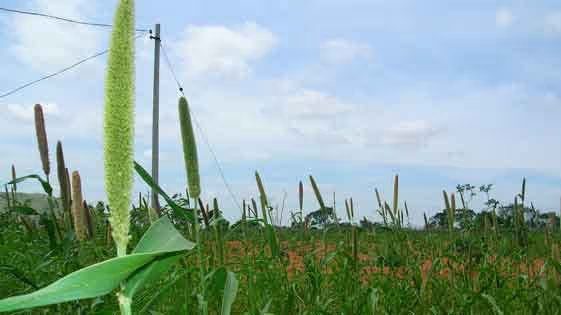
Addressing the nutrition crisis: Reflections from Odisha Millets Mission
The state of Odisha has a severe malnutrition problem, and evidence shows that increasing risks of climate change will render the resource-intensive, rice-wheat cropping system unsustainable. In this note, Saha et al. outline how nutrient-dense, resource-efficient millets have the potential to address malnutrition among vulnerable populations. Based on a qualitative survey of stakeholders, the authors discuss the implementation, progress, and challenges of the ‘Odisha Millets Mission’.
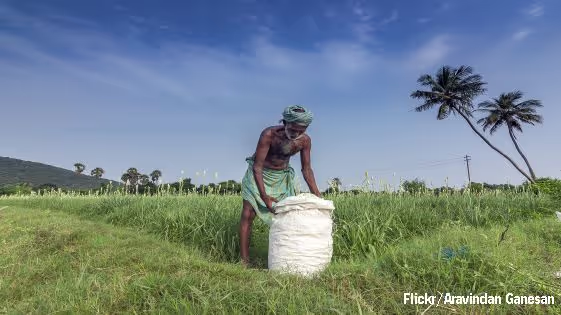
Improving farmers’ income: Learnings from a survey in Jharkhand
To work towards the central government’s goal of doubling farmers’ incomes by 2022, the state government of Jharkhand initiated the ‘Jharkhand Opportunities for Harnessing Rural Growth’ project in 2017. In this note, Khanuja et al. present results of a large-scale baseline survey of rural producer households that was undertaken under the project and highlight the need to facilitate the shift towards high-value agriculture.
Crop insurance scheme 2.0: Implementation issues and weaknesses
Launched in 2016 and revamped earlier this year, the Pradhan Mantri Fasal Bima Yojana is Government of India’s flagship crop insurance scheme. However, it has been riddled with implementation challenges and non-payment of dues to farmers. In this note, Ashwini Kulkarni highlights some of the key issues in the design of the scheme – particularly its use of ‘crop-cutting experiments’ – and makes recommendations to enhance its effectiveness.
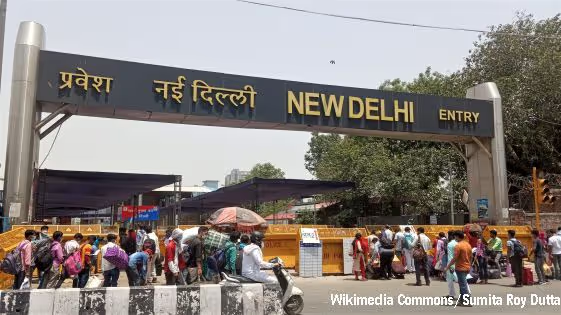
Covid-19 lockdown and migrant workers: Survey of vocational trainees from Bihar and Jharkhand
The nationwide lockdown in India hit migrant workers particularly hard and once travel restrictions were lifted, 11 million interstate migrants returned home. In this note, the authors present key findings from a phone survey of youth from Bihar and Jharkhand who were previous trainees of ‘Deen Dayal Upadhyay Grameen Kaushalya Yojana’. The survey seeks to assess the impact of the lockdown on interstate migrant workers, and to gauge their willingness to migrate again in the future.
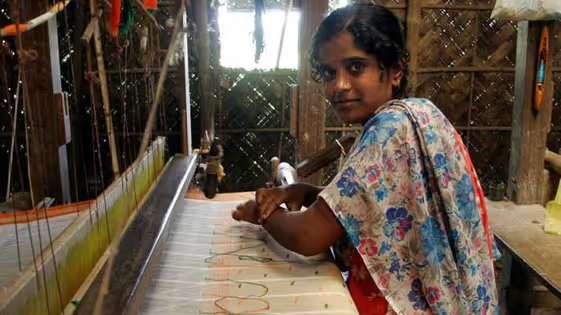
Covid-19: Assessing vulnerabilities faced by microenterprises
In India, where microenterprises form a crucial foundation for livelihoods and employment, the effects of the Covid-19 lockdown can potentially be significant. Based on the first wave of a dynamic, multidimensional survey of 1,461 microenterprises across the country, Buteau and Chandrasekar show that, while most business owners surveyed have displayed remarkable levels of confidence in the possibility of business recovery after Covid-19, more than half of them do not have a strategy to chart their recovery plan and are dipping into their savings to stay afloat.

Covid-19 crisis and health of small businesses: Findings from a primary survey
In a recent statement, the Union Minister for micro, small, and medium enterprises, acknowledged that the sector is “battling for survival”. This article reports some key findings from a survey of more than 360 enterprises, conducted in May 2020, which focusses on assessing the impact of the Covid crisis on the sector. The preliminary findings are suggestive of high levels of distress in the sector, with micro-enterprises faring the worst.

Getting to a greener picture of India's growth story
The Expert Group on Green National Accounting calls for including natural as well as human capital in our national accounts, and defining economic growth in terms of ‘wealth per capita’ instead of ‘GDP per capita’. In this Note from the Field, Varad Pande argues that this is a step in the right direction, discusses implementation issues and calls for a new robust cost-benefit rubric for new projects.
The push and pull of skilling
Vocational training has been centre-stage in policy discussions in India over the past decade. This article discusses the perspectives of and dissatisfaction among the four groups of stakeholders in skill training – government, industry, trainers and potential trainees. It highlights the need for a strong “pull” or demand for training and suggests innovative ways to achieve this.
Himayat - A silent skills revolution in the making
In this Note from the Field, Varad Pande of the Ministry of Rural Development discusses the Himayat programme in Jammu and Kashmir which offers skills-training and a job to unemployed young people in the state. This column argues that the scheme provides a ray of hope to thousands of young people and should be a template for how the government can turn the idea of providing training and jobs to the youth into a workable reality.
Rural sanitation: A charter of demands
A government survey shows that 93% of rural households in India have access to a toilet and 96% of those having a toilet use them. However, critics point out contradictions between these data and micro-level assessments in different parts of India. Based on his experience of working for more than two decades in rural Odisha, Liby Johnson argues that an effective rural sanitation model requires both financial assistance to the households, and an integrated water supply.
A quiet revolution: The case of primary education in Uttar Pradesh
The challenge in India’s school education system today is how to translate years of schooling into learning. While there is reason to lament the learning crisis, a quiet movement is taking place in Uttar Pradesh. In this note, Shobhini Mukerji, Executive Director of J-PAL South Asia, describes the shift brought to the state’s primary education system through the government's evidence-backed Graded Learning
The role of informal rural healthcare providers in universal health coverage
Millions of private informal healthcare providers provide essential doorstep health services to rural households in India. The law has not succeeded in reducing the informal healthcare market as there are not enough alternatives in place to provide universal healthcare. In this note, Gautham, Kumar, and Chowdhury contend that we need to recognise the unique strengths of India’s pluralistic healthcare delivery system and enhance its contextual relevance rather than turning a blind eye to the elephant in the room.
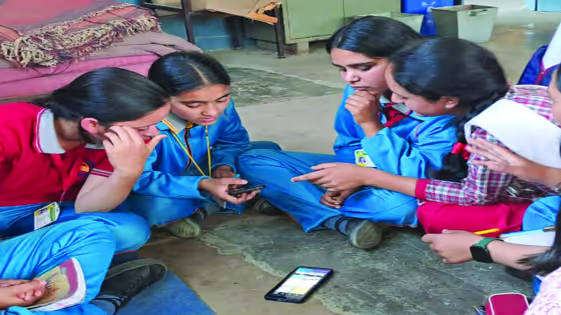
Youth’s digital readiness in rural India
As India undergoes rapid technological transformation, digital literacy has become a key driver of youth’s preparedness for future educational, economic, and social opportunities. In this note, Kumar and Bhutada examine digital readiness among rural youth, based on insights offered by the Annual Status of Education Report (ASER) 2023 and 2024. While there is widespread smartphone access, significant gaps remain in digital skills and readiness to adapt to an increasingly technology-driven world.
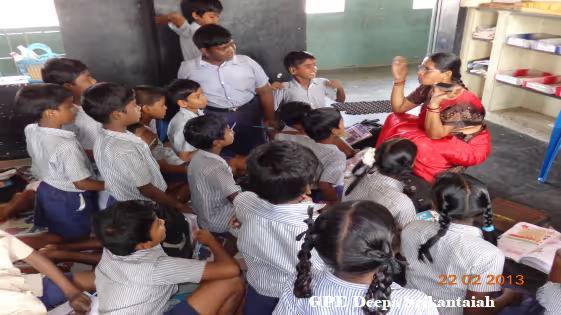
Reflections on how the New Education Policy plays out in the classroom
The National Education Policy, 2020 emphasises the acquisition of foundational literacy and numeracy by Standard 2. Yet, little is known about how the related initiatives have translated into changes in teaching-learning in the classroom. In this note, Bhattacharjea, Bhutada and Bisht share insights from a study involving classroom observations and teacher interviews across eight states in India – on aspects such as classroom composition, teachers’ attitudes towards young children, and teaching methods.
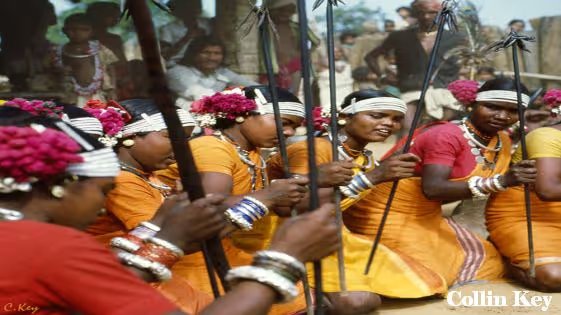
The tribal communities of central India: Challenges and way forward
The ‘Status of Adivasi Livelihoods’ Report has once again brought attention to the dire situation of tribes in central India. Based on a survey of tribal households in Madhya Pradesh and Chattisgarh, Chaudhuri and Ghosh discuss challenges such as loss of biodiversity and landlessness, poor food security and malnutrition, and illiteracy. They highlight the relief provided by food subsidies, and suggest improving governance systems and preserving tribal values to uplift these communities.
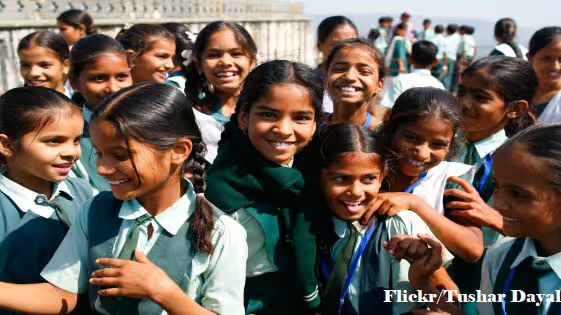
What ASER 2023 reveals about the gender gap in confidence
The Annual Status of Education Report (ASER) 2023 finds that although gender gaps in school enrolment have fallen over the years, girls still lag behind in terms of access to and use of digital technologies. In this post, Suman Bhattacharjea explores factors such as patterns of social and family control over youth of each sex, expectation from girls of refraining from independent action, and availability of role models at home and school.
How Prayagraj is addressing learning poverty in its Anganwadis
Despite increasing school enrolment rates, learning levels in India remain low. In this note, Agrawal and Kheria describe the efforts being made by the district administration in Prayagraj, Uttar Pradesh, to incorporate early childhood education into the care provided by Anganwadis. They highlight efforts to train Anganwadi workers and leverage technology to engage parents in their children's learning, as well as administrative endeavours to upgrade the infrastructure at Anganwadi centres to ensure greater chances of success from accessing education.
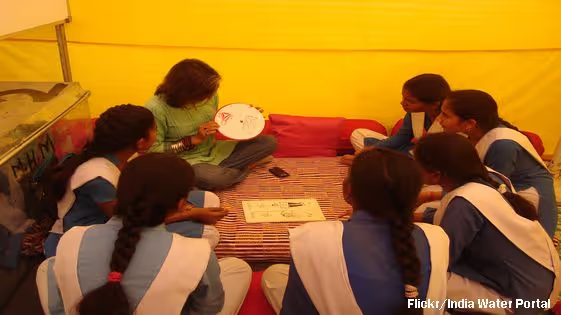
Making menstrual health a welfare priority: Insights from three states
Public policies on menstrual health have mainly focussed on distributing sanitary napkins to women and girls. However, in this note, Tanya Rana shares some insights gained from conversations with frontline workers in Bihar, Madhya Pradesh and Rajasthan which reveal the need for making more comprehensive menstrual health services available. She highlights that menstrual health schemes suffer from poor programme implementation, and a lack of training for frontline workers. She recommends that convergent thinking in planning can solve for these lacunae.
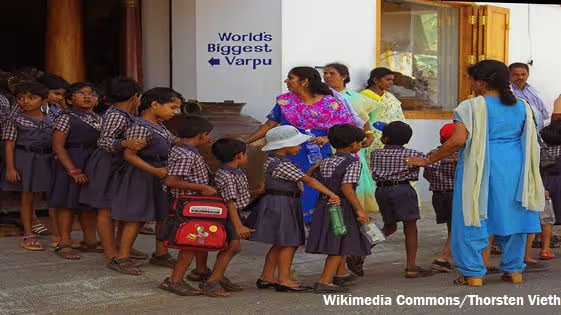
School absences as an early warning system
When children are frequently absent from school, it could be a sign that they are going through adverse personal circumstances. In this note, Anurag Kundu discusses the experience of launching a large-scale intervention to track students' attendance and provide support to vulnerable students that would allow them to return to school. He highlights the adverse impact of poor school attendance on learning and health outcomes, and the need to track attendance to understand students’ circumstances and design appropriate interventions

Illam Thedi Kalvi: A booster shot for post-Covid education
Amidst worries about learning loss caused by school closures during the Covid-19 pandemic, Tamil Nadu's Illam Thedi Kalvi (ITK) – a volunteer-based education programme – has played a vital role in bridging the learning gap. In this note, Sarthak Agrawal recounts his visit to a rural ITK classroom, outlines the factors which have contributed to the success of the programme, and the lessons that other states can learn from this model.

Challenges faced by community health workers in Covid-19 containment efforts
Although community health workers have been the backbone of the fight against Covid-19 in India, there has not been sufficient focus on their well-being and working conditions. Based on a survey in the Bundelkhand region, among the poorest regions in India, Saha et al., examine the perspectives and experiences of community health workers, and the socioeconomic hurdles faced by them during the pandemic.
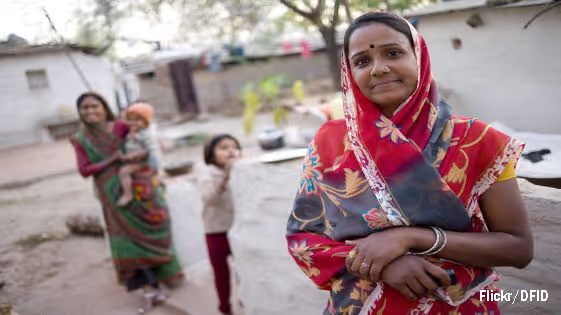
Saas, bahu, and ASHA: Information diffusion in rural Bihar
India has made significant progress in improving maternal and child health outcomes, and the contribution of ASHAs – female community health workers – in promoting healthcare-seeking behaviour is widely acknowledged. In this context, Dutta et al. discuss findings from their study in rural Bihar and highlight two key issues: mothers-in-law acting as mediators in the interaction between ASHAs and women of reproductive age, and the limited success in influencing educated women from affluent families.
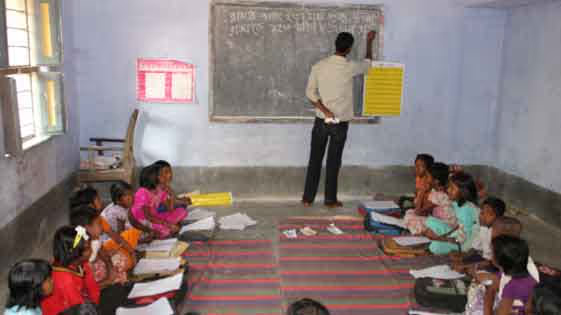
Designing incentives for mid-level officials in India's public sector
In the Indian public education system, block/cluster resource persons are mid-level officials who are responsible for monitoring the performance of teachers. In this note, Vivek et al. discuss their experience of working with the state government of Jharkhand to design a ‘results-based financing’ programme that incentivises these mid-level officials as well as teachers to perform better – with the ultimate objective of improving education outcomes.
Engaging the community to make schools accountable for delivering quality education
While the dismal quality of primary education in India has received considerable attention at the state and national levels, rural communities still seem to associate school quality with parameters such as physical infrastructure. In this note, K. Vaijayanti describes an initiative in Karnataka that involves publicly-conducted mathematics tests for school children, to raise awareness regarding learning levels and to engage the community in holding schools accountable.
Barriers in accessing applications under RTE quota in Gujarat
In the school year 2017-18, Gujarat shifted from a paper-based system at the district level to an online system at the state level, for applications under the Right to Education Act. In this note, researchers at IIM Ahmedabad demonstrate that unless the required technological infrastructure is adequately developed, a complete shift to digitisation adversely affects the most vulnerable populations.
Building institutional capacity for rural sanitation in Uttar Pradesh
Uttar Pradesh, India’s most populous state with about 200 million people, has historically not performed well on sanitation. In this article, Mariappa Kullappa of the World Bank Water Global Practice gives an account of the state administration’s experience of pushing ahead its sanitation agenda successfully in a few districts, and generating learning and confidence for wider replication.
Building a movement, assessment to action
While citizen-led assessments of children’s learning have been applauded for building awareness around the issue, observers have pointed out that information does not automatically galvanise action. In this article, Rukmini Banerji, of the education NGO Pratham, contends that citizen-led assessments can lead to citizen-led action for improving learning by making the problem visible, engaging with people, and demonstrating how change can be brought about.
Beyond toilets: Improving the sanitation value chain
Besides access to toilets, proper treatment and disposal of waste is essential for effective sanitation. In this article, Sujaya Rathi - Principal Research Scientist at CSTEP who is currently involved with developing decision-support tool for sanitation - discusses alternate sanitation systems and the importance of adopting a system that is well-suited to the context and needs of particular cities.
A campaign to end malnutrition in Bihar
About 55% of 0-3 year old children in the state of Bihar are malnourished. In this article, Hena Naqvi, State Programme Officer at the Department of Social Welfare, Government of Bihar, describes an ambitious campaign launched by the government in October 2014 to reduce child malnutrition in the state to 30% by 2017.
Taking education beyond educationists
ASER – Annual Status of Education Report – has been tracking learning outcomes of children in rural India for the past 10 years. In this note, Rukmini Banerji, Director of the ASER Centre/Pratham, highlights how this model of measurement is different from the traditional models of student assessments seen in India or elsewhere. She also points out key policy changes that have taken place in education in India, at least partly in response to ASER findings.
Improving children's learning: Challenges and priorities for the new government
Over the last 15 years, continued effort to universalise access to elementary education in India has resulted in high enrolment rates in schools. Now that most children are in school, policy and planning efforts are beginning to focus on improving their learning levels. This note contends that it is imperative for the new government to maintain, monitor and strengthen this priority and improve mechanisms for achieving learning goals.
Education for all: Fixing classroom processes
While India has achieved near universal enrolment in schools, the quality of education is far from satisfactory. There is an urgent need to change classroom processes to ensure that those who go to school actually learn. In this article, former Principal Secretary, Department of Education, Government of Bihar outlines various initiatives undertaken by the state to address this issue, and makes recommendations based on their experience.
Searching for the 'silver bullet': What works in improving children's learning outcomes?
Children’s learning outcomes in primary schools in India are far from satisfactory. In this article, Rukmini Banerji explores the various theories of change and associated implementation strategies that are currently at work for improving the status of learning in schools. She discusses the challenges of balancing and prioritising the different theories of change, and translating them into practice on scale.
Micro-innovations in education
The poor quality of school teachers is widely acknowledged as a major obstacle to the educational success of children from low income families. STIR Education visited and spoke to over 3,000 teachers in government and affordable private schools in New Delhi and compiled a list of replicable micro-innovations suggested by them. The exercise demonstrates that if given the opportunity, teachers can be a part of the solution, rather than a barrier to education reform.

Fighting gender inequality through mobility: Assessing Delhi’s ‘Pink Ticket’ scheme
To address gender inequities in mobility, Delhi launched a fare-free bus travel scheme for women in 2019. Based on a survey of female passengers in the city, Nishant and Archana highlight positive effects of the scheme such as enhanced confidence to commute independently, and use of savings from free travel for other purposes. At the same time, they note the need to make bus transport more female-friendly in a broader sense. This is the second post of a five-part series to mark International Women’s Day 2025
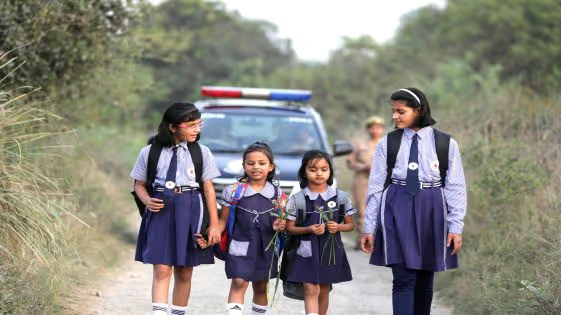
Should girls be ‘controlled’? Opinions among young boys and parents in Bihar
The practice of child marriage among girls continues to be common in Bihar. In this note, Priyadarshini, Joshi and Bhattacharya present findings from their survey of boys and parents, wherein they construct an index for the “tendency to control women and girls’ sexuality and assertion of choice” to measure a possible factor driving this trend. Highlighting the regressive views of young boys in particular, they advocate for gender sensitisation at the school and community levels.

Inching towards college: Exploring gender and mobility in India
In the sixth post of I4I’s month-long campaign to mark International Women’s Day 2023, Vijaya at al. investigate mobility constraints among college-going students in Jalandhar. They find that while a greater proportion of boys are allowed to travel on their own earlier in life, this gender gap reduces by the time they reach college, and that more girls gain the freedom to travel in households where adult women already travel alone. They also investigate how gender, caste and class-based differences intersect to affect access to mobility: impacting time and distances travelled.
IAP improving lives in Maoist-affected areas
In this Note from the Field, a PMRDF working in the Left Wing Extremism affected Purulia district in West Bengal, narrates how the Maoist movement disrupted livelihoods, revenue generation and public service delivery, and how the Integrated Action Plan has helped restore normalcy in the district.

Use of technology to improve public service delivery
How is technology being used to improve public service delivery at the grass root level? In this Note from the Field, the Prime Minister’s Rural Development Fellows that are working with district administrations across the country, share their experiences.

From numbers to impact: Learning from effective data management in Rajasthan
Access to good data is critical for evidence-based decision-making in policy. In this note, Santhosh and Kapur discuss insights from a study of Rajasthan’s experience with collecting, sharing and using data pertaining to developmental challenges. They make recommendations for improving interoperability of datasets, and institutional and legal frameworks for data in Rajasthan and other states – such that it can be used effectively by stakeholders within and outside government.
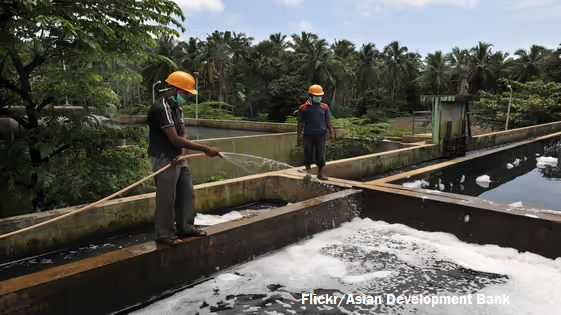
How Prayagraj is leveraging wastewater surveillance to prevent another pandemic
This note by Agrawal and Siva outlines efforts taken by the Prayagraj district in Uttar Pradesh to collect samples from sewage treatment plants and test them for the SARS-CoV-2 pathogen. They found a correlation between surveillance results and test results two weeks later, suggesting that wastewater surveillance can be used for early detection of the disease. They also highlight the potential to use wastewater surveillance to understand antimicrobial resistance, and to monitor diseases during large events.
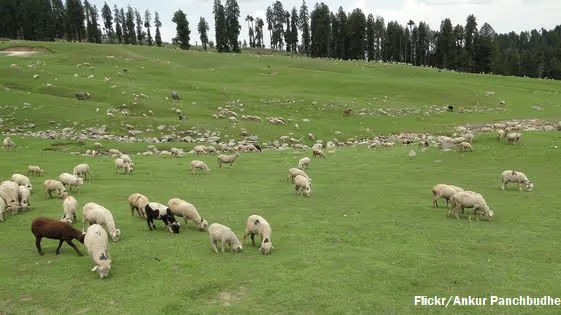
Making the case for a common land registry
The lack of comprehensive data on India’s common lands affects conservation, resource use and land right conflicts. Chandran & Singh highlight the need for a national common land registry to reduce information asymmetry and increase transparency. They note recent developments and progress have been made by some state governments through digital mapping and engaging with local communities. They assert that key to the success of a land registry will be overcoming the fragmentation of state-level regulations with the central government’s guidance.

Institutionalising social audits: Lessons from Meghalaya
Sidharth Santhosh summarises key findings from Meghalaya's experience of mandating social auditing for welfare schemes, including the need for stronger coalitions between citizens and the state, and greater autonomy of the institutions conducting oversight. These findings are complemented by the experiences of bureaucrats and civil society organisations which engaged with the state government on the facilitation of the audits, and an analysis of the functional challenges of conducting audits.
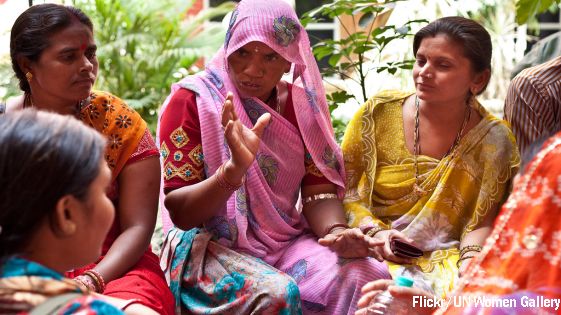
She wins: Electing women in ethnically divided societies
The Indian Constitution reserves a minimum of 33% of village council head positions for women, and Bihar is among the nine states that have opted for 50% reservation. This note investigates how gender, caste, political campaigns, and experiences of discrimination intersect in the state-level democratic process in Bihar. In particular, it seeks to identify the key factors that impact the electoral success of women candidates.
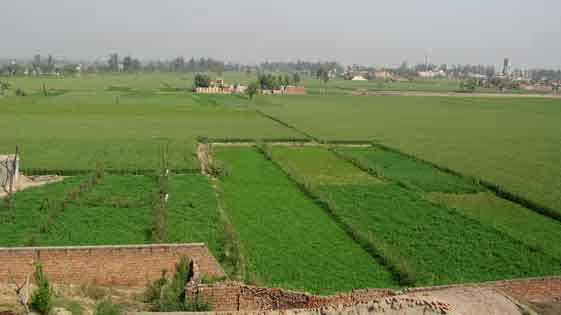
Land disputes in ‘Santhal Parganas’: Issues and solutions
Four of the six districts in Santhal Parganas division of Jharkhand have been classified as ‘aspirational districts’ by NITI Aayog. In this note, Karn Satyarthi describes the unique manner in which land revenue administration works in the division, and the problems involved in land dispute resolution. He suggests methods to address these systemic issues, and contends that this would constitute a major factor-market reform in the division.

Consent to nothing: Aadhaar-based payment systems in welfare
The process of seeding Aadhaar with bank accounts in order to link welfare schemes and cash transfers with Aadhaar payment systems, created chaos on the ground. In this note, Niklas Wagner and Sakina Dhorajiwala discuss findings from their field study in rural Jharkhand, which reveal that bank employees are unable to cope with the many changes directed from above – much to the chagrin of the most vulnerable sections of people.

Promoting women in grassroots governance: Strategies that work
There are more than a million women elected to the Panchayati Raj Institutions of local governance in India. Despite constitutional provisions, women face many barriers when they participate in local governance. In this post, Madhu Joshi highlights some interesting insights and strategies from a project to promote the participation and leadership of elected women representatives in four districts of Bihar.
Anganwadi: A workforce of women with a near-impossible mandate
With a workforce of 1.4 million women, the Anganwadi system forms the backbone of India’s Integrated Child Development Services Scheme – the world’s largest community-based programme for child development. Based on fieldwork in Odisha, Guruswamy and Kuruganti contend that there isn’t enough interest in understanding Anganwadi workers themselves – what drives them, their challenges, and what can be done to fully unleash their potential
Heart of darkness: Misplaced priorities of Jharkhand’s District Mineral Foundation
In 2015, the central government launched District Mineral Foundations in the districts affected by mining, which are mandated to collect royalty from all mining activities and use the funds for the welfare of the local population. In this note, Banerjee and Ranjan give an account of how lack of political commitment and misplaced bureaucratic priorities have led to dismal planning and implementation of the programme in the mineral-rich state of Jharkhand.

The development disconnect: MNREGA in Bihar's Jamui district
In this note, Amrita Dhiman describes her team’s visit to Jamui district in Bihar – the district that is supposed to have generated the highest number of person-days under MNREGA in its division in 2015-16. While almost all villagers they met had MNREGA cards, there was no MNREGA work to be seen, which was paradoxical given the obvious scope of work in the area.
Data openness and the Geospatial Information Regulation Bill
According to the Geospatial Information Regulation Bill, 2016, the acquisition or use of any geospatial information will require permission from a government authority. In this note, Ghosh and Malhotra highlight the importance of reliable geospatial information for development work. In their view, instead of restricting the production and use of such information, the government should regulate its quality and promote learning around it to ensure responsible and ethical use.
How participatory is work planning under MNREGA?
In 2014, the Ministry of Rural Development introduced the ‘Intensive Participatory Planning Exercise’ (IPPE) framework in 2,500 most backward blocks of the country, with the objective of making the work planning process under MNREGA more participatory. In this note, Akshay Ahuja, senior project officer at HCL Foundation, shares his experience of supporting the local administration of Hardoi district in Uttar Pradesh in implementing IPPE on the ground.

‘I Paid A Bribe’: Using technology to fight corruption in India
‘I Paid A bribe’ (ipaidabribe.com) harnesses the collective energy of Indian citizens against corruption by enabling them to report anonymously on the nature, number, pattern, types, location, frequency and values of demands for bribes. In this note, Venkatesh Kannaiah, the editor of IPAB discusses the initiative and the value of technology in tackling corruption, both in India and globally.
How a corruption scam brought MNREGA to a standstill in Nanded
Nanded district in Maharashtra demonstrated exemplary performance in MNREGA until 2012-13, when the exposure of a corruption scam brought the programme to a virtual standstill. In this note, researchers from the NGO Pragati Abhiyan show how the manner in which the incident was dealt with discouraged local authorities from actively implementing MNREGA and hence, adversely affected villagers that had earlier benefitted from the programme.
Slow and steady: Lessons from MNREGA
As the new government in India is considering changes to MNREGA, it is timely to reflect on its implementation trajectory so far. In this note, Adhikari and Sabhikhi discuss five aspects of programme delivery under MNREGA pertaining to management information systems, financial inclusion, fund management, state capacity and participatory planning. In their view, the programme has made massive strides in strengthening public service delivery.
Andhra Pradesh's youth training and employment scheme: Did it work?
To promote youth employment, the state government of Andhra Pradesh launched an innovative public-private partnership programme for skill development, training and job placement for the youth. This note traces the beneficiaries of the programme and finds high drop-out rates among candidates placed in jobs under the programme. It suggests changes in the programme design to make candidates stay in their jobs for longer.
Direct Benefits Transfer: An idea whose time has come
About a year ago, the Government of India launched a Direct Benefits Transfer programme that involves transferring government benefits and subsidies directly to residents through a biometric identification system. In this Note from the Field, Varad Pande, a government official who has been closely associated with the roll-out of the programme, reviews its promise and potential.
Religion and relief in Muzzafarnagar
The communal riots that broke out in Muzzafarnagar in the state of Uttar Pradesh in September last year took several lives and left hundreds homeless. In this Note from the Field, Rohini Somanathan shares her experience of visiting two of the largest relief camps in the region. While state relief was lacking, local Muslim communities were found to be providing a great deal of support to the refugees.
Connecting India's youth with development in red bastions
The Prime Minister’s Rural Development Fellowship is an initiative of the Ministry of Rural Development that recruits young professionals to work with local governments for grassroots development in left-wing extremism affected areas. In this article, Varad Pande talks about the objectives, challenges and successes of the programme.
Is the District Innovation Fund being utilised?
The 13th Finance Commission has recommended the creation of a District Innovation Fund in each district. The objective of the fund is to increase the efficiency of existing capital assets by filling vital gaps in public infrastructure projects that are near completion. Is the Fund being utilised in the way intended? In this Note from the Field, a PMRDF working with the district administration of Kalahandi in Odisha provides a perspective.
The fight against left-wing extremism
In this Note From the Field, Varad Pande of the Ministry of Rural Development argues that left-wing extremism and violence is a major challenge for India. He says that while this is definitely a security issue, it is as much a political and a development issue. We will not end this war by bullets alone; we will win it only if we win over hearts and minds.

Why are canteens important when 800 million people get free grains?
Over the past decade, canteens have been established in various parts of India to provide subsidised meals and enhance food security. Based on a survey of canteens conducted across three states, Reetika Khera contends that this social policy intervention has helped ensure dignified meals for millions, created jobs, and fostered a sense of oneness and well-being for many. She advocates for more and guaranteed funding for canteens, revamp and expansion of menus, better infrastructure, and fair wages for staff.
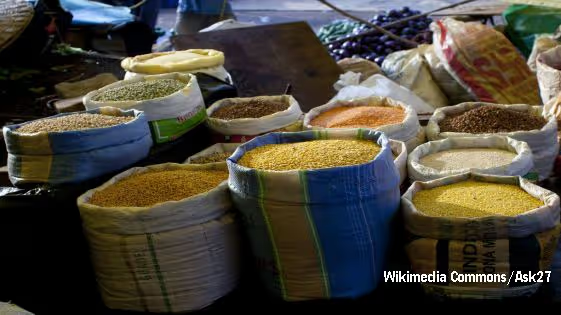
Persistent problems with PDS: An assessment of the Covid-19 ration scheme
This note summarises the findings of a survey conducted by students at IIT Delhi to evaluate the functioning of the PMGKAY scheme across Uttar Pradesh, Haryana and Punjab. It reveals that many households did not receive their entitled ration during the pandemic, and highlights disparities in the states’ distribution efforts along with long-standing issues of the Public Distribution System like exclusion errors due to difficulty in obtaining ration cards for family members, and Aadhar-linkage.

Examining Himachal’s urban employment guarantee
Despite proposals by economists on the need for an urban work programme in India, a national-level policy seems some time away from coming to fruition. However, some states have implemented such programmes and in this note, Krishna Priya Choragudi examines the case of Himachal Pradesh’s Mukhyamantri Shahri Ajeevika Guarantee Yojana. She contends that such schemes are an important step towards asset creation and livelihood security in urban areas, along with enhancing women's employment.

Covid-19: Impact on migrant workers in Bihar
The nationwide lockdown – imposed in March 2020 to contain the spread of Covid-19 – left large sections of migrant workers in a precarious position, with livelihoods lost, and no means of public transport to get back home. This note presents findings from a survey of over 1,600 households in 12 villages across seven districts of the state of Bihar – a major source of migrant workers – to assess the impact of the pandemic on their lives.
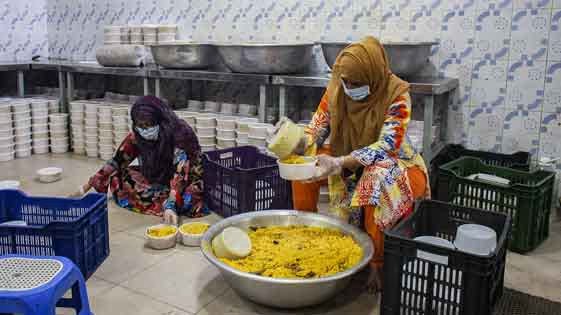
Covid-19 and growing food insecurity: Insights from rural Bihar
Emerging research shows that Covid-19 has had a devastating impact on the already undernourished and marginalised populations, by affecting their access to food and nutrition, and consumption patterns. In this note, Dutta et al. discuss findings from their field study in rural Bihar and highlight three key reasons for reduced food consumption by households – fear of contracting Covid-19, price hikes, and closure of markets.
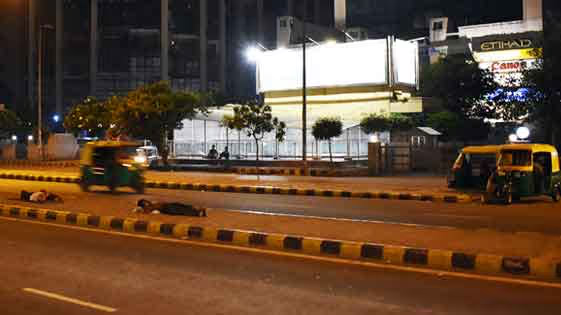
How has the Covid-19 crisis affected the urban poor? Findings from a phone survey - III
While the devastating impact of the second Covid-19 on public health in India is well-known, there is relatively little evidence on its economic and psychological dimensions. Based on surveys in industrial clusters of Delhi, Afridi et al. examine the dynamic effects of the different phases of the pandemic, on livelihoods and mental health of poor, informal workers – and how the experiences of women and men compare.
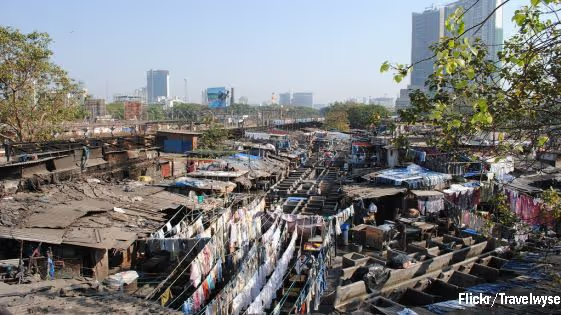
Covid-19: Health and economic impacts in Indian slums
Initial predictions suggested that slum communities – densely packed, with shared water taps, and an impossibility of social distancing – would be particularly hard-hit by Covid-19. In this note, Downs-Tepper, Krishna and Rains, use data from surveys in 40 slums across Bengaluru and Patna, to track the health and economic impacts of the pandemic on these vulnerable communities, and to understand the strategies employed by residents to cope with these impacts over time.
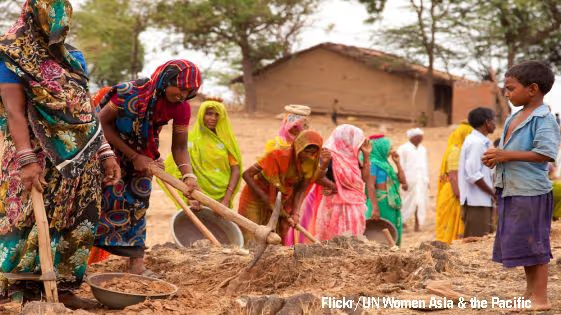
Covid-19: How well are government schemes supporting Bihar’s vulnerable populations?
The immediate adverse impact of the Covid-19 pandemic and associated lockdown was visibly greater for migrant workers and their households, whose ability to access government schemes in their villages of origin was uncertain. Analysing data from a survey in rural Bihar in June-July 2020, Sarin et al. find that household with migrants were more likely to cut down on food and suffer from mental health issues – even as they reported higher incomes than non-migrant households.
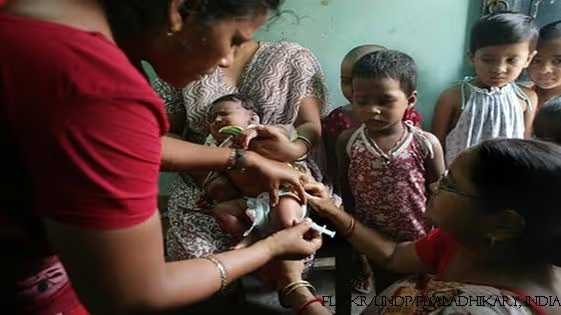
Covid-19: Willingness to vaccinate among slum-dwellers
Vaccination is among the success stories in modern-day medicine, and is seen by the WHO as a key element of the response to the Covid-19 pandemic. In this note, Augsburg et al. discuss findings from a survey of 4,000 slum dwellers in two cities of Uttar Pradesh, on their willingness to vaccinate and pay for it. They contend that, as billions are poured into a vaccine’s development and tackling supply difficulties, policymakers should also prepare for the next challenges: compliance and ability to pay.
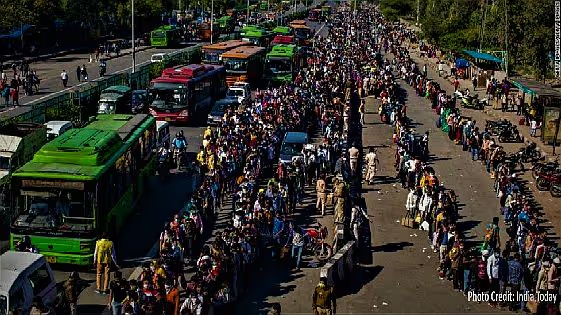
Pandemic as a lens: Identifying and addressing livelihood vulnerabilities
Based on the findings from a phone survey of around 5,000 Indian workers, the authors explore the impact of the Covid-19 economic lockdown on two forms of livelihood vulnerabilities: employment insecurity and food insecurity. They argue that the policy response needs to go beyond addressing the immediate consequences of this specific shock; this juncture posits the need for structural reforms that seek to address and fill these gaps concretely rather than suturing temporarily.

How has Covid-19 crisis affected urban poor? Findings from a phone survey - II
While several commentators have highlighted the plight of migrants due to the ongoing Covid-19 crisis, less is known about how low-income families living in urban shanty towns are faring. Afridi et al. began conducting a phone survey on 3 April – after the Covid lockdown was announced on 24 March – among a sample of households in the industrial areas of Delhi, to assess the impact on their livelihoods, and physical and emotional well-being. In their recent note, the researchers discussed findings from the initial, more stringent period of the lockdown (3-19 April). In this follow-up note, they report findings from Phase 2 of the lockdown, following some easing of restrictions (20 April-3 May).
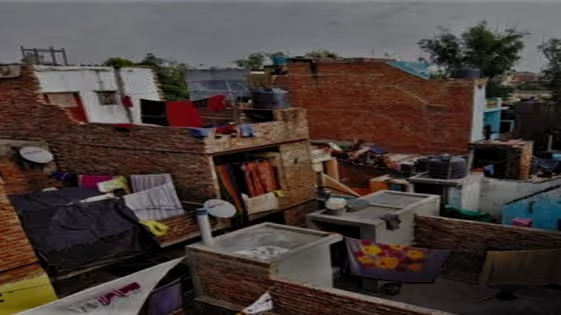
How has Covid-19 crisis affected the urban poor? Findings from a phone survey - I
While several commentators have highlighted the plight of migrants due to the ongoing Covid-19 crisis, less is known about how low-income families living in urban shanty towns are faring. In this note, Afridi et al. discuss findings from a phone survey of a sample of 413 households in the industrial areas of Delhi, on the impact on their livelihoods, and physical and emotional well-being. They also provide some insights into the gendered experience of this crisis.
Covid-19: A tailor’s tale
This note presents a narrative that is based on an interview conducted on 15 April with a tailor who walked most of the way from Jaipur to his home in Farrukhabad district in Uttar Pradesh, after the announcement of the national lockdown
Unleashing the forgotten billion of India
About 1.7% of India's 400 million workforce learns skills on their own. In this article, Yuvaraj Galada, former Vice President of National Skill Development Corporation, shares experiences from his travels to India's hinterland to meet these ustaads - individuals with extraordinary motivation to self-learn. In his view, supporting and catalysing ustaads to train others can be a rapidly scalable, grassroots approach to closing India's skills gap.
From the top to the bottom of MNREGA
MNREGA – the world’s largest public works programme - is intended to be demand-driven and has local implementation at its core. In this note, Megan Sheahan, Research Support Specialist at Cornell University, shares her experience of visiting MNREGA work sites in some of the most deprived communities in Andhra Pradesh. She finds that while the scheme has enabled a jump in earnings and created useful assets for villagers, beneficiaries have little control over the timing or type of work allocated to them.
The plight of 'complimentary' migrants: Children at brick kilns
Migration for work is meant to benefit families of migrant workers. But what if the families migrate along with the worker? Based on visits to brick kilns in the states of Uttar Pradesh, Madhya Pradesh and Karnataka, Parul Agarwal describes the plight of children of migrant workers in the Indian brick manufacturing industry.
Muktidhara: A sustainable livelihood project in West Bengal
In this ‘Note from the Field’, two Prime Minister’s Rural Development Fellows describe a government funded project in the state of West Bengal that seeks to generate self-employment opportunities and sustainable livelihood options for rural people via self-help groups. They discuss the successes of the project and the lessons that can be learnt for the design and implementation of other such initiatives.
Empowering women for development
In conversation with a Prime Minister’s Rural Development Fellow, Bahrin Bhuyinya, a resident of the Khunti district in Jharkhand shares her story. While she feels that the village has significantly benefitted from government schemes in the past decade, it is the increased involvement of women in the village panchayat that has truly empowered Bahrin and others like her. This is the second narrative in our three part series on what development means to women in some of the most remote parts of the country.
A success story from Keonjhar
The final narrative in our three part series on what development means to real women comes from Keonjhar in Odisha. In spite of facing deprivation and setbacks early in life, today Basanti Naik successfully oversees the implementation of MNREGA projects in her village. Her life gives a very positive feedback about the success of government run programmes, but there are still thousands of women waiting to create their success stories.
Lost in transition
As part of a special three part series, the Prime Minister’s rural development fellows bring us voices from the field about what development means to women in some of the most remote parts of the country. What is the impact of government programmes on the day to day lives of the people they are supposed to help? The first account in this series is of Kajalmani Soren in Lalgarh, West Bengal. Coming from a family of landless labourers, she talks about her experience with the National Rural Health Mission, the Employment Guarantee Scheme and the Public Distribution System.
Cash Transfers - through the postal system or the banks?
The central government has announced the conversion of 29 poverty schemes to Direct Cash Transfers. Should this be implemented through banks or the postal system? This article assesses the pros and cons, and recommends experimenting with different systems.
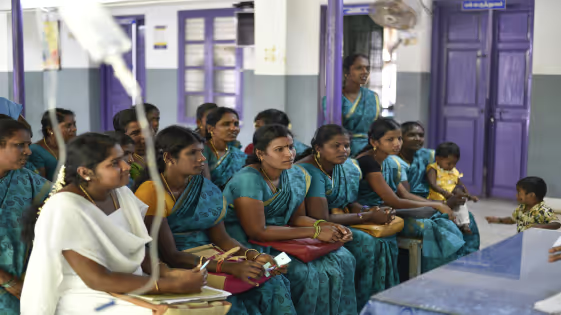
Is digitalisation a double-edged sword for workers in India's public healthcare system?
While technology is often celebrated as a solution to healthcare inefficiencies, its impact on India’s Accredited Social Health Activists (ASHAs) tells a more complex story. Drawing on qualitative research conducted across four states, this note examines the uneven experiences of digitalisation among ASHAs, with digital tools both improving work processes and creating new burdens and inequities.

A brighter future: Harnessing solar energy in a Jharkhand village
Simdega district in Jharkhand – one of NITI Aayog’s ‘Aspirational Districts’ – comprises small habitations that are not yet connected to grid-based electricity. In this note, Goswami and co-authors discuss how the installation of a solar micro-grid in village Chinjheria created livelihood opportunities, while also making domestic lives easier and more productive. They outline the financial aspects of the initiative, highlighting the importance of developing sustainable business models.
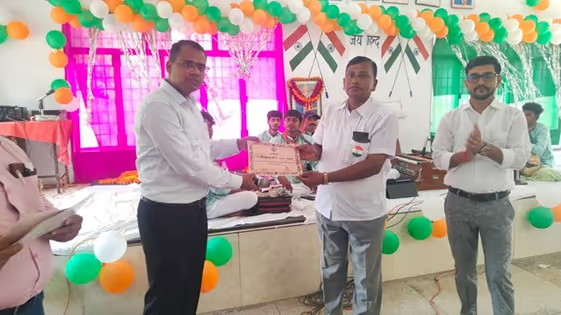
Insights from the rollout of LAKSHYAM – an integrated performance management system
In rural parts of India, Lekhpals or patwaris play an important role in upholding property rights by maintaining land records – however, there is no effective system to track their performance. In this note, Sarthak Agrawal describes the implementation of LAKSHYAM, a system for holistic assessment and management of Lekhpals, in his tehsil, Soraon, in Uttar Pradesh. He describes the system design, and the effect providing incentives had on worker outcomes, revenue board performance, and accountability.
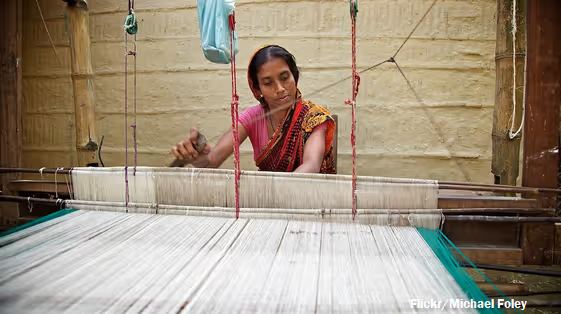
Supporting women weavers: Learnings from producer companies
The lack of market demand and low earnings, as well as competition from power looms, has led to declining participation of artisans in India's handloom industry. In this note, Dang et al. share some insights gained through conversations with women weavers and other members of the weaving community, which reveal the need for greater technical and management training and provision of suitable working conditions for weavers to ensure the long-term sustainability of weaving enterprises.
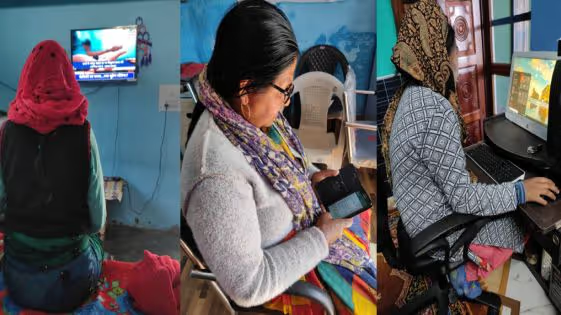
Mirroring realities: Digital technology through the eyes of women microentrepreneurs
The expansion of markets from physical spaces to e-commerce platforms during the pandemic widened the pre-existing digital gender divide in India. Employing the method of ‘auto-photography’, the team at SEWA Bharat asked women microentrepreneurs to capture their understanding of the term ‘digital’. They found that technology which may be commonplace in metropolitan areas, is significant and aspirational for the rural poor. Their findings bring forth a nuanced understanding of what digital empowerment looks like for women across the country.
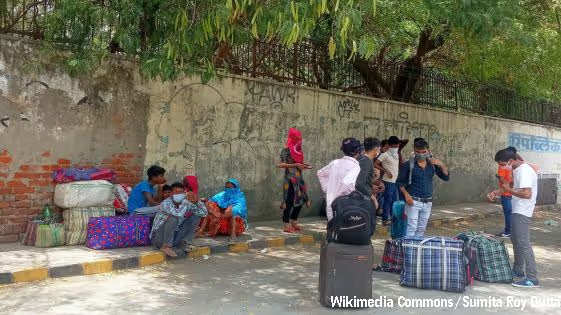
Covid-19 lockdown and migrant workers: Survey of vocational trainees from Bihar and Jharkhand - II
Covid-19 and the associated lockdowns have led to widespread job losses, and a subsequent exodus of migrant workers from the cities. In this note, Chakravorty et al. discuss findings from their survey of young vocational trainees from rural Bihar and Jharkhand. They highlight the severe impact on employment, increased informalisation, lack of re-migration, and disproportionate adverse effects on women.

Tripura’s bamboo sector: Potential and challenges
About a third of the total area of Tripura is covered by bamboo, and bamboo has emerged as a key thrust area for the state’s industrial development. Based on a field visit that was undertaken to study skill development in Tripura’s bamboo sector, Bornali Bhandari discusses the livelihood-based approach of Tripura Bamboo Mission vis-à-vis a market-based approach adopted by a private bamboo wood manufacturing unit.
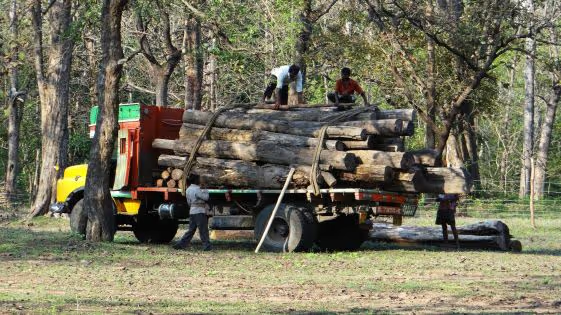
Sustainable livelihoods and resilience through community forest management
The Scheduled Tribes and Other Traditional Forest Dwellers (Recognition of Rights) Act, 2006 adopts a rights-based approach to forest conservation and seeks to place local communities at the centre of forest governance. In this note, Santosh Gedam presents the case of the Pachgaon village in the state of Maharashtra, which – through the recognition of community forest resource rights enshrined in the Act – has made significant progress in sustainably and equitably managing common-pool resources and generating local livelihoods.

Reducing the flow of plastic to oceans in India
Growing consumer demands are causing the generation of colossal amounts of plastic waste, and the poor state of waste management implies that large proportions of this litter is making its way into the oceans. Based on an exploratory study across India in 2019 – with focus on ‘hotspots’ in Chennai, Mangalore, and Kochi – Kumar et al. outline nine actions that can be taken to mitigate this issue.
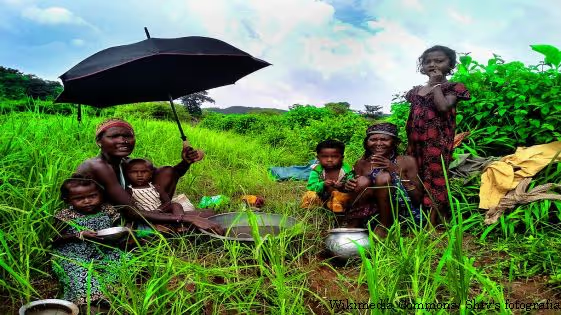
Implementing Forest Rights Act: Story of two villages in Maharashtra
The Forest Rights Act, 2006 was a landmark forest legislation in India, which recognised individual and community rights over forest resources. However, as of November 2018, only 44.83% of titles have been distributed among the total number of claims received across the country. Based on field studies in Maharashtra, Sayak Sinha describes the various issues in the implementation of the Act that make it difficult for the historically marginalised tribals and forest-dwellers to obtain rights.
Usharmukti project: A confluence of institutions for rejuvenating rivers
Usharmukti, a project of the Government of West Bengal, is being carried out in collaboration with civil society organisations in the western part of the state, to carry out watershed activities under MNREGA to conserve soil and water. In this note, Ashwini Kulkarni describes the main idea behind and working of the innovative project from her visit to the project area.
Making the best out of waste
Given rapid urbanisation and the increasing amounts of solid waste generated in India cities, there is a pressing need for effective waste management processes. In this article, Sourabh Bhattacharjee and Ujjwal Sinha, who have been associated with a successful waste management project in Saharanpur, provide an outline of the project and highlight lessons for other Indian cities.
Harnessing India's wind power potential
While India’s wind power sector has progressed significantly in the past decade, only about 22% of its potential has been harnessed so far. In this article, Deepthi Swamy - who was part of a team that worked with the Ministry of New and Renewable Energy to develop a framework for the National Wind Energy Mission - discusses the issues faced by the sector, need for a mission-mode approach, and the proposed contours for such a mission.
Creating the climate for India's low-carbon growth story
The ‘Expert Group on Low Carbon Strategies for Inclusive Growth’ recently laid out a detailed roadmap for India to take on climate change mitigation proactively. In this note, Varad Pande – a member of the Expert Group – outlines the key strengths of the roadmap, and contends that India must now create the political and administrative climate to implement it.
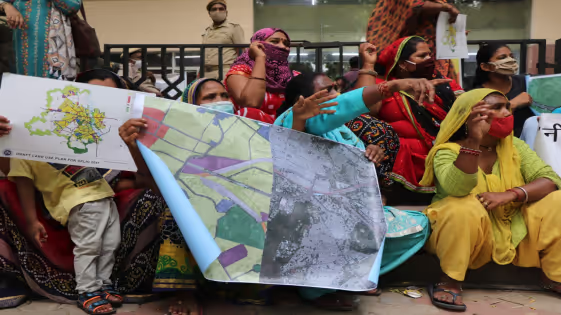
Making city planning democratic: Reflections from ‘Main Bhi Dilli’ campaign
‘Main Bhi Dilli’ campaign was launched in 2018 to ensure inclusion of citizen voices in the Delhi Master Plan 2041. In this context, Shalaka Chauhan discusses the role of co-creation and citizen participation in city-planning processes, rooted in the belief that everybody can contribute to city planning when provided with adequate participatory means and tools to express themselves.
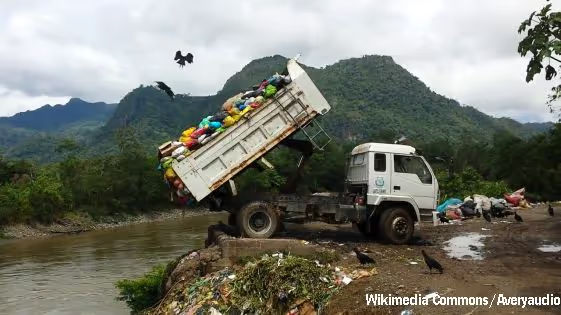
Challenges of solid waste management: The case of Patna city
Rapid urbanisation with insufficient planning has led to problems of solid waste management in several Indian cities. In this note, Uma Sarmistha discusses preliminary findings from a field study in the city of Patna in Bihar state, which examines the present state of waste management processes, as well as the perspectives of citizens and authorities on the issue.

Special purpose vehicles for smart cities: A question on governance
All 100 cities selected to become ‘smart cities’ under the Smart Cities Mission in India have Special Purpose Vehicles (SPVs) incorporated in them. In this note, Meenakshi Sinha posits that the SPV-driven mode of governance of cities is fraught with power asymmetries that are likely to bolster elite control over city’s resources and urban spaces of governance; thus, aggravating the class inequalities across cities.

Seasonal migration and health in India: Constraints for research and practice
Seasonal migrants in India engage in temporary informal work in work environments that actively flout labour laws on wages, work hours, and living conditions. The most significant impact of this is on the health outcomes of workers and their children. In this note, Varma and Ravindranath describe the roadblocks in conducting in-depth enquiries into migrants’ health status and healthcare-seeking behaviour, and designing and implementing health programmes conducive to their needs.
Real estate cross-subsidisation for infrastructure financing: A precarious solution for urban development?
A means of urban development financing that has emerged in Indian cities is real estate cross-subsidisation, whereby land along the mass rapid transit system corridors is offered to private developers for commercial real estate projects, which can then be sold to generate revenue. Based on case studies in Karnataka and Kerala, Meenakshi Sinha provides insights into some of the governance challenges associated with such processes.
Constructing housing for the poor without destroying their communities
The Pradhan Mantri Awas Yojana aims to achieve housing for all by 2022. However, vacancy of 23% was reported last year in urban housing built under the programme. In this article, Rohini Pande, contends that take-up can be increased if policies are designed in a way that allows the intended beneficiaries to preserve their social networks when they relocate.
A unique, informal banking system of rickshaw drivers in cities
Seasonal, rural migrants that drive rickshaws in cities have little or no access to formal financial institutions. Based on a survey of over 100 rickshaw drivers in Delhi, this article highlights a unique mechanism used by the drivers for remitting earnings to their families back in villages, obtaining short-term loans, and managing their savings.
A five-minute loan to unlock micro-entrepreneurship in India
Micro-entrepreneurs are grossly underserved by traditional lenders, as they typically do not have collateral or credit histories to make them creditworthy. In this article, Pande, Memon and Goyal of Dalberg Global Development Advisors, describe how digital infrastructure created by ‘India Stack’ can help provide paperless, presence-less, and cashless credit to micro-entrepreneurs, in a way that is sustainable for lenders.
Demonetisation and rural cooperative banks
The RBI has barred rural cooperative banks from exchanging or accepting the denotified Rs. 1,000 and 500 notes. In this article, Ajay Vir Jakhar of Bharat Krishak Samaj - a non-partisan association of farmers - argues that if rural cooperative banks sink, so will farmers.
Policymaking in the ‘grey zone’
Prerna Mukharya, Founder of Outline India – a social enterprise that focuses on data collection, impact assessments and evaluation studies, predominantly working with rural populations in remote areas – discusses the impact of the currency ban on their work.
How well does DBT work on the ground?
PM Modi has emphasised fast-tracking roll-out of the Adhaar-based Direct Benefits Transfer programme. In this note, Sweta Trayambak – who has worked with the district administration of Ramgarh in Jharkhand on the roll-out of DBT - highlights the key strengths of the programme, and problems faced in implementation on the ground.
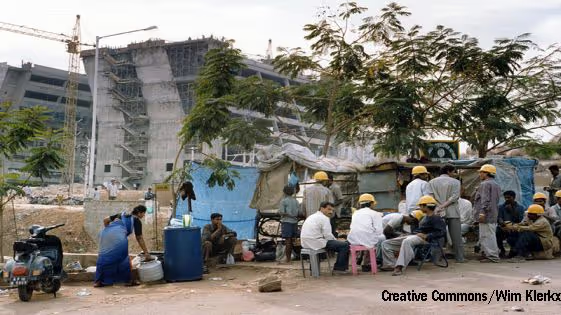
Covid-19: Journey of a construction firm through the lockdown
To check the spread of Covid-19, Government of India announced a stringent, three-week national lockdown on 25 March 2020 – with some easing of restrictions in subsequent phases. This note chronicles the journey of a construction firm and their workers over a four-month period following the announcement.
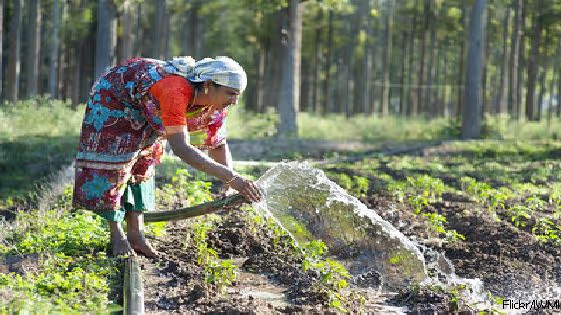
The institutional partnership model: Embedding evidence into the policy equation
One path for capitalising on government interest in evidence-informed policymaking is for the research community to build long-term institutional partnerships with governments to create an ecosystem where data and evidence become vital inputs for policy decisions. In this note, Sharanya Chandran draws from her experience of working closely with the Government of Punjab to generate evidence to address the state's top policy priorities, and argues for the promise of the institutional partnership model.
Helping youth discover self-identity through social purpose
‘Emerging adulthood’ refers to the transitory phase from adolescence to adulthood, when young adults are on an intense search for authenticity, awareness, personal definition, and exploration of worldviews, making it a crucial life stage for identity development. In this post, Jainetri Merchant talks about NIRMAN, an educational programme which aims to bridge the chasm between society’s problems and India’s youth who are in search for a purposeful and meaningful life.
A village’s journey of alcohol de-addiction due to children’s campaigning
In just two years, the alcohol addiction of an entire village could be eliminated due to the efforts of a school’s students and their teacher in Sangli district of Maharashtra. In this note, Shirish Khare highlights how this change was brought about by talking to and sharing the stories of people from the village.
Field missions and data stories
Data lies at the heart of research and policymaking in the social sector. But where does this data really come from? In this note, Prerna Mukharya (Founder, Outline India, Track your metrics), shares experiences from fieldwork in different parts of the country and presents insights into the complicated and challenging process of data collection.
Research, for whom?
In this note, Dr Abhay Bang discusses the importance of research in development. Giving examples from his 30 years of experience of working in the social sector, he contends that the power of knowledge- and evidence-based action is far greater than just action. He emphasises the need to promote a culture of research for the people, with the people, and by the people.
Ashok Kotwal speaks with Jean Drèze
I4I Editor-in-Chief Ashok Kotwal speaks with Jean Drèze, visiting Professor at Ranchi University and an ‘economist-activist’ who has been working in India at the grassroots level for a long time. They discuss a range of issues including cash vs. in-kind transfers; combining academic research with on-the-ground action; improving governance; and the principles of a good society.

Using drones for social sector research
While drones have historically been used in military operations, their application for peaceful purposes has risen steeply in recent years. In this note, representatives from Outline India - a research and development consultancy firm - discuss their efforts to integrate drones in social sector research to make data analysis more evidence-based, visualise policy performance, and produce actionable research materials to aid public policy making and monitoring.
Sign up to our newsletter to be notified about the latest updates
.svg)
Just One Step Away!
Complete your signup to start getting the latest news, stories, and updates delivered straight to your inbox.