
.svg)
.svg)
%201.svg)
%201.svg)
.svg)

.svg)
.svg)
Nalini Gulati Gulati

Nalini Gulati is Editorial Advisor at ‘Ideas for India’ (I4I). She was the founding Managing Editor of I4I, and served in the role between 2012 and 2022. She was also a Country Economist at the India Programme of the International Growth Centre (IGC). Nalini holds an M.Phil. in Economics from the University of Oxford, and B.A. (Hons.) Economics from Lady Shri Ram College, University of Delhi.
Under a grant from Open Philanthropy, Nalini co-authors 'The Care Gap', a living literature review at the intersection of gender and health in low- and middle-income countries. Recently, she has also worked as a Consultant on projects focused on women’s economic empowerment – funded by the Bill & Melinda Gates Foundation (BMGF) and led by senior academics at Indian Statistical Institute and Ashoka University.
In the early years of her career, Nalini was an Economist in the global health practice of Cambridge Economic Policy Associates (CEPA), and a Short Term Consultant for a nutrition project at World Bank India. Her M.Phil. research involved analysis of household survey data from India to examine the role of risk preference heterogeneity in the demand for health insurance.
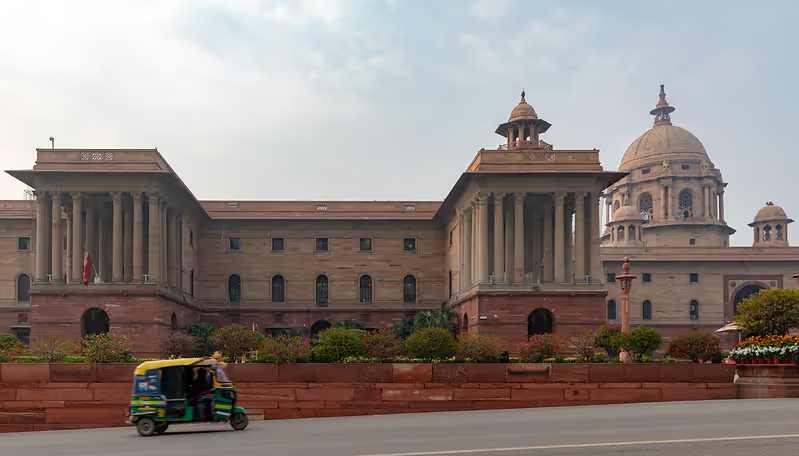
What will it take for the Indian economy to break out of the lower-middle-income bracket?
In 2007, India moved from the low-income to lower-middle-income category, as per the World Bank’s classification of countries by income. With clear aspirations to graduate into the higher brackets of income, what will it take for India to make it? Speaking at the launch event of Ashoka’s University’s Isaac Centre for Public Policy (ISPP), experts including Rakesh Mohan (former Governor of the Reserve Bank of India), Anup Wadhawan (former officer of the Indian Administrative Service) and Prachi Mishra (Chief of the Systemic Issues Division, International Monetary Fund) discuss ideas for achieving faster structural transformation of the economy, strengthening State capacity, catching the bus for labour-intensive manufacturing, empowering urban local government, and consolidating public debt.


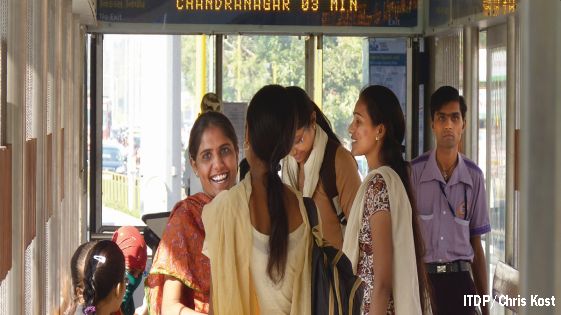
बजट 2021-22: लिंग आधारित नजरिए से
2021-22 के केंद्रीय बजट को लिंग आधारित नजरिए से परखते हुए नलिनी गुलाटी ने इस बात पर चर्चा की है कि इस बजट में भारतीय अर्थव्यवस्था में महिलाओं के लिए विशेष रूप से डिजिटल पुश, सार्वजनिक परिवहन, अन्य सार्वजनिक सेवाओं, स्वास्थ्य क्षेत्र के संबंध में, और कपड़ा उद्योग को बढ़ावा देने के लिए क्या प्रावधान किए गए हैं और क्या नहीं।
Budget 2021-22: A gender lens
Examining the 2021-22 union budget through a gender lens, Nalini Gulati discusses what the budget does – and does not do – for women in the Indian economy, particularly with respect to the digital push, public transport, other public services, health sector, and the boost to the textile industry.

Global financial crisis and India: A look at the decade gone by
The crisis that emerged in the US subprime mortgage market this month 10 years ago, not only engulfed the country’s financial system but the entire global economy. In this post, Vikas Dimble and Nalini Gulati explore some of the key effects of the crisis on the Indian economy.
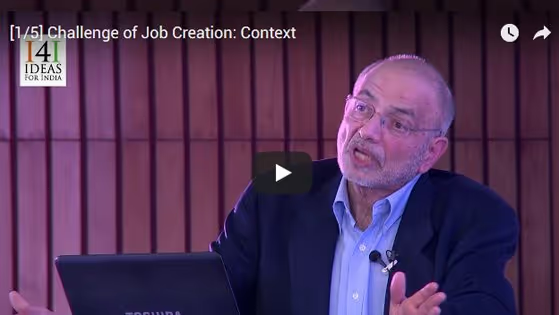
I4I Panel Discussion: The challenge of job creation
In a recent I4I editorial, Ashok Kotwal described the challenge of job creation that is facing the Indian economy today. In December 2017, Prof. Kotwal moderated a panel discussion on the topic between Kaushik Basu (Cornell University), Renana Jhabvala (SEWA), and Pronab Sen (IGC India). The panellists presented their views on issues including raising productivity of the unorganised sector; role of manufacturing and services in job creation; impact of automation and artificial intelligence; and binding constraints on growth of the organised sector.

Health policy and economic growth in India
A new synthesis paper (Menon 2017) produced by the International Growth Centre brings together evidence from various health-related IGC studies on India undertaken over the past seven years, to draw implications for health policy. At a workshop organised by IGC in collaboration with Ideas for India and Indian Statistical Institute, Srinath Reddy (Public Health Foundation of India), Alok Kumar (NITI Aayog), and Karthik Muralidharan (University of California, San Diego) discussed key policy lessons emerging from research, and areas where further work is required.
Smart policy for women's economic empowerment in South Asia
In this article, Jennifer Johnson and Nalini Gulati highlight the different trajectories of women’s economic empowerment across South Asia, based on a recent policy dialogue hosted by Evidence for Policy Design.

भारत में महिलाएँ और उनका स्वास्थ्य
मार्च महीने में अंतर्राष्ट्रीय महिला दिवस के सन्दर्भ में प्रस्तुत लेखों की श्रृंखला के इस अंतिम आलेख में I4I की संपादकीय सलाहकार नलिनी गुलाटी भारत में महिलाओंके स्वास्थ्य पर आर्थिक शोध का एक सार प्रस्तुत करती हैं, जिसमें मातृ एवं शिशु स्वास्थ्य, स्वास्थ्य देखभाल तक लैंगिक पहुँच, अन्तरंग-साथी द्वारा हिंसा और मानसिक स्वास्थ्य सम्बन्धी चिंताओं के पहलुओं को शामिल किया गया है। लेख में इन सभी पहलुओं में व्याप्त असमानताओं को दूर करने में संसाधन, लैंगिक दृष्टिकोण और जानकारी की भूमिका पर विचार किया गया है।
Women and health in India
This International Women’s Day, I4I Editorial Advisor Nalini Gulati presents a curation of economic research on women’s health in India, encompassing aspects of maternal and child health, gendered access to healthcare, intimate-partner violence, and mental health concerns – and considers the role of resources, gender attitudes, and information in addressing inequalities.

Governance and public service delivery in India
The International Growth Centre recently produced a synthesis paper (Afridi 2017) bringing together insights from its research on governance and public service delivery in India, over the past seven years. At a workshop organised by the IGC in collaboration with Ideas for India and Indian Statistical Institute, Amarjeet Sinha (Ministry of Rural Development), Rajesh Mahapatra (Hindustan Times), and Sandip Sukhtankar (University of Virginia) discussed the findings on key governance challenges and what can be done to address them.
The why and how of environmental protection: Examining the evidence
In the first post of a three-part blog series, I4I Editorial advisor Nalini Gulati summarises a selection of studies on the adverse impact of environmental degradation on human health as well as economic outcomes, followed by ideas from research on how effective policy design and implementation can mitigate the damage and enable conservation of the environment.
Where is the cash?
In recent weeks, reports of currency shortages have emerged from several parts of the country. In this post, Nalini Gulati contends that the cash crunch appears to be temporary and is likely to be resolved once the demand-supply mismatch is addressed. What may persist is the ‘ATM run’ and it is important to examine that issue. #CashCrunch Body: In November 2016, Prime Minister Modi announced that Rs. 500 and Rs. 1,000 notes were no longer legal tender and needed to be exchanged for new currency, thus withdrawing 86% of the cash in the economy. The cash shortage that followed had a significant adverse impact on the informal sector in particular, which predominantly uses cash for transactions and depends largely on informal cash credit. In recent weeks, reports of currency shortages have emerged from several parts of the country. The government is attributing the cash crunch to “unusual†high demand for currency, while maintaining that there is sufficient cash supply for normal transaction
Financial inclusion: Concepts, issues, and policies for India
The International Growth Centre recently brought out a synthesis paper (Singh 2017) that lays out the basic concepts surrounding financial inclusion, and reviews a wide range of IGC and other studies on financial inclusion. At a workshop organised by the IGC in collaboration with Ideas for India and Indian Statistical Institute, Rohini Pande (Harvard Kennedy School), S. Krishnan (State government of Tamil Nadu), Ashok Bhattacharya (Business Standard), and R Gopalan (ex-Ministry of Finance) discussed the key lessons emerging from research, implications for policy, and areas where further work is needed.
Policy Roundup: India-UK FTA, good monsoon, medium firms
This post presents our monthly curation of developments in the policy landscape – highlighting I4I content pertaining to the India-UK free trade agreement, predictions of an above-normal monsoon this year, and new initiatives by the government to support medium-sized enterprises.
Policy Roundup: 50 years post Emergency, forest rights, ethanol policy
This post presents our monthly curation of developments in the policy landscape – highlighting I4I content pertaining to coercive sterilisation of males during India’s period of Emergency; challenges in the implementation of the Forest Rights Act, 2006; and recent measures to promote ethanol production in the country.
Policy Roundup: State budgets, time use survey, natural calamities
This post presents our monthly curation of developments in the policy landscape – highlighting I4I content pertaining to state budgets, gender gaps in time use, and mitigating the impact of natural calamities.
Policy Roundup: Heat waves, smart cities, poverty debate
This post presents our monthly curation of developments in the policy landscape – highlighting I4I content pertaining to extreme heat predictions for Indian summer and the environmental impacts of coping via air conditioning, making cities climate-smart, and identifying the country’s poor
Policy Roundup: Union Budget and “Sabka Vikas”
Following the release of the Economic Survey of India and the Union Budget for 2025-26 – which reflect the official assessment of the state of the Indian economy and the government’s priorities and plans going forward – this special edition of the Policy Roundup spotlights research pertaining to selected themes under health, school education, and women’s work, which also form a part of the vision for “Viksit Bharat@2047”.
Policy Roundup: 1.5 degree breach, Trump’s America, ASER 2024
This post presents our monthly curation of developments in the policy landscape – highlighting I4I content pertaining to the widespread negative effects of climate change and what can be done to mitigate global warming; how uncertainty around immigration policies impacts job markets; improving students’ learning outcomes via evidence-based policy innovations, and closing digital gender gaps to achieve faster economic growth.
Policy Roundup: Delhi smog, US immigration, industrial policy
This post presents our monthly curation of developments in the Indian policy landscape – highlighting I4I (and IGC) content pertaining to Delhi’s seasonal smog problem, anti-pollution and adaptation measures, high-skilled migration from India to the US, and steps being taken by Indian states to promote industrial development.
Policy Roundup: Women’s safety, social security, clean air
This post presents our monthly curation of developments in the Indian policy landscape – highlighting (recent and upcoming) I4I content pertaining to the issue of women’s safety at home, the need to prepare for ‘ageing India’, and the non-health impacts of air pollution. We take a look at state anti-rape bills, new health coverage for seniors over 70 years of age, and the Unified Pension Scheme for central government employees.

Policy Roundup: Fed rate cut, ageing South India, Cyclone Dana, crypto regulation
This post presents our monthly curation of developments in the Indian policy landscape – highlighting I4I content pertaining to the impact of US monetary policy announcements on emerging economies, fertility differences across Indian states, resilience and adaptation vis-à-vis climate events, and the need for a regulatory framework for cryptocurrency.
Policy Roundup: Union Budget and Economic Survey
Following the release of the latest Economic Survey of India and the first Union Budget of the new government, this Policy Roundup applies a ‘jobs’ lens to these documents – presenting key takeaways and highlighting I4I content pertaining to youth employment, skilling, women’s work participation, care economy, and the MSME sector.
Policy Roundup: Women’s safety, sub-caste quotas, Bangladesh unrest
This Policy Roundup presents I4I content pertaining to recent developments in the Indian policy landscape – highlighting the issue of women’s safety and how it affects their work participation, and the Supreme Court judgement allowing sub-classification within Scheduled Castes and Scheduled Tribes for affirmative action policies. We also take a look at the speculation around the potential trade implications of the political unrest in Bangladesh.
Policy Roundup: India has a new government
In the aftermath of the 2024 Lok Sabha election results, this post presents a curation of developments in the Indian policy landscape – highlighting I4I content on how coalition governments have historically brought about policy reforms, and varied evidence on the effects of a constituency having an elected representation from the ruling party. It also touches upon the representation of independent candidates, and the share of women in ministerial positions.

Policy Roundup: Voting, wealth redistribution, state of health
This post presents our monthly curation of recent developments in the Indian policy landscape – highlighting I4I content pertaining to issues ranging from electronic voting machines, vote-buying, and political dynasties, to the rise of metabolic diseases in the country. We also take a look at the discourse on wealth redistribution and inequality, and key Supreme Court rulings including on childcare leave for women, 2G spectrum allocation, and the right to be free from climate change.
Policy Roundup: Elections, black money, state of the economy
This post presents our curation of key developments in the Indian policy landscape in recent months – highlighting I4I content pertaining to the issues of synchronised elections, funding of political parties, farmers’ protests, and India’s 2016 demonetisation in the context of 'black money'. We also take a look at the latest monetary policy statement by the Reserve Bank of India, and the current discourse on the new consumption survey and the jobs situation in the country.

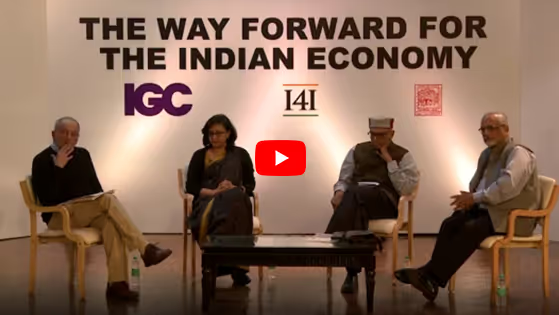
I4I Panel Discussion: The way forward for the Indian economy
In December 2018, I4I organised a panel discussion on ‘The Way Forward for the Indian Economy’ with K.P. Krishnan (Ministry of Skill Development and Entrepreneurship), T.N. Ninan (Business Standard), and Ila Patnaik (NIPFP). Ashok Kotwal (Editor-in-Chief, I4I) – the moderator of the discussion – set the context and laid out the key issues for deliberation in a blog post prior to the event. The panellists presented their views on issues including banking sector stress and infrastructure financing; possibility of India following an export-led growth path; the country’s business environment, including factor markets and law and order; skilling of the labour force; rural distress; India and the 4th Industrial Revolution; and the quality of our institutions.
Humanising economics
In a tribute to Richard Thaler, recipient of this year’s Nobel Prize in Economics, Ashok Kotwal and Nalini Gulati discuss his pioneering work on decision-making that lies in the space between economics and psychology.