
.svg)
.svg)
%201.svg)
%201.svg)
.svg)

.svg)
.svg)
Andrew Foster
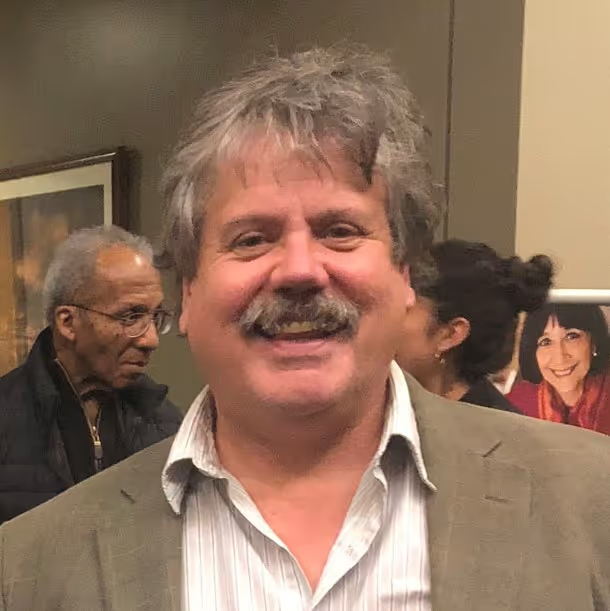
Andrew Foster is the George and Nancy Parker Professor of Economics at Brown University. He is an empirical microeconomist with primary interests in economic development, population, and the environment. His recent projects focus on the role of scale economies in agriculture, the impact of ex-ante risk on schooling choice, and the effect of inter-household sorting on educational mobility. He also has work on income-segregation and on long-term care in the US. He serves as the Editor-in-Chief of the Journal of Development Economics and is currently the Director of the Social Science Research Institute at Brown University.
.svg)

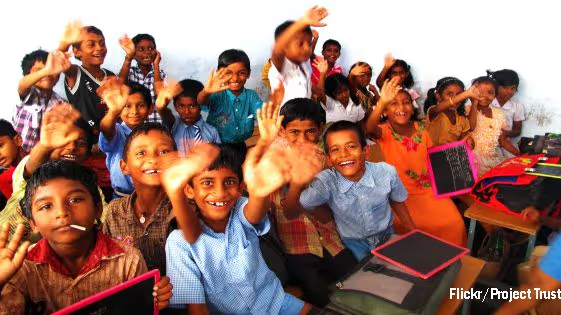
आरम्भ वही करे जो समाप्त हो सके! जोखिम और स्कूली शिक्षा में निवेश
आर्थिक झटकों के परिणामों को कम करने के लिए माता-पिता अधिक काम करने के लिए प्रेरित होते हैं और बच्चों का अधिक समय घर के कामों में उनकी मदद करने या परिवार के खेतों में बीत सकता है, जिससे उनकी स्कूली शिक्षा बाधित हो सकती है। ग्रामीण भारत के आंकड़ों का विश्लेषण करते हुए, इस लेख में दर्शाया गया है कि अधिक अस्थिर कृषि उत्पादन और खपत के रूप में जोखिम में 100% की वृद्धि होने से बच्चे के स्कूल जाने की संभावना में 4-5% तक की कमी हो जाती है।


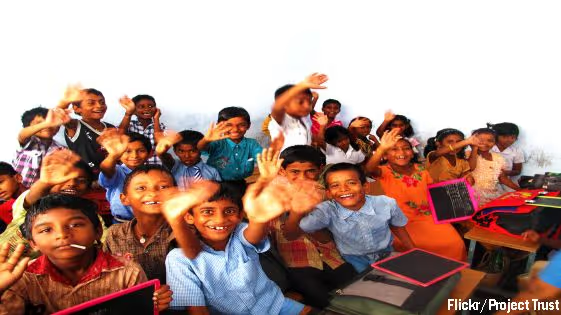
Start what you finish! Risk and schooling investments
Economic shocks prompt parents to work more in order to reduce the fallout, and children may spend more time helping in the household or on the family farm, thereby interrupting their schooling. Analysing data from rural India, this article shows that a 100% increase in risk – in the form of more volatile agricultural production and consumption – reduces the probability that a child attends school by 4-5%.