
.svg)
.svg)
%201.svg)
%201.svg)
.svg)

.svg)
.svg)
Apoorva Gupta

Apoorva Gupta is currently working as an Assistant Professor at the Department of Economics, Ramjas College, University of Delhi. Her research interests include development economics, especially economics of education, gender, and discrimination. She is an active member of the faculty organising committee of the South-Asian Economics Students’ Meet (SAESM), an economics meet for undergraduate students for South Asian countries. She is also a member of faculty review board of Ramjas Economic Review. Apoorva holds a Ph.D. from Department of Economics, Delhi School of Economics (DSE), where she wrote a thesis on ‘Education, Social Networks, and Intergenerational Mobility in India’. She also holds a master’s degree in economics from DSE. She has worked on a research project titled, ‘Education and Social Mobility, 2014-15’, housed at Centre for Development Economics, DSE from June 2013 to August 2015. She also received Krishna Raj Summer Fellowship from DSE, wherein she undertook a project to evaluate Ladli Yojana in Delhi in 2010, and has also been a recipient of the DSE merit scholarship for the year 2009-10.
.svg)

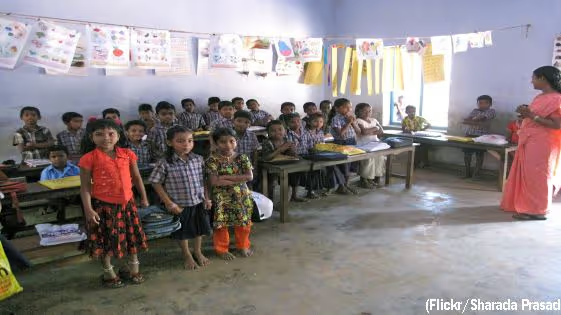
Nakusha: Son preference, ‘unwanted’ girls, and gender gaps in schooling
Indian society is commonly associated with a strong cultural preference for sons. Using nationally representative data from 1986-2017, this article examines parental investment in the education of sons vis-à-vis daughters. It finds that while gender gaps in the quantity of schooling have declined significantly for all children, those in the quality of education have increased – especially in families with unwanted girls.


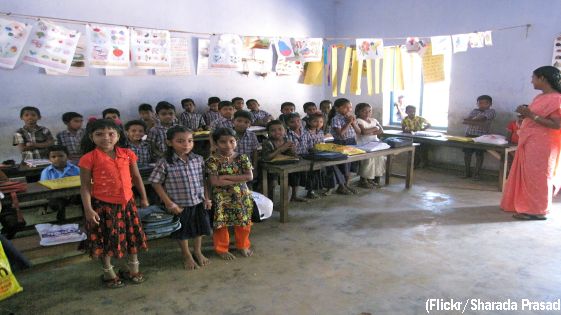
Nakusha: Son preference, ‘unwanted’ girls, and gender gaps in schooling
Indian society is commonly associated with a strong cultural preference for sons. Using nationally representative data from 1986-2017, this article examines parental investment in the education of sons vis-à-vis daughters. It finds that while gender gaps in the quantity of schooling have declined significantly for all children, those in the quality of education have increased – especially in families with unwanted girls.