
.svg)
.svg)
%201.svg)
%201.svg)
.svg)

.svg)
.svg)
Digvijay S. Negi

Digvijay S. Negi is Associate Professor in the Economics Department at Ashoka University. Prior to this he was an Assistant Professor at the Indira Gandhi Institute of Development Research (IGIDR), Mumbai. Before joining IGIDR, he was a Postdoctoral Fellow at the Delhi School of Economics. Digvijay obtained his Ph.D. in Economics from the Indian Statistical Institute, New Delhi and a Masters in Economics from the Delhi School of Economics. His main areas of research include agricultural economics, international trade, risk and insurance, and development economics.
.svg)

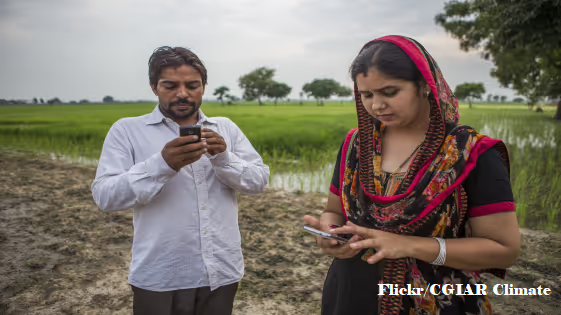
सूचना ही शक्ति है : आईसीटी और कृषि उत्पादकता
विकासशील देशों में कृषि की कम उत्पादकता का एक कारण यह है कि किसानों के पास आधुनिक कृषि विधियों के उपयोग के बारे में पर्याप्त जानकारी या मार्गदर्शन की कमी है। इस लेख में, बांग्लादेश में किसानों को कृषि प्रथाओं के बारे में विशेषज्ञों से परामर्श करने में सक्षम बनाने वाले कॉल सेंटर सहित सूचना और संचार प्रौद्योगिकी के पहल के प्रभाव की जांच की गई है। यह पाया गया कि हस्तक्षेप के बाद, फोन सेवा तक पहुँच वाले गाँवों में भूखंड स्तर पर कृषि संबंधी अकुशलता में 50% की कमी देखी गई।


Information is power: ICT and agricultural productivity
One reason for low agricultural productivity in developing countries is that farmers lack sufficient information or guidance in the use of modern agricultural methods. This article examines the impact of an Information and Communication Technology initiative in Bangladesh, involving call centres that enable farmers to consult experts regarding agricultural practices. It finds that, post intervention, villages with access to phone service experienced a 50% reduction in agricultural inefficiency at the plot level.

Does electrification illuminate women's lives?
A key reason for women’s low labour force participation in developing countries is the burden of unpaid domestic work. Analysing data from rural Bangladesh, this article assesses whether electrification can make a difference by increasing access to time-saving technologies. It finds that women in electrified homes are able to divert some time away from housework to farm work and leisure, and have a greater say in decision-making. This is the third post of a five-part series to mark International Women’s Day 2025.
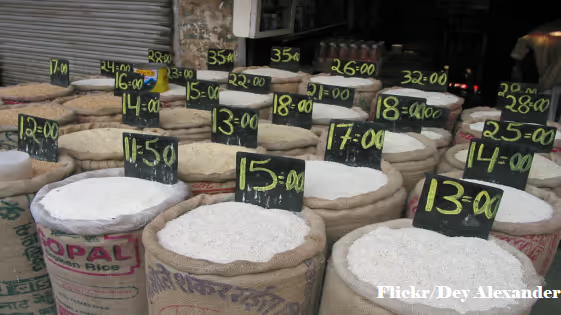
वस्तु-रूपी हस्तांतरण : डेडवेट हानि या लाभ?
क्या सामाजिक सहायता के लिए वस्तु-रूप में दिया जाने वाला हस्तांतरण उपभोक्ता की पसंद को सीमित करके ‘डेडवेट लॉस’ की ओर ले जाता है? इस लेख में महाराष्ट्र में हुए एक प्रयोग से प्राप्त निष्कर्षों को प्रस्तुत किया गया है जिसमें कम आय वाले उत्तरदाताओं को चावल की मुफ्त मात्रा और नकदी की अलग-अलग मात्रा के बीच विकल्प की पेशकश की गई, ताकि चावल के लिए उनकी भुगतान करने की इच्छा का पता लगाया जा सके। इसमें पाया गया कि परिवार में अधिक मोल-भाव करने की क्षमता वाली महिलाएं चावल की अपेक्षा नकदी को ज़्यादा तरजीह देती हैं।
In-kind transfers: Deadweight losses or gains?
Do in-kind transfers for social assistance lead to ‘deadweight losses’ by restricting consumer choice? This article presents findings from an experiment in Maharashtra, which involved offering low-income respondents the choice between a free quantity of rice and varying amounts of cash to elicit their willingness to pay for rice. It finds that women with higher bargaining power within the household are more likely to choose cash over rice.

अल्पकालिक बीमारी और परिवार में श्रम का प्रतिस्थापन
गरीब कृषि परिवारों में स्वास्थ्य-संबंधी झटकों की वजह से होने वाले चिकित्सा खर्चों का असर उनके पास के सीमित संसाधनों पर पड़ता है और इसके परिणामस्वरूप रोजगार के संभावित उत्पादक दिनों का नुकसान होता है। ग्रामीण भारत के आंकड़ों के आधार पर, यह लेख दर्शाता है कि एक बार की बीमारी के कारण बीमार व्यक्ति की औसत मासिक मजदूरी आय में 7% की गिरावट आती है। इसके साथ ही, परिवार के पुरुष मुखिया की बीमारी के कारण उसकी पत्नी की बाजार में श्रम आपूर्ति में औसतन 3.2% की वृद्धि होती है।
Short-term illness and intra-household labour substitution
For poor, agricultural households, health shocks strain limited resources on medical expenses, and result in loss of potential productive work-days. Based on data from rural India, this article shows that an illness episode causes a 7% decline in the ill individual’s average monthly wage income. Further, the male household head’s illness leads to the wife increasing her market labour supply by 3.2%, on average.
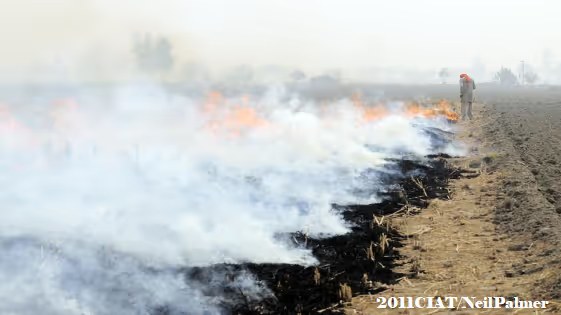
Grain procurement and seasonal air pollution
To provide farmers with stable remunerative prices for their produce, the government commits to buy all surplus grain at minimum support prices. This article demonstrates that when procurement prices are higher, farmers are encouraged to specialise and produce more rice, leading to an increase in crop-residue burning and air pollution. The mortality costs of pollution are estimated to be larger than gains to producers from higher prices