
.svg)
.svg)
%201.svg)
%201.svg)
.svg)

.svg)
.svg)
Fiona Burlig

Fiona Burlig is Assistant Professor at the Harris School of Public Policy at the University of Chicago and a Faculty Research Fellow at the National Bureau of Economic Research. She is an applied microeconomist with research interests in and at the intersection of energy and environmental economics, and development economics. Prior to joining Harris, she was a Postdoctoral Scholar in the Department of Economics at the University of Chicago. She holds a Ph.D. in Agricultural and Resource Economics from the University of California, Berkeley, and a Bachelors in Economics, Political Science, and German from Williams College.
.svg)

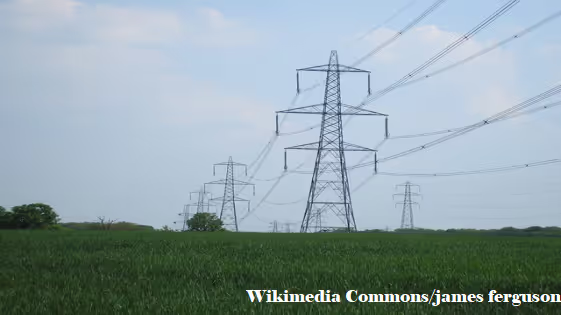
Does rural electrification cause economic development?
The last unelectrified Indian village is now connected to the grid. Given the large investments required for these infrastructure projects, value-for-money is an important consideration. Examining the impact of the Rajiv Gandhi Rural Electrification Programme, which expanded electricity access in 400,000 villages during 2005-2011, this article shows that the economic benefits of the intervention likely do not outweigh the costs below a certain population threshold.


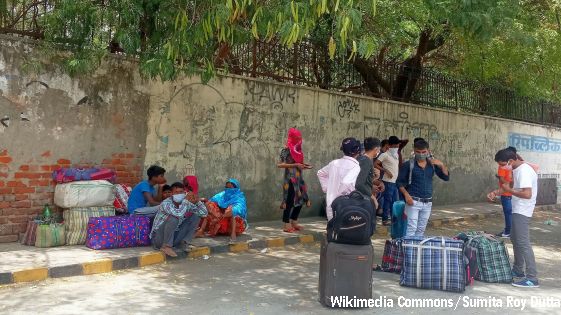
Examining Covid-19 travel restrictions in developing countries
At the outset of the Covid-19 pandemic, the developing world took many of the same policy steps as developed nations to contain the spread, including lockdowns. This article uses evidence from India to show that domestic travel bans may actually have increased Covid-19 cases in developing countries with large urban-rural migrant populations. While travel bans are in place, spread is temporarily stopped, but when travel is finally permitted, migrants return home possibly carrying many more infections than if they had been allowed to leave early.
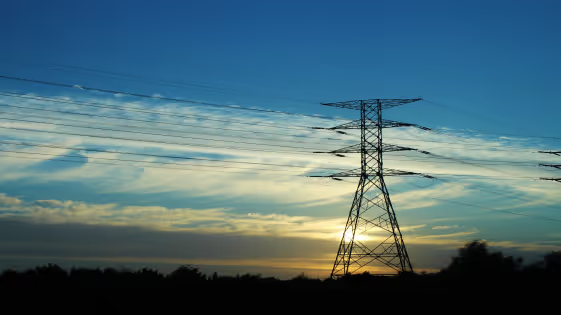
बिजली की कटौती को कम करने हेतु बिजली संयंत्रों की प्रोत्साहन राशि निश्चित करना
भारत में अपेक्षाकृत उच्च गुणवत्ता वाले बुनियादी ढांचे और बिजली संयंत्रों की पर्याप्त आपूर्ति के बावजूद, उपभोक्ताओं को लगातार बिजली की कटौती का सामना करना पड़ता है। यह लेख भारत में ब्लैकआउट के सन्दर्भ में एक नए स्पष्टीकरण को सामने लाता है: जब बिजली की खरीद लागत बढ़ जाती है, तो उपयोगिताएं बिजली संयंत्रों से कम बिजली खरीदना पसंद करती हैं, जिससे अंतिम उपयोगकर्ताओं तक पहुंचने वाली बिजली की मात्रा सीमित हो जाती है। थोक मूल्य लागत में कमी लाने वाले ‘थोक आपूर्ति सुधार’ ब्लैकआउट को प्रभावी तरीके से कम करने में सहायक हो सकते हैं।
Fixing incentives for power plants to reduce outages
Consumers in India face frequent power outages despite relatively high-quality infrastructure and ample supply of power plants. This article identifies a novel explanation for India’s blackouts: when the cost of purchasing electricity rises, utilities choose to buy less from power plants, thereby restricting the amount of power that reaches end-users. Reforms in wholesale supply that lower wholesale prices may help reduce blackouts in a cost-effective manner.