
.svg)
.svg)
%201.svg)
%201.svg)
.svg)

.svg)
.svg)
Jean-François Gauthier

Jean-François is a Ph.D. Candidate in Economics at Boston College. His work is centred around business and development economics. His current research has focussed on the role of minimum wage in firms’ decision-making, and on the dynamic between managers and workers in garment factories in India. In addition, he also studies the benefits of artificial intelligence-assisted hiring and training tools to employers, employees, and job-seekers in India and the US.
.svg)

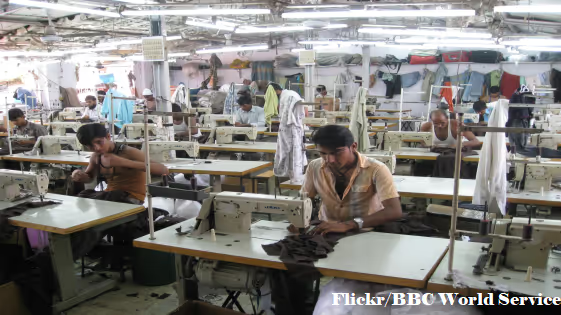
भारत के विनिर्माण क्षेत्र के श्रमिकों में निवेश और उत्पादकता
पहली मई को दुनिया भर में श्रम दिवस मनाया जाता है और आधुनिक विश्व की अर्थ व्यवस्था और प्रगति में श्रम, श्रम बाज़ार व श्रमिकों की महत्वपूर्ण भूमिका है। इसी सन्दर्भ में आज के इस लेख में, अध्वर्यु एवं अन्य भारत में घटती विनिर्माण उत्पादकता तथा राज्यों और उद्योगों में व्याप्त भिन्नता से सम्बंधित कुछ तथ्यों का संकलन प्रस्तुत करते हैं। वे श्रमिक उत्पादकता बढ़ाने की क्षमता वाले चार प्रमुख क्षेत्रों- सॉफ्ट स्किल्स, आवाज़ यानी उनका मत, भौतिक वातावरण और प्रबन्धकीय गुणवत्ता में निवेश के बारे में मौजूदा साहित्य की जाँच करते हैं, जिसमें भारतीय और वैश्विक दोनों सन्दर्भों में किए गए अध्ययनों पर प्रकाश डाला गया है। वे सम्भावित कारणों के साथ यह निष्कर्ष निकालते हैं कि क्यों कम्पनियाँ श्रमिकों में पर्याप्त निवेश नहीं कर रही हैं।



How worker investments can fuel productivity in India’s manufacturing sector
In the second article in the Ideas@IPF2023 series, Adhvaryu et al. synthesise some facts on India’s declining manufacturing productivity and variations across states and industries. They examine existing literature on investments in four key areas with the potential to increase worker productivity – soft skills, voice, physical environment, and managerial quality – highlighting studies conducted in both the Indian and global context. They conclude with possible reasons why firms may not be adequately investing in workers.
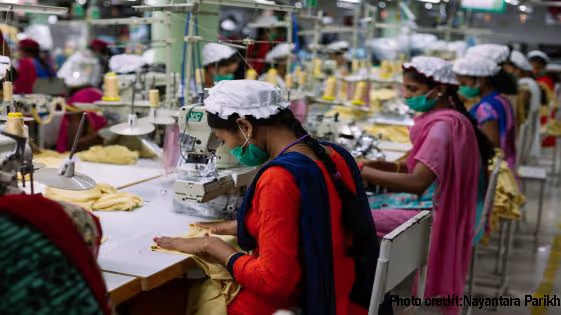
श्रम-प्रधान उद्योगों में श्रमिकों की अनुपस्थिति का सामना करना
श्रम-प्रधान उद्योगों में श्रमिकों की अनुपस्थिति फर्मों की उत्पादकता में हानि का कारण बनती है, जिसके चलते श्रमिकों के लिए उत्पादकता-आधारित प्रोत्साहन की संभावना कम होती है। कर्नाटक में किये गए एक अध्ययन के आधार पर, यह लेख इस बात की जाँच करता है कि अपनी लाइनों पर श्रमिकों की विशेष रूप से कम उपस्थिति का सामना करते समय फैक्ट्री लाइन-मैनेजर किस प्रकार से आपस में श्रमिकों का अदल-बदल करते हैं, और यह लेख लाइनों में अपने श्रमिकों की तैनाती में सुधार करने पर फर्मों को मिलने वाले वित्तीय लाभों का अनुमान भी लगाता है।
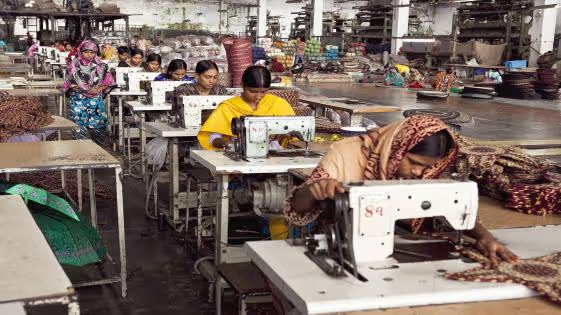
Dealing with worker absenteeism in labour-intensive industries
Worker absenteeism in labour-intensive industries causes productivity losses for firms, and reduced potential for productivity-based incentives for workers. Based on a study in Karnataka, this article investigates how factory line-managers trade workers amongst themselves when facing particularly low attendance on their lines, and estimates the financial gains that firms can make when they improve the distribution of workers across lines.