
.svg)
.svg)
%201.svg)
%201.svg)
.svg)

.svg)
.svg)
Nikita Sharma

Nikita Sharma is the Economics Editor for the IGC and oversees IGC publications, including the IGC blog. Straddling research and communications, she has also been the Managing Editor for VoxDev. Previously, she provided research assistance at the Massachusetts Institute of Technology. She holds an M.A. in International and Development Economics from Yale University and a B.A. in Economics (Hons.) from Miranda House, University of Delhi.
.svg)

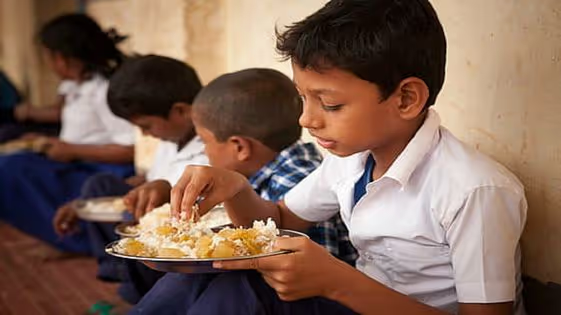
मातृत्व पर पोषण का बोझ : क्या बच्चों को दिया जाने वाला मध्याह्न भोजन उनकी माताओं के स्वास्थ्य परिणामों में भी सुधार ला सकता है?
मध्याह्न भोजन बच्चों को पोषण सुरक्षा जाल प्रदान करता है और उनके अधिगम परिणामों तथा स्कूलों में उनकी उपस्थिति में सुधार लाता है। निकिता शर्मा तर्क देती हैं कि मध्याह्न भोजन प्राप्त करने वाले बच्चों की माताओं को भी इसके ‘स्पिलओवर’ लाभ मिल सकते हैं। वह शोध के निष्कर्षों पर प्रकाश डालती हैं जो यह दर्शाते हैं कि मध्याह्न भोजन बच्चों में कुपोषण को दूर करने के साथ-साथ यह भी सुनिश्चित करता है कि पोषण में कमी के दौरान बच्चों को खिलाने के लिए माताओं को अपना आहार त्यागने की आवश्यकता नहीं पड़ती।


Nutritional penalty of motherhood: Can midday meals for children also improve their mothers’ health outcomes?
Midday meals provide a nutritional safety net for children and improve their learning outcomes and attendance. Nikita Sharma argues that spillover benefits might also exist for mothers of the children who receive them. She highlights research findings which indicate that, in addition to addressing malnutrition among children, midday meals also ensure that mothers do not need to forgo their own consumption to feed their children in times of scarcity.
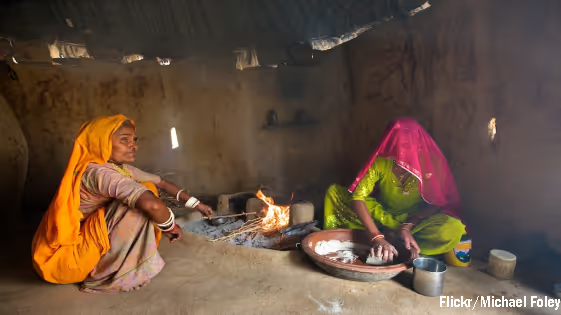
How cleaner cookstoves and fuels could benefit women’s health and the environment
With lesser access to financial resources and greater domestic responsibilities, women face the brunt of the climate change crisis. In particular, women are more affected by indoor air pollution caused by unclean cookstoves or fuel. In this post, Sharma and McDonough discuss evidence from research interventions in India examining and promoting the uptake of cleaner alternatives for cooking – in order to improve women’s health and the environment.

सतत विकास की दिशा में भारत के अवसर
गत सप्ताहांत लन्दन स्कूल ऑफ़ इकोनॉमिक्स एंड पोलिटिकल साइंस में 'भारत सतत विकास सम्मेलन' का आयोजन किया गया जिसमें नोबेल पुरस्कार से सम्मानित प्रो. एस्थर दुफ्लो समेत कई प्रतिष्ठित अर्थशास्त्रियों, विशेषज्ञों व शोधार्थियों ने भाग लिया। इंटरनेशनल ग्रोथ सेंटर (आईजीसी), एलएसई एसटीआईसीईआरडी के पर्यावरण और ऊर्जा कार्यक्रम, वारविक विश्वविद्यालय और भारतीय सांख्यिकी संस्थान द्वारा संयुक्त रूप से आयोजित इस सम्मेलन का उद्देश्य, पर्यावरण अर्थशास्त्र पर काम करने वाले दुनिया भर के शोधकर्ताओं और अग्रणी संकायों को भारत में नीति निर्माताओं के साथ लाना था। इसी सन्दर्भ में टिम डोबरमन और निकिता शर्मा अपने इस लेख के माध्यम से तर्क देते हैं कि भारत के लिए पर्यावरणीय क्षति को न्यूनतम रखते हुए जीवन-स्तर बढ़ाने को प्राथमिकता देने वाले विकास पथ को चुनना अति महत्वपूर्ण है।
India’s opportunity for sustainable growth
In the second post of a three-part blog series, Tim Dobermann and Nikita Sharma contend that it is important for India to choose a growth trajectory that prioritises raising living standards while minimising environmental decline. They discuss how innovations in at least two areas – energy and conservation – are helping India realise this opportunity.
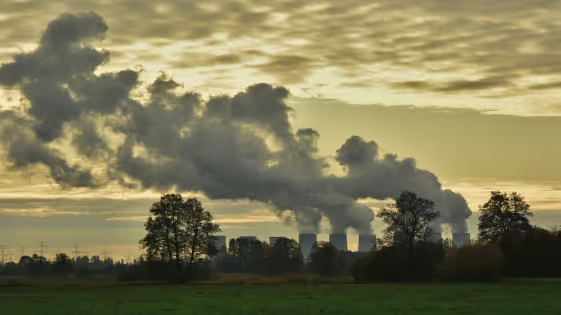
In extremity and externality: Need for policies to protect children from environmental crises
Despite the undeniable threats of climate change, little consideration has been given to creating social safety nets for the vulnerable or engendering resilience in institutions disrupted by extreme climate events. In this post, Despite the undeniable threats of climate change, little consideration has been given to creating social safety nets for the vulnerable or engendering resilience in institutions disrupted by extreme climate events. In this post, Nikita Sharma considers the impact of climate change on economies and individuals, particularly children whose health and education are impeded as a result of extremities and externalities, and the need for policy to support them alongside those to mitigate the climate crisis.