
.svg)
.svg)
%201.svg)
%201.svg)
.svg)

.svg)
.svg)
Paul Niehaus

Paul Niehaus is Assistant Professor of Economics at the University of California, San Diego, where he works with governments in emerging markets to improve the implementation of social programmes. He is a Faculty Research Fellow at the National Bureau of Economic Research (NBER), a Junior Affiliate at the Bureau for Research and Economic Analysis of Development (BREAD), an Affiliate of the Jameel Poverty Action Lab (J-PAL), and an Affiliate at the Center for Effective Global Action (CEGA). He is also co-founder and president of Give Directly, currently the top-rated nonprofit by Give Well and ranked among the 25 most audacious companies (Inc) and 10 most innovative companies in finance (Fast Company). He holds a Ph.D. in economics from Harvard University. In 2013 Foreign Policy named him one of its 100 leading "Global Thinkers.
.svg)


पीडीएस में पसंद-आधारित विकल्प की आवश्यकता
भारत के प्रमुख खाद्य सुरक्षा कार्यक्रम पब्लिक डिस्ट्रीब्यूशन सिस्टम (पीडीएस) पर सार्वजनिक व्यय का एक बड़ा हिस्सा अपेक्षित लाभार्थियों तक नहीं पहुंचता है। इसलिए सब्सिडी वाले अनाज के बदले डायरेक्ट बेनिफिट ट्रांसफर (डीबीटी) का विचार एक प्रमुख नीति विकल्प के रूप में उभरा है। मुरलीधरन, नीहौस, और सुखतंकर एक सरल लेकिन शक्तिशाली दृष्टिकोण की सलाह देते हैं: इसके बजाय कि नीति निर्माता पीडीएस और डीबीटी के बीच निर्णय लें, हम लाभार्थियों को यह विकल्प दे सकते हैं।



शासन में सुधार के लिए मोबाइल का उपयोग
मुख्य सार्वजनिक कार्यक्रमों का कितनी अच्छी तरह क्रियान्वयन हो रहा है इसे मापना शासन की एक बड़ी चुनौती बनी हुई है। देश में मोबाइल-फोन की तेजी से बढ़ रही पहुंच को देखते, मुरलीधरन, नीहौस, सुखतंकर, और वीवर का मानना है की सार्वजनिक सेवा वितरण में सुधार के लिए इस सशक्त साधन का लाभ उठाना चाहिए।
Using mobiles to improve governance
Measuring how well major public programmes are implemented remains a core governance challenge. With the increasing mobile-phone penetration in the country, Muralidharan, Niehaus, Sukhtankar, and Weaver make the case for leveraging this powerful tool to improve public service delivery.
मनरेगा से निकली हैं कई राहें
भारत की महात्मा गांधी राष्ट्रीय ग्रामीण रोजगार गारंटी योजना (मनरेगा) की भूमिहीन ग्रामीण परिवारों को लाभ पहुंचाने के लिए बनाए गए सुरक्षा तंत्र के रूप में प्रभावशीलता को लेकर बहुत सारे विवाद उत्पन्न हुए हैं। मुरलीधरन, नीहौस, और सुखतंकर ने बड़े पैमाने पर एक मूल्यांकन के परिणामों की चर्चा करके बताया है कि मनरेगा भूमिहीन ग्रामीण गरीबों के कल्याण में सुधार, और समग्र ग्रामीण उत्पादकता में वृद्धि के लिए आश्चर्यजनक रूप से प्रभावी उपकरण हो सकता है।
Strengthen MNREGS to support the rural economy
India’s Mahatma Gandhi National Rural Employment Guarantee Scheme (MNREGS) has generated a lot of controversy about its effectiveness as a safety net designed to benefit landless rural households. Muralidharan, Niehaus, and Sukhtankar discuss the results from a large-scale randomised evaluation that suggest MNREGS may be a surprisingly effective tool both for improving the welfare of the landless rural poor and increasing overall rural productivity.
Need for a choice-based approach in PDS
A large share of public spending on the Public Distribution System (PDS), India’s flagship food security programme, does not reach intended beneficiaries. Thus, the idea of Direct Benefits Transfer (DBT) in lieu of subsidised food has emerged as a leading policy alternative. Muralidharan, Niehaus, and Sukhtankar recommend a simple but powerful approach: rather than policymakers deciding between PDS and DBT, we could give beneficiaries that choice.

Building state capacity for better programme implementation: Lessons from the Andhra Pradesh Smartcard Programme
Biometric payment systems are posited to reduce leakages in public welfare programmes but there is limited evidence on their effectiveness. This column presents evidence on the impact of the Andhra Pradesh Smartcard Programme on MNREGS and Social Security Pension beneficiaries, based on a large-scale randomised controlled trial. It finds substantial economic benefits, and concludes that using biometric payment infrastructure to deliver welfare payments can be a game changer for governance in India.
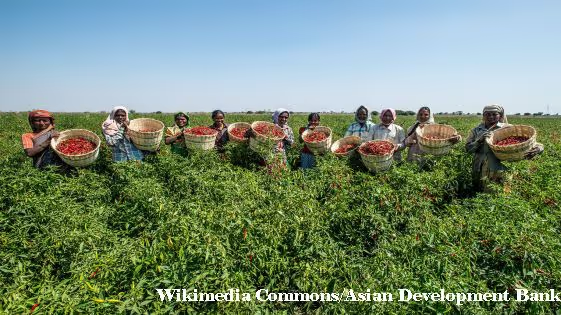
How reforming India’s workfare programme raised private sector earnings
By randomising the rollout of improved, biometric payment infrastructure used to issue National Rural Employment Guarantee Scheme payments in Andhra Pradesh, this study found that this reform raised incomes and reduced poverty. This effect was realised mostly through increases in private labour market earnings, as higher earnings through NREGS put competitive pressure on large landowners who had kept wages low by limiting employment. These findings highlight how critical it is to get implementation of policies and social programmes right..
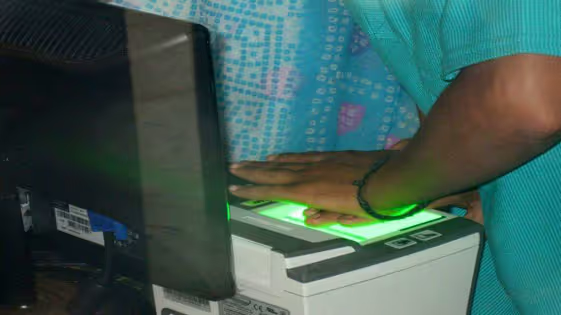
भ्रष्टाचार और बहिष्करण को संतुलित करना: आधार को पीडीएस में शामिल करना
सार्वजनिक रूप से प्रदान की जाने वाली वस्तुओं और सेवाओं के लाभार्थियों को इन लाभों को प्राप्त करने के लिए अपनी पहचान कैसे साबित करनी चाहिए? यह लेख, झारखंड राज्य में सार्वजनिक वितरण प्रणाली (पीडीएस) में बायोमेट्रिक प्रमाणीकरण के आधार पर अधिक कड़ी पहचान आवश्यकताओं के प्रभावों के अध्ययन को हमारे सामने रखता है। यह अध्ययन झारखंड राज्य में 1.5 करोड़ लाभार्थियों के बड़े पैमाने पर एक प्रयोग के तौर पर किया गया है। इसमे यह पाया गया है कि भ्रष्टाचार को कम करने के प्रयासों में, इस प्रक्रिया के कारण कुछ कम आय वाले परिवार अपने लाभ से वंचित हो गए हैं।

Balancing corruption and exclusion: Incorporating Aadhaar into PDS
How should recipients of publicly provided goods and services prove their identity in order to access these benefits? This article reports findings from a large-scale experiment across 15 million beneficiaries to evaluate the effects of more stringent identification requirements based on biometric authentication, on the delivery of subsidised food through Public Distribution System in the state of Jharkhand. It finds that attempts to reduce corruption has cost some low-income households their benefits in the process.