
.svg)
.svg)
%201.svg)
%201.svg)
.svg)

.svg)
.svg)
Ritwik Sarkar

Ritwik Sarkar is a Senior Research Associate at 3ie. He is responsible for assisting the Head of Evaluation in coordinating grant windows, preparing grant proposals, organising steering group meetings, assisting with in-house research and managing external relationships. He has 12 years of experience in the field of research and development. He has previously also worked for the Institute for Financial Management and Research, J-PAL and World Bank India and Indonesia.
Ritwik has a Masters in Social Policy from the London School of Economics.
.svg)

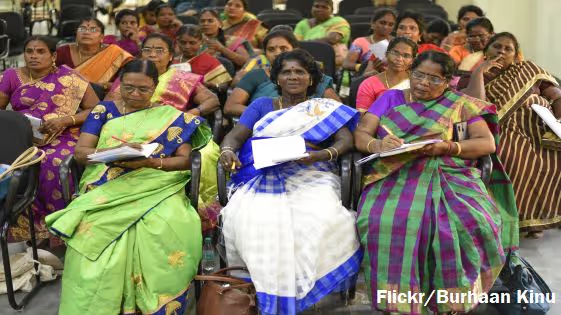
वित्तीय पहुंच परिवारों में महिलाओं की निर्णय लेने की भूमिका को कैसे प्रभावित करती है
महिलाओं को वित्तीय सहायता तक पहुंच प्रदान करने वाले सरकारी कार्यक्रमों द्वारा दी जाने वाली सहायता अक्सर इतनी कम होती है कि जिससे महिलाओं की उनके परिवार में आर्थिक स्थिति में कोई महत्वपूर्ण बदलाव नहीं हो पाता है। इस लेख में एनआरएलपी स्वयं-सहायता समूहों के सदस्यों को दिए गए ऋणों से संबंधित डेटा का उपयोग किया गया और यह पाया गया कि वित्तीय संसाधनों तक महिलाओं की पहुंच बढ़ने से परिवार में उनकी निर्णय लेने की भूमिका में वृद्धि होती है। हालाँकि, केवल बड़े ऋणों के बारे में ही यह प्रभाव दिखता है, जबकि महिलाओं को छोटे ऋण प्रदान करने से परिवार की वित्तीय स्थिति में सुधार के समान परिणाम दिखाई देते हैं।


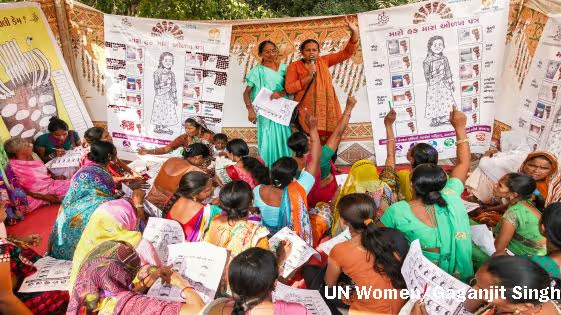
स्वयं-सहायता समूहों में जाति आधारित मतभेद: ग्रामीण आजीविका कार्यक्रम से साक्ष्य
राष्ट्रीय ग्रामीण आजीविका मिशन (एनआरएलएम) का उद्देश्य ग्रामीण परिवारों की आय में वृद्धि करना और उनके कल्याण में सुधार लाना है। इस लेख में, भारत में नौ राज्यों के सर्वेक्षण डेटा का उपयोग करते हुए, एनआरएलएम कार्यक्रम के भीतर स्वयं-सहायता समूहों में व्याप्त जाति-आधारित मतभेदों के अस्तित्व का विश्लेषण किया गया है। यह पाया गया कि वंचित समूहों के सदस्यों की भी समान रूप से पदाधिकारी के रूप में चुने जाने की संभावना है। नेतृत्ववाले पदों में वंचित समूहों के प्रतिनिधित्व से वंचित समूह के सदस्यों के बीच भागीदारी, लाभों तक पहुंच और अन्य संबंधित परिणामों में वृद्धि होती है।
Caste-based differences in self-help groups: Evidence from a rural livelihood programme
The National Rural Livelihood Mission aims to increase income and improve wellbeing for rural households. Using survey data from nine states in India, this article analyses the existence of caste-based differences in self-help groups within the NRLM programme. It finds that members of disadvantaged groups are equally likely to be elected as an office bearer. Further representation of disadvantaged groups in leadership positions increases participation, access to benefits and other related outcomes amongst members from the disadvantaged group.

How financial access impacts women’s decision-making role in households
Government programmes which grant women access to financial support often provide assistance which is too small to significantly impact women’s economic position within the household. This article uses data on loans granted to members of NRLP self-help groups and finds that increasing women's access to financial resources enhance their decision-making role within the household. However, only large loans have this effect, while providing women with small loans yields similar results to improving the financial position of the household.