
.svg)
.svg)
%201.svg)
%201.svg)
.svg)

.svg)
.svg)
Sabyasachi Das

Sabyasachi Das is an Associate Professor at Amrut Mody School of Management, Ahmedabad University. He has taught at the Indian Statistical Institute, Delhi, Ashoka University, and Gokhale Institute of Politics and Economics, Pune. He has also held a visiting scholar position at Northwestern University. He is an active member of the Society for Economic Research in India
He holds a Ph.D. in Economics from Yale University.
.svg)


कोविड-19: क्या हम लंबी दौड़ के लिए तैयार हैं? - भाग 2
इस आलेख के पहले भाग में, लेखकों ने भारत में कोविड-19 के प्रति सरकार की प्रतिक्रिया का मार्गदर्शन करने हेतु व्यापक सिफारिशें कीं। इस भाग में, वे पांच ऐसे समूहों की पहचान करते हैं जिनके वर्तमान संकट से उत्पन्न आर्थिक एवं स्वास्थ्य संबंधी झटकों की चपेट में आने की आशंका ज्यादा है, और ऐसे क्षेत्र जहां राहत प्रयासों को केंद्रित करने की आवश्यकता है।


कोविड-19: क्या हम लंबी दौड़ के लिए तैयार हैं? - भाग 1
कोविड-19 के प्रसार की संभावित पुनरावृत्ति को रोकने के लिए यह लॉकडाउन, संभवतः भविष्य में किए जाने वाले कई लॉकडाउन में से पहला हो सकता है, इसलिए नीति निर्माताओं को इससे प्रतिकूल रूप से प्रभावित व्यक्तियों को राहत प्रदान करने के लिए तैयार रहना होगा। इसे ध्यान में रखते हुए, लेखक एक व्यापक दृष्टिकोण का प्रस्ताव करते हैं जिसमें अगले 24 महीनों में होने वाले किसी भी लॉकडाउन के दौरान राशन कार्ड धारक सभी परिवारों को प्रदान किए जाने वाले वस्तु रूपी अंतरणों और नकद सहायता के एक संयोजन के लिए तर्क दिया गया है।
Covid-19: Are we ready for the long haul? - Part II
In Part I of this piece, the authors made broad recommendations to guide the government’s response to Covid-19 in India. In this part, they identify five salient population groups that are particularly vulnerable to the economic and health shocks arising from the current crisis, and regions where relief effort needs to be concentrated.
Covid-19: Are we ready for the long haul? - Part I
As this may be the first of many future lockdowns to stamp out possible repeated outbreaks of Covid-19, policymakers must be prepared to provide relief to adversely affected individuals. With this in mind, the authors propose a comprehensive approach that argues for a combination of in-kind transfers and cash support to be provided to all households with ration cards during any lockdown that takes place over the next 24 months.

सिंचाई जल के विकेन्द्रीकरण का गलत स्थानिक आवंटन पर प्रभाव
भारत में सिंचाई का एक महत्वपूर्ण स्रोत नहरों का पानी है, जिसका वितरण किसी भौगोलिक क्षेत्र के भीतर किसानों के बीच अक्सर असमान रूप से होता है। इस लेख में, ओडिशा राज्य में नहर सिंचाई प्रणालियों के प्रबंधन के विकेन्द्रीकरण के बाद किए गए एक सर्वेक्षण के आधार पर पाया गया कि नीतिगत सुधार के सकारात्मक प्रभाव पड़ते हैं, लेकिन सुधार का संस्थागत डिज़ाइन भी मायने रखता है।
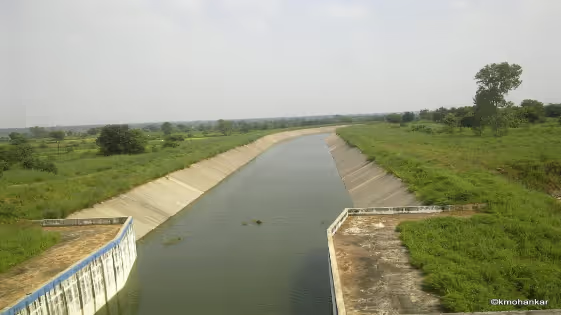
Decentralisation and spatial (mis)allocation of irrigation water
Canal water – an important source of irrigation in India – often tends to be unequally distributed among farmers within a geographical area. Based on a survey in the state of Odisha, following the decentralisation of the management of canal irrigation systems, this article finds that the policy reform has positive impacts – but the details of the institutional design matter.
एक साथ कराए जाने वाले चुनाव, मतदाता का व्यवहार तथा चुनावी नतीजे
भारत सरकार का एक क्रियाशील नीतिगत प्रस्ताव है कि सभी राज्यों के विधानसभा चुनाव और राष्ट्रीय चुनाव एक साथ ही कराए जाएँ। यह लेख इस बात की जाँच करता है कि क्या राष्ट्रीय एवं राज्य के चुनाव एक साथ होने से मतदाता के फैसले प्रभावित होते हैं, और क्या इसके परिणामस्वरूप भारत में चुनावी नतीजों पर प्रभाव पड़ता है। इससे यह ज्ञात होता है कि एक साथ चुनाव कराए जाने से निर्वाचन क्षेत्रों के दोनों स्तरों पर एक ही राजनीतिक पार्टी के जीतने की संभावना 21% बढ़ जाती है।
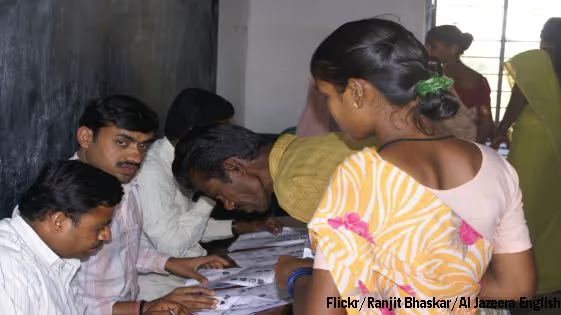
Synchronised elections, voter behaviour, and governance outcomes
An active policy proposal of the Government of India is to hold national elections at the same time as the assembly elections of all the states. This article examines whether holding national and state elections simultaneously affects voter decisions, and consequently, electoral outcomes in India. It finds that synchronised elections increase the likelihood of the same political party winning constituencies in both tiers by 21%.

How effective are gram sabhas?
Village panchayats across India are mandated to organise local public meetings called gram sabhas several times a year, wherein villagers discuss issues such as local public good provision. This column finds that gram sabhas are indeed effective in altering the composition of local public goods provided. Promoting the institution of gram sabha can make policymaking more sensitive to the preferences of discriminated groups such as women.