
.svg)
.svg)
%201.svg)
%201.svg)
.svg)

.svg)
.svg)
Shweta Bhutada

Shweta Bhutada graduated with a degree in journalism from St. Xavier’s College, Mumbai and then studied International Development at Sciences Po. After a brief stint in journalism, her enthusiasm to understand the world first-hand brought her to ASER Centre, where she is now working as the Senior Project Lead.
.svg)

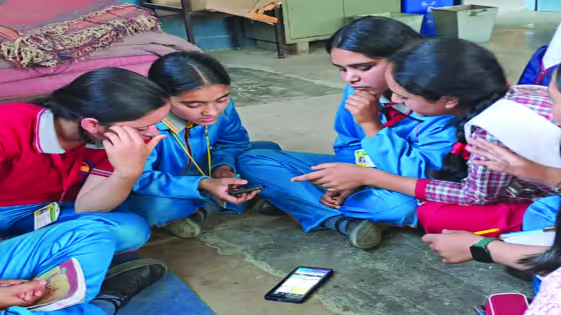
ग्रामीण भारत में युवाओं की डिजिटल तैयारी
भारत में तेज़ी से तकनीकी परिवर्तन हो रहा है, ऐसे में डिजिटल साक्षरता युवाओं की भविष्य की शैक्षिक, आर्थिक और सामाजिक अवसरों की तैयारियों का एक प्रमुख चालक बन गई है। कुमार और भुतडा ने इस लेख में, वार्षिक शिक्षा स्थिति रिपोर्ट (असर- एएसईआर) 2023 और 2024 में प्रस्तुत जानकारी के आधार पर ग्रामीण युवाओं के बीच डिजिटल तैयारी की जाँच की है। हालांकि स्मार्टफोन का अब व्यापक रूप में इस्तेमाल हो रहा है, तब भी डिजिटल कौशल और तेज़ी से प्रौद्योगिकी-संचालित दुनिया के अनुकूल होने की तैयारी में महत्वपूर्ण अंतर बना हुआ है।


Youth’s digital readiness in rural India
As India undergoes rapid technological transformation, digital literacy has become a key driver of youth’s preparedness for future educational, economic, and social opportunities. In this note, Kumar and Bhutada examine digital readiness among rural youth, based on insights offered by the Annual Status of Education Report (ASER) 2023 and 2024. While there is widespread smartphone access, significant gaps remain in digital skills and readiness to adapt to an increasingly technology-driven world.
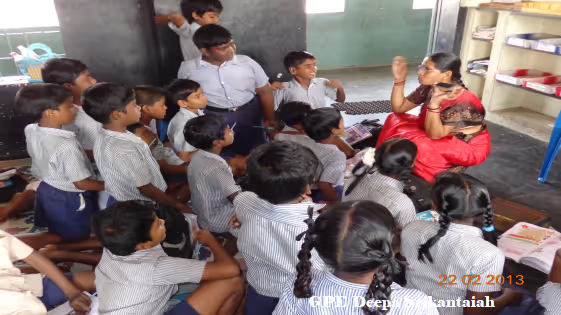
Reflections on how the New Education Policy plays out in the classroom
The National Education Policy, 2020 emphasises the acquisition of foundational literacy and numeracy by Standard 2. Yet, little is known about how the related initiatives have translated into changes in teaching-learning in the classroom. In this note, Bhattacharjea, Bhutada and Bisht share insights from a study involving classroom observations and teacher interviews across eight states in India – on aspects such as classroom composition, teachers’ attitudes towards young children, and teaching methods.