
.svg)
.svg)
%201.svg)
%201.svg)
.svg)

.svg)
.svg)
Surayya Masood

Surayya Masood is a Consultant at the Education Global Practice of the World Bank Group where she provides technical and operational support to projects in South Asia, Middle East and North Africa. Prior to joining the World Bank, she worked with the Research for Improving Systems of Education (RISE) Programme, using a systems-thinking approach to tackle the learning crisis in Tanzania and Pakistan.
She holds a Masters in International Development Policy (MIDP) from Georgetown University's McCourt School of Public Policy, and a BA in Economics from Mount Holyoke College.
.svg)

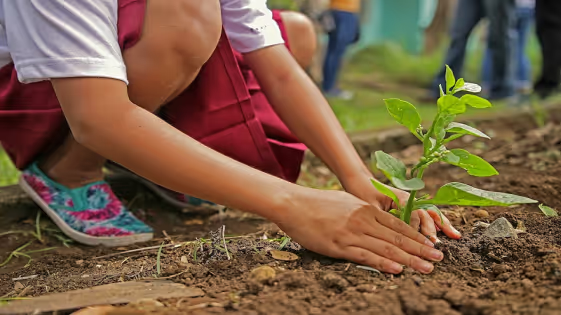
क्या शिक्षा से जलवायु कार्रवाई की प्रेरणा मिल सकती है?
हर साल 22 अप्रैल को दुनिया भर में पृथ्वी दिवस मनाया जाता है जो पर्यावरण की रक्षा और स्थिरता को बढ़ावा देने के लिए समर्पित एक वैश्विक आंदोलन है। जलवायु संकट के और भी गंभीर होने के साथ ही, आज पृथ्वी के संरक्षण की हमारी साझा जिम्मेदारी पहले से कहीं अधिक महत्वपूर्ण हो गई है। विकासशील देशों में युवा वर्ग जलवायु परिवर्तन के बारे में चिंतित हैं और इसके लिए उचित कदम उठाने के लिए तैयार हैं लेकिन व्यवहारिक जानकारी और ज्ञान की कमी के कारण वे विवश हैं। पृथ्वी दिवस पर प्रस्तुत इस लेख में मसूद और सबरवाल विश्वबैंक की हालिया रिपोर्ट से प्राप्त अंतर्दृष्टि पर चर्चा करते हैं, जिसमें बताया गया है कि शिक्षा किस प्रकार जलवायु से जुड़ी कार्रवाई को आगे बढ़ाने के लिए इस विसंगति को दूर कर सकती है। वे जलवायु परिवर्तन से उत्पन्न होने वाले जोखिम से शैक्षिक प्रणालियों की सुरक्षा की आवश्यकता पर भी प्रकाश डालते हैं।


Can education propel climate action?
While youth in the developing world are anxious about climate change and ready for action, they are constrained by a lack of information and knowledge. In this post, Masood and Sabarwal discuss insights from a new World Bank Report outlining how education can address this disconnect to drive climate action. They also highlight the need to safeguard educational systems from the threats posed by climate change.