
.svg)
.svg)
%201.svg)
%201.svg)
.svg)

.svg)
.svg)
Jane Hammaker

Jane Hammaker supports 3ie projects in women’s empowerment and livelihoods in India, nutrition, democracy, human rights and governance, and cost evidence in impact evaluation. She leads and contributes to multiple 3ie services and strategic initiatives, including impact evaluations, process evaluations, monitoring support, rapid evidence assessments, systematic reviews, evidence gap maps, virtual trainings and capacity building.
.svg)

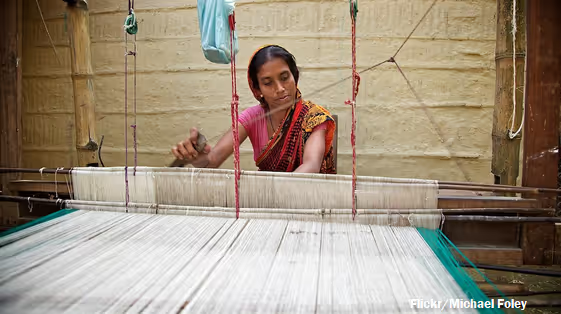
पीढ़ी-दर-पीढ़ी बुनाई : ग्रामीण भारत में पारिवारिक व्यवसायों में उत्पादकता लाभ
हर साल 12 फरवरी को मनाए जाने वाले राष्ट्रीय उत्पादकता दिवस का उद्देश्य अर्थव्यवस्था में उत्पादकता, नवाचार और निपुणता के महत्त्व पर ज़ोर देना है। इसी सन्दर्भ में प्रस्तुत इस लेख में पारिवारिक स्वामित्व वाले बुनाई उद्यम की चर्चा की गई है। आंध्र प्रदेश और तेलंगाना में बुनाई का कार्य अक्सर एक पारिवारिक उद्यम है। 1,800 से अधिक परिवारों के डेटा का उपयोग करते हुए, हैममेकर एवं अन्य द्वारा किया गया मिश्रित-विधियों का मूल्याँकन यह दर्शाता है कि पीढ़ी-दर-पीढ़ी बुनाई व्यवसाय में जुटे परिवार बुनाई कार्य में अधिक कमाते हैं और केवल एक पीढ़ी के बुनकरों वाले परिवारों की तुलना में उनकी पारिवारिक आय अधिक होती है। हालाँकि, पाया गया कि उत्पादकता के ये लाभ पूरे परिवार में समान रूप से वितरित नहीं होते हैं, क्योंकि वे उन महिला बुनकरों के लिए विस्तृत एजेंसी के रूप में तब्दील नहीं होते जो इन व्यवसायों का हिस्सा होती हैं।


Weaving through generations: Productivity gains in family-owned businesses in rural India
In Andhra Pradesh and Telangana, weaving is often a family enterprise. Using data from over 1,800 households, this ongoing mixed-methods evaluation by Patel et al. shows that households with multi-generational weaving businesses earn more in weaving revenue and have greater household incomes relative to households with only one generation of weavers. However, it notes that these gains in productivity are not equally distributed across the household, as they do not translate into greater agency for the women weavers who are part of family-owned businesses.