
.svg)
.svg)
%201.svg)
%201.svg)
.svg)

.svg)
.svg)
Robert C M Beyer

Robert C. M. Beyer is an economist at the South Asia Office of the Chief Economist at the World Bank. He is the lead author of the biannual macroeconomic update for South Asia entitled South Asia Economic Focus. Before joining the World Bank in 2016, he completed a Ph.D. at Goethe University Frankfurt and was involved in research at the European Central Bank and the International Monetary Fund.
.svg)


Fiscal policy and economic activity in South Asia
The Indian economy is currently experiencing a sharp slowdown, and the government has reacted with corporate tax cuts and a large infrastructure initiative. Using annual data from 1987-2017 for six South Asian countries including India, this article analyses the relationship between fiscal policy and economic activity in the region and finds that it amplified boom-and-bust cycles.


Jobless growth? From speculation to statistical analysis
This column investigates the relationship between economic growth and net job creation in India and South Asia. If economic growth was truly jobless, as is often claimed, labour productivity would be increasing very rapidly. But how real is the alleged joblessness?
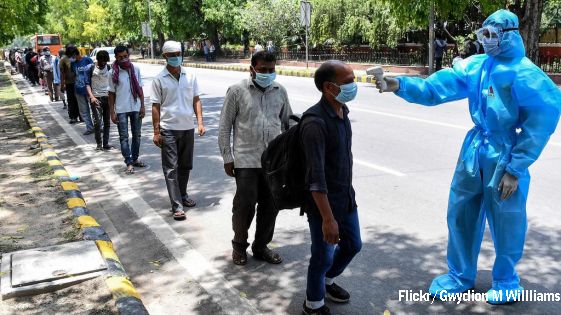
Economic consequences of Covid-19 lockdowns: Lessons from India’s first wave
As India combats the second wave of Covid-19, the impact on economic activity remains a major concern. Drawing lessons from the first wave in 2020, this article provides an assessment of how containment measures have influenced aggregate economic outcomes. It finds that economic recovery was lower by 9.3% in districts where mobility restrictions were maximum – relative to those with minimal restrictions – and incomes were hit harder than consumption.
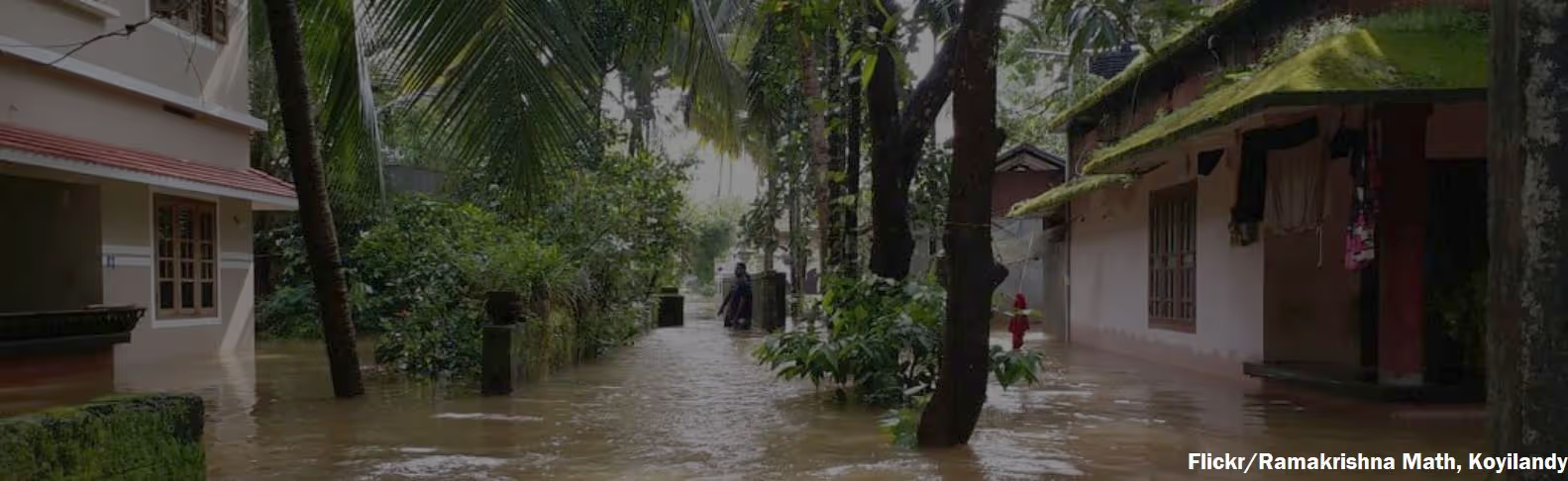
प्राकृतिक आपदाओं की आर्थिक गतिशीलता: केरल में आई बाढ़ से साक्ष्य
इस लेख में, प्राकृतिक आपदाओं के आर्थिक प्रभाव को समझने हेतु एक स्वाभाविक प्रयोग (नैचुराल एक्सपेरिमेंट) को डिजाइन करने के लिए, वर्ष 2018 में केरल में आई बाढ़ का संदर्भ लिया गया है, जब वहां पड़ोसी राज्यों कर्नाटक और तमिलनाडु की तुलना में बहुत अधिक बारिश हुई थी। पारिवारिक और जिला-स्तरीय डेटा का उपयोग करते हुए, इस अध्ययन में पाया गया है कि भले बाढ़ के कारण आई आपदा के दौरान आर्थिक गतिविधियां कम हुई हों, श्रम बाजार की स्थितियों और सरकार के पुनर्निर्माण के प्रयासों के चलते सभी पड़ोसी राज्यों की तुलना में आपदा के बाद के उछाल के दौरान ऋण की मांग, पारिवारिक आय और मजदूरी में वृद्धि हुई है।

Economic dynamics of natural disasters: Evidence from the Kerala floods
To understand the economic impact of natural disasters, this article uses the 2018 floods in Kerala – a time when it received higher rainfall than the neighbouring states of Karnataka and Tamil Nadu ¬– to design a natural experiment. Using household and district-level data, the study finds that although flooding lowered economic activity during the disaster, the demand for credit, household income and wages all increased relative to the neighbouring states during the post-disaster boom, facilitated by labour market conditions and government’s reconstruction efforts.