
.svg)
.svg)
%201.svg)
%201.svg)
.svg)

.svg)
.svg)
Sisir Debnath

Sisir Debnath is Assistant Professor of Humanities and Social Sciences at Indian Institute of Technology, Delhi. Prior to this he was Assistant Professor of Economics and Public Policy at the ISB. He received his Ph D, from the University of Virginia in USA. His primary research interests are in the areas of Development Economics and Empirical Microeconomics. His paper "The Impact of Household Structure on Female Autonomy in Developing Countries" has been accepted to be published in Journal of Development Studies. His other paper "Intergenerational Consequences of Early Age Marriages of Human Capital" has already appeared in Journal of Development Studies. The Professor regularly makes presentations on Developmental Economics related topics at academic conferences in India as well abroad. He is recipient of many prestigious grants.
.svg)


भारत में बच्चों के टीकाकरण की समयबद्धता और उसका कवरेज
यूनिवर्सल इम्यूनाइजेशन प्रोग्राम के तहत 12 साल से कम उम्र के बच्चों के लिए मुफ्त में टीकाकरण उपलब्ध होने के बावजूद, विश्व के एक तिहाई बच्चों की मौतें भारत में जिन बीमारियों की रोकथाम वैक्सीन से हो सकती है ऐसी बीमारियों के कारण होती हैं। देबनाथ और चौधरी इस लेख में, 2005-06 और 2015-16 के राष्ट्रीय स्तर के प्रातिनिधिक डेटा का उपयोग देश में नियमित टीकाकरण की समयबद्धता और उसके कवरेज की जांच करने के लिए करते हैं। इसके अलावा, वे इस संबंध में कोविड-19 के प्रभाव का आकलन करने के लिए बिहार में किये गए हाल के एक प्राथमिक सर्वेक्षण के निष्कर्षों पर भी चर्चा करते हैं।


Timeliness and coverage of child vaccinations across India
Despite free vaccinations for children below 12 years of age under the Universal Immunisation Programme, one-third of global child deaths due to vaccine-preventable diseases occur in India. In this post, Debnath and Chaudhuri use nationally representative data from 2005-06 and 2015-16, to examine the timeliness and coverage of routine immunisation in the country. Further, they discuss findings from a recent primary survey in Bihar to gauge the impact of Covid-19 in this regard.
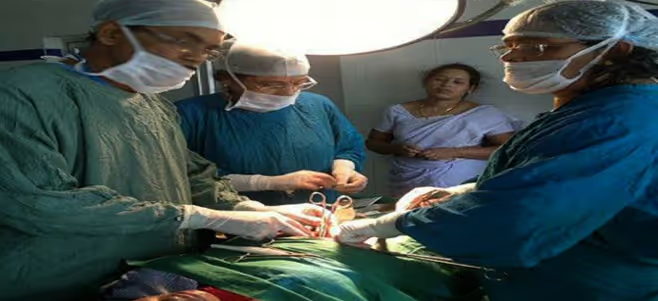
Designing India’s national healthcare protection: Challenges and opportunities
The burden of non-communicable diseases, requiring costly hospital-based treatment, is increasing in India, and only 15% of the population has health insurance coverage. The Modi government recently introduced the Ayushman Bharat–National Health Protection Mission that aims to pay for tertiary healthcare for nearly 100 million families across the country. In this post, Debnath et al. highlight design issues that the programme must overcome to deliver on its promise.

Improving maternal and child health through conditional cash transfers
Cash transfers to the poor, conditional on use of particular public services, are a popular tool to increase healthcare utilisation. This column evaluates the impact of one such scheme – Janani Suraksha Yojana - and finds that it encouraged pregnant women to deliver babies at healthcare facilities. It also suggests that the marginal effect of cash incentives is larger when provided to healthcare workers rather than mothers.
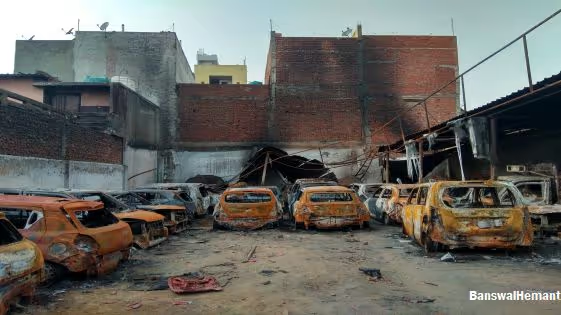
धार्मिक हिंसा और सामाजिक संघर्ष का महिलाओं की शादी की उम्र पर प्रभाव
इस लेख में देबनाथ एवं अन्य अंतर्राष्ट्रीय महिला दिवस 2023 के उपलक्ष्य में I4I पर इस महीने चल रहे अभियान के अंतर्गत महिलाओं की शादी से जुड़े फैसलों पर हिंदू-मुस्लिम दंगों के प्रभावों का पता लगाते हैं। वे पाते हैं कि धार्मिक हिंसा की घटनाओं के कारण महिलाओं के प्रति यौन हिंसा की संभावनाओं को कम कराने के उद्देश्य से कम आयु में ही उनके विवाह करा दिए जाने हेतु प्रेरणा मिलती है। वे यह भी पाते हैं कि उनकी शादी कम उम्र में होने से उनकी शिक्षा प्राप्ति और उनके बच्चे पैदा करने की उम्र पर असर पड़ता है।
The impact of religious violence and social conflict on women’s age of marriage
In the ninth post of I4I’s month-long campaign to mark International Women’s Day 2023, Debnath et al. explore the effects of Hindu-Muslim riots on decisions around women's marriage. They find that the incidence of religious violence lowers the age of marriage for women– likely motivated by the desire to marry girls off early to reduce their vulnerability to sexual violence. They find that early marriage also impacts women’s educational attainment, and their age at which they have children.

बिहार में शराबबंदी का जीवन साथी द्वारा हिंसा पर प्रभाव
इस लेख में वर्ष 2016 में बिहार में शराब की बिक्री और खपत पर लगाए गए पूर्ण प्रतिबंध के कारण महिलाओं के प्रति उनके जीवन साथी द्वारा होने वाली हिंसा की घटनाओं पर पड़े प्रभाव की जांच की गई है। एनएफएचएस आंकड़ों का उपयोग करते हुए पाया गया कि इस प्रतिबंध के बाद बिहार में महिलाओं का कहना था कि उनके पतियों के शराब पीने की संभावना पहले से कम थी और महिलाओं के घरेलू हिंसा का सामना किए जाने की संभावना भी कम थी। इस लेख में महिला सशक्तिकरण को बढ़ाने और उन्हें दुर्व्यवहार से बचाने में स्वयं-सहायता समूहों की पूरक भूमिका पर भी प्रकाश डाला गया है।
Impact of Bihar’s alcohol ban on intimate partner violence
This article examines the impact of a complete ban on the sale and consumption of alcohol in Bihar in 2016 on the incidence of intimate partner violence against women. Using NFHS data, it finds that after the ban, women in Bihar reported that their husbands were less likely to consume alcohol, and they were less likely to experience domestic violence. It also highlights the complementary role of self-help groups in increasing women’s empowerment and making them less susceptible to abuse.

चुनावी धोखाधड़ी, लोकतंत्र, और विकास पर इलेक्ट्रॉनिक वोटिंग मशीनों का प्रभाव
चुनावी गड़बडि़यों पर नियंत्रण रखने के प्रयास में भारतीय चुनाव आयोग द्वारा 1990 के दशक में इलेक्ट्रॉनिक वोटिंग मशीनों का राष्ट्रीय स्तर पर उपयोग शुरू किया गया था। इस लेख में राज्यों की विधान सभाओं के 1976 से 2007 तक के चुनावों के आंकड़ों का प्रयोग करके चुनावी प्रक्रिया पर मशीनों के प्रभाव का विश्लेषण किया गया है। इसमें पाया गया है कि मतदान की प्रौद्योगिकी में बदलाव ने चुनावों को अधिक प्रतिस्पर्धी बना दिया है जिससे विकास को बढ़ावा मिला है।

Impact of Electronic Voting Machines on electoral frauds, democracy, and development
In an attempt to curb electoral malpractices, Electronic Voting Machines were introduced on a national scale by the Election Commission of India in the 1990s. Using data from state assembly elections during 1976-2007, this column analyses the impact of the machines on electoral processes. It finds that the change in voting technology made elections more competitive, which in turn promoted development.