
.svg)
.svg)
%201.svg)
%201.svg)
.svg)

.svg)
.svg)
Somdeep Chatterjee

Somdeep Chatterjee is an Associate Professor of Economics at IIM Calcutta. Prior to this, he was an Assistant Professor at IIM Lucknow and FLAME University, Pune. He has a Ph.D. in Economics from the University of Houston. He also holds Master's and Bachelor's degrees in Economics from Jadavpur University, Kolkata.
He is an applied microeconomist by training. His research interests are in the fields of empirical issues in development economics with a particular focus on the economics of education, labour, health, gender and human capital in general. Other than these, he takes a keen interest in the political economy of development such as public policy implementation, electoral behaviour as well as behavioural economics perspectives on public institution efficacies. He has experience of teaching courses on Indian Economy, Managerial Economics, Behavioural Economics, Applied Econometrics as well as Economics of Human Capital. He is a fellow of the Global Labour Organisation (GLO). His research has appeared in journals like the Journal of the European Economic Association, Economica, World Development, Journal of Human Capital, Public Choice etc.
.svg)


शिक्षा का मार्ग रोशन करना : क्या बिजली की सुविधा से बच्चों के परीक्षा स्कोर में वृद्धि हो सकती है?
घरों में बिजली की सुविधा उपलब्ध हो जाने पर बच्चों के स्कूल में दाखिला लेने की सम्भावना बढ़ जाती है। लेकिन क्या वे बेहतर प्रदर्शन भी करते हैं? यह लेख पश्चिम बंगाल के सार्वभौमिक घरेलू विद्युतीकरण कार्यक्रम और राष्ट्रीय स्तर के प्रतिनिधि डेटा के आधार पर, दर्शाता है कि बिजली की सुविधा वाले परिवारों के बच्चे पठन और गणित की परीक्षाओं में बेहतर अंक प्राप्त करते हैं। इसके पीछे के मुख्य तंत्रों के रूप में अधिक देर तक पढ़ने की सुविधा, अधिक पारिवारिक आय और ईंधन संग्रहण की आवश्यकता कम होने के रूप में की गई है।


Lighting the path to learning: Can electricity boost children’s test scores?
When households gain access to electricity, children are more likely to be enrolled in school. But do they also perform better? Based on West Bengal’s universal household electrification programme and nationally representative data, this article shows that children in families with electricity access score higher on reading and math tests. The key mechanisms are identified as longer study time, higher household incomes, and reduced need for fuel collection.
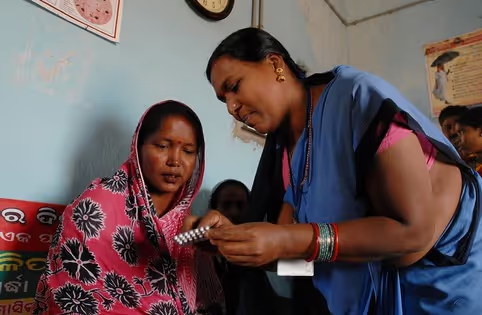
भारत के मिशन परिवार विकास का प्रजनन दर व परिवार नियोजन पर प्रभाव
भारत का बड़े पैमाने का परिवार नियोजन कार्यक्रम, मिशन परिवार विकास, गर्भनिरोधक तक पहुँच में सुधार करता है, कार्यक्रम अपनाने वाले लाभार्थियों को नकद प्रोत्साहन प्रदान करता है और 146 जिलों में प्रजनन की वर्तमान उच्च दर को कम करने के उद्देश्य से परिवार नियोजन के बारे में जानकारी का प्रसार करता है। इस लेख में एनएफएचएस के कई दौरों के डेटा का उपयोग करते हुए, हस्तक्षेप के परिणामस्वरूप जन्मों की संख्या में गिरावट, महिलाओं और पुरुषों की प्रजनन प्राथमिकताओं में कमी और गर्भनिरोधक को अपनाने में वृद्धि के साक्ष्य का दस्तावेज़ीकरण किया गया है।
Impact of India’s Mission Parivar Vikas on fertility rates and family planning
India’s large-scale family planning programme, Mission Parivar Vikas, improves access to contraception, offers monetary incentives to beneficiaries for programme adoption, and disseminates information on family planning with the objective of reducing the prevailing high rates of fertility in 146 districts. Using data from multiple rounds of the NFHS, this article documents evidence of a decline in number of births as a result of the intervention, accompanied by reduced fertility preferences of women and men, and increased adoption of contraception.
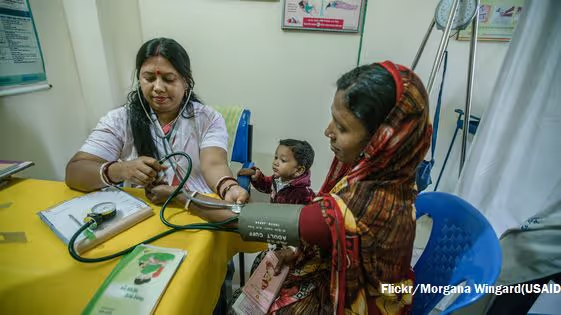
‘स्वीट कैश’- विकासशील देशों में महिलाओं की स्वास्थ्य देखभाल सम्बन्धी ज़रूरतें
अग्रवाल एवं अन्य, स्वास्थ्य देखभाल की मांग के संदर्भ में लिंग-आधारित प्राथमिकताओं की भूमिका का पता लगाते हैं। सीपीएचएस डेटा का उपयोग करते हुए वे पाते हैं कि ईपीएफ में योगदान की अनिवार्य दरों में बदलाव से उत्पन्न सकारात्मक आय-झटके के कारण चिकित्सा परामर्श और दवाओं पर खर्च कम होने से, स्वास्थ्य देखभाल के खर्चों में 11.6% की गिरावट आती है। पर यह गिरावट स्पष्ट रूप से महिलाओं के बेहतर स्वास्थ्य परिणामों को इंगित नहीं करती है। यह दर्शाती है कि महिलाएँ, विशेष रूप से विवाहित महिलाएँ, अपनी बढ़ी हुई आय का उपयोग घरेलू सामान की खरीद पर करने को प्रमुखता देती हैं।
Sweet cash: Women’s demand for healthcare in developing countries
Agrawal et al. explore the role of gender-based preferences for demand of healthcare. Using CPHS data they find that the positive income shock – generated by a change in the mandated rates of contribution to the EPF – leads to a 11.6% decline in healthcare expenses driven by less expenditure on consultations and medications. However, this decline is not explained by women having better health outcomes and suggests that women, especially married women, prefer using the increased income on household goods

The unintended positive consequences of India’s safe motherhood programme
India’s flagship maternal health intervention, Janani Suraksha Yojana, provided conditional cash transfers to women opting for institutional deliveries. In this study, Chatterjee and Poddar document large positive spillovers of this programme on children’s educational outcomes. They find that these spillovers accrue to the already born elder children in the household through increased investments in human capital and changes in fertility preferences among women beneficiaries of the programme.

किसान क्रेडिट कार्ड कार्यक्रम: ऋण की उपलब्ध्ता का विस्तार या ऋण का प्रसार?
किसान क्रेडिट कार्ड कार्यक्रम – भारत में कृषि उधार में एक महत्वपूर्ण सुधार – का आरम्भ हुए लगभग 20 वर्ष हो गए हैं। हालांकि, लक्षित लाभार्थियों पर इसके प्रभाव का थोड़ा अनुभवजन्य साक्ष्य है। इस लेख में पाया गया है कि इस कार्यक्रम का कृषि उत्पादन और प्रौद्योगिकी अपनाने पर महत्वपूर्ण सकारात्मक प्रभाव पड़ा है। इसका संभावित कारण यह है कि कृषि ऋण की पहुँच के विस्तार के बजाय पहले से ही कृषि ऋण तक पहुँच वालों की उधार लेने की क्षमता बढ़ गई है।
Kisan Credit Card programme: Expanded access to credit or expansion of credit?
Kisan Credit Card programme - a key reform in agricultural lending in India - has been operational for almost 20 years now. However, there is little empirical evidence of its impact on intended beneficiaries. This column finds that the programme has had significant positive impact on agricultural production and technology adoption. It is likely that the channel is enhanced borrowing ability of the already unconstrained, rather than expanded access to credit.
भारत के सुरक्षित मातृत्व कार्यक्रम के अनपेक्षित सकारात्मक परिणाम
भारत के प्रमुख मातृ स्वास्थ्य हस्तक्षेप, जननी सुरक्षा योजना के माध्यम से संस्थानों में प्रसव करवाने का विकल्प चुनने वाली महिलाओं को सशर्त नकद हस्तांतरण उपलब्ध कराया गया है। इस अध्ययन में चटर्जी और पोद्दार ने बच्चों के शैक्षिक परिणामों पर इस कार्यक्रम के बड़े सकारात्मक स्पिलओवर (लाभ) को दर्शाया है। उन्होंने पाया कि ये स्पिलओवर मानव पूंजी में निवेश में वृद्धि और कार्यक्रम के महिला लाभार्थियों की प्रजनन वरीयताओं में बदलाव के माध्यम से घर में पहले से पैदा हुए बड़े बच्चों को मिलते हैं।