
.svg)
.svg)
%201.svg)
%201.svg)
.svg)

.svg)
.svg)
.svg)
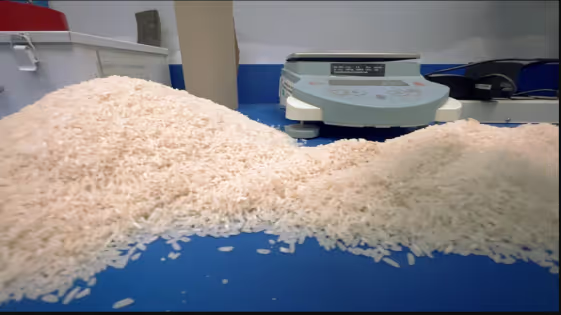
Why India's plan to sell rice for ethanol undermines food and water security
.svg)

.svg)

Agriculture
Easing contracting frictions with machines: Evidence from Karnataka
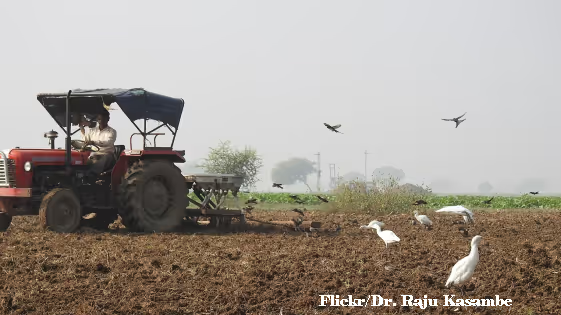
Productivity-enhancing technology adoption in agriculture, which makes workers available for other economic sectors, has long been considered essential for economic development. Based on a field experiment among 7,000 farmers in Karnataka, this article shows that mechanisation lowers supervision needs for hired workers in stages of production other than the one being mechanised, and family workers freed from those tasks engage in non-agricultural activities.


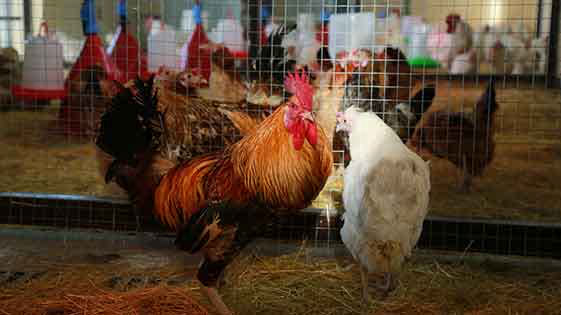
Higher poultry prices and policy (or data) gap
Food and agricultural prices have been rising over the past two years – particularly so for pulses and livestock. In this post, Saini and Das track livestock and feed prices, and identify the key drivers of the recent increases. In their view, policy responses in the form of imports could have been timelier if official data on production were more reliable and robust.
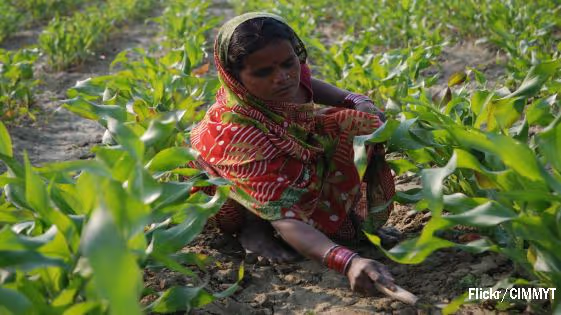
Gendering technological change: Evidence from agricultural mechanisation
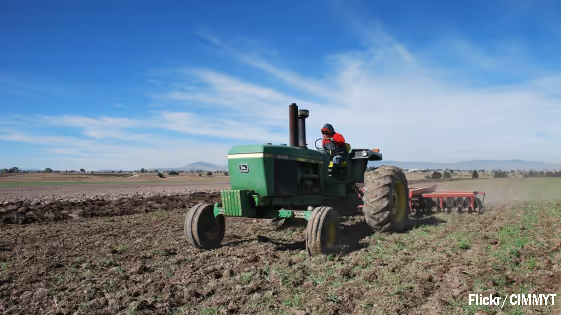
Rising mechanisation in Indian agriculture has been accompanied by reduction in farm employment in rural areas, particularly for women. This article shows that the observed 32 percentage point increase in mechanisation during 1999-2011 can account for 22% of the 30% overall decline in women’s rural employment in agriculture. This is driven by a significant fall in labour used for weeding, an operation that follows tilling of land.
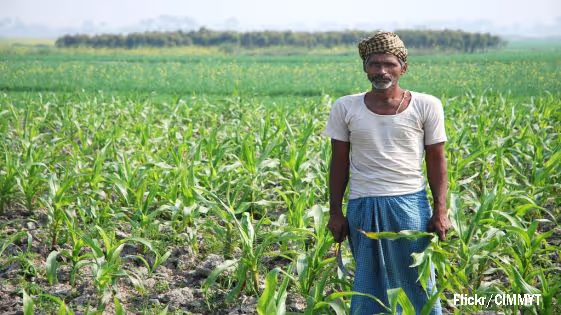
Impact of agricultural reforms in Bihar: Test case for new farm laws
The 2020 farm laws have been opposed by several farmers due to their possible use for corporate takeover of agriculture, removal of APMC mandis, and dilution of minimum support price and public procurement. This article examines the impact of repealing the Agricultural Produce Marketing Committee Act in Bihar in 2006 on the state’s agricultural indicators – as a test case for the potential impact of the Farmers’ Produce Trade and Commerce (Promotion and Facilitation) Act.
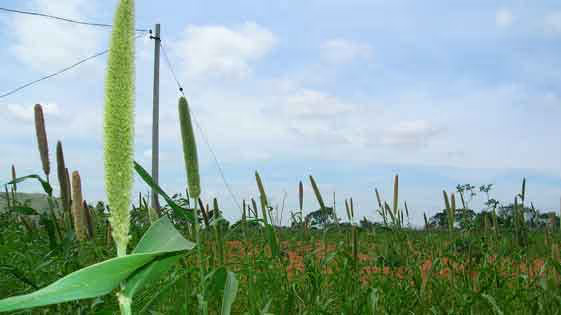
Addressing the nutrition crisis: Reflections from Odisha Millets Mission
The state of Odisha has a severe malnutrition problem, and evidence shows that increasing risks of climate change will render the resource-intensive, rice-wheat cropping system unsustainable. In this note, Saha et al. outline how nutrient-dense, resource-efficient millets have the potential to address malnutrition among vulnerable populations. Based on a qualitative survey of stakeholders, the authors discuss the implementation, progress, and challenges of the ‘Odisha Millets Mission’.
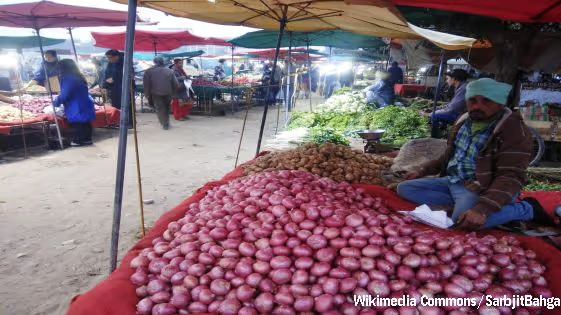
Webinar video: Putting farmers first
In December 2020, the India Programme of the International Growth Centre (IGC) and Asian Development Research Institute (ADRI) organised a webinar on ‘Putting Farmers First’. The panel comprised Siraj Hussain (Senior Visiting Fellow, Indian Council for Research on International Economic Relations (ICRIER)), Sudha Narayanan (Research Fellow, International Food Policy Research Institute (IFPRI)), Vikas Rawal (Professor, Jawaharlal Nehru University), and N Vijaya Lakshmi (Principal Secretary, Government of Bihar). The event was moderated by Sukhpal Singh (Professor, Indian Institute of Management, Ahmedabad).

Sign up to our newsletter to be notified about the latest updates
.svg)
Just One Step Away!
Complete your signup to start getting the latest news, stories, and updates delivered straight to your inbox.