
.svg)
.svg)
%201.svg)
%201.svg)
.svg)

.svg)
.svg)
.svg)
Why India's plan to sell rice for ethanol undermines food and water security
.svg)

.svg)

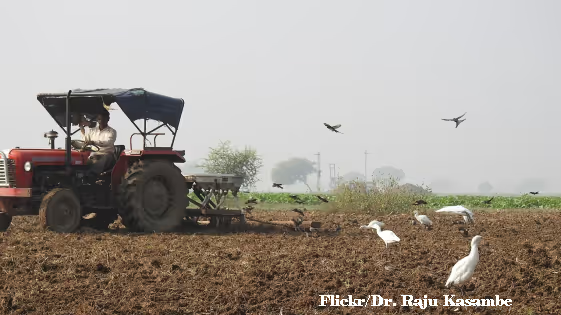

Agriculture

Irrigation and the spatial pattern of local economic development in India
Irrigation projects across India are intended to boost agricultural productivity and rural development. In this post, Blakeslee et al. study the long-run effects of access to irrigation on the composition of local economic activity. They find that while access to irrigation has a positive impact on rural villages by increasing agricultural productivity, population density and other indicators of economic development, the reverse is true for irrigated towns, which experience a decline in local non-agricultural economic activity.


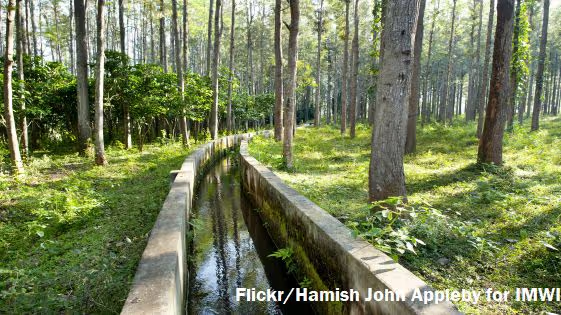
The long-run effects of agricultural productivity gains: Evidence from irrigation canals in India
Evidence from canals in India shows that labour mobility is a key channel to agricultural growth. This article shows that villages with access to canal water have persistently higher agricultural yields and higher population density for decades after canals are built. While the non-farm share of the economy is no different in canal and non-canal villages, nearby towns grew more quickly after canals were built. Structural transformation has taken place primarily through the migration of people to towns.
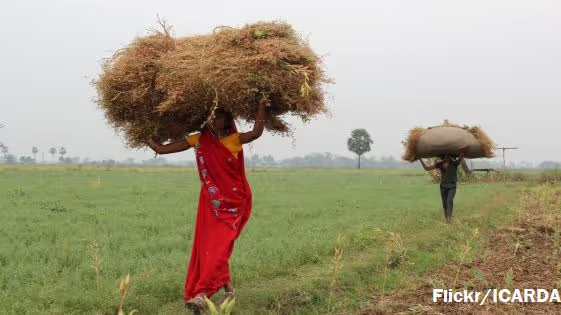
The 10,000 FPOs scheme ignores women farmers
In this piece, Shilpa Vasavada puts forth her concern that if we don’t revisit the new Farmer Producer Organisations (FPO) guidelines with a gender lens, women in the agriculture sector will be left behind. She makes a case for the inclusion of women in FPOs, by indicating how it has the potential to ensure both gender justice, as well as business productivity, and outlines measures which can be taken to increase female participation
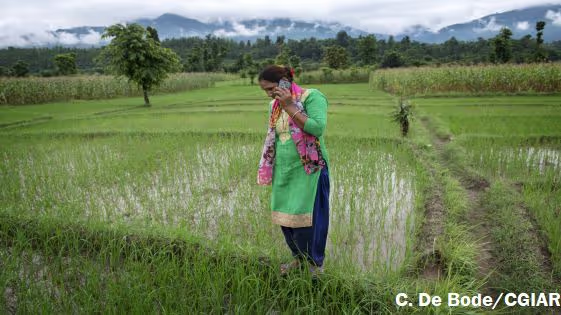
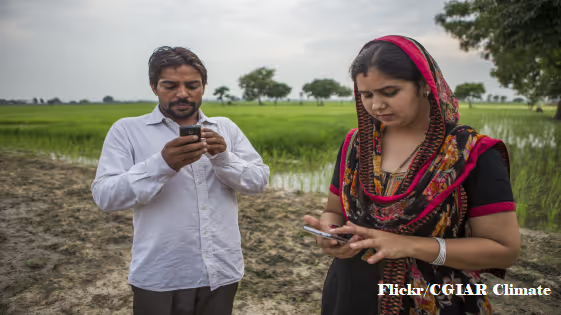
Digital agricultural extension: Stimulating or supplanting farmers’ interactions?
Governments and non-profit organisations are increasingly reliant on using digital technologies to deliver information. In the context of agricultural extension in Gujarat, this article looks at whether these digital flows of information crowd out in-person interactions that have been critical to agricultural technology adoption. It finds that access to a mobile phone-based extension system makes farmers less reliant on their peers for information, but still stimulates information exchange and increases demand for digital services.
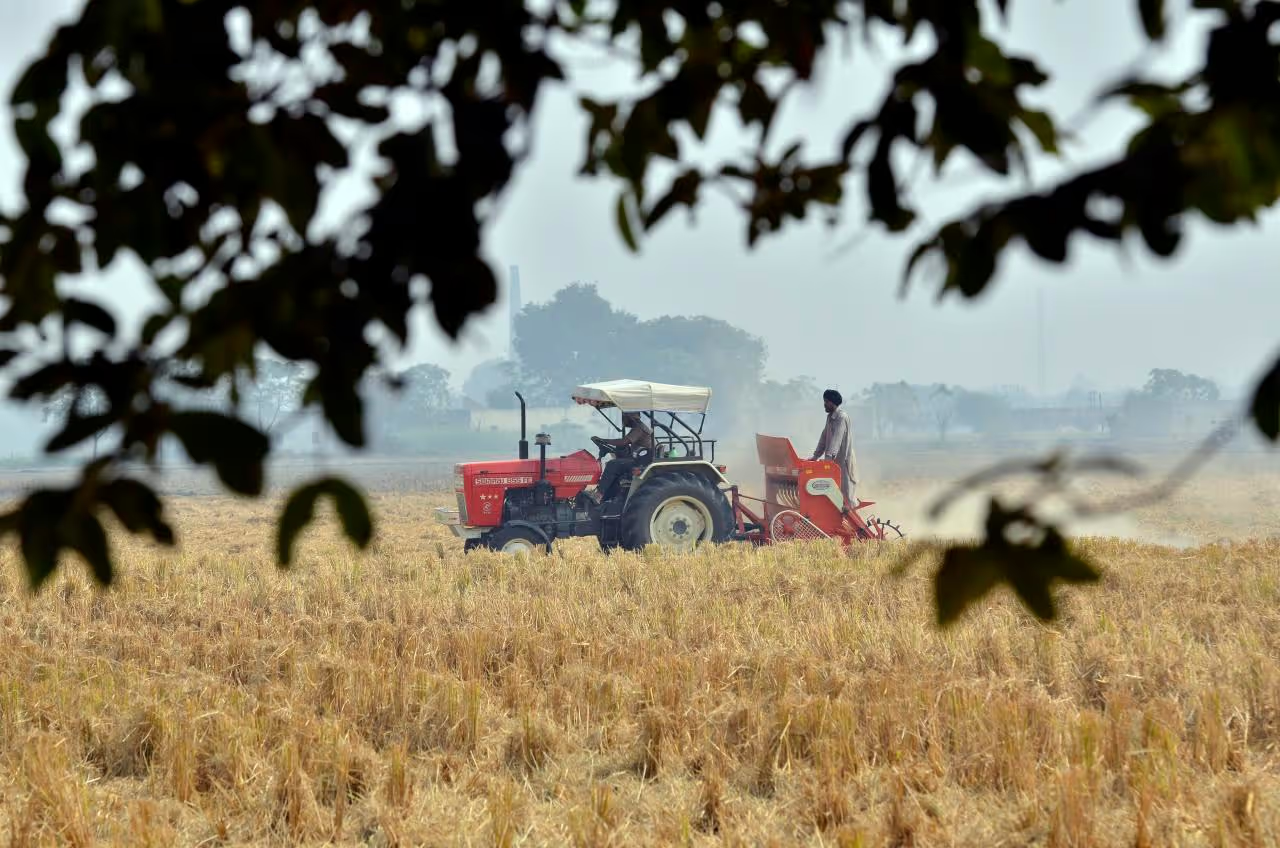
Wheat export ban and heat stress: Balancing the trade-off between food security and farmers’ income
The recent imposition of a ban on wheat exports, in a bid to ensure food security, has meant that farmers will not realise the benefits from the recent increase in global wheat prices. In this post, Kumar and Mandal discuss the trade-off between food security and farmers’ income and the strategies and policy options that can be employed to balance these priorities, amidst international conflict and climate change.
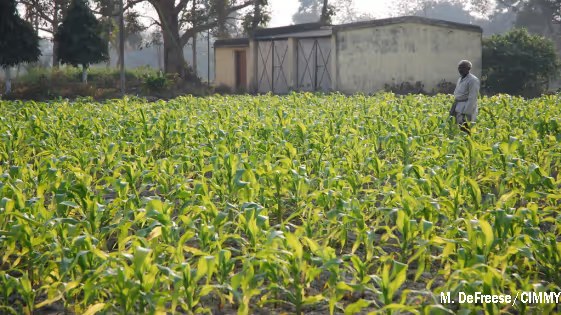
Addressing the economic trade-offs of interlinkages in contemporary agrarian markets
Agrarian markets often see interlinked market transactions – the arhatiya deals with the farmer in both the crop market as a commission agent, and in the credit market as a moneylender. In this post, Kumar et al. examine the trade-off between the welfare of farmers and arhatiyas, and how schemes and institutions can work to increase access to formal credit in agriculture

Sign up to our newsletter to be notified about the latest updates
.svg)
Just One Step Away!
Complete your signup to start getting the latest news, stories, and updates delivered straight to your inbox.