
.svg)
.svg)
%201.svg)
%201.svg)
.svg)

.svg)
.svg)
.svg)
Why India's plan to sell rice for ethanol undermines food and water security
.svg)

.svg)

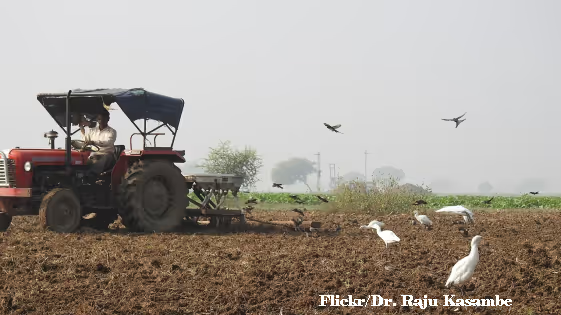


Agriculture
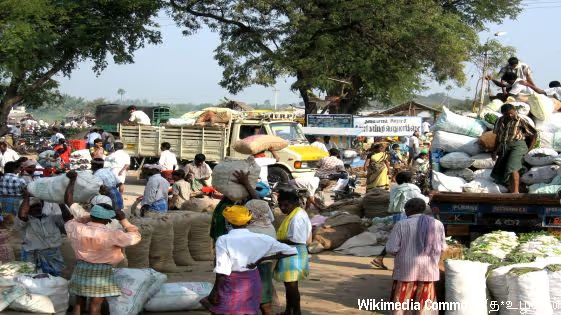
Introduction to e-Symposium: Understanding the new farm laws
Would the farm laws help increase farmers’ incomes? Could farmers benefit from an expanded access to markets? Would they be more willing to engage in contracts with urban firms because of the law on contract farming? Would the changes in the Essential Commodites Act help to reduce distress sales for perishable commodities? Or, would the reform bear fruit only after some essential infrastructure is built? Would these laws help in diversifying agriculture?



Farm laws: Liberalisation of agricultural marketing is necessary
Providing his perspective on the farm laws, Bharat Ramaswami contends that the liberalisation of agricultural marketing is the necessary direction – a view endorsed in the past across the political spectrum. The departure is the use of legislation by the Centre. There are also no immediate gains for the procurement-surplus states.
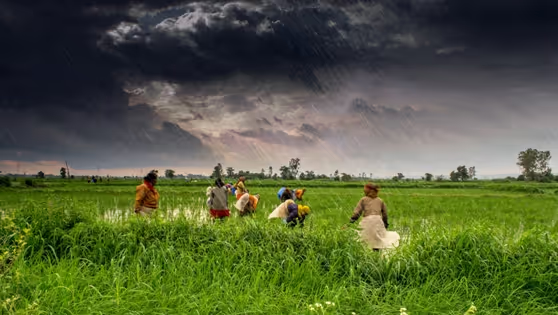
How self-help groups enable households to cope with climatic shocks
Climate variability and extremes, combined with a lack of appropriate insurance devices, pose a risk to rain-fed agriculture and large populations in developing countries. This article examines how self-help groups (SHG) support poor rural households in the state of Jharkhand in coping with monsoon deficit. It finds that microcredit and networks provided by SHGs enhance households’ food security and enable them to undertake seasonal migration.

Food and agriculture during a pandemic: Managing the consequences
A critical fallout of the lockdown following the novel coronavirus pandemic has been a combination of confusion, uncertainty, and anxiety for farmers and consumers alike as to what lies in store in the coming weeks. In this post, Sudha Narayanan provides a sense of current bottlenecks in the supply chains of food and agricultural produce, and makes recommendations for government action to get these back on track quickly.

Identifying the binding constraints of agricultural growth in Bihar
Out of the seven-year period set for doubling of farmers’ income by the government, four full agricultural years have already gone. This article identifies the binding constraints on farmers’ income or economic activity in Bihar. It finds that the poor functioning of agricultural markets, reflected in the instability in the prices of agricultural produces and the low level of crop diversification, are the reasons for slow agricultural growth.

Economic Survey 2019-20: How does it seek to address challenges of farm sector?
This year’s Economic Survey, the flagship document of the Ministry of Finance, was recently tabled in the Parliament at a time of economic slowdown and rural distress in India. In this post, Sudha Narayanan offers a critical review of the Economic Survey from the point of view of agriculture, while also proposing an alternative way of framing the issues mentioned in the report.
Sign up to our newsletter to be notified about the latest updates
.svg)
Just One Step Away!
Complete your signup to start getting the latest news, stories, and updates delivered straight to your inbox.