
.svg)
.svg)
%201.svg)
%201.svg)
.svg)

.svg)
.svg)

.svg)

.svg)
.svg)
.svg)




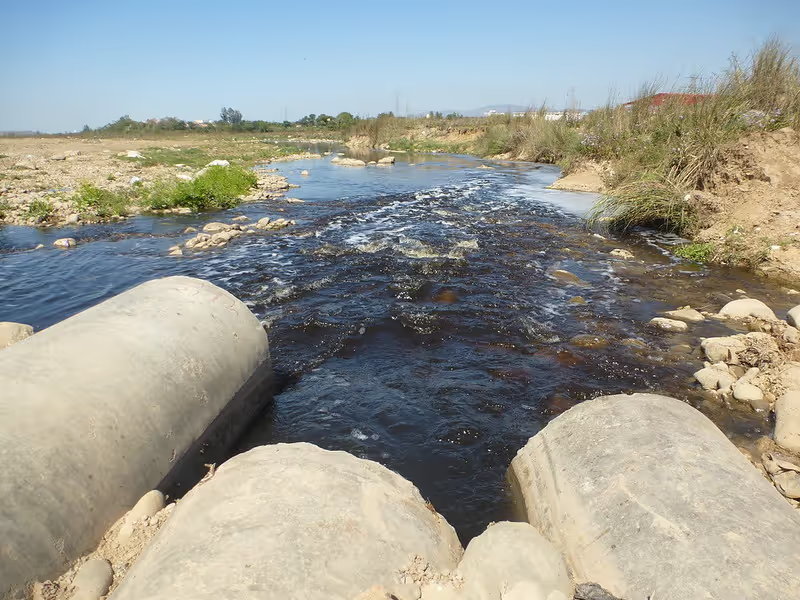
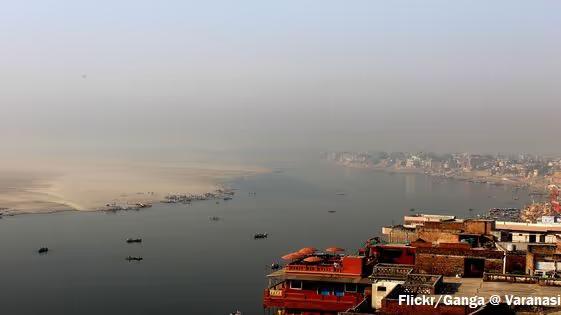
In many developing countries, environmental quality remains low and policies to improve it have been inconsistently effective. This project conducts a case study of environmental policy, focussing on an unprecedented ruling by the Supreme Court of India, which targeted industrial pollution in the Ganga River. Difference-in-difference estimations indicate that the ruling led to reductions in river pollution and one-month infant mortality. To look at the mechanisms of impact, the project tests whether the identified health impact is fully explained by changes in pollution induced by the policy, and fails to reject that it indeed is. In so doing, the analysis also quantifies the adverse impact of water pollution on infant health and documents the persistence of such impacts in downstream communities.












































.svg)

.svg)
%201.svg)
.svg)
.svg)
