
.svg)
.svg)
%201.svg)
%201.svg)
.svg)

.svg)
.svg)

.svg)

.svg)
.svg)
.svg)



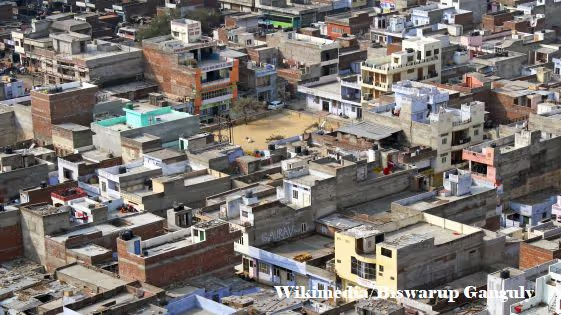
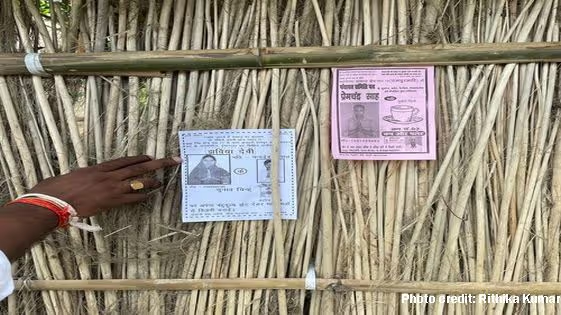
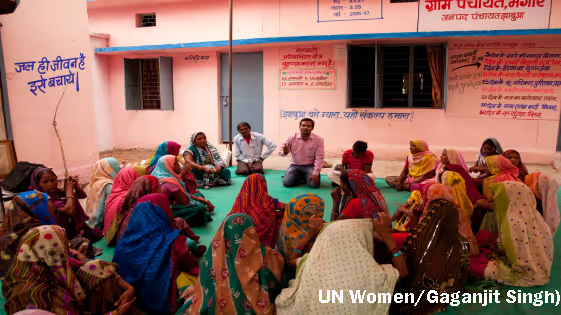
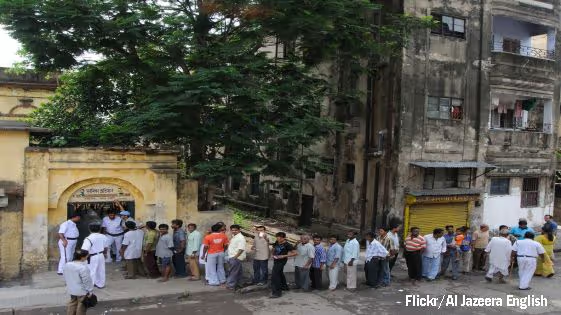
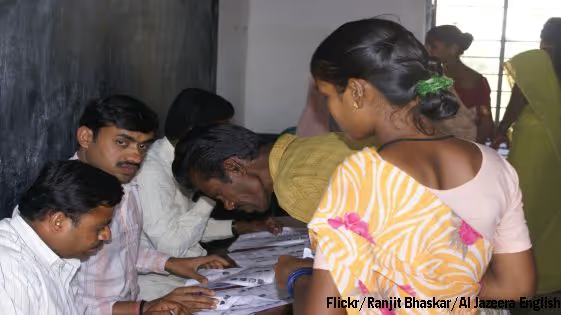
Informal monitoring and enforcement can increase the efficiency of public service delivery. This project studies the Targeted Public Distribution System of India and finds that Scheduled Castes (SC) have a higher take-up of government subsidised food when facing SC delivery agents. It provides evidence suggesting that this effect works through increased informal monitoring and enforcement when the delivery agent is corrupt. They then estimate a structural model and show that the welfare that SC households would gain from lowering monitoring and enforcement costs – an amount equivalent to moving from a non-SC shopkeeper to a SC shopkeeper – are important, equaling approximately one-fifth of the average subsidy amount. Additionally, expanding the generosity of the programme – as envisioned in the proposed National Food Security Bill – can perversely lower welfare for SCs and non-SCs due to increased incentives for black-marketing.






























































.svg)

.svg)
%201.svg)
.svg)
.svg)
