
.svg)
.svg)
%201.svg)
%201.svg)
.svg)

.svg)
.svg)
.svg)
India’s primary healthcare reform: Improved service delivery, reduced mortality
.svg)

.svg)

Human Development
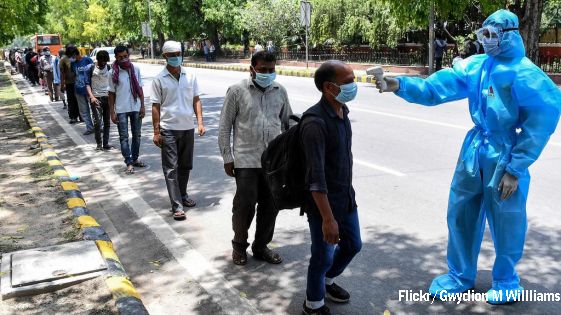
Covid-19 and mobility: A behavioural perspective
The imposition of a nationwide lockdown in March 2020 to check the spread of Covid-19, sparked debates on the necessity and effectiveness of such measures due to resulting economic hardships. In this post, Chadha and Naik examine the correlation between Covid-19 spread and mobility in the district of Pune in Maharashtra state, between January and July 2021.


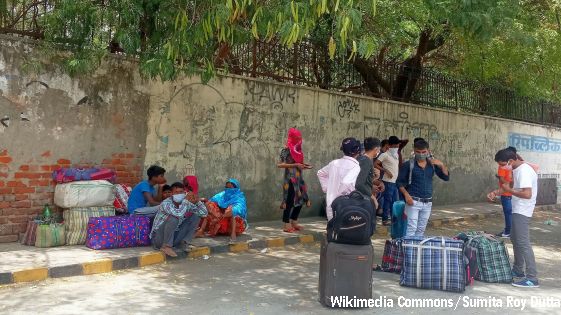
Examining Covid-19 travel restrictions in developing countries
At the outset of the Covid-19 pandemic, the developing world took many of the same policy steps as developed nations to contain the spread, including lockdowns. This article uses evidence from India to show that domestic travel bans may actually have increased Covid-19 cases in developing countries with large urban-rural migrant populations. While travel bans are in place, spread is temporarily stopped, but when travel is finally permitted, migrants return home possibly carrying many more infections than if they had been allowed to leave early.

Timeliness and coverage of child vaccinations across India
Despite free vaccinations for children below 12 years of age under the Universal Immunisation Programme, one-third of global child deaths due to vaccine-preventable diseases occur in India. In this post, Debnath and Chaudhuri use nationally representative data from 2005-06 and 2015-16, to examine the timeliness and coverage of routine immunisation in the country. Further, they discuss findings from a recent primary survey in Bihar to gauge the impact of Covid-19 in this regard.
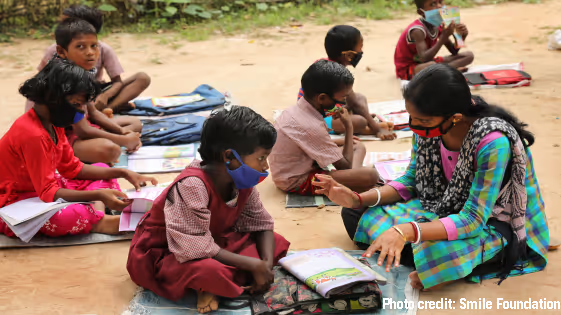
Covid-19 and mental health: Focus on children’s holistic development
Santanu Mishra (Co-founder and Trustee Smile Foundation) discusses how Covid-related restrictions on movement and social interactions, and complete dependence on adults to create a conducive home environment, have had an impact on the mental health of children. He also highlights the need for schools - when they reopen - to focus on more holistic development of children.
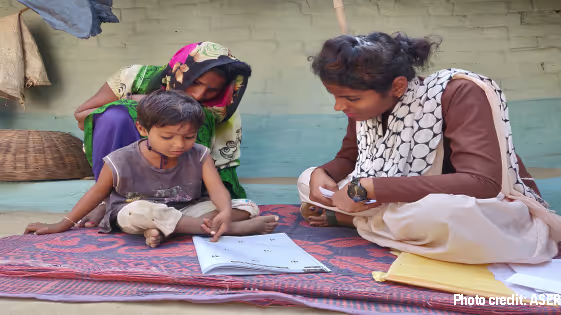
Covid-19 and mental health: Are children ready to go back to school?
Previous parts of the I4I e-symposium on ‘Covid-19 and mental health’ have discussed the potential adverse effects of school closures on children’s psychological well-being – particularly those belonging to marginalised and vulnerable groups. In this post, Wilima Wadhwa presents ASER (Annual Status of Education Report) 2020 findings on children’s access to learning materials during this period. She contends that when schools reopen, the system will have to adapt to children and their current reality, rather than the other way around.
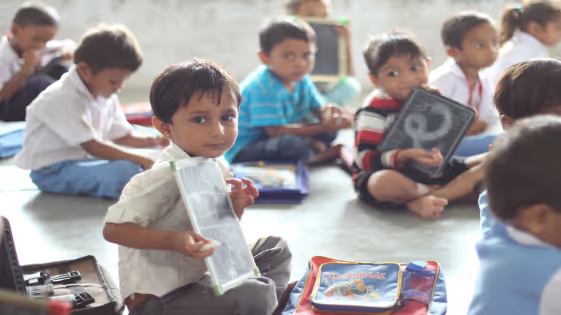
Covid-19 and mental health: How have children been faring?
Dr John Vijay Sagar Kommu of NIMHANS examines the factors affecting the mental health of children during the pandemic and the role of caregivers and mental health professionals in helping children navigate this ‘new normal’. He recommends a staggered reopening of schools, focussing on extra-curricular activities, to improve children’s well-being
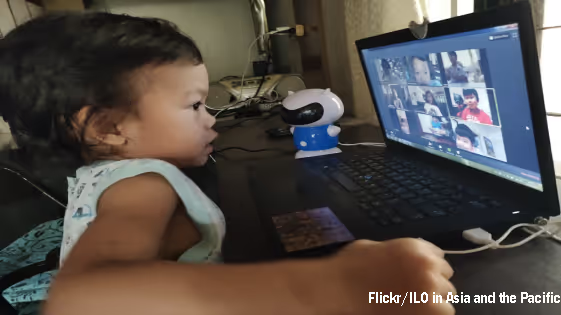
Covid-19 and mental health: Strengthening psychosocial well-being of children
Yasmin Haque, UNICEF Representative in India, outlines the evidence on the severe impact of the pandemic on the mental health of children and adolescents – particularly girls, and the measures being taken by UNICEF and its partners to provide support.
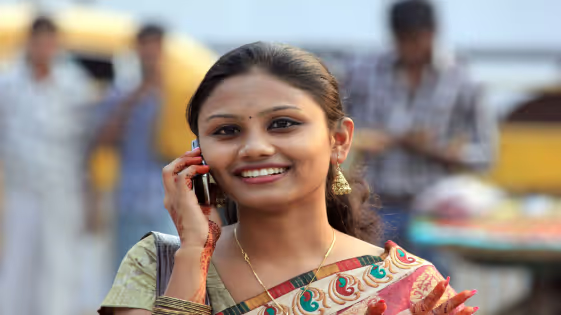
Covid-19 and mental health: Fighting the “infodemic”, one phone call at a time
COVID-19 information communication strategies globally have been dominated by SMS and voice recording based campaigns. The most pervasive Indian government campaign was a pre-recorded message that played before phone calls. We conducted a randomised controlled trial in 2020 using phone surveys and found in-person phone calls are at least as effective as text messages and voice recordings at providing knowledge, in addition to having a positive impact on mental health. We find a reduction in anxiety and depression from in-person phone calls along with a small increase in knowledge levels, when compared with the aforementioned modes. We think this could have implications for large scale information delivery campaigns. Meta description: Strategies to communicate information regarding Covid-19 in India have predominantly included text messages and recorded voice messages at the start of phone calls. Based on a remote survey of garment workers in Karnataka, this article shows that using pho

Covid-19 and mental health: Improving women’s mental well-being via telecounselling
Public health emergencies such as Covid-19 disproportionally cause mental health problems among women due to factors such as their inferior socioeconomic position in the household, greater care responsibilities, and risk of intimate partner violence. Based on a field study in rural Bangladesh, this article shows that a low-cost telecounselling intervention can effectively improve women’s mental health in resource-poor settings.

Sign up to our newsletter to be notified about the latest updates
.svg)
Just One Step Away!
Complete your signup to start getting the latest news, stories, and updates delivered straight to your inbox.