
.svg)
.svg)
%201.svg)
%201.svg)
.svg)

.svg)
.svg)
.svg)
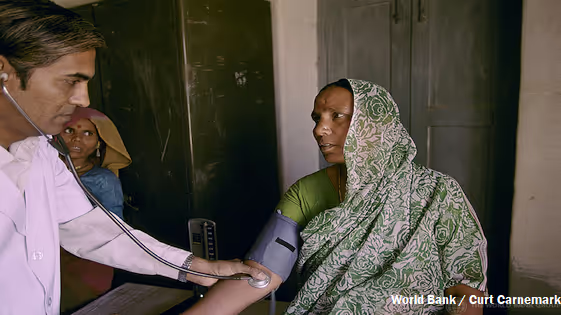
India’s primary healthcare reform: Improved service delivery, reduced mortality
.svg)

.svg)

Human Development
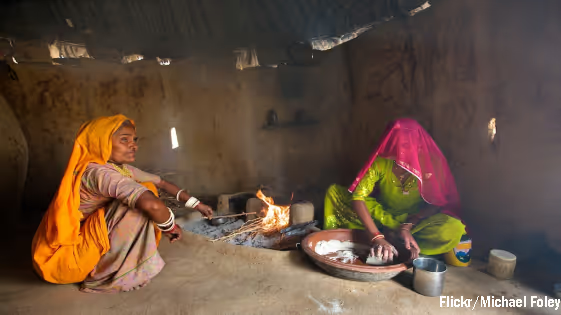
How cleaner cookstoves and fuels could benefit women’s health and the environment
With lesser access to financial resources and greater domestic responsibilities, women face the brunt of the climate change crisis. In particular, women are more affected by indoor air pollution caused by unclean cookstoves or fuel. In this post, Sharma and McDonough discuss evidence from research interventions in India examining and promoting the uptake of cleaner alternatives for cooking – in order to improve women’s health and the environment.


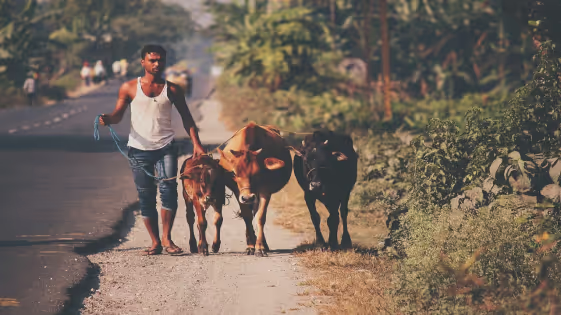
Budget 2022-23: The elephants and the ostrich
Analysing India’s 2022-23 Union Budget, Neeraj Hatekar contends that MNREGA, the rural job guarantee programme that has not received additional funding vis-à-vis 2021-22 budget estimates, should be leveraged in dealing with the looming agriculture crisis. He also examines the deterioration of health and nutrition indicators, and puts forth the view that there are no significant initiatives in the Budget to address this.

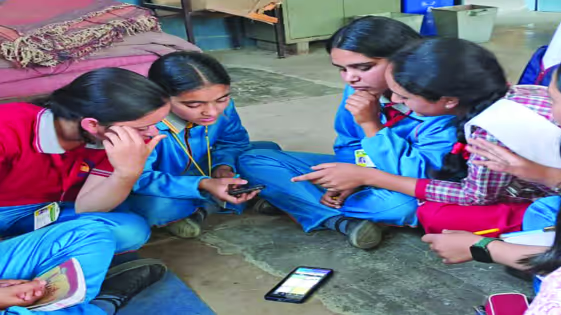
Gender difference in mathematics learning in rural India
A growing body of evidence in developed countries has indicated that female disadvantage prevails and persists in mathematics learning outcomes, with the likely causes being social factors, cultural norms, teacher bias, and parental attitudes, among others. Using nationally representative data from India, this article shows that a gender gap exists in mathematics – across age groups, and with no evidence of convergence over time.

Economic development, the nutrition trap, and metabolic disease
Two recently documented facts run counter to the conventional wisdom that economic development leads to better health: the absence of a clear link between income and nutritional status in developing countries; and the increased prevalence of metabolic disease, among normal individuals, that is, those who are not necessarily overweight, with economic development. This article provides a single explanation for these seemingly unrelated observations.
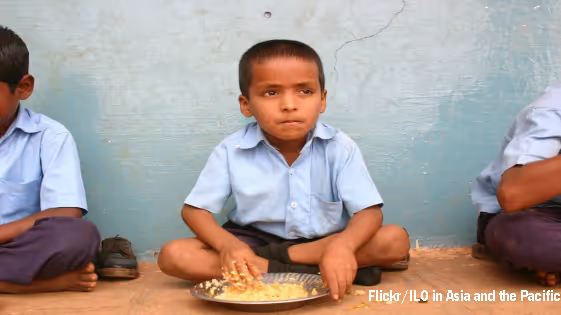
Food insecurity and child malnutrition: New empirical evidence from India
Child malnutrition is among the most pressing public health issues in India today. Equally alarming is the country’s food security crisis. Analysing ‘Young Lives Survey’ data from the states of Andhra Pradesh and Telangana, this article shows that there are sizeable negative effects of food insecurity on children’s nutrition – particularly among those towards the upper end of the health distribution.
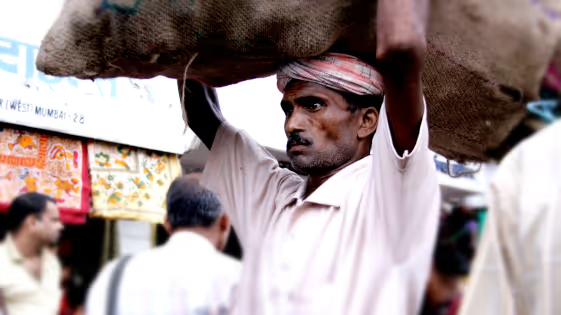
Estimating changes in India’s workforce during 2011-2018
Prior to the 2017-18 Periodic Labour Force Survey, there was paucity of official, labour-market data since the last nationally representative survey was from 2011, and other surveys in the intervening period indicated varying estimates. In this post, Basole and Nath identify the main factors driving these differences, and highlight the most salient feature of employment during 2011-2018 – massive withdrawal of women from subsidiary agricultural work.
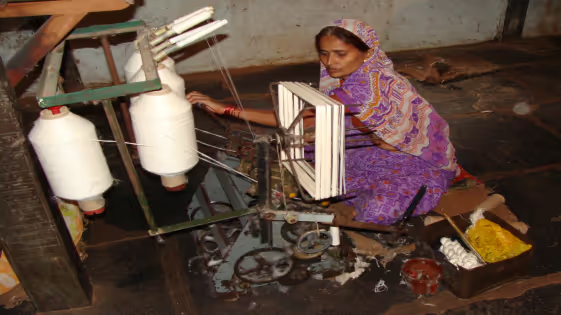
Urbanisation, gender, and social change: Do working women enjoy more agency?
Women’s limited work participation in India is not only of economic significance, but also has ramifications for their well-being and societal status. Based on a household survey in four north Indian urban clusters, this article finds a strong association between women’s work status and household decision-making agency, adding another dimension to our understanding of the link between women and work in India. However, the strength of this linkage is uneven and contingent on location, work categories, decision domains, and decision types.
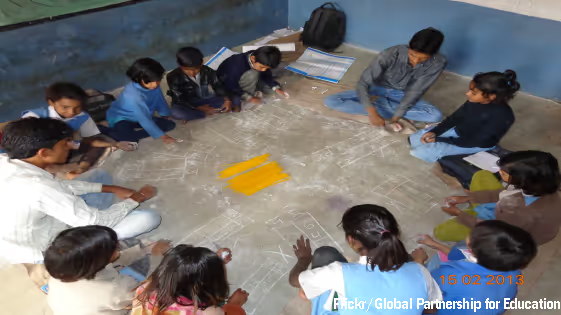
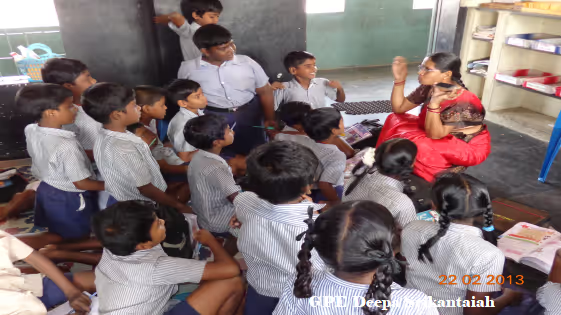
Assessing the assessments: Taking stock of India’s ‘learning outcomes’ data
As India recovers from the pandemic and the new National Education Policy is implemented, availability of reliable data on ‘learning outcomes’ is crucial. In this post, Johnson and Parrado assess the reliability of three main sources of learning outcomes data: government-run National Achievement Survey, independently conducted Annual Status of Education Report, and India Human Development Survey – and highlight the pressing need for better learning outcomes data at the national level.

Incentivising quality of public infrastructure: Does it work?
Community toilets in slums are often poorly maintained, and upgrading facilities is difficult due to low willingness-to-pay among potential users and ‘free riding’. Based on an experiment in Uttar Pradesh, this article examines the impact of one-time facility upgrade and cash incentives to caretakers. While there are improvements in the quality of facilities and reduced free-riding, more residents practise open defecation, with poor public health outcomes.


Sign up to our newsletter to be notified about the latest updates
.svg)
Just One Step Away!
Complete your signup to start getting the latest news, stories, and updates delivered straight to your inbox.