
.svg)
.svg)
%201.svg)
%201.svg)
.svg)

.svg)
.svg)
.svg)
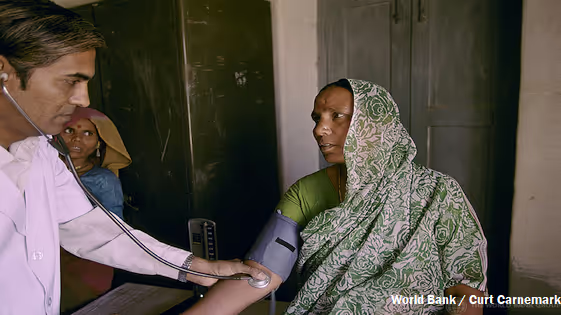
India’s primary healthcare reform: Improved service delivery, reduced mortality
.svg)

.svg)

Human Development
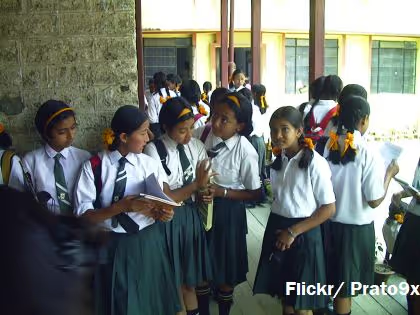
Remedying poor student assessment data in India
Taking into account existing evidence on the accuracy of administrative data on student learning levels in India, Singh and Ahluwalia discuss why a reliable system of student assessment matters; fixing the quality of assessment data is a step towards preventing a vicious cycle of mediocrity in the Indian education system. They highlight how independent third-party evaluation, and the use of technology and advanced data forensics can help prevent misrepresentation of true learning levels.


To invest in sanitation or not? The role of gender differences in perceptions
Although sanitation is essential for health, many households remain without a toilet due to financial constraints. This article describes the extent to which perceptions of costs and benefits of sanitation investments vary by gender and within the household. It demonstrates how these intra-household gender differences impact the success of a sanitation microcredit intervention in Maharashtra. Impacts of these differences on intervention success are largely concentrated in households where the woman is involved in the decision-making process.
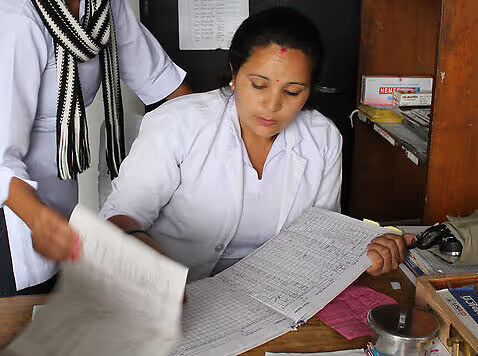
Access to health insurance in India: Direct and spillover effects
Many low-income households in India have been pushed into poverty by high healthcare costs. Uptake of the Rashtriya Swasthya Bima Yojana, the government-run national health insurance programme for below poverty line households, has been less than optimal. This article examines the impact of offering hospital insurance to a sample of above poverty line households in Karnataka. It finds significant peer effects in increasing insurance utilisation; hospital insurance however doesn’t have any significant effect on health outcomes.
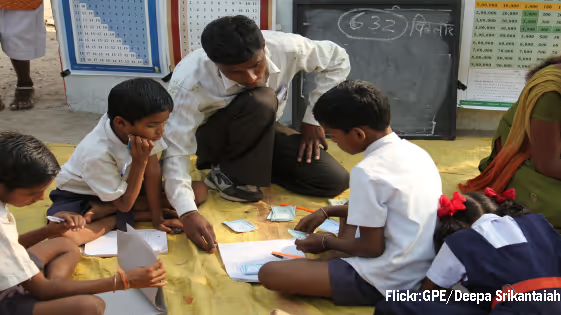
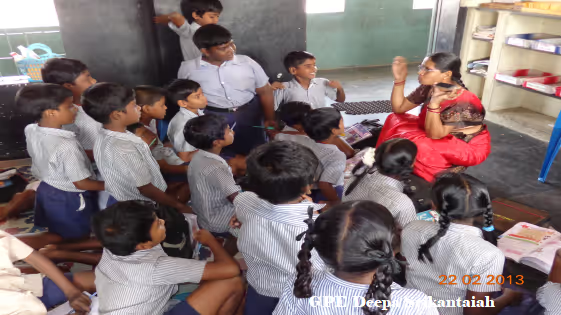
Assessing the extent and fiscal cost of teacher shortages in India
The New Education Policy has proposed that the one million teacher vacancies in public elementary schools be filled imperatively. Using 2019-20 District Information System for Education (u-DISE) data, this article assesses this estimate of teacher shortages across India. Accounting for the prevalence of teacher surpluses and ‘fake’ student enrolment, it finds that there is a net surplus of about 100,000 teachers instead of the much-publicised shortage of a million teachers.
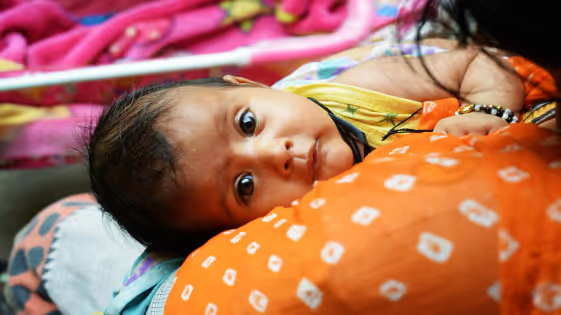
Using machine learning to target neonatal and infant mortality
India accounts for one-fourth of the world’s neonatal mortalities, and this has likely been exacerbated by the Covid-19 pandemic – due to lockdowns and lack of access to critical antenatal and postnatal care. Analysing 2011-12 India Human Development Survey (IHDS)-II data, this article uses machine learning to build predictive models of neonatal and infant mortality incidence, and identify the early warning signs, and consequently those at high-risk of neonatal and infant mortality.
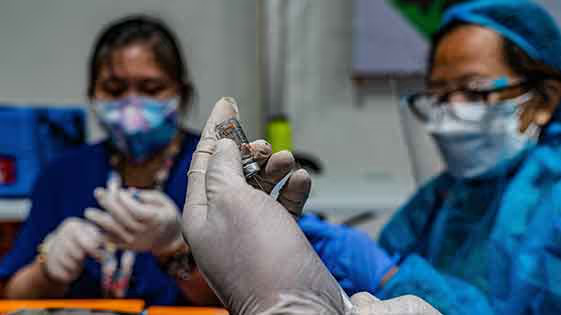
Covid-19: Identifying and addressing vaccine hesitancy using ‘personas’
Vaccine hesitancy poses a threat to India’s fight against Covid-19, and given the different motivations that drive vaccine hesitancy, a one-size-fits-all solution may not be feasible. In this post, Daral and Shashidhara use data from a Facebook survey – conducted in partnership with the University of Maryland – to identify the barriers and beliefs driving vaccine hesitancy, by segmenting the vaccine hesitant into ‘personas’ based on their psycho-behavioural profiles.
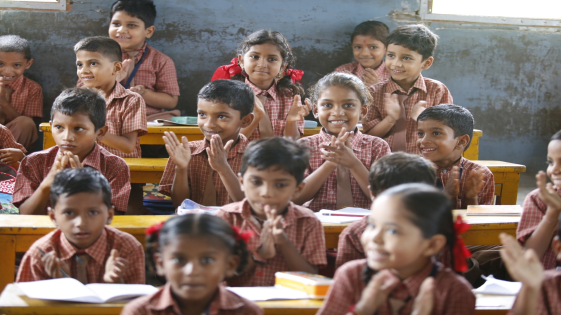
Does increasing female representation in school management improve school quality?
The 2009 Right to Education Act (RTE) mandated public and private aided schools to constitute School Management Committees (SMCs) to improve accountability in schools through community participation. Using 2012-2018 Indian administrative data on schools and ASER (Annual Status of Education Report) data, this article shows that higher female representation in SMCs is associated with higher school quality, measured in terms of number of teachers hired, qualification of teachers, academic resources, student enrolment, and learning outcomes
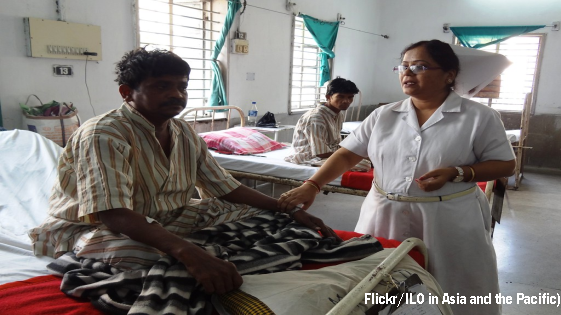
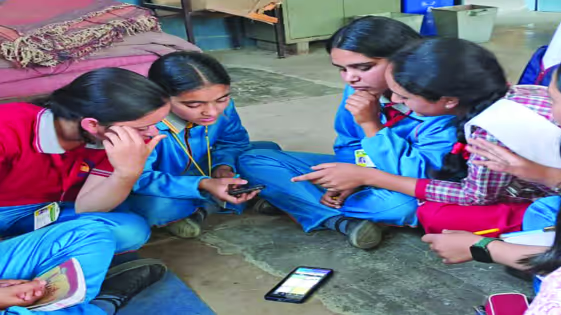
How RSBY impacted healthcare utilisation and spending
Social Health Insurance seeks to protect the poor from high health spending, and encourage healthcare utilisation. Analysing 2004-05 and 2011-12 Indian Human Development Survey data, this article finds that Rashtriya Swasthya Bima Yojana increased the likelihood of hospitalisation for long-term illness, and of doctor visits for short-term illness. While out-of-pocket health expenditure rose, there was a decline in the number of days lost due to illness.
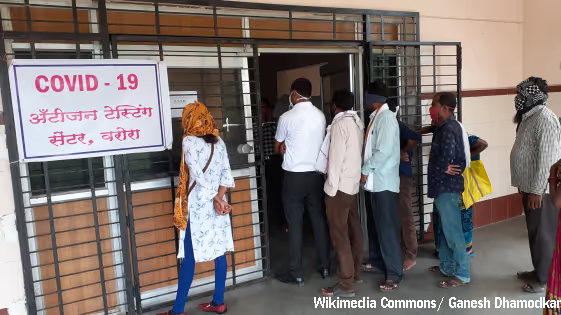
Covid-19 in India: Cases, deaths, and vaccinations
The Omicron variant resulted in a third major wave of Covid-19 in India, with the number of cases exceeding those in the second wave, albeit causing less severe illness on average. In this post, Kundu and Gisselquist draw on several nationally representative data sources to illuminate key Covid-19 patterns and trends in the country pre-Omicron – capturing the differential impacts across regions, and discuss how the pandemic response can be improved

Sign up to our newsletter to be notified about the latest updates
.svg)
Just One Step Away!
Complete your signup to start getting the latest news, stories, and updates delivered straight to your inbox.