
.svg)
.svg)
%201.svg)
%201.svg)
.svg)

.svg)
.svg)
.svg)
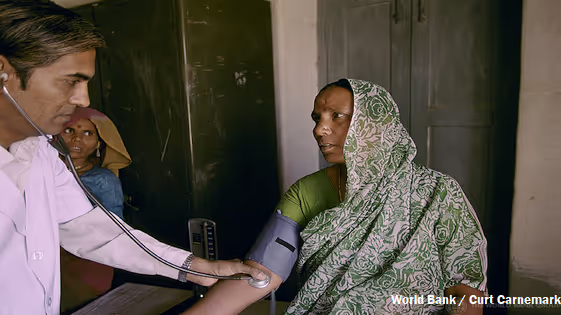
India’s primary healthcare reform: Improved service delivery, reduced mortality
.svg)

.svg)
Human Development

Challenges in access to secondary education in India
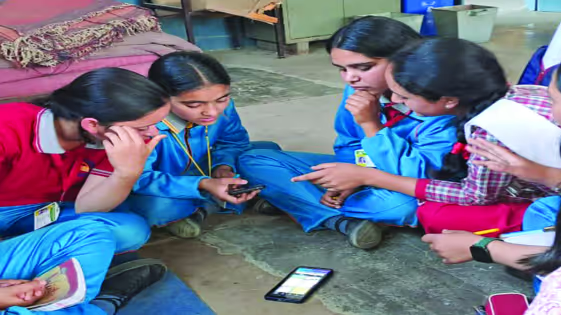
India’s latest National Education Policy has envisaged universal access to education by 2030. However, while enrolment is high in elementary schools, access to and uptake of secondary education has remained low. Bordoloi and Pandey consider some contributing factors, including the limited number of schools offering secondary education, the higher costs associated with schooling, and the lack of public investment in education and vocational training. They call for increased attention to be paid to policy focussed on secondary education.


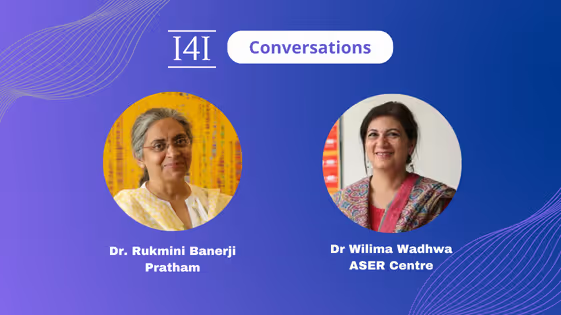
Tracking learning outcomes: ASER’s work through the pandemic
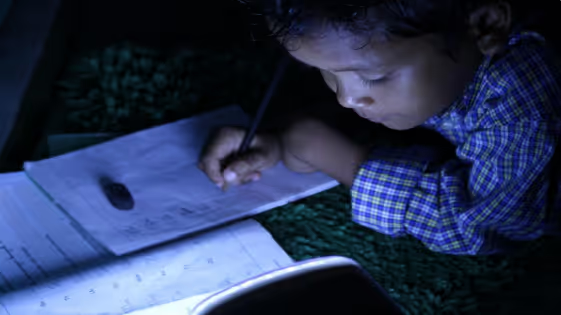
With the onset of the Covid-19 pandemic and the associated lockdowns, schools quickly pivoted to online learning. However, there was limited information about whether children had access to learning materials, and what was actually taking place within households. In this edition of I4I Conversations, Rukmini Banerji and Wilima Wadhwa discuss the role that the Annual Status of Education Report (ASER) played in remedying this gap in the data. They discuss a few major findings from the survey on learning outcomes during the pandemic. Although the proportion of children not enrolled in schools went up, the proportion of children enrolled in government schools increased, and most of them had access to digital learning materials due to an increase in smartphone coverage. They discuss the challenges they faced while conducting ASER during the pandemic, including being limited to phone surveys and rallying volunteers amidst uncertainty. However, after the lack of data during the first ...
Tracking learning outcomes: ASER’s work through the pandemic
With the onset of the Covid-19 pandemic and the associated lockdowns, schools quickly pivoted to online learning. However, there was limited information about whether children had access to learning materials, and what was actually taking place within households. In this edition of I4I Conversations, Rukmini Banerji and Wilima Wadhwa discuss the role that the Annual Status of Education Report (ASER) played in remedying this gap in the data. They discuss a few major findings from the survey on learning outcomes during the pandemic. Although the proportion of children not enrolled in schools went up, the proportion of children enrolled in government schools increased, and most of them had access to digital learning materials due to an increase in smartphone coverage. They discuss the challenges they faced while conducting ASER during the pandemic, including being limited to phone surveys and rallying volunteers amidst uncertainty. However, after the lack of data during the first ...

Insuring India: PM-JAY’s targeting problem
India’s largest health insurance programme is targetted at poor and vulnerable populations who would be least able to afford medical care. However, this article by Chhabra and Smith shows that a large proportion of beneficiaries of both national and state health insurance schemes belong to the top half of the welfare distribution. They suggest using alternative eligibility criteria to increase awareness and uptake of schemes, as a path towards universal health coverage.
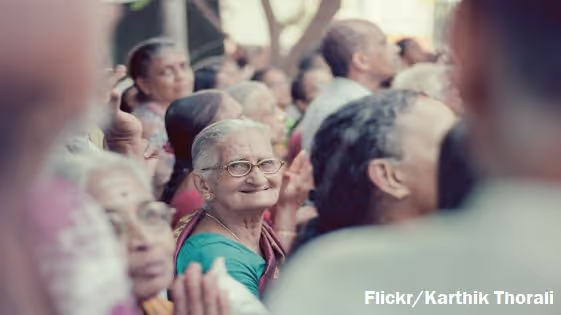
The future of old times
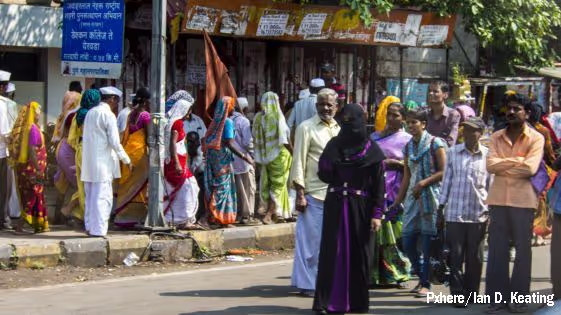
India needs to plan for a radical expansion of public support for the elderly. In this piece, Drèze and Duflo argue that near-universal social security pensions would be a good start. Elderly persons, especially widows, often struggle with poverty, ill health and loneliness, all associated with a risk of depression. Financial assistance would help them to lead an easier life. Some Indian states already have near-universal pensions, and there is a case for extending this approach across the country.
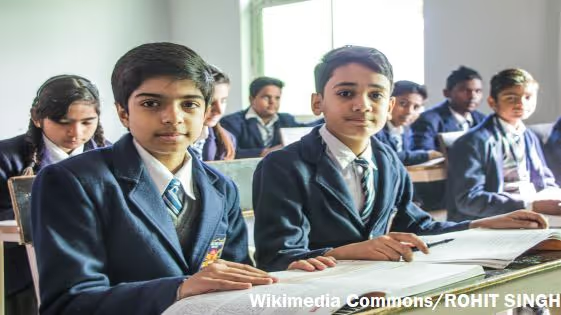
High scoring but poor: The misallocation of talent in higher education
As labour market returns to college education have increased, more young adults now receive some form of higher education than ever before. Yet, college attendance remains low for children from poor socioeconomic backgrounds. This article investigates that disparity. It finds that family background remains as, if not more, important than academic preparedness for college attendance–poor students at the top of their class are just as likely to attend college as rich students at the bottom of the class.

Illam Thedi Kalvi: A booster shot for post-Covid education
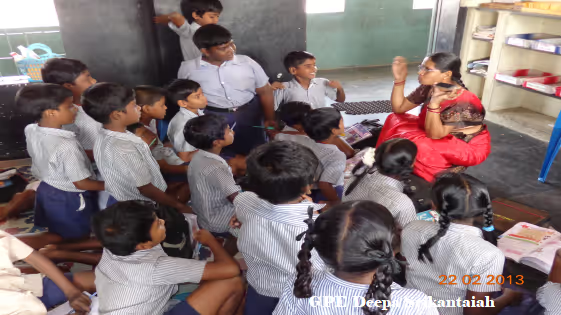
Amidst worries about learning loss caused by school closures during the Covid-19 pandemic, Tamil Nadu's Illam Thedi Kalvi (ITK) – a volunteer-based education programme – has played a vital role in bridging the learning gap. In this note, Sarthak Agrawal recounts his visit to a rural ITK classroom, outlines the factors which have contributed to the success of the programme, and the lessons that other states can learn from this model.
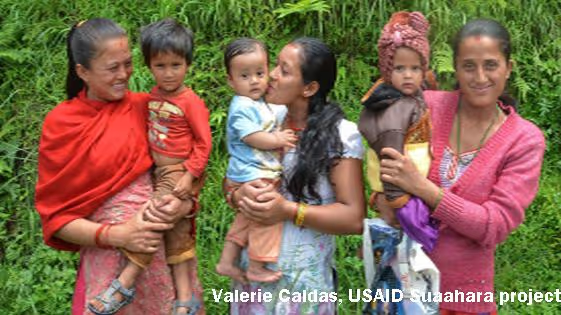
Access to antenatal care and its influence on children’s cognitive development
Research has shown that maternal health affects later-life outcomes of children. Using data from the Young Lives survey in Andhra Pradesh and Telangana, this article shows that antenatal care has an impact on the cognitive scores of children during mid-childhood, with scores increasing if mothers had between five and eight antenatal visits, with significant variations by caste. Based on this finding, the authors suggest that the government’s current mandate of four minimum antenatal visits is worth rethinking.
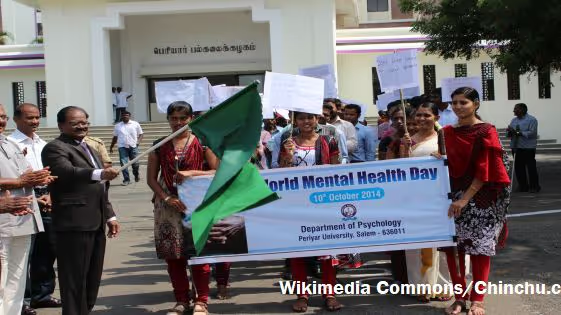
The impact of community-based depression treatment in India
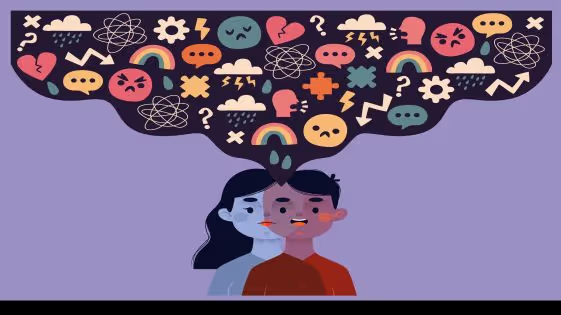
Although the prevalence of depression may have adverse economic impacts, especially in developing countries, treatment options in India are limited by a shortage of providers. This article looks at the impact of providing community-based depression treatment to low-income adults, and finds that it improves mental health and schooling outcomes for older children, and reduces risk tolerance. Additionally, pairing pharmacotherapy with livelihoods assistance provides additional benefits at a low additional cost.
Sign up to our newsletter to be notified about the latest updates
.svg)
Just One Step Away!
Complete your signup to start getting the latest news, stories, and updates delivered straight to your inbox.