
.svg)
.svg)
%201.svg)
%201.svg)
.svg)

.svg)
.svg)
.svg)
India’s primary healthcare reform: Improved service delivery, reduced mortality
.svg)

.svg)
Human Development
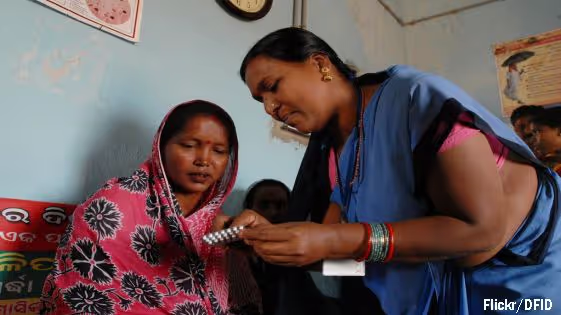
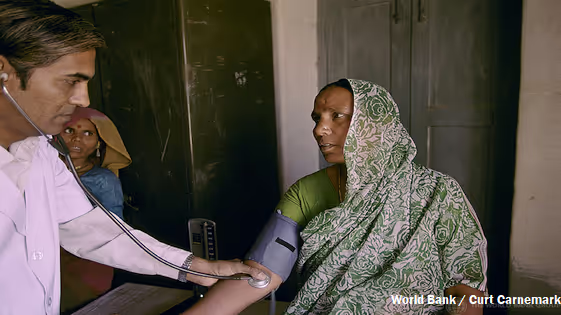
Gender pay gap in India’s health workforce
Despite constituting almost half of the qualified health workforce in India, female health workers face a visible gender pay gap and lack of conducive work conditions. In this post Arushi Pandey examines the evidence on gender disparities in compensation for health workers at various levels, and the impact of on women’s careers, service delivery, and universal health coverage and health-related sustainable development goals.


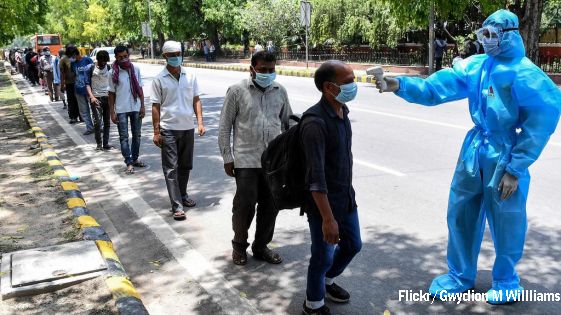
Economic consequences of Covid-19 lockdowns: Lessons from India’s first wave
As India combats the second wave of Covid-19, the impact on economic activity remains a major concern. Drawing lessons from the first wave in 2020, this article provides an assessment of how containment measures have influenced aggregate economic outcomes. It finds that economic recovery was lower by 9.3% in districts where mobility restrictions were maximum – relative to those with minimal restrictions – and incomes were hit harder than consumption.
Informing youth about job opportunities to make training programmes more effective
Launched in 2014 by the central government, Deen Dayal Upadhyaya Grameen Kaushalya Yojana seeks to provide skills-based training to rural, marginalised youth, and to place them in salaried jobs. Based on an experiment conducted in Bihar and Jharkhand, this article shows that providing detailed information about the programme and prospective jobs to the trainees, helps align their expectations with realities, and enhances job retention.

IGC Webinar: The impact of Covid-19 in India and pathways to recovery
The ongoing Covid-19 health crisis has affected lives across the world, and caused a massive economic shock. To help policy stakeholders and the general audience understand the socioeconomic impact of the crisis in India, IGC India and ADRI, in collaboration with CORENET, are organising an online conference to present new evidence on the themes of labour markets, households, and health and well-being, across three days, 5 – 7 May 2021, at 16:00 – 17:35 IST.
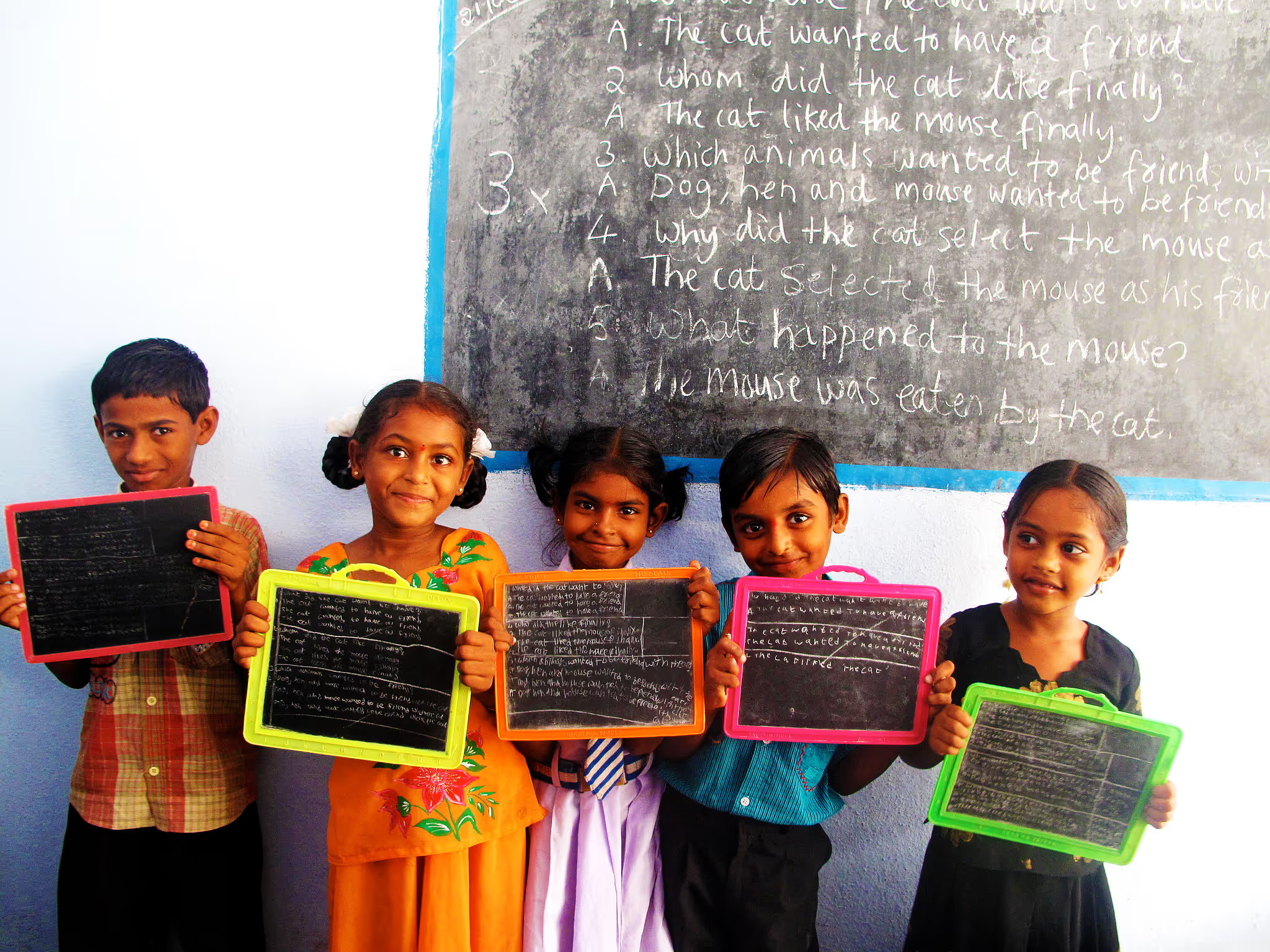
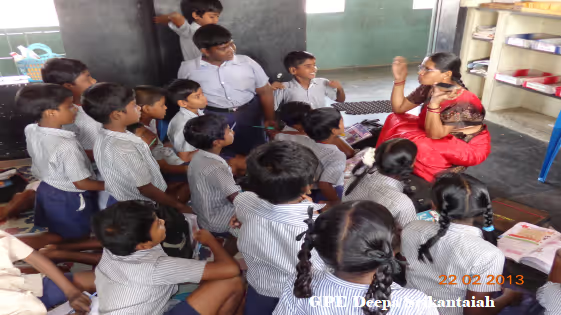
Dynamics of achievement gap between public and private school students
The achievement gap between public and private school students is well-documented in the literature on education in India, but there has not been sufficient focus on the dynamics of this gap over time. Analysing Young Lives Survey data on student test scores from Andhra Pradesh and Telangana, this article suggests that very little convergence is expected, as students make their way through middle and high school.

Covid-19 vaccine hesitancy: Trends across states, over time
Delay in acceptance or refusal of vaccine against Covid-19 despite its availability, is a key hindrance in achieving optimal vaccination coverage among populations around the globe. Using data from a Facebook survey – conducted in partnership with University of Maryland and Carnegie Mellon – this article explores vaccine hesitancy in India, and trends across states and over time.

Book review: India’s fight against the Covid-19 pandemic
The Indian government’s response to the Covid-19 pandemic has drawn polarising reactions, mostly set within a restrictive ‘success-failure’ metric. In this post, Oommen C Kurian reviews the book Till We Win: India’s Fight Against The Covid-19 Pandemic by Chandrakant Lahariya, Gagandeep Kang and Randeep Guleria – commending the authors for their balanced, nuanced approach to assessing India’s Covid-19 response. In his view, the book also serves as an accessible information source for general readers on viruses, health systems and policies more broadly.
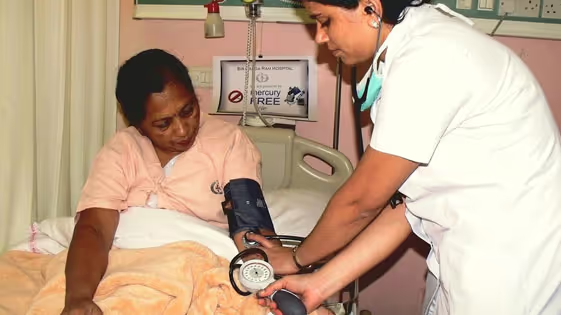
Women left behind: Gender disparities in utilisation of government health insurance
Equity in healthcare is a key goal of health policy in India. Analysing administrative data from Rajasthan, this article highlights substantial gender gaps in the utilisation of subsidised hospital care under the state health insurance programme. These disparities persist despite substantial programme expansion, and seem to be driven by households being less willing to allocate resources to female vis-à-vis male health.
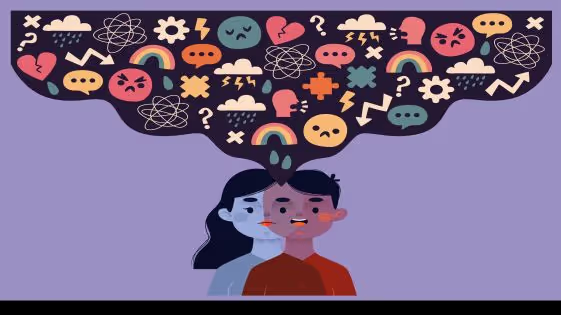
Understanding India’s mental health crisis
Since the onset of the Covid-19 pandemic, several reports have indicated a worsening of mental health issues among individuals across age groups. In this post, Michele Mary Bernadine examines the state of mental health in India, the cost of the mental health crisis to the economy, and the extent to which legislation and existing State capacity is equipped to address this crisis.
Sign up to our newsletter to be notified about the latest updates
.svg)
Just One Step Away!
Complete your signup to start getting the latest news, stories, and updates delivered straight to your inbox.