
.svg)
.svg)
%201.svg)
%201.svg)
.svg)

.svg)
.svg)
.svg)
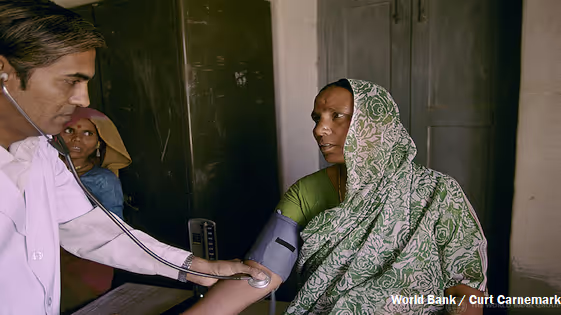
India’s primary healthcare reform: Improved service delivery, reduced mortality
.svg)

.svg)
Human Development
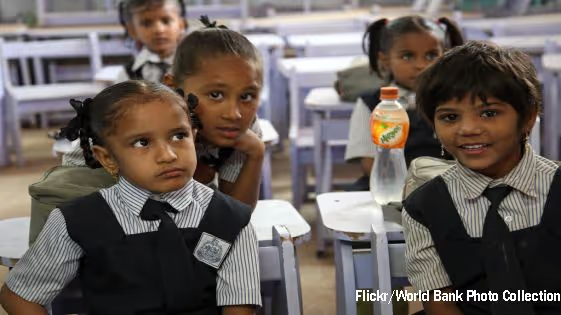
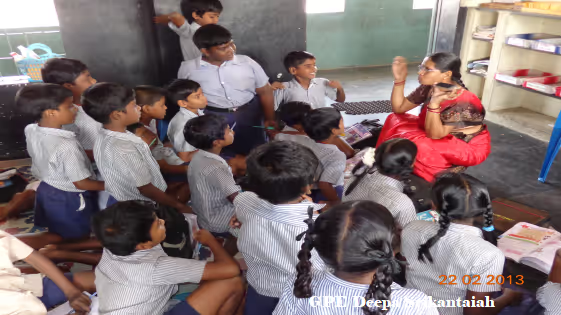
Teacher-student gender matching and learning outcomes
Studies have found positive effects of teacher-student gender matching on students’ learning outcomes in certain countries. Based on a theoretical model – tested empirically with survey data from Andhra Pradesh – this article shows that the positive effect in the Indian context seems to be a consequence of higher quality female teachers and more competent female students ‘self-selecting’ into urban, private schools on account of gender norms and institutional structures of teacher hiring.


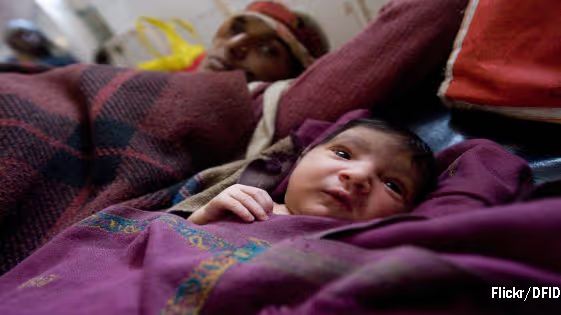
Evaluating India’s maternal cash transfer programmes
Over the years, India has implemented several programmes to overcome the issue of poor maternal and child health which can affect long-term physical and cognitive development. Using nationally representative data to study the impact of the current state maternity health benefits programme, this article shows that the programme has positive effects on infant health and immunisation rates and does not increase fertility rates unlike the previous programme. However, the results indicate that the programme’s effects are not sufficient to substantially improve health outcomes in children and mothers.
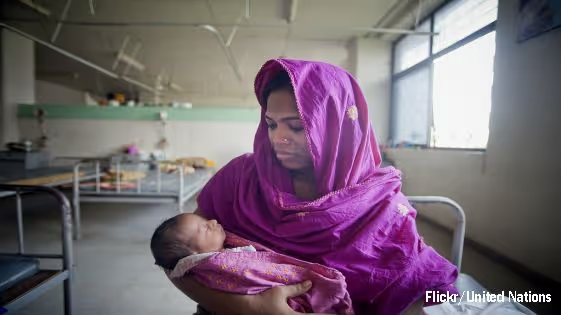
Budget 2021-22: Healthcare takes centre stage, again
Assessing the 2021-22 Union Budget from a health-sector perspective, Coffey and Spears contend that improving India’s health outcomes will require old solutions to old problems – and this sort of thing is hard to find in a ‘new’ budget. In particular, they advocate for increased allocation for maternal and newborn health programmes in the next budget.
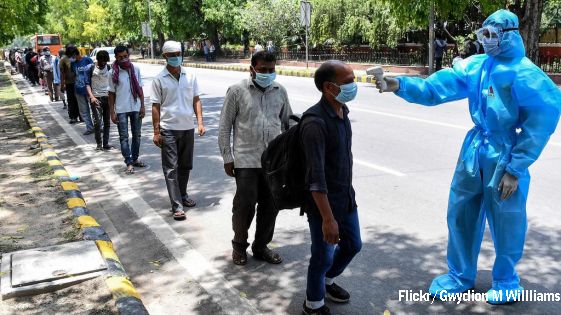
Covid-19 and other diseases: An ‘Animal Farm’ perspective
Debraj Ray and S Subramanian contend that despite the apparent sentiment of ‘we are all in this together’, the global burdens of Covid-19 and the global benefits of anti-Covid-19 policy have been skewed against the poorer nations of the world, and within nations, against the poor and the vulnerable.

What can we learn about Swachh Bharat Mission from NFHS-5 factsheets?
Swachh Bharat Mission was introduced by Government of India in 2014 to eliminate open defecation. Based on data from the National Family and Health Survey (NFHS)-5 factsheets, this article shows that the sanitation situation has broadly remained the same between NFHS-4 in 2014 and NFHS-5 in 2019. Half of the rural population in the states of Uttar Pradesh, Madhya Pradesh, Bihar, and Rajasthan, continue to defecate in the open.
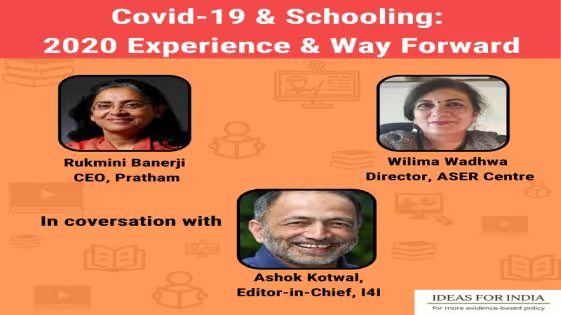
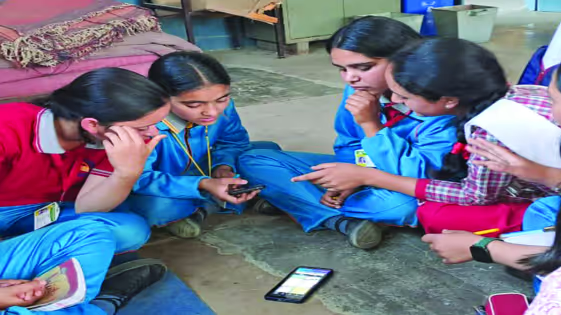
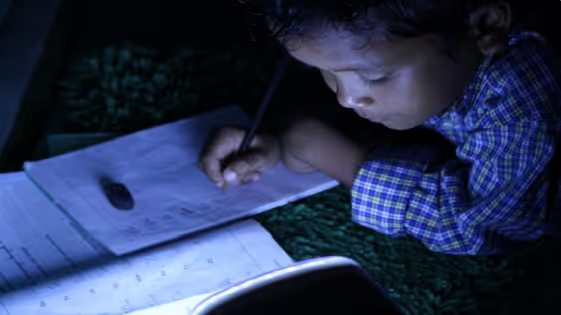
Covid-19 and schooling: 2020 experience and way forward
The onset of the Covid-19 pandemic brought with it significant challenges for the education sector. On the one hand, closing schools meant imposing a heavy cost on a whole generation of students, and on the other hand, keeping schools open was a health hazard. India and several other developing countries – reluctantly at first – adopted online teaching. However, this was riddled with problems given the weak access to digital connectivity and devices. So how was the schooling experience in 2020, and are there any lessons for the future? To explore these crucial questions, I4I Editor-in-Chief Ashok Kotwal speaks with Rukmini Banerji (CEO of Pratham; India’s largest education non-profit) and Wilima Wadhwa (Director, Annual Status of Education Report (ASER) Centre). Banerji and Wadhwa discuss the mechanics of the ASER 2020 phone survey; availability of educational materials and learning activities in rural homes; how families, communities, and schools came together to keep up children’s le
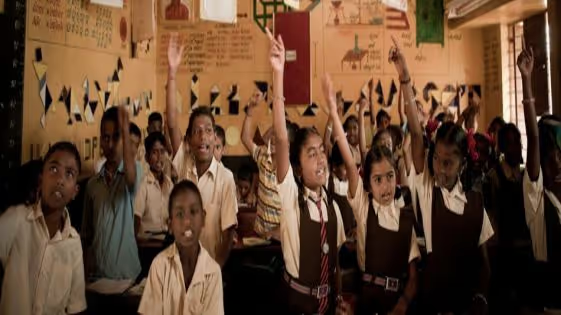
International Day of Education
24 January is observed by the United Nations as the International Day of Education, to highlight the importance of education for sustainable development and to promote universal, equitable, and inclusive education. The 2021 theme is “Recover and revitalize education for the Covid-19 generation”, with a focus on placing education and lifelong learning at the centre of the pandemic-recovery process. This page presents selected I4I content pertaining to the provision of and access to education in India – with particular focus on schooling during Covid-19 and related issues of technology and facilities, learning outcomes, and disparities across socioeconomic groups.
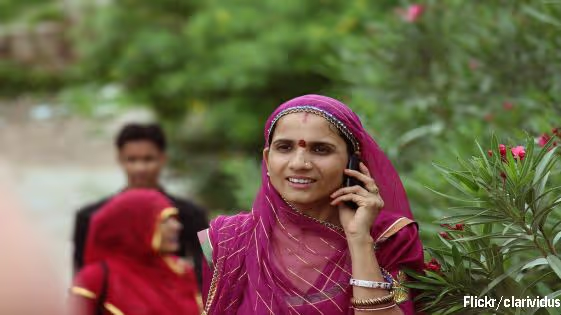
Covid-19: Debunking fake news among slum-dwellers
Urban slum-dwellers are among the groups that are most at-risk of Covid-19, and their precarious situation is further compounded by rampant misinformation regarding the Virus. Based on a survey of about 4,000 households in slum areas in Uttar Pradesh, this article shows that recorded phone messages from doctors giving information on Covid-19 – along with high financial incentives to pay attention – can debunk related fake news.

Rising obesity in rural India, under the growing urban shadow
According to the National Family Health Survey (NFHS), 2015-16, nearly 20% of India’s population is obese. This article shows that the country’s obesity trends have followed the nature of its economic transformation whereby urban growth impacts rural development. It finds that an additional kilometre of urban influence on surrounding villages leads to an increase in obesity incidence among approximately 3,000 rural women.
Sign up to our newsletter to be notified about the latest updates
.svg)
Just One Step Away!
Complete your signup to start getting the latest news, stories, and updates delivered straight to your inbox.