
.svg)
.svg)
%201.svg)
%201.svg)
.svg)

.svg)
.svg)
.svg)
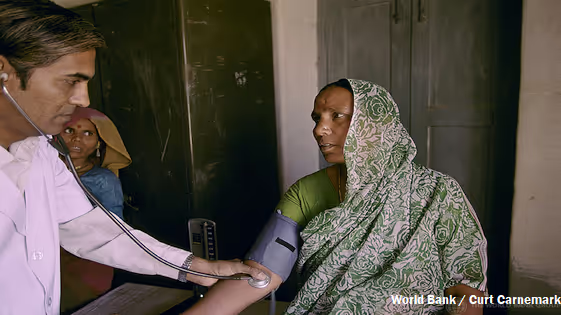
India’s primary healthcare reform: Improved service delivery, reduced mortality
.svg)

.svg)

Human Development

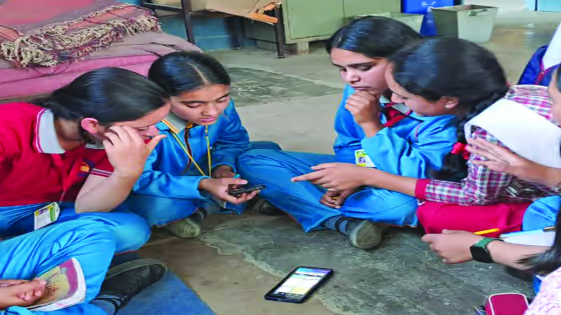
School absences as an early warning system
When children are frequently absent from school, it could be a sign that they are going through adverse personal circumstances. In this note, Anurag Kundu discusses the experience of launching a large-scale intervention to track students' attendance and provide support to vulnerable students that would allow them to return to school. He highlights the adverse impact of poor school attendance on learning and health outcomes, and the need to track attendance to understand students’ circumstances and design appropriate interventions


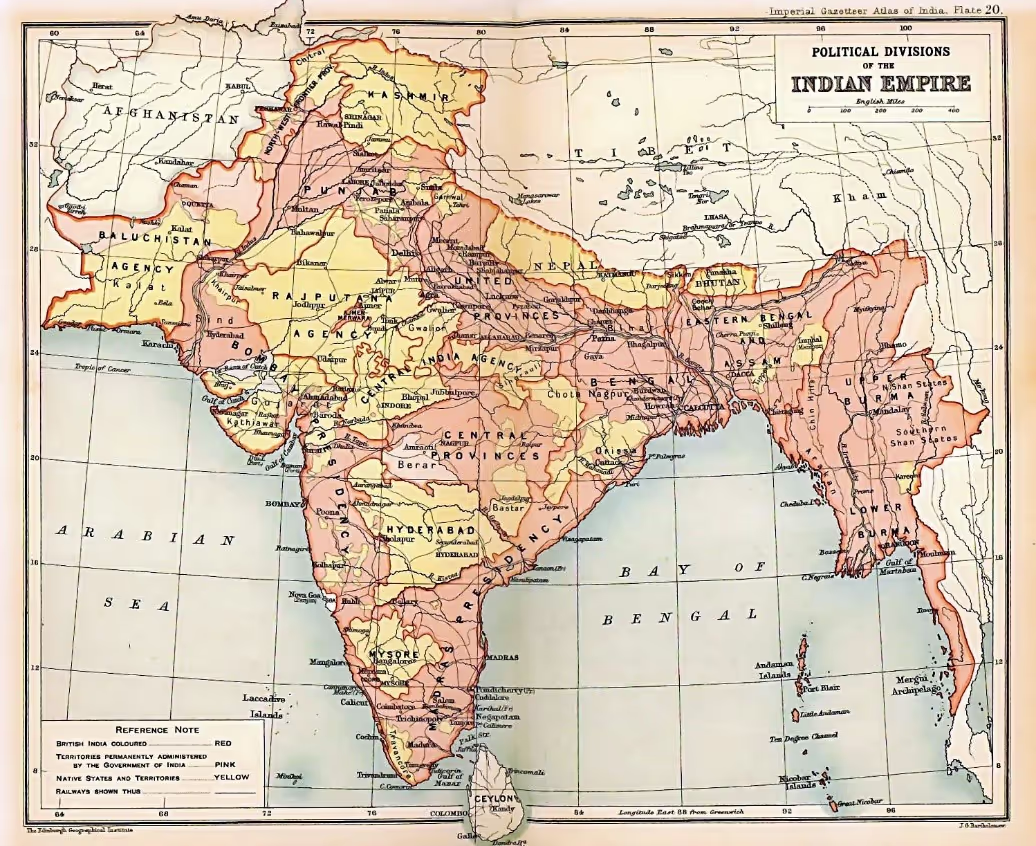
Women empowerment in India: Does colonial history matter?
Examining whether colonial history matters for women’s contemporary economic outcomes in India, this article shows that women who live in areas that were under direct British rule are better off in terms of almost all measures of women empowerment. It argues that legal and institutional changes brought in by the British in favour of women, and West-inspired social reforms in the 19th century may be relevant to explaining this long-term link.
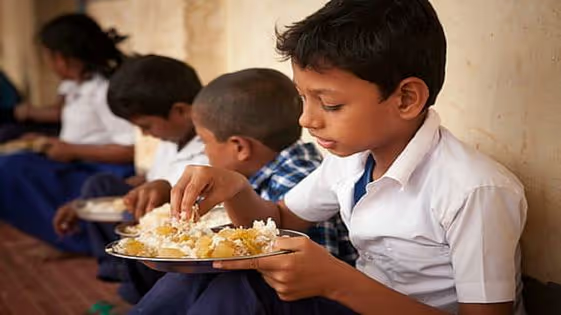
Nutritional penalty of motherhood: Can midday meals for children also improve their mothers’ health outcomes?
Midday meals provide a nutritional safety net for children and improve their learning outcomes and attendance. Nikita Sharma argues that spillover benefits might also exist for mothers of the children who receive them. She highlights research findings which indicate that, in addition to addressing malnutrition among children, midday meals also ensure that mothers do not need to forgo their own consumption to feed their children in times of scarcity.

Access to clean drinking water and women’s safety in India
In this study, Sekhri and Hossain use district-level data to find empirical evidence that groundwater scarcity results in an increase in sexual violence against women. They argue that in households without access to clean drinking water, women often have to walk far from home to collect water, making them more vulnerable to sexual violence. Since they establish that water shortages increase the risk faced by women water collectors, it makes the case for increased investment in water infrastructure.
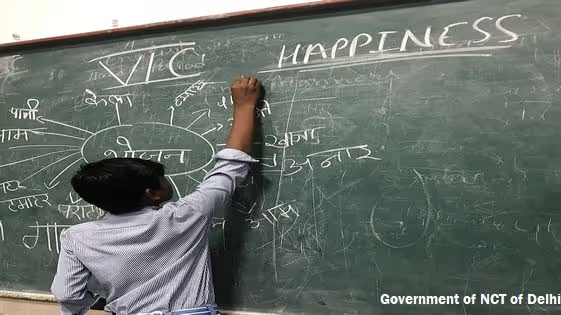
Foundational learning outcomes: More recovery than loss
Sharing data from the recently released ASER 2022, Wilima Wadhwa discusses the trends in primary school enrollment and learning during the pandemic. Using data collected from Karnataka, Chhattisgarh and West Bengal in 2021 to fill in the gap in the surveys, she shows how there were large learning losses in reading and maths between 2018 and 2021; however, learning levels had recovered by 2022. She also highlights the emphasis given to foundational learning, the results of which are reflected in ASER 2022.
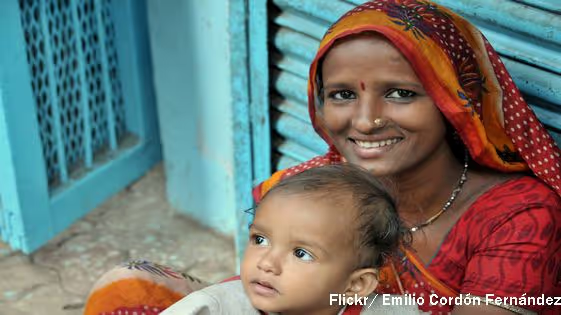
Herself, and her child: Are they worse off due to Covid-19?
Lockdowns imposed to contain the spread of Covid-19 led to loss of employment and income. They also created greater food insecurity, with women and children being more vulnerable to such shocks. In this context, based on surveys in rural Bihar, Husain et al. discuss the impact of the lockdown on the dietary practices of women and children, and how these were impacted by their access to government welfare programmes during this period.

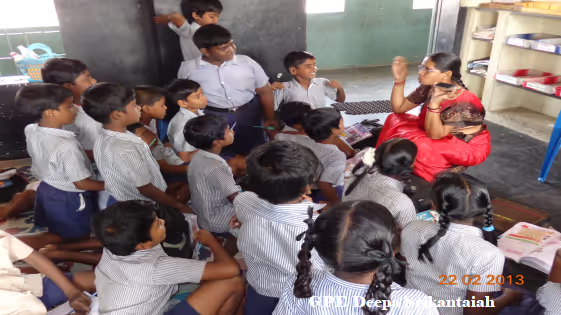
Old habits and new norms
As schools reopen and memories of the pandemic fade, Madhav Chavan takes stock of practices and ideas that have become the ‘new normal’. He highlights the increase in enrollment and absence of learning loss among children over the last few years, and the role that parents and the community played in aiding children’s learning efforts. He sees the pandemic-induced closures as an opportunity to learn from how the school system coped with the challenge and created new pedagogical norms.
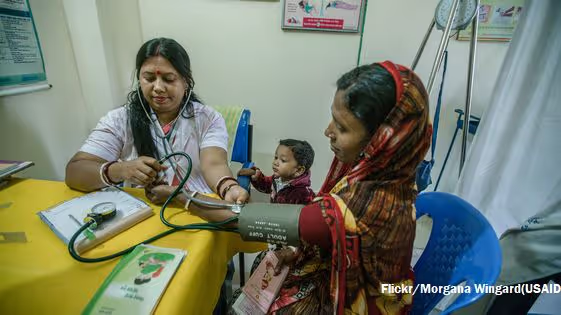
Sweet cash: Women’s demand for healthcare in developing countries
Agrawal et al. explore the role of gender-based preferences for demand of healthcare. Using CPHS data they find that the positive income shock – generated by a change in the mandated rates of contribution to the EPF – leads to a 11.6% decline in healthcare expenses driven by less expenditure on consultations and medications. However, this decline is not explained by women having better health outcomes and suggests that women, especially married women, prefer using the increased income on household goods
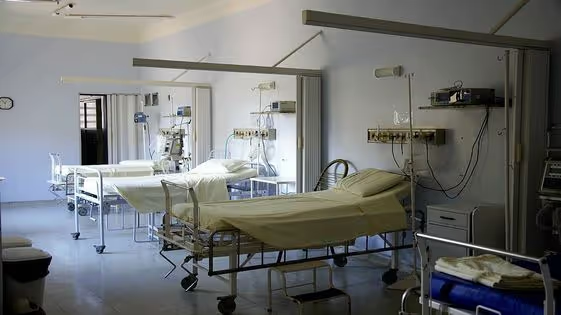
Empowering patients with information to improve hospital accountability
Despite the expansion of free healthcare for the poor throughout India, many hospitals continue to charge patients out-of-pocket fees. In this study, Dupas and Jain investigate whether informing patients of their benefits helps hold hospitals accountable. They survey dialysis patients in Rajasthan entitled to insurance under a government scheme and find the impact of the information intervention manifests differently in private and public hospitals, with a decrease in out-of-pocket payments


Sign up to our newsletter to be notified about the latest updates
.svg)
Just One Step Away!
Complete your signup to start getting the latest news, stories, and updates delivered straight to your inbox.