
.svg)
.svg)
%201.svg)
%201.svg)
.svg)

.svg)
.svg)
.svg)
Why next-generation economic reforms are crucial for reviving investment
.svg)

.svg)

Macroeconomics
Why next-generation economic reforms are crucial for reviving investment
While corporate profitability and banks' lending ability have been on the rise for some time, corporate investment remains sluggish. In this post, Gupta and Sachdeva argue that investment levels of India Inc. are consistent with their assessment of future demand growth. Unleashing the next generation of reform, with a priority given to land, can make (large) Indian firms more competitive globally – improving growth and spurring investment.



The growing burden of state subsidies
Delivery of welfare benefits to citizens by state governments in India often takes the form of subsidies. Analysing budgetary data from seven Indian states for the period between 2018-19 and 2022-23, this article documents how explicit subsidies are straining state finances and compromising development expenditure. Further, it presents new evidence on how subsidy categorisation in government accounts masks their true fiscal impact.
Union Budget 2025-26: Many small measures but lacks big ideas
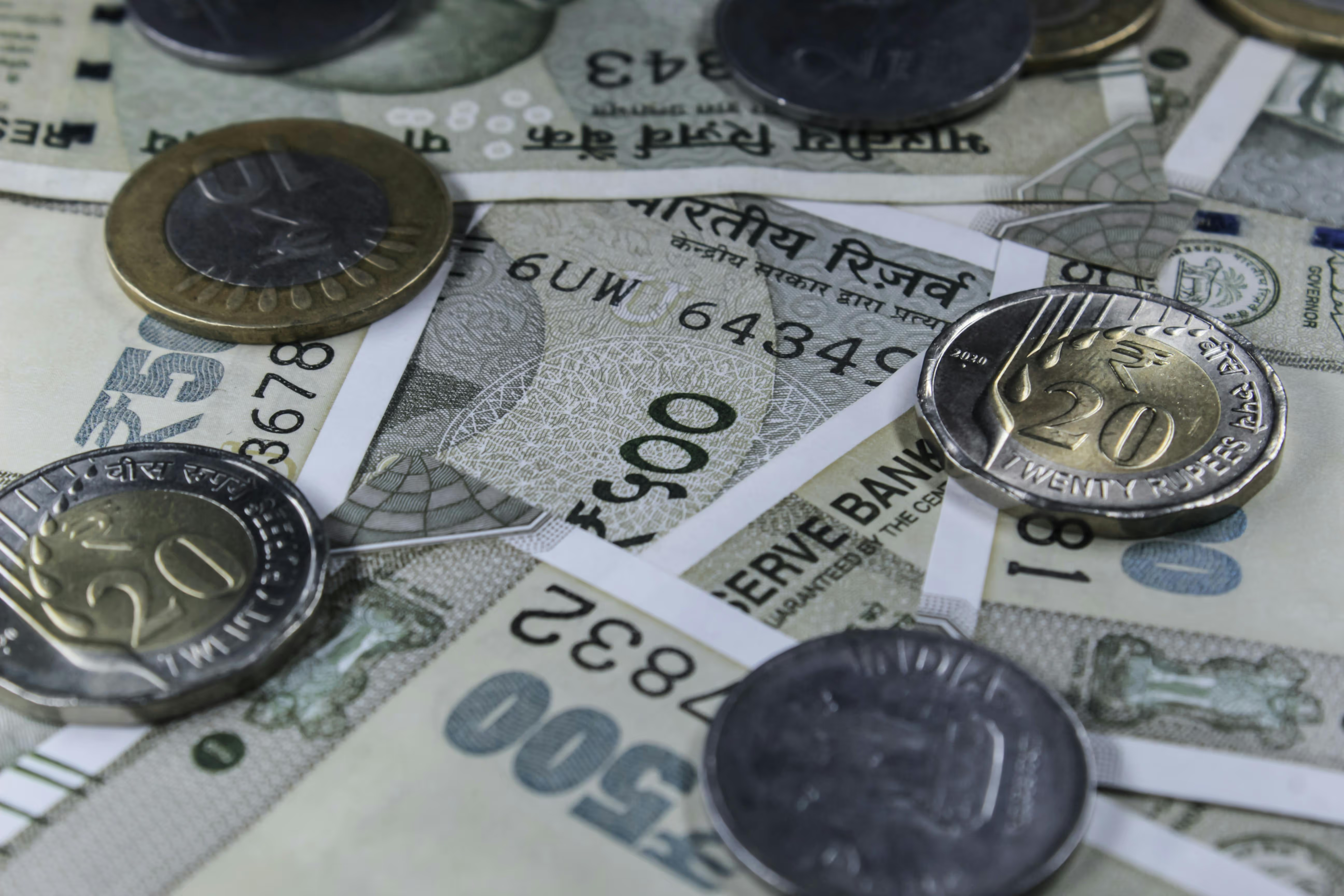
The Finance Minister recently presented the Union Budget for 2025-26. In this post, Rajeswari Sengupta notes that the most significant aspect of this Budget is the fiscal stimulus aimed at middle-class consumers through tax relief. However, she argues that the impact of this measure is likely to be limited and short-lived in the absence of substantial structural reforms to drive sustainable, long-term growth.

High public debt in India: 9 stylised facts
The Covid-induced surge in public debt in India was unique compared to its own history, but also bigger and driven by different factors relative to the average emerging market economy. In this post, Mishra and Patel document nine stylised facts on the recent evolution of sovereign debt and fiscal deficits in India – examining issues such as the cost of high debt levels, whether there are silver linings, and the path ahead.

Uneven resilience: Why some emerging markets better navigate US monetary policy cycles
As the US dollar and monetary policy continue to have a significant impact on global financial dynamics, some emerging markets are observed to be more resilient than others to the policy cycles. Analysing data on a large sample of emerging markets, this article highlights the role of consistent strategy that strengthens macroeconomic fundamentals and institutional quality across all phases of the cycle.

Economic development of Punjab: Prospects and policies
While the north Indian state of Punjab topped per-capita income rankings within the country until year 2000, its position fell consistently thereafter. This article discusses the current state of Punjab’s economy – in terms of agriculture, manufacturing and services; jobs and education; and public finance and governance – and the reasons for the challenges faced by the state. Further, they consider prospects for growth and enabling policies.


Sign up to our newsletter to be notified about the latest updates
.svg)
Just One Step Away!
Complete your signup to start getting the latest news, stories, and updates delivered straight to your inbox.