
.svg)
.svg)
%201.svg)
%201.svg)
.svg)

.svg)
.svg)
.svg)
Why next-generation economic reforms are crucial for reviving investment
.svg)

.svg)
Macroeconomics
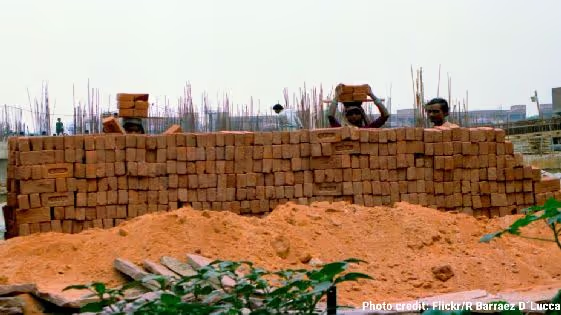
The Covid-19 shock: Learnings from the past, addressing the present - IV
In the previous part of the series, Dr Pronab Sen presented a pathway to recovery, focusing on the ‘survival’ phase, that is, the three-month period of lockdown. In this part he discusses the revival phase – four-month period after the lockdown is lifted and normal economic activity is allowed to resume from June 2020, and the recovery phase thereafter.


The Covid-19 shock: Learnings from the past, addressing the present - III
In the previous part of the series, Dr Pronab Sen provided estimates of the economic damage on account of the ongoing crisis, and the expected trajectory of the economy over the next three years. In this part, he presents a pathway to recovery, focusing on the survival phase. In the immediate context while the lockdown is in place, the two principal imperatives should be survival of those who have lost livelihoods, and of production capacities in non-essentials sectors. An approximate estimate of the additional fiscal support required during this three-month period is Rs. 2 trillion.
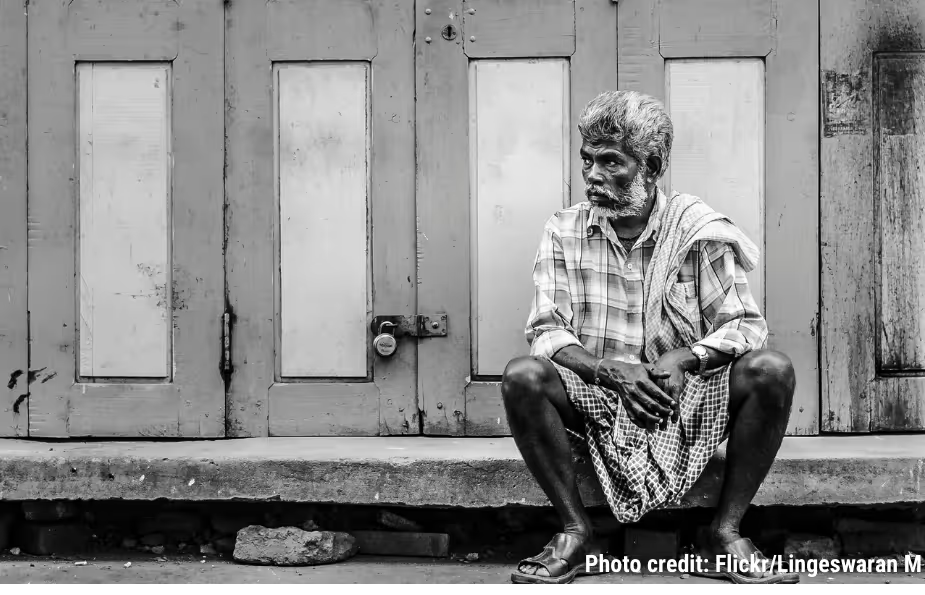
The Covid-19 shock: Learnings from the past, addressing the present - II
In the first part of the series, Dr Pronab Sen discussed the performance of the Indian economy during the last two major economic shocks – Global Financial crisis in 2008, and demonetisation-cum-GST in 2016-17 – and drew lessons for the current crisis. In this part, he estimates the damage to the economy due to the lockdown and export slowdown, taking into account the fiscal stimulus announced by the government so far. Presenting the expected trajectory of the economy over the next three years, he contends that the likely recovery path is not a V, but an elongated U, maybe even closer to an L.
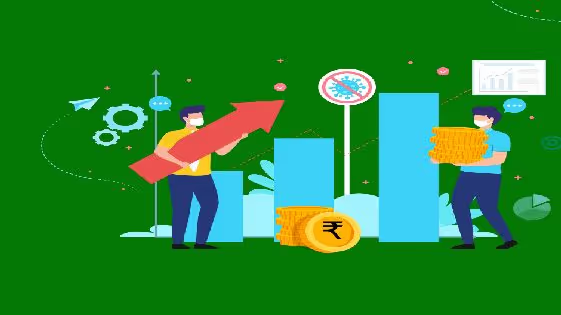
The pandemic and the package
The government has announced a package of fiscal and monetary policy actions, and broader economic reforms to set the economy back on track after the Covid-19 lockdown. In this post, Sengupta and Vardhan argue that instead of announcing many small-ticket items that further complicate matters of targeting and delivery, the package could have been split into two main parts: partial credit guarantees and direct lending programmes for targeted micro, small, and medium enterprises; and direct benefit transfers to low-income households
Webinar video: The new Coronavirus and the Indian economy
The global pandemic has created a terrible trade-off for every country between an economic crisis caused by a shutdown of the economic activity and a health crisis and fatalities as the healthcare system gets overwhelmed. The burden of the economic hardship is unbearably heavy on the poor. This is especially so in India where a significant part of the population live hand to mouth.
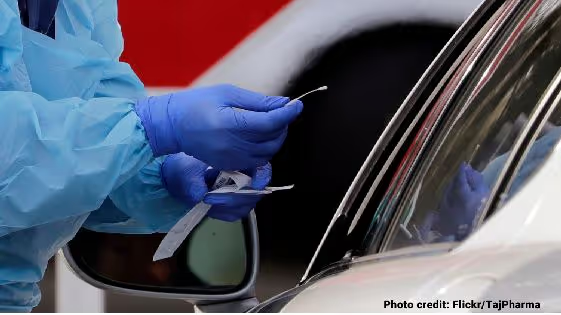
Covid-19: Escaping the economic dangers
As long as the spread of Covid-19 is not controlled in India, there is a threat of new complete or partial lockdowns in response. In this post, E. Somanathan contends that any further lockdown risks incurring a loss of over 10% of GDP without stemming the spread of Covid-19. The ideal strategy is to find and isolate the small fraction of infected people through incentivised testing, while allowing business as usual to resume.

Sign up to our newsletter to be notified about the latest updates
.svg)
Just One Step Away!
Complete your signup to start getting the latest news, stories, and updates delivered straight to your inbox.