
.svg)
.svg)
%201.svg)
%201.svg)
.svg)

.svg)
.svg)
.svg)
Night shift bans and female employment in Indian manufacturing
.svg)

.svg)



Productivity and Innovation

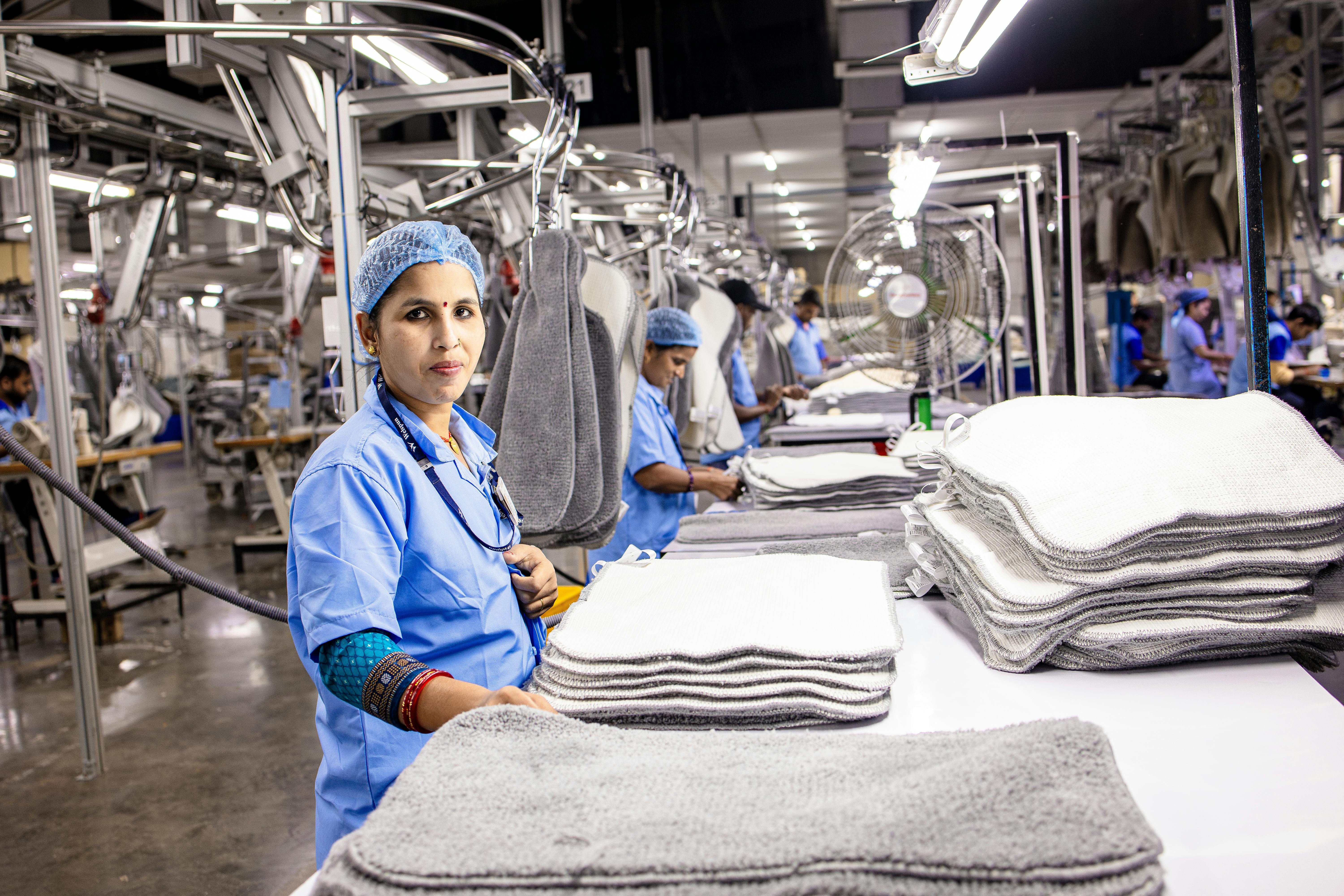
Feminisation of India’s industrial workforce
In recent years, the average annual growth rate in manufacturing employment has exceeded that of aggregate employment in India. In this post, Goldar and Aggarwal demonstrate that this trend is accompanied by an increase in the share of women in the industrial workforce – largely driven by a rise in the proportion of women-owned manufacturing enterprises. Their findings also highlight the need for measures to enhance productivity of women-owned units.



Is digitalisation a double-edged sword for workers in India's public healthcare system?
While technology is often celebrated as a solution to healthcare inefficiencies, its impact on India’s Accredited Social Health Activists (ASHAs) tells a more complex story. Drawing on qualitative research conducted across four states, this note examines the uneven experiences of digitalisation among ASHAs, with digital tools both improving work processes and creating new burdens and inequities.

Post-Covid informal manufacturing growth: How states fared
Recently released official data show an expansion in informal manufacturing in India in the post-pandemic period. In this post, Goldar and Aggarwal conduct a cross-state analysis and highlight that Bihar led the growth story in terms of the number of enterprises and employment generation. An additional notable trend is of the feminisation of industrial labour. Financial assistance by the government helped support the recovery, particularly in rural areas.

Share of manufacturing in India’s total employment: No mean performance
Available jobs data show only a modest increase in the share of manufacturing in India’s total employment in the last 50 years. In this post, Bishwanath Goldar highlights that the outsourcing of services used by manufacturing has grown speedily over time, due to the splintering of services from manufacturing. If this is accounted for, the performance of manufacturing in job creation is not as dismal as indicated by the data.

Patent protection in India: Impact on innovation, pricing and competition
When stronger patent laws were introduced in India, there were fears that it would lead to higher prices without substantial gains in innovation. This article provides evidence that stronger patent protection increased the number and quality of patents, and R&D spending among manufacturing firms. While process innovations and output growth led to lower production costs, these cost savings translated into higher price-cost margins rather than lower consumer prices.
How can India become a manufacturing powerhouse?
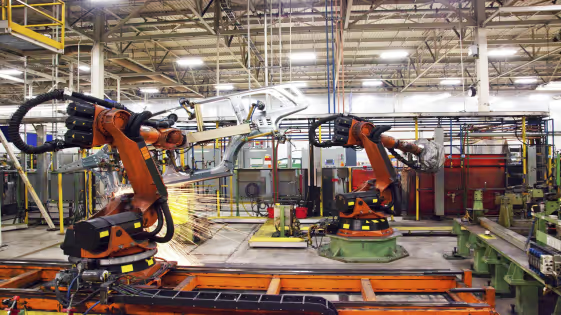
India’s manufacturing sector has been stagnant over the past 20 years, in terms of contribution to national output as well as employment generation. In this article, Ejaz Ghani locates the explanation in the diverging paths of industrialisation and urbanisation, market distortions pertaining to land and finance, excessive focus on large enterprises rather than smaller, informal ones, and the misconception that services growth is crowding-out manufacturing.


Bringing work home: Flexible work arrangements as ‘gateway jobs’ for women
Millions of women stay out of the workforce despite having a desire for paid work, often because available opportunities are incompatible with traditional norms of household roles. Based on an experiment in West Bengal, this article shows that flexible work arrangements significantly raise women’s take-up of jobs. Although home-based work reduces worker productivity, once women have some experience with flexible work, they are more likely to accept future outside-the-home jobs.

Can shared social identity minimise corporate frictions?
A separation between owners and managers of firms gives rise to various problems known as ‘agency conflicts’. This article explores whether having a shared social identity between managers and board members can help reduce frictions and improve firm performance. Analysing data from Indian firms, it finds that homophily enhances firm value in the long run – despite the costs associated with in-group favouritism.

Sign up to our newsletter to be notified about the latest updates
.svg)
Just One Step Away!
Complete your signup to start getting the latest news, stories, and updates delivered straight to your inbox.