
.svg)
.svg)
%201.svg)
%201.svg)
.svg)

.svg)
.svg)

.svg)

.svg)
Social Identity
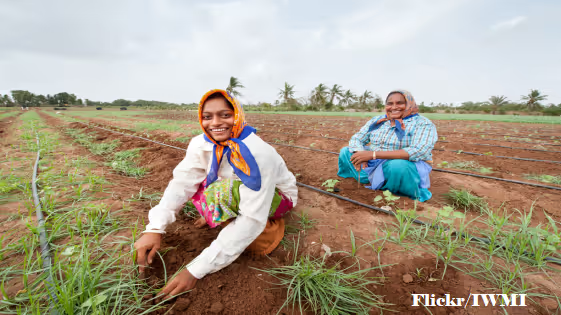
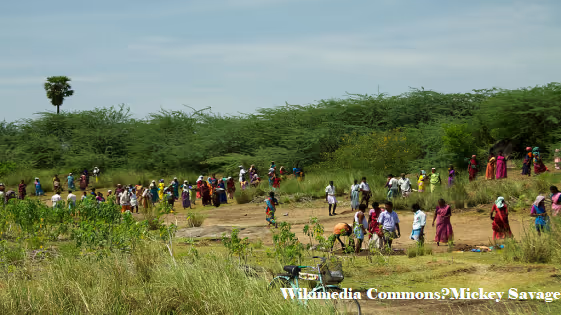
Soil characteristics, women’s workforce participation and intra-household consumption distribution
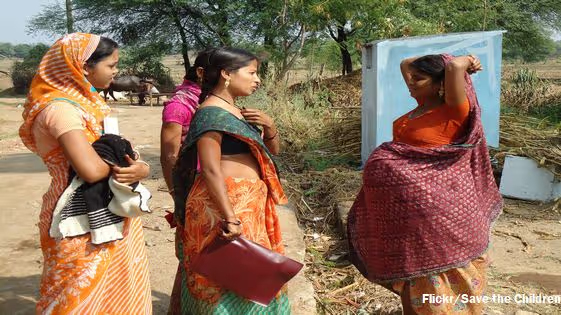
When women’s participation in agriculture increases relative to men, does the intra-household distribution of consumption become more gender-equitable? Is there a positive impact on children’s access to consumption resources within households? This article analyses 2011 Consumption Survey Data and finds that regions where geographical conditions favour greater participation of women in agriculture, have significantly higher shares of consumption resources among both women and children within the household.


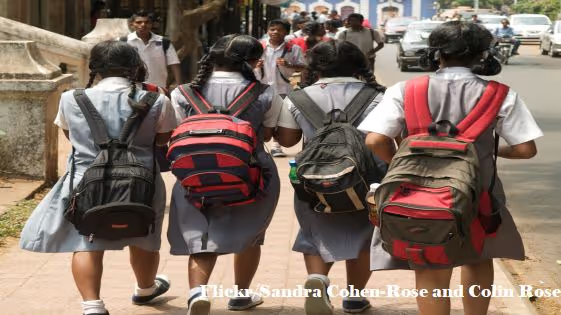
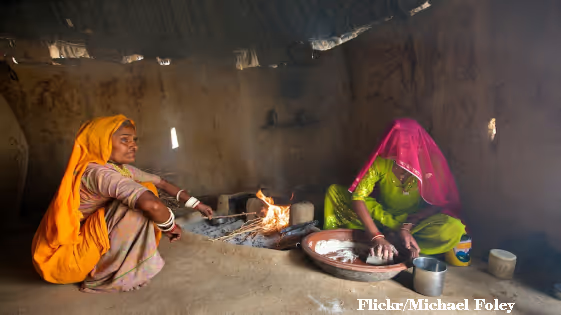
How social norms hold women back: A look at recent evidence
In light of India’s low female labour force participation rate, as a follow up to International Women’s Day, I4I Deputy Managing Editor Nikita Mujumdar highlights a selection of economic research on social and household norms in India which have held women back from taking up higher education and work; and brings together some ideas on how women’s economic and political participation can improve household and community outcomes and improve how they are perceived in society.
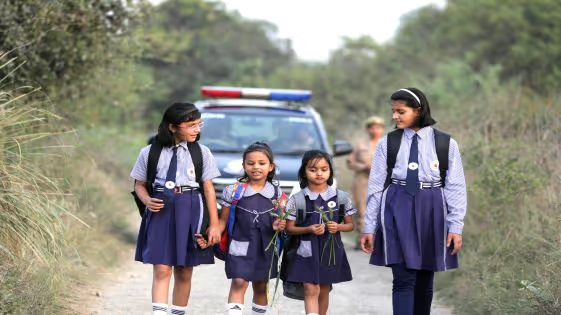
Should girls be ‘controlled’? Opinions among young boys and parents in Bihar
The practice of child marriage among girls continues to be common in Bihar. In this note, Priyadarshini, Joshi and Bhattacharya present findings from their survey of boys and parents, wherein they construct an index for the “tendency to control women and girls’ sexuality and assertion of choice” to measure a possible factor driving this trend. Highlighting the regressive views of young boys in particular, they advocate for gender sensitisation at the school and community levels.
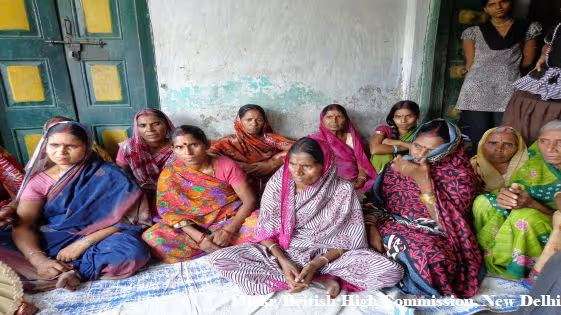
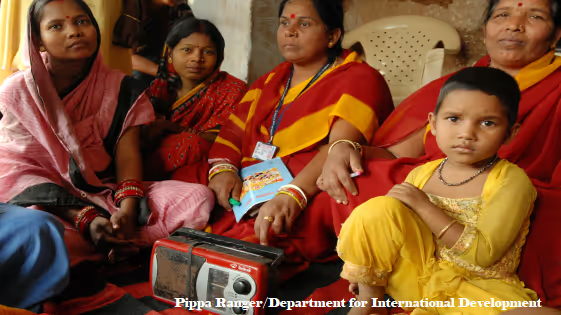
Mahila Samakhya: Women’s education through empowerment
While girls are now at par with boys in school enrolment, they continue to lag behind in terms of the number of years spent in formal education. In this context, this article assesses the impact of the ‘Mahila Samakhya’ programme – which sought to empower women within local communities in rural India in order to challenge traditional gender roles that may be restricting girls’ education – on educational gains.

Sign up to our newsletter to be notified about the latest updates
.svg)
Just One Step Away!
Complete your signup to start getting the latest news, stories, and updates delivered straight to your inbox.