
.svg)
.svg)
%201.svg)
%201.svg)
.svg)

.svg)
.svg)
Bharti Nandwani

Bharti Nandwani is Assistant Professor of Economics at Indira Gandhi Institute of Development Research (IGIDR), Mumbai. Her research interests lie in the areas of political economy and economics of education. Her work in political economy has explored the extent of local community participation amongst Scheduled Tribes (STs) and effectiveness of welfare policies introduced for STs. Within economics of education, she has explored the implications of different funding sources and management of schools for education provision in India. She completed her Ph.D. in Economics from Shiv Nadar University in 2018.
.svg)


भारत में महिलाओं का सशक्तिकरण : क्या औपनिवेशिक इतिहास मायने रखता है?
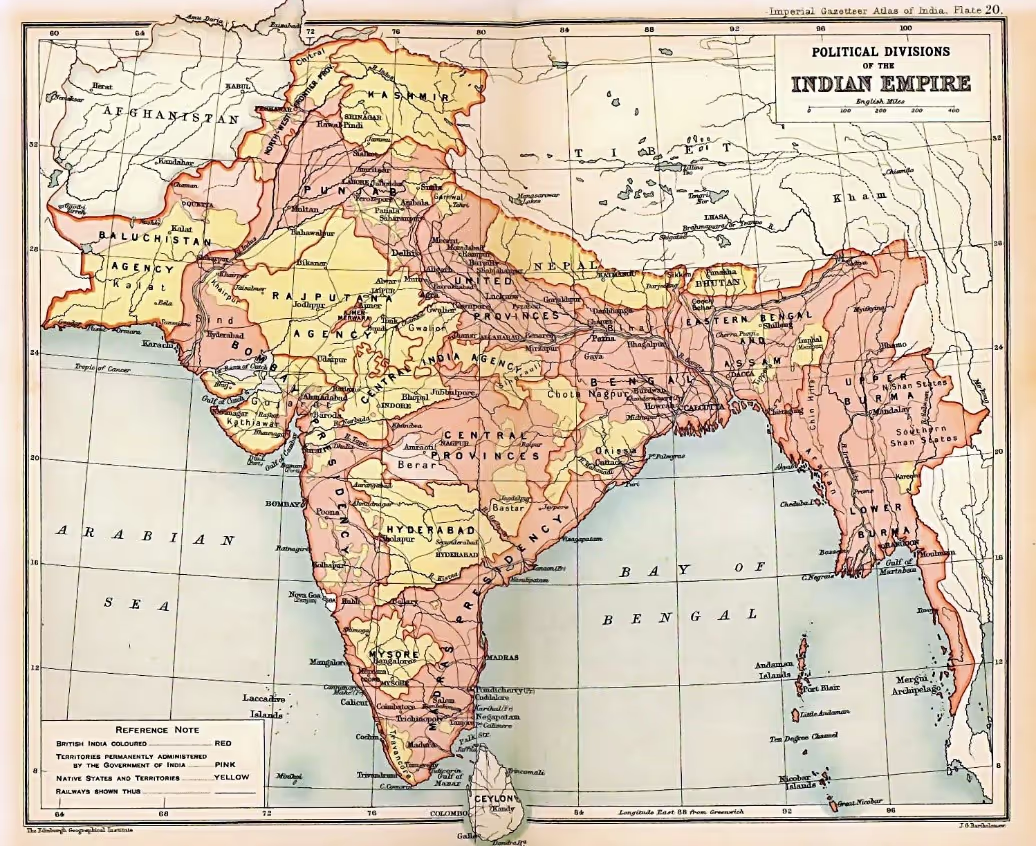
क्या औपनिवेशिक इतिहास भारत में महिलाओं के समकालीन आर्थिक परिणामों की दृष्टि से मायने रखता है? इसकी जांच करते हुए यह लेख इस बात की ओर इशारा करता है कि जो क्षेत्र सीधे ब्रिटिश शासन के अधीन रहा, महिला सशक्तिकरण के लगभग सभी मानदण्डों के आधार पर वहां की निवासी महिलाएं बेहतर स्थिति में हैं। इसमें तर्क दिया गया है कि अंग्रेज़ों के काल में महिलाओं के पक्ष में लाए गए कानूनी और संस्थागत परिवर्तन और 19वीं शताब्दी में पश्चिम-प्रेरित सामाजिक सुधार इस दीर्घकालिक संबंध को समझाने में प्रासंगिक हो सकते हैं।


Women empowerment in India: Does colonial history matter?
Examining whether colonial history matters for women’s contemporary economic outcomes in India, this article shows that women who live in areas that were under direct British rule are better off in terms of almost all measures of women empowerment. It argues that legal and institutional changes brought in by the British in favour of women, and West-inspired social reforms in the 19th century may be relevant to explaining this long-term link.

क्या स्कूल प्रबंधन में महिलाओं का प्रतिनिधित्व बढाने से स्कूल की गुणवत्ता में सुधार होता है?
वर्ष 2009 में लागू किये गए शिक्षा का अधिकार अधिनियम (आरटीई) ने सामुदायिक भागीदारी के माध्यम से स्कूलों में जवाबदेही में सुधार लाने हेतु सार्वजनिक और निजी सहायता-प्राप्त स्कूलों को स्कूल प्रबंधन समितियों (एसएमसी) का गठन करने के लिए अनिवार्य किया। यह लेख स्कूलों के बारे में वर्ष 2012-2018 के बीच के भारतीय प्रशासनिक डेटा और एएसईआर (शिक्षा की वार्षिक स्थिति रिपोर्ट) डेटा का उपयोग करते हुए, दर्शाता है कि स्कूल प्रबंधन समितियों में महिलाओं का अधिक प्रतिनिधित्व उस स्कूल की उच्चतम गुणवत्ता से जुड़ा है; जिसे तैनात किए गए शिक्षकों की संख्या, शिक्षकों की शैक्षणिक योग्यता, शैक्षणिक संसाधन, स्कूल में छात्रों के दाखिले, और शिक्षा प्राप्त करने के परिणाम के संदर्भ में मापा गया है।

Does increasing female representation in school management improve school quality?
The 2009 Right to Education Act (RTE) mandated public and private aided schools to constitute School Management Committees (SMCs) to improve accountability in schools through community participation. Using 2012-2018 Indian administrative data on schools and ASER (Annual Status of Education Report) data, this article shows that higher female representation in SMCs is associated with higher school quality, measured in terms of number of teachers hired, qualification of teachers, academic resources, student enrolment, and learning outcomes

Road to empowerment: Rural roads programme and women's outcomes
Lack of spatial mobility is recognised as a critical constraint on women's socioeconomic participation. This article presents findings from a study examining the impact of India’s rural roads programme, on women’s outcomes. While the construction of all-weather roads alleviates women’s mobility restrictions and improves social norms and female education, there is limited effect on female employment – with men benefitting more in this regard instead.
वन अधिकार अधिनियम : विरोधाभासी संरक्षण कानूनों का लेखा-जोखा
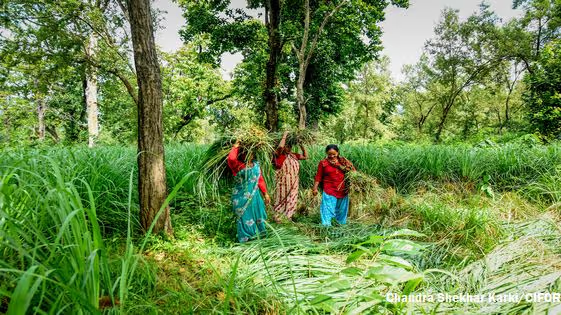
वन अधिकार अधिनियम (एफआरए) के बारे में अपने दूसरे लेख में, भारती नंदवानी ने इस बात की जांच के लिए कि एफआरए की शुरूआत के बाद भूमि सम्बन्धी विवाद क्यों बढ़े, भूमि संघर्षों पर डेटा का उपयोग किया है। वे विरोधाभासी कानून की व्यापकता की ओर इशारा करते हुए, प्रतिपूरक वनीकरण निधि या ‘कम्पेन्सेटरी अफॉरेस्टेशन फण्ड’ के मामले को उजागर करती हैं, जिसका वितरण इस तरह से होता है कि वनवासियों की खेती की भूमि पर अतिक्रमण हो जाता है। वे उन समुदायों के बेहतर ज्ञान को पहचानने और उन्हें वनों के प्रबंधन और संरक्षण की ज़िम्मेदारी देने की आवश्यकता पर ज़ोर देती हैं।

वन अधिकार अधिनियम- स्थानीय समुदायों की राजनीति में सहभागिता
वन अधिकार अधिनियम (एफआरए) के कार्यान्वयन के बारे में अपने दो लेखों में से पहले लेख में, भारती नंदवानी ने ओडिशा के अनुसूचित जनजातियों की राजनीति में सहभागिता के संदर्भ में भूमि स्वामित्व मान्यता की बढ़ती मांग के निहितार्थ पर प्रकाश डाला है। वे आय में वृद्धि या शिकायत निवारण तक पहुँच जैसे संभावित चैनलों की, जिनके माध्यम से एफआरए लाभार्थियों को सशक्त बना सकता है, जांच करती हैं और दर्शाती हैं कि स्थानीय समुदायों को उनके अधिकार दिलाने और कल्याण कार्यक्रमों तक उनकी पहुँच को बढ़ाने से वनों के संरक्षण में मदद मिल सकती है और संघर्ष को कम किया जा सकता है।
Forest Rights Act: An account of contradictory conservation laws
In the second of two articles about the implementation of Forest Rights Act, Bharti Nandwani uses data on land conflicts to investigate why land disputes increased after the introduction of FRA. She points to the prevalence of contradictory legislation, highlighting the case of compensatory afforestation funds which are disbursed in a way that encroaches upon land cultivated by forest dwellers. She emphasises the need to recognise the superior knowledge of those communities and give them the responsibility of managing and conserving forests
Forest Rights Act: Political participation of indigenous communities
In the first of two articles about the implementation of Forest Rights Act, Bharti Nandwani looks at the implication of increased demand for land title recognition on political participation of Scheduled Tribes in Odisha. She examines possible channels through which the FRA can empower beneficiaries, such as through increased income or accessing grievance redressal, and suggests that recognising the rights of indigenous communities and increasing their access to welfare programmes could aid in conservation and reduce conflict.