
.svg)
.svg)
%201.svg)
%201.svg)
.svg)

.svg)
.svg)
S Anukriti

S Anukriti is a Senior Economist at the World Bank's Development Research Group. Her research examines the underlying causes of gender inequalities in developing societies, and explores mechanisms that can bring about gender equity. She is an applied micro-economist with interests in the fields of development economics, economics of gender and the family, and political economy. She received her PhD in Economics from Columbia University, an MA in Economics from the Delhi School of Economics, and a BA (Honors) in Economics from St. Stephen’s College, Delhi. She is also a Research Fellow at the Institute for Labor Economics (IZA). Prior to joining the World Bank, she was an Associate Professor of Economics at Boston College.
.svg)

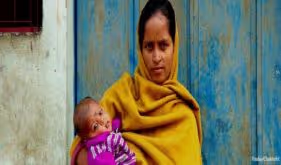
Financial incentives and the fertility-sex ratio trade-off in India
Fertility reduction and a gender-balanced population often appear to be conflicting objectives in countries with persistent son preference and easy access to sex-selection technology, as targeting one may worsen the other. This article finds that financial incentive programmes that reward parents that have fewer children and more girls, such as Haryana’s Devi Rupak, may only play a limited role in resolving this conflict.


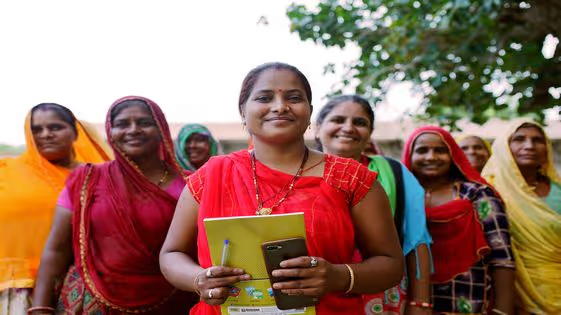
‘ब्रिंग-ए-फ्रेंड’: महिलाओं के प्रजनन अधिकार में सुधार के लिए वित्तीय और साथी के समर्थन का लाभ उठाना
राष्ट्रीय सुरक्षित मातृत्व दिवस के सन्दर्भ में प्रस्तुत दो आलेखों की श्रृंखला के इस दूसरे लेख में उन परिणामों पर प्रकाश डाला गया है, जिनसे पता चलता है कि अगर महिलाओं के साथी उनके साथ हों तो उनके परिवार नियोजन सेवाओं का लाभ उठाने की अधिक संभावना होती है। शोधकर्ता दर्शाते हैं कि साथी का समर्थन सामाजिक अलगाव को कम कर सकता है, महिलाओं के आवागमन को बढ़ा सकता है और सास व परिवार के अन्य सदस्यों के विरोध को दूर कर सकता है। इस प्रकार के परिणामों का महिला सशक्तिकरण पर व्यापक प्रभाव पड़ेगा।
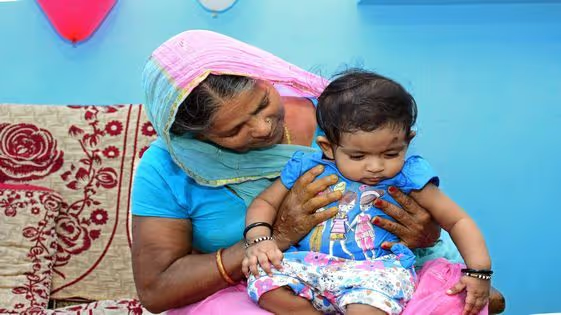
मम्मी-जी को मनाना : भारत में परिवार नियोजन के लिए सास की स्वीकृति
भारत में हर साल 11 अप्रैल को, जो कस्तूरबा गाँधी की जयन्ती होती है, राष्ट्रीय सुरक्षित मातृत्व दिवस के रूप में मनाया जाता है। इसे मानाने का उद्देश्य गर्भावस्था, प्रसव और प्रसवोत्तर चरणों में माताओं के लिए उचित स्वास्थ्य सेवा और कल्याण के महत्व के बारे में जागरूकता बढ़ाना है। इसी सन्दर्भ में प्रस्तुत दो आलेखों की इस श्रृंखला के पहले लेख में यह चर्चा की है कि महिलाओं की परिवार नियोजन सेवाओं तक पहुँच पर सास का क्या प्रभाव पड़ता है। पारम्परिक रूप में सास औसतन महिलाओं और उनके पतियों की तुलना में अधिक बच्चों और बेटों को प्राथमिकता देती हैं। लेख में उत्तर प्रदेश में महिलाओं को सब्सिडी वाले परिवार नियोजन तक पहुँच प्रदान करने वाले एक हस्तक्षेप के प्रभावों का वर्णन है। इस हस्तक्षेप से महिलाओं और उनकी सास के बीच परिवार नियोजन के बारे में बातचीत में वृद्धि हुई, जिसके परिणामस्वरूप सासों द्वारा परिवार नियोजन के प्रति स्वीकृति में वृद्धि हुई, और उल्लेखनीय रूप से बहुओं के क्लिनिक में जाने की संख्या में भी वृद्धि हुई है।
Bring a friend: Leveraging financial and peer support to improve women’s reproductive agency
In the second of two articles about women’s fertility and family planning, S Anukriti et al. highlight findings which reveal that women are more likely to avail of family planning services if they are accompanied by one of their peers to the clinic. They suggest that peer support could also reduce social isolation, enable greater mobility, and overcome the resistance from mothers-in-law and other family members, with the findings of this intervention having broader implications for women’s empowerment.
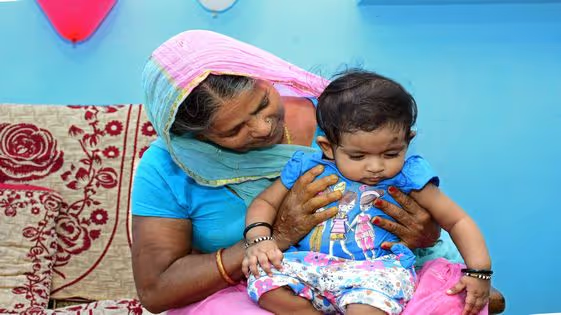
Convincing the Mummy-ji: Improving mother-in-law approval of family planning in India
In the first of two articles about women’s fertility and family planning, Anukriti et al. discuss the influence that mothers-in-law have on women’s access to family planning services, with them on average preferring more children and sons than the women and their husbands. They describe the effects of an intervention that provides access to subsidised family planning to women in Uttar Pradesh. The intervention increased conversations about family planning between women and their mothers-in-law, with a consequent increase in mothers-in-law’s approval of family planning, and significantly, an increase in daughters-in-law’s clinic visits.
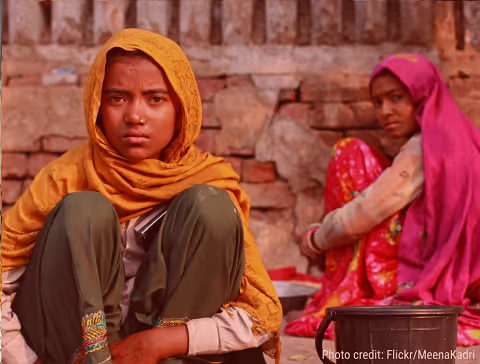
सास अपनी बहुओं के सामाजिक नेटवर्क तथा प्रजनन स्वास्थ्य को कैसे प्रभावित करती हैं?
परिवार के सदस्यों द्वारा लगाए गए प्रतिबंधात्मक सामाजिक मानदंड एवं रणनीतिक बाधाएं, महिलाओं की सामाजिक नेटवर्क तक पहुंच और उससे प्राप्त होने वाले लाभ को सीमित कर सकती हैं। ग्रामीण उत्तर प्रदेश में एक सर्वेक्षण के आधार पर इस लेख में दिखाया गया है कि यदि सास के साथ रहने वाली और ना रहने वाली विवाहित महिलाओं की तुलना की जाए, तो, जो महिला अपने सास के साथ रहती है उसके घर के बाहर करीबी साथियों की संख्या 36% कम है। इसके परिणामस्वरूप प्रजनन स्वास्थ्य सेवाओं तक उनकी पहुंच कम हो जाता है।

सास अपनी बहुओं के सामाजिक नेटवर्क तथा प्रजनन स्वास्थ्य को कैसे प्रभावित करती हैं?
परिवार के सदस्यों द्वारा लगाए गए प्रतिबंधात्मक सामाजिक मानदंड एवं रणनीतिक बाधाएं, महिलाओं की सामाजिक नेटवर्क तक पहुंच और उससे प्राप्त होने वाले लाभ को सीमित कर सकती हैं। ग्रामीण उत्तर प्रदेश में एक सर्वेक्षण के आधार पर इस लेख में दिखाया गया है कि यदि सास के साथ रहने वाली और ना रहने वाली विवाहित महिलाओं की तुलना की जाए, तो, जो महिला अपने सास के साथ रहती है उसके घर के बाहर करीबी साथियों की संख्या 36% कम है। इसके परिणामस्वरूप प्रजनन स्वास्थ्य सेवाओं तक उनकी पहुंच कम हो जाता है।
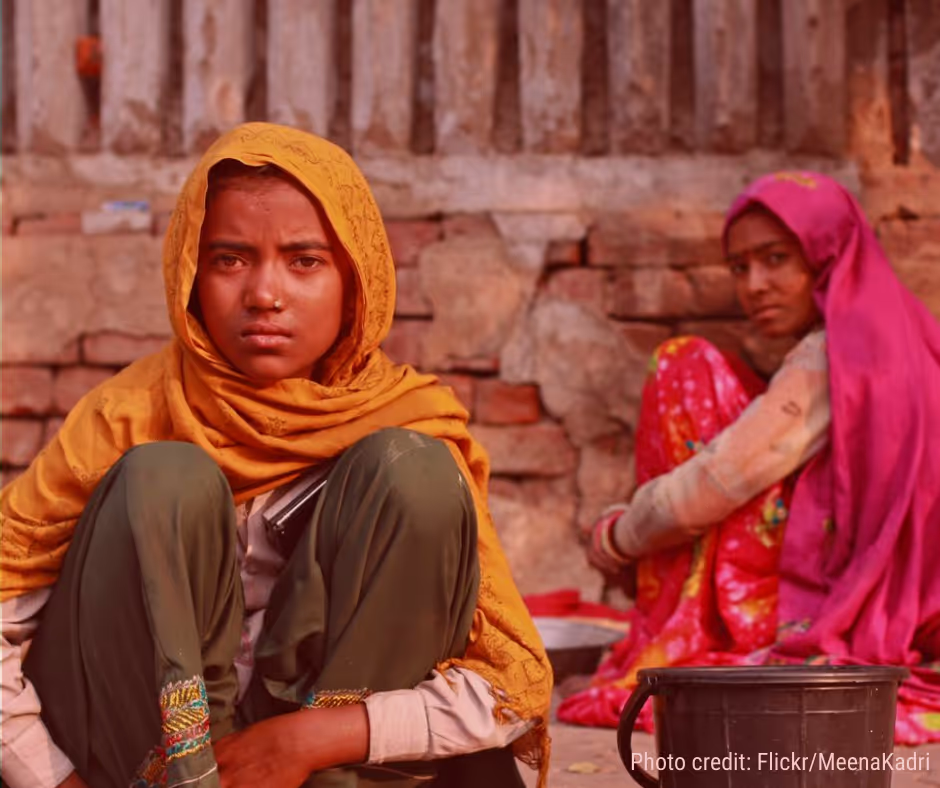
How mothers-in-law influence women’s social networks and reproductive health
Restrictive social norms and strategic constraints imposed by family members can limit women’s access to and benefit from social networks. Based on a survey in rural Uttar Pradesh, this article shows that a young, married woman who lives with her mother-in-law has 36% fewer close peers outside the home – in comparison to a similar woman who does not co-reside with the mother-in-law – which in turn reduces her access to, and utilisation of reproductive health services.
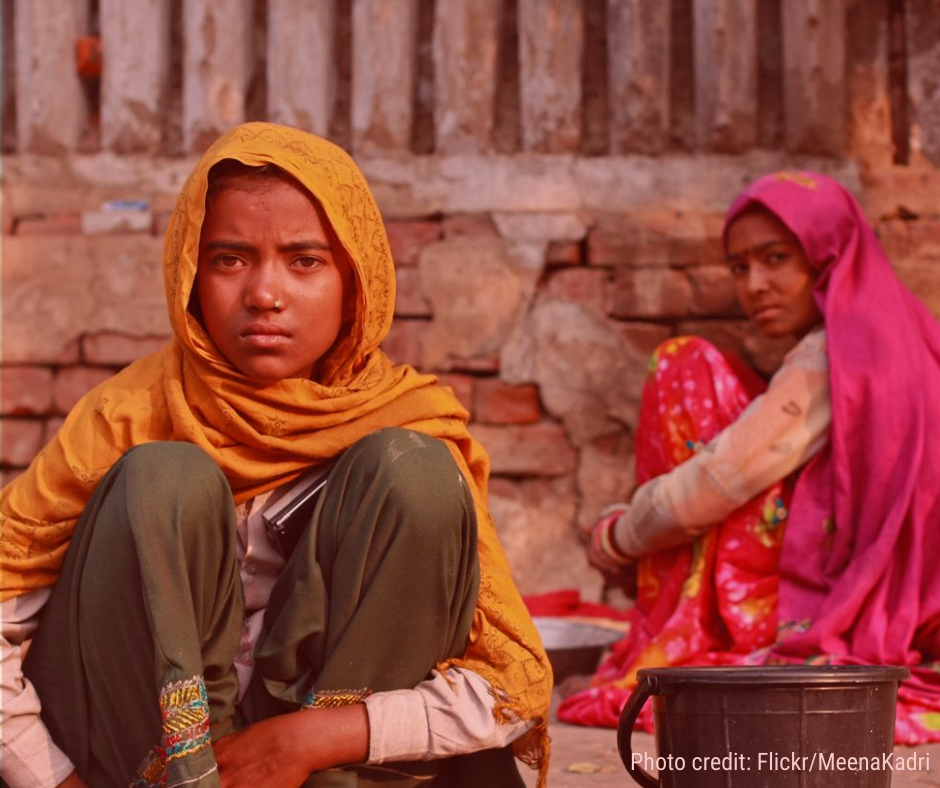
How mothers-in-law influence women’s social networks and reproductive health
Restrictive social norms and strategic constraints imposed by family members can limit women’s access to and benefit from social networks. Based on a survey in rural Uttar Pradesh, this article shows that a young, married woman who lives with her mother-in-law has 36% fewer close peers outside the home – in comparison to a similar woman who does not co-reside with the mother-in-law – which in turn reduces her access to, and utilisation of reproductive health services.