
.svg)
.svg)
%201.svg)
%201.svg)
.svg)

.svg)
.svg)
Soham Sahoo
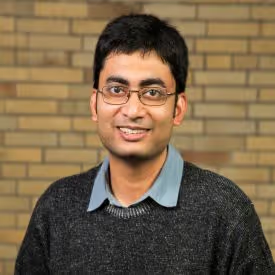
Soham Sahoo an Assistant Professor of Economics based at Loughborough University, UK. He is also associated with the Centre for Public Policy, Indian Institute of Management Bangalore.
His research interest is broadly in development economics, with a focus on education, gender, labour, and political economy. Soham holds a Ph.D. in Quantitative Economics from the Indian Statistical Institute, Delhi. Before joining IIM Bangalore, he worked as a Postdoctoral Researcher at the Department of Economics of University of Goettingen, Germany. He has also held visiting positions at the Centre for Modern Indian Studies, University of Goettingen and Institute for Employment Research, University of Warwick.
.svg)


भारत में विज्ञान शिक्षा के निर्धारण में जाति और लिंग की भूमिका
12 जनवरी को राष्ट्रीय युवा दिवस के रूप में मनाया जाता है। इसी सन्दर्भ में प्रस्तुत है यह आलेख। शिक्षा और करियर युवाओं के लिए अत्यंत महत्त्वपूर्ण होते हैं। भारत में विज्ञान, प्रौद्योगिकी, इंजीनियरिंग और गणित (एसटीईएम) स्तर की शिक्षा प्राप्त करने के लिए उच्च माध्यमिक स्तर पर विज्ञान का अध्ययन करना आवश्यक है। इस लेख में हालिया शोध के आधार पर विज्ञान का अध्ययन करने के विकल्प में लिंग और जाति-आधारित असमानताओं की व्यापकता को प्रस्तुत किया गया है। लेख में परिवारों की सामाजिक-आर्थिक स्थिति, स्कूली शिक्षा तक पहुँच की कमी और इन असमानताओं को समझाने में गलत मान्यताओं व पूर्वाग्रहों की भूमिका पर प्रकाश डालते हुए, यह दर्शाया है कि शिक्षकों की सामाजिक पहचान का वंचित समूहों द्वारा विज्ञान को चुनने पर प्रभाव पड़ सकता है।


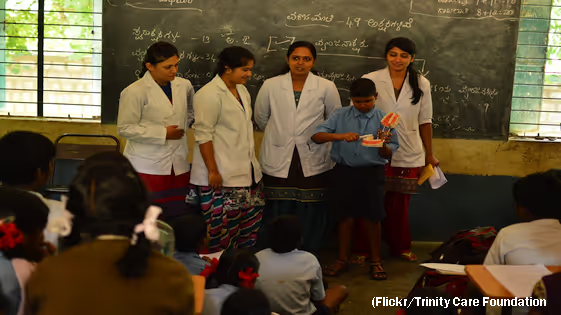
The role of caste and gender in determining science education in India
Studying science at the higher secondary level is essential to pursue further STEM education in India. However, based on recent research, this article documents the prevalence of gender- and caste-based disparities in the choice to study science. It highlights the role of households’ socioeconomic status, lack of access to schooling, and false beliefs and biases in explaining these disparities, and suggests that the social identity of teachers could have an impact on the uptake of science by disadvantaged groups.
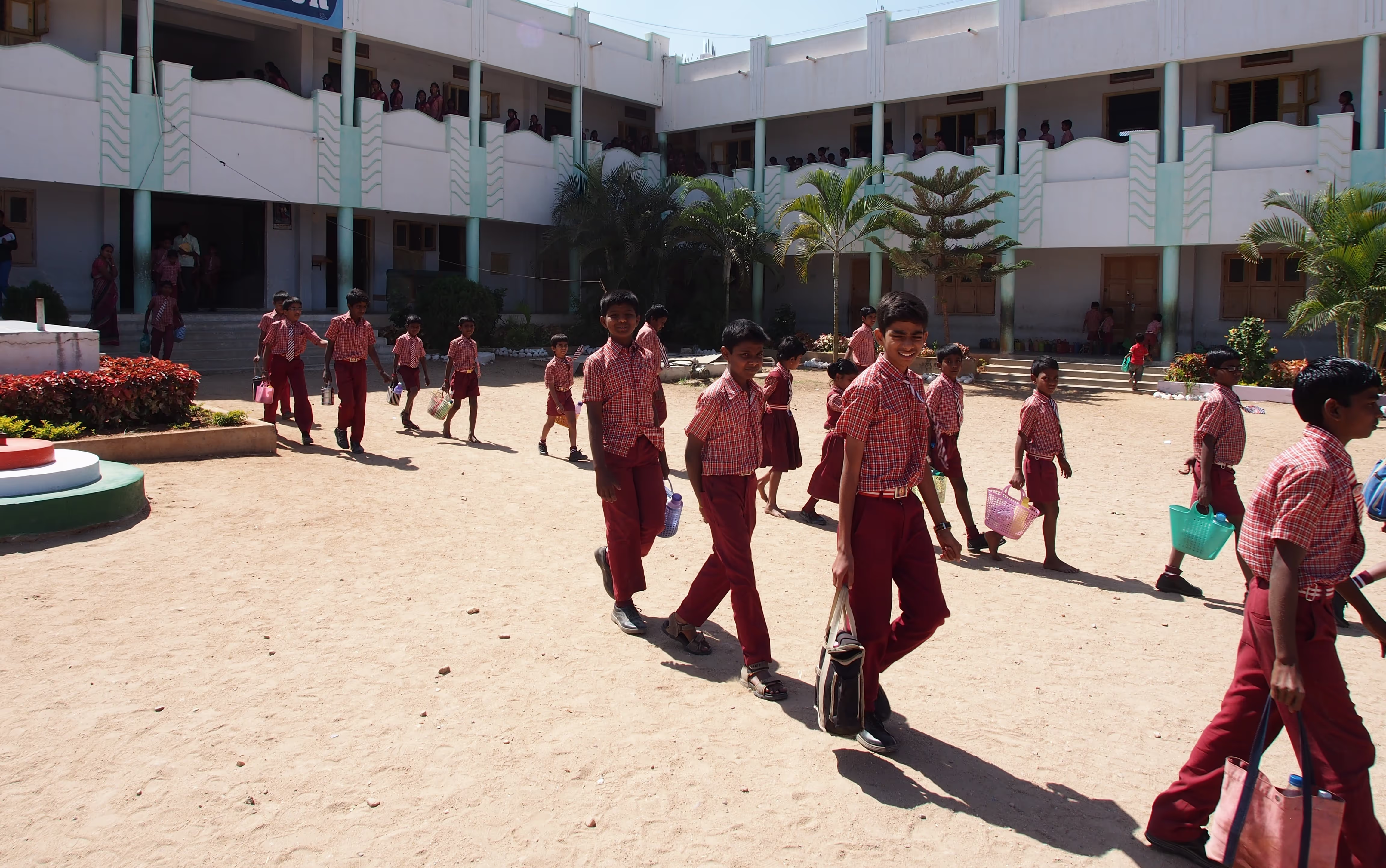
The influence of local politicians in the private education market
Private schooling has experienced rapid expansion in India – both in terms of number of schools and student enrolment. Analysing data from 2005-2017, this article shows that constituencies represented by ruling party-aligned politicians experience significantly higher growth in private schools, relative to those represented by opposition leaders, potentially through the influence exerted by the former over the bureaucracy. However, this does not translate into improvements in educational quality.

जब आपराधिकता अपराध को जन्म देती है: निर्वाचित राजनेताओं की भूमिका
राजनीति का अपराधीकरण समाज के लिए एक बहुत बड़ा खतरा बन गया है। यद्यपि साहित्य में आपराधिक रूप से आरोपी नेताओं के आर्थिक परिणामों पर अध्ययन तो किया गया है, लेकिन उनके क्षेत्राधिकार में आपराधिक माहौल पर उनके प्रभाव के बारे में बहुत कम जानकारी उपलब्ध है। 2009-2018 के भारत के आंकड़ों का विश्लेषण कर इस लेख में यह दिखाया गया है कि कमजोर कानून-व्यवस्था वाले जिलों में एक अतिरिक्त आपराधिक रूप से आरोपी नेता 64 अतिरिक्त आपराधिक मामलों का कारण बन जाता है।
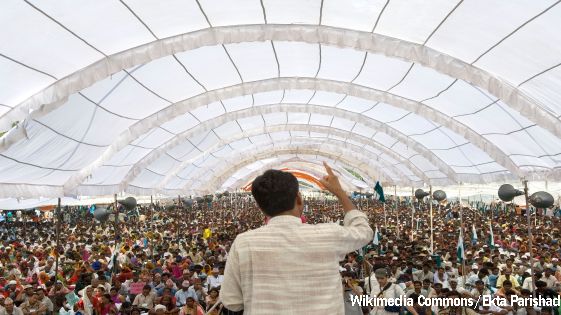
When criminality begets crime: The role of elected politicians
The criminalisation of politics has become a massive threat to society. While the impact of criminally accused leaders on economic outcomes has been studied in the literature, little is known about their effect on the crime environment of the jurisdiction. Analysing data from India for 2009-2018, this article shows that in districts with weak rule of law, an additional criminally accused leader leads to 64 more criminal cases.