
.svg)
.svg)
%201.svg)
%201.svg)
.svg)

.svg)
.svg)

.svg)

.svg)




Environment
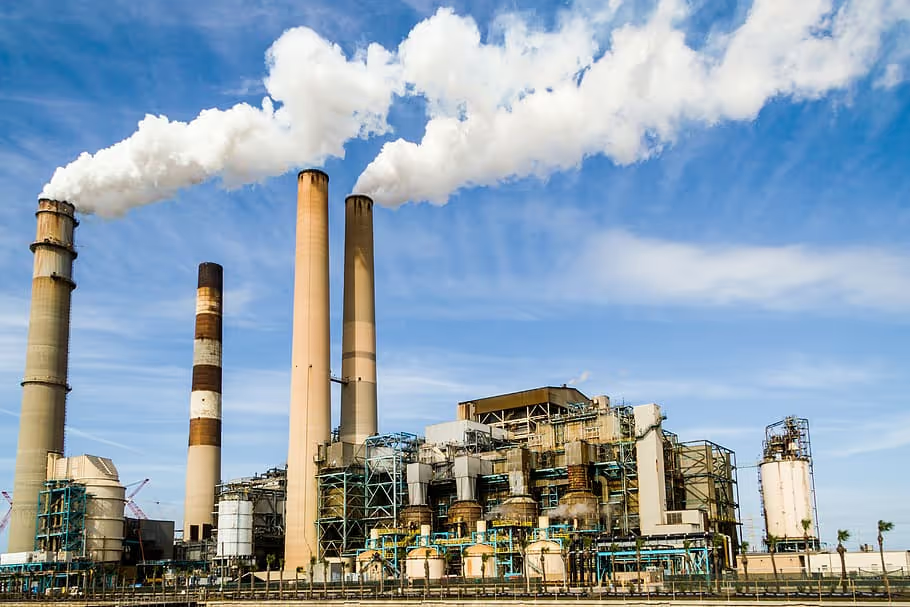
Trade-offs in carbon trading: Can a carbon market yield benefits for India?
The creation of a national carbon market in India, depending on its institutional setup, policy integration, and design could offer a mechanism for reducing emissions, or it could result in serious economic costs. Srivastava and Swain put forth seven key considerations for its design – including India's growth objectives, trade balance, fiscal revenues, and the effect on its MSMEs. To ensure its success, they highlight the need to integrate it with a comprehensive policy package to quell broader political economy challenges.



Learnings from emissions trade in India
India, and many developing nations in other parts of the world take solace in the U-shaped Kuznets curve: a belief in this inverse relationship between income and environmental quality results in not enough efforts being made to tackle pollution and environmental degradation in these countries. There is an urgent need for policy which can protect societies and people from the adverse effects of climate change. In this edition of I4I Conversations, Anant Sudarshan and Michael Greenstone discuss their work as environmental economists, and the many ways in which they have been able to use research to help guide policy. This includes their work on emissions trading in Surat, the cap-and-trade market in Gujarat, and clean cookstoves in Orissa. In that context, they list some of the difficulties with environmental regulation, such as the reluctance to install emissions monitors and falsification of the readings. They also delve into the trade-off between finding energy sources that are ...
Learnings from emissions trade in India
India, and many developing nations in other parts of the world take solace in the U-shaped Kuznets curve: a belief in this inverse relationship between income and environmental quality results in not enough efforts being made to tackle pollution and environmental degradation in these countries. There is an urgent need for policy which can protect societies and people from the adverse effects of climate change. In this edition of I4I Conversations, Anant Sudarshan and Michael Greenstone discuss their work as environmental economists, and the many ways in which they have been able to use research to help guide policy. This includes their work on emissions trading in Surat, the cap-and-trade market in Gujarat, and clean cookstoves in Orissa. In that context, they list some of the difficulties with environmental regulation, such as the reluctance to install emissions monitors and falsification of the readings. They also delve into the trade-off between finding energy sources that are ...
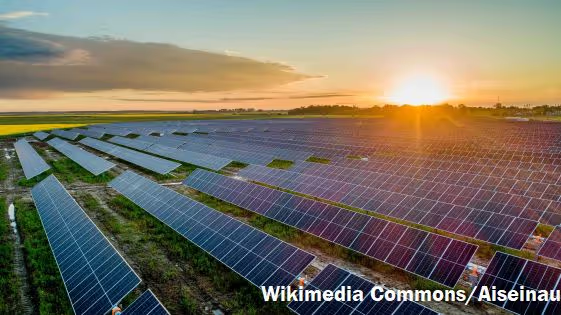
Reducing information barriers to solar adoption: Experimental evidence from India
A large number of people lack access to reliable and high-quality electricity supply. Off-grid solar technologies can fill this gap, but adoption remains low. This article looks at the role of information provision on the adoption of solar home-systems in three Indian states, and finds that potential customers who were better informed expressed a greater interest in solar products, even though actual take-up remained low due to income and credit constraints.
Pledges, plans, and actions: An analysis of India’s Panchamrit pledges
In anticipation of India updating its Nationally Determined Contributions (NDCs), Aman Srivastava and Ashwini Swain evaluate the climate pledges made by Prime Minister Modi at COP26. In the context of historical trends and growth and development objectives, they discuss the feasibility and implications of reducing India’s emissions intensity and increasing the share of renewables in its energy mix. They use this analysis to suggest potential ways forward towards ensuring greater clarity and cohesion among these pledges.
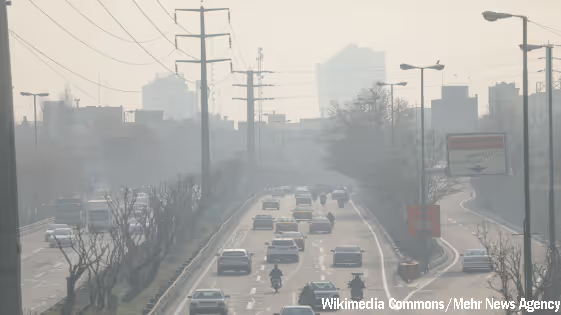
The role of regulatory innovation in reversing India’s environmental degradation
In the Yale Environmental Performance Index, India ranked last out of 180 countries. Anant Sudarshan examines the broader economic and developmental costs of environmental degradation. Based on the literature and his own empirical work he argues that regulatory stagnation has made it harder to find solutions, with India failing to sufficiently engage with promising innovations in environmental policy. He suggests that environmental governance in India would benefit from more research-policy collaboration and broader disciplinary expertise.
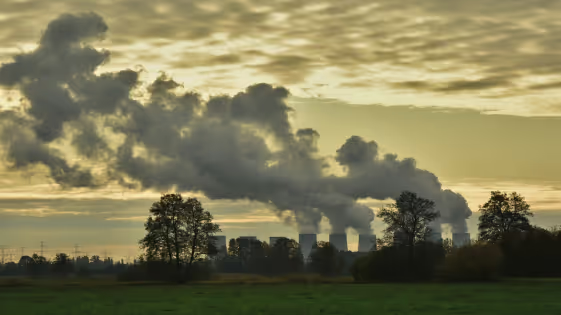
In extremity and externality: Need for policies to protect children from environmental crises
Despite the undeniable threats of climate change, little consideration has been given to creating social safety nets for the vulnerable or engendering resilience in institutions disrupted by extreme climate events. In this post, Despite the undeniable threats of climate change, little consideration has been given to creating social safety nets for the vulnerable or engendering resilience in institutions disrupted by extreme climate events. In this post, Nikita Sharma considers the impact of climate change on economies and individuals, particularly children whose health and education are impeded as a result of extremities and externalities, and the need for policy to support them alongside those to mitigate the climate crisis.
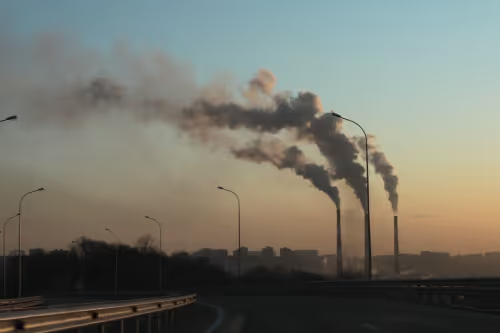
Carbon dioxide emissions from India’s industries: Data sources and discrepancies
Industries are one of the most significant contributors to energy-related carbon-dioxide (energy-CO2) emissions in India – the share of industries in the total emissions was 25%, second only to power generation. In this post, Manisha Jain examines the trends, and differences in the two data sources on manufacturing emissions in India – International Energy Agency estimates, and country-level data reported by the central government to the United Nations Framework Convention on Climate Change.
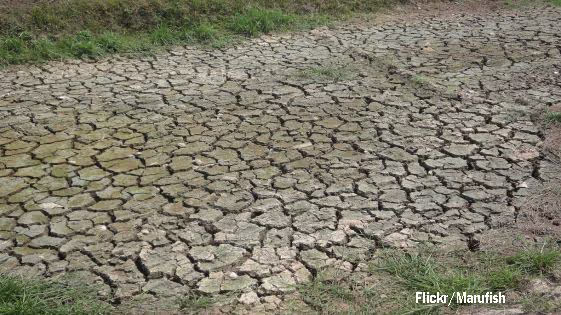
Reimagining Indian federalism in the climate crisis
Climate change is an increasingly urgent problem for India, as for all countries. In this post, Pillai et al. contend that addressing the issue requires reimagining Indian federalism, as the Indian Constitution gives states a crucial role in several arenas of climate action. They propose a new approach to institutional reform in climate policy, one that gives states adequate flexibility while coordinating their actions for national goals.


Sign up to our newsletter to be notified about the latest updates
.svg)
Just One Step Away!
Complete your signup to start getting the latest news, stories, and updates delivered straight to your inbox.