
.svg)
.svg)
%201.svg)
%201.svg)
.svg)

.svg)
.svg)
.svg)
.svg)

.svg)
.svg)
.svg)




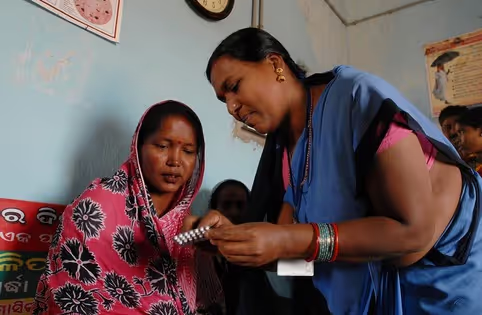
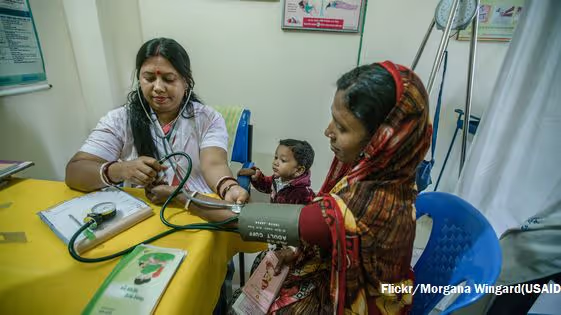
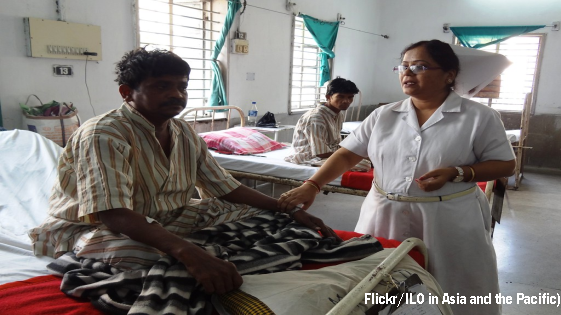
This project aims to add to the broad literature on improving the quality of public services by looking at the effect of providing incentives to agents for spreading information regarding a government-funded health insurance programme on the level of programme knowledge and enrolment among beneficiaries. It compares the impact of such monetary incentives to that of matching agents with beneficiaries in terms of socioeconomic characteristics, in order to understand their relative efficacy in information dissemination. This is done through a randomised experiment conducted across 151 villages in rural Karnataka in south India. The results suggest that providing financial incentives linked to provision of knowledge about the programme had a positive impact on agent performance and led to an improvement in knowledge about the programme. It also finds that improved knowledge led to higher take-up of the programme among beneficiaries and that social matching plays a significant role in information dissemination, independent of the effects of incentive pay.


















































































.svg)

.svg)
%201.svg)
.svg)
.svg)
