
.svg)
.svg)
%201.svg)
%201.svg)
.svg)

.svg)
.svg)
.svg)
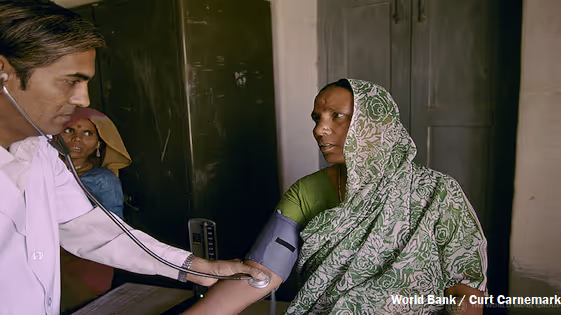
India’s primary healthcare reform: Improved service delivery, reduced mortality
.svg)

.svg)

Human Development

India’s massive employment problem and some ways out
In the recent announcement of India’s Union Budget 2024-25, significant emphasis was placed on the need for job creation. In this post, Pranab Bardhan presents a four-pronged strategy for the sustainable generation of good jobs in the long run: mass-scale vocational education and apprenticeship; replacing capital subsidies with conditional, wage subsidies; providing extension services to non-farm household enterprises; and boosting demand via a basic income supplement for vulnerable groups.


Managing India’s demographic transition
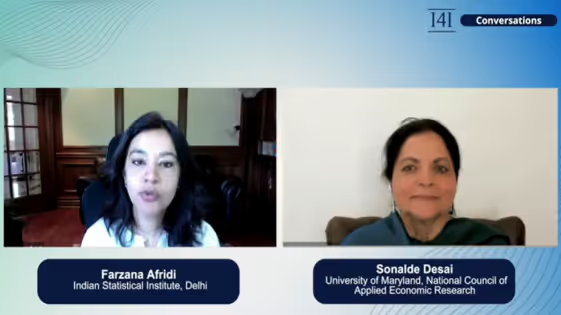
India’s population is expected to peak at about 1.7 billion in 2064, and while the current median age is only 28, the share of Indians aged 65 and above will go from 7% to 20% in the next 40 years or so. Has India been able to take advantage of its demographic dividend of a large working-age population, and is the country prepared for the upcoming transition from a young to an ageing population? In a new edition of I4I conversations, Farzana Afridi (Indian Statistical Institute, Delhi) and Sonalde Desai (University of Maryland & National Council of Applied Economic Research) discuss the challenges associated with India’s demographic dividend. They emphasise the need to tap into the full workforce, including women, as well as ensuring that workers are productive. They also analyse the issue of ageing both from the perspective of society and family. ....
Managing India’s demographic transition
India’s population is expected to peak at about 1.7 billion in 2064, and while the current median age is only 28, the share of Indians aged 65 and above will go from 7% to 20% in the next 40 years or so. Has India been able to take advantage of its demographic dividend of a large working-age population, and is the country prepared for the upcoming transition from a young to an ageing population? In a new edition of I4I conversations, Farzana Afridi (Indian Statistical Institute, Delhi) and Sonalde Desai (University of Maryland & National Council of Applied Economic Research) discuss the challenges associated with India’s demographic dividend. They emphasise the need to tap into the full workforce, including women, as well as ensuring that workers are productive. They also analyse the issue of ageing both from the perspective of society and family. ....
Historical land policies and socioeconomic development: The case of Uttar Pradesh
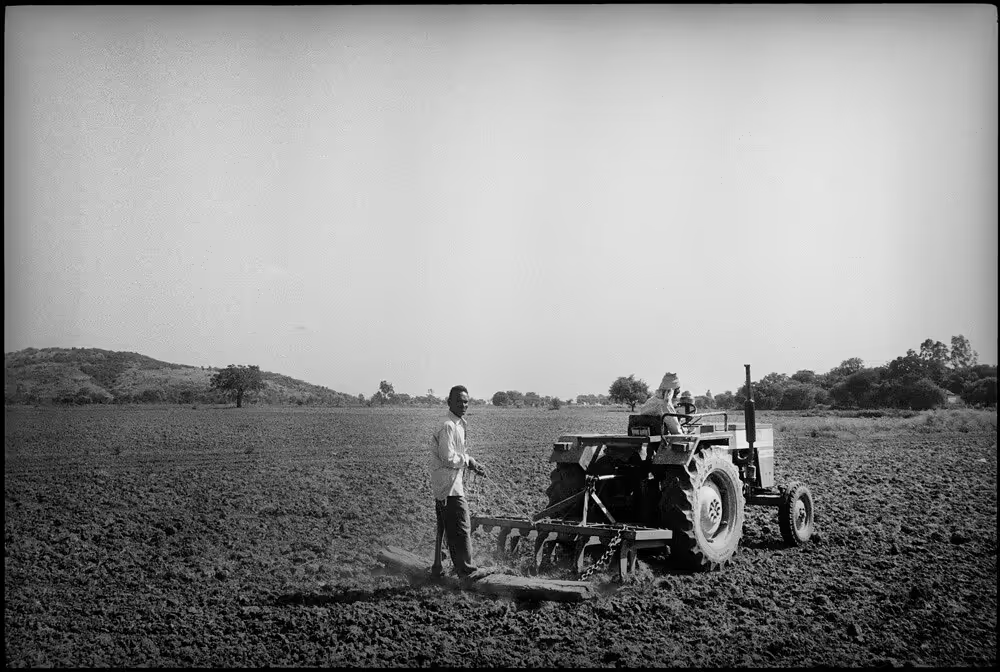
Uttar Pradesh is characterised by significant intra-state variation in developmental outcomes, with research suggesting that this could be partially attributable to the long-run effects of differences in colonial land policies within the state. Comparing areas that underwent land reforms in the 19th century with those that did not, this article demonstrates that the former experienced positive long-run effects on wealth and human capital – including among lower-caste households whose ancestors did not receive land under the reforms.

Reversing the trend: Improving toilet access for better test scores
Poor sanitation is associated with adverse health outcomes among children, which in turn are linked with poor educational outcomes. Leveraging the staggered implementation of ‘Swachh Bharat Mission’ across districts in India during 2014-2018, this article shows that exposure to the programme improves children’s test performance in the short term, with larger estimated benefits the longer districts were exposed to the programme

Water water everywhere, not a drop to drink? Information and enabling access to clean water
Over 50 million people in India are exposed to arsenic-contaminated water, leading to adverse health outcomes – especially for children. Yet, the demand for private, safe drinking water remains low in the affected areas. Based on an experiment in Assam, this article demonstrates how combining water quality awareness interventions with a reduction of transactional complexity in obtaining related government benefits can help address the issue.

How teachers’ beliefs can shape motivation and student learning
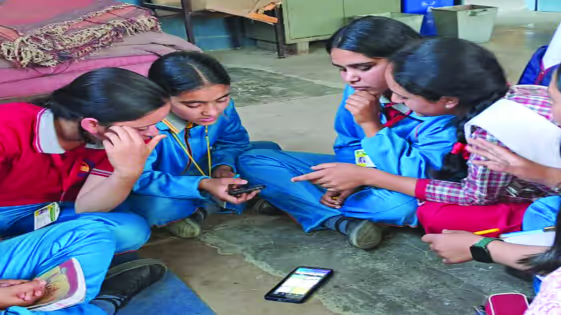
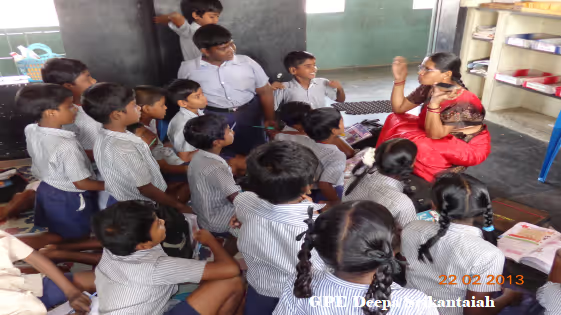
While teacher effort is crucial for student learning, evidence suggests that this is not what teachers themselves believe. This article presents findings from a randomised experiment involving a psycho-social intervention targeted at teachers. It shows that teachers exposed to the intervention exhibit greater confidence in their ability to raise student learning and exert more effort
Aiding the search for good jobs: Evidence from Uganda
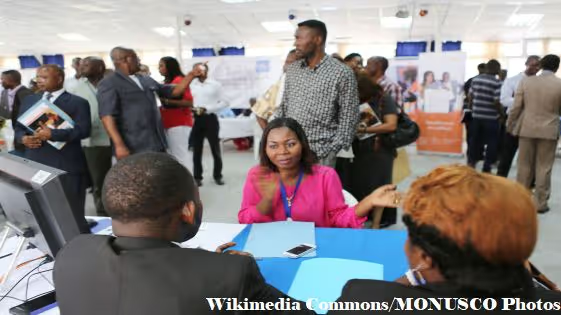
To design policies that lead young labour-market entrants to good jobs, it is important to understand job search processes and what affects the ability to find gainful employment. Based on an experiment in Uganda involving two interventions – vocational training and matching workers with firms – this article shows that while training enhances optimism about employment prospects, matching causes discouragement and poorer labour market outcomes in the long run.
How investing in girls’ education can reduce domestic violence in India
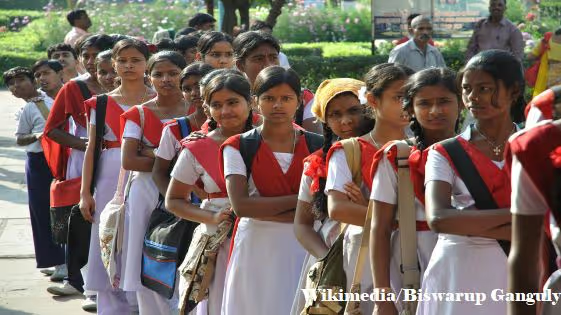
One-third of women in India aged 15-49 report experiencing domestic violence. This article examines the impact of an increase in education among girls due to the District Primary Education Programme – a large-scale school expansion programme – on domestic violence in adulthood. It finds a significant decline in domestic violence, via pathways such as positive shifts in gender attitudes among women, improvements in partner quality, and increased access to information.


Sign up to our newsletter to be notified about the latest updates
.svg)
Just One Step Away!
Complete your signup to start getting the latest news, stories, and updates delivered straight to your inbox.