
.svg)
.svg)
%201.svg)
%201.svg)
.svg)

.svg)
.svg)
.svg)
.svg)

.svg)
Poverty Inequality

Impact of the Food Security Act on Public Distribution System
‘Leakages’ from the Public Distribution System – that is, grain released by the Food Corporation of India that fails to reach consumers – stood at around 42% in 2011-12 at an all-India level. Passed in 2013, the National Food Security Act guaranteed food security and mandated PDS reforms. As anticipated, based on data from the Household Consumption Expenditure Survey, Reetika Khera shows that leakages were down to 22% by 2022-23.


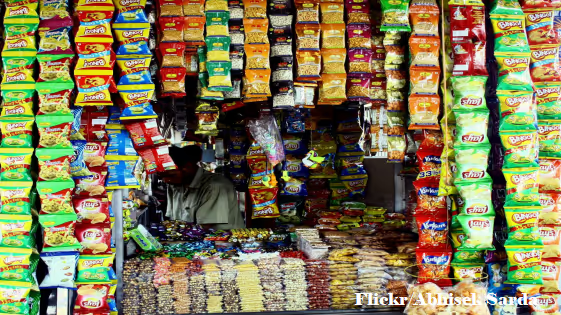
Grain subsidies and junk food purchases among low-income individuals
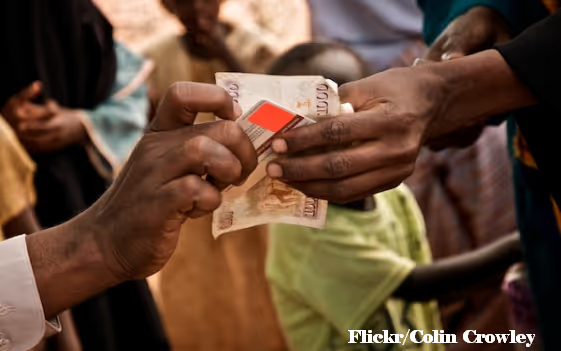
While governments rely on expensive food subsidy programmes to address malnutrition among low-income communities, their impact is unclear as only self-reported data on food purchase decisions are available. Based on an experiment in Mumbai using data from point-of-sale scanners, this article finds that low-income individuals – especially those living in households with children – who received a wheat and rice subsidy spent less on junk food and more on spices and accompaniments that complement grains in home cooking.
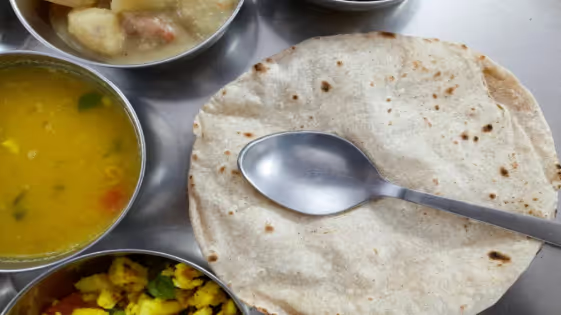
Why are canteens important when 800 million people get free grains?
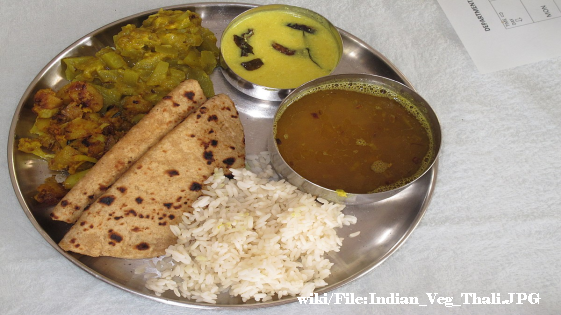
Over the past decade, canteens have been established in various parts of India to provide subsidised meals and enhance food security. Based on a survey of canteens conducted across three states, Reetika Khera contends that this social policy intervention has helped ensure dignified meals for millions, created jobs, and fostered a sense of oneness and well-being for many. She advocates for more and guaranteed funding for canteens, revamp and expansion of menus, better infrastructure, and fair wages for staff.
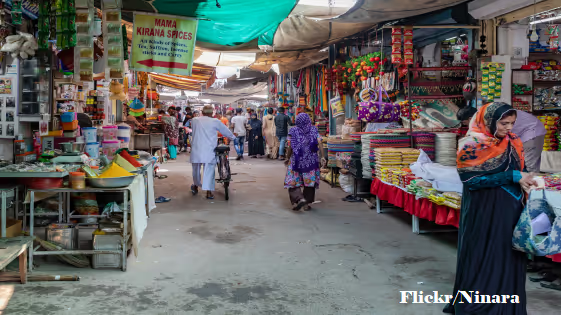
The problem of India’s stagnant real wages
New data from the Labour Bureau and the National Sample Survey Office point to a virtual stagnation of real wages in India over the past decade. In this post, Das and Drèze argue that this trend points to a deep crisis in the country’s informal sector, and warrants a lot more policy attention that it has hitherto received

Rethinking social safety nets in a changing society
This paper was coauthored by Debasis Barik, Pallavi Choudhuri, Bijay Chouhan, Om Prakash Sharma, Dinesh Kumar Tiwari (NCAER) and Sharan Sharma (University of Maryland College Park and NCAER). Historically, India’s approach to social safety nets has involved identifying the poor and providing them with priority access to social protection. Analysing data from the India Human Development Survey, collected in three waves across 2004-05, 2011-12 and 2022-24, this article finds that households face considerable transition in and out of poverty as the economy grows, making it difficult to identify and target the poor in a precise manner. This is the third article in the Ideas@IPF2024 series
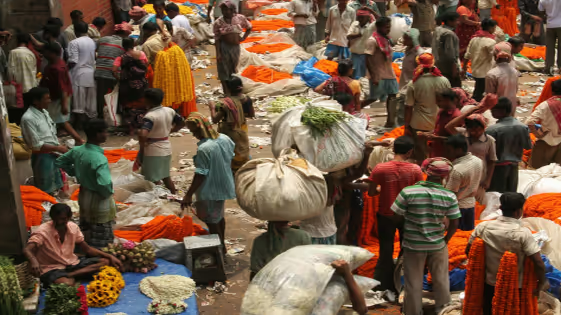
Determining how many Indians are poor today
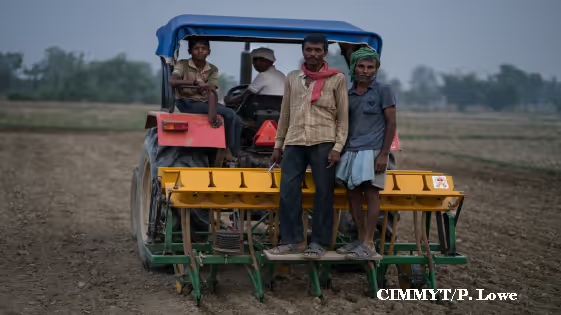
Poverty debates in India have seen a revival since the release of a fact sheet from the 2022-23 household consumption expenditure survey. In this post, Ghatak and Kumar note that the general consensus among researchers is that extreme poverty is under 5%. However, they contest this by digging deeper into how the poverty line is determined and conclude that in the absence of detailed data necessary for calculation of an updated poverty line, doubts will remain about the estimates of extreme poverty
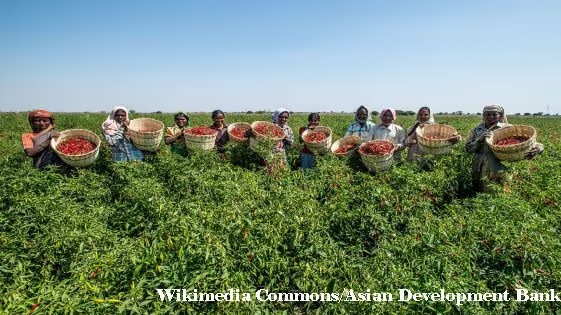
How reforming India’s workfare programme raised private sector earnings
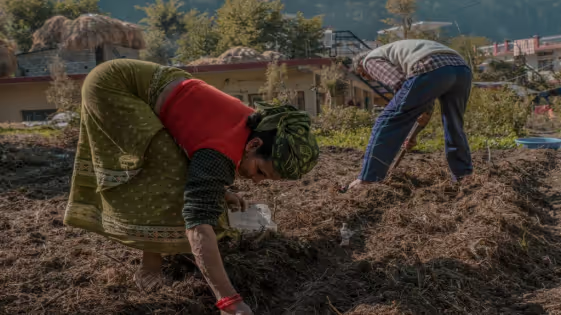
By randomising the rollout of improved, biometric payment infrastructure used to issue National Rural Employment Guarantee Scheme payments in Andhra Pradesh, this study found that this reform raised incomes and reduced poverty. This effect was realised mostly through increases in private labour market earnings, as higher earnings through NREGS put competitive pressure on large landowners who had kept wages low by limiting employment. These findings highlight how critical it is to get implementation of policies and social programmes right..
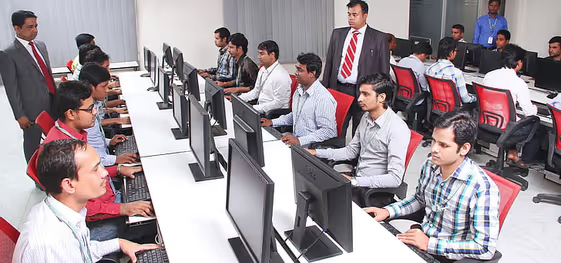
Could job creation be a driver of poverty reduction in India?
While the Indian economy continues to grow, there is a consensus that creating more jobs is vital to reduce poverty. Ejaz Ghani shares trends which suggest that job creation is being driven by cities and small and young firms, but entrepreneurial growth in India has slowed down due to inadequate infrastructure and distorted factor markets. He suggests that the path to job creation and poverty reduction is scaling up local investments in education and infrastructure, and not chasing large firms.
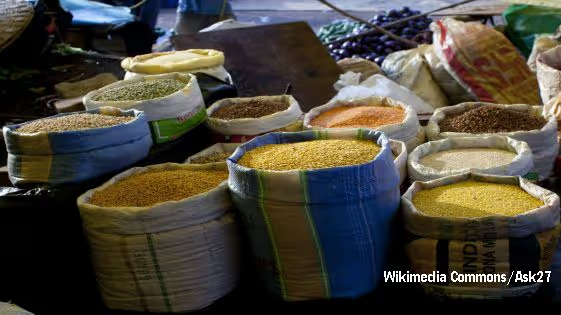
Persistent problems with PDS: An assessment of the Covid-19 ration scheme
This note summarises the findings of a survey conducted by students at IIT Delhi to evaluate the functioning of the PMGKAY scheme across Uttar Pradesh, Haryana and Punjab. It reveals that many households did not receive their entitled ration during the pandemic, and highlights disparities in the states’ distribution efforts along with long-standing issues of the Public Distribution System like exclusion errors due to difficulty in obtaining ration cards for family members, and Aadhar-linkage.
Sign up to our newsletter to be notified about the latest updates
.svg)
Just One Step Away!
Complete your signup to start getting the latest news, stories, and updates delivered straight to your inbox.