
.svg)
.svg)
%201.svg)
%201.svg)
.svg)

.svg)
.svg)

.svg)

.svg)


Social Identity
Assessing gender disparities in entrepreneurship and employment in India
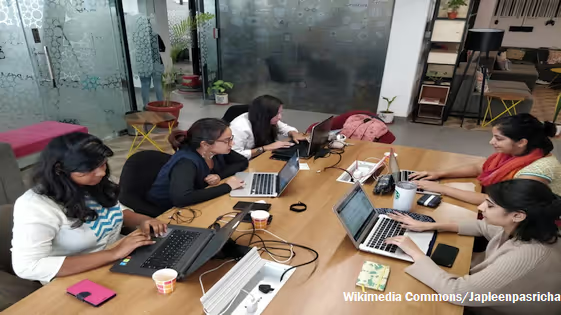
Economic growth depends on successful utilisation of the entire workforce. Ejaz Ghani argues that gender equality is not only a key pillar of human rights, but could be a powerful tool for sustaining higher and more inclusive economic growth. He notes that despite the economic advances that India has made, its gender balance in economic participation remains among the lowest in the world, and shares some statistics from the manufacturing and services sector which highlight these disparities.


The distributional consequences of political reservations
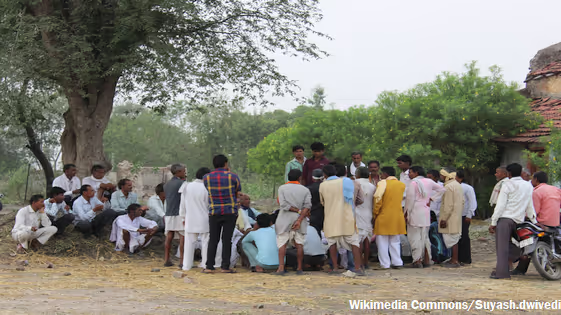
This article identifies and attempts to fill in the gaps in understanding the effects of reservations for Scheduled Castes (SCs) in Panchayats. Using data from a state-wide census, multiple administrative datasets and primary survey data from Bihar, it finds that reservations reduce asset inequality between scheduled castes and others, both in the short run and more substantially, in the long run. It investigates the mechanisms through which this takes place – including greater targeting of public goods, access to welfare programmes and improved political participation. In this context, they also show that reservation works best when sub-castes within SCs are few and their population in the GP is neither too small nor too large.
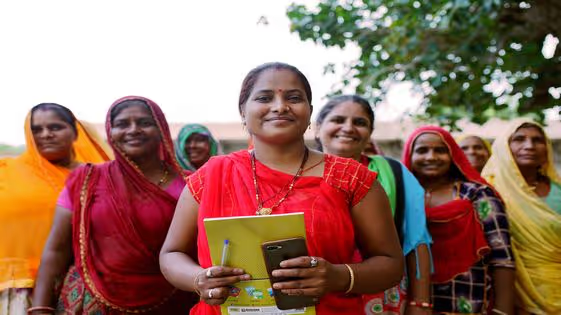
Bring a friend: Leveraging financial and peer support to improve women’s reproductive agency
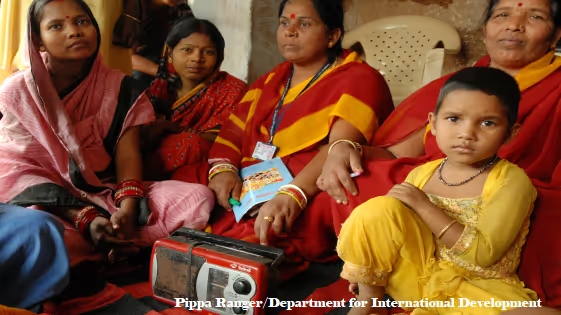
In the second of two articles about women’s fertility and family planning, S Anukriti et al. highlight findings which reveal that women are more likely to avail of family planning services if they are accompanied by one of their peers to the clinic. They suggest that peer support could also reduce social isolation, enable greater mobility, and overcome the resistance from mothers-in-law and other family members, with the findings of this intervention having broader implications for women’s empowerment.
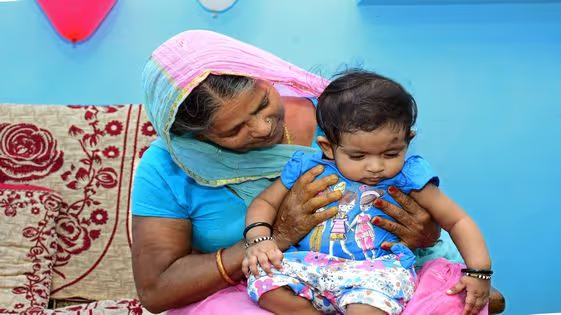
Convincing the Mummy-ji: Improving mother-in-law approval of family planning in India
In the first of two articles about women’s fertility and family planning, Anukriti et al. discuss the influence that mothers-in-law have on women’s access to family planning services, with them on average preferring more children and sons than the women and their husbands. They describe the effects of an intervention that provides access to subsidised family planning to women in Uttar Pradesh. The intervention increased conversations about family planning between women and their mothers-in-law, with a consequent increase in mothers-in-law’s approval of family planning, and significantly, an increase in daughters-in-law’s clinic visits.

Sign up to our newsletter to be notified about the latest updates
.svg)
Just One Step Away!
Complete your signup to start getting the latest news, stories, and updates delivered straight to your inbox.