
.svg)
.svg)
%201.svg)
%201.svg)
.svg)

.svg)
.svg)

.svg)

.svg)


Social Identity
Hypergamy violation and domestic violence
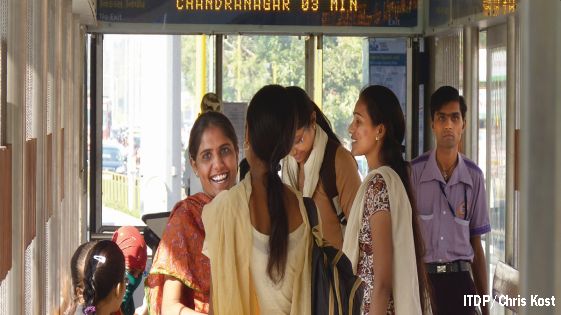
Whether violation of hypergamy – when the wife’s economic status equals or exceeds that of her husband’s – increases or decreases domestic violence is a priori ambiguous. Analysing 2015-2016 National Family Health Survey data, this article shows that women in non-hypergamous marriages are at least 14% more likely to face domestic violence than those in hypergamous marriages; as husbands in non-hypergamous marriages are more likely to use violence as an instrument to establish authority at home.



The impact of displacement on women’s marriage outcomes: Evidence from the partition of India
Women and children are made particularly vulnerable by displacement – the high incidence of gender-based violence and vulnerability to child marriage is well-documented in literature. Using data from Pakistan’s 1973 Housing, Economic, Demographic Characteristics survey, this article examines the impact of displacement during the partition of India (1947-1949) on the outcomes of young women, and finds that adolescent displaced women were more likely to get married at the time of partition, and experienced higher child marriage and fertility rates.

Caste inequalities within socio-religious groups: Evidence from Uttar Pradesh
The Mandal Commission and Sachar Committee reports, among others, have indicated the existence of caste inequalities within the four major caste groups. However, data on this subject remain limited. Using data from a novel 2014-2015 survey conducted in Uttar Pradesh, this article shows that within-group inequalities among upper castes are significantly less, relative to the within-group inequalities observed among both Hindu and Muslim OBCs and Dalits.

A signal to end child marriage: Evidence from Bangladesh
Child marriage remains common even where female schooling and employment opportunities have grown. Based on a field study in Bangladesh, this article seeks to experimentally evaluate the impact of a financial incentive to delay marriage alongside a girls’ empowerment programme. While girls eligible for two years of the incentive are 19% less likely to marry underage, the empowerment programme failed to decrease adolescent marriage.

Sign up to our newsletter to be notified about the latest updates
.svg)
Just One Step Away!
Complete your signup to start getting the latest news, stories, and updates delivered straight to your inbox.