
.svg)
.svg)
%201.svg)
%201.svg)
.svg)

.svg)
.svg)

.svg)

.svg)
Social Identity
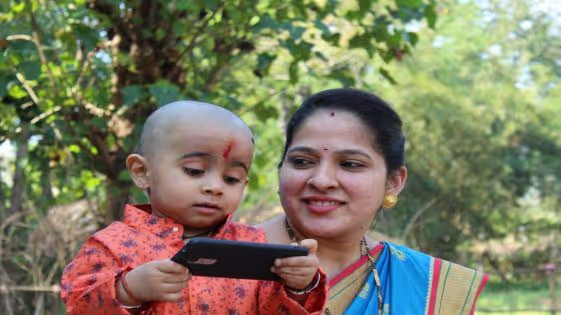
Motherhood, childcare and wages in India
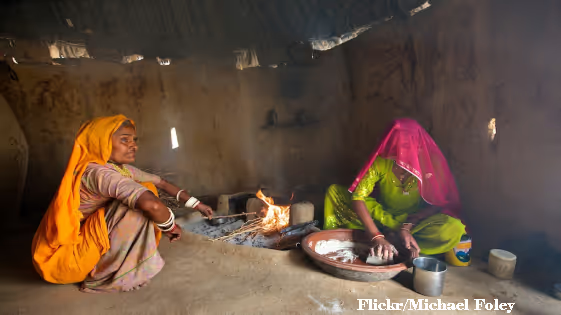
Despite studies emphasising the role of parenthood as central to gender wage inequality in wealthy countries, these wage dynamics in developing countries are poorly understood. This article looks at the association between having children and women’s wages in India. It quantifies the contribution of motherhood to gender wage inequality across urban and rural contexts. Wage reductions associated with motherhood are negligible for rural women, but large for urban women, who have better educational and job characteristics.


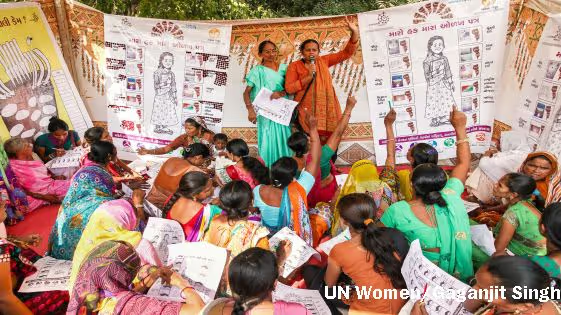
Caste-based differences in self-help groups: Evidence from a rural livelihood programme
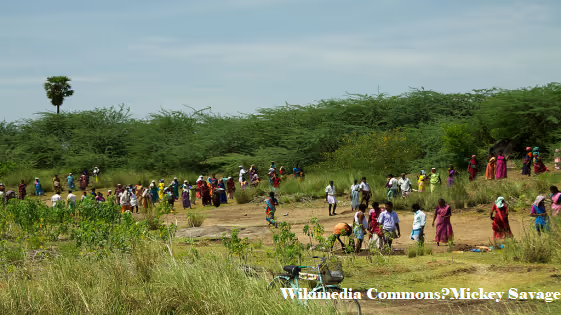
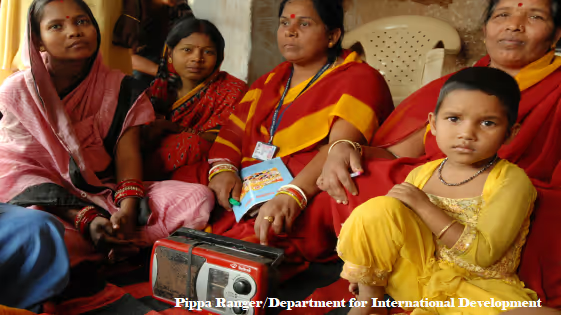
The National Rural Livelihood Mission aims to increase income and improve wellbeing for rural households. Using survey data from nine states in India, this article analyses the existence of caste-based differences in self-help groups within the NRLM programme. It finds that members of disadvantaged groups are equally likely to be elected as an office bearer. Further representation of disadvantaged groups in leadership positions increases participation, access to benefits and other related outcomes amongst members from the disadvantaged group.

'Indian Matchmaking': The marriage market penalty for working women
Despite female education rates rising, India has one of the lowest female labour force participation rates globally. Using data gathered through profiles on Shaadi.com, this article by Diva Dhar estimates the penalty in the marriage market for women who choose to work after marriage. By looking at how women’s career choices are determined by marital incentives, this article also highlights the role that gender norms play in female labour force participation rates in India.
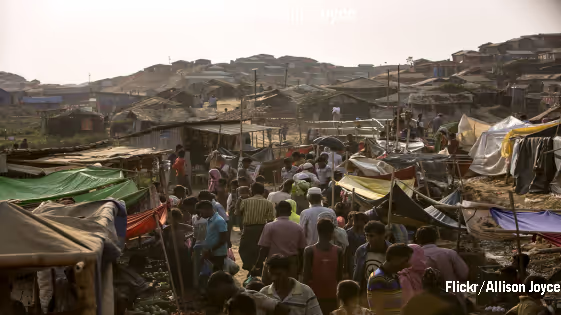
The psychosocial value of employment: Evidence from a refugee camp
Many of the world’s most vulnerable groups – including refugees –lack access to employment opportunities, which along with the obvious benefit of income generation also produces psychosocial benefits for individuals. Based on a field experiment in Bangladesh with Rohingya refugees, this article inspects the effect of providing refugees with employment, and finds that it leads to improved well-being and self-worth, compared to those who receive only a wage-equal amount of cash assistance.

Sign up to our newsletter to be notified about the latest updates
.svg)
Just One Step Away!
Complete your signup to start getting the latest news, stories, and updates delivered straight to your inbox.