
.svg)
.svg)
%201.svg)
%201.svg)
.svg)

.svg)
.svg)

.svg)

.svg)
Social Identity
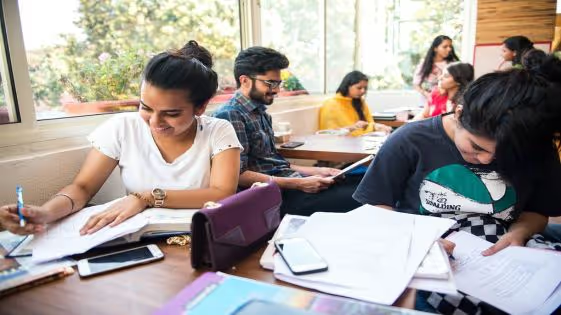
Inching towards college: Exploring gender and mobility in India
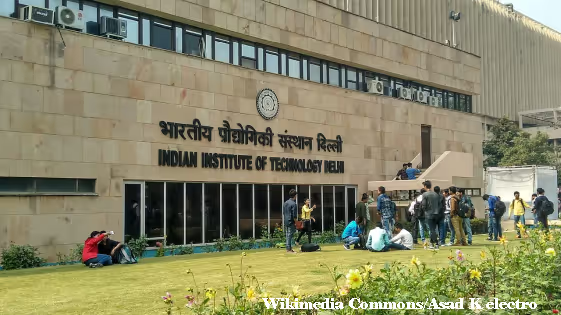
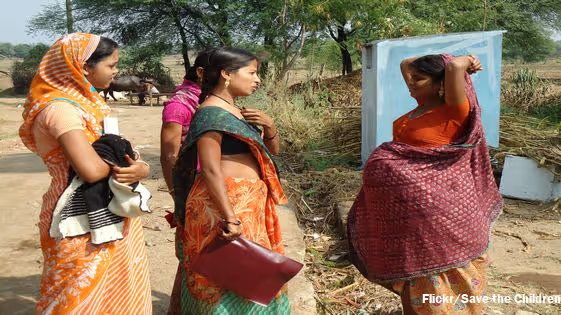
In the sixth post of I4I’s month-long campaign to mark International Women’s Day 2023, Vijaya at al. investigate mobility constraints among college-going students in Jalandhar. They find that while a greater proportion of boys are allowed to travel on their own earlier in life, this gender gap reduces by the time they reach college, and that more girls gain the freedom to travel in households where adult women already travel alone. They also investigate how gender, caste and class-based differences intersect to affect access to mobility: impacting time and distances travelled.


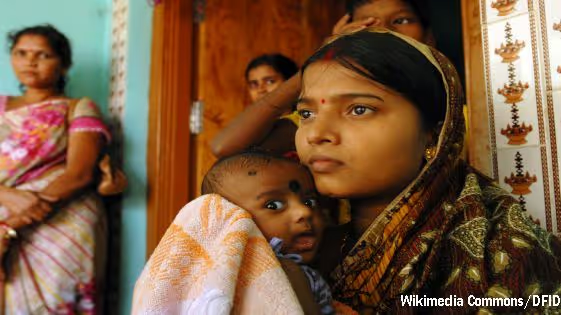
Living with the in-laws: Effect on women’s employment in India
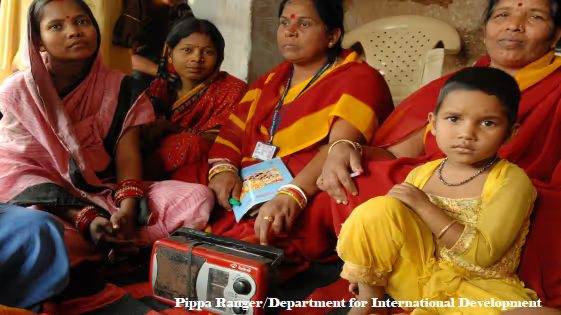
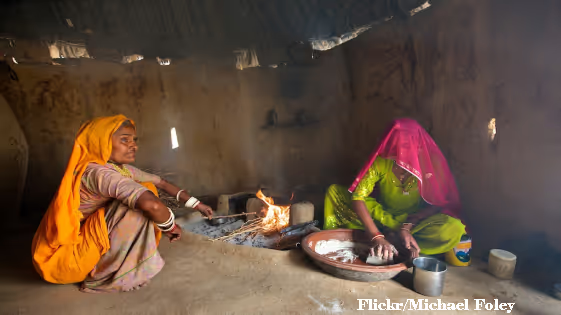
In the fourth post of I4I’s month-long campaign to mark International Women’s Day 2023, Rajshri Jayaraman considers the negative correlation between high rates of co-residence with in-laws and low rates of labour force participation among women in India. She establishes a causal relationship between the two and explores three possible channels through which co-residence could reduce women’s employment – a negative income effect from accessing shared household resources; an increase in domestic responsibilities; and conservative gender norms which restrict women's agency.
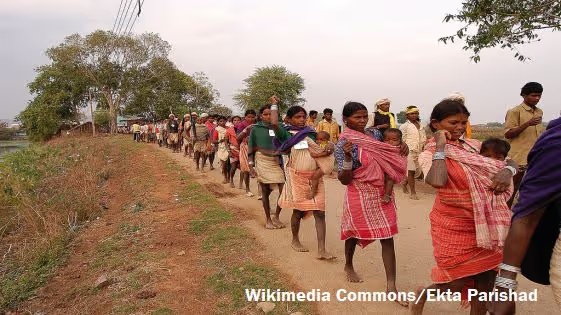
The state of Adivasi livelihoods after 75 years of planned development
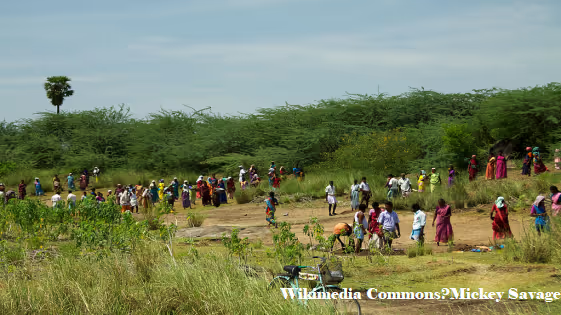
Despite efforts to ensure their wellbeing, the Adivasi community remains one of the most deprived in India. In this post, Chaudhuri and Ghosh discuss the findings of a study surveying the livelihood status of the Adivasi population in Jharkhand and Odisha. Using personal interviews, focus group discussions and household surveys, they find that Adivasis lag behind the rest of the country in not only household income, but also nutritional outcomes, access to roads and public transport, literacy and landholdings

Sign up to our newsletter to be notified about the latest updates
.svg)
Just One Step Away!
Complete your signup to start getting the latest news, stories, and updates delivered straight to your inbox.