
.svg)
.svg)
%201.svg)
%201.svg)
.svg)

.svg)
.svg)

.svg)

.svg)
Social Identity
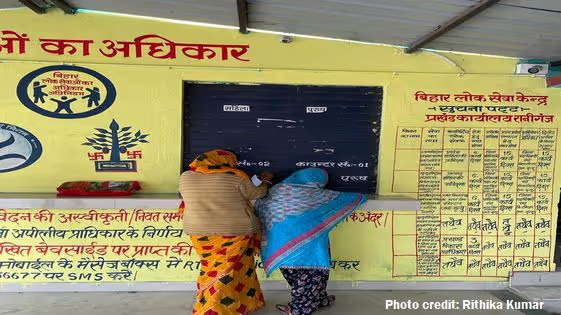
Left behind or left ahead? Implications of male migration on female political engagement
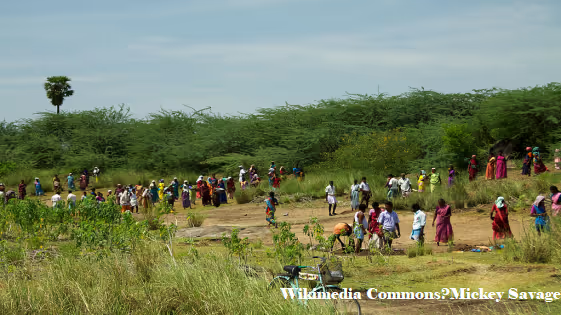
In the eleventh post of I4I’s month-long campaign to mark International Women’s Day 2023, using data from both the IHDS and a survey conducted in rural Bihar, Rithika Kumar finds that migration-driven male absence is leading to the feminisation of everyday political engagement in rural India. This is through an alternate pathway: women are empowered despite remaining financially dependent on the household. However, she finds that the periodic return of migrant men and the dominance of joint family systems constrains this positive effect and in fundamentally altering household dynamics


The effect of domestic violence on cardiovascular risk
In the tenth post of I4I’s month-long campaign to mark International Women’s Day 2023, Seetha Menon investigates the causal relationship between domestic violence and increased risk of cardiovascular disease among women. Using data from NFHS-4, and instrumenting the price of gold at the time of marriage as a source of variation in domestic violence, she finds a positive effect of domestic violence on hypertension in women but finds no effect on the partnered men

The impact of religious violence and social conflict on women’s age of marriage
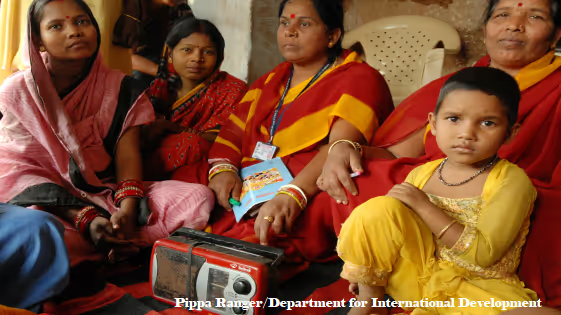
In the ninth post of I4I’s month-long campaign to mark International Women’s Day 2023, Debnath et al. explore the effects of Hindu-Muslim riots on decisions around women's marriage. They find that the incidence of religious violence lowers the age of marriage for women– likely motivated by the desire to marry girls off early to reduce their vulnerability to sexual violence. They find that early marriage also impacts women’s educational attainment, and their age at which they have children.
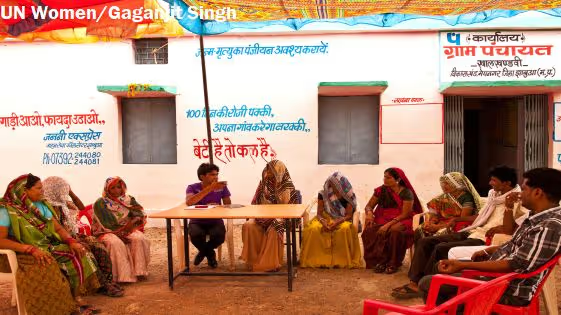
The empowering effects of employment on married women
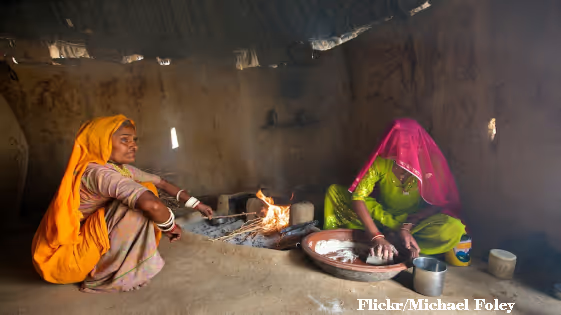
In the seventh post of I4I’s month-long campaign to mark International Women’s Day 2023, Madeline McKelway and Julia Redstone outline the findings of a study investigating the empowerment effects on married women of an employment opportunity in carpet weaving in Uttar Pradesh. They note that although the intervention increased women's participation in the training programme and involvement in household decision making, the employment effects were not long-lasting, as participation in paid work came at the cost of women's leisure time.

Sign up to our newsletter to be notified about the latest updates
.svg)
Just One Step Away!
Complete your signup to start getting the latest news, stories, and updates delivered straight to your inbox.