
.svg)
.svg)
%201.svg)
%201.svg)
.svg)

.svg)
.svg)
Farzana Afridi

Farzana Afridi is Professor of economics at the Indian Statistical Institute (Delhi) and Visiting Professor at the Munk School of Global Affairs and Public Policy at the University of Toronto. Her primary research interests lie in the areas of education, gender, and more recently, political economy. She holds an abiding interest in understanding the response of individuals and households to public programmes in developing countries. She obtained her Ph.D. in economics from the University of Michigan, Ann Arbor and an M.A. in economics from the Delhi School of Economics.
.svg)

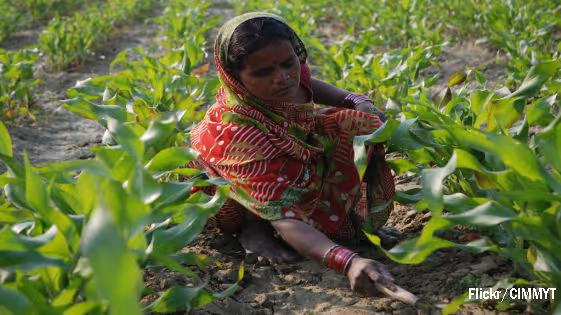
प्रोद्योगिकी में लैंगिक परिवर्तन: कृषि मशीनीकरण से साक्ष्य
भारतीय कृषि में बढ़ते मशीनीकरण के कारण ग्रामीण क्षेत्रों में विशेषकर महिलाओं के लिए कृषि रोजगार में कमी आई है। यह लेख दर्शाता है कि 1999-2011 के दौरान मशीनीकरण में 32 प्रतिशत की वृद्धि देखी गई, जो कृषि में महिलाओं के ग्रामीण रोजगार में हुई 30% की समग्र गिरावट में से 22% गिरावट का कारण हो सकती है। यह गिरावट भूमि की जुताई के बाद किये जाने वाले निराई के कार्य हेतु लगाए जाने वाले श्रम में एक महत्वपूर्ण गिरावट के कारण है।


Gendering technological change: Evidence from agricultural mechanisation
Rising mechanisation in Indian agriculture has been accompanied by reduction in farm employment in rural areas, particularly for women. This article shows that the observed 32 percentage point increase in mechanisation during 1999-2011 can account for 22% of the 30% overall decline in women’s rural employment in agriculture. This is driven by a significant fall in labour used for weeding, an operation that follows tilling of land.

Fostering social connections
This column describes an ongoing study that analyses data from Delhi’s labour-intensive garment factories to explore the relationship between trust among workers and productivity. Using the strength of pre-existing social ties among workers as proxy for the value of trust, it finds that being socially connected has significant implications for worker productivity.
Women and work in rural India
In contrast to the global average of 48%, only 32.6% of the half-a-billion working-age women in India report to be working. It is puzzling that the rapid fertility transition, broad increases in female educational attainment, and substantial economic growth over the past two decades in India has been accompanied by a consistently low share of women working in urban areas and a real reduction in the share of women working in rural areas.
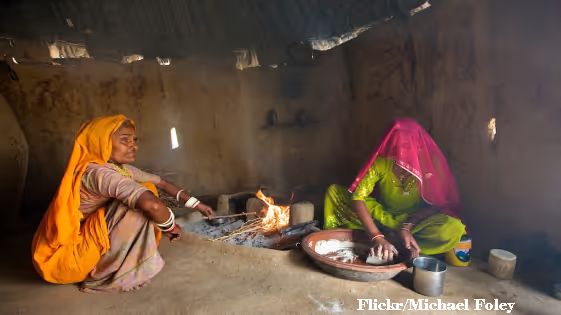
स्वच्छ ईंधन में बदलाव हेतु महिलाओं के समय का मूल्य (महत्त्व) बढ़ाना
ग्रामीण भारत में अधिकांश महिलाएँ पारंपरिक ईंधन का उपयोग जारी रखती हैं, जिसके चलते घरेलू कामों में उनका अधिक समय व्यतीत होता है। फरज़ाना अफरीदी ने इस लेख में मध्य प्रदेश में हुए एक सर्वेक्षण के परिणामों पर चर्चा की है और यह दिखाया है कि स्वच्छ ईंधन का उपयोग शुरू करने से महिलाओं का औसतन प्रतिदिन लगभग 20 मिनट का समय बचता है, लेकिन महिलाओं की कार्यबल भागीदारी में समान वृद्धि नहीं होती है। उनका कहना है कि श्रम बाज़ार में महिलाओं के काम का मूल्य बढ़ाने से स्वच्छ ईंधन अपनाने को प्रोत्साहन मिल सकता है।
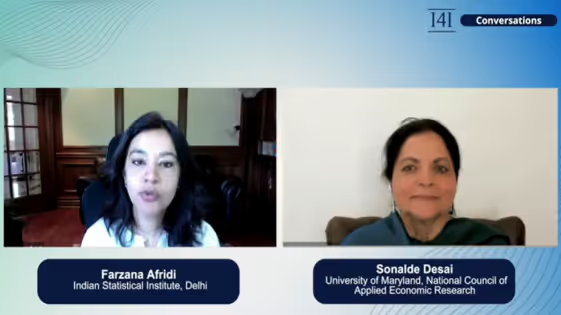
Managing India’s demographic transition
India’s population is expected to peak at about 1.7 billion in 2064, and while the current median age is only 28, the share of Indians aged 65 and above will go from 7% to 20% in the next 40 years or so. Has India been able to take advantage of its demographic dividend of a large working-age population, and is the country prepared for the upcoming transition from a young to an ageing population? In a new edition of I4I conversations, Farzana Afridi (Indian Statistical Institute, Delhi) and Sonalde Desai (University of Maryland & National Council of Applied Economic Research) discuss the challenges associated with India’s demographic dividend. They emphasise the need to tap into the full workforce, including women, as well as ensuring that workers are productive. They also analyse the issue of ageing both from the perspective of society and family. ....
Managing India’s demographic transition
India’s population is expected to peak at about 1.7 billion in 2064, and while the current median age is only 28, the share of Indians aged 65 and above will go from 7% to 20% in the next 40 years or so. Has India been able to take advantage of its demographic dividend of a large working-age population, and is the country prepared for the upcoming transition from a young to an ageing population? In a new edition of I4I conversations, Farzana Afridi (Indian Statistical Institute, Delhi) and Sonalde Desai (University of Maryland & National Council of Applied Economic Research) discuss the challenges associated with India’s demographic dividend. They emphasise the need to tap into the full workforce, including women, as well as ensuring that workers are productive. They also analyse the issue of ageing both from the perspective of society and family. ....

कोविड-19 और मानसिक स्वास्थ्य: ई-संगोष्ठी का परिचय
कोविड-19 महामारी और इससे संबंधित लॉकडाउन का अर्थव्यवस्था पर बहुत ही बुरा प्रभाव पड़ा जिसके कारण सबसे कमजोर वर्गों को आजीविका, कमाई का नुकसान हुआ और उन्हें खाद्य असुरक्षा भी झेलनी पड़ी। यद्यपि इस महामारी का लोगों के आर्थिक कल्याण पर पड़ा प्रभाव अधिक स्पष्ट रूप से दिखता है, उनके मानसिक स्वास्थ्य पर हुआ प्रभाव उतना ही प्रतिकूल है लेकिन वह साफ दिखता नहीं है। अगले दो सप्ताह में आयोजित की जा रही ई-संगोष्ठी में, विभिन्न क्षेत्रों के विशेषज्ञ दो विशेष रूप से कमजोर जनसांख्यिकीय समूहों-महिलाओं और बच्चों पर महामारी के पड़े मानसिक स्वास्थ्य प्रभावों पर विचार करेंगे।
Covid-19 and mental health: Introduction to e-Symposium
The Covid-19 pandemic and associated lockdowns had a devastating effect on the economy, with loss of livelihoods, earnings, and food insecurity suffered by the most vulnerable sections. Although economic well-being has suffered more apparently, the pandemic’s impact on mental well-being has been equally adverse but less visible. In a symposium that will run through this week, experts from various domains will weigh in on the mental health impacts of the pandemic on two particularly vulnerable demographic groups – women and children.

Providing information on school quality in a dysfunctional public education system
Insufficient school accountability and limited parental awareness of school quality can result in poor learning outcomes of students. This article reports the results of a randomised experiment in rural Rajasthan to better understand how greater awareness among schools and households of extant learning levels can lead to changes in student performance in an education market with both public and private providers of primary schooling.
Food for thought: On the design of school subsidy programmes
Despite significant increase in primary school enrollments, student attendance rates are less than 70% in public schools. This column argues that India needs to start evaluating its existing school subsidies systematically. It finds that provision of free cooked meals at schools that are sufficient not just in terms of quantity but also quality and variety will ensure better targeting and help get more children in school.
Cognitive Effects of Supplementary School Feeding Programme
This project uses the exogenous policy shock of the extension of provision of school meals to upper primary grades in public schools in Delhi to study the effects of school meal intake on the cognitive effort of students within the classroom.
Information Provision and the Quality of Education in Rural India
This study analyses whether providing information on the absolute and relative quality of schooling to the stakeholders affects the behaviour of service providers in both the public and the private sector.
Raising the value of women’s time for a transition to clean fuels
A majority of women in rural India continue to use traditional fuels, adding to the time that they devote to domestic work. In this post, Farzana Afridi discusses findings from a survey in Madhya Pradesh, showing that switching to a clean fuel leads to time saving of about 20 minutes per day on average – but no corresponding increase in women’s workforce participation. She contends that raising the value of women’s work in the labour market can incentivise clean fuel adoption

Governance and public service delivery in India
The International Growth Centre recently produced a synthesis paper (Afridi 2017) bringing together insights from its research on governance and public service delivery in India, over the past seven years. At a workshop organised by the IGC in collaboration with Ideas for India and Indian Statistical Institute, Amarjeet Sinha (Ministry of Rural Development), Rajesh Mahapatra (Hindustan Times), and Sandip Sukhtankar (University of Virginia) discussed the findings on key governance challenges and what can be done to address them.
Has community monitoring helped reduce corruption in public programme delivery?
MNREGA mandates social audits of public work projects undertaken under the Act in order to empower beneficiaries to scrutinise programme expenditures, and monitor programme delivery. Has community monitoring helped reduce corruption and improve programme delivery? This column presents results from the first study that rigorously assesses the impact of India’s only large-scale community monitoring initiative - in the state of Andhra Pradesh.
Does political reservation for women improve programme delivery?
This column outlines results of a study that assesses the impact of women leaders on corruption and other aspects of the quality of delivery of MNREGA. It argues that administrative experience, training and institutional support are essential for making women’s political participation and affirmative action policies more effective.
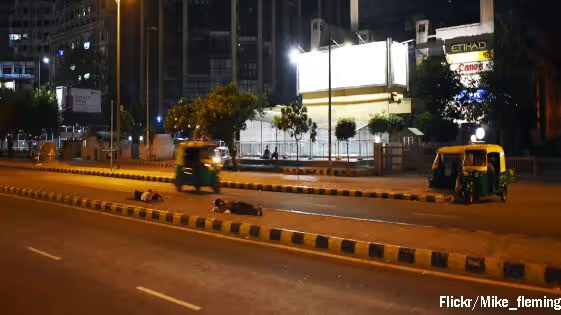
कोविड-19 संकट ने शहरी गरीबों को कैसे प्रभावित किया है? एक फोन सर्वेक्षण के निष्कर्ष-III
हालांकि भारत में कोविड-19 की दूसरी लहर के सार्वजनिक स्वास्थ्य पर विनाशकारी प्रभाव को सभी जानते हैं परंतु इसके आर्थिक और मनोवैज्ञानिक आयामों पर अपेक्षाकृत कम साक्ष्य उपलब्ध है। दिल्ली के औद्योगिक समूहों में सर्वेक्षण के आधार पर अफरीदी और अन्य ने गरीबों, अनौपचारिक श्रमिकों की आजीविका एवं मानसिक स्वास्थ्य पर महामारी के आज तक के विभिन्न चरणों के गतिशील प्रभावों की जांच की तथा महिलाओं और पुरुषों के अनुभवों की तुलना की है।
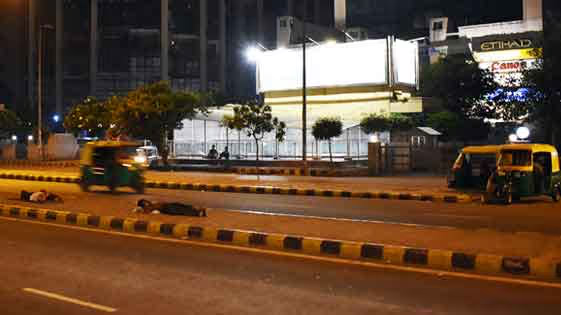
How has the Covid-19 crisis affected the urban poor? Findings from a phone survey - III
While the devastating impact of the second Covid-19 on public health in India is well-known, there is relatively little evidence on its economic and psychological dimensions. Based on surveys in industrial clusters of Delhi, Afridi et al. examine the dynamic effects of the different phases of the pandemic, on livelihoods and mental health of poor, informal workers – and how the experiences of women and men compare.
कोविड-19: बिहार लौटते प्रवासी मजदूर, ग्रामीण आजीविका तथा सामाजिक सुरक्षा
कोविड-19 के प्रसार को कम करने के लिए लागू किए गए लॉकडाउन के कारण अनेक प्रवासी मजदूरों ने अपना रोज़गार गँवाया और उनमें से करीब 30 लाख से ज्यादा प्रवासी दूसरे राज्यों से बिहार लौटे। इस विषय पर प्रोफेसर फरजाना अफ़रीदी (I4I संपादकीय बोर्ड सदस्य) के साथ बातचीत करते हुए श्री अरविंद कुमार चौधरी (प्रमुख सचिव, ग्रामीण विकास विभाग, बिहार सरकार) ने बिहार लौटे मजदूरों के हित में सरकार द्वारा उठाए गए कदमों पर प्रकाश डाला है। जिसमे उन्होने मनरेगा, गरीब कल्याण रोज़गार अभियान, जल जीवन योजना, आदि पहलकदमियों के बारे में विस्तृत जानकारी दी है।

कोविड-19 संकट ने शहरी गरीबों को कैसे प्रभावित किया है? फोन सर्वेक्षण के निष्कर्ष - II
हालांकि कई टिप्पणीकारों ने चल रहे कोविड-19 संकट के कारण प्रवासियों की दुर्दशा को उजागर किया है, परंतु शहरी झुग्गी-झोंपडी बस्तियों में रह रहे कम आय वाले परिवारों के बारे में कम ही ज्ञात है। अफरीदी, ढिल्लों एवं रॉय ने 24 मार्च को कोविड लॉकडाउन की घोषणा के बाद दिल्ली के औद्योगिक क्षेत्रों में परिवारों के यादृच्छिक प्रतिदर्श के बीच, उनकी आजीविका और शारीरिक एवं भावनात्मक कल्याण पर प्रभाव का आकलन करने के लिए 3 अप्रैल को फोन-सर्वेक्षण करना शुरू किया। हाल ही के अपने नोट में, शोधकर्ताओं ने लॉकडाउन की प्रारंभिक, अधिक कठोर अवधि (3 से 19 अप्रैल) के निष्कर्षों पर चर्चा की। इस अनुवर्ती नोट में, वे प्रतिबंधों में कुछ रियायतों के साथ लागू लॉकडाउन के दूसरे चरण (20 अप्रैल से 3 मई) के निष्कर्षों की रिपोर्ट करते हैं।
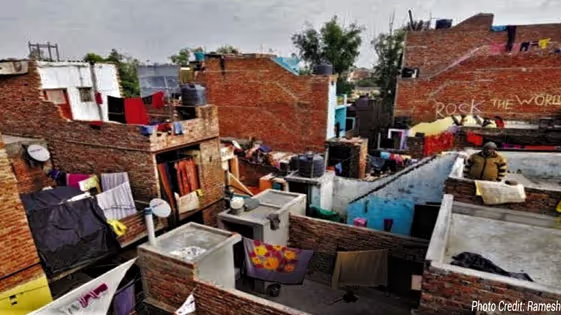
कोविड-19 संकट ने शहरी गरीबों को कैसे प्रभावित किया है? - फोन सर्वेक्षण के निष्कर्ष - I
यद्यपि कई टिप्पणीकारों ने वर्तमान कोविड-19 संकट के कारण प्रवासियों की दुर्दशा पर प्रकाश डाला है, परंतु शहरी झुग्गी झोंपडी बस्तियों में रह रहे कम आय वाले परिवारों के बारे में बहुत कम ज्ञात है। इस नोट में, अफरीदी, ढिल्लों एवं रॉय ने दिल्ली के औद्योगिक क्षेत्रों में 413 परिवारों के नमूनों के आधार पर उनकी आजीविका, एवं शारीरिक और भावनात्मक कल्याण पर प्रभाव के संबंध में फोन सर्वेक्षण द्वारा प्राप्त निष्कर्षों पर चर्चा की है। वे इस संकट के लिंग आधारित अनुभव में भी कुछ अंतर्दृष्टि प्रदान करती हैं।
How has Covid-19 crisis affected urban poor? Findings from a phone survey - II
While several commentators have highlighted the plight of migrants due to the ongoing Covid-19 crisis, less is known about how low-income families living in urban shanty towns are faring. Afridi et al. began conducting a phone survey on 3 April – after the Covid lockdown was announced on 24 March – among a sample of households in the industrial areas of Delhi, to assess the impact on their livelihoods, and physical and emotional well-being. In their recent note, the researchers discussed findings from the initial, more stringent period of the lockdown (3-19 April). In this follow-up note, they report findings from Phase 2 of the lockdown, following some easing of restrictions (20 April-3 May).
Webinar: Impact of Covid-19 on informal and migrant workers in India
The International Growth Centre (IGC), in collaboration with I4I, organised a Webinar on 'The impact of Covid-19 on informal and migrant workers in India', with Jean Drèze (Ranchi University), Farzana Afridi (Indian Statistical Institute), Purnima Menon (IFPRI), and Shahid Vaziralli (IGC), on 13 May 2020.
How has Covid-19 crisis affected the urban poor? Findings from a phone survey - I
While several commentators have highlighted the plight of migrants due to the ongoing Covid-19 crisis, less is known about how low-income families living in urban shanty towns are faring. In this note, Afridi et al. discuss findings from a phone survey of a sample of 413 households in the industrial areas of Delhi, on the impact on their livelihoods, and physical and emotional well-being. They also provide some insights into the gendered experience of this crisis.
Afterword: What lies ahead for MNREGA?
In an afterword to the e-symposium on ‘10 years of MNREGA and the way forward’, I4I Editor Farzana Afridi contends that the evidence summarised in the e-symposium suggests that MNREGA is not merely a poverty alleviation programme. Given its multiple potential benefits, MNREGA needs more than mere lip service or it risks dwindling into irrelevance.
Introduction to e-Symposium: 10 years of MNREGA and the way forward
India’s Mahatma Gandhi National Rural Employment Guarantee Scheme – the largest public works programme in the world – completed a decade in February 2016. As a contribution to the discussions, I4I Editor Farzana Afridi is hosting an e-symposium to summarise the existing evidence on various aspects of the programme, and to discuss the future of the programme.
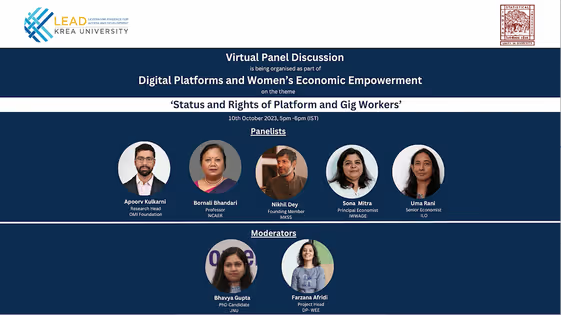
DP-WEE Panel Discussion: Status and rights of platform and gig workers
A virtual panel discussion was organised by the Digital Platforms and Women’s Economic Empowerment (DP-WEE) programme, funded by the Bill and Melinda Gates Foundation, to understand the status and legal rights of the workforce in India’s digital economy. The discussion was moderated by Farzana Afridi (Head, DP-WEE) and Bhavya Gupta (PhD scholar, Jawaharlal Nehra University), and featured Uma Rani (International Labour Organization), Sona Mitra (IWWAGE), Nikhil Dey (Mazdoor Kishan Shakti Sangthan), Bornali Bhandari (NCAER) and Apoorv Kulkarni (OMI Foundation).

Bringing skilling and productive employment closer to women
On International Women’s Day, Farzana Afridi considers a key issue in the creation of good jobs for women – the provision of skilling. She discusses the lack of physical and financial access to skill training, shortage of demand-relevant and high-quality programmes, and inefficient matching with jobs post-training. While highlighting recent government proposals to address these concerns – such as launching a unified Skill India Digital Platform – she contends that a more gender-sensitive approach is needed.

The promise of technology for women’s employment
The growth of digital labour platforms holds tremendous potential to improve employment outcomes for India’s young, urban population. In this post, Farzana Afridi discusses the challenges in leveraging this technology – especially for women, given their lower access to technology, skills, capital and public spaces. She calls for the creation of a data ecosystem – including public and private sources – to analyse the issues and develop suitable policies to fully realise the sector’s promise.
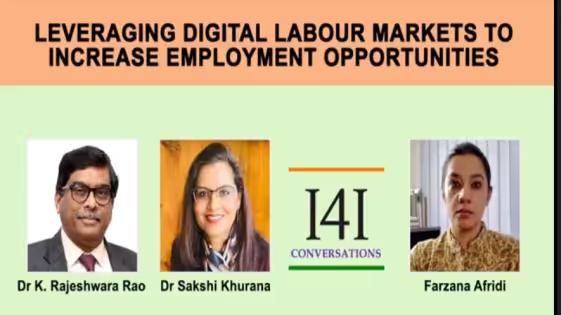
Leveraging digital labour markets to increase employment opportunities
India’s relatively young population, the pace of adoption of smartphones and digital technology, and rapid urbanisation has contributed to the growth of digital labour markets. In recent years, we have seen the proliferation of gig work and labour market platforms like Uber, Urban Company, Swiggy and others. This growth has accelerated in the wake of the Covid-19 pandemic with India currently accounting for 8% of the world’s digital labour platforms. In this edition of I4I Conversations, Prof. Farzana Afridi (Indian Statistical Institute) speaks with Dr K Rajeswara Rao and Dr Sakshi Khurana (NITI Aayog) to examine how job-matching technology platforms could be harnessed to increase employment opportunities, through skill-matching and technology-based job allocation. In reference to the NITI Aayog report ‘India's Booming Gig and Platform Economy: Perspectives and Recommendations for the Future of Work’, released on 27 June 2022, they discuss how the flexibility and low entry ...

Leveraging digital labour markets to increase employment opportunities
India’s relatively young population, the pace of adoption of smartphones and digital technology, and rapid urbanisation has contributed to the growth of digital labour markets. In recent years, we have seen the proliferation of gig work and labour market platforms like Uber, Urban Company, Swiggy and others. This growth has accelerated in the wake of the Covid-19 pandemic with India currently accounting for 8% of the world’s digital labour platforms. In this edition of I4I Conversations, Prof. Farzana Afridi (Indian Statistical Institute) speaks with Dr K Rajeswara Rao and Dr Sakshi Khurana (NITI Aayog) to examine how job-matching technology platforms could be harnessed to increase employment opportunities, through skill-matching and technology-based job allocation. In reference to the NITI Aayog report ‘India's Booming Gig and Platform Economy: Perspectives and Recommendations for the Future of Work’, released on 27 June 2022, they discuss how the flexibility and low entry ...
Introduction to e-Symposium: Firms and labour productivity
Eighty per cent of India’s labour force works ‘informally’. Providing employment with decent wages and benefits to this segment requires structural transformation of the economy to more high-productivity sectors. I4I Editor Farzana Afridi is hosting an e-symposium to bring together some fundamental issues around the challenge of raising labour and firm productivity in the country.

Claudia Goldin’s Nobel Prize winning research
On Sunday, Claudia Goldin will be awarded the Nobel Prize in Economic Sciences for her work on women’s progress in the workforce. In this piece, Farzana Afridi reflects on the significance of Goldin’s win and the contribution of her research to understanding the gender dynamics of labour markets. She also delves into the implications of this research for developing countries like India, where female labour force participation has remained low despite economic growth, and why this matters for economic growth.